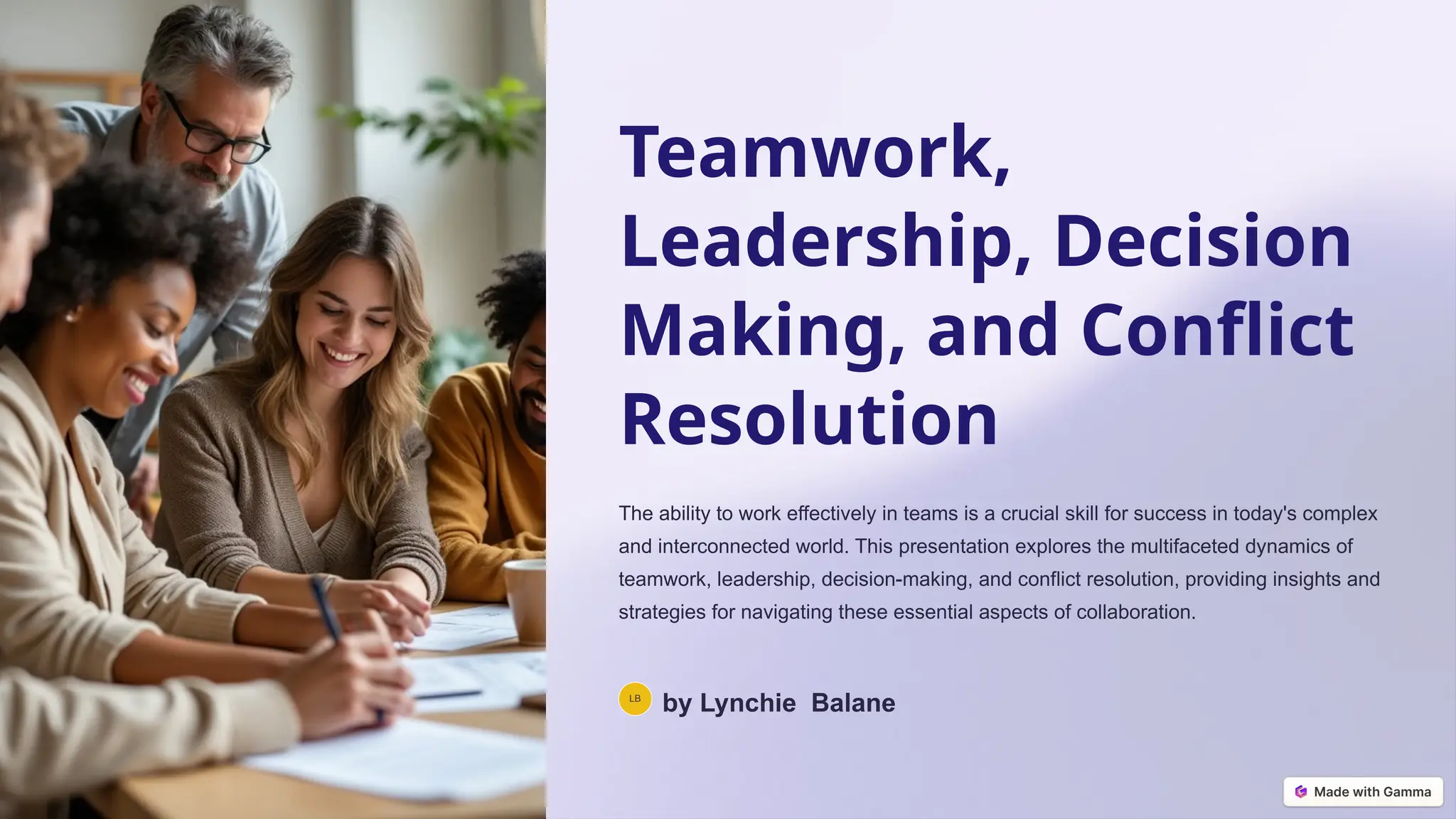
Teamwork,
Leadership, Decision
Making, and Conflict
Resolution
The ability to work effectively in teams is a crucial skill for success in today's complex
and interconnected world. This presentation explores the multifaceted dynamics of
teamwork, leadership, decision-making, and conflict resolution, providing insights and
strategies for navigating these essential aspects of collaboration.
LB
by Lynchie Balane
Importance of Effective Teamwork
Effective teamwork is the foundation for success in any collaborative endeavor. Teams that function well leverage the unique skills,
perspectives, and experiences of their members to achieve shared goals. Effective teamwork fosters a sense of unity, shared
purpose, and mutual support, leading to increased productivity, innovation, and overall organizational effectiveness.
1 Enhanced Creativity and Innovation
Teams provide a platform for diverse perspectives to
converge, leading to more creative solutions and
innovative approaches to challenges.
2 Improved Problem-Solving
Multiple perspectives contribute to a more
comprehensive understanding of problems, leading to
more effective and sustainable solutions.
3 Increased Productivity and Efficiency
Collaboration allows for task distribution and resource
optimization, leading to greater efficiency and output.
4 Enhanced Communication and
Interpersonal Skills
Working in teams fosters communication and
interpersonal skills, essential for navigating various work
environments and relationships.
Strategies for Building Strong Teams
Building a strong team requires a deliberate and strategic approach that focuses on establishing a foundation of trust, clear communication, and shared
goals. By fostering a culture of collaboration and mutual respect, teams can maximize their potential and achieve collective success.
Define Clear Roles and
Responsibilities
Each team member should have a clear
understanding of their specific roles,
responsibilities, and expectations. This
minimizes confusion and ensures that everyone
is working towards the same goals.
• Clearly outline individual tasks and
contributions.
• Establish communication channels for
effective coordination.
• Regularly review and adjust roles based
on evolving team needs.
Foster Open and Honest
Communication
Open and honest communication is essential for
building trust and resolving conflicts. Encourage
team members to express their ideas, concerns,
and feedback without fear of judgment.
• Establish regular communication
channels for updates and discussions.
• Promote active listening and respect for
diverse viewpoints.
• Create a safe and inclusive environment
for open dialogue.
Encourage Collaboration and
Shared Decision Making
Teams that encourage collaboration and shared
decision-making foster a sense of ownership
and commitment among members. Involve
everyone in the process, seeking their input and
valuing their contributions.
• Facilitate brainstorming sessions to
generate ideas and solutions.
• Utilize collaborative tools and platforms
to enhance communication and
information sharing.
• Implement decision-making processes
that ensure everyone's voices are heard
and considered.
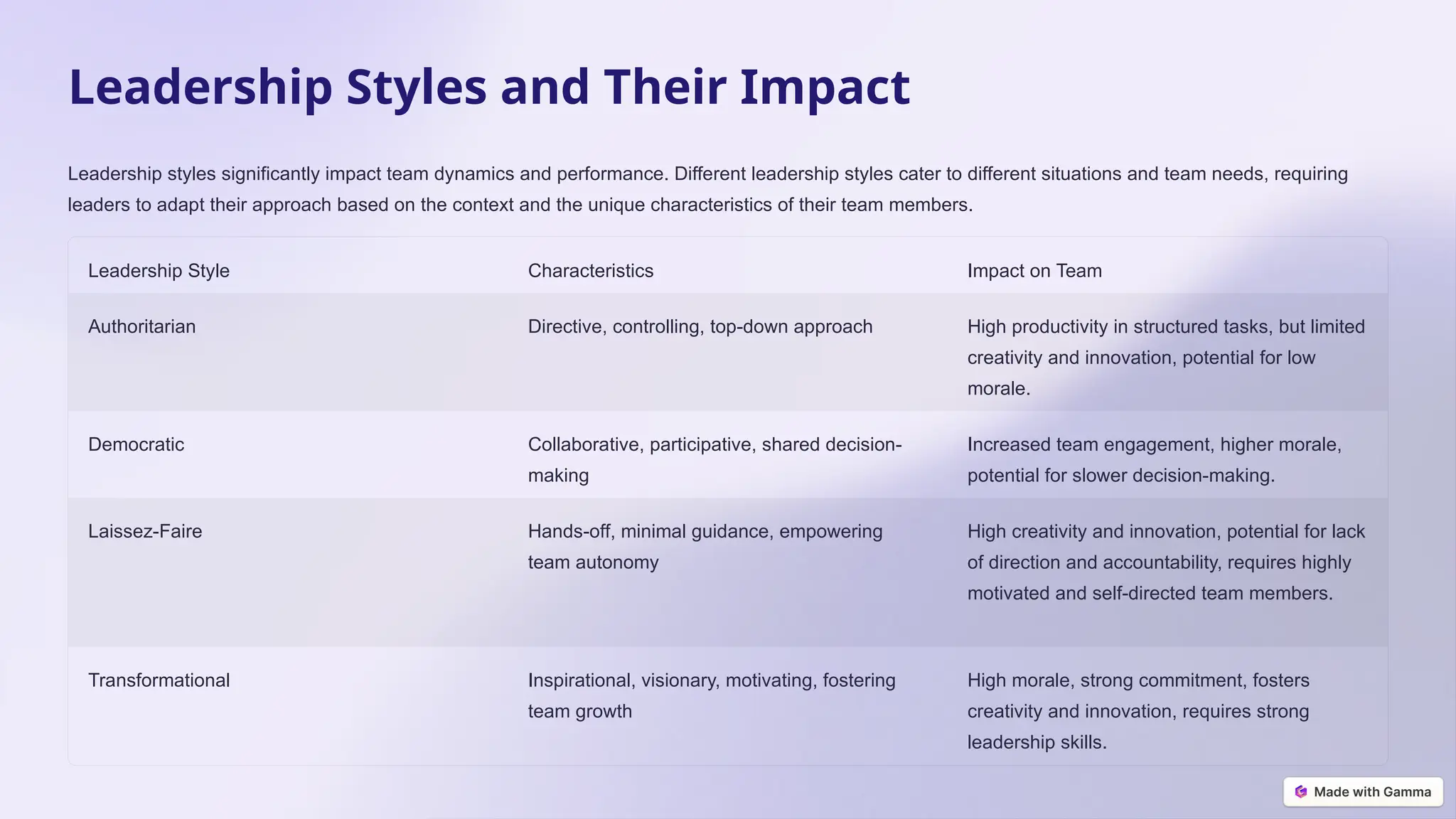
Leadership Styles and Their Impact
Leadership styles significantly impact team dynamics and performance. Different leadership styles cater to different situations and team needs, requiring
leaders to adapt their approach based on the context and the unique characteristics of their team members.
Leadership Style Characteristics Impact on Team
Authoritarian Directive, controlling, top-down approach High productivity in structured tasks, but limited
creativity and innovation, potential for low
morale.
Democratic Collaborative, participative, shared decision-
making
Increased team engagement, higher morale,
potential for slower decision-making.
Laissez-Faire Hands-off, minimal guidance, empowering
team autonomy
High creativity and innovation, potential for lack
of direction and accountability, requires highly
motivated and self-directed team members.
Transformational Inspirational, visionary, motivating, fostering
team growth
High morale, strong commitment, fosters
creativity and innovation, requires strong
leadership skills.
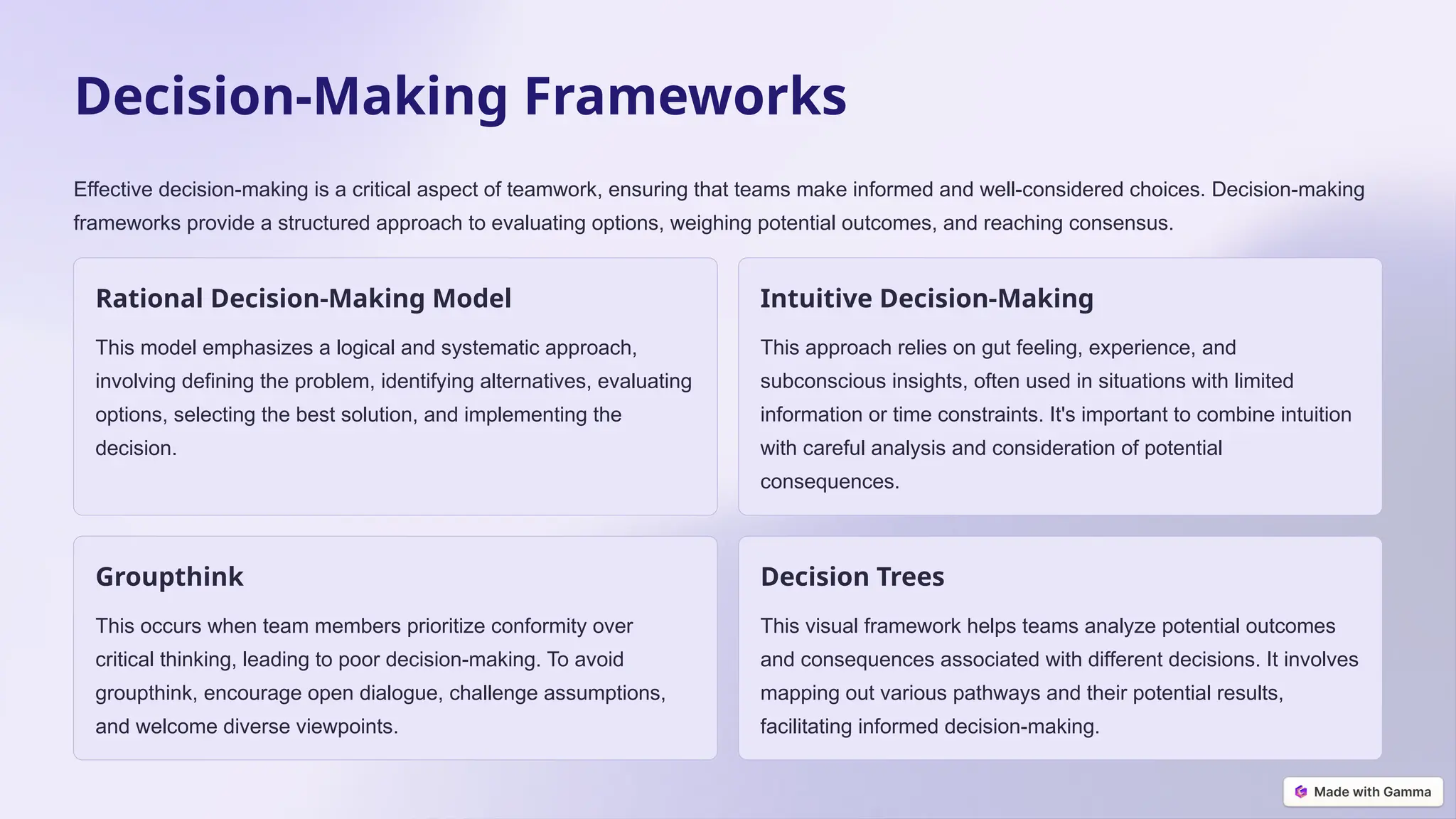
Decision-Making Frameworks
Effective decision-making is a critical aspect of teamwork, ensuring that teams make informed and well-considered choices. Decision-making
frameworks provide a structured approach to evaluating options, weighing potential outcomes, and reaching consensus.
Rational Decision-Making Model
This model emphasizes a logical and systematic approach,
involving defining the problem, identifying alternatives, evaluating
options, selecting the best solution, and implementing the
decision.
Intuitive Decision-Making
This approach relies on gut feeling, experience, and
subconscious insights, often used in situations with limited
information or time constraints. It's important to combine intuition
with careful analysis and consideration of potential
consequences.
Groupthink
This occurs when team members prioritize conformity over
critical thinking, leading to poor decision-making. To avoid
groupthink, encourage open dialogue, challenge assumptions,
and welcome diverse viewpoints.
Decision Trees
This visual framework helps teams analyze potential outcomes
and consequences associated with different decisions. It involves
mapping out various pathways and their potential results,
facilitating informed decision-making.
Conflict Resolution Techniques
Conflict is inevitable in any team environment, but it's how teams handle conflict that determines its impact.
Effective conflict resolution techniques promote open communication, understanding, and collaborative
problem-solving, allowing teams to move forward constructively.
Active Listening
Actively listen to understand the other person's perspective without interrupting or getting
defensive.
Empathy
Try to see the situation from the other person's point of view and understand their emotions.
Negotiation
Find common ground and work together to find a solution that meets the needs of both
parties.
Mediation
If direct negotiation is unsuccessful, a neutral third party can help facilitate a constructive
conversation and find solutions.
Fostering Open Communication
Open and honest communication is the lifeblood of any successful team. Fostering a culture of open communication requires
establishing a safe and inclusive environment where team members feel comfortable expressing their ideas, concerns, and
feedback without fear of judgment or repercussions.
Regular
Communication
Channels
Establish regular
communication channels for
updates, discussions, and
feedback, such as team
meetings, email, or instant
messaging platforms.
Active Listening
Encourage active listening,
where team members fully
attend to what others are
saying, understand their
perspectives, and respond
thoughtfully.
Transparency and
Openness
Promote transparency by
sharing information openly
and honestly, fostering a
culture of trust and
accountability.
Respect for Diverse
Viewpoints
Value and respect diverse
perspectives, encouraging
team members to share their
unique ideas and experiences
without fear of judgment or
dismissal.
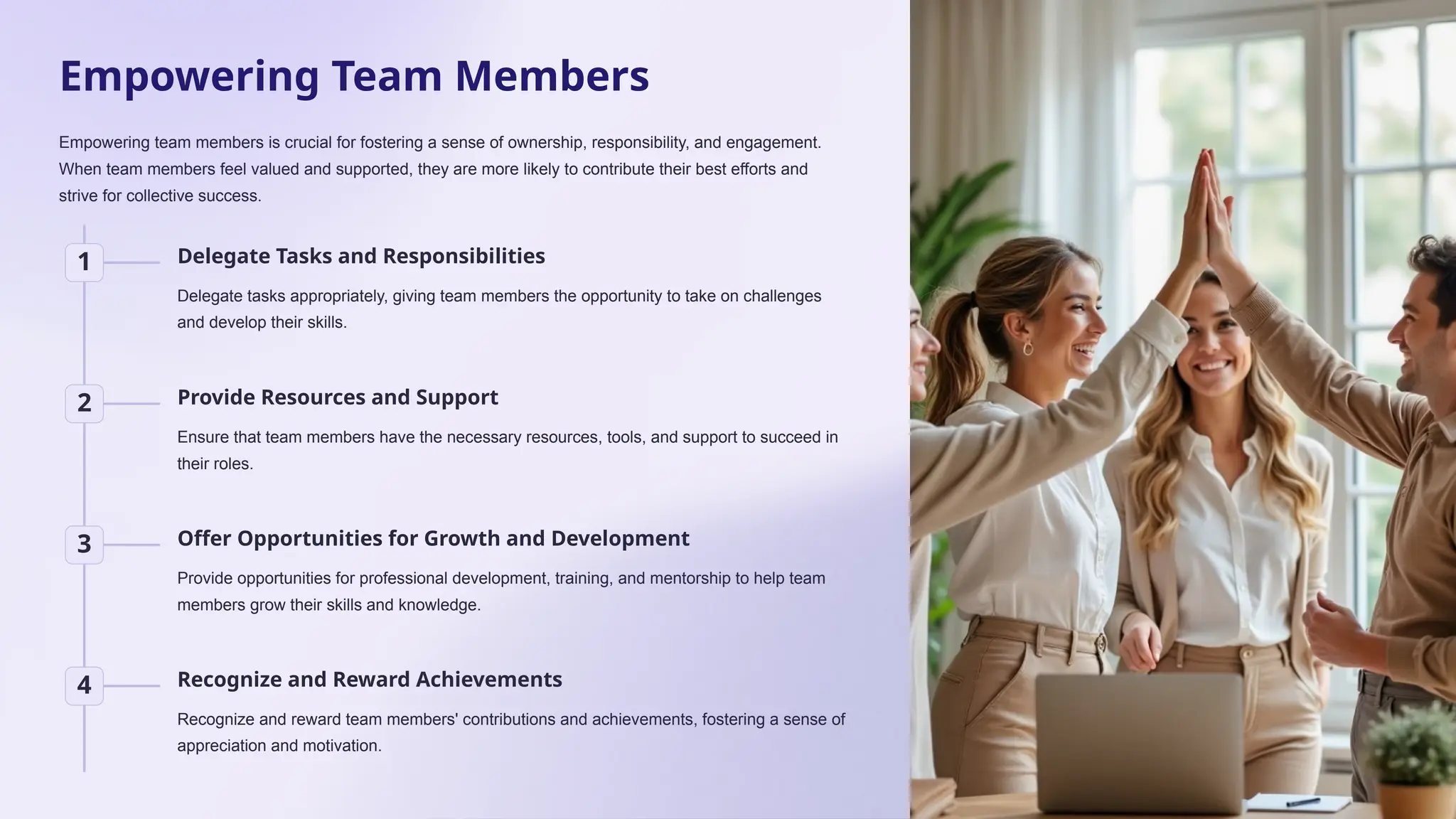
Empowering Team Members
Empowering team members is crucial for fostering a sense of ownership, responsibility, and engagement.
When team members feel valued and supported, they are more likely to contribute their best efforts and
strive for collective success.
1 Delegate Tasks and Responsibilities
Delegate tasks appropriately, giving team members the opportunity to take on challenges
and develop their skills.
2 Provide Resources and Support
Ensure that team members have the necessary resources, tools, and support to succeed in
their roles.
3 Offer Opportunities for Growth and Development
Provide opportunities for professional development, training, and mentorship to help team
members grow their skills and knowledge.
4 Recognize and Reward Achievements
Recognize and reward team members' contributions and achievements, fostering a sense of
appreciation and motivation.
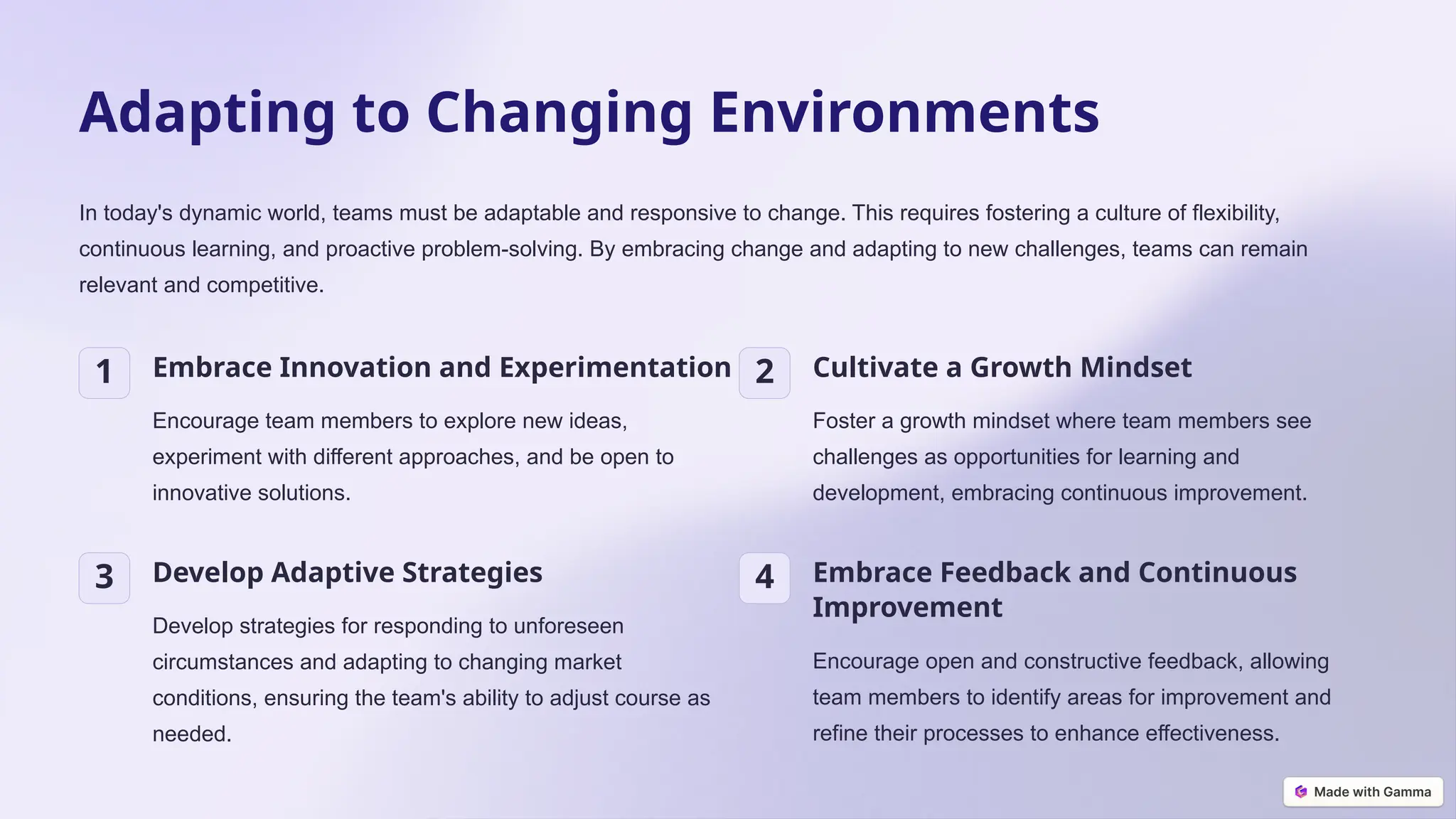
Adapting to Changing Environments
In today's dynamic world, teams must be adaptable and responsive to change. This requires fostering a culture of flexibility,
continuous learning, and proactive problem-solving. By embracing change and adapting to new challenges, teams can remain
relevant and competitive.
1 Embrace Innovation and Experimentation
Encourage team members to explore new ideas,
experiment with different approaches, and be open to
innovative solutions.
2 Cultivate a Growth Mindset
Foster a growth mindset where team members see
challenges as opportunities for learning and
development, embracing continuous improvement.
3 Develop Adaptive Strategies
Develop strategies for responding to unforeseen
circumstances and adapting to changing market
conditions, ensuring the team's ability to adjust course as
needed.
4 Embrace Feedback and Continuous
Improvement
Encourage open and constructive feedback, allowing
team members to identify areas for improvement and
refine their processes to enhance effectiveness.
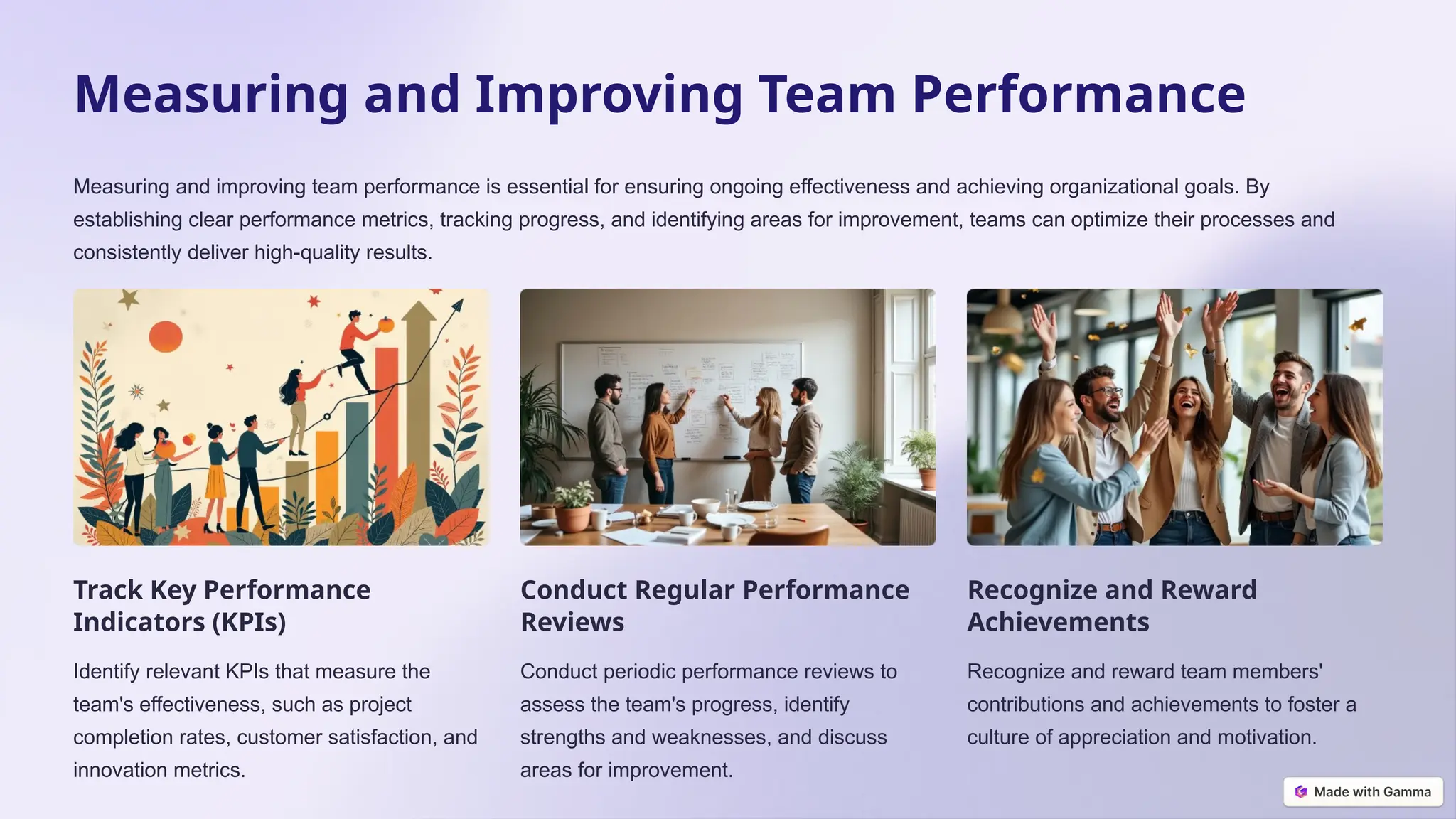
Measuring and Improving Team Performance
Measuring and improving team performance is essential for ensuring ongoing effectiveness and achieving organizational goals. By
establishing clear performance metrics, tracking progress, and identifying areas for improvement, teams can optimize their processes and
consistently deliver high-quality results.
Track Key Performance
Indicators (KPIs)
Identify relevant KPIs that measure the
team's effectiveness, such as project
completion rates, customer satisfaction, and
innovation metrics.
Conduct Regular Performance
Reviews
Conduct periodic performance reviews to
assess the team's progress, identify
strengths and weaknesses, and discuss
areas for improvement.
Recognize and Reward
Achievements
Recognize and reward team members'
contributions and achievements to foster a
culture of appreciation and motivation.

Teamwork-Leadership-Decision-Making-and-Conflict-Resolution.pptx

  • 1.
    Teamwork, Leadership, Decision Making, andConflict Resolution The ability to work effectively in teams is a crucial skill for success in today's complex and interconnected world. This presentation explores the multifaceted dynamics of teamwork, leadership, decision-making, and conflict resolution, providing insights and strategies for navigating these essential aspects of collaboration. LB by Lynchie Balane
  • 2.
    Importance of EffectiveTeamwork Effective teamwork is the foundation for success in any collaborative endeavor. Teams that function well leverage the unique skills, perspectives, and experiences of their members to achieve shared goals. Effective teamwork fosters a sense of unity, shared purpose, and mutual support, leading to increased productivity, innovation, and overall organizational effectiveness. 1 Enhanced Creativity and Innovation Teams provide a platform for diverse perspectives to converge, leading to more creative solutions and innovative approaches to challenges. 2 Improved Problem-Solving Multiple perspectives contribute to a more comprehensive understanding of problems, leading to more effective and sustainable solutions. 3 Increased Productivity and Efficiency Collaboration allows for task distribution and resource optimization, leading to greater efficiency and output. 4 Enhanced Communication and Interpersonal Skills Working in teams fosters communication and interpersonal skills, essential for navigating various work environments and relationships.
  • 3.
    Strategies for BuildingStrong Teams Building a strong team requires a deliberate and strategic approach that focuses on establishing a foundation of trust, clear communication, and shared goals. By fostering a culture of collaboration and mutual respect, teams can maximize their potential and achieve collective success. Define Clear Roles and Responsibilities Each team member should have a clear understanding of their specific roles, responsibilities, and expectations. This minimizes confusion and ensures that everyone is working towards the same goals. • Clearly outline individual tasks and contributions. • Establish communication channels for effective coordination. • Regularly review and adjust roles based on evolving team needs. Foster Open and Honest Communication Open and honest communication is essential for building trust and resolving conflicts. Encourage team members to express their ideas, concerns, and feedback without fear of judgment. • Establish regular communication channels for updates and discussions. • Promote active listening and respect for diverse viewpoints. • Create a safe and inclusive environment for open dialogue. Encourage Collaboration and Shared Decision Making Teams that encourage collaboration and shared decision-making foster a sense of ownership and commitment among members. Involve everyone in the process, seeking their input and valuing their contributions. • Facilitate brainstorming sessions to generate ideas and solutions. • Utilize collaborative tools and platforms to enhance communication and information sharing. • Implement decision-making processes that ensure everyone's voices are heard and considered.
  • 4.
    Leadership Styles andTheir Impact Leadership styles significantly impact team dynamics and performance. Different leadership styles cater to different situations and team needs, requiring leaders to adapt their approach based on the context and the unique characteristics of their team members. Leadership Style Characteristics Impact on Team Authoritarian Directive, controlling, top-down approach High productivity in structured tasks, but limited creativity and innovation, potential for low morale. Democratic Collaborative, participative, shared decision- making Increased team engagement, higher morale, potential for slower decision-making. Laissez-Faire Hands-off, minimal guidance, empowering team autonomy High creativity and innovation, potential for lack of direction and accountability, requires highly motivated and self-directed team members. Transformational Inspirational, visionary, motivating, fostering team growth High morale, strong commitment, fosters creativity and innovation, requires strong leadership skills.
  • 5.
    Decision-Making Frameworks Effective decision-makingis a critical aspect of teamwork, ensuring that teams make informed and well-considered choices. Decision-making frameworks provide a structured approach to evaluating options, weighing potential outcomes, and reaching consensus. Rational Decision-Making Model This model emphasizes a logical and systematic approach, involving defining the problem, identifying alternatives, evaluating options, selecting the best solution, and implementing the decision. Intuitive Decision-Making This approach relies on gut feeling, experience, and subconscious insights, often used in situations with limited information or time constraints. It's important to combine intuition with careful analysis and consideration of potential consequences. Groupthink This occurs when team members prioritize conformity over critical thinking, leading to poor decision-making. To avoid groupthink, encourage open dialogue, challenge assumptions, and welcome diverse viewpoints. Decision Trees This visual framework helps teams analyze potential outcomes and consequences associated with different decisions. It involves mapping out various pathways and their potential results, facilitating informed decision-making.
  • 6.
    Conflict Resolution Techniques Conflictis inevitable in any team environment, but it's how teams handle conflict that determines its impact. Effective conflict resolution techniques promote open communication, understanding, and collaborative problem-solving, allowing teams to move forward constructively. Active Listening Actively listen to understand the other person's perspective without interrupting or getting defensive. Empathy Try to see the situation from the other person's point of view and understand their emotions. Negotiation Find common ground and work together to find a solution that meets the needs of both parties. Mediation If direct negotiation is unsuccessful, a neutral third party can help facilitate a constructive conversation and find solutions.
  • 7.
    Fostering Open Communication Openand honest communication is the lifeblood of any successful team. Fostering a culture of open communication requires establishing a safe and inclusive environment where team members feel comfortable expressing their ideas, concerns, and feedback without fear of judgment or repercussions. Regular Communication Channels Establish regular communication channels for updates, discussions, and feedback, such as team meetings, email, or instant messaging platforms. Active Listening Encourage active listening, where team members fully attend to what others are saying, understand their perspectives, and respond thoughtfully. Transparency and Openness Promote transparency by sharing information openly and honestly, fostering a culture of trust and accountability. Respect for Diverse Viewpoints Value and respect diverse perspectives, encouraging team members to share their unique ideas and experiences without fear of judgment or dismissal.
  • 8.
    Empowering Team Members Empoweringteam members is crucial for fostering a sense of ownership, responsibility, and engagement. When team members feel valued and supported, they are more likely to contribute their best efforts and strive for collective success. 1 Delegate Tasks and Responsibilities Delegate tasks appropriately, giving team members the opportunity to take on challenges and develop their skills. 2 Provide Resources and Support Ensure that team members have the necessary resources, tools, and support to succeed in their roles. 3 Offer Opportunities for Growth and Development Provide opportunities for professional development, training, and mentorship to help team members grow their skills and knowledge. 4 Recognize and Reward Achievements Recognize and reward team members' contributions and achievements, fostering a sense of appreciation and motivation.
  • 9.
    Adapting to ChangingEnvironments In today's dynamic world, teams must be adaptable and responsive to change. This requires fostering a culture of flexibility, continuous learning, and proactive problem-solving. By embracing change and adapting to new challenges, teams can remain relevant and competitive. 1 Embrace Innovation and Experimentation Encourage team members to explore new ideas, experiment with different approaches, and be open to innovative solutions. 2 Cultivate a Growth Mindset Foster a growth mindset where team members see challenges as opportunities for learning and development, embracing continuous improvement. 3 Develop Adaptive Strategies Develop strategies for responding to unforeseen circumstances and adapting to changing market conditions, ensuring the team's ability to adjust course as needed. 4 Embrace Feedback and Continuous Improvement Encourage open and constructive feedback, allowing team members to identify areas for improvement and refine their processes to enhance effectiveness.
  • 10.
    Measuring and ImprovingTeam Performance Measuring and improving team performance is essential for ensuring ongoing effectiveness and achieving organizational goals. By establishing clear performance metrics, tracking progress, and identifying areas for improvement, teams can optimize their processes and consistently deliver high-quality results. Track Key Performance Indicators (KPIs) Identify relevant KPIs that measure the team's effectiveness, such as project completion rates, customer satisfaction, and innovation metrics. Conduct Regular Performance Reviews Conduct periodic performance reviews to assess the team's progress, identify strengths and weaknesses, and discuss areas for improvement. Recognize and Reward Achievements Recognize and reward team members' contributions and achievements to foster a culture of appreciation and motivation.