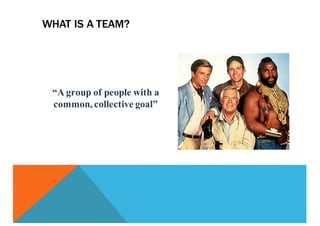
“A group of people with a
common, collective goal”
WHAT IS A TEAM?
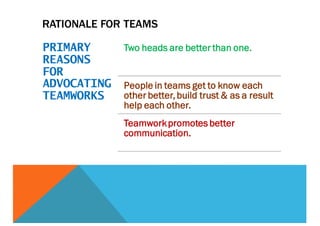
RATIONALE FOR TEAMS
PRIMARY
REASONS
FOR
ADVOCATING
TEAMWORKS
Two heads are better than one.
People in teams get to know each
other better,build trust & as a result
help each other.
Teamworkpromotes better
communication.
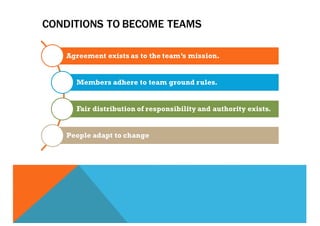
CONDITIONS TO BECOME TEAMS
Agreement exists as to the team’s mission.
Members adhere to team ground rules.
Fair distribution of responsibility and authority exists.
People adapt to change
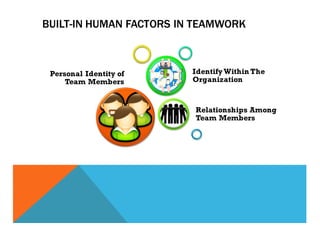
BUILT-IN HUMAN FACTORS IN TEAMWORK
Personal Identity of
Team Members
Relationships Among
Team Members
Identify Within The
Organization
WHAT TEAM LEADER MUST DEVELOP FOR
TEAM’S EXCELLENCE?
Mutual Support Challenge
Singleness of
Purpose Trust
Participation People Skills Accountability Reinforcement
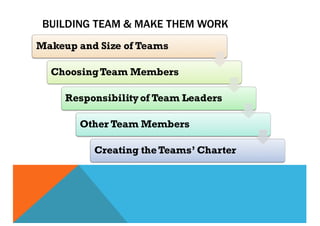
BUILDING TEAM & MAKE THEM WORK
Makeup and Size of Teams
ChoosingTeam Members
Responsibilityof Team Leaders
Other Team Members
Creating theTeams’ Charter
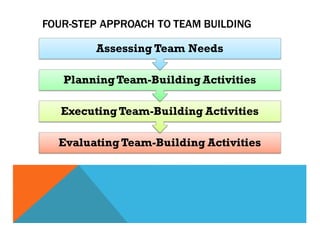
FOUR-STEP APPROACH TO TEAM BUILDING
EvaluatingTeam-Building Activities
ExecutingTeam-Building Activities
PlanningTeam-Building Activities
Assessing Team Needs
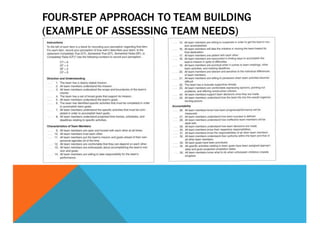
FOUR-STEP APPROACH TO TEAM BUILDING
(EXAMPLE OF ASSESSING TEAM NEEDS)
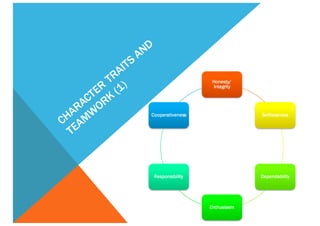
Honesty/
Integrity
Selflessness
Dependability
Enthusiasm
Responsibility
Cooperativeness
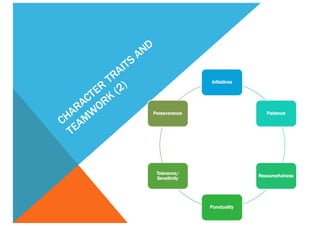
Initiatives
Patience
Resourcefulness
Punctuality
Tolerance/
Sensitivity
Perseverance
COACHES: WHAT TO DO?
Clearly
Defined
Charter
Team
Development
and Team
Building
Mentoring
Mutual
Respect
•Trust made
tangible
•Appreciation of
people as
assets
•Communication
that is clear and
candid
•Ethics that are
unequivocal
•Team members
are assets
Human
Diversity
•Conduct a
cultural audit
•Identify the
specific
needs of
different
groups
•Confront
cultural
clashes
•Eliminate
institutionaliz
ed bias
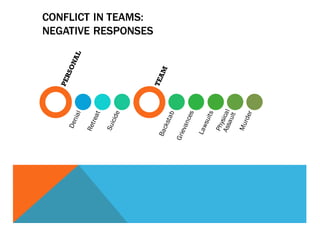
CONFLICT IN TEAMS:
NEGATIVE RESPONSES
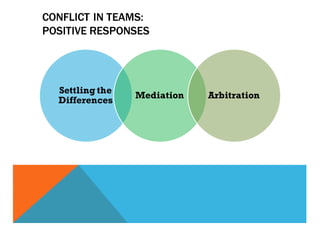
CONFLICT IN TEAMS:
POSITIVE RESPONSES
Settling the
Differences
Mediation Arbitration
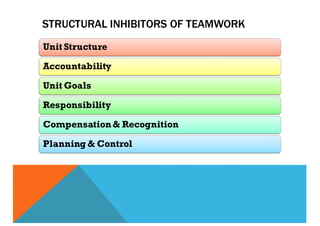
STRUCTURAL INHIBITORS OF TEAMWORK
Unit Structure
Accountability
Unit Goals
Responsibility
Compensation& Recognition
Planning & Control
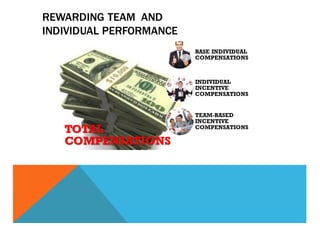
REWARDING TEAM AND
INDIVIDUAL PERFORMANCE
TOTAL
COMPENSATIONS
BASE INDIVIDUAL
COMPENSATIONS
INDIVIDUAL
INCENTIVE
COMPENSATIONS
TEAM-BASED
INCENTIVE
COMPENSATIONS
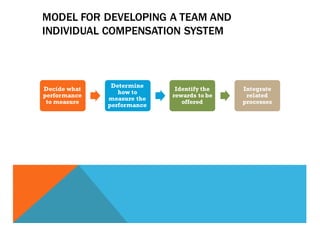
MODEL FOR DEVELOPING A TEAM AND
INDIVIDUAL COMPENSATION SYSTEM
Decide what
performance
to measure
Determine
how to
measure the
performance
Identify the
rewards to be
offered
Integrate
related
processes
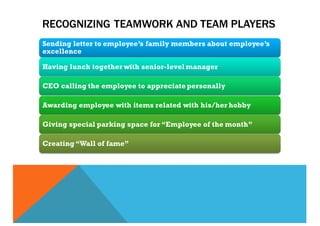
RECOGNIZING TEAMWORK AND TEAM PLAYERS
Sending letter to employee’s family members about employee’s
excellence
Having lunch together with senior-level manager
CEO calling the employee to appreciate personally
Awarding employee with items related with his/her hobby
Giving special parking space for “Employee of the month”
Creating “Wall of fame”
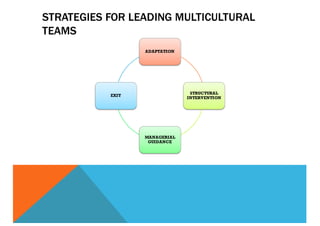
STRATEGIES FOR LEADING MULTICULTURAL
TEAMS
ADAPTATION
STRUCTURAL
INTERVENTION
MANAGERIAL
GUIDANCE
EXIT

Team building and teamwork

  • 2.
    “A group ofpeople with a common, collective goal” WHAT IS A TEAM?
  • 3.
    RATIONALE FOR TEAMS PRIMARY REASONS FOR ADVOCATING TEAMWORKS Twoheads are better than one. People in teams get to know each other better,build trust & as a result help each other. Teamworkpromotes better communication.
  • 4.
    CONDITIONS TO BECOMETEAMS Agreement exists as to the team’s mission. Members adhere to team ground rules. Fair distribution of responsibility and authority exists. People adapt to change
  • 5.
    BUILT-IN HUMAN FACTORSIN TEAMWORK Personal Identity of Team Members Relationships Among Team Members Identify Within The Organization
  • 6.
    WHAT TEAM LEADERMUST DEVELOP FOR TEAM’S EXCELLENCE? Mutual Support Challenge Singleness of Purpose Trust Participation People Skills Accountability Reinforcement
  • 7.
    BUILDING TEAM &MAKE THEM WORK Makeup and Size of Teams ChoosingTeam Members Responsibilityof Team Leaders Other Team Members Creating theTeams’ Charter
  • 8.
    FOUR-STEP APPROACH TOTEAM BUILDING EvaluatingTeam-Building Activities ExecutingTeam-Building Activities PlanningTeam-Building Activities Assessing Team Needs
  • 9.
    FOUR-STEP APPROACH TOTEAM BUILDING (EXAMPLE OF ASSESSING TEAM NEEDS)
  • 10.
  • 11.
  • 12.
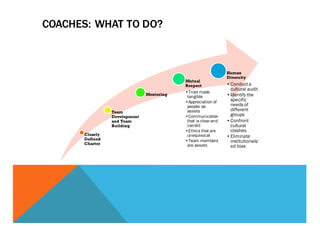
    COACHES: WHAT TODO? Clearly Defined Charter Team Development and Team Building Mentoring Mutual Respect •Trust made tangible •Appreciation of people as assets •Communication that is clear and candid •Ethics that are unequivocal •Team members are assets Human Diversity •Conduct a cultural audit •Identify the specific needs of different groups •Confront cultural clashes •Eliminate institutionaliz ed bias
  • 13.
  • 14.
    CONFLICT IN TEAMS: POSITIVERESPONSES Settling the Differences Mediation Arbitration
  • 15.
    STRUCTURAL INHIBITORS OFTEAMWORK Unit Structure Accountability Unit Goals Responsibility Compensation& Recognition Planning & Control
  • 16.
    REWARDING TEAM AND INDIVIDUALPERFORMANCE TOTAL COMPENSATIONS BASE INDIVIDUAL COMPENSATIONS INDIVIDUAL INCENTIVE COMPENSATIONS TEAM-BASED INCENTIVE COMPENSATIONS
  • 17.
    MODEL FOR DEVELOPINGA TEAM AND INDIVIDUAL COMPENSATION SYSTEM Decide what performance to measure Determine how to measure the performance Identify the rewards to be offered Integrate related processes
  • 18.
    RECOGNIZING TEAMWORK ANDTEAM PLAYERS Sending letter to employee’s family members about employee’s excellence Having lunch together with senior-level manager CEO calling the employee to appreciate personally Awarding employee with items related with his/her hobby Giving special parking space for “Employee of the month” Creating “Wall of fame”
  • 19.
    STRATEGIES FOR LEADINGMULTICULTURAL TEAMS ADAPTATION STRUCTURAL INTERVENTION MANAGERIAL GUIDANCE EXIT