J A C O B I G R O U P
A L L R I G H T S R E S E R V E D
Objective
Team
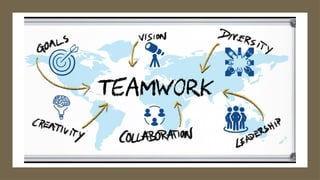
Teamwork
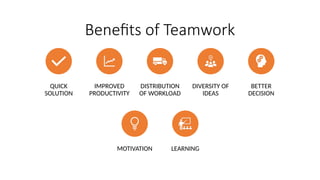
Benefits of Teamwork
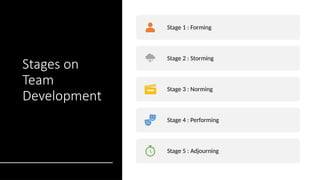
Stages of Team development
Team Characteristics
Communication with Team
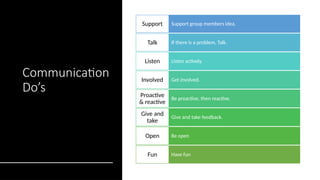
Communication Do’s
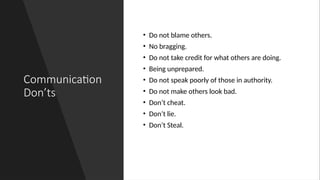
Communication Don’ts
Conclusion
Team
• A group of people
who have give a
commitment to
produce a result
Teamwork
To ability to cooperate
and communicate
effectively with others
to achieve a common
goal
Benefits of Teamwork
QUICK
SOLUTION
IMPROVED
PRODUCTIVITY
DISTRIBUTION
OF WORKLOAD
DIVERSITY OF
IDEAS
BETTER
DECISION
MOTIVATION LEARNING
Stages on
Team
Development
Stage 1 : Forming
Stage 2 : Storming
Stage 3 : Norming
Stage 4 : Performing
Stage 5 : Adjourning
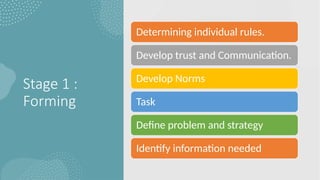
Stage 1 :
Forming
Determining individual rules.
Develop trust and Communication.
Develop Norms
Task
Define problem and strategy
Identify information needed
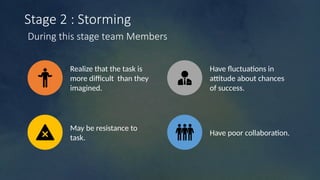
Stage 2 : Storming
During this stage team Members
Realize that the task is
more difficult than they
imagined.
Have fluctuations in
attitude about chances
of success.
May be resistance to
task.
Have poor collaboration.
Stage 3 :
Norming
During this stage team
members accept
• Their Team.
• Team rules and procedure.
• Their roles in the Team.
• The individuality of fellow
members.
• Team Members realize that they
are not going crush and burn and
start helping each other.
Stage 4 : Performing
Team Members have
• Gained insight into personal and
team processes.
• A better understanding of each
other’s strengths and weaknesses
• Gained the ability to prevent or
work through group conflict and
resolve differences.
• Developed a close attachment to
the Team.
• Commitment to shared the goals.
Stage 5 : Adjourning
During this stage
• It is important to achieve closure for the group
on a positive note.
• It is therefore important to recognize the
group members for their accomplishments
and celebrate the group’s overall success.
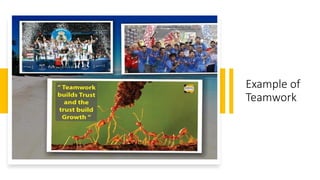
Example of
Teamwork
Team
Characteristics
• Work Effortlessly.
• Trust
• Good Communication.
• Supportive.
• Participation.
• Innovative
• Motivation.
Communication
with Team
When the team doesn’t work, 99
out of 100 times there is a
communication break.
Effective communication is a vital
part of any Team.
To create a successful team,
effective communication methods
are necessary for both Team
members and leaders.
Communication
Do’s
Support group members idea.
Support
If there is a problem, Talk.
Talk
Listen actively.
Listen
Get involved.
Involved
Be proactive, then reactive.
Proactive
& reactive
Give and take feedback.
Give and
take
Be open
Open
Have fun
Fun
Communication
Don’ts
• Do not blame others.
• No bragging.
• Do not take credit for what others are doing.
• Being unprepared.
• Do not speak poorly of those in authority.
• Do not make others look bad.
• Don’t cheat.
• Don’t lie.
• Don’t Steal.
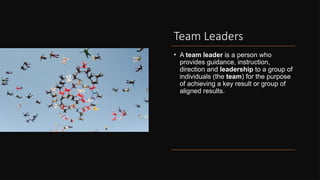
Team Leaders
• A team leader is a person who
provides guidance, instruction,
direction and leadership to a group of
individuals (the team) for the purpose
of achieving a key result or group of
aligned results.
Closing
Thought
“The strength of the team is
each individual member”
“The strength of each
member is the team”
TeamWork and Motivation Training Program

TeamWork and Motivation Training Program

  • 1.
    J A CO B I G R O U P A L L R I G H T S R E S E R V E D
  • 3.
    Objective Team Teamwork Benefits of Teamwork Stagesof Team development Team Characteristics Communication with Team Communication Do’s Communication Don’ts Conclusion
  • 4.
    Team • A groupof people who have give a commitment to produce a result
  • 5.
    Teamwork To ability tocooperate and communicate effectively with others to achieve a common goal
  • 6.
    Benefits of Teamwork QUICK SOLUTION IMPROVED PRODUCTIVITY DISTRIBUTION OFWORKLOAD DIVERSITY OF IDEAS BETTER DECISION MOTIVATION LEARNING
  • 7.
    Stages on Team Development Stage 1: Forming Stage 2 : Storming Stage 3 : Norming Stage 4 : Performing Stage 5 : Adjourning
  • 8.
    Stage 1 : Forming Determiningindividual rules. Develop trust and Communication. Develop Norms Task Define problem and strategy Identify information needed
  • 9.
    Stage 2 :Storming During this stage team Members Realize that the task is more difficult than they imagined. Have fluctuations in attitude about chances of success. May be resistance to task. Have poor collaboration.
  • 10.
    Stage 3 : Norming Duringthis stage team members accept • Their Team. • Team rules and procedure. • Their roles in the Team. • The individuality of fellow members. • Team Members realize that they are not going crush and burn and start helping each other.
  • 11.
    Stage 4 :Performing Team Members have • Gained insight into personal and team processes. • A better understanding of each other’s strengths and weaknesses • Gained the ability to prevent or work through group conflict and resolve differences. • Developed a close attachment to the Team. • Commitment to shared the goals.
  • 12.
    Stage 5 :Adjourning During this stage • It is important to achieve closure for the group on a positive note. • It is therefore important to recognize the group members for their accomplishments and celebrate the group’s overall success.
  • 13.
  • 14.
    Team Characteristics • Work Effortlessly. •Trust • Good Communication. • Supportive. • Participation. • Innovative • Motivation.
  • 15.
    Communication with Team When theteam doesn’t work, 99 out of 100 times there is a communication break. Effective communication is a vital part of any Team. To create a successful team, effective communication methods are necessary for both Team members and leaders.
  • 16.
    Communication Do’s Support group membersidea. Support If there is a problem, Talk. Talk Listen actively. Listen Get involved. Involved Be proactive, then reactive. Proactive & reactive Give and take feedback. Give and take Be open Open Have fun Fun
  • 17.
    Communication Don’ts • Do notblame others. • No bragging. • Do not take credit for what others are doing. • Being unprepared. • Do not speak poorly of those in authority. • Do not make others look bad. • Don’t cheat. • Don’t lie. • Don’t Steal.
  • 18.
    Team Leaders • Ateam leader is a person who provides guidance, instruction, direction and leadership to a group of individuals (the team) for the purpose of achieving a key result or group of aligned results.
  • 19.
    Closing Thought “The strength ofthe team is each individual member” “The strength of each member is the team”