A D E W I J A Y A , M D
N O V E M B E R 2 0 1 9
Sydenham’s Chorea
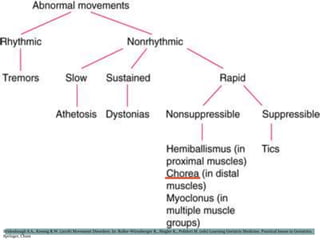
Bridenbaugh S.A., Kressig R.W. (2018) Movement Disorders. In: Roller-Wirnsberger R., Singler K., Polidori M. (eds) Learning Geriatric Medicine. Practical Issues in Geriatrics.
Springer, Cham
Outline:
 Introduction
 Clinical presentation
 Diagnosis
 Pathophysiology
 Treatment
 Summary
Introduction
Most common form of autoimmune chorea
Onset: age 5-15
Female > Male
Usually develops 4–8 weeks after a group A beta-
hemolytic streptococcal (GABHS) pharyngitis
Part of Rheumatic Fever
Resolve in 1-6 months
Punukollu M, Mushet N, Linney M, Hennessy C, Morton M. Neuropsychiatric manifestations of Sydenham’s chorea: a systematic review. Dev Med Child Neurol. 2016;58:16–28.
Clinical Presentation
Generalized chorea
Hemichorea (25 %)
Other neurological symptoms:
motor impersistence, hypometric saccades, reduced muscle tone,
tics, clumsiness, dysarthria, and weakness
Profound hypotonia  chorea paralytica or chorea mollis
Neuropsychiatric symptoms, including obsessive compulsive
behaviors, personality changes, emotional lability, distractibility,
irritability, anxiety, age-regressed behaviors, and anorexia, are
common and frequently predate the appearance of chorea
Punukollu M, Mushet N, Linney M, Hennessy C, Morton M. Neuropsychiatric manifestations of Sydenham’s chorea: a systematic review. Dev Med Child Neurol. 2016;58:16–28.
Diagnosis
Elevated antistreptococcal titers are present in about 15–30%
imaging is usually normal, except for possible acute phase
enlargement of the basal ganglia and increased T2 intensity
in rare cases
Giedd JN, Rapoport JL, Kruesi MJ, et al. Sydenham’s chorea: magnetic resonance imaging of the basal ganglia. Neurology. 1995;45:2199–2202.
Pathophysiology
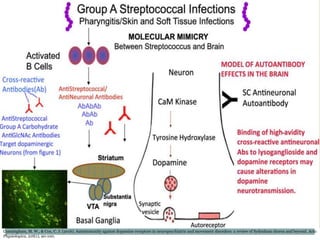
Cunningham, M. W., & Cox, C. J. (2016). Autoimmunity against dopamine receptors in neuropsychiatric and movement disorders: a review of Sydenham chorea and beyond. Acta
Physiologica, 216(1), 90-100.
Treatment
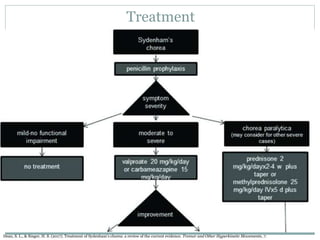
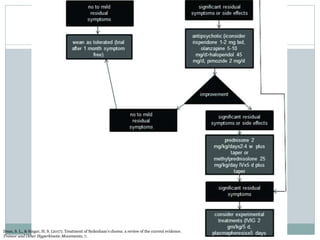
Dean, S. L., & Singer, H. S. (2017). Treatment of Sydenham’s chorea: a review of the current evidence. Tremor and Other Hyperkinetic Movements, 7.
Dean, S. L., & Singer, H. S. (2017). Treatment of Sydenham’s chorea: a review of the current evidence.
Tremor and Other Hyperkinetic Movements, 7.
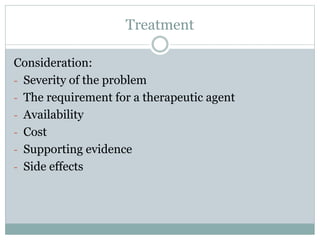
Treatment
Consideration:
- Severity of the problem
- The requirement for a therapeutic agent
- Availability
- Cost
- Supporting evidence
- Side effects
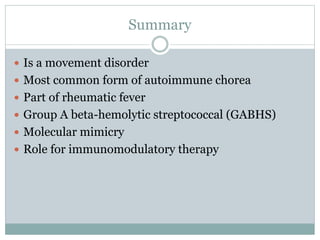
Summary
 Is a movement disorder
 Most common form of autoimmune chorea
 Part of rheumatic fever
 Group A beta-hemolytic streptococcal (GABHS)
 Molecular mimicry
 Role for immunomodulatory therapy
THANK YOU

Sydenham Chorea

  • 1.
    A D EW I J A Y A , M D N O V E M B E R 2 0 1 9 Sydenham’s Chorea
  • 2.
    Bridenbaugh S.A., KressigR.W. (2018) Movement Disorders. In: Roller-Wirnsberger R., Singler K., Polidori M. (eds) Learning Geriatric Medicine. Practical Issues in Geriatrics. Springer, Cham
  • 3.
    Outline:  Introduction  Clinicalpresentation  Diagnosis  Pathophysiology  Treatment  Summary
  • 4.
    Introduction Most common formof autoimmune chorea Onset: age 5-15 Female > Male Usually develops 4–8 weeks after a group A beta- hemolytic streptococcal (GABHS) pharyngitis Part of Rheumatic Fever Resolve in 1-6 months Punukollu M, Mushet N, Linney M, Hennessy C, Morton M. Neuropsychiatric manifestations of Sydenham’s chorea: a systematic review. Dev Med Child Neurol. 2016;58:16–28.
  • 5.
    Clinical Presentation Generalized chorea Hemichorea(25 %) Other neurological symptoms: motor impersistence, hypometric saccades, reduced muscle tone, tics, clumsiness, dysarthria, and weakness Profound hypotonia  chorea paralytica or chorea mollis Neuropsychiatric symptoms, including obsessive compulsive behaviors, personality changes, emotional lability, distractibility, irritability, anxiety, age-regressed behaviors, and anorexia, are common and frequently predate the appearance of chorea Punukollu M, Mushet N, Linney M, Hennessy C, Morton M. Neuropsychiatric manifestations of Sydenham’s chorea: a systematic review. Dev Med Child Neurol. 2016;58:16–28.
  • 6.
    Diagnosis Elevated antistreptococcal titersare present in about 15–30% imaging is usually normal, except for possible acute phase enlargement of the basal ganglia and increased T2 intensity in rare cases Giedd JN, Rapoport JL, Kruesi MJ, et al. Sydenham’s chorea: magnetic resonance imaging of the basal ganglia. Neurology. 1995;45:2199–2202.
  • 7.
    Pathophysiology Cunningham, M. W.,& Cox, C. J. (2016). Autoimmunity against dopamine receptors in neuropsychiatric and movement disorders: a review of Sydenham chorea and beyond. Acta Physiologica, 216(1), 90-100.
  • 8.
    Treatment Dean, S. L.,& Singer, H. S. (2017). Treatment of Sydenham’s chorea: a review of the current evidence. Tremor and Other Hyperkinetic Movements, 7.
  • 9.
    Dean, S. L.,& Singer, H. S. (2017). Treatment of Sydenham’s chorea: a review of the current evidence. Tremor and Other Hyperkinetic Movements, 7.
  • 10.
    Treatment Consideration: - Severity ofthe problem - The requirement for a therapeutic agent - Availability - Cost - Supporting evidence - Side effects
  • 11.
    Summary  Is amovement disorder  Most common form of autoimmune chorea  Part of rheumatic fever  Group A beta-hemolytic streptococcal (GABHS)  Molecular mimicry  Role for immunomodulatory therapy
  • 12.