TARGET DISCOVERY AND
VALIDATION: ROLE OF
PROTEOMICS
Shivanshu Bajaj
M.Pharm(Pharmacology) 2nd Sem
SPER , Jamia Hamdard
Contents –
1. Target identification
2. Target validation
3. Proteomics introduction
4. Current approaches in targeted
proteomics
5. Proteomic technology
Target Identification
Identifying a biological target that is ‘druggable’ – a
target is termed ‘druggable’ if its activity (behavior or
function) can be modulated by a therapeutic – whether it
be a small molecule drug, or biologic. Proteins and
nucleic acids are both examples of biological targets.
Properties of a promising drug target
1. The target has a confirmed role in the pathophysiology
of a disease and/or is disease-modifying.
2. Target expression is not evenly distributed throughout
the body.
3. The target’s 3D-structure is available to assess
druggability.
4. The target is easily ‘assayable’ enabling high-throughput
screening
5. The target possesses a promising toxicity profile,
potential adverse effects can be predicted using
Target Deconvolution vs Target Discovery
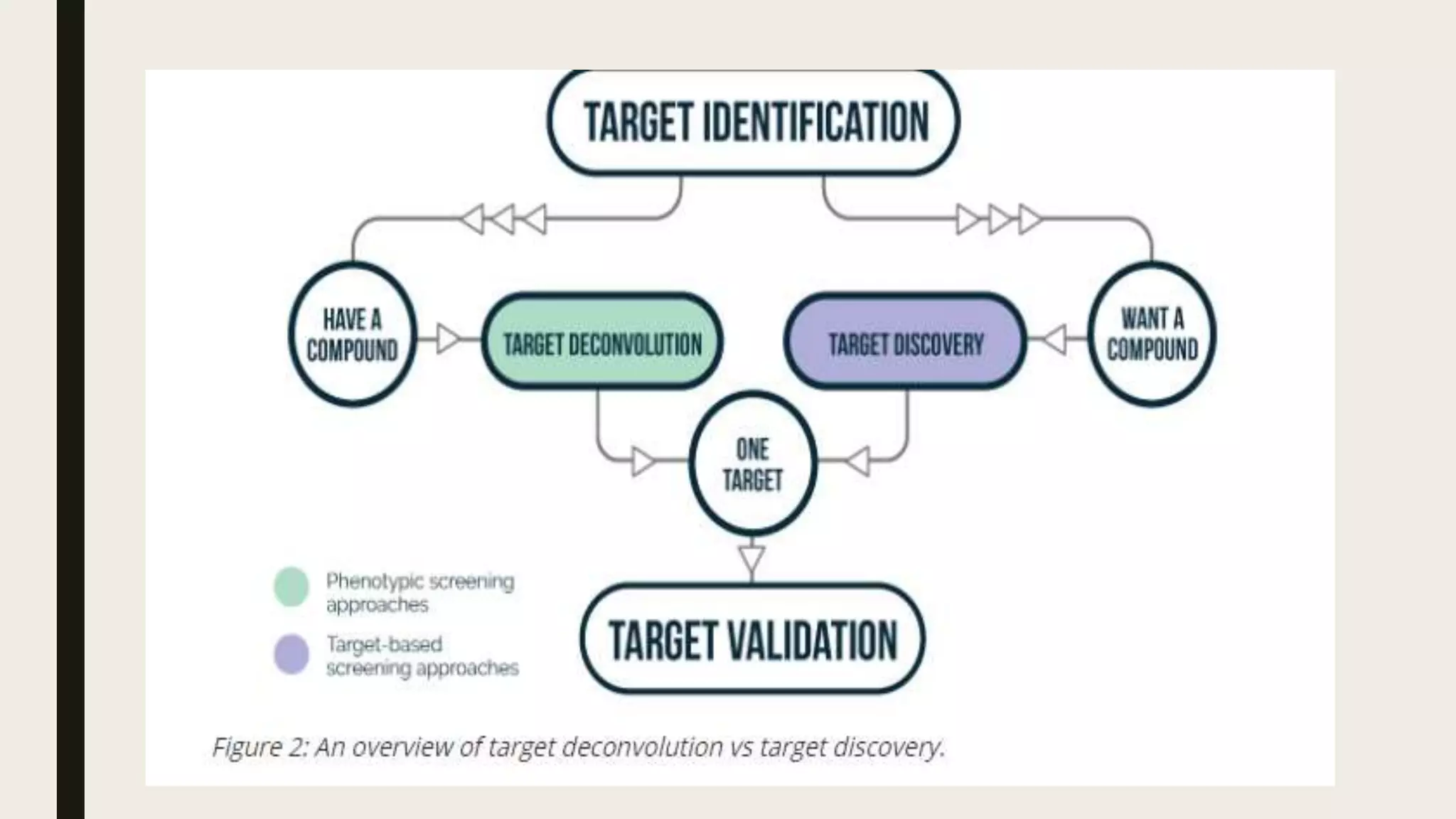
The phenotypic approach to drug discovery falls within the reality of target
deconvolution, and involves exposing cells, isolated tissues, or animal
models, to small molecules to determine whether a specific candidate
molecule exerts the desired effect – which is observed by a change in
phenotype. While numerous animal models can be used for the
characterization of small molecules and small-scale drug screening
approaches, use of mammalian cells is often favored due to their
compatibility with high-throughput screening (HTS) and greater physiological
relevance.
The phenotypic approach goes beyond individual proteins or nucleic acids
and involves the study of entire signaling pathways. The drug’s effect is
determined before the specific biological (drug) target that underlies the
observed phenotypic response is identified.
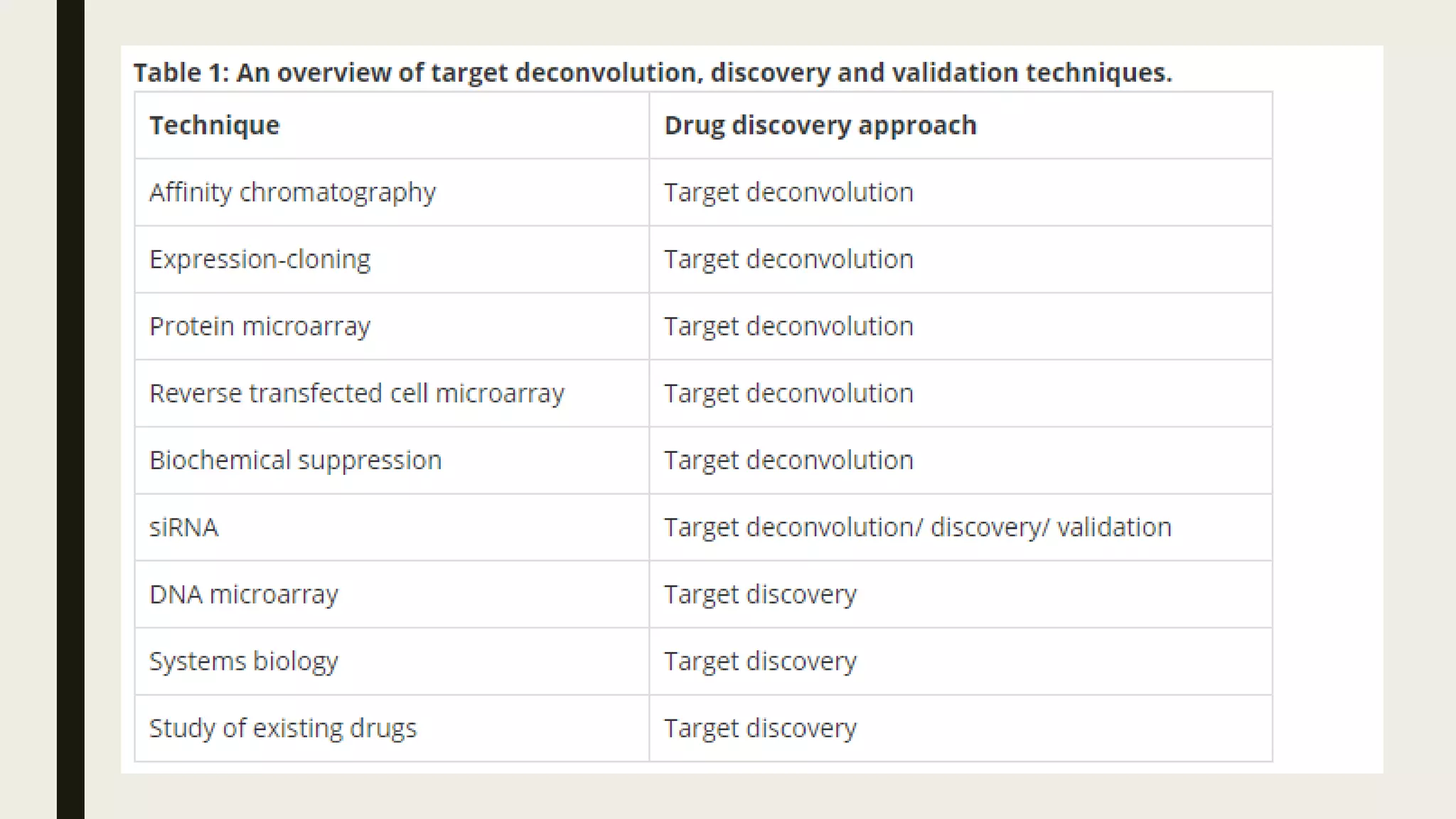
Target deconvolution
Target deconvolution can be achieved by numerous methods including;
affinity chromatography, expression-cloning, protein microarray, ‘reverse
transfected’ cell microarray, and biochemical suppression.
Target discovery
In target-based drug discovery, biological (drug) targets are already
established (or ‘discovered’) before lead discovery starts – hence target
discovery is the cornerstone of target-based screening. The target’s role in
a disease process is known, this target is then used to create relevant
systems-based assays, and vast compound libraries are screened in
search of a ‘hit’ – a candidate drug.
Validating Drug Targets
Target validation is the process of demonstrating
the functional role of the identified target in the
disease phenotype. While the validation of a
drug’s efficacy and toxicity in numerous disease-
relevant cell models and animal models is
extremely valuable – the ultimate test is whether
the drug works in a clinical setting
Target validation can be broken down in to two key
steps.
Reproducibility. Once a drug target is identified, whether it be via a
specific technique or from review of literature, the first step is to repeat the
experiment to confirm that it can be successfully reproduced.
Introduce variation to the ligand (drug)-target-environment.
- It should be possible to modulate the drug’s affinity to the target by
modulating the activity of the drug molecule.
- Varying the cell or tissue type, should or should not, alter the drug’s
effect.
- Introducing mutations in to the binding domain of the protein target
should result in either modulation or loss of activity of the ligand (drug).
Proteomics
• Proteomics, defined as the ‘‘global analysis of changes in the
quantities, and post-translational modifications, of all proteins in
cells’’ involves the full complement of proteins expressed by a
genome
• Proteomes are extremely complex with component proteins
undergoing extensive post-translational modification
• Only a fraction of the putative drug targets thought to be present
in the genome have been identified to date. This, together with a
paucity of new drug approvals over the past decade has placed a
high premium on target identification with proteomics-based
approaches having the potential to both identify and validate
disease-related target proteins
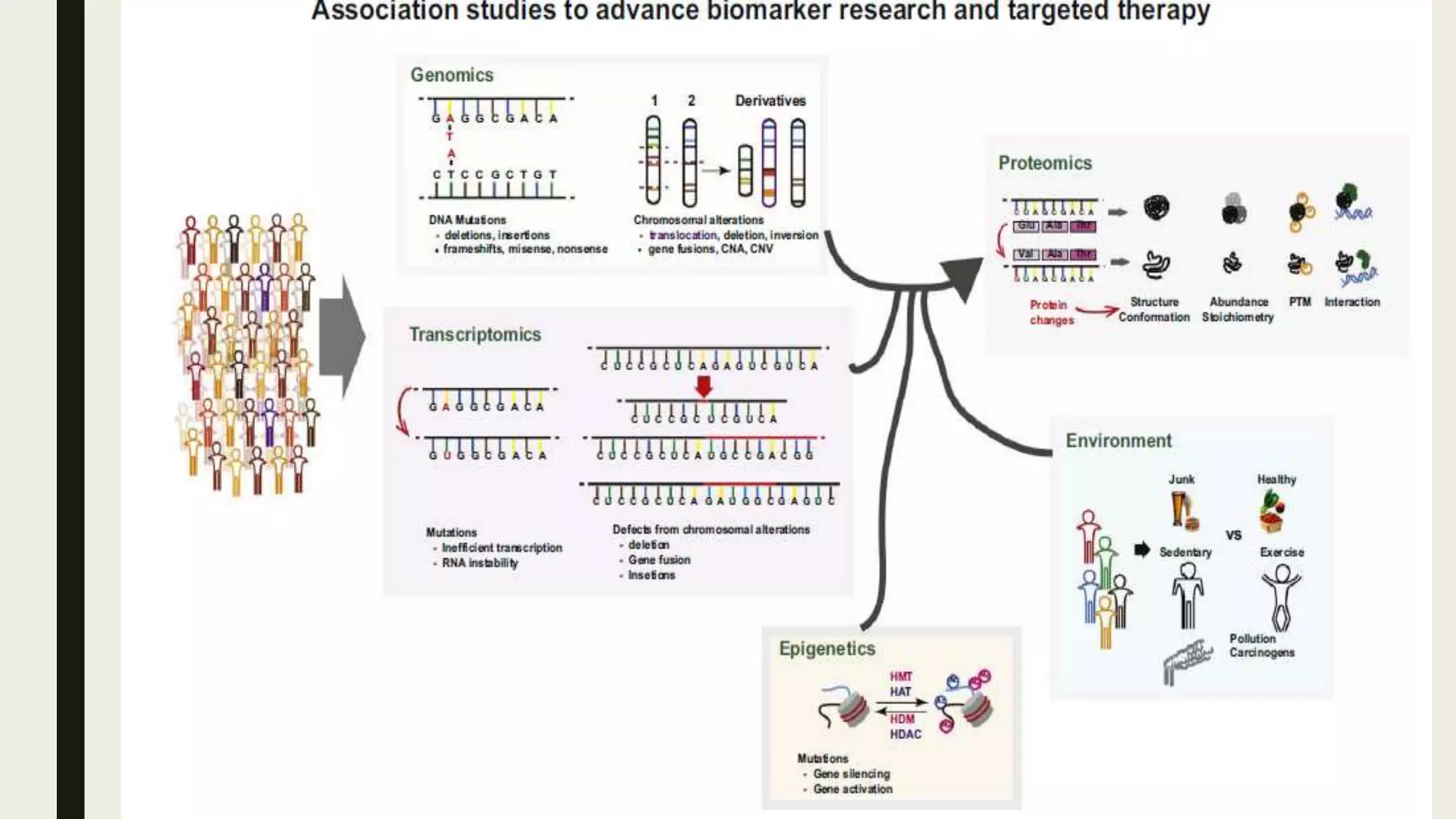
• Understanding disease biology is centered on
investigating the links between DNA, RNA, proteins,
and ultimately between the molecular makeup and
disease phenotypes.
• The central dogma of biology defines how the coding
sequence of a gene determines its mRNA product,
and how an mRNA sequence further defines the
amino acid arrangement of the resulting polypeptides
of a protein.
• Protein function is representative of active biological
processes, and the proteome describes the complete
protein make-up of a cell in a defined condition
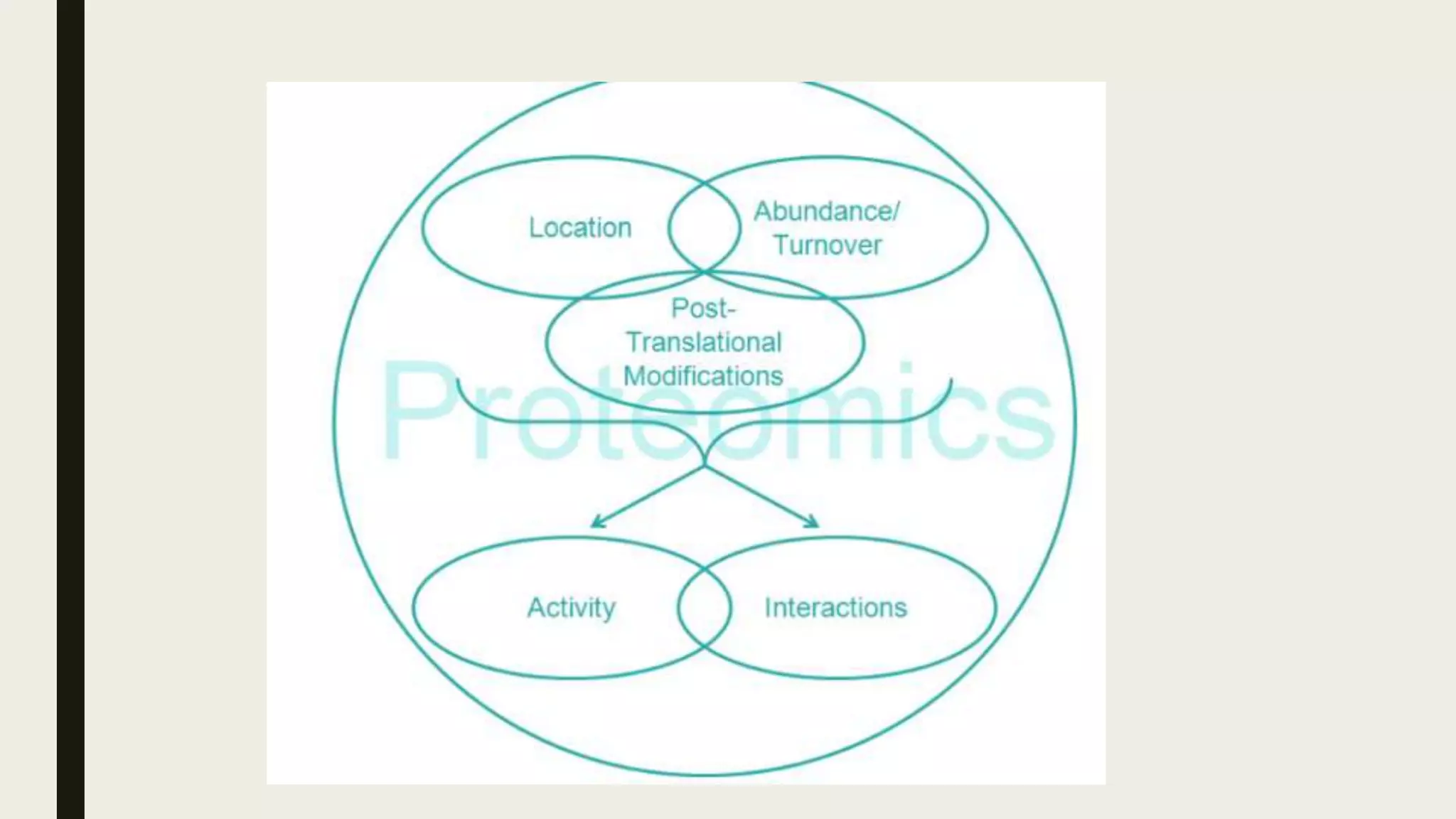
Proteomics is used to investigate
• when and where proteins are expressed;
• rates of protein production, degradation, and steady-
state abundance;
• how proteins are modified (for example, post-
translational modifications (PTMs) such as
phosphorylation);
• the movement of proteins betweeen subcellular
compartment
• the involvement of proteins in metabolic pathways;
• how proteins interact with one another.
Proteomics can provide significant
biological information for many biological
problems, such as:
• proteins interact with a particular protein of
interest (for example, the tumour suppressor
protein p53)
• proteins are localised to a subcellular
compartment (for example, the
mitochondrion)
• proteins are involved in a biological process
(for example, circadian rhythm)
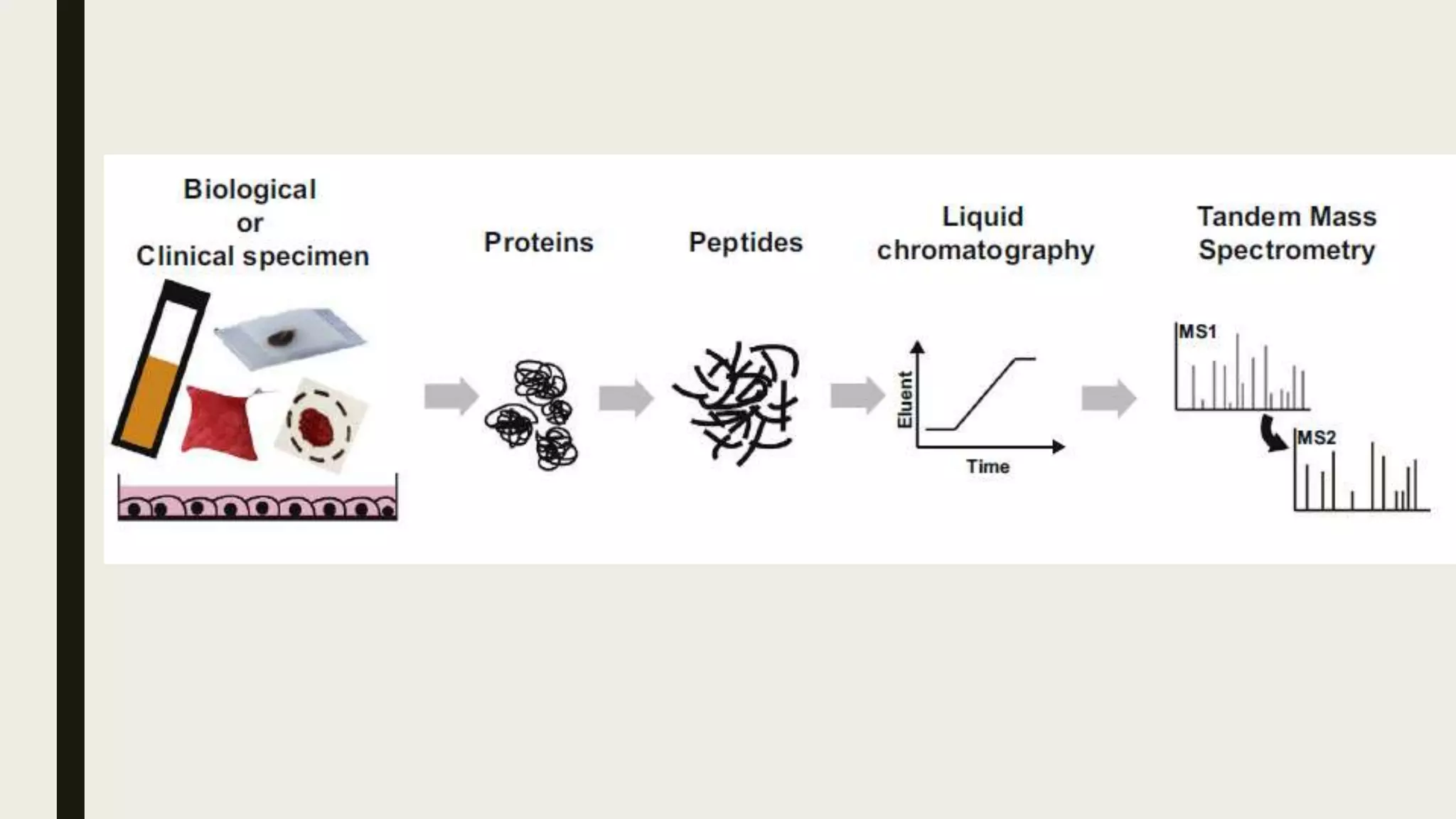
Current approaches in targeted proteomics
Most advanced proteomics methods utilize the well-
established bottom-up proteomic workflow, in which
proteins are extracted and digested to peptides by
sequence-specific enzymes.
• Peptides are separated by reverse-phase
chromatography, ionized and channeled to a mass
spectrometer for analysis
Relevance of proteomics and the proteotype-
• In translational research, protein biomarkers are usually defined as
proteins that steadily alter their abundance in parallel with the disease
phenotype of interest. These potential biomarkers are selected based
on discovery studies in large sample cohorts, or by using data-driven
methodologies to link protein abundance patterns with disease
conditions.
• The proteome is a complex, dynamic entity. Proteomics has among
others, contributed to establish the fact that different cellular systems
contain highly similar proteomes, and it is highly unlikely to find
proteins expressed exclusively in a particular cell type .It has also
highlighted the importance of investigating proteins in the context of
active organized modules and not as independent entities.
Protein structure/conformation-
• The abundance of different members of a complex correlate more with
each other than with matching transcript levels, suggesting that other
regulatory processes such as translation rate and protein degradation
rates also contribute to the ensuing protein complex stoichiometries.
• Pronounced structural shifts occur in proteins upon interaction with
other molecules, mutations, or environmental changes.
• For example, specific regions/segments of intrinsically disordered
proteins lack folded structures in the absence of binding partners and
these regions can be converted into ordered structures upon binding to
partner proteins or ligands
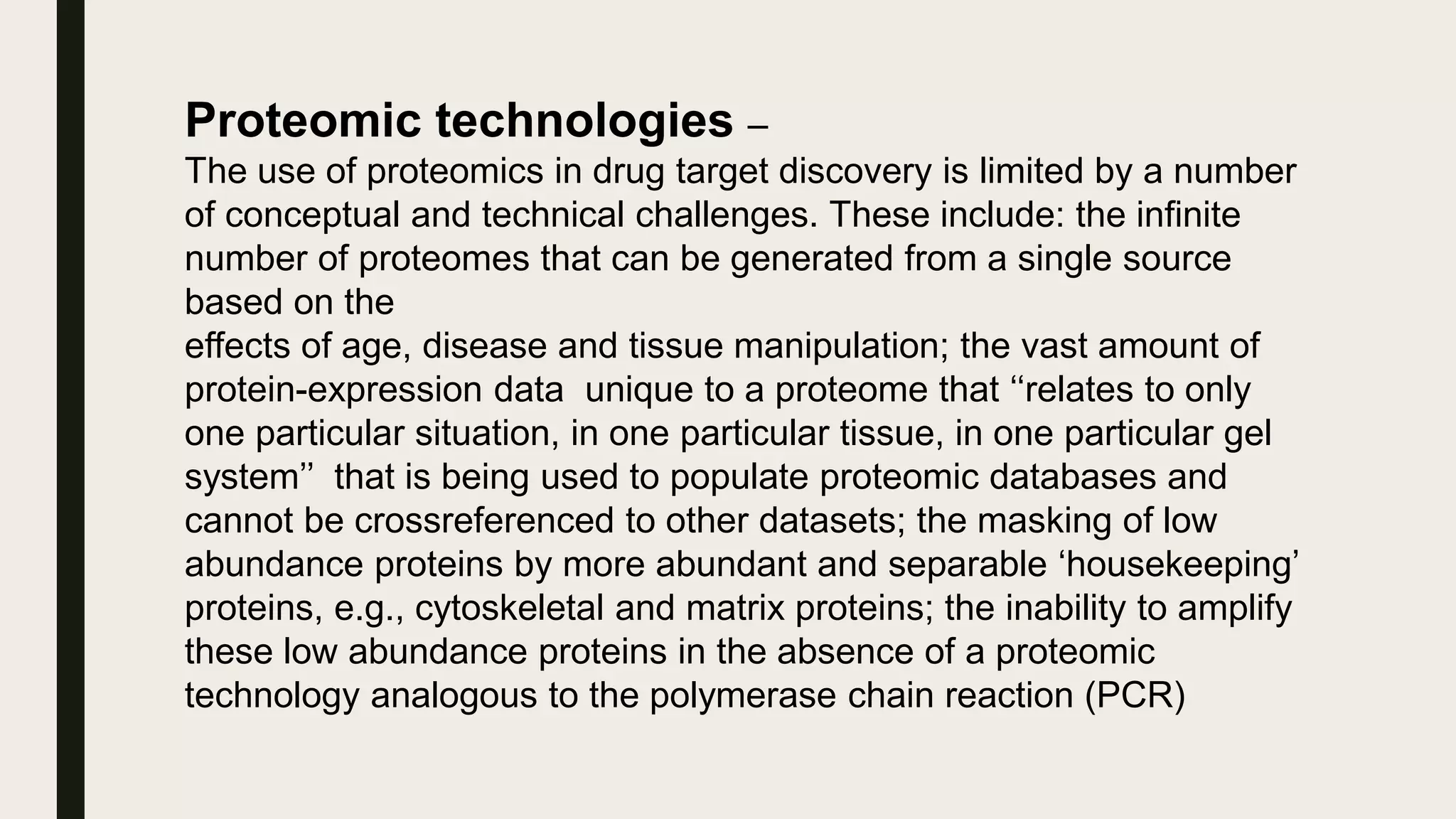
Proteomic technologies –
The use of proteomics in drug target discovery is limited by a number
of conceptual and technical challenges. These include: the infinite
number of proteomes that can be generated from a single source
based on the
effects of age, disease and tissue manipulation; the vast amount of
protein-expression data unique to a proteome that ‘‘relates to only
one particular situation, in one particular tissue, in one particular gel
system’’ that is being used to populate proteomic databases and
cannot be crossreferenced to other datasets; the masking of low
abundance proteins by more abundant and separable ‘housekeeping’
proteins, e.g., cytoskeletal and matrix proteins; the inability to amplify
these low abundance proteins in the absence of a proteomic
technology analogous to the polymerase chain reaction (PCR)
Proteomic technology –
Various steps involved in proteomic technology is
1. Protein array prioritization
2. Hydrophobic transmembrane receptors
3. Sample complexity
4. Chemical proteomics
5. Technical challenges and developments
i. Replication
ii. Data integration
iii. Target validation
Protein array prioritization –
The ability to identify novel disease-related proteins, when these
represent only a minor part of a proteome or when they are not well
characterized, makes it difficult to prioritize proteins for further
investigation. Thus, proteins whose biology and function are, to
some degree under-stood, e.g., recognizable motifs, tend to be
prioritized for analysis while those lacking in detail end up at the
bottom of the list until additional information becomes available
Example - An increase in the isoforms of protein 14-3-3 in
Alzheimer’s disease and Down syndrome led to the suggestion that
this protein may play a role in neurodegenerative disease pathology
Hydrophobic transmembrane receptors –
Both G-protein coupled (GPCRs) and ion channels, are
the targets through which 70% of currently available
drugs act, issues with sample preparation and
purification results in these proteins being
underrepresented in many proteome arrays
Sample complexity –
To address the challenges present by the multitude of proteins
present in a proteome and of isolating membrane proteins, smaller
scale ‘‘subproteomes’’ are obtained by subcellular fractionation,
affinity labeling and chromatography of the parent proteome and also
by using chemical proteomics . Combinations of classical and newer
purification procedures can reduce sample complexity, allowing the
visualization of lower abundance, yet potentially important, proteins
Example - Chloroform/methanol increased the identification of highly
hydrophobic proteins isolated from chloroplast membranes while at
the same time excluding hydrophilic proteins
Chemical proteomics-
This is a technique that uses small, drug-like molecules
either tethered to a resin or exposed to protein
chips . Proteins binding the ligand are then viewed as
potential drug targets
Technical challenges and developments-
As the technologies applied to proteome analysis evolve, there are
tactical aspects of proteome experimentation that need to be
addressed to enhance progress.
This process addresses several aspects of the proteome experiment:
(i) replication; (ii) data integration; and (iii) target validation
In proteomics, because of: (a) technology limitations (despite some of
the advances outlined above);
(b) the dynamic nature of a proteome and;
(c) the complexity of the initial sample, it is often very difficult to
replicate data from a single proteome sample, let alone from a repeat
experiment in the same laboratory
Target discovery and Validation - Role of proteomics

Target discovery and Validation - Role of proteomics

  • 1.
    TARGET DISCOVERY AND VALIDATION:ROLE OF PROTEOMICS Shivanshu Bajaj M.Pharm(Pharmacology) 2nd Sem SPER , Jamia Hamdard
  • 2.
    Contents – 1. Targetidentification 2. Target validation 3. Proteomics introduction 4. Current approaches in targeted proteomics 5. Proteomic technology
  • 3.
    Target Identification Identifying abiological target that is ‘druggable’ – a target is termed ‘druggable’ if its activity (behavior or function) can be modulated by a therapeutic – whether it be a small molecule drug, or biologic. Proteins and nucleic acids are both examples of biological targets.
  • 4.
    Properties of apromising drug target 1. The target has a confirmed role in the pathophysiology of a disease and/or is disease-modifying. 2. Target expression is not evenly distributed throughout the body. 3. The target’s 3D-structure is available to assess druggability. 4. The target is easily ‘assayable’ enabling high-throughput screening 5. The target possesses a promising toxicity profile, potential adverse effects can be predicted using
  • 7.
    Target Deconvolution vsTarget Discovery The phenotypic approach to drug discovery falls within the reality of target deconvolution, and involves exposing cells, isolated tissues, or animal models, to small molecules to determine whether a specific candidate molecule exerts the desired effect – which is observed by a change in phenotype. While numerous animal models can be used for the characterization of small molecules and small-scale drug screening approaches, use of mammalian cells is often favored due to their compatibility with high-throughput screening (HTS) and greater physiological relevance. The phenotypic approach goes beyond individual proteins or nucleic acids and involves the study of entire signaling pathways. The drug’s effect is determined before the specific biological (drug) target that underlies the observed phenotypic response is identified.
  • 8.
    Target deconvolution Target deconvolutioncan be achieved by numerous methods including; affinity chromatography, expression-cloning, protein microarray, ‘reverse transfected’ cell microarray, and biochemical suppression. Target discovery In target-based drug discovery, biological (drug) targets are already established (or ‘discovered’) before lead discovery starts – hence target discovery is the cornerstone of target-based screening. The target’s role in a disease process is known, this target is then used to create relevant systems-based assays, and vast compound libraries are screened in search of a ‘hit’ – a candidate drug.
  • 10.
    Validating Drug Targets Targetvalidation is the process of demonstrating the functional role of the identified target in the disease phenotype. While the validation of a drug’s efficacy and toxicity in numerous disease- relevant cell models and animal models is extremely valuable – the ultimate test is whether the drug works in a clinical setting
  • 11.
    Target validation canbe broken down in to two key steps. Reproducibility. Once a drug target is identified, whether it be via a specific technique or from review of literature, the first step is to repeat the experiment to confirm that it can be successfully reproduced. Introduce variation to the ligand (drug)-target-environment. - It should be possible to modulate the drug’s affinity to the target by modulating the activity of the drug molecule. - Varying the cell or tissue type, should or should not, alter the drug’s effect. - Introducing mutations in to the binding domain of the protein target should result in either modulation or loss of activity of the ligand (drug).
  • 12.
  • 13.
    • Proteomics, definedas the ‘‘global analysis of changes in the quantities, and post-translational modifications, of all proteins in cells’’ involves the full complement of proteins expressed by a genome • Proteomes are extremely complex with component proteins undergoing extensive post-translational modification • Only a fraction of the putative drug targets thought to be present in the genome have been identified to date. This, together with a paucity of new drug approvals over the past decade has placed a high premium on target identification with proteomics-based approaches having the potential to both identify and validate disease-related target proteins
  • 14.
    • Understanding diseasebiology is centered on investigating the links between DNA, RNA, proteins, and ultimately between the molecular makeup and disease phenotypes. • The central dogma of biology defines how the coding sequence of a gene determines its mRNA product, and how an mRNA sequence further defines the amino acid arrangement of the resulting polypeptides of a protein. • Protein function is representative of active biological processes, and the proteome describes the complete protein make-up of a cell in a defined condition
  • 15.
    Proteomics is usedto investigate • when and where proteins are expressed; • rates of protein production, degradation, and steady- state abundance; • how proteins are modified (for example, post- translational modifications (PTMs) such as phosphorylation); • the movement of proteins betweeen subcellular compartment • the involvement of proteins in metabolic pathways; • how proteins interact with one another.
  • 17.
    Proteomics can providesignificant biological information for many biological problems, such as: • proteins interact with a particular protein of interest (for example, the tumour suppressor protein p53) • proteins are localised to a subcellular compartment (for example, the mitochondrion) • proteins are involved in a biological process (for example, circadian rhythm)
  • 18.
    Current approaches intargeted proteomics Most advanced proteomics methods utilize the well- established bottom-up proteomic workflow, in which proteins are extracted and digested to peptides by sequence-specific enzymes. • Peptides are separated by reverse-phase chromatography, ionized and channeled to a mass spectrometer for analysis
  • 20.
    Relevance of proteomicsand the proteotype- • In translational research, protein biomarkers are usually defined as proteins that steadily alter their abundance in parallel with the disease phenotype of interest. These potential biomarkers are selected based on discovery studies in large sample cohorts, or by using data-driven methodologies to link protein abundance patterns with disease conditions. • The proteome is a complex, dynamic entity. Proteomics has among others, contributed to establish the fact that different cellular systems contain highly similar proteomes, and it is highly unlikely to find proteins expressed exclusively in a particular cell type .It has also highlighted the importance of investigating proteins in the context of active organized modules and not as independent entities.
  • 21.
    Protein structure/conformation- • Theabundance of different members of a complex correlate more with each other than with matching transcript levels, suggesting that other regulatory processes such as translation rate and protein degradation rates also contribute to the ensuing protein complex stoichiometries. • Pronounced structural shifts occur in proteins upon interaction with other molecules, mutations, or environmental changes. • For example, specific regions/segments of intrinsically disordered proteins lack folded structures in the absence of binding partners and these regions can be converted into ordered structures upon binding to partner proteins or ligands
  • 23.
    Proteomic technologies – Theuse of proteomics in drug target discovery is limited by a number of conceptual and technical challenges. These include: the infinite number of proteomes that can be generated from a single source based on the effects of age, disease and tissue manipulation; the vast amount of protein-expression data unique to a proteome that ‘‘relates to only one particular situation, in one particular tissue, in one particular gel system’’ that is being used to populate proteomic databases and cannot be crossreferenced to other datasets; the masking of low abundance proteins by more abundant and separable ‘housekeeping’ proteins, e.g., cytoskeletal and matrix proteins; the inability to amplify these low abundance proteins in the absence of a proteomic technology analogous to the polymerase chain reaction (PCR)
  • 24.
    Proteomic technology – Varioussteps involved in proteomic technology is 1. Protein array prioritization 2. Hydrophobic transmembrane receptors 3. Sample complexity 4. Chemical proteomics 5. Technical challenges and developments i. Replication ii. Data integration iii. Target validation
  • 25.
    Protein array prioritization– The ability to identify novel disease-related proteins, when these represent only a minor part of a proteome or when they are not well characterized, makes it difficult to prioritize proteins for further investigation. Thus, proteins whose biology and function are, to some degree under-stood, e.g., recognizable motifs, tend to be prioritized for analysis while those lacking in detail end up at the bottom of the list until additional information becomes available Example - An increase in the isoforms of protein 14-3-3 in Alzheimer’s disease and Down syndrome led to the suggestion that this protein may play a role in neurodegenerative disease pathology
  • 26.
    Hydrophobic transmembrane receptors– Both G-protein coupled (GPCRs) and ion channels, are the targets through which 70% of currently available drugs act, issues with sample preparation and purification results in these proteins being underrepresented in many proteome arrays
  • 27.
    Sample complexity – Toaddress the challenges present by the multitude of proteins present in a proteome and of isolating membrane proteins, smaller scale ‘‘subproteomes’’ are obtained by subcellular fractionation, affinity labeling and chromatography of the parent proteome and also by using chemical proteomics . Combinations of classical and newer purification procedures can reduce sample complexity, allowing the visualization of lower abundance, yet potentially important, proteins Example - Chloroform/methanol increased the identification of highly hydrophobic proteins isolated from chloroplast membranes while at the same time excluding hydrophilic proteins
  • 28.
    Chemical proteomics- This isa technique that uses small, drug-like molecules either tethered to a resin or exposed to protein chips . Proteins binding the ligand are then viewed as potential drug targets
  • 29.
    Technical challenges anddevelopments- As the technologies applied to proteome analysis evolve, there are tactical aspects of proteome experimentation that need to be addressed to enhance progress. This process addresses several aspects of the proteome experiment: (i) replication; (ii) data integration; and (iii) target validation In proteomics, because of: (a) technology limitations (despite some of the advances outlined above); (b) the dynamic nature of a proteome and; (c) the complexity of the initial sample, it is often very difficult to replicate data from a single proteome sample, let alone from a repeat experiment in the same laboratory