Presented by AYUSH ROY
M.PHARM, 2nd Semester Pharmacology
(2023-25)
Combinatorial Chemistry and High Throughput
Screening in Lead Identification
SCHOOL OF PHARMACEUTICAL SCIENCES
GIRIJANANDA CHOWDHURY UNIVERSITY
CONTENT
1. Lead identification
2. Combinatorial Chemistry
3. High Throughput Screening
INTRODUCTION TO LEAD IDENTIFICATION
➢ Lead identification in drug discovery is the process of identifying chemical compounds or
molecules or lead that exhibit potential pharmacological activity against a specific target or
disease.
➢ These compounds are called "leads" because they lead the way in drug discovery.
➢ The lead compound is the first foothold in the drug discovery ladder.
➢ Leads are sometimes developed as collections, or libraries, of individual molecules that
possess properties needed in a new drug.
METHODS OF LEAD IDENTIFICATION
I. Combinatorial chemistry
II. High throughput screening (HTS)
III. Assay development for Hit identification
IV. In silico lead discovery techniques
COMBINATORIAL CHEMISTRY
➢Combinatorial chemistry is a technique by which large numbers of different but
structurally similar molecules are produced rapidly and submitted for
pharmacological assay.
➢It was discovered in the early 1980s.
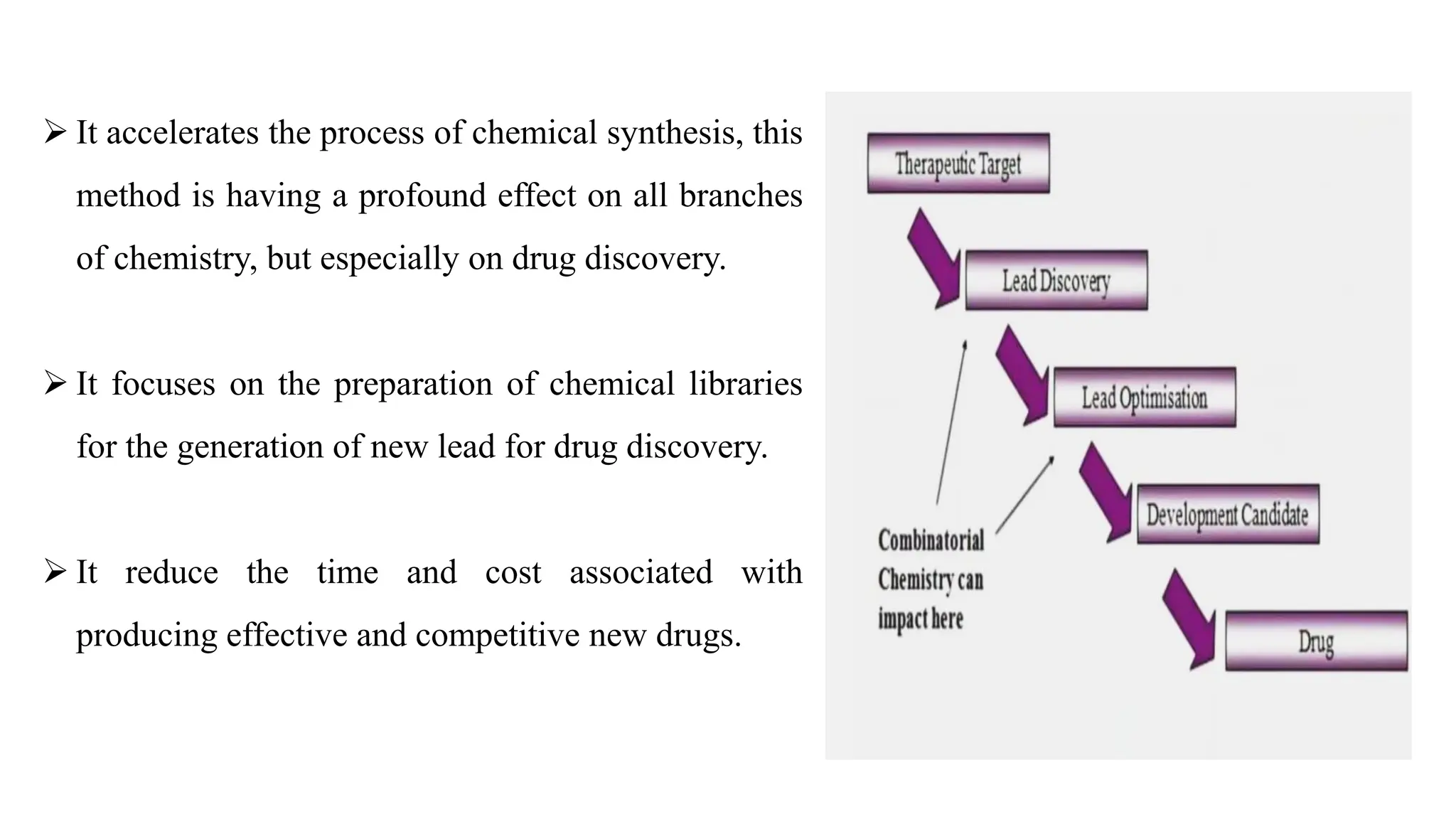
➢ It accelerates the process of chemical synthesis, this
method is having a profound effect on all branches
of chemistry, but especially on drug discovery.
➢ It focuses on the preparation of chemical libraries
for the generation of new lead for drug discovery.
➢ It reduce the time and cost associated with
producing effective and competitive new drugs.
PRINCIPLE
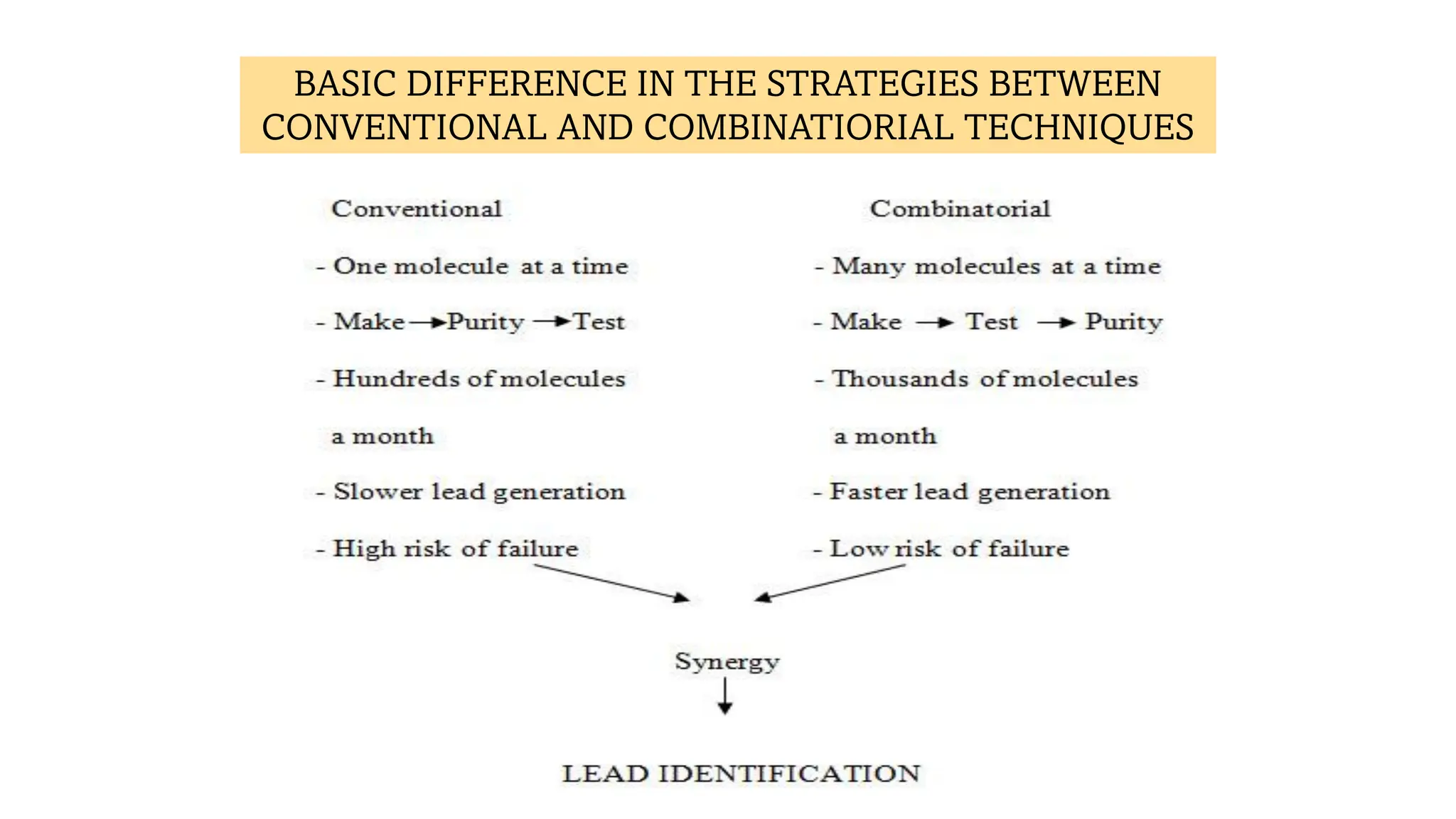
The basic principle of combinatorial chemistry is synthesizing large number of different
compounds at the same time instead of synthesizing compounds in a conventional/classical one at
a time manner and then to identify the most promising compound for further development.
COMBINATORIAL CHEMISTRY
BASIC DIFFERENCE IN THE STRATEGIES BETWEEN
CONVENTIONAL AND COMBINATIORIAL TECHNIQUES
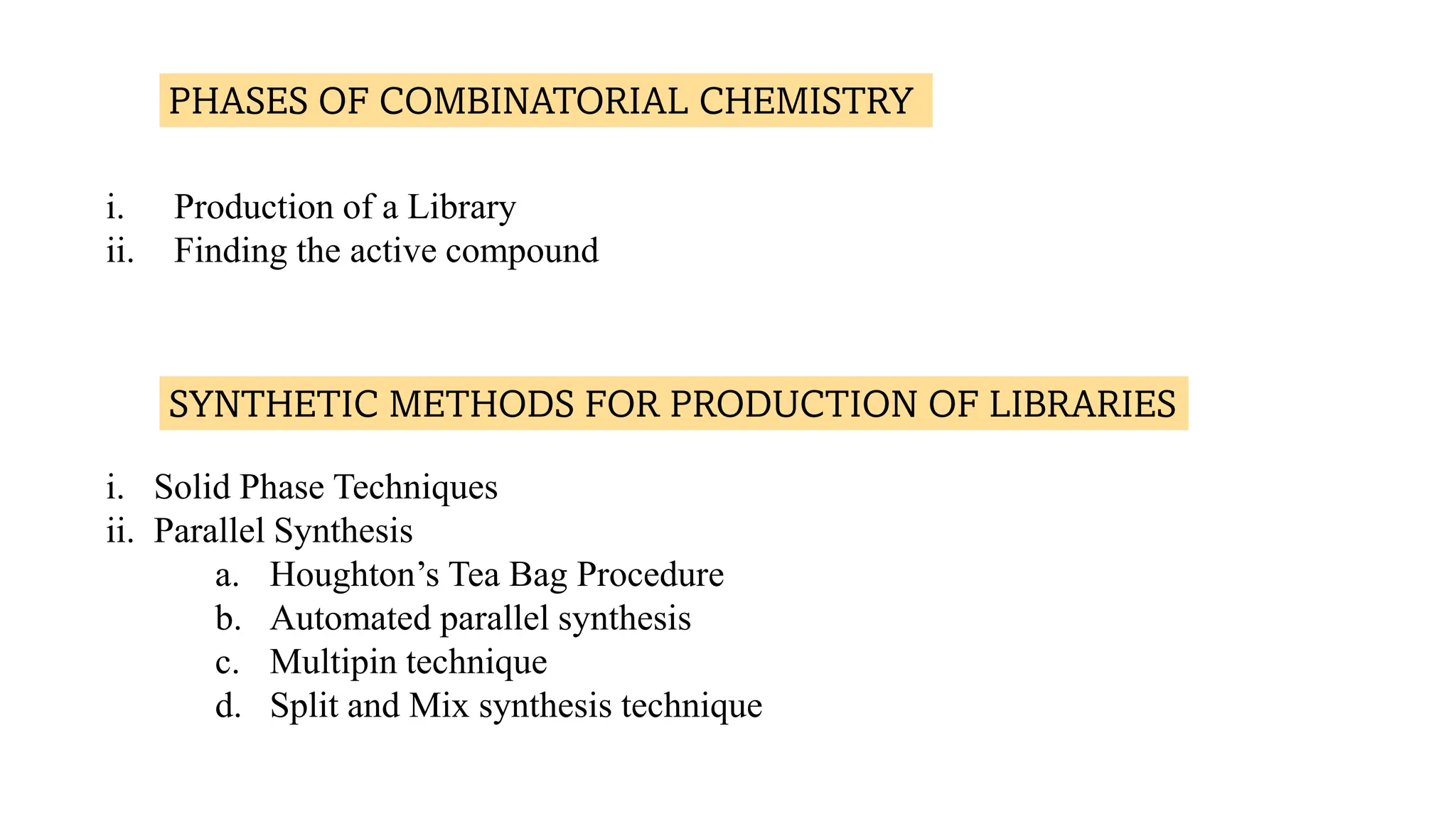
PHASES OF COMBINATORIAL CHEMISTRY
i. Production of a Library
ii. Finding the active compound
SYNTHETIC METHODS FOR PRODUCTION OF LIBRARIES
i. Solid Phase Techniques
ii. Parallel Synthesis
a. Houghton’s Tea Bag Procedure
b. Automated parallel synthesis
c. Multipin technique
d. Split and Mix synthesis technique
i. SOLID PHASE TECHNIQUES
➢ Reactants(functional group) are bound to a polymeric surface and modified whilst still
attached.
➢ Final product is released at the end of the synthesis.
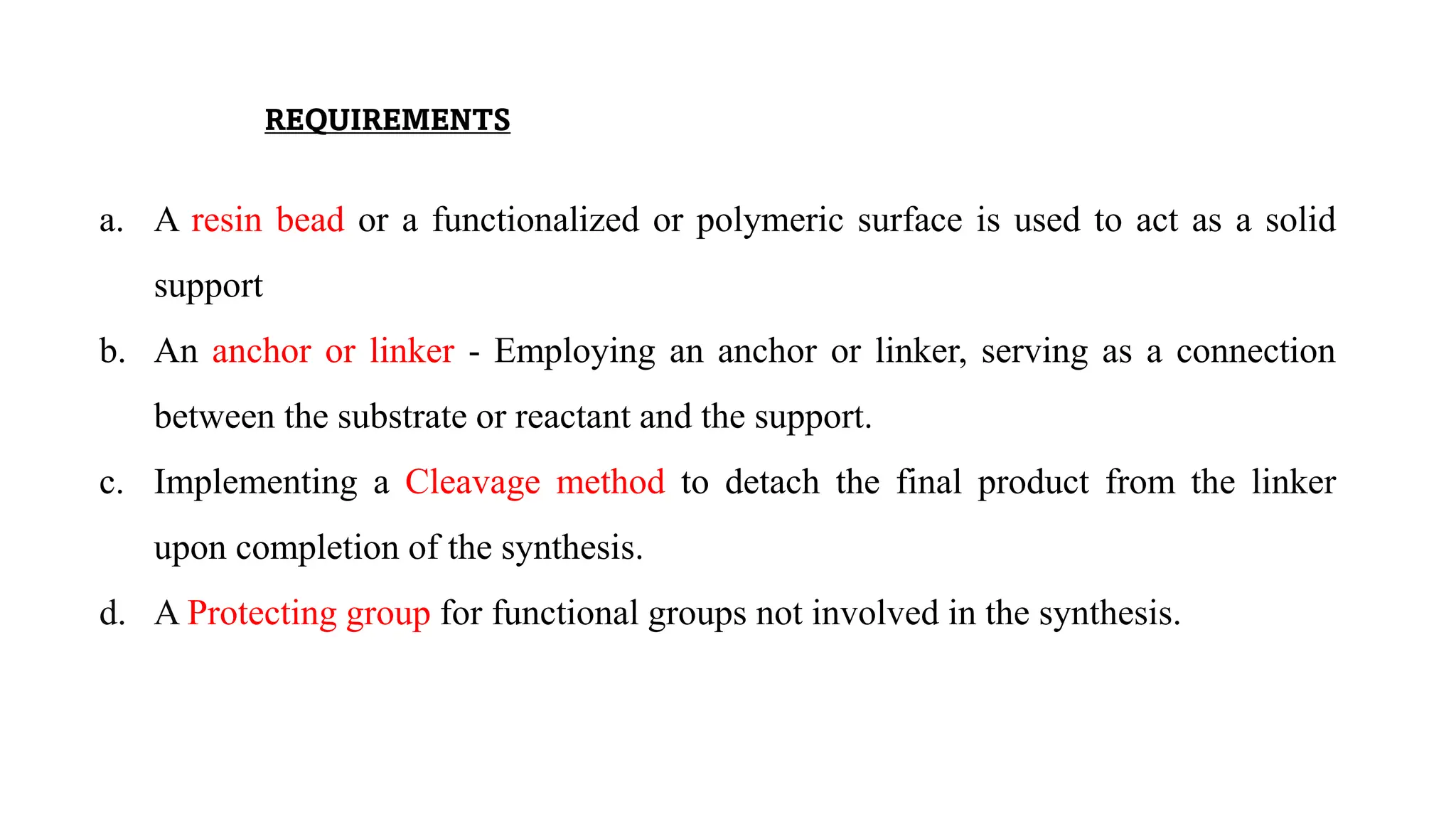
REQUIREMENTS
a. A resin bead or a functionalized or polymeric surface is used to act as a solid
support
b. An anchor or linker - Employing an anchor or linker, serving as a connection
between the substrate or reactant and the support.
c. Implementing a Cleavage method to detach the final product from the linker
upon completion of the synthesis.
d. A Protecting group for functional groups not involved in the synthesis.
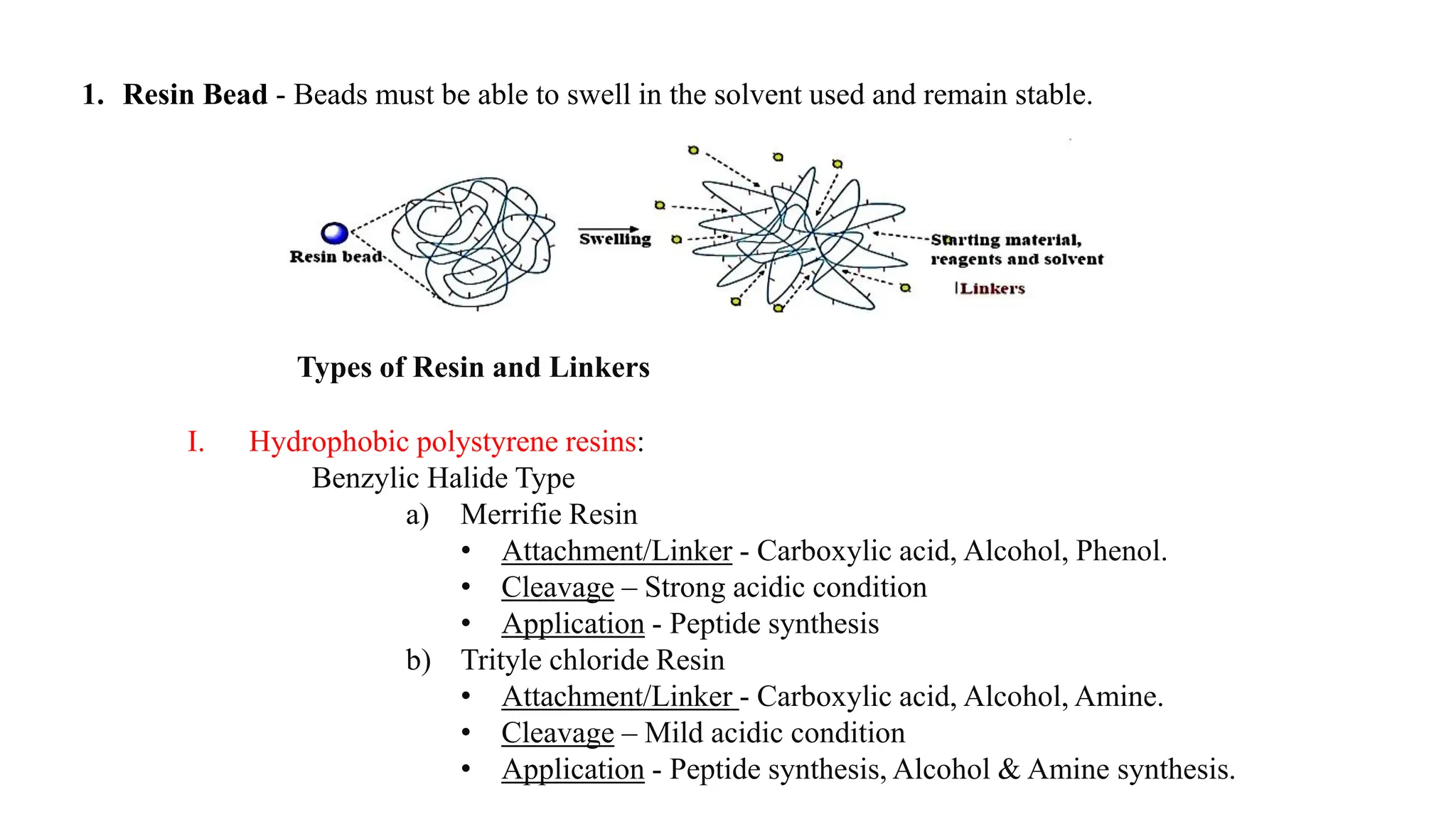
1. Resin Bead - Beads must be able to swell in the solvent used and remain stable.
Types of Resin and Linkers
I. Hydrophobic polystyrene resins:
Benzylic Halide Type
a) Merrifie Resin
• Attachment/Linker - Carboxylic acid, Alcohol, Phenol.
• Cleavage – Strong acidic condition
• Application - Peptide synthesis
b) Trityle chloride Resin
• Attachment/Linker - Carboxylic acid, Alcohol, Amine.
• Cleavage – Mild acidic condition
• Application - Peptide synthesis, Alcohol & Amine synthesis.
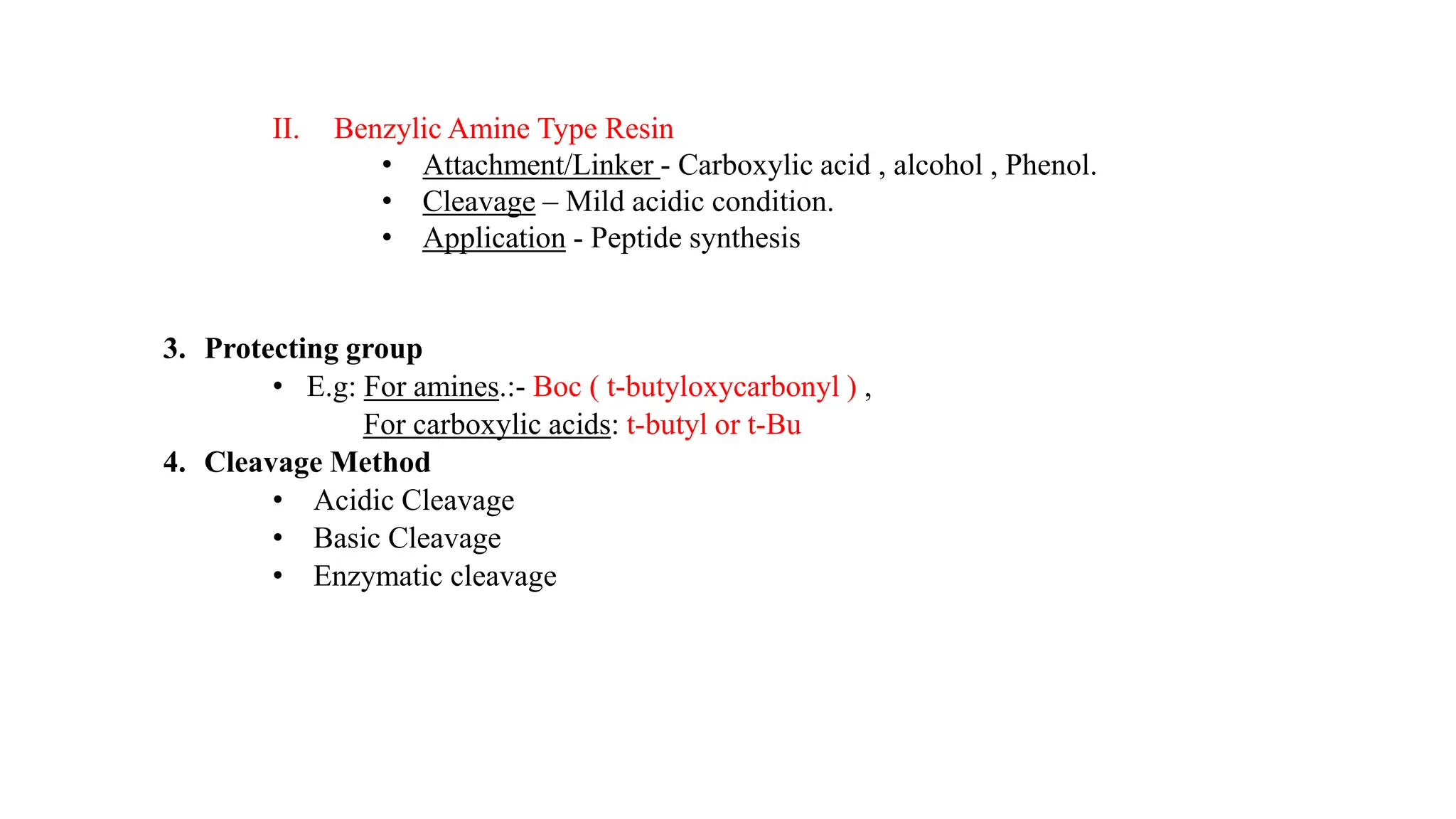
II. Benzylic Amine Type Resin
• Attachment/Linker - Carboxylic acid , alcohol , Phenol.
• Cleavage – Mild acidic condition.
• Application - Peptide synthesis
3. Protecting group
• E.g: For amines.:- Boc ( t-butyloxycarbonyl ) ,
For carboxylic acids: t-butyl or t-Bu
4. Cleavage Method
• Acidic Cleavage
• Basic Cleavage
• Enzymatic cleavage
ii. PARALLEL SYNTHESIS
➢ In this method, each starting material is reacted with each building block separately (i.e. in
separate vessel)
➢ In parallel synthesis, multiple reactions are conducted simultaneously in a single experiment or
in parallel fashion, enabling the synthesis of numerous compounds in a short period of time.
➢ Methods that can be used for parallel synthetic includes:
a. Houghton’s Tea Bag Procedure
b. Automated parallel synthesis
c. Multipin Technique
d. Split and Mix Synthesis Method
➢ Inspired by teabags containing different types of tea, this
method involves porous bags filled with specific reactants or
building blocks for synthesis.
➢ Each porous bag, similar to a tea bag, contains a specific
reactant or building block required for the synthesis.
➢ These bags are placed in a reaction vessel or array, typically
with each bag in its separate compartment.
➢ The reactants inside the bags are allowed to react with each
other, resulting in the synthesis of compound libraries.
➢ After the synthesis is complete, the products can be
collected from the bags for further analysis or screening.
a. Houghton’s Tea Bag Procedure
b. Automated parallel synthesis
➢ A Automated synthesizers are available with 42, 96 or 144
reaction vessels or wells
➢ Use beads or pins for solid phase support
➢ Reactions and workups are carried out automatically
➢ Same synthetic route used for each vessel, but different reagents
➢ Different product obtained per vessel.
c. Multipin Technique
➢ Involves the use of a specialized tool with multiple pins.(Pin tools)
➢ Each pin can transfer a different reactant or building block to reaction vessels or wells.
➢ Allows for the simultaneous synthesis of multiple compounds in parallel.
➢ Requires manual operation, where the user dips the pins into reservoirs containing reactants and
transfers them to reaction vessels.
d. Split and Mix Synthesis Method
➢ In this method, ingredients are assembled on the
surface of the beads.
➢ In each step, beads from last steps are partitioned
into new building block and several groups are
added.
➢ This leads to the formation of new groups, the
different groups of beads are recombined and
separated once again.
➢ Process is continuous with next building block is
added until the desired library has been
assembled
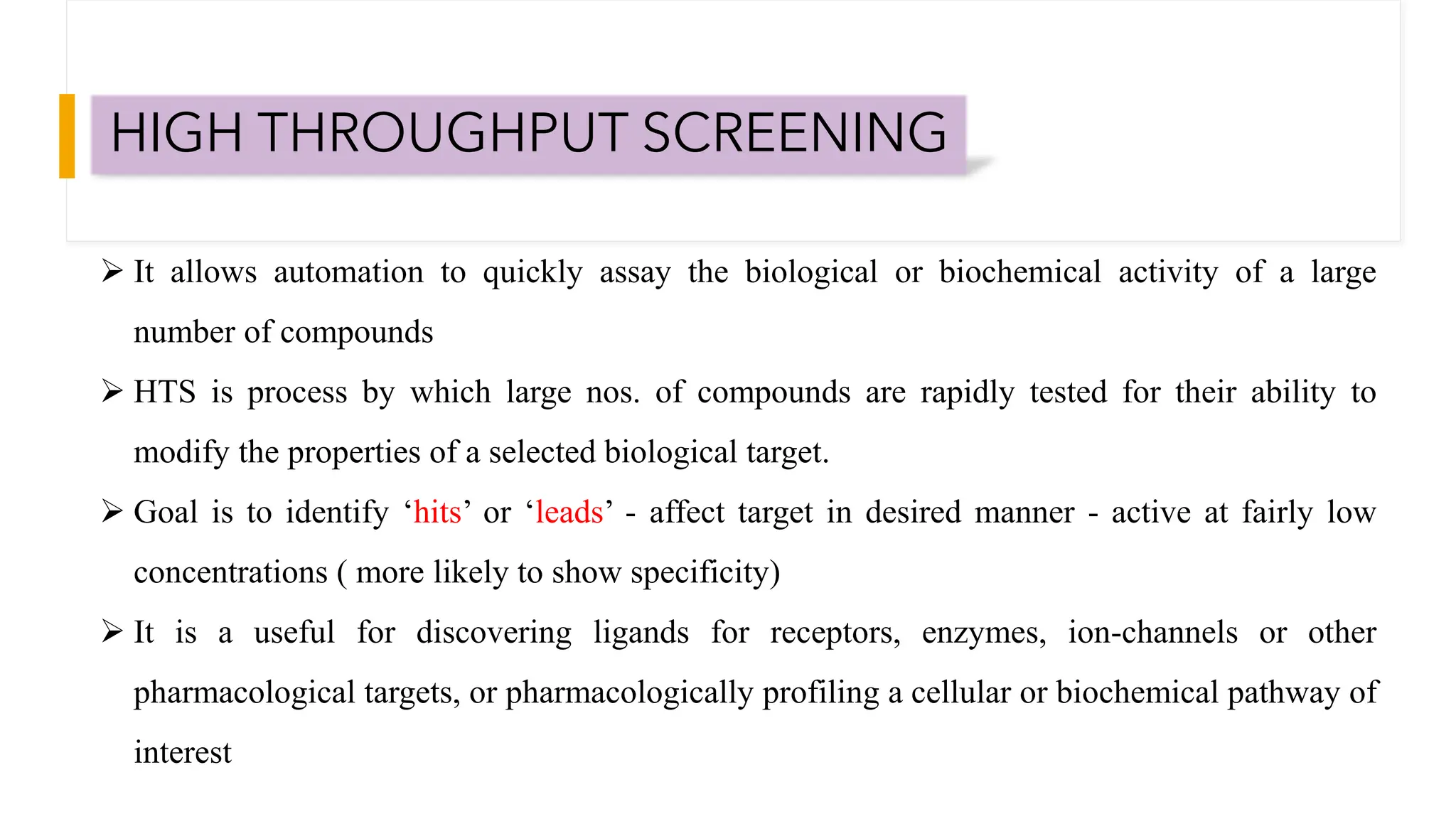
HIGH THROUGHPUT SCREENING
➢ It allows automation to quickly assay the biological or biochemical activity of a large
number of compounds
➢ HTS is process by which large nos. of compounds are rapidly tested for their ability to
modify the properties of a selected biological target.
➢ Goal is to identify ‘hits’ or ‘leads’ - affect target in desired manner - active at fairly low
concentrations ( more likely to show specificity)
➢ It is a useful for discovering ligands for receptors, enzymes, ion-channels or other
pharmacological targets, or pharmacologically profiling a cellular or biochemical pathway of
interest
METHODOLOGY
1. Target Identification and Validation
2. Assay Development
▪ Assay development is a crucial step in HTS. Researchers design assays that can accurately
measure the interaction between the target and potential drug candidates.
▪ The assay format (biochemical, cellular, or functional) is selected based on the nature of the target
and the desired outcome of the screening.
▪ Assay parameters such as buffer conditions, substrate concentrations, reaction kinetics, and
detection methods are optimized to maximize assay sensitivity, specificity, and reproducibility.
3. Compound Library Preparation
4. Automation
▪ High throughput screening relies heavily on automation to handle the large number of samples
and assays involved.
▪ Automated systems increase the speed, accuracy, and reproducibility of screening assays,
allowing for the rapid testing of thousands of compounds.
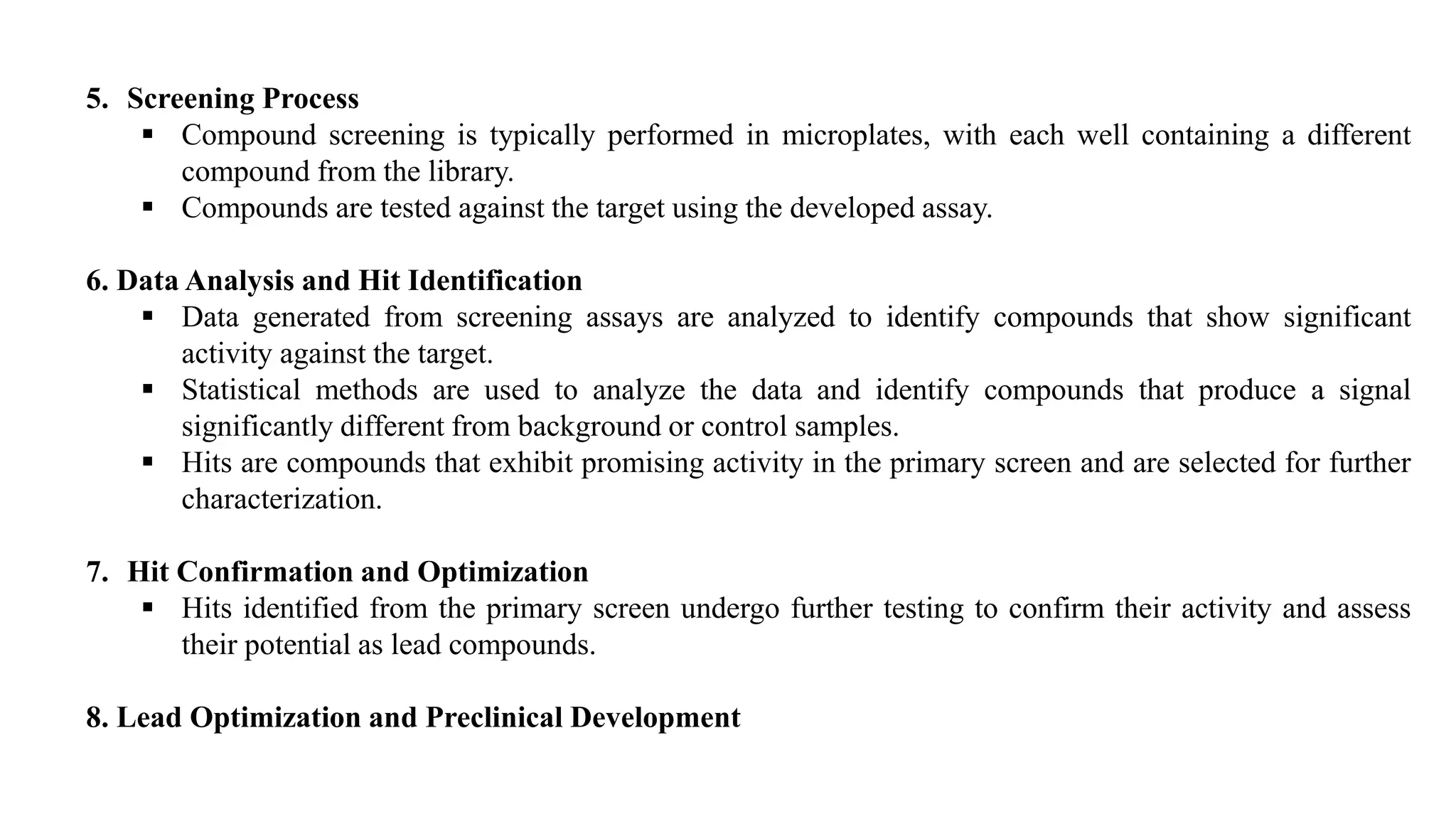
5. Screening Process
▪ Compound screening is typically performed in microplates, with each well containing a different
compound from the library.
▪ Compounds are tested against the target using the developed assay.
6. Data Analysis and Hit Identification
▪ Data generated from screening assays are analyzed to identify compounds that show significant
activity against the target.
▪ Statistical methods are used to analyze the data and identify compounds that produce a signal
significantly different from background or control samples.
▪ Hits are compounds that exhibit promising activity in the primary screen and are selected for further
characterization.
7. Hit Confirmation and Optimization
▪ Hits identified from the primary screen undergo further testing to confirm their activity and assess
their potential as lead compounds.
8. Lead Optimization and Preclinical Development
1. Biochemical Assays
▪ These assays measure the interaction between a compound and a purified target molecule, such
as an enzyme or receptor, in a test tube.
▪ Examples include enzyme activity assays, receptor binding assays, and protein-protein
interaction assays.
a. Cell-Based Assays
• Cell-based assays use living cells to assess the effects of compounds on cellular functions or
pathways relevant to a disease.
• Examples include cell viability assays
b. Label-Free Assays
▪ Label-free assays measure the interaction between compounds and target molecules without the
need for labeling or tagging molecules with fluorescent or radioactive markers.
▪ Examples include mass spectrometry-based assays
DIFFERENT TYPES OF ASSAY IN HTS
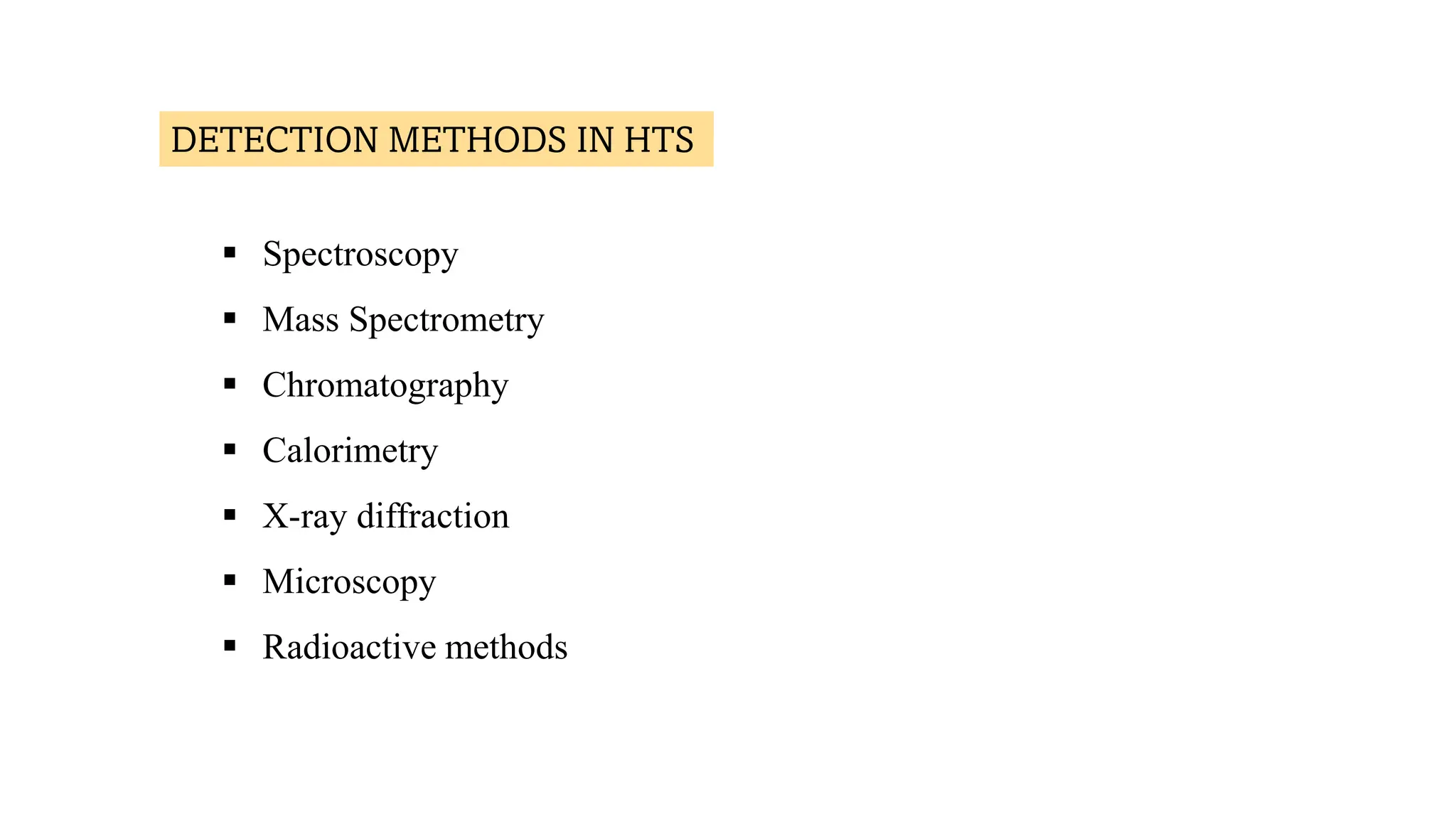
▪ Spectroscopy
▪ Mass Spectrometry
▪ Chromatography
▪ Calorimetry
▪ X-ray diffraction
▪ Microscopy
▪ Radioactive methods
DETECTION METHODS IN HTS
THANK YOU
24

Combinatorial chemistry and HTS in lead identification.pdf

  • 1.
    Presented by AYUSHROY M.PHARM, 2nd Semester Pharmacology (2023-25) Combinatorial Chemistry and High Throughput Screening in Lead Identification SCHOOL OF PHARMACEUTICAL SCIENCES GIRIJANANDA CHOWDHURY UNIVERSITY
  • 2.
    CONTENT 1. Lead identification 2.Combinatorial Chemistry 3. High Throughput Screening
  • 3.
    INTRODUCTION TO LEADIDENTIFICATION ➢ Lead identification in drug discovery is the process of identifying chemical compounds or molecules or lead that exhibit potential pharmacological activity against a specific target or disease. ➢ These compounds are called "leads" because they lead the way in drug discovery. ➢ The lead compound is the first foothold in the drug discovery ladder. ➢ Leads are sometimes developed as collections, or libraries, of individual molecules that possess properties needed in a new drug.
  • 4.
    METHODS OF LEADIDENTIFICATION I. Combinatorial chemistry II. High throughput screening (HTS) III. Assay development for Hit identification IV. In silico lead discovery techniques
  • 5.
    COMBINATORIAL CHEMISTRY ➢Combinatorial chemistryis a technique by which large numbers of different but structurally similar molecules are produced rapidly and submitted for pharmacological assay. ➢It was discovered in the early 1980s.
  • 6.
    ➢ It acceleratesthe process of chemical synthesis, this method is having a profound effect on all branches of chemistry, but especially on drug discovery. ➢ It focuses on the preparation of chemical libraries for the generation of new lead for drug discovery. ➢ It reduce the time and cost associated with producing effective and competitive new drugs.
  • 7.
    PRINCIPLE The basic principleof combinatorial chemistry is synthesizing large number of different compounds at the same time instead of synthesizing compounds in a conventional/classical one at a time manner and then to identify the most promising compound for further development. COMBINATORIAL CHEMISTRY
  • 8.
    BASIC DIFFERENCE INTHE STRATEGIES BETWEEN CONVENTIONAL AND COMBINATIORIAL TECHNIQUES
  • 9.
    PHASES OF COMBINATORIALCHEMISTRY i. Production of a Library ii. Finding the active compound SYNTHETIC METHODS FOR PRODUCTION OF LIBRARIES i. Solid Phase Techniques ii. Parallel Synthesis a. Houghton’s Tea Bag Procedure b. Automated parallel synthesis c. Multipin technique d. Split and Mix synthesis technique
  • 10.
    i. SOLID PHASETECHNIQUES ➢ Reactants(functional group) are bound to a polymeric surface and modified whilst still attached. ➢ Final product is released at the end of the synthesis.
  • 11.
    REQUIREMENTS a. A resinbead or a functionalized or polymeric surface is used to act as a solid support b. An anchor or linker - Employing an anchor or linker, serving as a connection between the substrate or reactant and the support. c. Implementing a Cleavage method to detach the final product from the linker upon completion of the synthesis. d. A Protecting group for functional groups not involved in the synthesis.
  • 12.
    1. Resin Bead- Beads must be able to swell in the solvent used and remain stable. Types of Resin and Linkers I. Hydrophobic polystyrene resins: Benzylic Halide Type a) Merrifie Resin • Attachment/Linker - Carboxylic acid, Alcohol, Phenol. • Cleavage – Strong acidic condition • Application - Peptide synthesis b) Trityle chloride Resin • Attachment/Linker - Carboxylic acid, Alcohol, Amine. • Cleavage – Mild acidic condition • Application - Peptide synthesis, Alcohol & Amine synthesis.
  • 13.
    II. Benzylic AmineType Resin • Attachment/Linker - Carboxylic acid , alcohol , Phenol. • Cleavage – Mild acidic condition. • Application - Peptide synthesis 3. Protecting group • E.g: For amines.:- Boc ( t-butyloxycarbonyl ) , For carboxylic acids: t-butyl or t-Bu 4. Cleavage Method • Acidic Cleavage • Basic Cleavage • Enzymatic cleavage
  • 14.
    ii. PARALLEL SYNTHESIS ➢In this method, each starting material is reacted with each building block separately (i.e. in separate vessel) ➢ In parallel synthesis, multiple reactions are conducted simultaneously in a single experiment or in parallel fashion, enabling the synthesis of numerous compounds in a short period of time. ➢ Methods that can be used for parallel synthetic includes: a. Houghton’s Tea Bag Procedure b. Automated parallel synthesis c. Multipin Technique d. Split and Mix Synthesis Method
  • 15.
    ➢ Inspired byteabags containing different types of tea, this method involves porous bags filled with specific reactants or building blocks for synthesis. ➢ Each porous bag, similar to a tea bag, contains a specific reactant or building block required for the synthesis. ➢ These bags are placed in a reaction vessel or array, typically with each bag in its separate compartment. ➢ The reactants inside the bags are allowed to react with each other, resulting in the synthesis of compound libraries. ➢ After the synthesis is complete, the products can be collected from the bags for further analysis or screening. a. Houghton’s Tea Bag Procedure
  • 16.
    b. Automated parallelsynthesis ➢ A Automated synthesizers are available with 42, 96 or 144 reaction vessels or wells ➢ Use beads or pins for solid phase support ➢ Reactions and workups are carried out automatically ➢ Same synthetic route used for each vessel, but different reagents ➢ Different product obtained per vessel.
  • 17.
    c. Multipin Technique ➢Involves the use of a specialized tool with multiple pins.(Pin tools) ➢ Each pin can transfer a different reactant or building block to reaction vessels or wells. ➢ Allows for the simultaneous synthesis of multiple compounds in parallel. ➢ Requires manual operation, where the user dips the pins into reservoirs containing reactants and transfers them to reaction vessels.
  • 18.
    d. Split andMix Synthesis Method ➢ In this method, ingredients are assembled on the surface of the beads. ➢ In each step, beads from last steps are partitioned into new building block and several groups are added. ➢ This leads to the formation of new groups, the different groups of beads are recombined and separated once again. ➢ Process is continuous with next building block is added until the desired library has been assembled
  • 19.
    HIGH THROUGHPUT SCREENING ➢It allows automation to quickly assay the biological or biochemical activity of a large number of compounds ➢ HTS is process by which large nos. of compounds are rapidly tested for their ability to modify the properties of a selected biological target. ➢ Goal is to identify ‘hits’ or ‘leads’ - affect target in desired manner - active at fairly low concentrations ( more likely to show specificity) ➢ It is a useful for discovering ligands for receptors, enzymes, ion-channels or other pharmacological targets, or pharmacologically profiling a cellular or biochemical pathway of interest
  • 20.
    METHODOLOGY 1. Target Identificationand Validation 2. Assay Development ▪ Assay development is a crucial step in HTS. Researchers design assays that can accurately measure the interaction between the target and potential drug candidates. ▪ The assay format (biochemical, cellular, or functional) is selected based on the nature of the target and the desired outcome of the screening. ▪ Assay parameters such as buffer conditions, substrate concentrations, reaction kinetics, and detection methods are optimized to maximize assay sensitivity, specificity, and reproducibility. 3. Compound Library Preparation 4. Automation ▪ High throughput screening relies heavily on automation to handle the large number of samples and assays involved. ▪ Automated systems increase the speed, accuracy, and reproducibility of screening assays, allowing for the rapid testing of thousands of compounds.
  • 21.
    5. Screening Process ▪Compound screening is typically performed in microplates, with each well containing a different compound from the library. ▪ Compounds are tested against the target using the developed assay. 6. Data Analysis and Hit Identification ▪ Data generated from screening assays are analyzed to identify compounds that show significant activity against the target. ▪ Statistical methods are used to analyze the data and identify compounds that produce a signal significantly different from background or control samples. ▪ Hits are compounds that exhibit promising activity in the primary screen and are selected for further characterization. 7. Hit Confirmation and Optimization ▪ Hits identified from the primary screen undergo further testing to confirm their activity and assess their potential as lead compounds. 8. Lead Optimization and Preclinical Development
  • 22.
    1. Biochemical Assays ▪These assays measure the interaction between a compound and a purified target molecule, such as an enzyme or receptor, in a test tube. ▪ Examples include enzyme activity assays, receptor binding assays, and protein-protein interaction assays. a. Cell-Based Assays • Cell-based assays use living cells to assess the effects of compounds on cellular functions or pathways relevant to a disease. • Examples include cell viability assays b. Label-Free Assays ▪ Label-free assays measure the interaction between compounds and target molecules without the need for labeling or tagging molecules with fluorescent or radioactive markers. ▪ Examples include mass spectrometry-based assays DIFFERENT TYPES OF ASSAY IN HTS
  • 23.
    ▪ Spectroscopy ▪ MassSpectrometry ▪ Chromatography ▪ Calorimetry ▪ X-ray diffraction ▪ Microscopy ▪ Radioactive methods DETECTION METHODS IN HTS
  • 24.