
Pharmacology of Free
Radicals
Free radicals causes Disorder & Their
Treatment
Submitted By : Shubham Sharma
M.Pharmacy 2nd semester
Department of Pharmacology
G.H.G Khalsa Collage of Pharmacy Gurusar Sadhar
(Ludhiana)
CONTENTS
• Generation of free radicals
• Antioxidants
• Advanced and recent treatment of
• Diabetes mellitus
• Alzheimer’s Disease
• Parkinsonism and Cancer
Pharmacology of Free Radicals
 Free Radicals
• A free radical is defined as any chemical species that contains
unpaired electron (s) in its outer orbit.
• Because of these unpaired electrons, free radicals are highly
reactive and readily take part in chemical reactions with virtually
all cell components (lipids, proteins, complex carbohydrates and
nucleic acids) in the body.
• These reactions occur through a chain of oxidative reactions to
cause tissue injury.
• For most biological structures (like lipids, proteins, and nucleic
acids), free radical damage is closely associated with oxidative
damage, causing direct cellular injury by inducing lipid and
protein
Types of Free Radicals
Superoxide Ion Radical
 Hydroxyl Radical
Peroxyl Radical
 Hydrogen Peroxide
 Singlet Oxygen
 Ozone
 Hypochlorous Acid
 Nitric Oxide or Nitrogen Monoxide
Formation of free radicals
• Normally, bonds don’t split to leave a molecule with an
odd, unpaired electron. But when weak bonds split,
free radicals are formed.
• Free radicals are very unstable and react quickly with
other compounds, trying to capture the needed electron
to gain stability. When the "attacked" molecule loses its
electron, it becomes a free radical itself, beginning a
chain reaction , resulting in the disruption of a living
cell.
• Some free radicals may arise normally during
metabolism and by immune system’s cells purposefully
to neutralize viruses and bacteria.
Steps involving free radical generation
• free radicals take part in radical addition and radical
substitution as reactive intermediates.
• Chain reactions involving free radicals can usually be
divided into three distinct processes: initiation,
propagation, and termination.
1. Initiation reactions are those, which result in a net
increase in the number of free radicals. They may
involve the formation of free radicals from stable
species or they may involve reactions of free radicals
with stable species to form more free radicals.
2. Propagation reactions involve free radicals in which
the total number of free radicals remains the same.
3. Termination reactions are those reactions resulting in
a net decrease in the number of free radicals. Radicals
may also be formed by single electron oxidation or
reduction of an atom or molecule.
An example is the production of superoxide by the
electron transport chain.
Causes of free radicals
 Pollution and other external substances:- The pollutants
produced by modern technologies often generate free
radicals in the body.
• The food most of us buy contains farm chemicals,
including fertilizers and pesticides, that produce free
radicals when we ingest them.
• Prescription drugs often have the same effect, their
harmful side-effects may be caused by the free radicals
they generate.
• Processed foods frequently contain high levels of lipid
peroxides, which produce free radicals that damage the
cardiovascular system.
• Cigarette smoke generates high free-radical
concentrations , much of the lung damage associated
with smoking is caused by free radicals.
• Air pollution , Alcohol is a potent generator of free
radicals
 Stress:- The body's stress response creating free
radicals in abundance.
• The stress response races the body's energy-creating
apparatus, increasing the number of free radicals as a
toxic by-product The hormones that mediate the stress
reaction in the body cortisol and catecholamines will
themselves degenerate into particularly destructive free
radicals.
 The immune system:- The body tries to harness the
destructive power of the most dangerous free radicals -
the oxy radicals and ROS - for use in the immune
system and in inflammatory reactions.
• Certain cells in these systems engulf bacteria or viruses,
take up oxygen molecules from the bloodstream,
remove an electron to create a flood of oxy radicals and
ROS, and bombard the invader with the resulting toxic
shower.
• This aggressive use of toxic oxygen species is
remarkably effective in protecting the body against
infectious organisms.
Role of free radicals in
Etiopathogenesis
• When produced in excess, free radicals and oxidants
generate a phenomenon called oxidative stress.
• A deleterious process that can seriously alter the cell
membranes and other structures such as proteins,
lipids, lipoproteins, and deoxyribonucleic acid (DNA)
oxidative stress results from an imbalance between
formation and neutralization of ROS/RNS
• Cancer and oxidative stress:- oxidative DNA
damage is responsible for cancer development.
• Cancer initiation and promotion are associated with
chromosomal defects and oncogene activation induced
by free radicals.
• Oxidative DNA damage also produces a multiplicity of
modifications in the DNA structure including base and
sugar lesions, strand breaks DNA-protein cross-links
and base-free sites.
• For example, tobacco smoking and chronic
inflammation resulting from noninfectious diseases like
asbestos are sources of oxidative DNA damage that can
contribute to the development of lung cancer and other
tumors
 Neurological disease and oxidative stress
• Oxidative stress has been investigated in neurological
diseases including Alzheimer’s disease, Parkinson’s
disease, multiple sclerosis, memory loss, depression.
• In Alzheimer’s, numerous experimental and clinical
studies have demonstrated that oxidative damage plays
a key role in the loss of neurons and the progression to
dementia .
• The production of ß-amyloid, a toxic peptide often
found present in Alzheimer’s patients’ brain, is due to
oxidative stress and plays an important role in the
neurodegenerative processes.
 Rheumatoid arthritis and oxidative stress
• Rheumatoid arthritis is an autoimmune disease
characterized by chronic inflammation of the joints and
tissue around the joints with infiltration of macrophages
and activated T cells.
• The pathogenesis of this disease is due to the
generation of ROS and RNS at the site of inflammation.
• Oxidative damage and inflammation in various
rheumatic diseases were proved by increased levels of
isoprostanes and prostaglandins in serum and synovial
fluid compared to controls.
Role of Free radicals in Etiopathology
of Various Disease
 Role of free Radicals in Diabetes Mellitus
• Diabetes mellitus is a common disorder, caused by
hyperglycaemia resulting from a deficiency in insulin
secretion or action.
• Diabetes mellitus is associated with increased risk of
complications including retinopathy, kidney failure, nerve
damage, circulatory problems, heart disease and stroke.
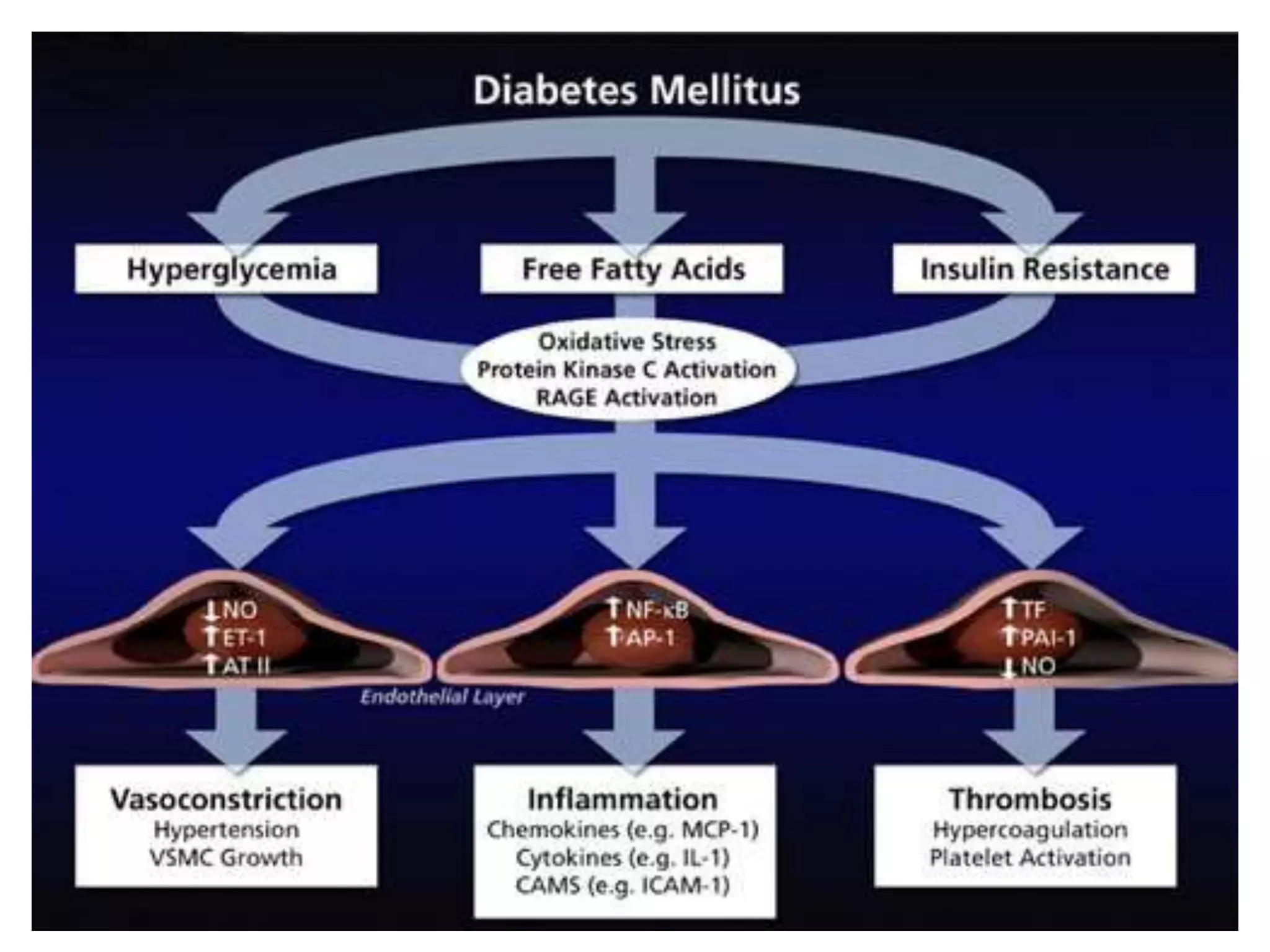
• Free radical formation in diabetes by non-enzymatic
glycation of proteins, glucose oxidation and increased lipid
peroxidation leads to damage of enzymes, cellular
machinery and also increased insulin resistance due to
oxidative stress.
 Role of free Radicals in Neurodegenerative
Disease
• Oxidative stress in the brain is likely to occur as the
brain uses up to 20% of the body's inspired oxygen, yet
only accounts for 2% body weight.
• The brain also houses large concentrations of
polyunsaturated fatty acids, which may undergo lipid
per-oxidation in such an oxygen-rich environment.
• ROS have been implicated in the pathology of a number
of neurological disorders.
 Alzheimer's Disease
• Alzheimer’s disesae is associated with loss of neurons,
neurofibrillary tangles, deposition of amorphous protein,
among others.
• Increased oxidative stress has also been identified in the
brain of these patients.
• Decreased levels of vitamin E, C and plasma aluminium
have also been associated with Alzheimer's disease.
Increased thought to enhance iron induced lipid
peroxidation.
• There is increasing evidence that free radical-induced
oxidative damage may play a role in the pathogenesis
of Alzheimer's disease. Free radicals are reactive oxygen
compounds that may attack and damage lipids,
proteins, and DNA. Antioxidants such as vitamin E show
promise that they may help in treating the disease.
 Role of Free Radicals in Cancer
• Millions of patients throughout the world suffer from
cancer. Recent evidence suggests regional variance of
cancer with lung, breast, colon, uterus and prostate
cancers being prevalent in developed countries compared
to cervical, mouth/pharynx, esophageal and liver cancers
being prevalent in the developing world.
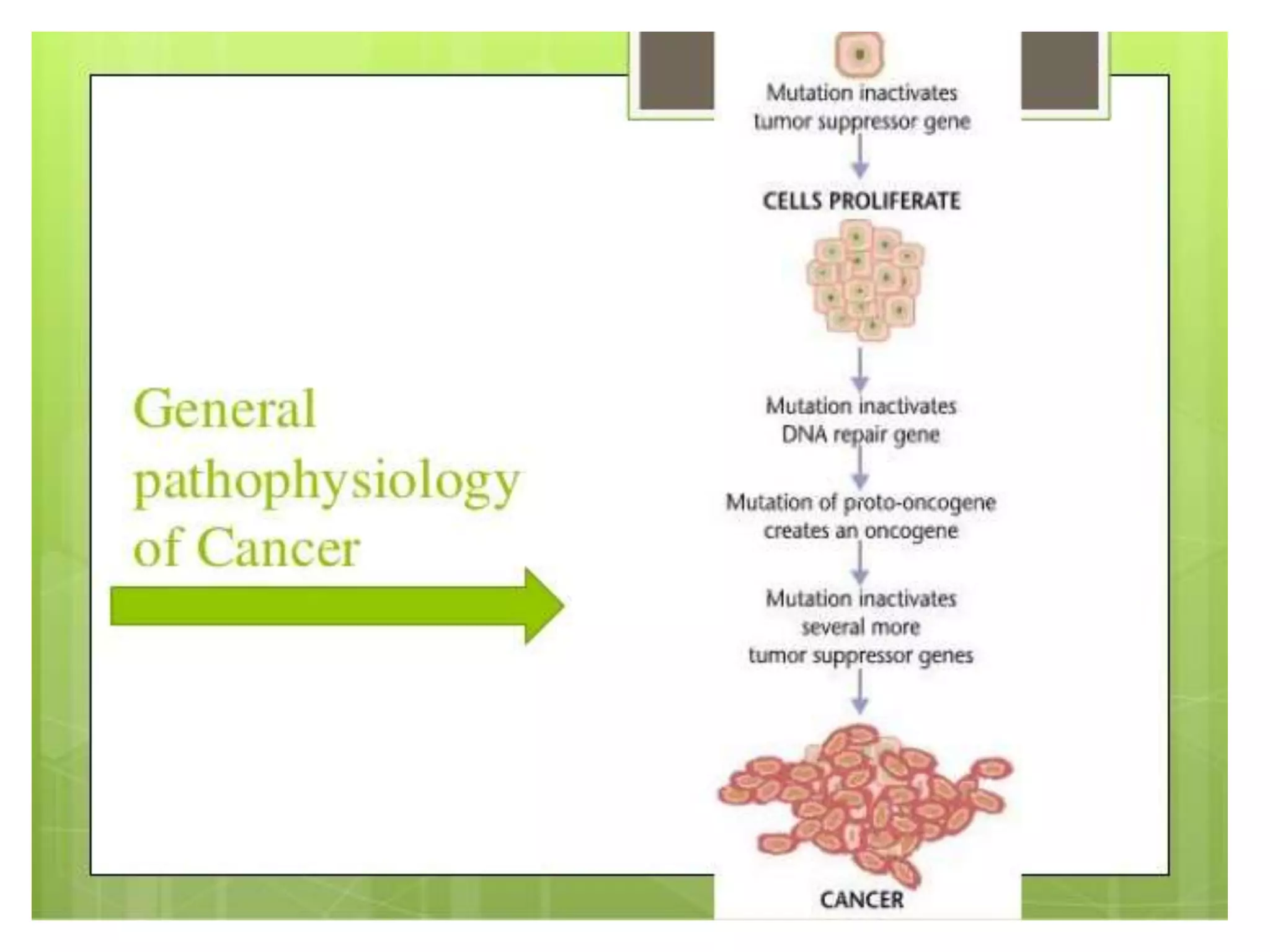
• Evidence suggests that cancer development occurs in
two stages, initiation and promotion. Initiation involves a
permanent, irreversible genetic change in the cell’s
DNA.
• This generally causes DNA strand brakes, which can lie
dormant in the cell but do not alone cause cancer.
• Free radicals and ROS can alter gene expression by
mobilization of calcium stores, which activate a variety
of cellular kinases, phosphatases and transcription
factors.
• Lipid peroxidation by free radicals and ROS has also
been implicated as a causative factor in cancer
development.
• Role of Oxygen Free Radicals in Cancer Development
and Treatment. It is well known that species derived
from oxygen are cytotoxic and are involved in
the etiology of cancer. Several carcinogens during
metabolism exert their effect by producing reactive
oxygen species (ROS)
Protective activity of certain important
antioxidant
• An antioxidant is a molecule capable of inhibiting the
oxidation of other molecules.
• Oxidation is a chemical reaction that transfers
electrons or hydrogen from a substance to an
oxidizing agent.
• Oxidation reactions can produce free radicals. In turn,
these radicals can start chain reactions.
Types of antioxidants
Mainly Hydrophilic and Hydrophobic
 Antioxidant enzymes:
• 1. Catalase
• 2. Glutathione peroxidase
• 3. Glutathione reductase
• 4. Super oxide dismutase (both Cu -Zn and Mn)
 Metals binding proteins:
• 1. Ceruloplasmin
• 2. Ferritin
• 3. Lactoferrin
• 4. Metallotheinein
• 5. Transferrin
• 6. Hemoglobin
• 7. Myoglobin
 Common antioxidants (scavengers)
• 1. Bilirubin
• 2. Carotenoids
• a. Beta -carotene
• b. Alpha -carotene
• c. Beta -cryptoxanthin
• d. Lutein
• e. Zeaxanthin
• f. Lycopene
• 3. Flavonoids
• a. Quercetin
• b. Rutin
• c. Catechin
• 4. Uric acids
• 5. Thiols (R -SH)
• 6. Coenzyme
• 7. Vitamin A, C, E, D.
 Others antioxidants
1. Copper
2. Glutathione (GSH)
3. Alpha lipoic acid
4. Manganise
5. Selenium
6. Zinc
free radical

free radical

  • 1.
    Pharmacology of Free Radicals Freeradicals causes Disorder & Their Treatment Submitted By : Shubham Sharma M.Pharmacy 2nd semester Department of Pharmacology G.H.G Khalsa Collage of Pharmacy Gurusar Sadhar (Ludhiana)
  • 2.
    CONTENTS • Generation offree radicals • Antioxidants • Advanced and recent treatment of • Diabetes mellitus • Alzheimer’s Disease • Parkinsonism and Cancer
  • 3.
    Pharmacology of FreeRadicals  Free Radicals • A free radical is defined as any chemical species that contains unpaired electron (s) in its outer orbit. • Because of these unpaired electrons, free radicals are highly reactive and readily take part in chemical reactions with virtually all cell components (lipids, proteins, complex carbohydrates and nucleic acids) in the body. • These reactions occur through a chain of oxidative reactions to cause tissue injury. • For most biological structures (like lipids, proteins, and nucleic acids), free radical damage is closely associated with oxidative damage, causing direct cellular injury by inducing lipid and protein
  • 4.
    Types of FreeRadicals Superoxide Ion Radical  Hydroxyl Radical Peroxyl Radical  Hydrogen Peroxide  Singlet Oxygen  Ozone  Hypochlorous Acid  Nitric Oxide or Nitrogen Monoxide
  • 5.
    Formation of freeradicals • Normally, bonds don’t split to leave a molecule with an odd, unpaired electron. But when weak bonds split, free radicals are formed. • Free radicals are very unstable and react quickly with other compounds, trying to capture the needed electron to gain stability. When the "attacked" molecule loses its electron, it becomes a free radical itself, beginning a chain reaction , resulting in the disruption of a living cell. • Some free radicals may arise normally during metabolism and by immune system’s cells purposefully to neutralize viruses and bacteria.
  • 6.
    Steps involving freeradical generation • free radicals take part in radical addition and radical substitution as reactive intermediates. • Chain reactions involving free radicals can usually be divided into three distinct processes: initiation, propagation, and termination. 1. Initiation reactions are those, which result in a net increase in the number of free radicals. They may involve the formation of free radicals from stable species or they may involve reactions of free radicals with stable species to form more free radicals.
  • 7.
    2. Propagation reactionsinvolve free radicals in which the total number of free radicals remains the same. 3. Termination reactions are those reactions resulting in a net decrease in the number of free radicals. Radicals may also be formed by single electron oxidation or reduction of an atom or molecule. An example is the production of superoxide by the electron transport chain.
  • 8.
    Causes of freeradicals  Pollution and other external substances:- The pollutants produced by modern technologies often generate free radicals in the body. • The food most of us buy contains farm chemicals, including fertilizers and pesticides, that produce free radicals when we ingest them. • Prescription drugs often have the same effect, their harmful side-effects may be caused by the free radicals they generate. • Processed foods frequently contain high levels of lipid peroxides, which produce free radicals that damage the cardiovascular system.
  • 9.
    • Cigarette smokegenerates high free-radical concentrations , much of the lung damage associated with smoking is caused by free radicals. • Air pollution , Alcohol is a potent generator of free radicals  Stress:- The body's stress response creating free radicals in abundance. • The stress response races the body's energy-creating apparatus, increasing the number of free radicals as a toxic by-product The hormones that mediate the stress reaction in the body cortisol and catecholamines will themselves degenerate into particularly destructive free radicals.
  • 10.
     The immunesystem:- The body tries to harness the destructive power of the most dangerous free radicals - the oxy radicals and ROS - for use in the immune system and in inflammatory reactions. • Certain cells in these systems engulf bacteria or viruses, take up oxygen molecules from the bloodstream, remove an electron to create a flood of oxy radicals and ROS, and bombard the invader with the resulting toxic shower. • This aggressive use of toxic oxygen species is remarkably effective in protecting the body against infectious organisms.
  • 11.
    Role of freeradicals in Etiopathogenesis • When produced in excess, free radicals and oxidants generate a phenomenon called oxidative stress. • A deleterious process that can seriously alter the cell membranes and other structures such as proteins, lipids, lipoproteins, and deoxyribonucleic acid (DNA) oxidative stress results from an imbalance between formation and neutralization of ROS/RNS
  • 12.
    • Cancer andoxidative stress:- oxidative DNA damage is responsible for cancer development. • Cancer initiation and promotion are associated with chromosomal defects and oncogene activation induced by free radicals. • Oxidative DNA damage also produces a multiplicity of modifications in the DNA structure including base and sugar lesions, strand breaks DNA-protein cross-links and base-free sites. • For example, tobacco smoking and chronic inflammation resulting from noninfectious diseases like asbestos are sources of oxidative DNA damage that can contribute to the development of lung cancer and other tumors
  • 13.
     Neurological diseaseand oxidative stress • Oxidative stress has been investigated in neurological diseases including Alzheimer’s disease, Parkinson’s disease, multiple sclerosis, memory loss, depression. • In Alzheimer’s, numerous experimental and clinical studies have demonstrated that oxidative damage plays a key role in the loss of neurons and the progression to dementia . • The production of ß-amyloid, a toxic peptide often found present in Alzheimer’s patients’ brain, is due to oxidative stress and plays an important role in the neurodegenerative processes.
  • 14.
     Rheumatoid arthritisand oxidative stress • Rheumatoid arthritis is an autoimmune disease characterized by chronic inflammation of the joints and tissue around the joints with infiltration of macrophages and activated T cells. • The pathogenesis of this disease is due to the generation of ROS and RNS at the site of inflammation. • Oxidative damage and inflammation in various rheumatic diseases were proved by increased levels of isoprostanes and prostaglandins in serum and synovial fluid compared to controls.
  • 15.
    Role of Freeradicals in Etiopathology of Various Disease  Role of free Radicals in Diabetes Mellitus • Diabetes mellitus is a common disorder, caused by hyperglycaemia resulting from a deficiency in insulin secretion or action. • Diabetes mellitus is associated with increased risk of complications including retinopathy, kidney failure, nerve damage, circulatory problems, heart disease and stroke. • Free radical formation in diabetes by non-enzymatic glycation of proteins, glucose oxidation and increased lipid peroxidation leads to damage of enzymes, cellular machinery and also increased insulin resistance due to oxidative stress.
  • 17.
     Role offree Radicals in Neurodegenerative Disease • Oxidative stress in the brain is likely to occur as the brain uses up to 20% of the body's inspired oxygen, yet only accounts for 2% body weight. • The brain also houses large concentrations of polyunsaturated fatty acids, which may undergo lipid per-oxidation in such an oxygen-rich environment. • ROS have been implicated in the pathology of a number of neurological disorders.
  • 18.
     Alzheimer's Disease •Alzheimer’s disesae is associated with loss of neurons, neurofibrillary tangles, deposition of amorphous protein, among others. • Increased oxidative stress has also been identified in the brain of these patients. • Decreased levels of vitamin E, C and plasma aluminium have also been associated with Alzheimer's disease. Increased thought to enhance iron induced lipid peroxidation. • There is increasing evidence that free radical-induced oxidative damage may play a role in the pathogenesis of Alzheimer's disease. Free radicals are reactive oxygen compounds that may attack and damage lipids, proteins, and DNA. Antioxidants such as vitamin E show promise that they may help in treating the disease.
  • 20.
     Role ofFree Radicals in Cancer • Millions of patients throughout the world suffer from cancer. Recent evidence suggests regional variance of cancer with lung, breast, colon, uterus and prostate cancers being prevalent in developed countries compared to cervical, mouth/pharynx, esophageal and liver cancers being prevalent in the developing world. • Evidence suggests that cancer development occurs in two stages, initiation and promotion. Initiation involves a permanent, irreversible genetic change in the cell’s DNA. • This generally causes DNA strand brakes, which can lie dormant in the cell but do not alone cause cancer.
  • 21.
    • Free radicalsand ROS can alter gene expression by mobilization of calcium stores, which activate a variety of cellular kinases, phosphatases and transcription factors. • Lipid peroxidation by free radicals and ROS has also been implicated as a causative factor in cancer development. • Role of Oxygen Free Radicals in Cancer Development and Treatment. It is well known that species derived from oxygen are cytotoxic and are involved in the etiology of cancer. Several carcinogens during metabolism exert their effect by producing reactive oxygen species (ROS)
  • 23.
    Protective activity ofcertain important antioxidant • An antioxidant is a molecule capable of inhibiting the oxidation of other molecules. • Oxidation is a chemical reaction that transfers electrons or hydrogen from a substance to an oxidizing agent. • Oxidation reactions can produce free radicals. In turn, these radicals can start chain reactions.
  • 24.
    Types of antioxidants MainlyHydrophilic and Hydrophobic  Antioxidant enzymes: • 1. Catalase • 2. Glutathione peroxidase • 3. Glutathione reductase • 4. Super oxide dismutase (both Cu -Zn and Mn)  Metals binding proteins: • 1. Ceruloplasmin • 2. Ferritin • 3. Lactoferrin • 4. Metallotheinein • 5. Transferrin • 6. Hemoglobin • 7. Myoglobin
  • 25.
     Common antioxidants(scavengers) • 1. Bilirubin • 2. Carotenoids • a. Beta -carotene • b. Alpha -carotene • c. Beta -cryptoxanthin • d. Lutein • e. Zeaxanthin • f. Lycopene • 3. Flavonoids • a. Quercetin • b. Rutin • c. Catechin
  • 26.
    • 4. Uricacids • 5. Thiols (R -SH) • 6. Coenzyme • 7. Vitamin A, C, E, D.  Others antioxidants 1. Copper 2. Glutathione (GSH) 3. Alpha lipoic acid 4. Manganise 5. Selenium 6. Zinc