PRIMARY MARKET
INDEX 
• INTRODUCTION 
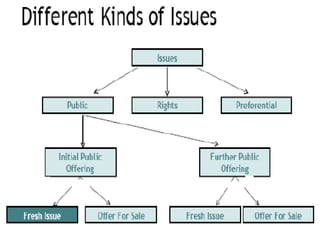
• IPO 
• FPO 
• PRIVATE PLACEMENT 
• OFFER FOR SALE 
• RIGHTS ISSUE 
• BONUS ISSUE 
• STOCK OPTION 
• FOREIGN CAPITAL ISSUANCE 
• CONCLUSION 
• BIBLIOGRAPHY
STUFF 
LIABILITY ASSET
INTRODUCTION 
• The primary market is the part of the capital market that 
deals with issuing of new securities. Companies, 
governments or public sector institutions can obtain funds 
through the sale of a new stock or bond issues through 
primary market. This is typically done through 
an investment bank or finance syndicate of securities 
dealers. 
• The process of selling new issues to investors is 
called underwriting. In the case of a new stock issue, this 
sale is an initial public offering (IPO). Dealers earn a 
commission that is built into the price of the security 
offering, though it can be found in the prospectus. Primary 
markets create long term instruments through which 
corporate entities borrow from capital market.
INTRODUCTION 
• Securities market is an economic institute within which 
takes place the sale and purchase transactions of securities 
between subjects of the economy, on the basis of demand 
and supply. Also we can say that securities market is a 
system of interconnection between all participants 
(professional and nonprofessional) that provides effective 
conditions: to buy and sell securities, and also 
• To attract new capital by means of issuance new security 
(securitization of debt), 
• To transfer real asset into financial asset, 
• To invest money for short or long term periods with the aim 
of deriving profitability.
IPO 
• IPO. The first sale of stock by a company to the 
public. The most common reason for a 
company to initiate an IPO is in order to raise 
more capital.
FPO 
• An issuing of shares to investors by a public 
company that is already listed on an exchange. 
• An FPO is essentially a stock issue of 
supplementary shares made by a company 
that is already publicly listed and has gone 
through the IPO process.
PRIVATE PLACEMENT 
• A company makes the offer of sale to 
individuals and institution privately without 
the issue of a prospectus.
OFFER FOR SALE 
• A company sells the securities through the 
intermediaries such as issue houses, and stock 
brokers.
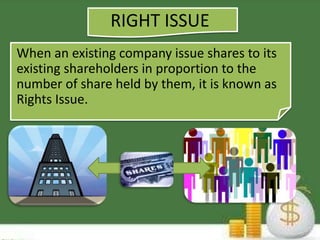
RIGHT ISSUE 
When an existing company issue shares to its 
existing shareholders in proportion to the 
number of share held by them, it is known as 
Rights Issue.
BONUS ISSUE 
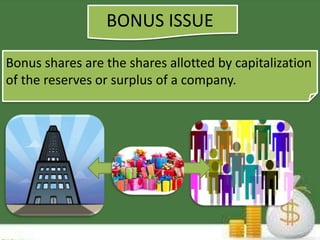
Bonus shares are the shares allotted by capitalization 
of the reserves or surplus of a company.
STOCK OPTION 
• A company can encourage its employees to take up 
shares and subscribe to it is called stock option or 
Employee Stock Option Scheme (ESOPS). 
• SEBI has issued guidelines in this respect.
FOREIGN CAPITAL ISSUANCE 
(a) American Depository Receipts: An American 
Depository Receipts (ADRs) is physical 
certificate evidencing ownership of American 
Depository Shares. 
(b) Global Depository Receipts: Global 
Depository Receipts (GDRs) is a global 
finance vehicle that allows an issuer to raise 
capital simultaneously in two or more 
markets through a global offering.
CONCLUSION
THANK YOU..!!

PRIMARY MARKET PPT

  • 1.
  • 2.
    INDEX • INTRODUCTION • IPO • FPO • PRIVATE PLACEMENT • OFFER FOR SALE • RIGHTS ISSUE • BONUS ISSUE • STOCK OPTION • FOREIGN CAPITAL ISSUANCE • CONCLUSION • BIBLIOGRAPHY
  • 3.
  • 4.
    INTRODUCTION • Theprimary market is the part of the capital market that deals with issuing of new securities. Companies, governments or public sector institutions can obtain funds through the sale of a new stock or bond issues through primary market. This is typically done through an investment bank or finance syndicate of securities dealers. • The process of selling new issues to investors is called underwriting. In the case of a new stock issue, this sale is an initial public offering (IPO). Dealers earn a commission that is built into the price of the security offering, though it can be found in the prospectus. Primary markets create long term instruments through which corporate entities borrow from capital market.
  • 5.
    INTRODUCTION • Securitiesmarket is an economic institute within which takes place the sale and purchase transactions of securities between subjects of the economy, on the basis of demand and supply. Also we can say that securities market is a system of interconnection between all participants (professional and nonprofessional) that provides effective conditions: to buy and sell securities, and also • To attract new capital by means of issuance new security (securitization of debt), • To transfer real asset into financial asset, • To invest money for short or long term periods with the aim of deriving profitability.
  • 7.
    IPO • IPO.The first sale of stock by a company to the public. The most common reason for a company to initiate an IPO is in order to raise more capital.
  • 8.
    FPO • Anissuing of shares to investors by a public company that is already listed on an exchange. • An FPO is essentially a stock issue of supplementary shares made by a company that is already publicly listed and has gone through the IPO process.
  • 9.
    PRIVATE PLACEMENT •A company makes the offer of sale to individuals and institution privately without the issue of a prospectus.
  • 10.
    OFFER FOR SALE • A company sells the securities through the intermediaries such as issue houses, and stock brokers.
  • 11.
    RIGHT ISSUE Whenan existing company issue shares to its existing shareholders in proportion to the number of share held by them, it is known as Rights Issue.
  • 12.
    BONUS ISSUE Bonusshares are the shares allotted by capitalization of the reserves or surplus of a company.
  • 13.
    STOCK OPTION •A company can encourage its employees to take up shares and subscribe to it is called stock option or Employee Stock Option Scheme (ESOPS). • SEBI has issued guidelines in this respect.
  • 14.
    FOREIGN CAPITAL ISSUANCE (a) American Depository Receipts: An American Depository Receipts (ADRs) is physical certificate evidencing ownership of American Depository Shares. (b) Global Depository Receipts: Global Depository Receipts (GDRs) is a global finance vehicle that allows an issuer to raise capital simultaneously in two or more markets through a global offering.
  • 15.
  • 16.