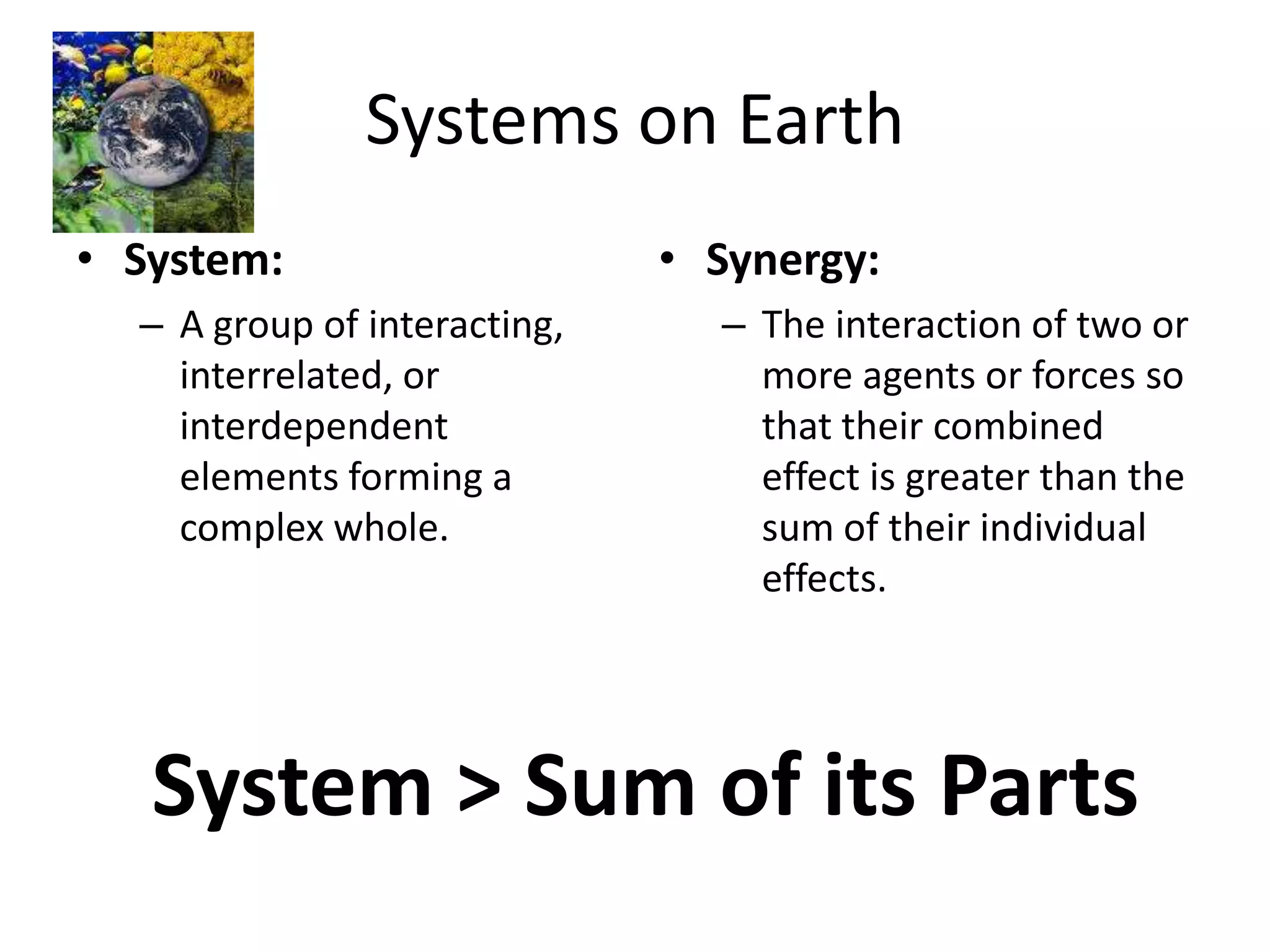
Systems on EarthSystem: A group of interacting, interrelated, or interdependent elements forming a complex whole.Synergy:The interaction of two or more agents or forces so that their combined effect is greater than the sum of their individual effects.System > Sum of its Parts
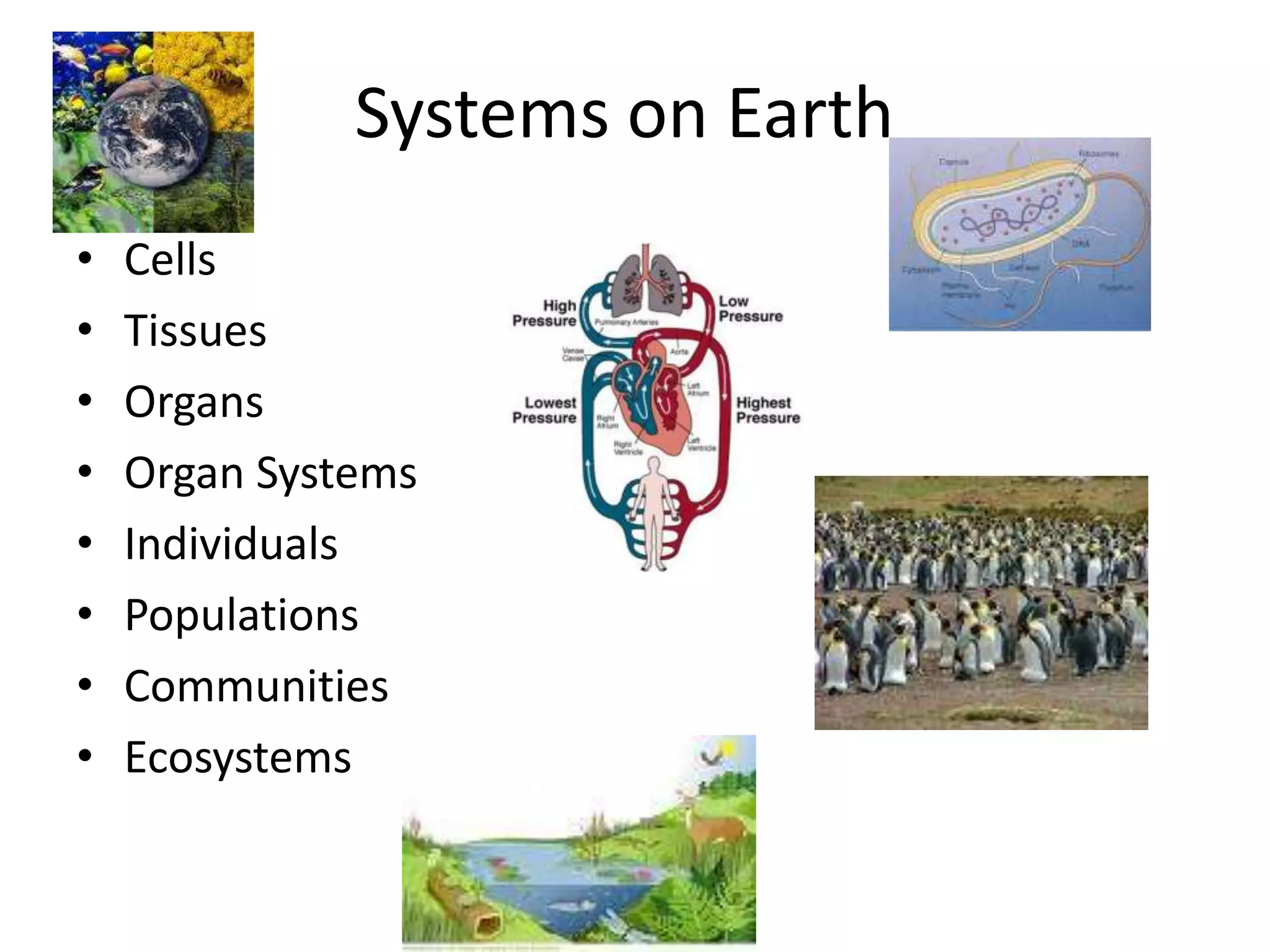
CellsTissuesOrgansOrgan SystemsIndividualsPopulationsCommunitiesEcosystemsSystems on Earth
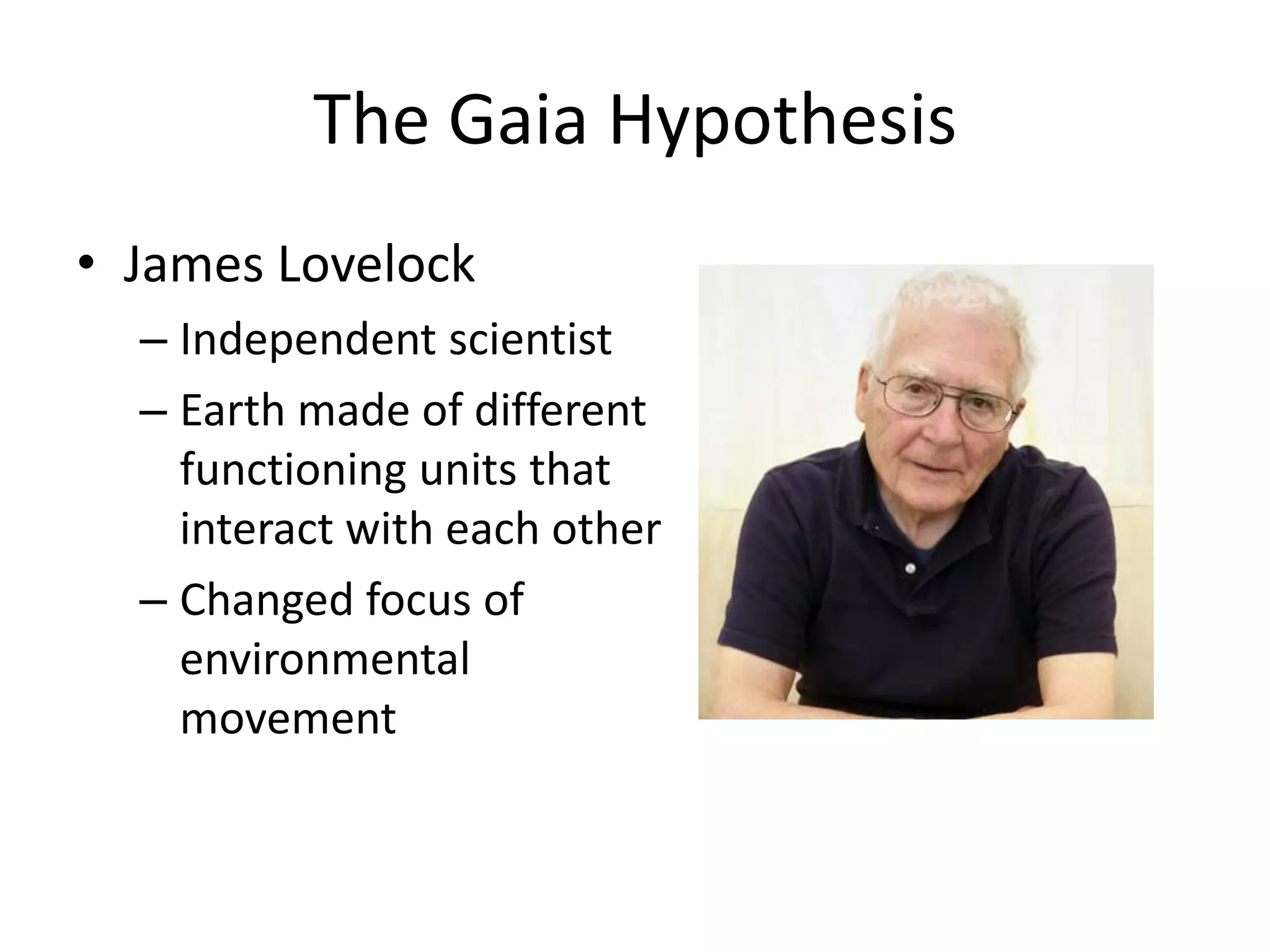
The Gaia HypothesisJames LovelockIndependent scientistEarth made of different functioning units that interact with each otherChanged focus of environmental movement
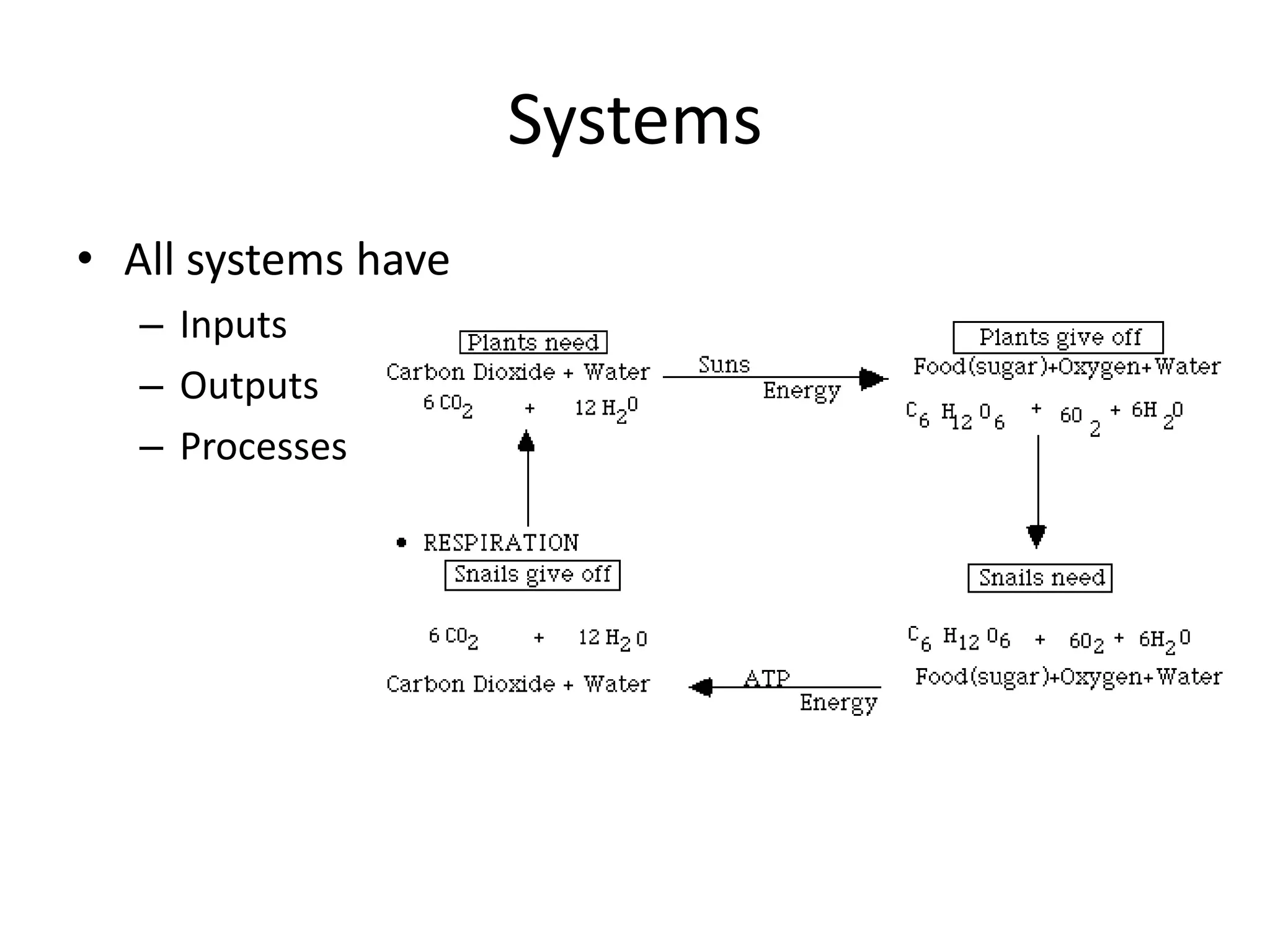
SystemsAll systems haveInputsOutputsProcesses
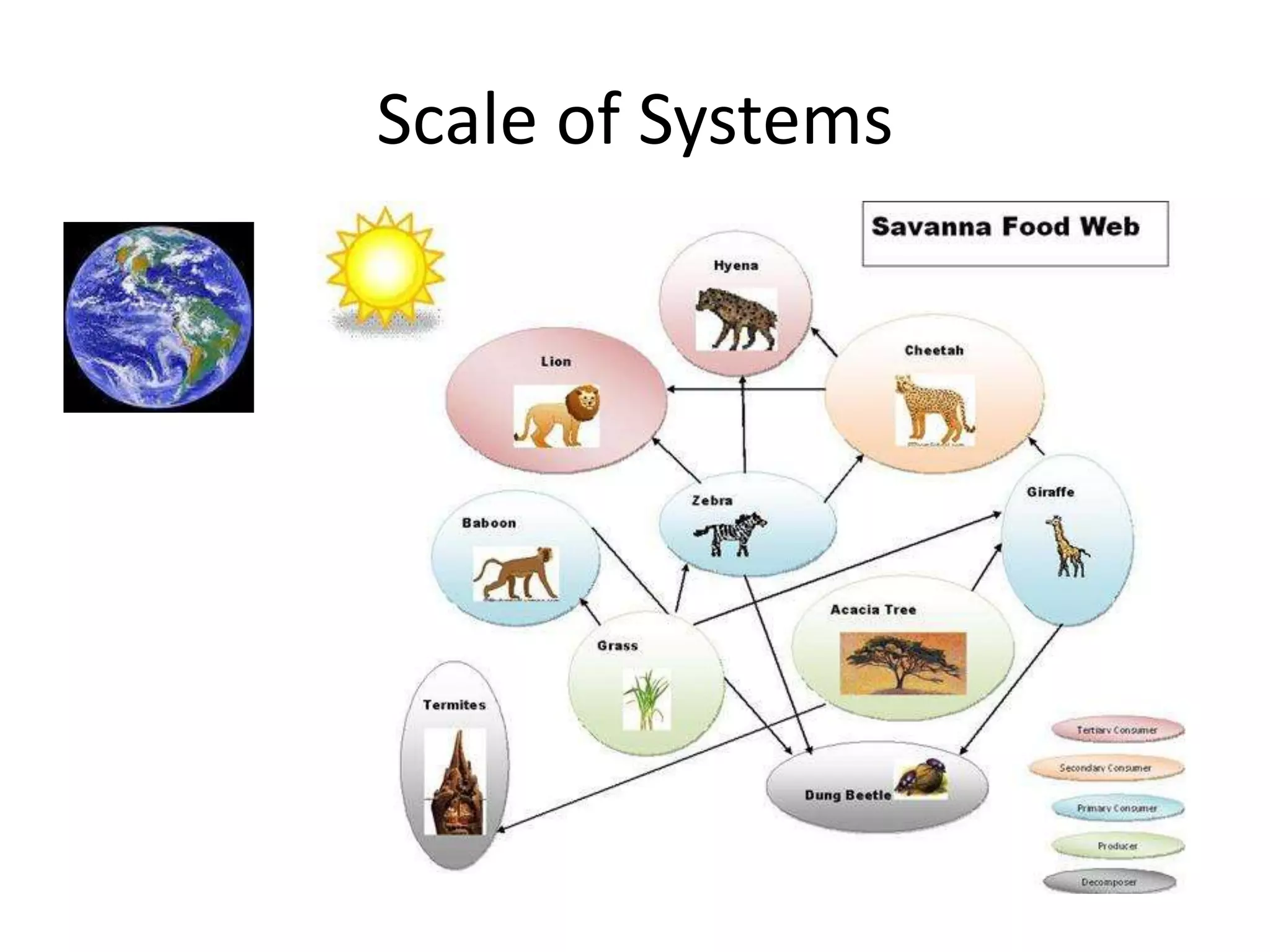
Scale of Systems
Types of SystemsOpenClosedIsolated
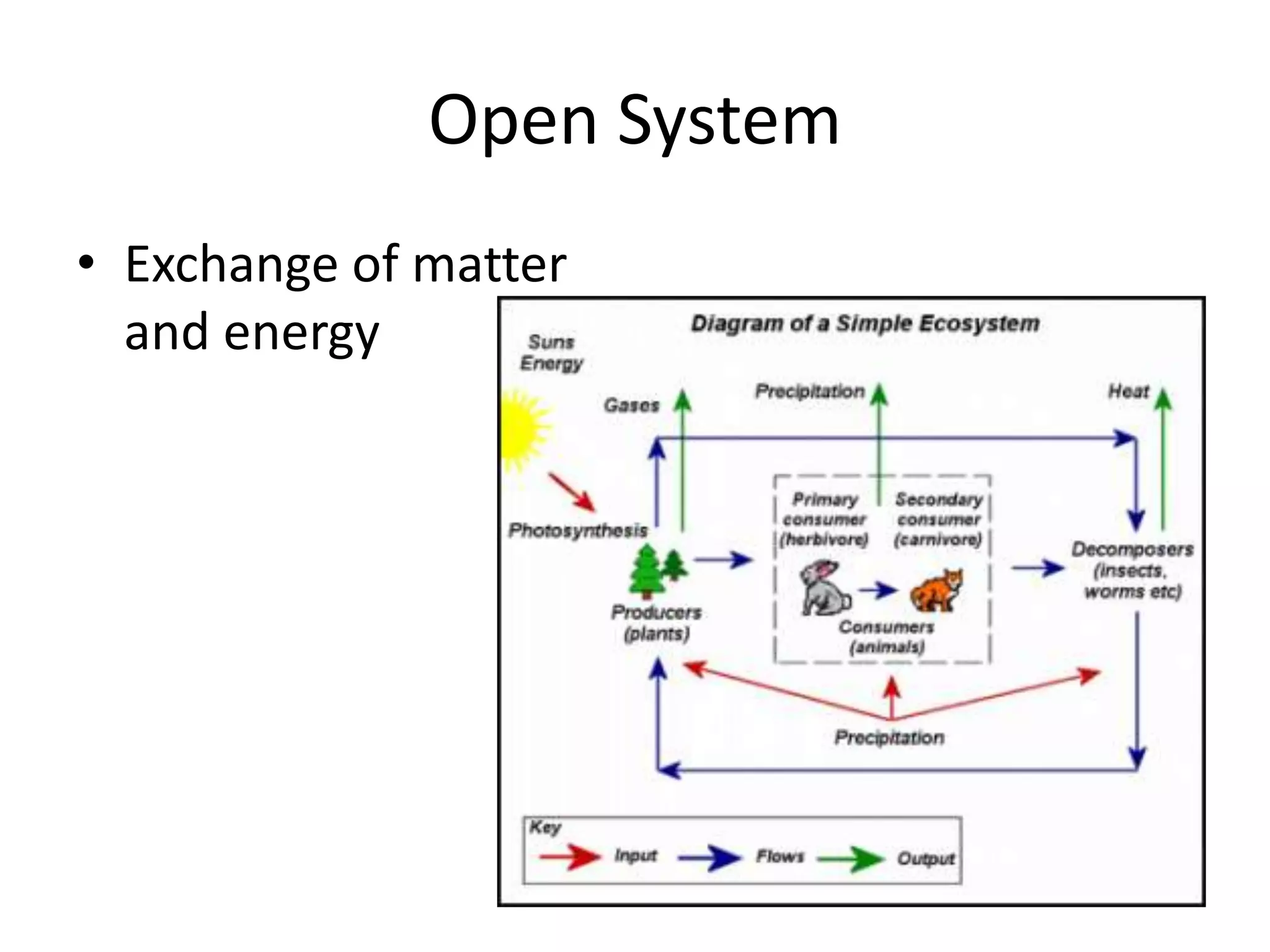
Open SystemExchange of matter and energy
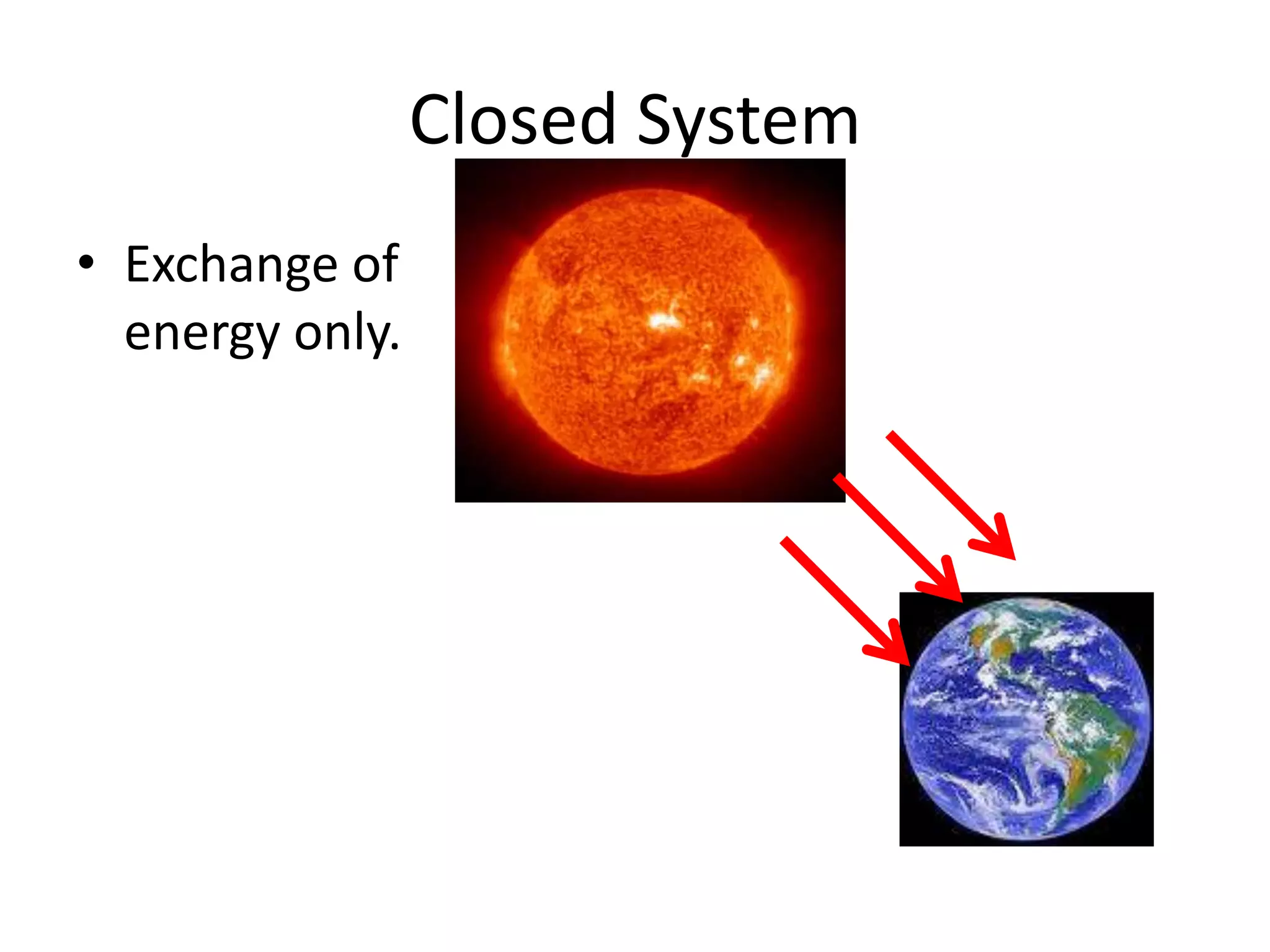
Closed SystemExchange of energy only.
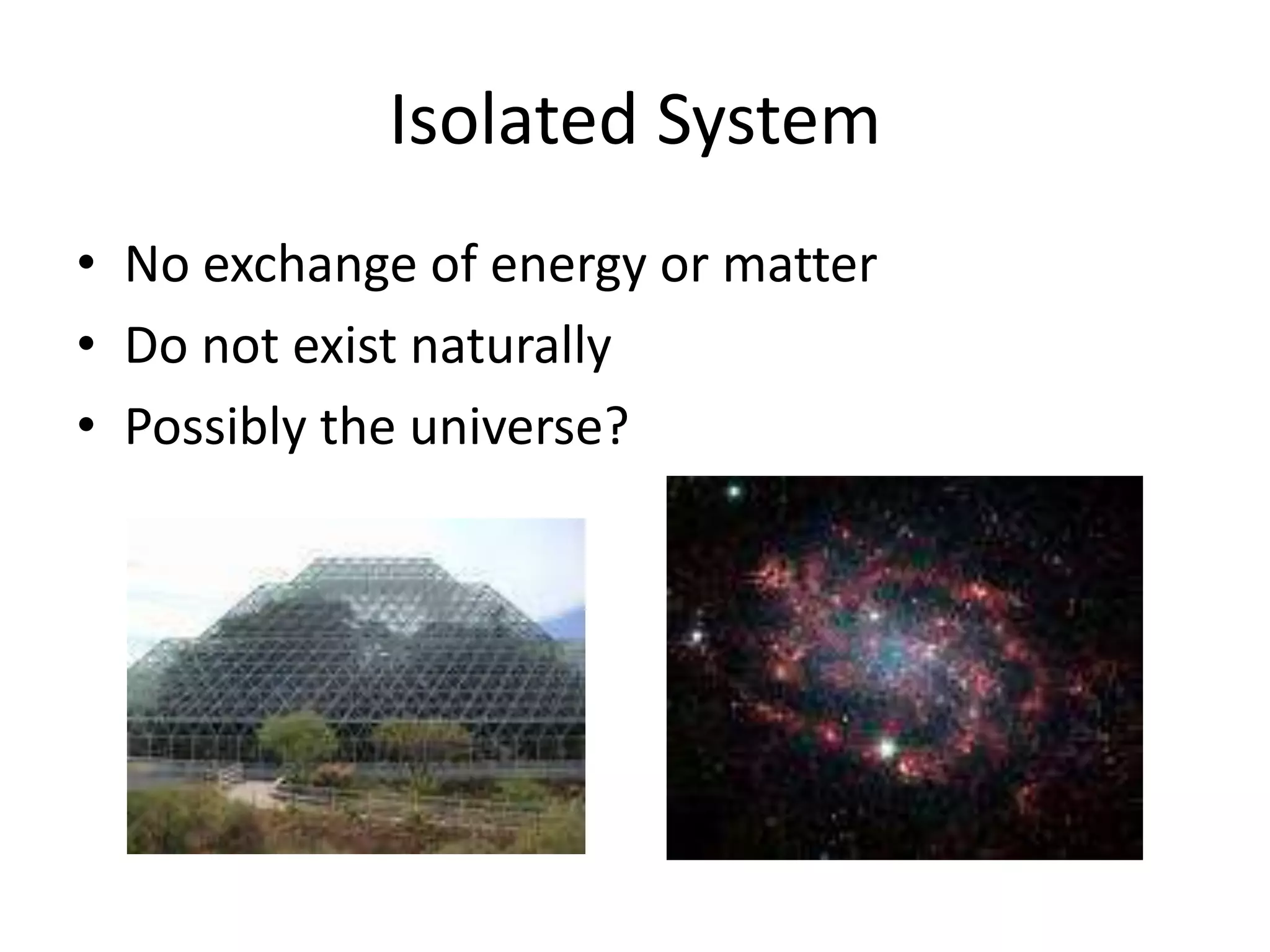
Isolated SystemNo exchange of energy or matterDo not exist naturallyPossibly the universe?
EnergyEnergy in all types of systems follows the laws of thermodynamics.Energy is released in the form of light and heat.Energy can be “stored” in the bonds or organic molecules.
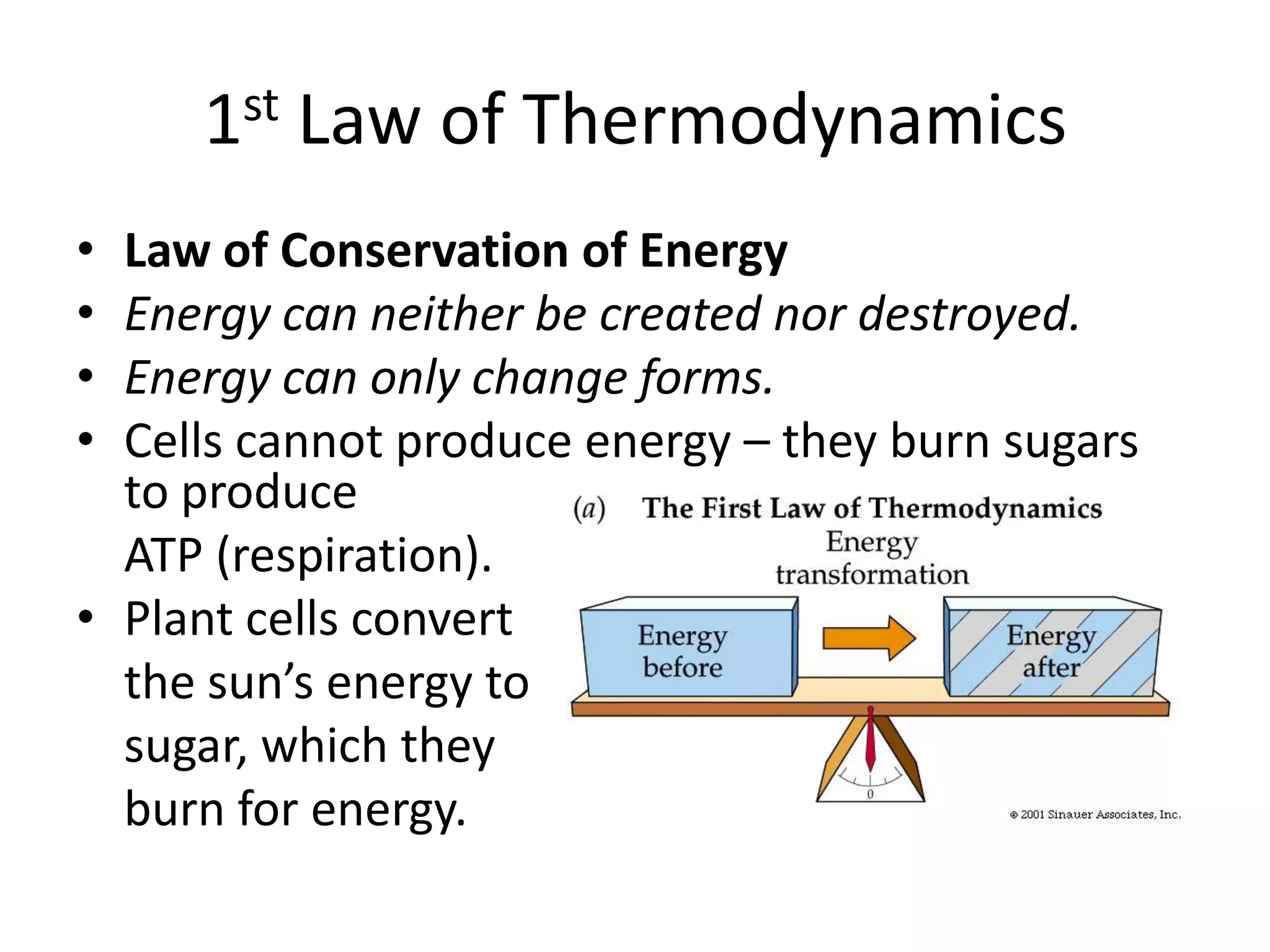
1st Law of ThermodynamicsLaw of Conservation of EnergyEnergy can neither be created nor destroyed.Energy can only change forms.Cells cannot produce energy – they burn sugars to produce    ATP (respiration).Plant cells convert    the sun’s energy to    sugar, which they    burn for energy.
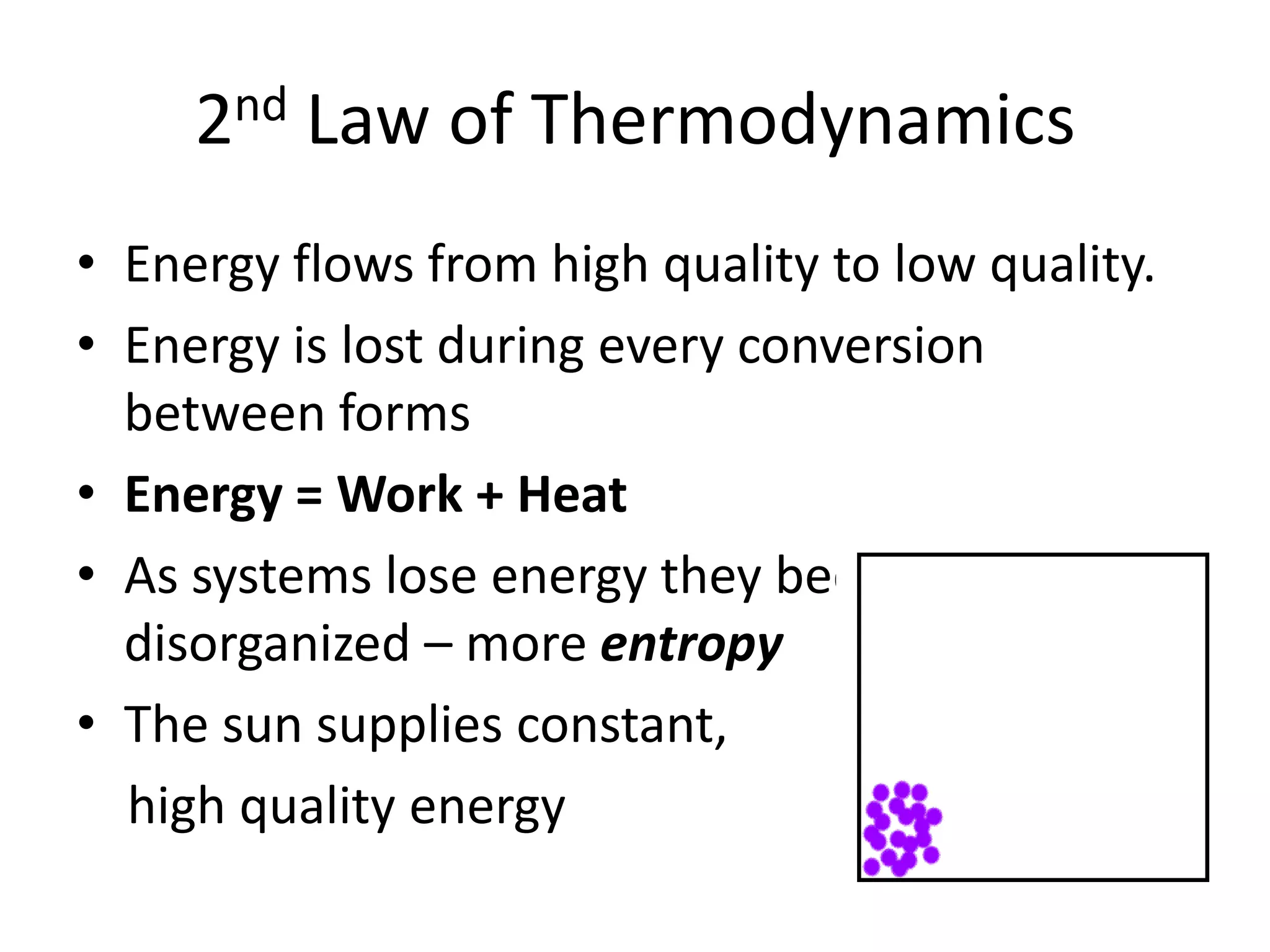
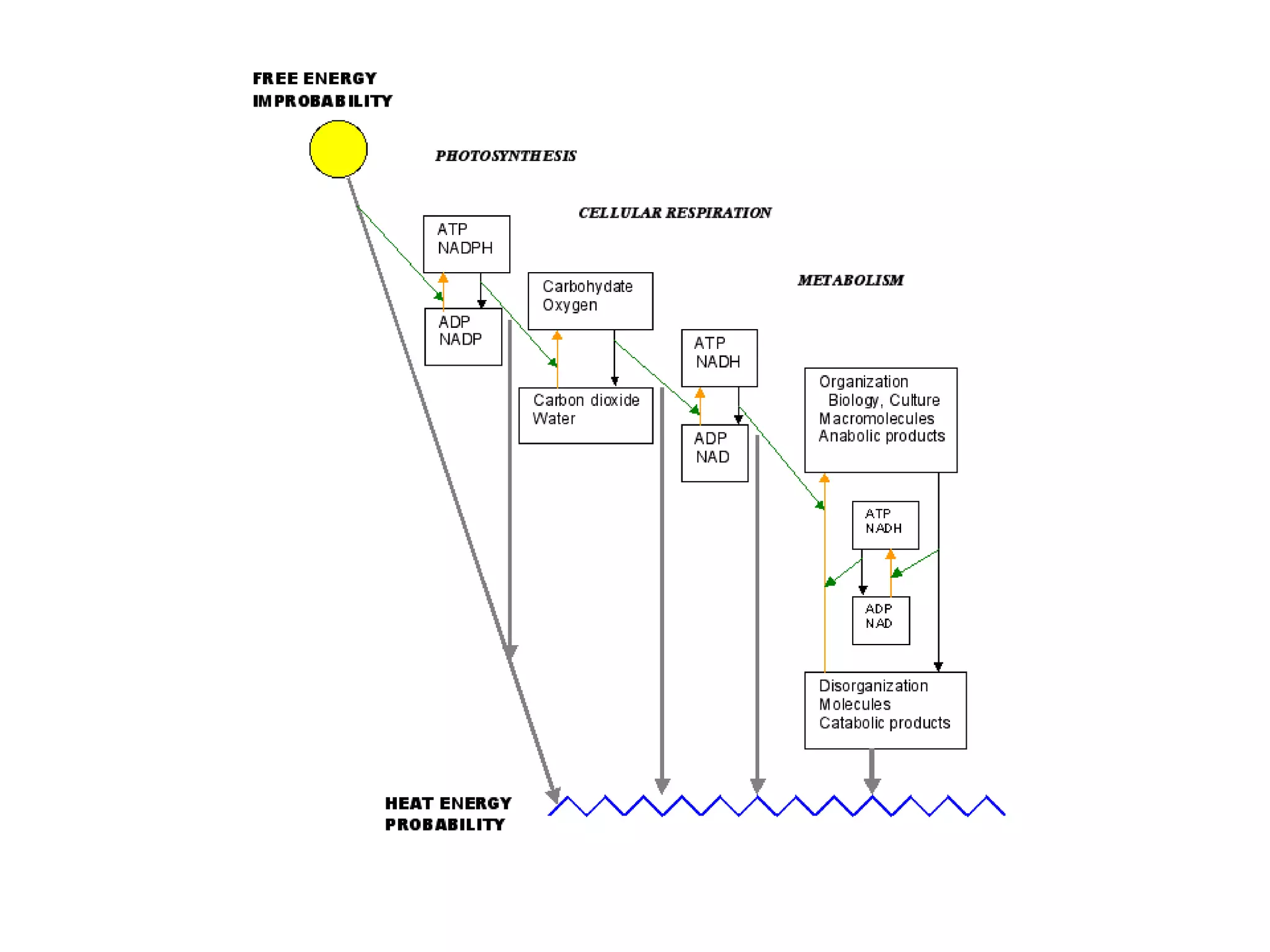
2nd Law of ThermodynamicsEnergy flows from high quality to low quality.Energy is lost during every conversion between formsEnergy = Work + HeatAs systems lose energy they become more disorganized – more entropyThe sun supplies constant,      high quality energy
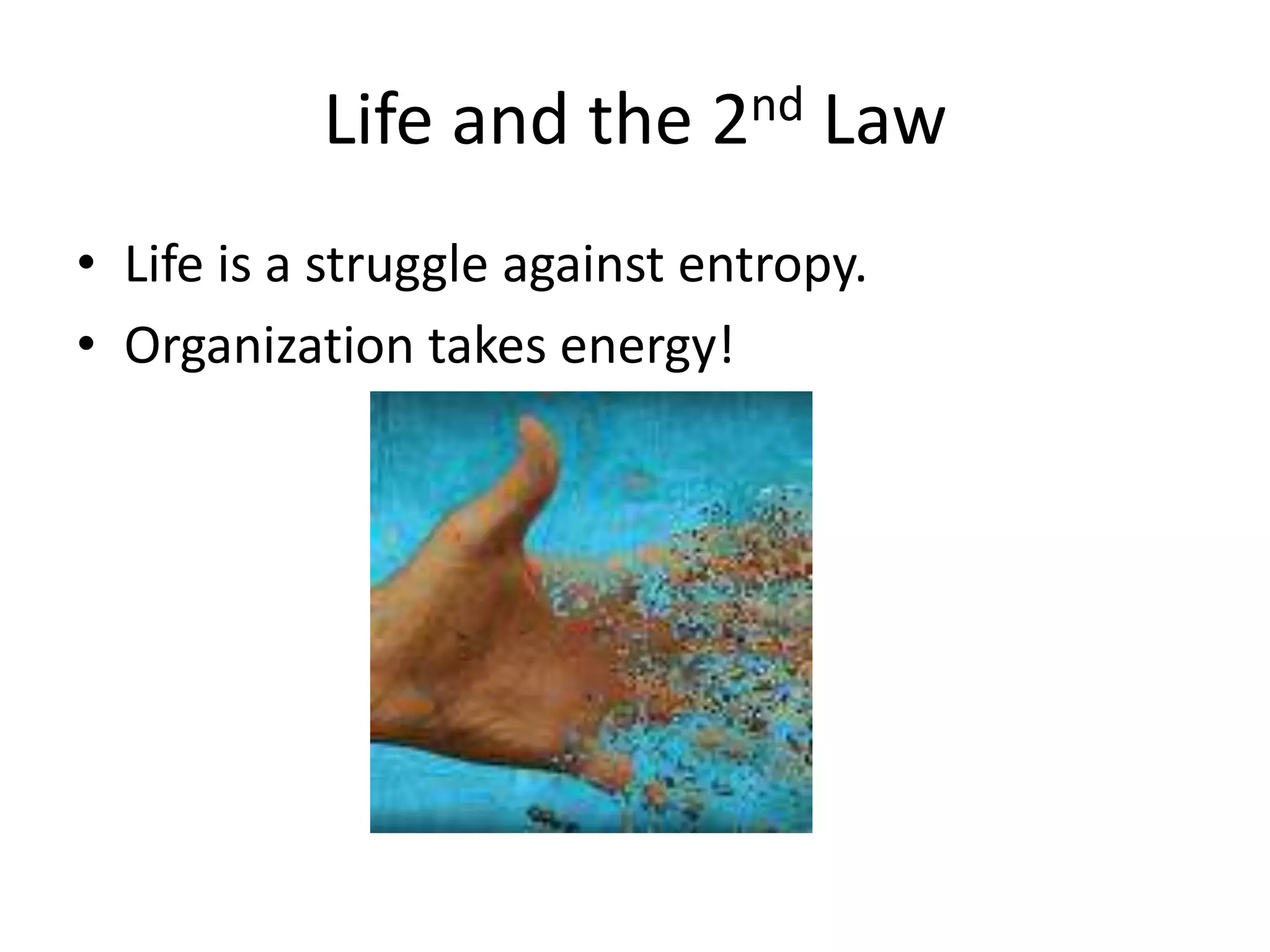
Life and the 2nd LawLife is a struggle against entropy.Organization takes energy!
ENERGYis the foundationof all ecosystems
EquilibriumEcosystems are open systemsOpen systems tend to exist in a state of balance, or equilibriumStatic equilibriumComponents of the system stay unchangedEx: makeup of Earth’s crustDynamic equilibriumThe system is unstable on the short termStays unchanged over the long term
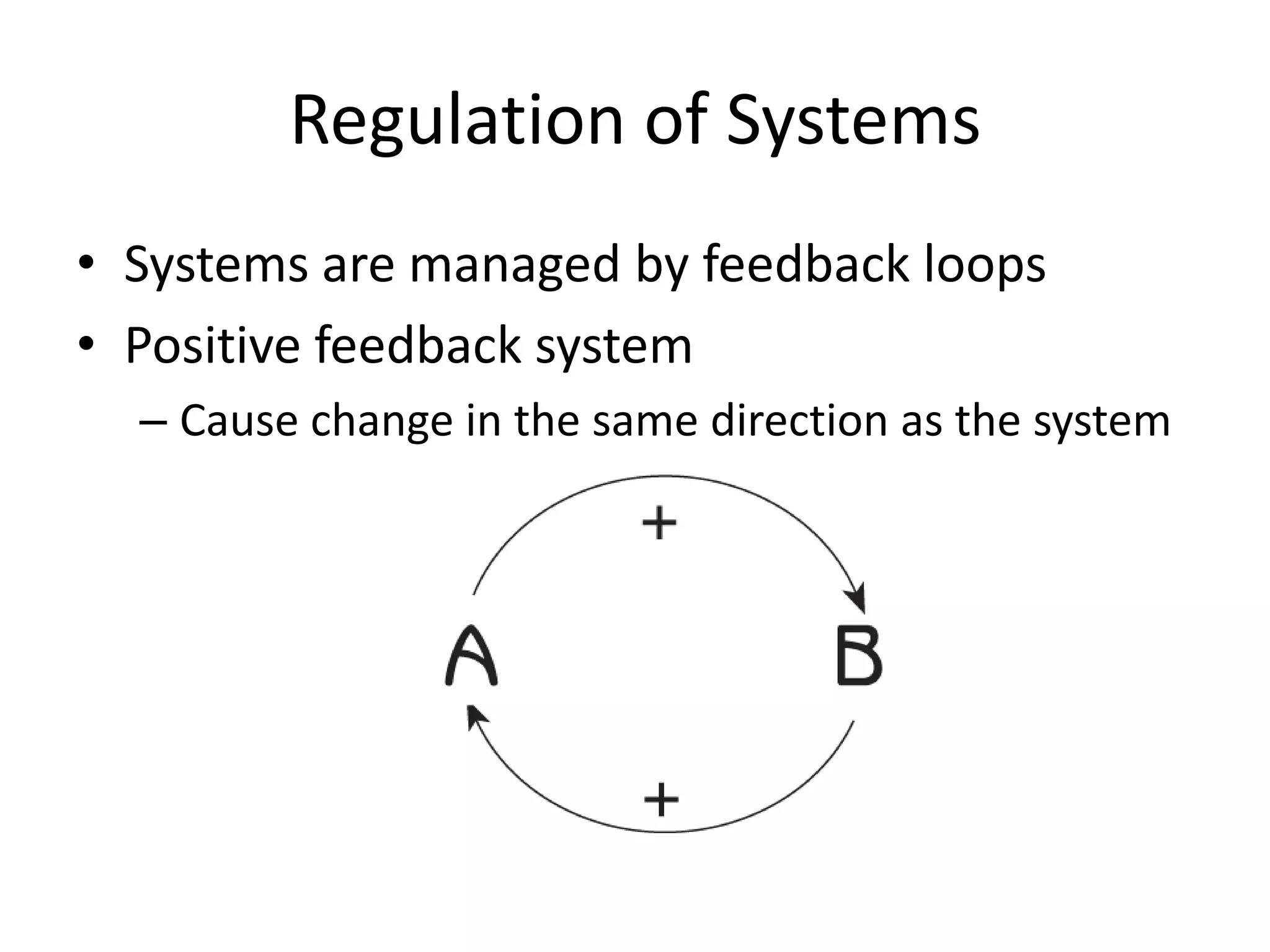
Regulation of SystemsSystems are managed by feedback loopsPositive feedback systemCause change in the same direction as the system
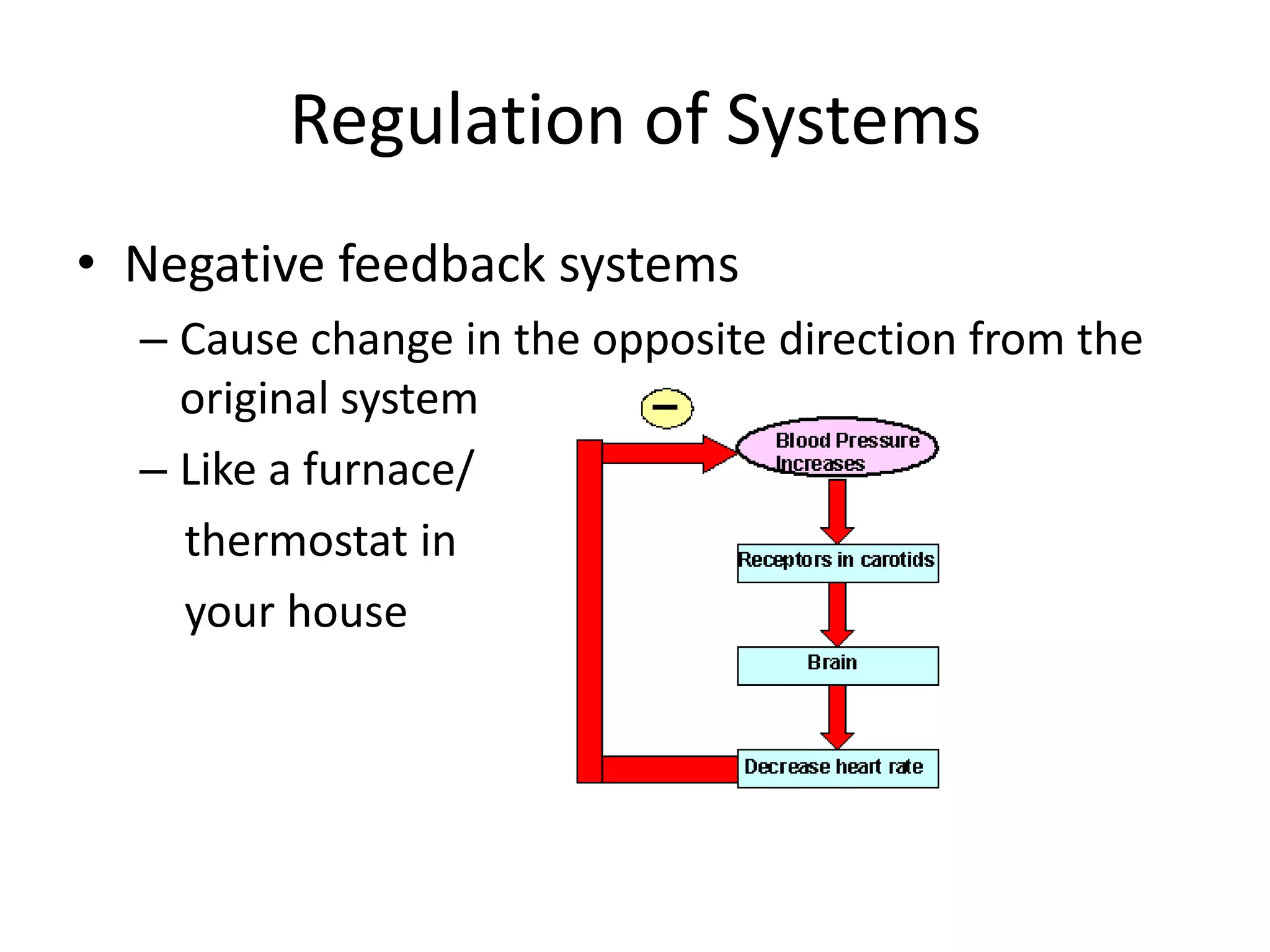
Regulation of SystemsNegative feedback systemsCause change in the opposite direction from the original systemLike a furnace/    thermostat in     your house
Processes Within EcosystemsBoth materials and energy move through ecosystemsMaterials can be recycledEnergy cannot
Two Types of ProcessesTransfersRequire little energyChange in location of material or energyExamplesMovement of materials when one organism eats anotherMovement of water through runoffHeat energy moving in ocean currents, air masses
Two Types of ProcessesTransformationsChange in form of the energy or materialsRequires more energyExamples:Conversion of energy from glucose to ATP during respirationConversion of sun’s energy from light to organic molecules during photosynthesisEvaporation or condensation of waterBurning of fossil fuels
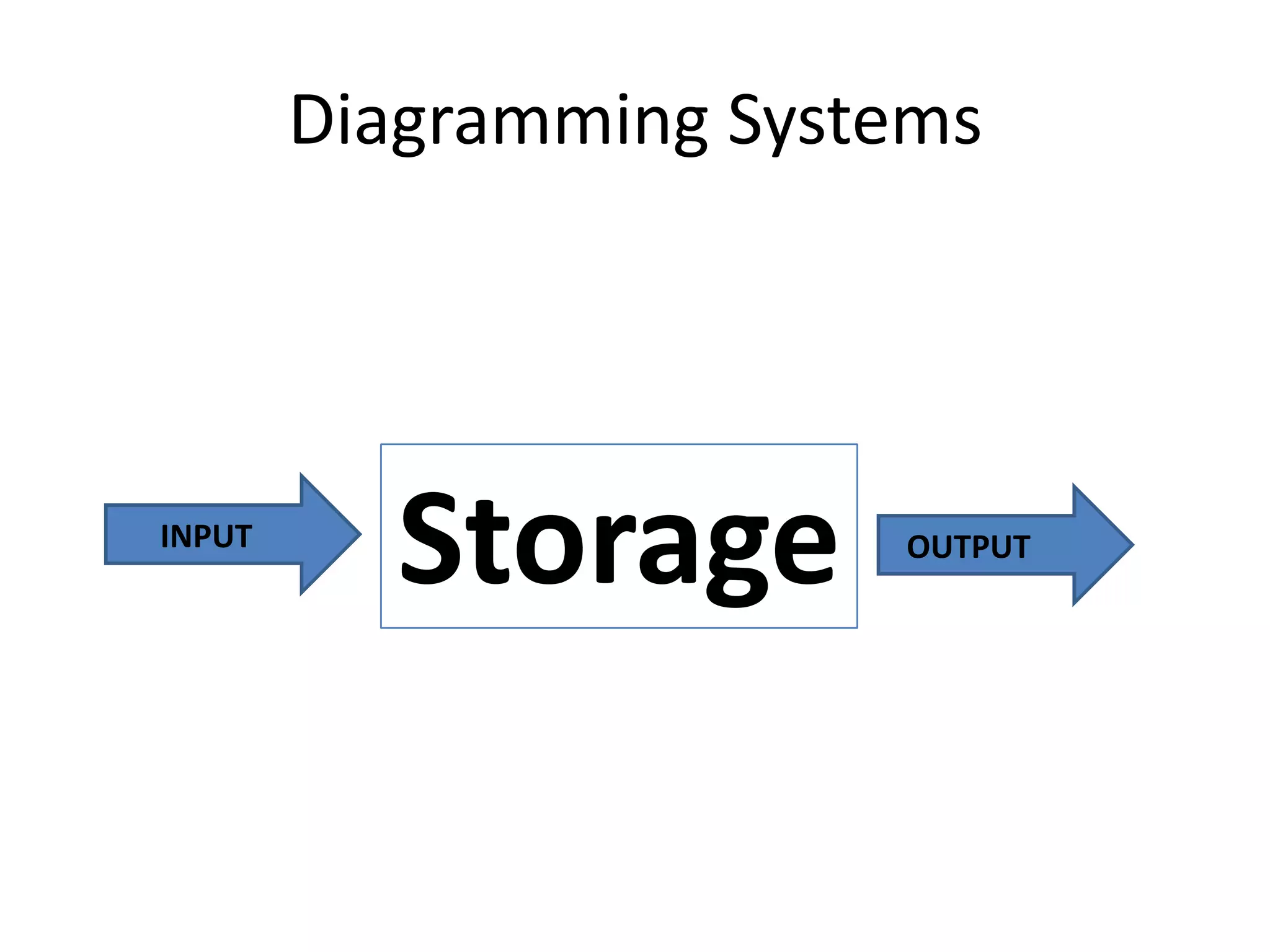
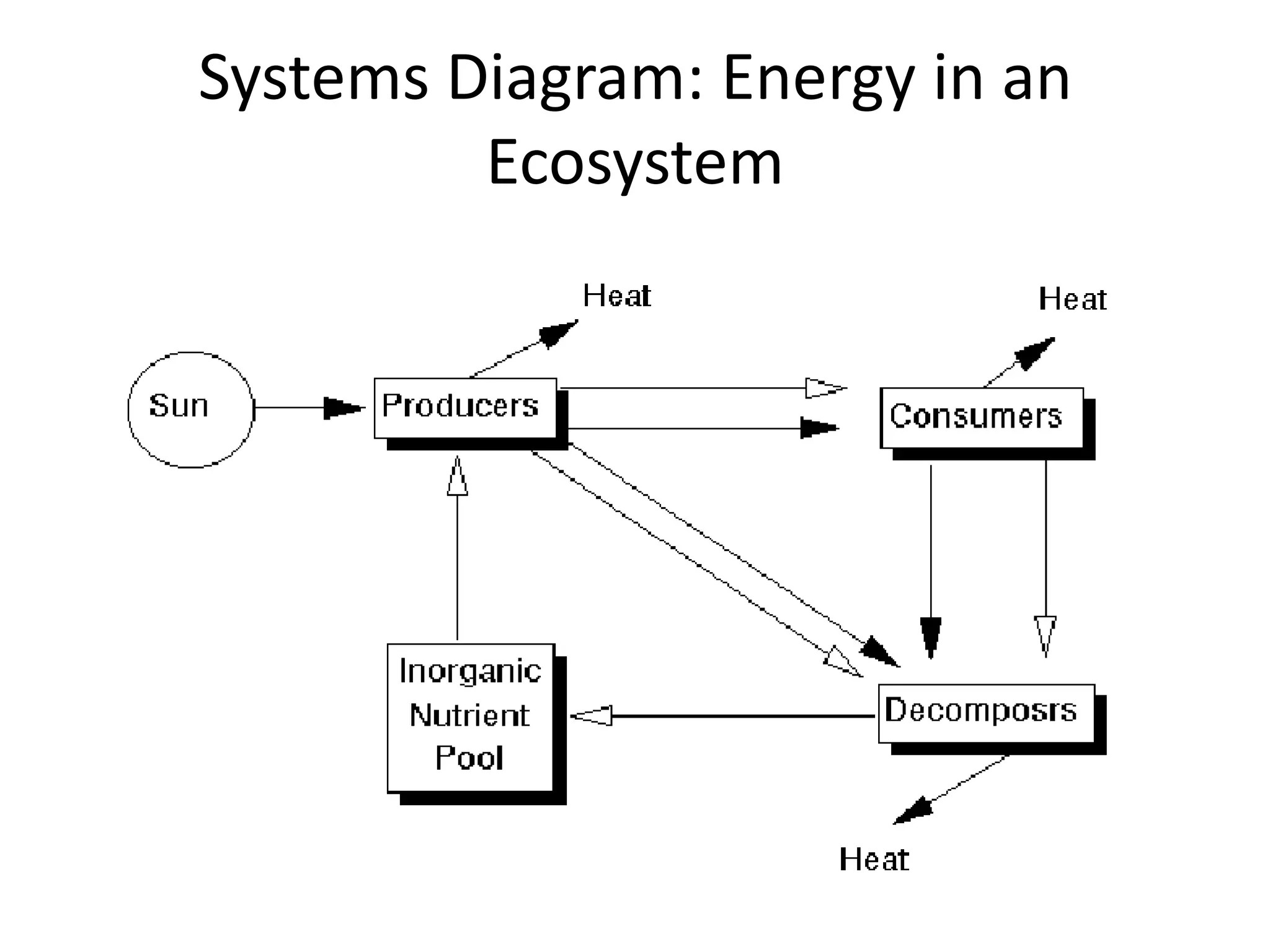
Diagramming SystemsStorageParts of a system where energy or materials accumulateDrawn as a box (think engine in a box)FlowsInputs – movement into the storageOutputs – movement out of the storageCan be transfers or transformations
Diagramming SystemsStorageINPUTOUTPUT
Systems Diagram: Energy in an Ecosystem

Systems On Earth

  • 1.
    Systems on EarthSystem:A group of interacting, interrelated, or interdependent elements forming a complex whole.Synergy:The interaction of two or more agents or forces so that their combined effect is greater than the sum of their individual effects.System > Sum of its Parts
  • 2.
  • 3.
    The Gaia HypothesisJamesLovelockIndependent scientistEarth made of different functioning units that interact with each otherChanged focus of environmental movement
  • 5.
  • 6.
  • 7.
  • 8.
    Open SystemExchange ofmatter and energy
  • 9.
  • 10.
    Isolated SystemNo exchangeof energy or matterDo not exist naturallyPossibly the universe?
  • 11.
    EnergyEnergy in alltypes of systems follows the laws of thermodynamics.Energy is released in the form of light and heat.Energy can be “stored” in the bonds or organic molecules.
  • 12.
    1st Law ofThermodynamicsLaw of Conservation of EnergyEnergy can neither be created nor destroyed.Energy can only change forms.Cells cannot produce energy – they burn sugars to produce ATP (respiration).Plant cells convert the sun’s energy to sugar, which they burn for energy.
  • 13.
    2nd Law ofThermodynamicsEnergy flows from high quality to low quality.Energy is lost during every conversion between formsEnergy = Work + HeatAs systems lose energy they become more disorganized – more entropyThe sun supplies constant, high quality energy
  • 15.
    Life and the2nd LawLife is a struggle against entropy.Organization takes energy!
  • 16.
  • 17.
    EquilibriumEcosystems are opensystemsOpen systems tend to exist in a state of balance, or equilibriumStatic equilibriumComponents of the system stay unchangedEx: makeup of Earth’s crustDynamic equilibriumThe system is unstable on the short termStays unchanged over the long term
  • 18.
    Regulation of SystemsSystemsare managed by feedback loopsPositive feedback systemCause change in the same direction as the system
  • 19.
    Regulation of SystemsNegativefeedback systemsCause change in the opposite direction from the original systemLike a furnace/ thermostat in your house
  • 20.
    Processes Within EcosystemsBothmaterials and energy move through ecosystemsMaterials can be recycledEnergy cannot
  • 21.
    Two Types ofProcessesTransfersRequire little energyChange in location of material or energyExamplesMovement of materials when one organism eats anotherMovement of water through runoffHeat energy moving in ocean currents, air masses
  • 22.
    Two Types ofProcessesTransformationsChange in form of the energy or materialsRequires more energyExamples:Conversion of energy from glucose to ATP during respirationConversion of sun’s energy from light to organic molecules during photosynthesisEvaporation or condensation of waterBurning of fossil fuels
  • 23.
    Diagramming SystemsStorageParts ofa system where energy or materials accumulateDrawn as a box (think engine in a box)FlowsInputs – movement into the storageOutputs – movement out of the storageCan be transfers or transformations
  • 24.
  • 25.