FLAVOUR
Flavor is the sensory impression of food or other, and is determined
mainly by the chemical senses of taste and smell. Flavor is defined as
the combined effect of taste and aroma of food.
The flavor and aroma of food usually declines when it is handled
processed or Stored, like in coffee, milk, and cooked meats.
The five main tastes are
Salty
Bitter
Sour
Pungent
Sweet
• Other tastes include, six fundamental kinds of
aroma:
• Spicy, Flowery, Fruity, Foul, Burned
Flavor in different foods
Tannin.
Mixture of strong astringent acids found in plants,
particularly tea leaves the bark of trees.
• It has the ability to coagulate proteins and is
Responsible for the keeping quality of fine red
wines
Tannic acid
One of the acids in tannin used for flavoring and
as a clarifying agent in beer,
• Wine, cider, and other brewed drinks.
Caffeine
• Coffee owes its characteristic flavor to caffeine
although by itself caffeine without Its aroma has
a faint bitter taste. Coffee also contains alkaloids,
volatile aromatic
• It stimulates the Central Nervous system.
Capsaicin
contained in chilies and is responsible for their
fiery flavour.it is an oily Substance insoluble in
water. The heat of the chilly is measured in
Sackville units.
Alien
• responsible for the flavor of garlic. Garlic
contains0.1-0.36% volatile Alien adjoins,
protein minerals vitamins etc.
Amygolalin
• is present in bitter almonds and can be
hydrolyzed to yield deadly Hydrocyanic acid
Sin grin
present in raw cabbage cabbage should be
cooked for a short time, covered with a lid.
Alcohol
• wine has alcohol which refers to potable liquid
containing ethyl
• Alcohol (C6H5OH) it denotes a class of organic
compounds distinguished by the Presence of
hydroxyl group. Alcohol is produced as a result
of fermentation.
Sculpture compounds
the onion family has strong flavors in the raw
state but Reduce on heating.
CONDIMENTS
• Condiments are aromatic substances added to
food to improve its flavor.
• seasoning “is applied to substances which are
added at the time of cooking
• condiments” apply to those added at the table
to food already prepared
Condiments are classified according to
their dominant flavors:-
Acid- vinegar, lemon juice
Bitter (aromatic) - pepper, paprika
Bitter- garlic, shallot, wheels onion, spring onion,
leek
Fat- oil, butter, fats
Readymade condiments –English sauces
(Worcestershire, Harvey) ketchups, curry
Salt condiments-sodium chloride, sea salt
Sweet condiments-sugar, honey
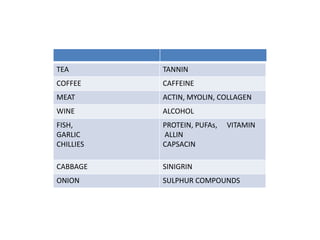
FOOD FLAVOUR
TEA TANNIN
COFFEE CAFFEINE
MEAT ACTIN, MYOLIN, COLLAGEN
WINE ALCOHOL
FISH,
GARLIC
CHILLIES
PROTEIN, PUFAs, VITAMIN
ALLIN
CAPSACIN
CABBAGE SINIGRIN
ONION SULPHUR COMPOUNDS

Flavour in food

  • 1.
    FLAVOUR Flavor is thesensory impression of food or other, and is determined mainly by the chemical senses of taste and smell. Flavor is defined as the combined effect of taste and aroma of food. The flavor and aroma of food usually declines when it is handled processed or Stored, like in coffee, milk, and cooked meats.
  • 2.
    The five maintastes are Salty Bitter Sour Pungent Sweet • Other tastes include, six fundamental kinds of aroma: • Spicy, Flowery, Fruity, Foul, Burned
  • 3.
    Flavor in differentfoods Tannin. Mixture of strong astringent acids found in plants, particularly tea leaves the bark of trees. • It has the ability to coagulate proteins and is Responsible for the keeping quality of fine red wines Tannic acid One of the acids in tannin used for flavoring and as a clarifying agent in beer, • Wine, cider, and other brewed drinks.
  • 4.
    Caffeine • Coffee owesits characteristic flavor to caffeine although by itself caffeine without Its aroma has a faint bitter taste. Coffee also contains alkaloids, volatile aromatic • It stimulates the Central Nervous system. Capsaicin contained in chilies and is responsible for their fiery flavour.it is an oily Substance insoluble in water. The heat of the chilly is measured in Sackville units.
  • 5.
    Alien • responsible forthe flavor of garlic. Garlic contains0.1-0.36% volatile Alien adjoins, protein minerals vitamins etc. Amygolalin • is present in bitter almonds and can be hydrolyzed to yield deadly Hydrocyanic acid Sin grin present in raw cabbage cabbage should be cooked for a short time, covered with a lid.
  • 6.
    Alcohol • wine hasalcohol which refers to potable liquid containing ethyl • Alcohol (C6H5OH) it denotes a class of organic compounds distinguished by the Presence of hydroxyl group. Alcohol is produced as a result of fermentation. Sculpture compounds the onion family has strong flavors in the raw state but Reduce on heating.
  • 7.
    CONDIMENTS • Condiments arearomatic substances added to food to improve its flavor. • seasoning “is applied to substances which are added at the time of cooking • condiments” apply to those added at the table to food already prepared
  • 8.
    Condiments are classifiedaccording to their dominant flavors:- Acid- vinegar, lemon juice Bitter (aromatic) - pepper, paprika Bitter- garlic, shallot, wheels onion, spring onion, leek Fat- oil, butter, fats Readymade condiments –English sauces (Worcestershire, Harvey) ketchups, curry Salt condiments-sodium chloride, sea salt Sweet condiments-sugar, honey
  • 9.
    FOOD FLAVOUR TEA TANNIN COFFEECAFFEINE MEAT ACTIN, MYOLIN, COLLAGEN WINE ALCOHOL FISH, GARLIC CHILLIES PROTEIN, PUFAs, VITAMIN ALLIN CAPSACIN CABBAGE SINIGRIN ONION SULPHUR COMPOUNDS