This document discusses nanobiotechnology and the functionalization of enzymes. It describes various types of nanomaterials like carbon nanotubes, quantum dots, and dendrimers that can be used as matrices for enzyme immobilization. Methods of immobilizing enzymes on nanomaterials include electrostatic adsorption, covalent attachment, conjugation using protein affinity, and direct conjugation. Immobilizing enzymes provides benefits like increased stability but can introduce mass transfer limitations. Overall, nanomaterials provide a high surface area support for immobilizing enzymes with various applications.
NANOBIOTECHNOLOGY-
Types of Nanomaterialsand
Functionalization of Enzymes
SUBMITTED TO- Dr. RANJEETA BHARI
SUBMITTED BY- NEHA SINGLA
M.Sc.(Hon’s) Biotechnology
ROLL NO.- 18011001
2.
Contents-
• INTRODUCTION
• HISTORY
•WHERE ARE NANOMATERIALS FOUND?
• MATERIALS AT NANOSCALE CAN HAVE DIFFERENT PROPERTIES
• TYPES OF NANOMATERIALS
• WHY NANOMATERIALS ARE IMPORTANT?
• NANOMATERIAL SYNTHESIS AND PROCESSING
• Nano materials as matrices for enzyme immobilization
• FUNCTIONALIZATION OF NANOPARTICLE
• METHODS OF IMMOBILISATION ON NANOMATERIALS
• ADVANTAGE AND DISADVANTAGE OF IMMOBILISATION ON NANOMATERIAL
• REFERENCES
3.
NANOBIOTECHNOLOGY-
• The term“nano” has been derived from Greek word “nanos” which
means dwarf.
So how much exactly one nanometer is ??
If a marble were a nanometer, then one meter would be the size of the
earth.
To be more precise 1-100nm size particles are used for nanotechnology.
The ability to manipulate atoms and molecules at the molecular level is
very exciting thing, but the fact that we could use it for our benefit is
more mind boggling
4.
HISTORY-
• Richard Feynman
•1959, entitled ‘There's Plenty of Room at the Bottom’
He presented ideas for creating nanoscale machines to
manipulate, control and image material at atomic scale.
• Tokyo Science University professor Norio Taniguchi
• 1974 to describe the precision manufacture of materials
with nanometre tolerance (Top-down approach)
• He coined the term nanotechnology
5.
• K EricDrexler
• 1986 , discussed Bottom-up approach of nanomaterials in
his book “ Engines of Creation “.
• Nanotechnology and Nano-Science got started in early
1980’s with two major developments:
Birth of cluster science
Invention of Scanning Tunneling Microscope by Gerd
Binnig and Rohrer in 1981
• In 1986, Atomic Force Microscope was invented .
6.
WHERE ARE NANAOMATERIALSFOUND?
• Naturally occuring nanostructures are present in volcanic
ash, ocean spray ,fine sand and dust. Also present in plants
and animals.
• For example-nanostructure ensures an antireflection and
water repelling effect so they can fly safely.
• Nowadays, scientist can create nanostructure themselves by
rearranging the atoms of an object , they can make new
nanomaterial with new properties. That are stronger, lighter
or different in colour.
7.
• Some nanomaterialsoccur naturally , but of particular
interest are engineered nanomaterials, which are designed
for , and already being used in many commercial products
and processes. They can be found as sunscreens , cosmetics ,
stain resistant clothing, tires ,electronics as well as in
medicine purposes of diagnostic ,imaging and drug delivery.
8.
MATERIALS AT NANOSCALECAN HAVE
DIFFERENT PROPERTIES-
• Nanomaterials have a much greater surface area to volume
ratio , which can lead to greater chemical reactivity and
affect their strength
• Also at nano scale, quantum effects can become much more
important in determining the materials properties and
characteristics, leading to novel optical, electrical and
magnetic behaviours.
9.
TYPES OF NANOMATERIALS-
•Nanomaterials can be nanoscale in one dimension(eg surface films),
two dimensions (eg strands of fibres), or three dimensions (eg.
Particles).
• They can exist in single, fused, aggregated or agglomerated forms
with spherical, tubular and irregular shapes.common types of
nanomaterial includes-
• Nanotubes
• Dendrimers
• Quantum dots
• Fullerenes
• composites
10.
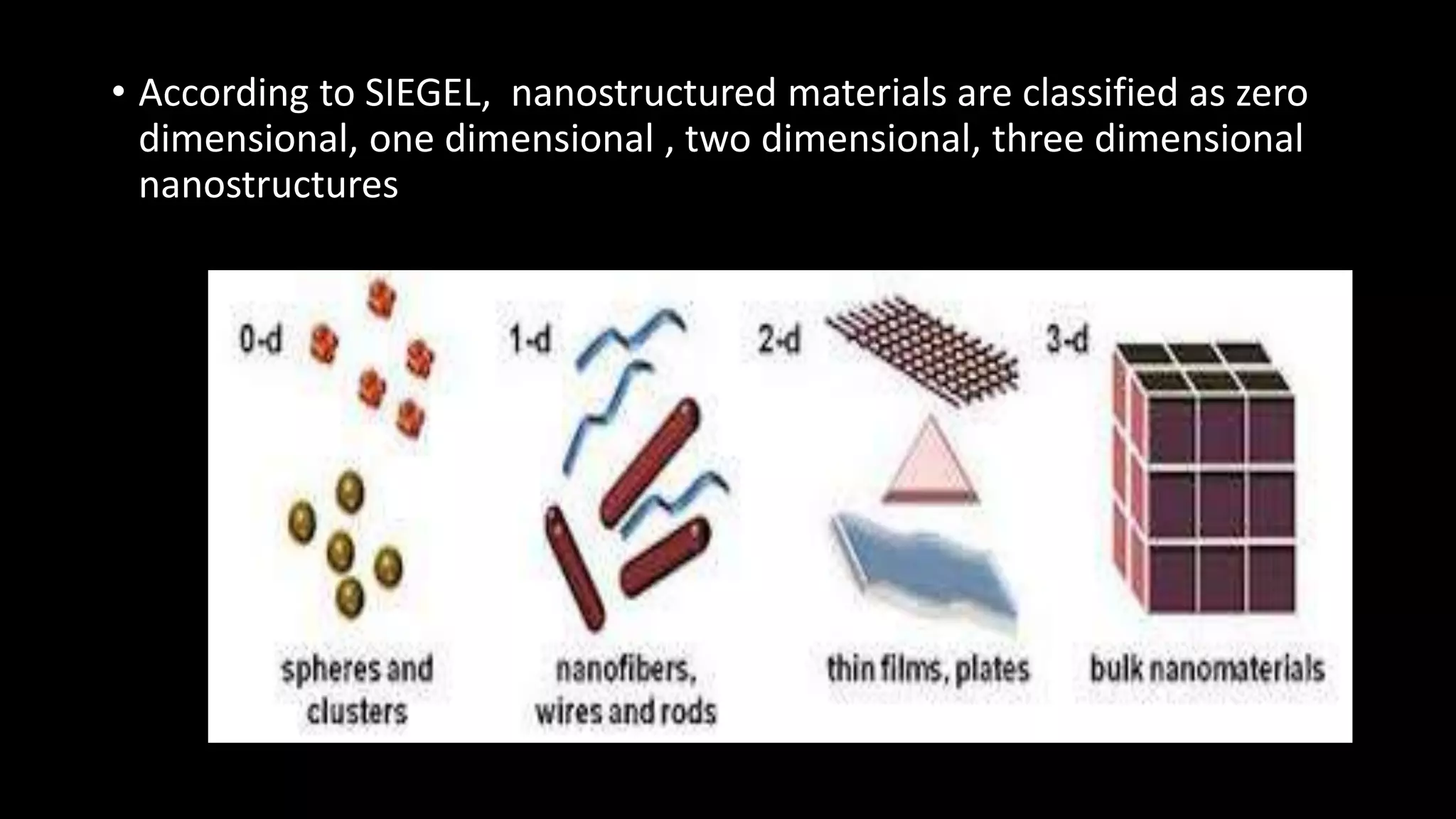
• According toSIEGEL, nanostructured materials are classified as zero
dimensional, one dimensional , two dimensional, three dimensional
nanostructures
11.
Nanomaterials can beclassified primarily into two
types:
Natural and artificially fabricated
• Natural nanomaterials: These include nanomaterials that exist in
biological systems
e.g. viruses(capsid), substances in our bone matrix, ribosome
machinery, ATPase etc
• Artificial nanomaterials: These are the ones that are fabricated
by different experiments. They can further sub-divided into 4
classes:
12.
Carbon Based: Thesenanomaterials are composed mostly of
carbon, most commonly taking the form of a hollow spheres, ellipsoids,
or tubes. Spherical and ellipsoidal carbon nanomaterials are referred to
as fullerenes, while cylindrical ones are called carbon nanotubes(CNTs).
• In 1985 ; Smalley , Curl and Kroto invented a new form of carbon
made of 60 carbon atoms known as Bucky balls.
• Graphite can be rolled into cylinder with a diameter of about 1 nm.
These strong but light carbon nanotubes are used in sensors,
computers and televisions.
13.
• Metal Based:These nanomaterials include quantum dots, nanogold,
nanosilver and metal oxides, such as titanium dioxide. Metal particle
size can be controlled by changing temperature, pressure,
concentration, pH, ultrasound application. With increase in
temperature there will be decrease in particle size.
• Nucleation is required for growth of nanoparticles
• Homogenous nucleation-
• Form simultaneously and uniformly throughout the solution
• Heterogenous nucleation-
• Ag+ +e- Ag0(seed)
Ag0 + Ni2+ + 2e- Ni0 (nano scale particle)
• Dendrimers: These nanomaterials are nanosized polymers built from
branched units. The surface of a dendrimer has numerous chain ends,
which can be tailored to perform specific chemical functions.
14.
• The three-dimensionaldendrimers contain interior cavities into which
other molecules could be placed, they may be useful for drug
delivery.
• Composites: Composites combine nanoparticles with other
nanoparticles or with larger, bulk-type materials. The composites may
be any combination of metal based, carbon based or polymer based
nanomaterials with any form of metal, ceramic, or polymer bulk
materials
15.
NANOMATERIALS AS IMMOBILISATIONMATRICES-
• CARBON BASED-mostly in spheres, ellipsoides or tubes form
•CARBON NANOTUBES AND FIBRES-
• Graphite's filaments/whiskers with diameter between 0.4 to
500nm
• Produced by diffusion of carbon through metal catalyst(usually Ni
or Co) and subsequently precipitation as graphite filaments
• Classified into three structural types based on angle of graphene
layers to filament axis-
• Stacked
• Herring bone/cup stacked
• Nano tubular
16.
CARBON NANOTUBES-
Tiny stripsof graphite are rolled into tubes
• Both single walled carbon nanotubes (SWNT) and
multiwalled carbon nanotubes (MWNT) have been used for
immobilization of protein/enzyme .MWNT have more
dispersive properties. MWNT have interlayer distance of 3.4
angstrom.
- High electrical conductivity
- Mechanical strength
- Species can easily adsorb onto surface
• CARBON NANOFIBRES-
Enzymescan be immobilized inside or outside the fibre hence
providing more surface area.
• Are defined as fibres with diametres less than 100nm
Applications-
Skin cleansing, skin therapy, skin healing
Filtration media, liquid filtration, gas filtration
19.
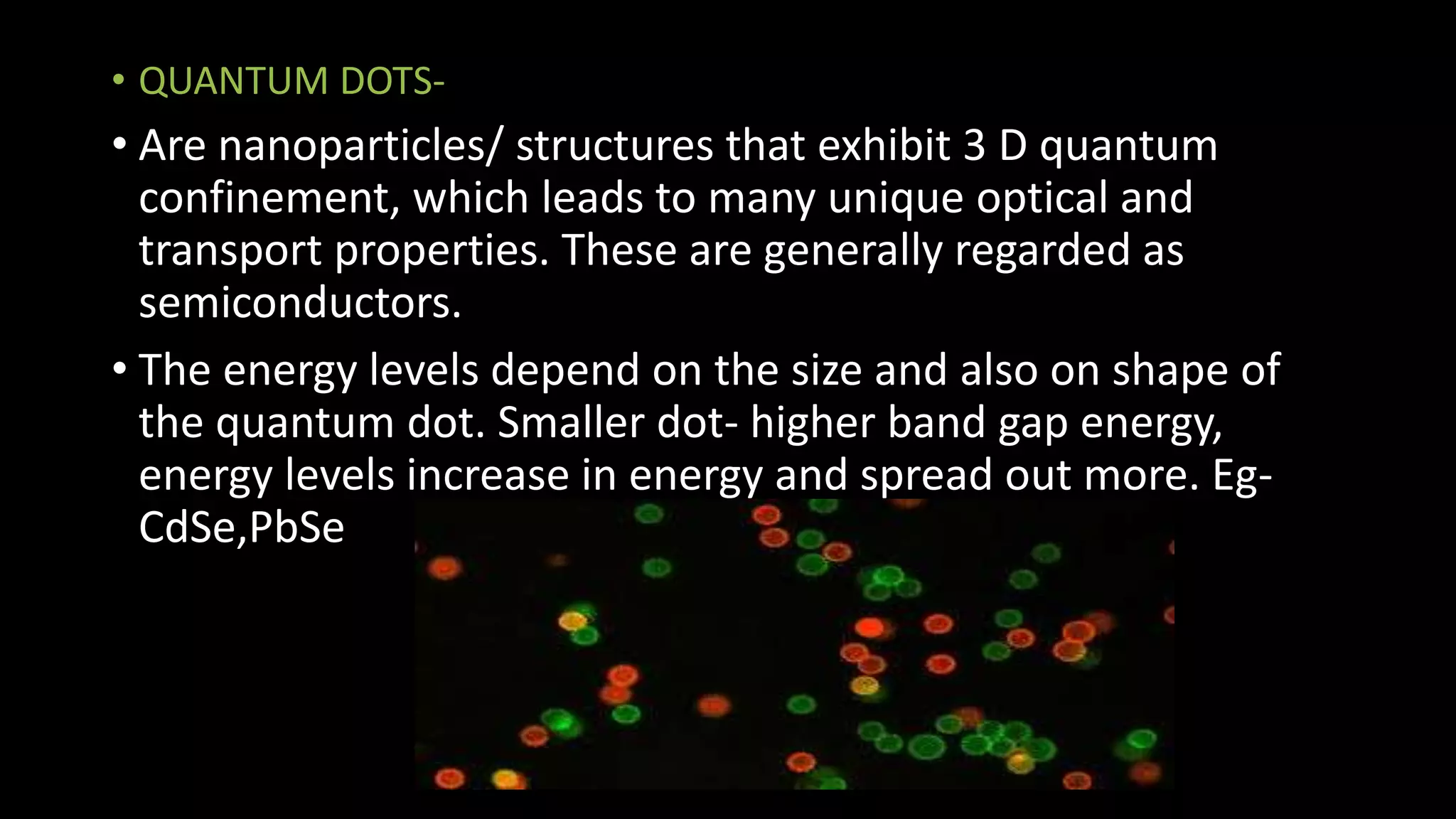
• QUANTUM DOTS-
•Are nanoparticles/ structures that exhibit 3 D quantum
confinement, which leads to many unique optical and
transport properties. These are generally regarded as
semiconductors.
• The energy levels depend on the size and also on shape of
the quantum dot. Smaller dot- higher band gap energy,
energy levels increase in energy and spread out more. Eg-
CdSe,PbSe
20.
SOL GEL-
• SOLis a stable dispersion of colloidal particles or polymers in a
solvent
• Consist of liquid with colloidal particles which are not dissolved ,but
do not agglomerate or sediment
• Gel is dried by evaporation, capillary forces will result in shrinkage ,
the gel network collapse.(disadvantage)
• MOR + H2O → MOH + ROH
(hydrolysis)
• MOH + ROM → M-O-M + ROH
(condensation)
21.
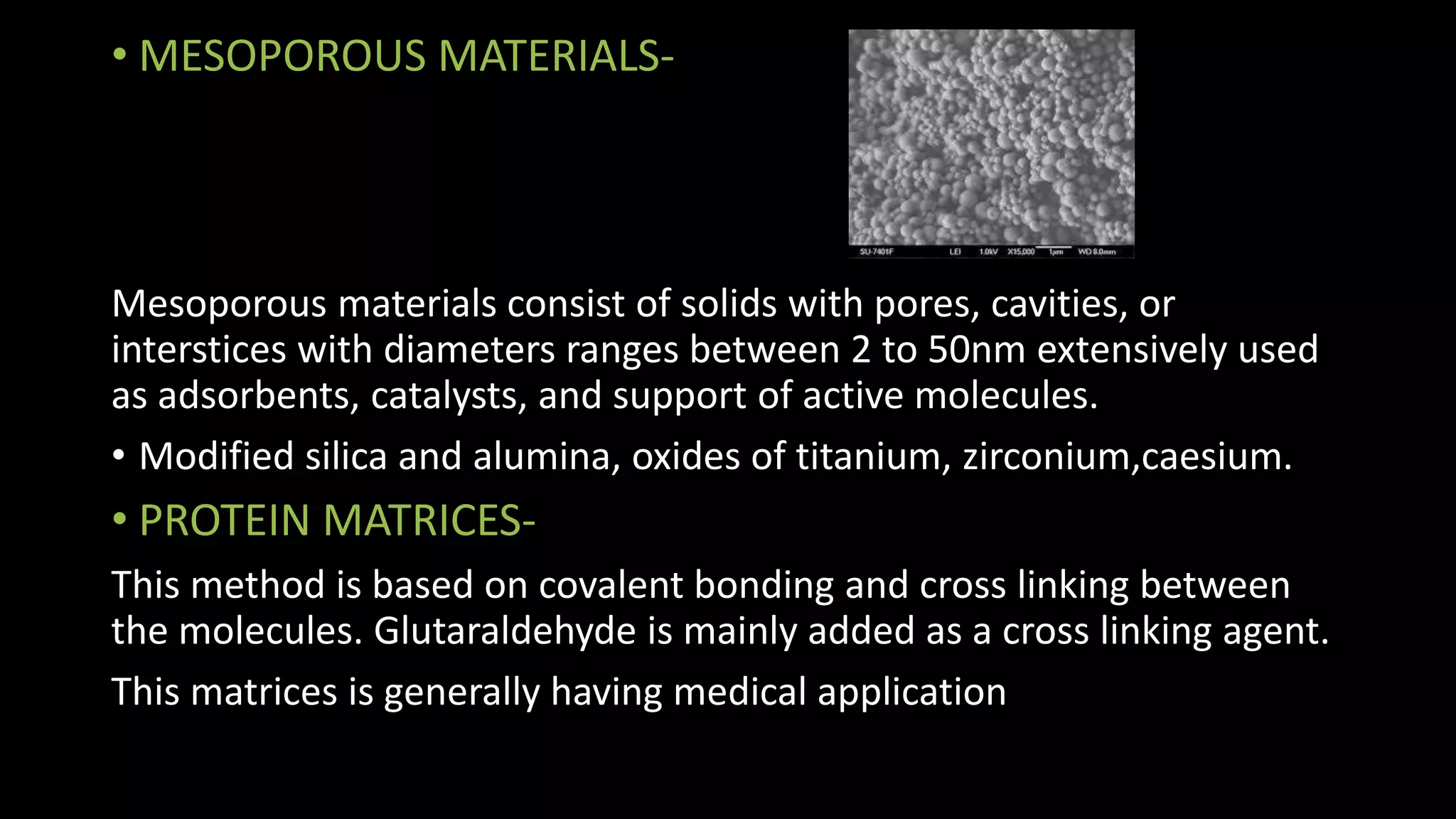
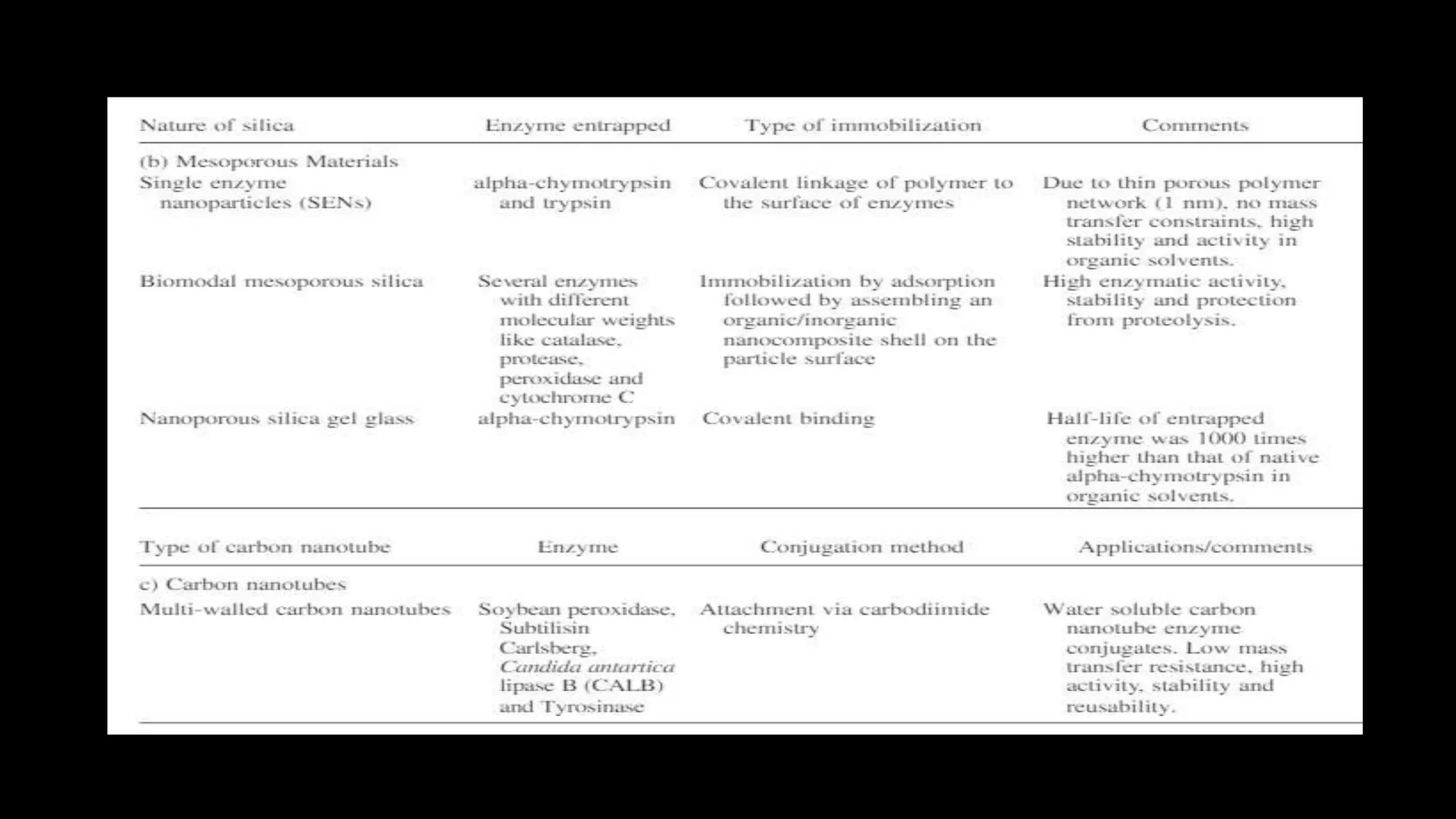
• MESOPOROUS MATERIALS-
Mesoporousmaterials consist of solids with pores, cavities, or
interstices with diameters ranges between 2 to 50nm extensively used
as adsorbents, catalysts, and support of active molecules.
• Modified silica and alumina, oxides of titanium, zirconium,caesium.
• PROTEIN MATRICES-
This method is based on covalent bonding and cross linking between
the molecules. Glutaraldehyde is mainly added as a cross linking agent.
This matrices is generally having medical application
22.
WHY ARE NANOMATERIALSIMPORTANT?
• Have created a high interest in recent years by virtue of their unusual
mechanical, electrical, optical and magnetic properties.
• Nanomaterial ceramics are of particular interest because they are
more ductile at elevated temperatures as compared to the coarse
grained ceramics.
• Polymer based composites with a high content of inorganic particles
leading to a high dielectric constant are interesting materials for
photonic band gap structure.
• Nanostructured metal oxide thin films are receiving a growing
attention for the realization of gas sensors with enhanced sensitivity
and selectivity
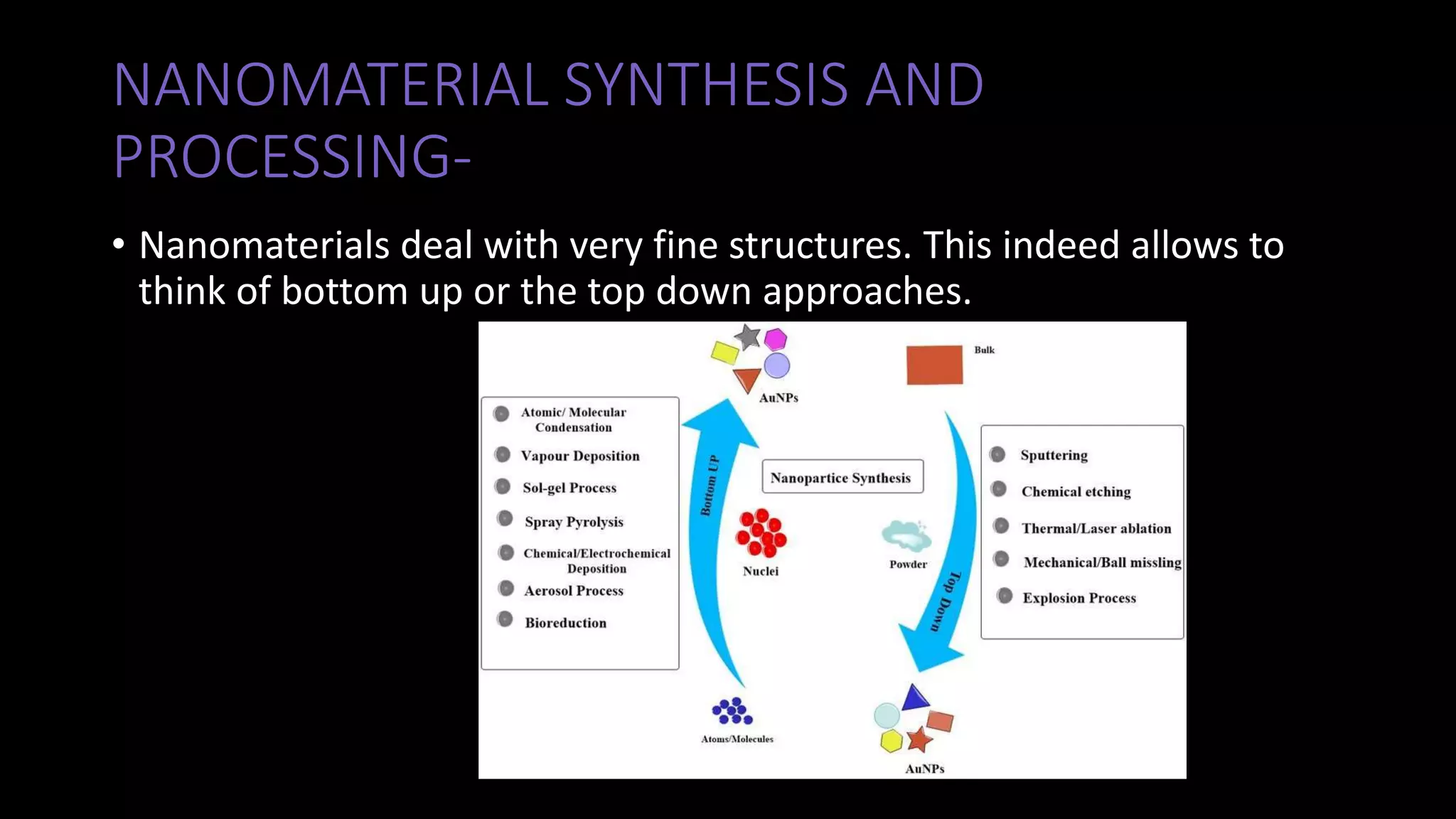
• Bottom-Up approach:- Materials and devices are built from
molecular atom which assemble themselves chemically by principles
of molecular recognition.
• Top-Down approach :- Nano-objects are constructed from larger
entities without atomic level control Eg – Sol Gel method
25.
IMMOBILISATION-
• Enzyme immobilizationwas discovered in 1916, found that activity of
invertase enzyme does not get hampered when it is adsorbed on solid
surface matrix such as charcoal .
• This lead foundation to the currently available enzyme immobilization
techniques.
• Initially enzyme loading was low as compared to available surface
area.
• Immobilization improve properties of enzyme resistance to changes in
environment and stability.
26.
IDEAL SUPPORT PROPERTIES-
• physical resistance to compression
• hydrophilicity
• inertness toward enzymes ease of derivatization
• biocompatibility
• resistance to microbial attack
• availability at low cost
27.
Nanomaterials as matricesfor enzyme
immobilization :-
• Nanomaterials constitute novel and interesting matrices for enzyme
immobilization.
• While their high surface to volume ratio is an obvious advantage,
their Brownian motion can impact the behavior of enzymes
immobilized on these matrices.
• High enzyme loading with minimum mass transfer resistant and
effective enzyme loading
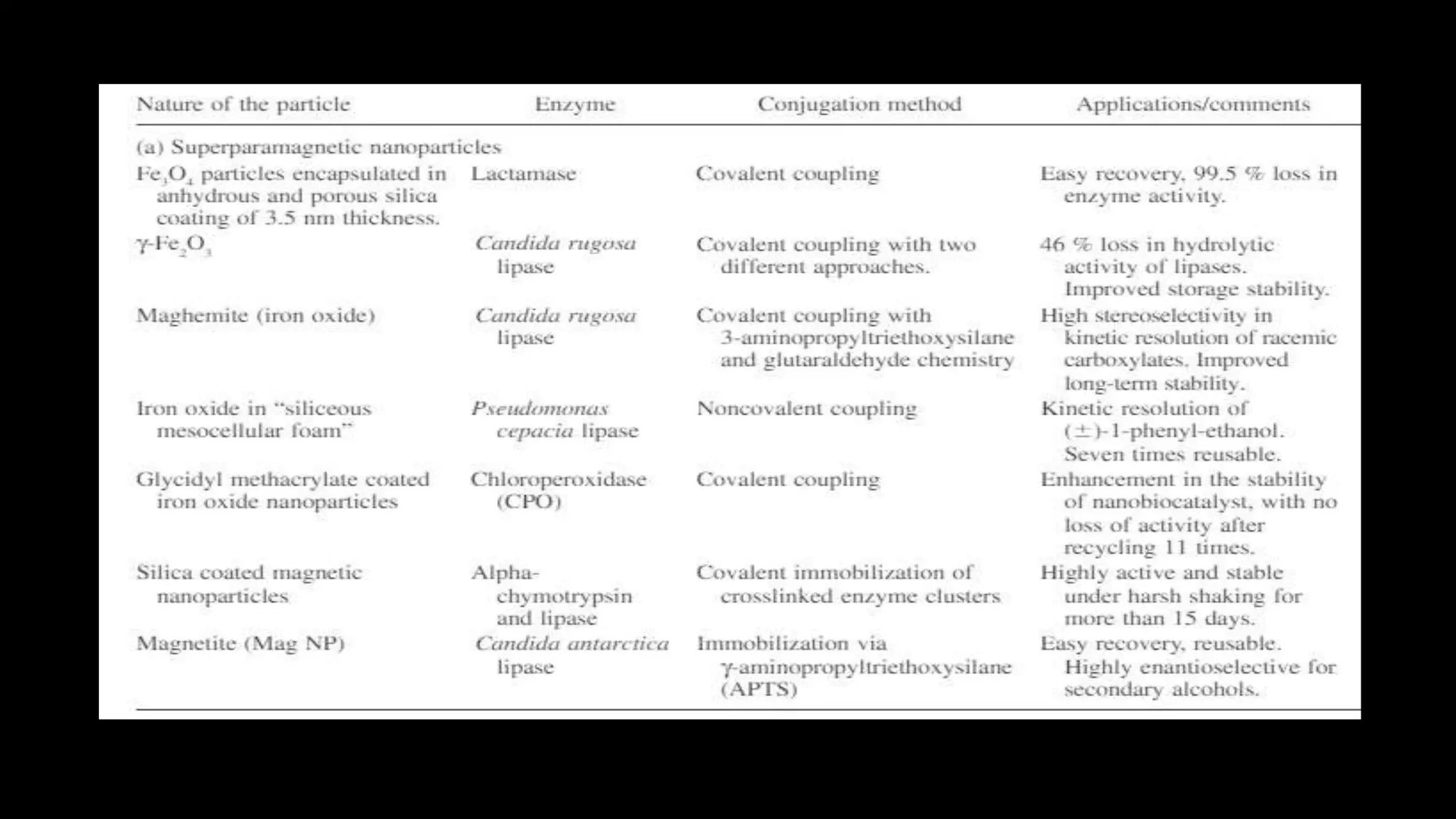
• Carbon nanotubes, superparamagnetic nanoparticles, and
mesoporous materials constitute some important classes of matrices.
Such immobilized enzyme systems have been used in both aqueous
and low water media for biocatalysis.
28.
Superparamagnetic Nanoparticles
• Nanoparticlesas such have two disadvantages when used as carriers
of enzymes.
• Firstly, these particles often form clumps on sonication with
ultrasonic waves has to be carried out for temporary dispersion.
• Secondly, because their size, separation by either centrifugation
(ultracentrifugation is generally required) or membranes
(nanofiltration is costly) is often not easy.
• Superparamagnetic solves both of these problems.
• Superparamagnetic consists of a material becoming magnetic only in
the presence of a magnetic field.
29.
• Such particlesdisperse easily in solution and can be recovered by use
of a simple magnet.
• Luckily, magnetic particles less than about 30 nm show
superparamagnetism . Magnetite nanoparticles been most
extensively used as superparamagnetic supports .
• Fe3O4 have been most extensively used as supermagnetic supports
30.
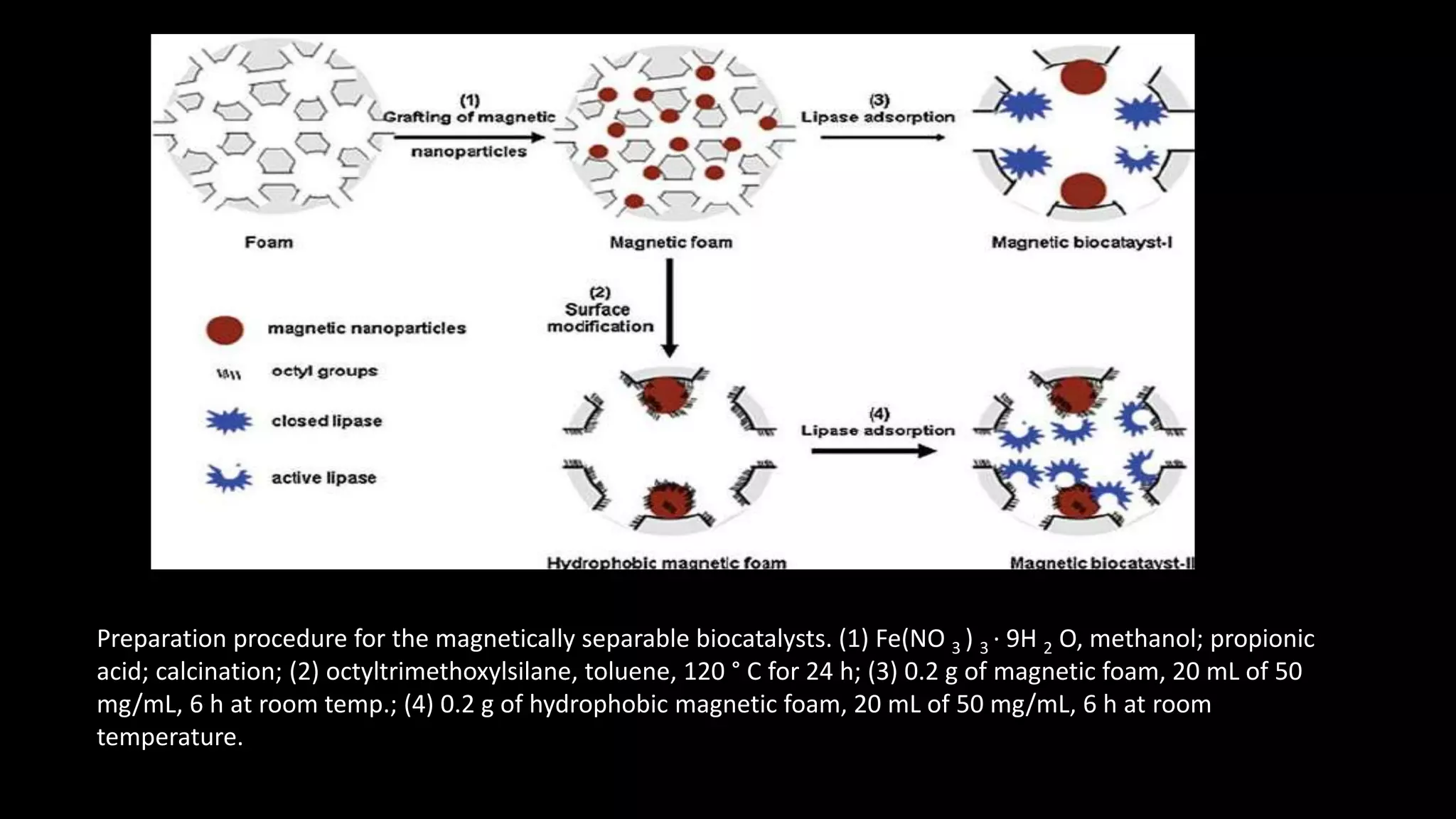
Preparation procedure forthe magnetically separable biocatalysts. (1) Fe(NO 3 ) 3 · 9H 2 O, methanol; propionic
acid; calcination; (2) octyltrimethoxylsilane, toluene, 120 ° C for 24 h; (3) 0.2 g of magnetic foam, 20 mL of 50
mg/mL, 6 h at room temp.; (4) 0.2 g of hydrophobic magnetic foam, 20 mL of 50 mg/mL, 6 h at room
temperature.
33.
Functionalization -
• Surfacemodification of nanoparticles includes-
• Conjugation of chemicals or biomolecules on to the surface like folic
acid, biotin molecules, oligo nucleotides, peptides, antibodies etc.
• To enhance the properties and hit the target with high precision.
• Functionalization of nanoparticles have good physical properties like
anti corrosion, anti agglomeration and non- invasive characteristic.
34.
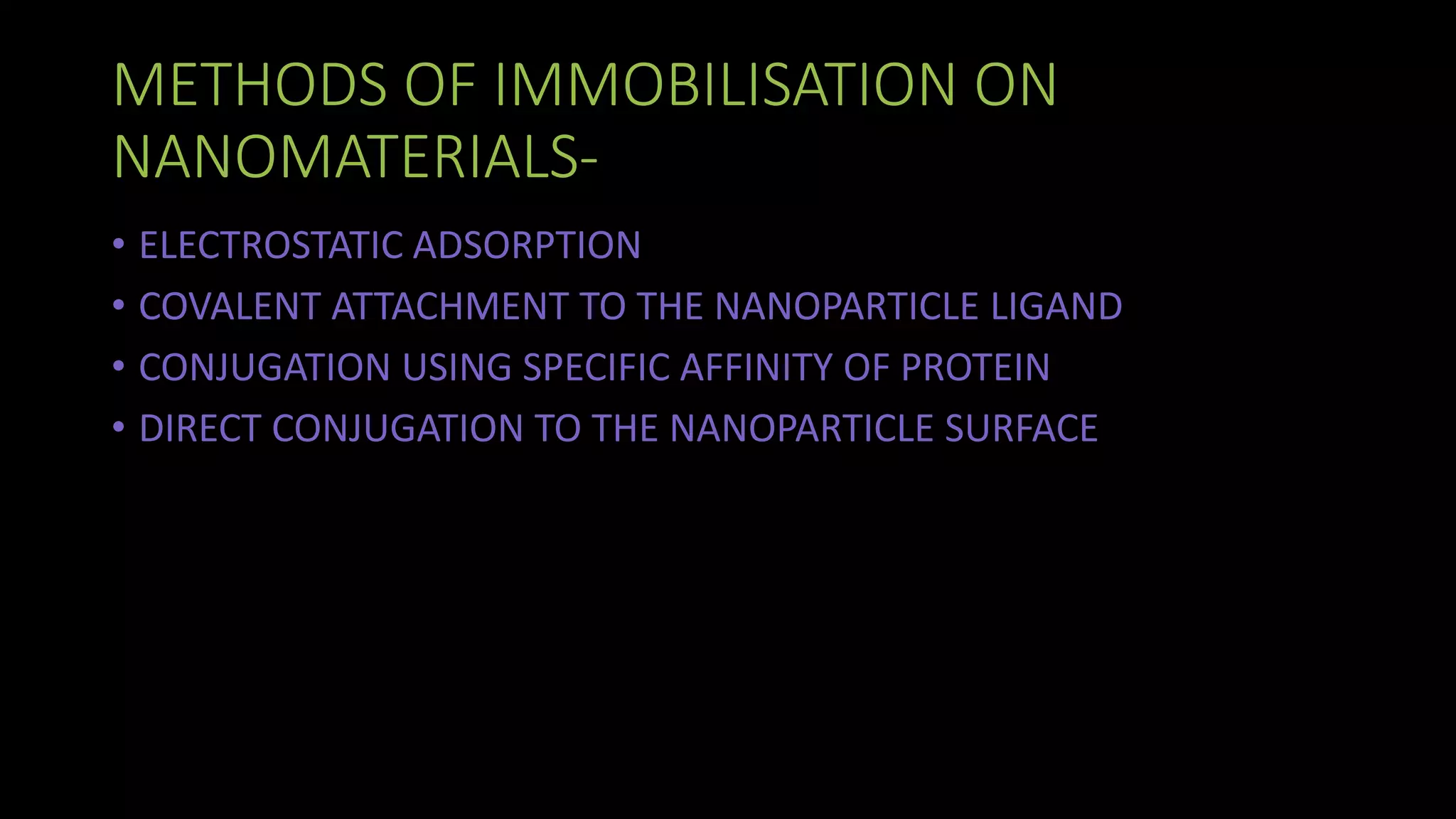
METHODS OF IMMOBILISATIONON
NANOMATERIALS-
• ELECTROSTATIC ADSORPTION
• COVALENT ATTACHMENT TO THE NANOPARTICLE LIGAND
• CONJUGATION USING SPECIFIC AFFINITY OF PROTEIN
• DIRECT CONJUGATION TO THE NANOPARTICLE SURFACE
35.
ELECTROSTATIC ADSORPTION-
• Themost widely used linkage approach consists of electrostatic
adsorption. This is the simplest approach and is already used
routinely as an electron dense marker in histology . The interaction
between the nanoparticle and protein may be modulated by the pH
or charge screening by controlling the ionic strength of the medium.
36.
COVALENT ATTACHMENT TOTHE
NANOPARTICLE LIGAND-
• Another general method for nanoparticle–protein
conjugation is covalently linking a protein to the
nanoparticle ligand . This approach has been greatly
advanced by extreme control over the surface chemistry of
the nanoparticles. For example, a variety of organic
functional groups can be introduced to the surface using
mild conditions . The popular labeling chemistry utilizes the
covalent binding of primary amines with sulfo-NHS esters
(N-hydroxysulfosuccinimide)or R-COOH groups via reaction
with {1-Ethyl-3-(3-dimethylaminopropyl)carbodiimide }(EDC,
EDAC or EDCI)
37.
• Nanoparticles labeledwith NHS esters can react to form covalent
bonds with the primary amine of lysine on a protein.
• In addition, nanoparticles coated with maleimide groups
{H2C2(CO)2NH}can react with the thiol of cysteine on a protein.
• Oxide nanoparticles (TiO iron oxide, Coper oxide, silver and gold
oxide) can be easily modified by Silanization yielding a modified
surface exhibiting amino groups, which can be used as adsorbent or
as coupling sites for linking various proteins.
38.
CONJUGATION USING SPECIFICAFFINITY OF
PROTEIN-
• Nanoparticle–protein conjugation can also be achieved by using
specific labeling strategies. Example Streptavidin coated nanoparticles
can selectively bind biotin-labeled proteins and antibody coated
nanoparticles selectively bind to the specific protein.
39.
DIRECT CONJUGATION TOTHE
NANOPARTICLE SURFACE-
• A direct reaction of a chemical group on the protein without the use of a
linker is usually desired if the particle is used as a biosensor where FRET
(fluorescence resonance energy transfer)or electron transfer is used .
• For Au and Ag nanoparticles, this can be achieved by the Au-thiol or Ag-
thiol chemistry where a protein with a cysteine covalently bonds to an Au
or Ag nanoparticle. The conjugation requires incubation of the protein and
the nanoparticle together as the Au–S or Ag-S bond is strongly favored.
• Similarly, for sulphur containing nanoparticles such as ZnS/CdSe, cysteine
can directly form a disulfide bridge with the surface S atom.
• Direct linkages can also be achieved by His tags, which can attach directly
to Zn, Ni, Cu, Co, Fe, Mn atoms.
41.
ADVANTAGES OF IMMOBILISATIONON NANOMATERIAL-
• Mass transfer resistance
• Effective enzyme loading
• High surface area
• High mechanical strength
• Diffusional problems minimization
DISADVANTAGES OF IMMOBILISATION ON
NANOMATERIAL-
• Cost of fabricational process
• Large scale application
• Separation of the reaction medium (except magnetic nanoparticles)