“Sustainable Mining
“Sustainable” based on premise that resources currently used
without compromising their availability to future generations
SUSTAINABLE MINING
design & build mining systems methods, equipment,
technologies, management to perform optimally in the
following contexts: technical, economic,
environmental, social performance.
Sustainable What?
• Mining Minerals and Sustainable Development program = Breaking
New Ground found:
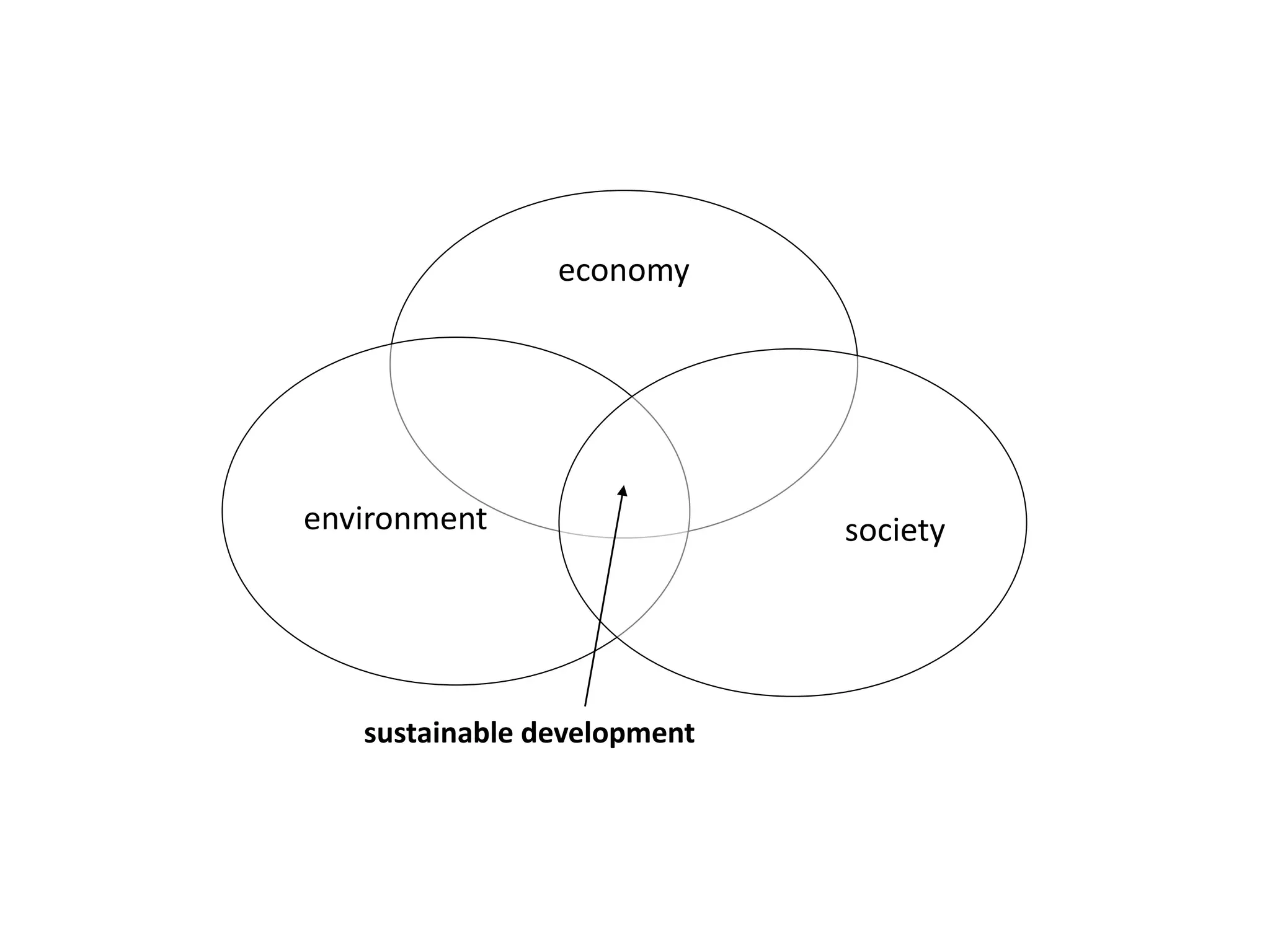
• “Triple bottom line” meaning a mine may be economically,
ecologically and socially sustainable
• Sustainable Development is developing in such a way that future
people will have “enough and as good”*
• Mining necessarily ends up depleting the resource it uses and is
characterized by negative impacts.
• However, it has significant potential for making positive impact. It is
possible for mining to contribute to sustainable development
through:
• Enhancing the benefits while mitigating the negative impacts both
when mining is taking place and subsequently as well as Improving
stakeholder participation in the management of the resources.
• This is however easier said than done…
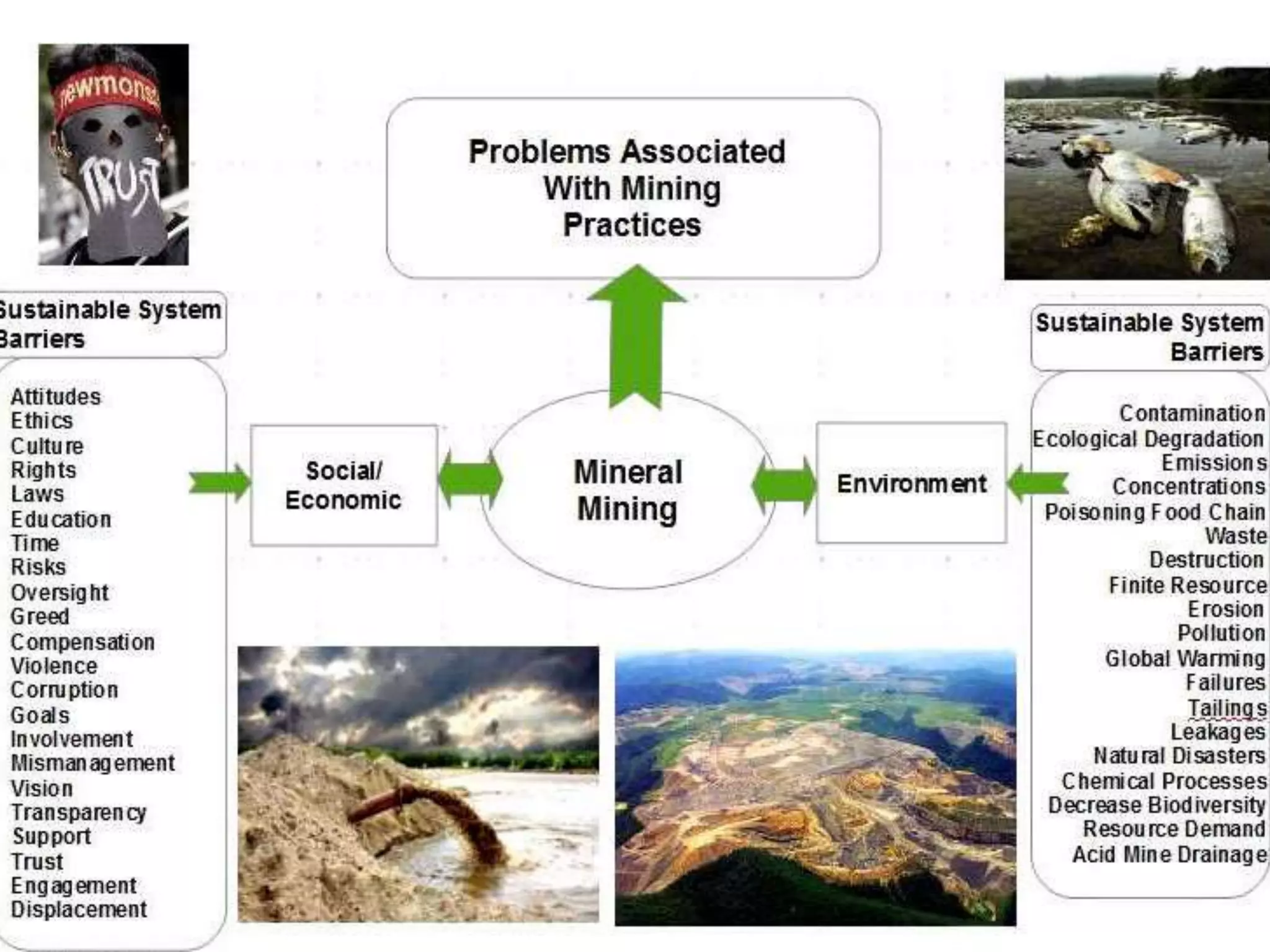
Problem
• The mining process is extremely demanding on resources such as
water, land, and energy. The ecological and social degradation that
results from the mining process prevents the industry from complying
with the “Four System Conditions for Sustainability” as per The
Natural Step. The current practices of minimizing impacts and
enforcing regulations do not address the systemic sustainability
challenges within the process.
Goal
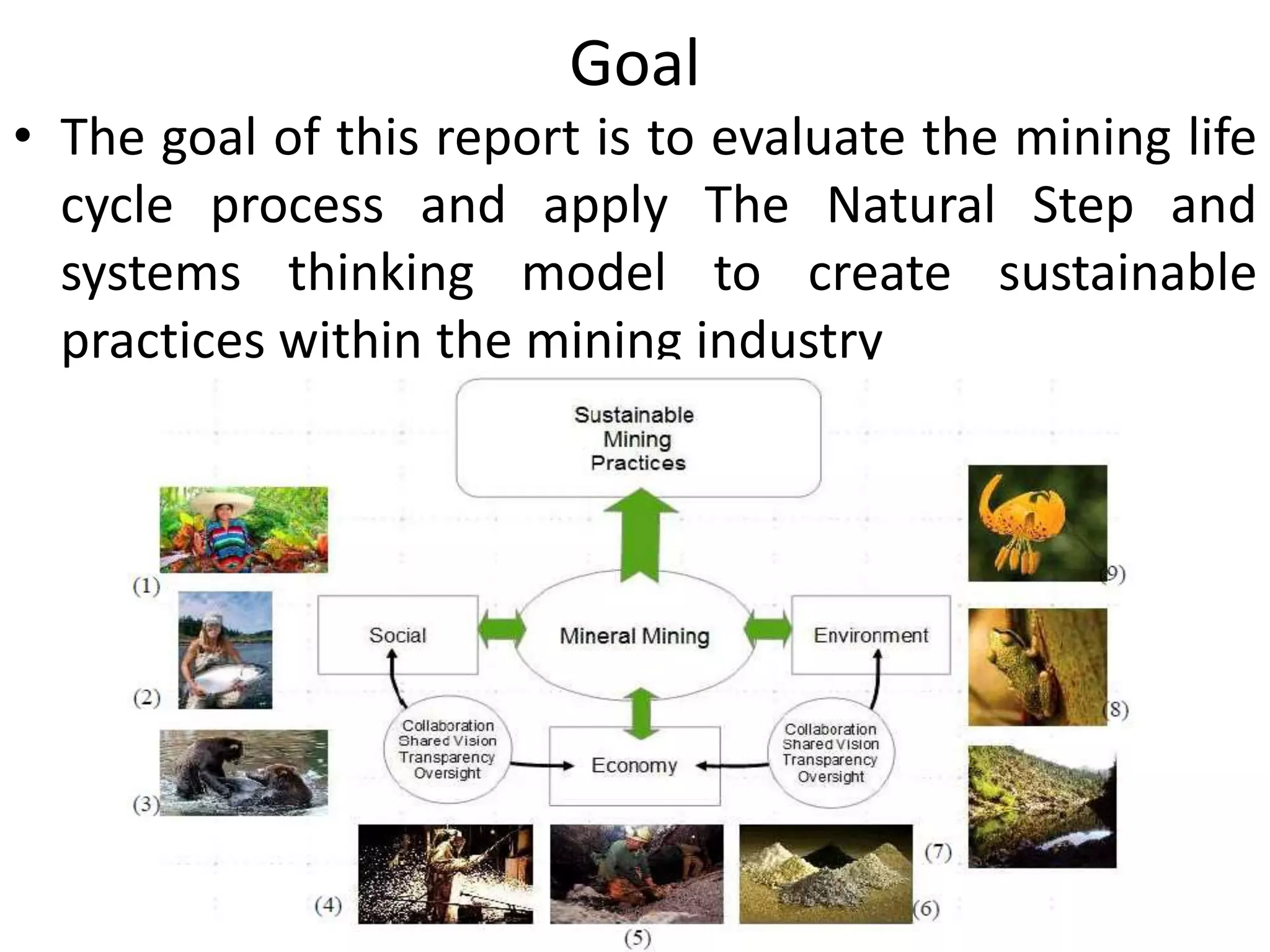
• The goal of this report is to evaluate the mining life
cycle process and apply The Natural Step and
systems thinking model to create sustainable
practices within the mining industry
• Sustainable Mining There is no one definition of
sustainability that has been universally adopted by the
mining industry. Some useful descriptions include the
following:
• miners can achieve sustainable development by
embracing the social, environment and economic pillars –
James 1999.
• offsetting or reinvesting the benefits from the depleting
mineral asset – Labonne 1999.
• the simultaneous pursuit of sustained or enhanced:
environmental quality, economic growth, and social justice
– Eggert 2006.
Scope
• Awareness of the environmental and social challenges
is ever increasing. Significant opportunities
• for change already exist within the mining process.
These changes can allow the industry to
• contribute to a sustainable society. The scope of this
report will identify the current system in
• place, apply a systems thinking framework to analyze
the barriers and challenges and provide
• strategic solutions to these challenges. The scope of
the report is limited to the life cycle of the
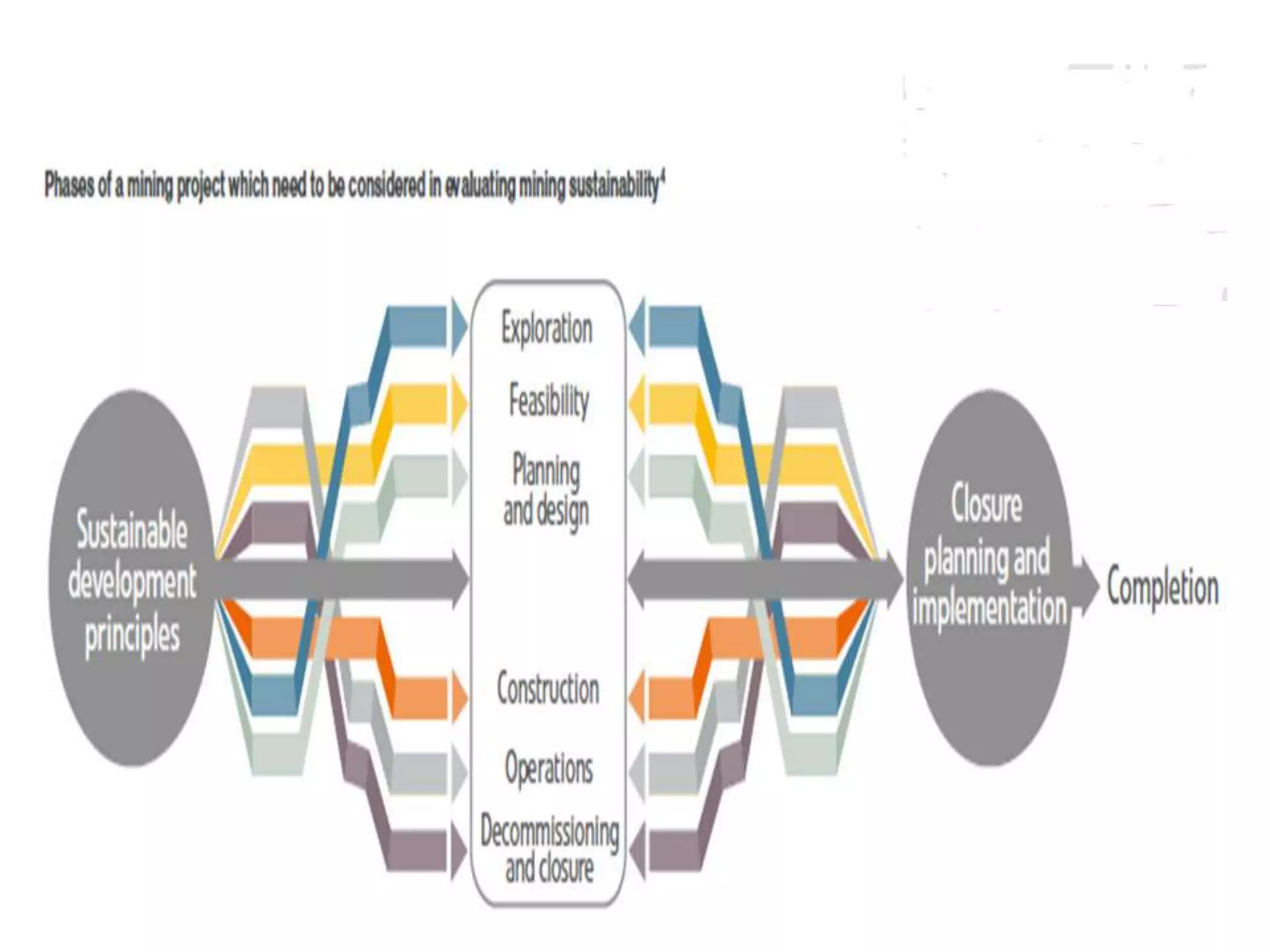
• mineral mining process – exploration, evaluation,
development, production, closure, and postclosure.
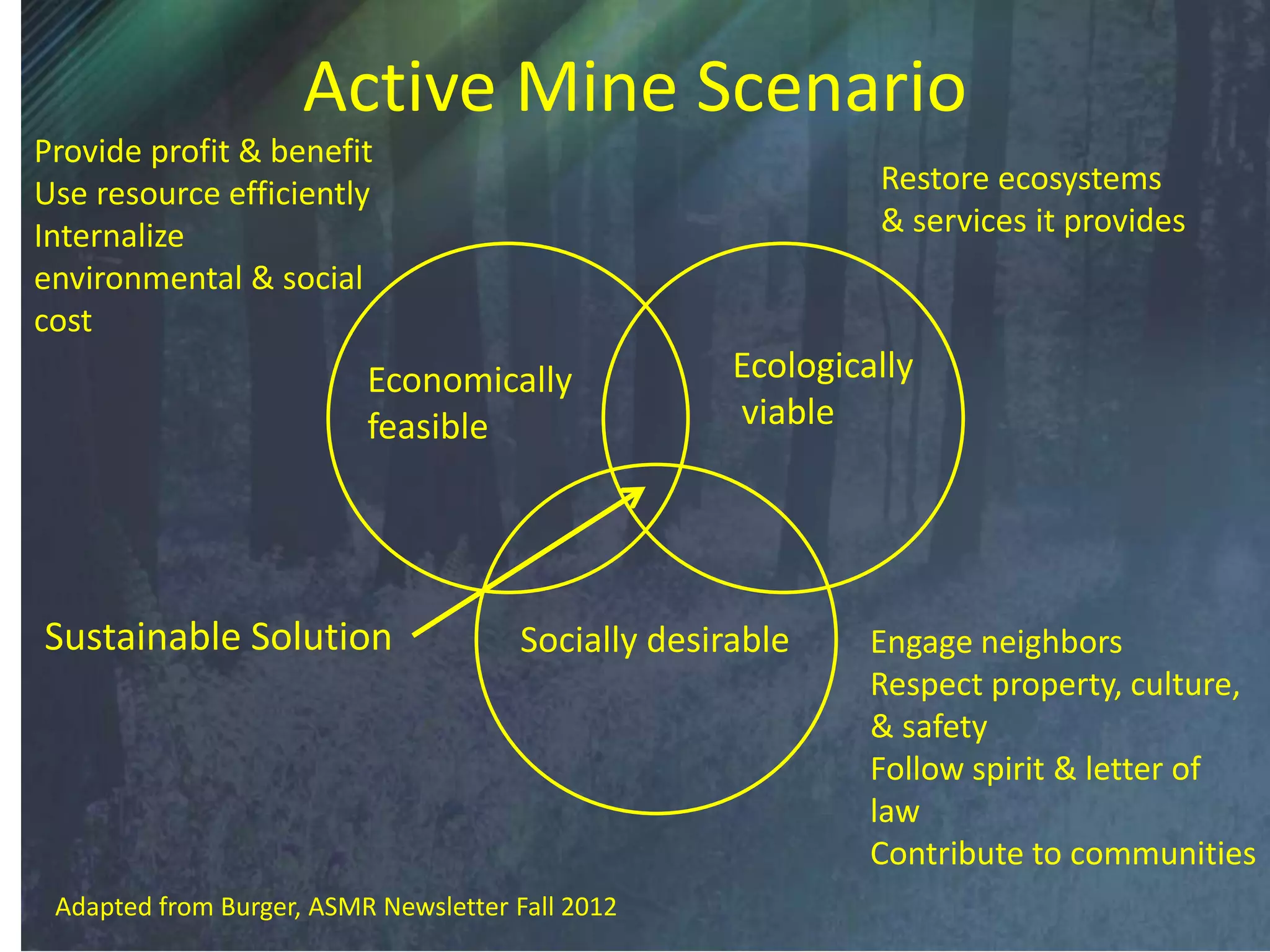
Economically
feasible
Ecologically
viable
Socially desirable
Provide profit & benefit
Use resource efficiently
Internalize
environmental & social
cost
Restore ecosystems
& services it provides
Engage neighbors
Respect property, culture,
& safety
Follow spirit & letter of
law
Contribute to communities
Sustainable Solution
Active Mine Scenario
Adapted from Burger, ASMR Newsletter Fall 2012
economy
environment society
sustainable development
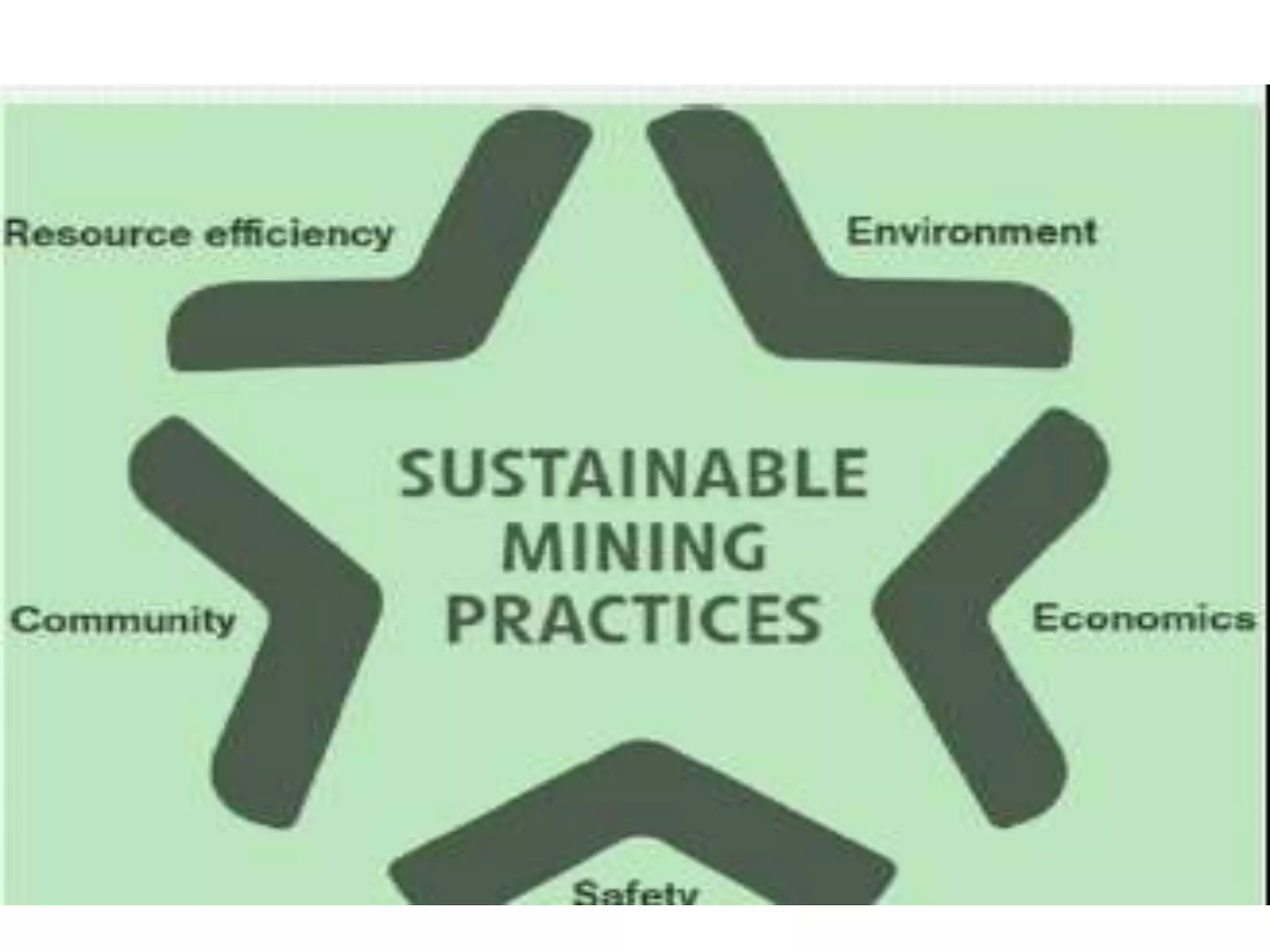
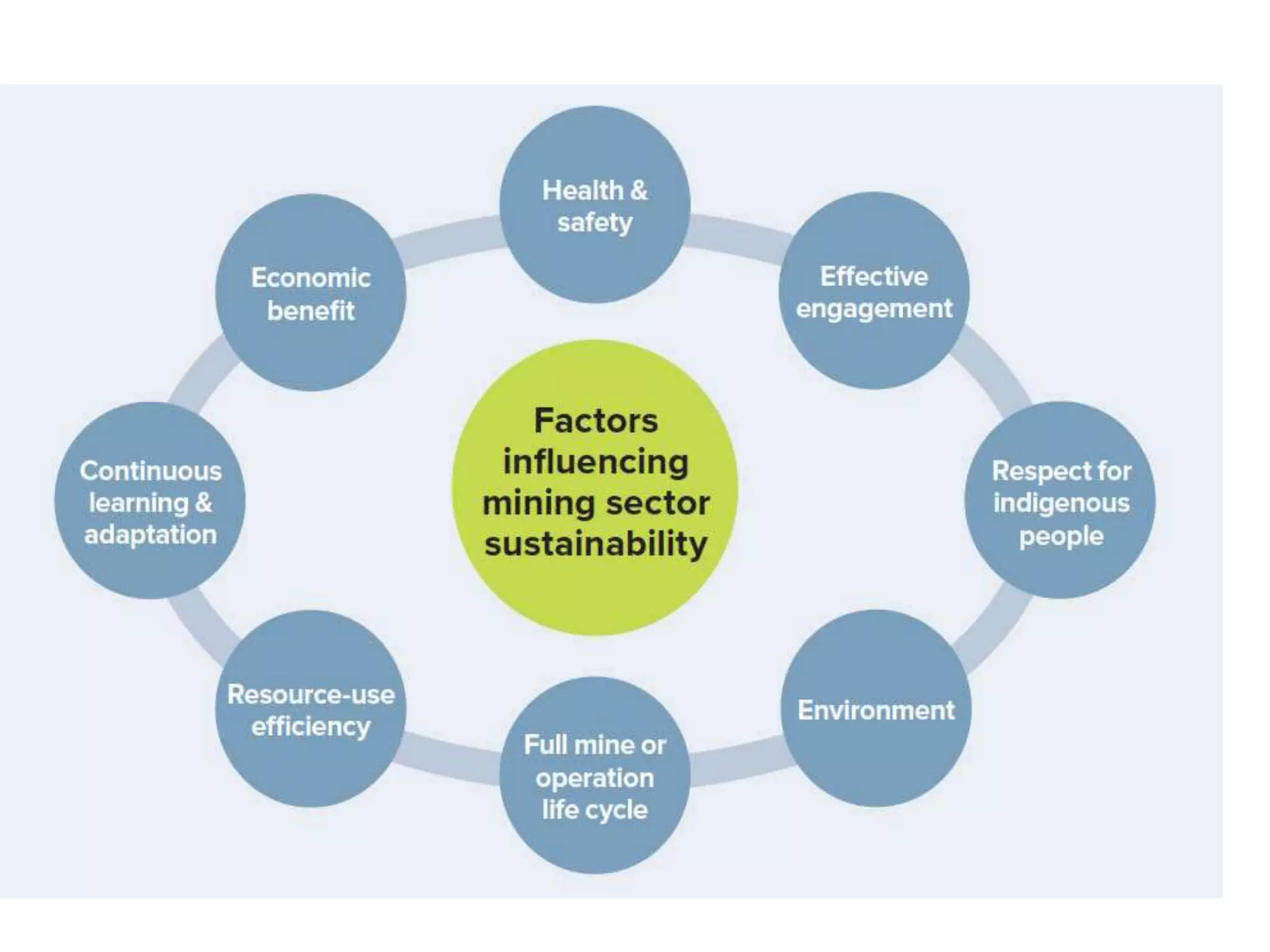
• Safety;-For both ethical and business reasons, a mining
operation should aim to prioritise safety. Characteristics of
safe mines include a commitment to risk management;
appropriate attitudes and behaviours; reporting systems
need to be in place; a focus on education and training; and
a focus on processes and equipment (Laurence 2005).
• Economy Unless a mine is profitable, it cannot be
sustainable. The aim for mine managers is to generate
profit responsibly for as long as possible by keeping costs to
a minimum while maximizing revenue. This will also
maximize the equitable benefits to all stakeholders,
including shareholders, employees, local communities and
businesses, which depend on the mine, as well as the
governments that benefit by means of taxes and royalties.
• Resource Efficiency;- A mine also has to be efficient in the way the resource is
managed and extracted. Mining engineers, geologists and metallurgists collaborate
to optimize resource extraction. Examples of non-sustainable mining practices
abound and include “high grading” the ore body, which entails mining only the
highest grade material for short term gain. This is a practice used by companies and
individuals within those companies with a short time frame. This, in turn, is a
symptom of the high turnover at many mine sites and the drive to “make one’s
name” as quickly as possible without regard for the longer-term extraction of the
deposit. Particularly in these times of high commodity prices, it makes sense to
consider mining lower grades which will extend the mine life and thus stakeholder
benefits, without compromising the revenue stream. Another example is
underground mining only the lowest horizon of a thick coal seam (>6 metres),
rather than mining the full seam thickness. Mines in China have been criticised for
their safety record but due to the implementation of novel techniques such as
longwall top coal caving, it is possible to extract the full height of even a 10 metre
seam, thus optimising the extraction of this valuable resource. Efficiency also
encompasses the management dimension at a mine site, as poor management
decisions can often lead to production difficulties or equipment breakdown or
industrial relations or other factors that impact on optimum resource extraction.
• Environment :-Adopting leading environmental management
practices on mine sites makes excellent business sense. Unless steps
are taken in the planning and operational stages to protect
environmental values, long-term liabilities such as acid mine
drainage, may result. Thanks in part to the increasing awareness of
environmental issues, there is considerable literature relating to the
environment and sustainable development.
• Community:- Finally, a mine needs a ‘social licence to operate’. Unless
the community is engaged and supportive of a mining operation,
opposition and confrontation may ensue. Mining operations run by
corporations have been disrupted on many occasions in the recent
past particularly from local artisanal and small-scale miners, who
were mining in many cases before the commencement of the larger-
scale operations.
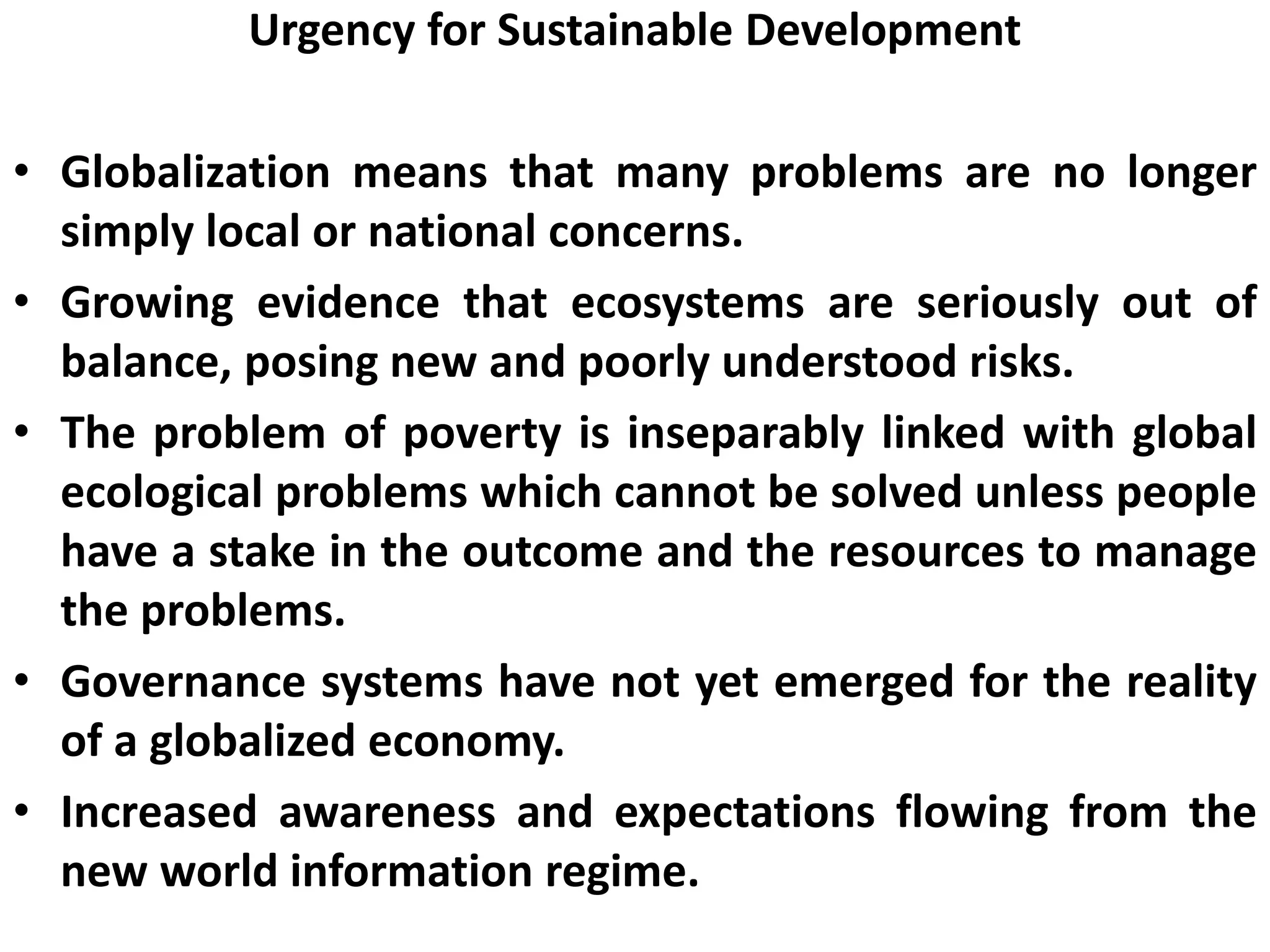
Urgency for Sustainable Development
• Globalization means that many problems are no longer
simply local or national concerns.
• Growing evidence that ecosystems are seriously out of
balance, posing new and poorly understood risks.
• The problem of poverty is inseparably linked with global
ecological problems which cannot be solved unless people
have a stake in the outcome and the resources to manage
the problems.
• Governance systems have not yet emerged for the reality
of a globalized economy.
• Increased awareness and expectations flowing from the
new world information regime.
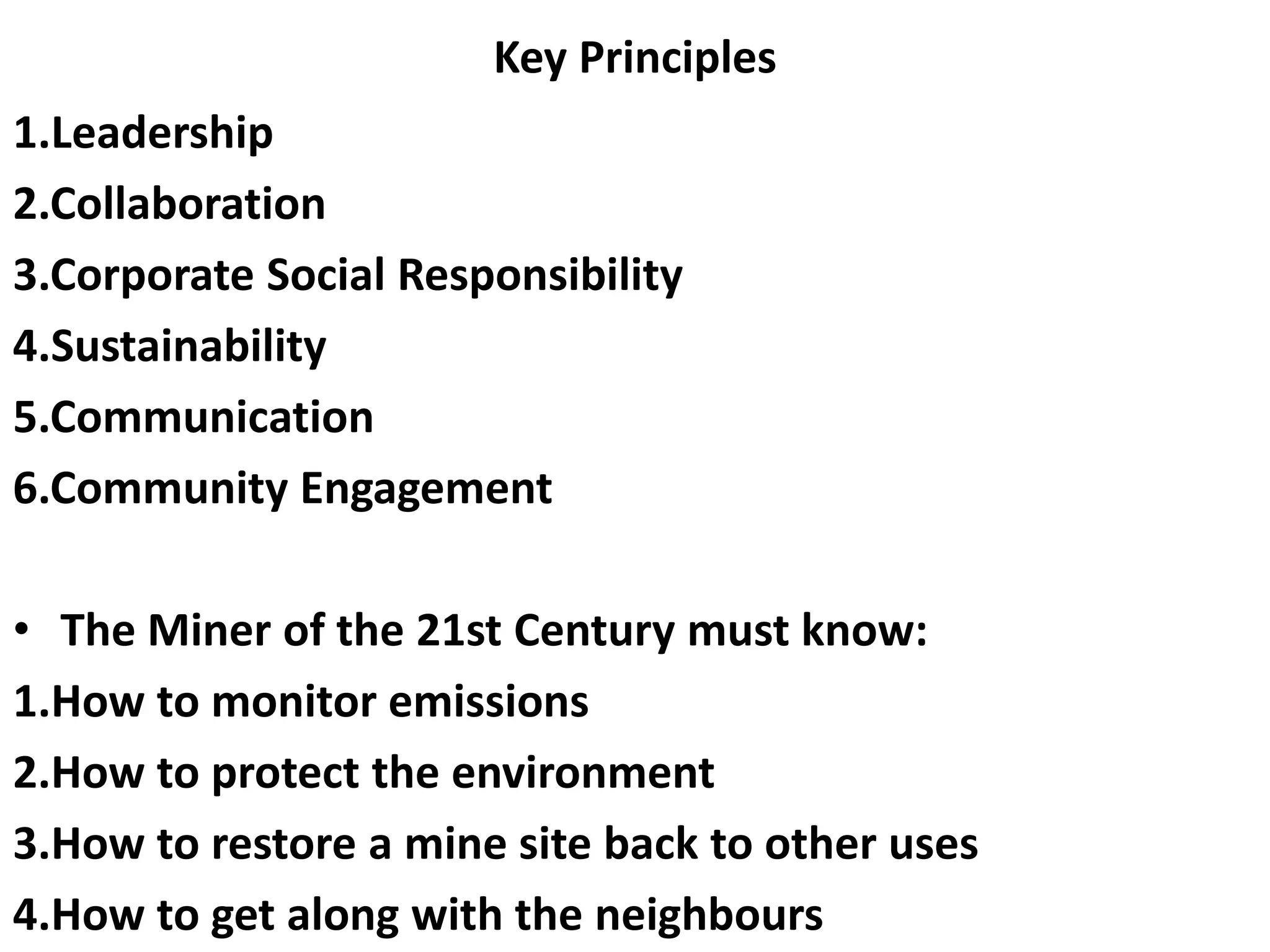
Key Principles
1.Leadership
2.Collaboration
3.Corporate Social Responsibility
4.Sustainability
5.Communication
6.Community Engagement
• The Miner of the 21st Century must know:
1.How to monitor emissions
2.How to protect the environment
3.How to restore a mine site back to other uses
4.How to get along with the neighbours
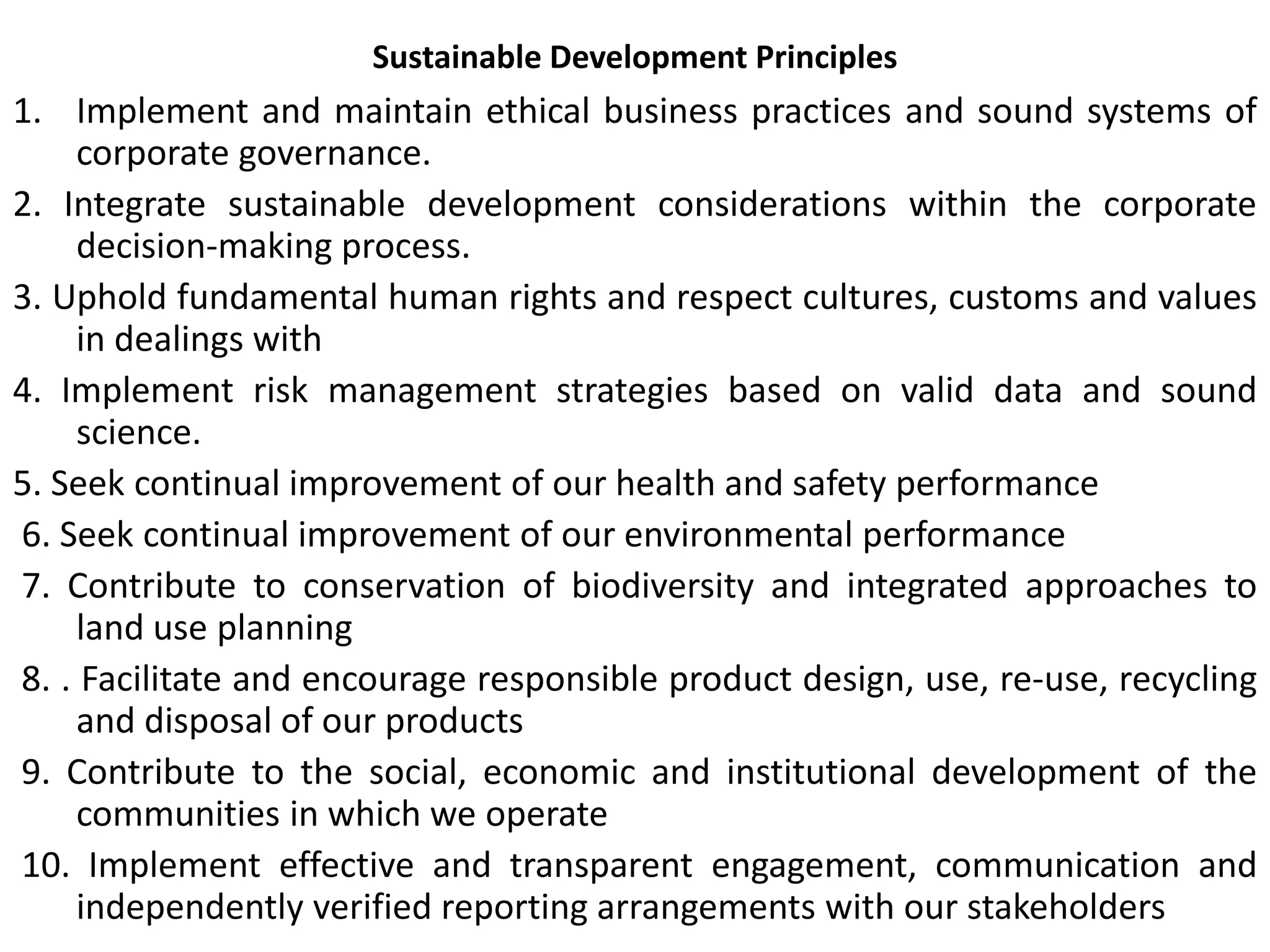
Sustainable Development Principles
1. Implement and maintain ethical business practices and sound systems of
corporate governance.
2. Integrate sustainable development considerations within the corporate
decision-making process.
3. Uphold fundamental human rights and respect cultures, customs and values
in dealings with
4. Implement risk management strategies based on valid data and sound
science.
5. Seek continual improvement of our health and safety performance
6. Seek continual improvement of our environmental performance
7. Contribute to conservation of biodiversity and integrated approaches to
land use planning
8. . Facilitate and encourage responsible product design, use, re-use, recycling
and disposal of our products
9. Contribute to the social, economic and institutional development of the
communities in which we operate
10. Implement effective and transparent engagement, communication and
independently verified reporting arrangements with our stakeholders
Sustainable Development Framework
1. Incorporating Environmental and Social Sensitivities in
decisions on leases
2. Strategic Assessment in Key Mining regions
3. Managing impacts at the Mine level impact through sound
management systems.
4. Addressing Land, Resettlement and Other Social Impacts
5. Community engagement, benefit sharing and contribution
to socio-economic development
6. Mine Closure and Post Closure Mining operations must
prepare, manage and progressively work on a process for
eventual mine closure
7. Ethical functioning and responsible business practices
8. Assurance and Reporting
• Mining today is a balance of three elements:
1.Techno-economic issues
2.Environmental issues
3.Socio-political issues
Key Challenges
• Setting up and expansion of mining operations
• Increase in workforce to support expansion
• Accommodating the workforce – impact on forest areas
• Impact of Operations on the environment
• Balancing Local and National interests – local livelihood
v/s mineral for development
• Immediate, short, medium and long term management
issues.
• Mine Closure….
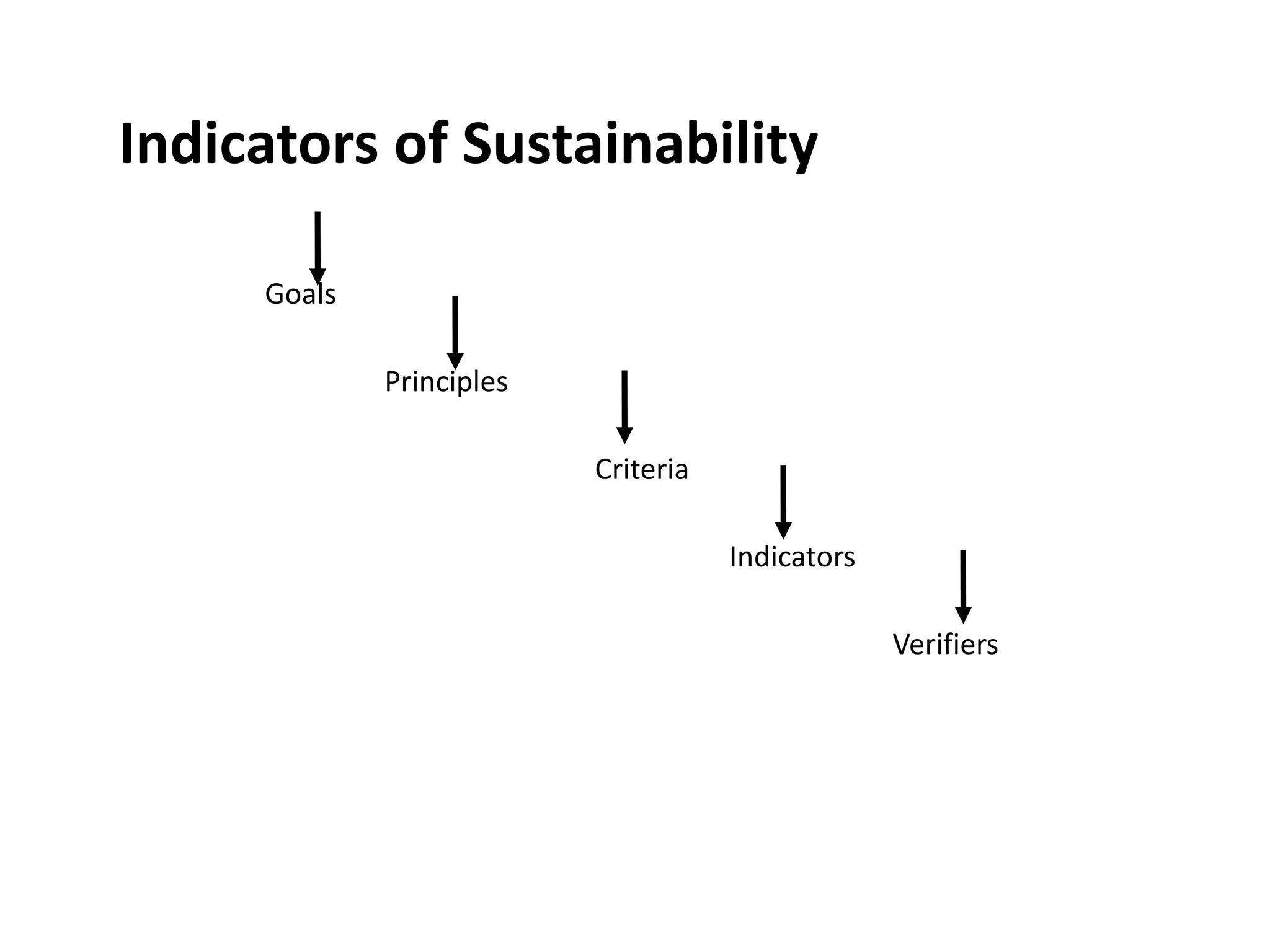
Indicators of Sustainability
Goals
Principles
Criteria
Indicators
Verifiers
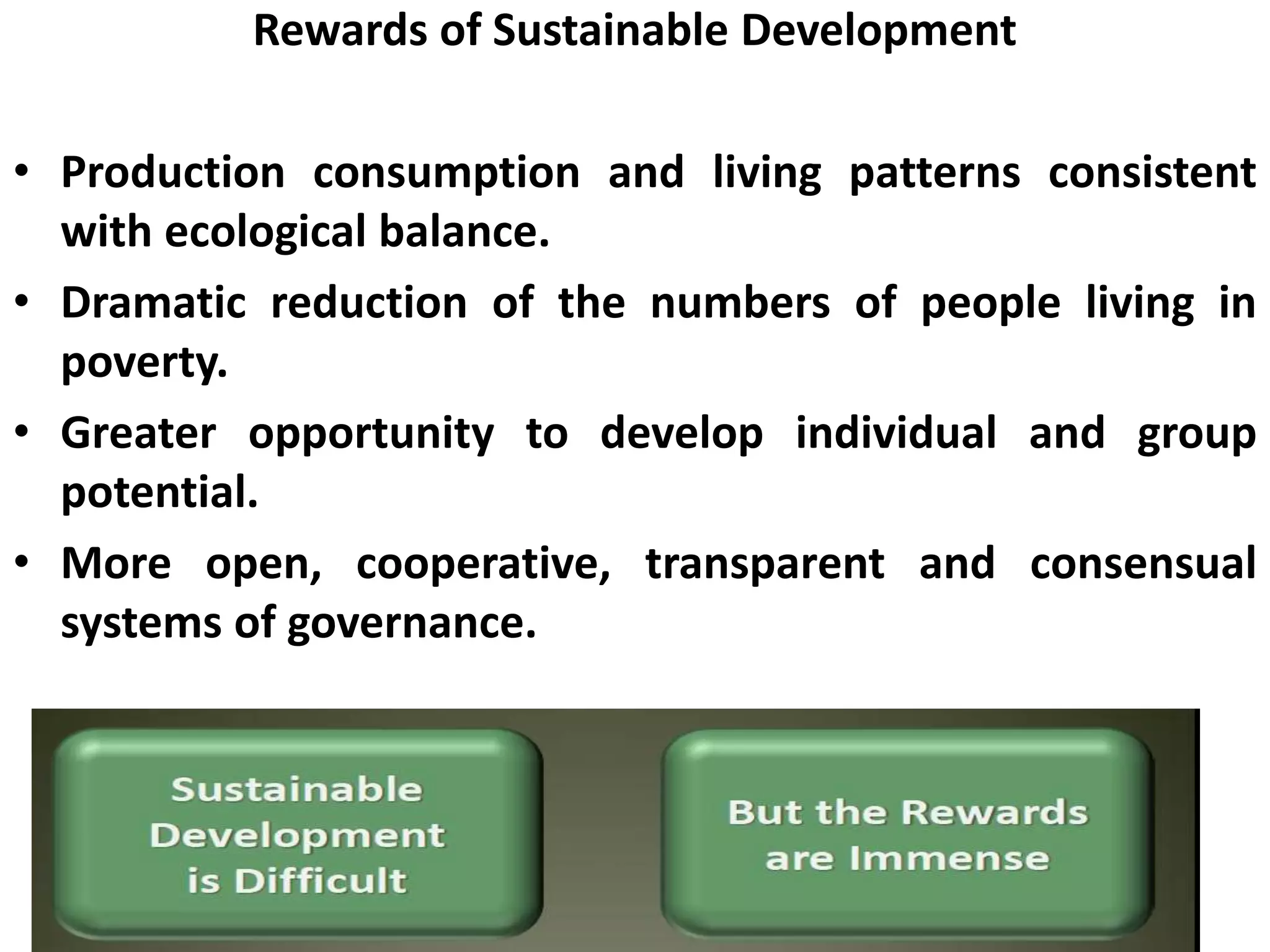
Rewards of Sustainable Development
• Production consumption and living patterns consistent
with ecological balance.
• Dramatic reduction of the numbers of people living in
poverty.
• Greater opportunity to develop individual and group
potential.
• More open, cooperative, transparent and consensual
systems of governance.
Schneider Electric – Sustainability in Mining: Technologies and Processes for Data Aggregation, Management, and Reporting– SME 2013
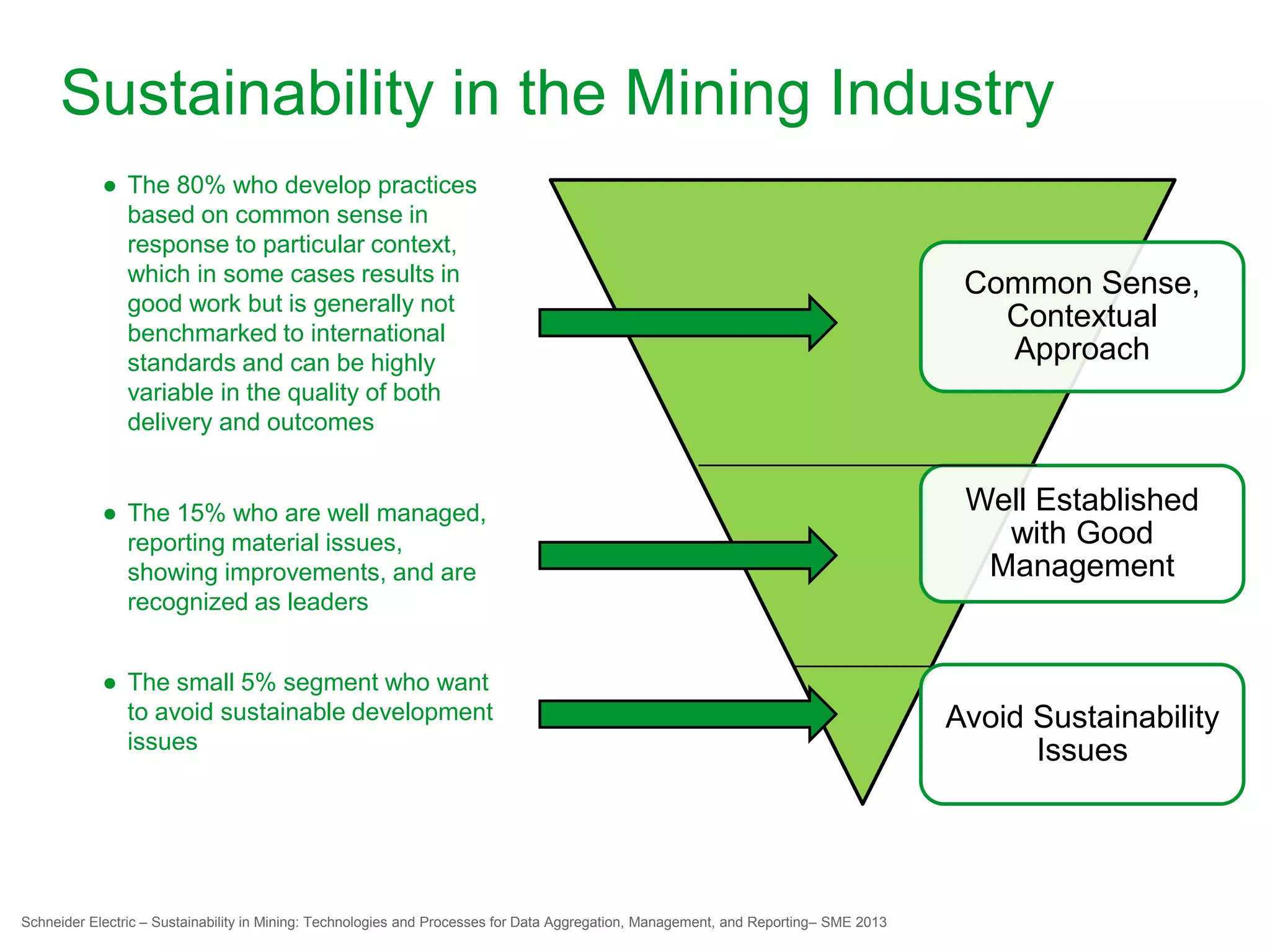
Sustainability in the Mining Industry
● The small 5% segment who want
to avoid sustainable development
issues
Avoid Sustainability
Issues
Well Established
with Good
Management
Common Sense,
Contextual
Approach
● The 80% who develop practices
based on common sense in
response to particular context,
which in some cases results in
good work but is generally not
benchmarked to international
standards and can be highly
variable in the quality of both
delivery and outcomes
● The 15% who are well managed,
reporting material issues,
showing improvements, and are
recognized as leaders
Schneider Electric – Sustainability in Mining: Technologies and Processes for Data Aggregation, Management, and Reporting– SME 2013
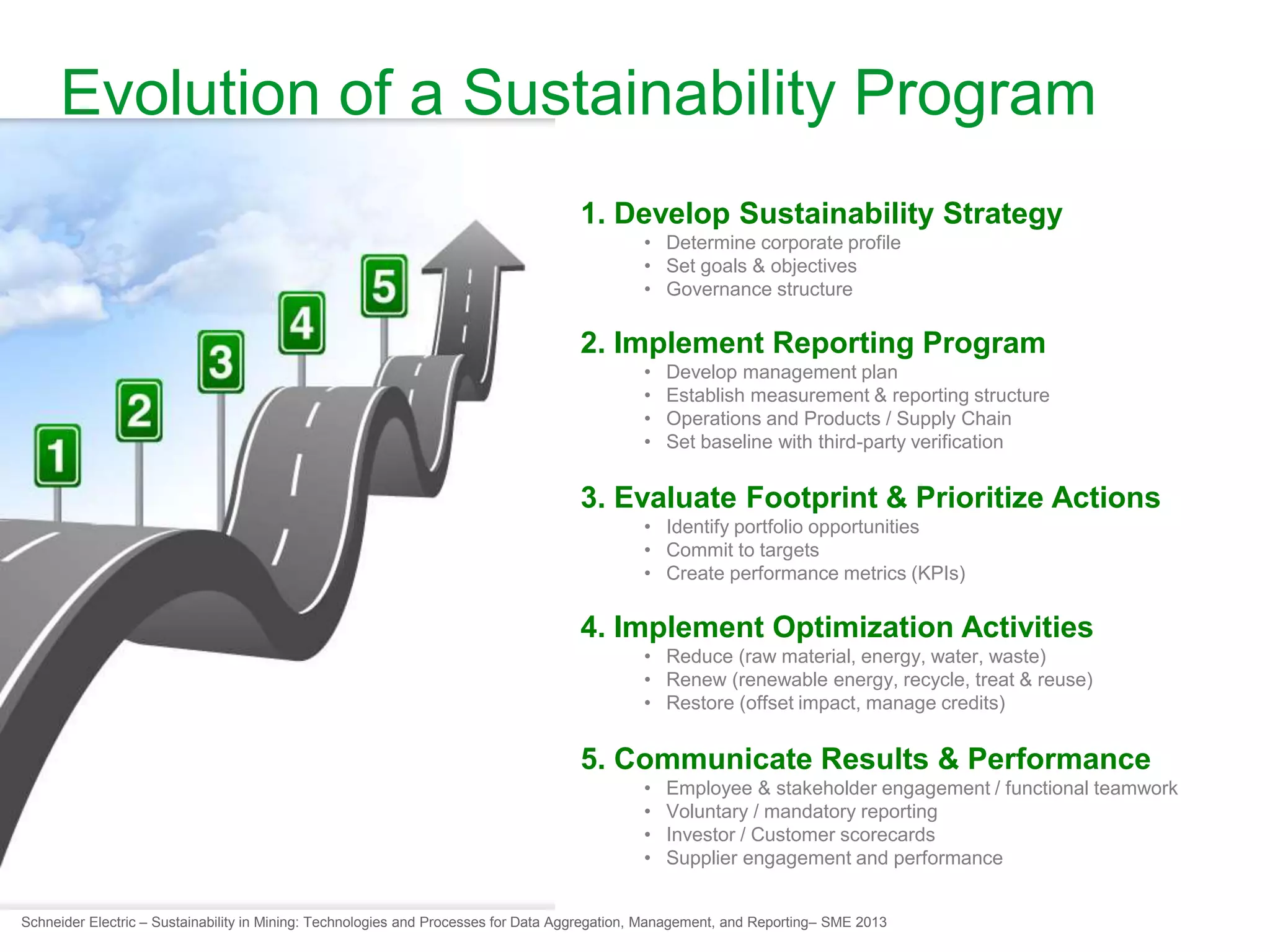
Evolution of a Sustainability Program
1. Develop Sustainability Strategy
• Determine corporate profile
• Set goals & objectives
• Governance structure
2. Implement Reporting Program
• Develop management plan
• Establish measurement & reporting structure
• Operations and Products / Supply Chain
• Set baseline with third-party verification
3. Evaluate Footprint & Prioritize Actions
• Identify portfolio opportunities
• Commit to targets
• Create performance metrics (KPIs)
4. Implement Optimization Activities
• Reduce (raw material, energy, water, waste)
• Renew (renewable energy, recycle, treat & reuse)
• Restore (offset impact, manage credits)
5. Communicate Results & Performance
• Employee & stakeholder engagement / functional teamwork
• Voluntary / mandatory reporting
• Investor / Customer scorecards
• Supplier engagement and performance
Schneider Electric – Sustainability in Mining: Technologies and Processes for Data Aggregation, Management, and Reporting– SME 2013
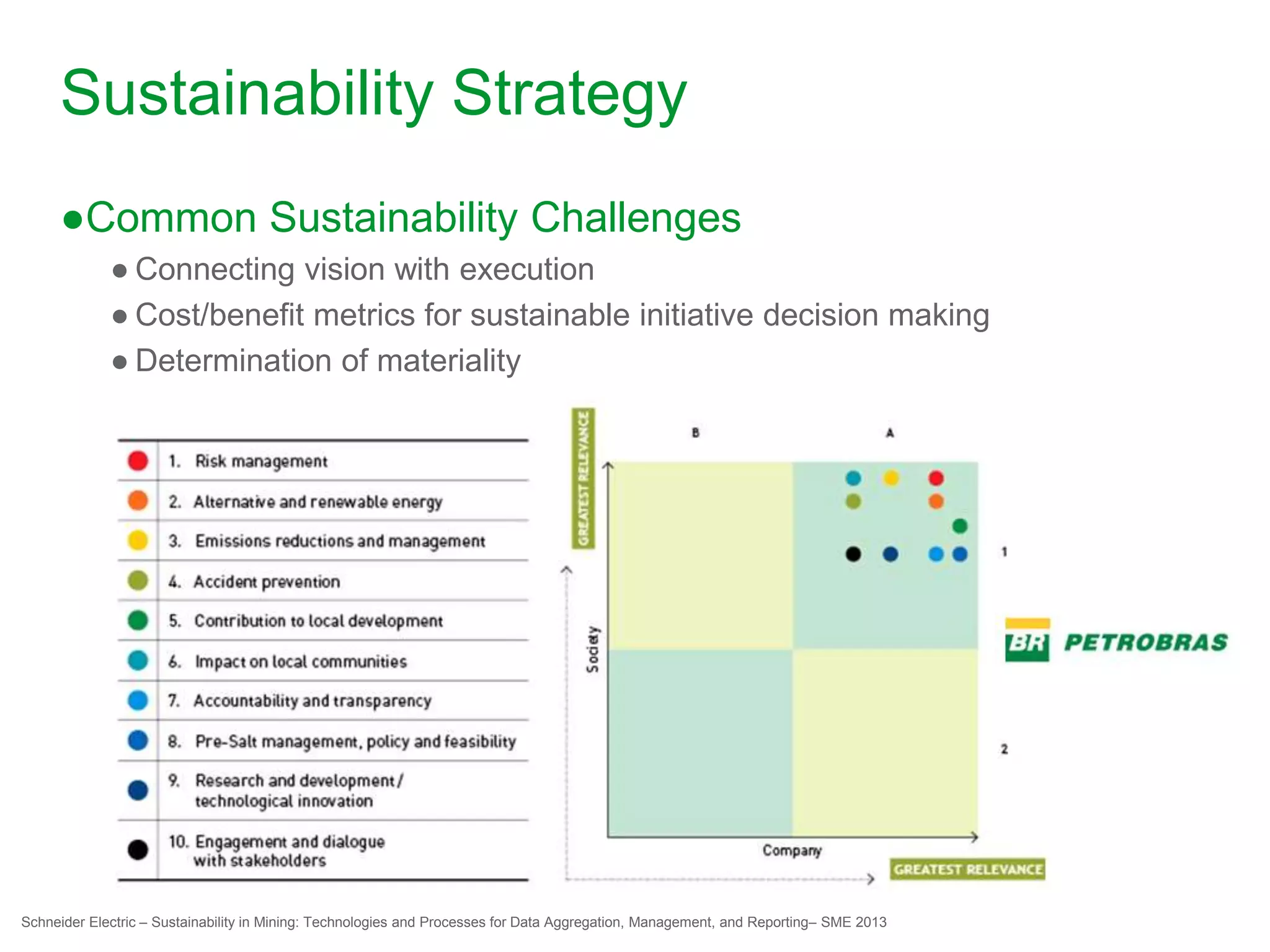
Sustainability Strategy
●Common Sustainability Challenges
● Connecting vision with execution
● Cost/benefit metrics for sustainable initiative decision making
● Determination of materiality
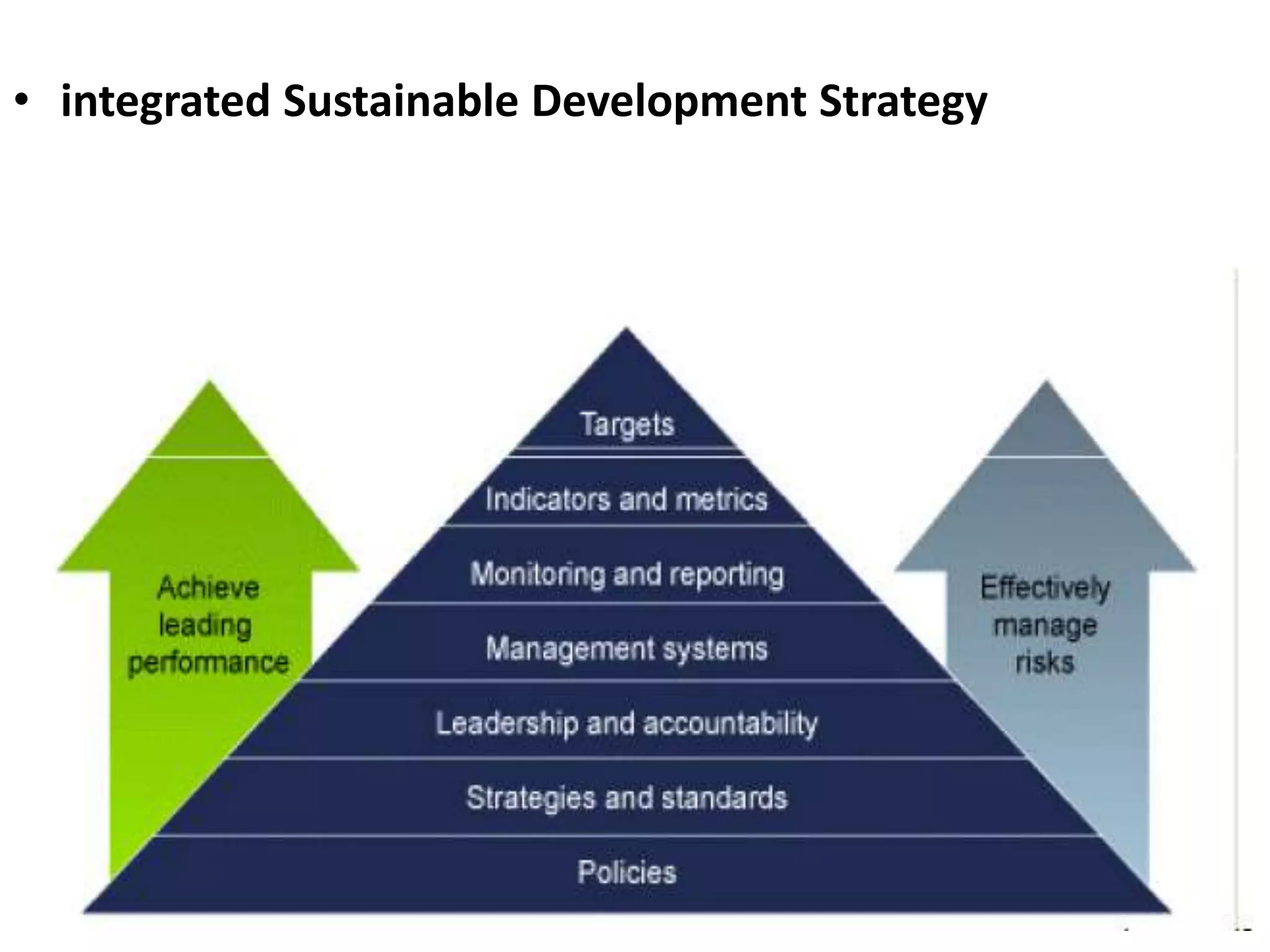
• integrated Sustainable Development Strategy
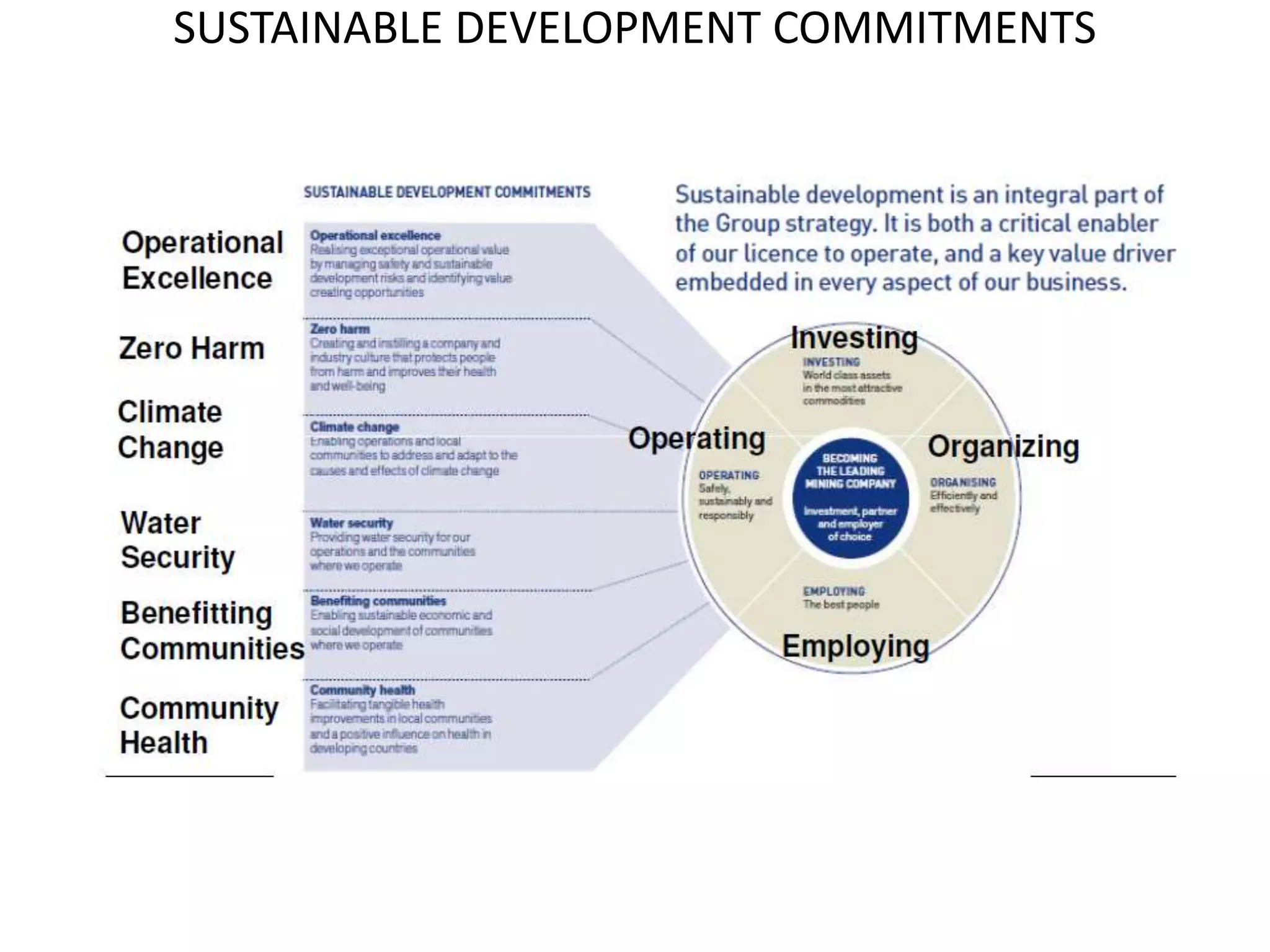
SUSTAINABLE DEVELOPMENT COMMITMENTS
Methods
• Literature review to gain an understanding of:
1. “The Natural Step” and “Systems Thinking” framework;
2. The mining life cycle process and the associated
ecological and human impacts;
3. The current best practices for mineral mining.
• Data collection:
1. The socioeconomic and environmental barriers
2. The organizations involved in the process
3. The current solutions to the challenges within the mining
process
• Systems diagrams and suggested strategies
• Present recommendations to address the current
unsustainable practices.
Systematic Approach to Sustainability
Shared Vision of Success
• The shared vision of success must be one that contributes to a sustainable society.
The mining industry needs to constantly be aware of its actions and how they are
assisting in moving the process towards its vision of success as constrained by
Sustainability Principles .
• Is the action:
• Eliminating its contribution to systematic increases in concentrations of substances
from the Earth’s crust?
• Eliminate its contribution to systematic increases in concentrations of substances
produced by society?
• Eliminating its contribution to systematic physical degradation of nature through
overharvesting,
introduction and other forms of modification?
• Eliminating its contribution to conditions that systematically undermine people’s
capacity to meet their needs?
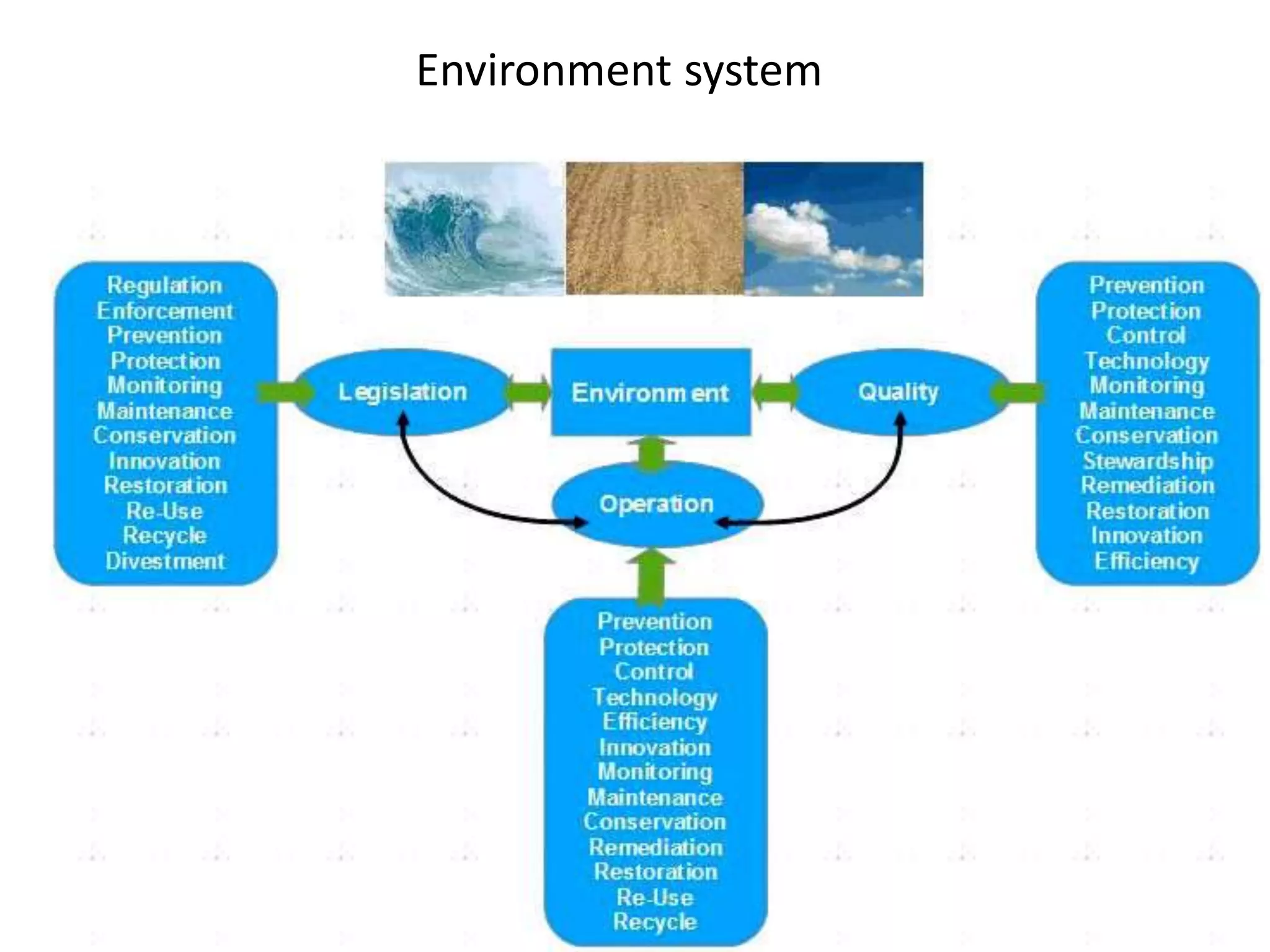
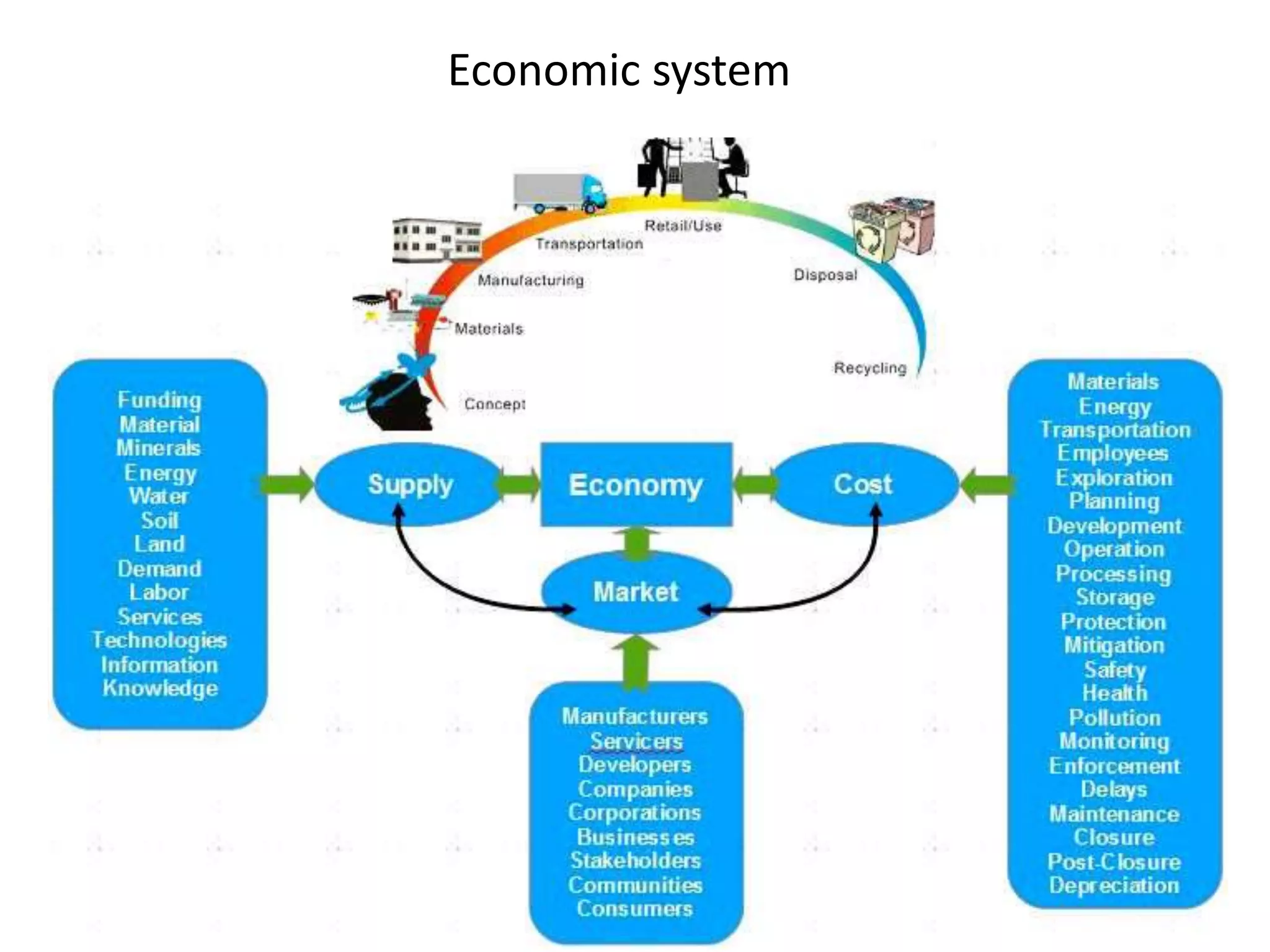
System Awareness
• Applying a systematic approach to the mining process requires that the elements of
each system of sustainability to be identified. Not only will this method bring to
light the interconnectedness between the environmental, social, and economic
elements in the system, it will also help create new opportunities for improvement
and identify gaps between current best practices and a desired vision of
sustainability.
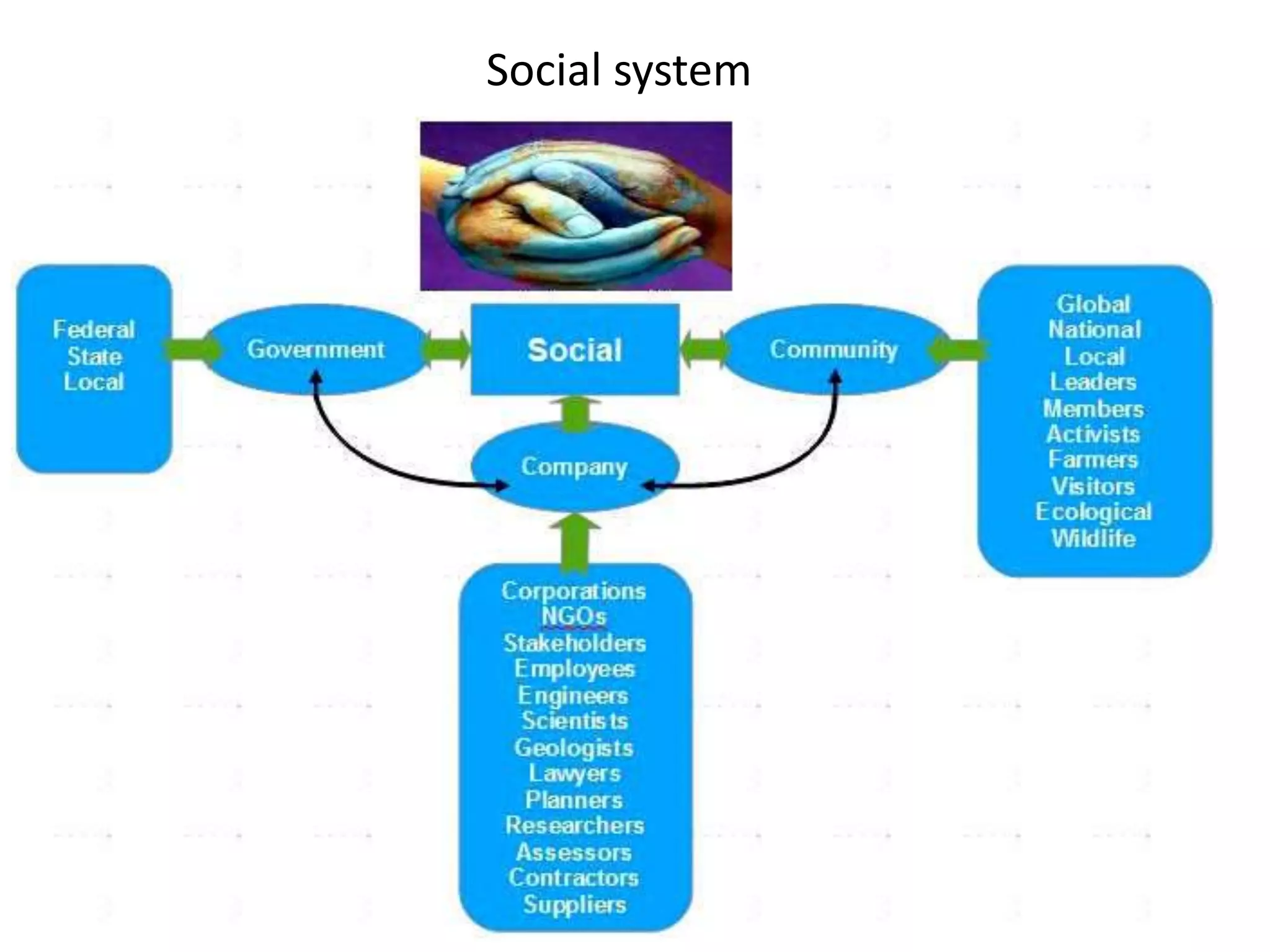
Environment system
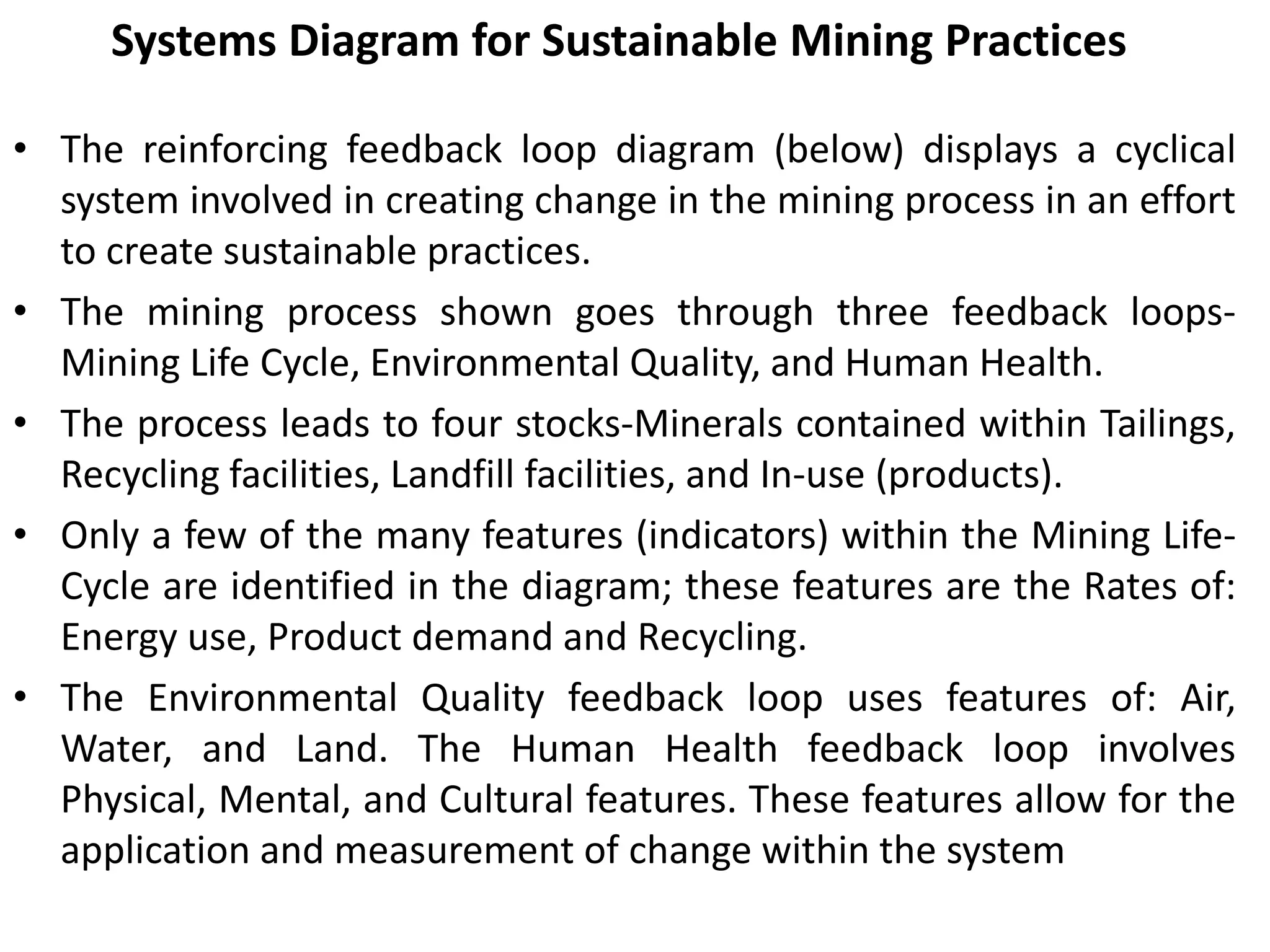
Social system
Economic system
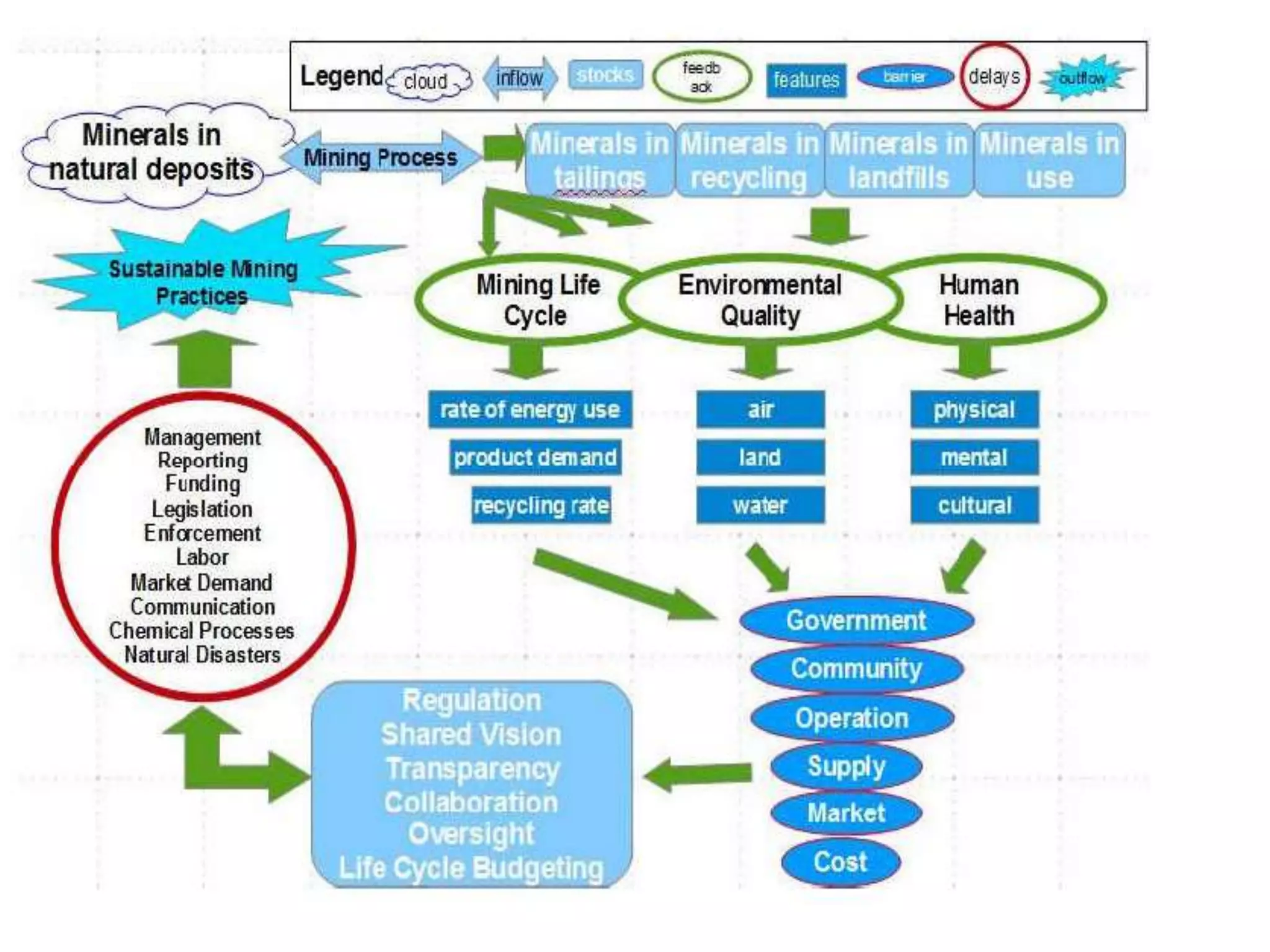
Systems Diagram for Sustainable Mining Practices
• The reinforcing feedback loop diagram (below) displays a cyclical
system involved in creating change in the mining process in an effort
to create sustainable practices.
• The mining process shown goes through three feedback loops-
Mining Life Cycle, Environmental Quality, and Human Health.
• The process leads to four stocks-Minerals contained within Tailings,
Recycling facilities, Landfill facilities, and In-use (products).
• Only a few of the many features (indicators) within the Mining Life-
Cycle are identified in the diagram; these features are the Rates of:
Energy use, Product demand and Recycling.
• The Environmental Quality feedback loop uses features of: Air,
Water, and Land. The Human Health feedback loop involves
Physical, Mental, and Cultural features. These features allow for the
application and measurement of change within the system
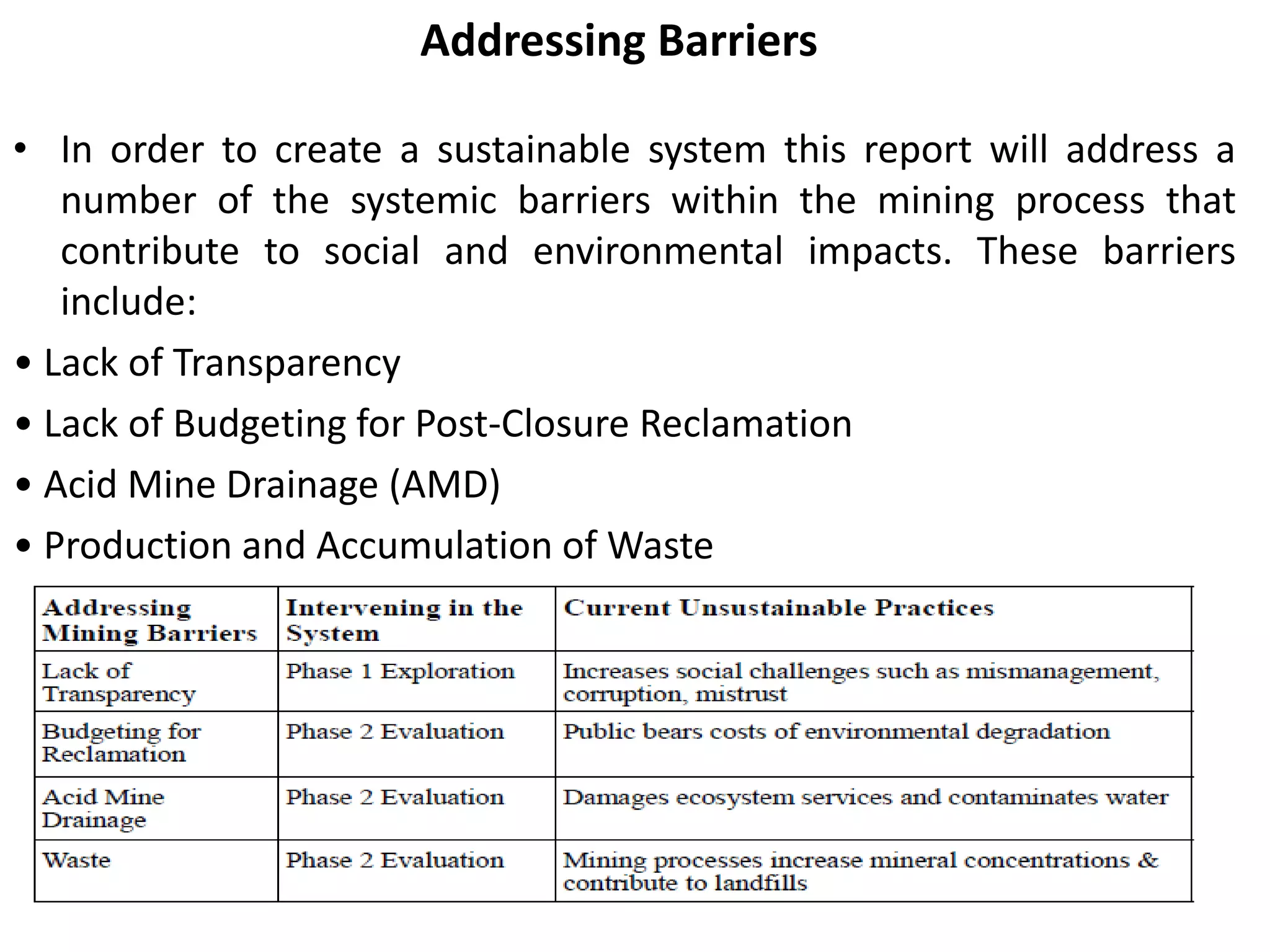
Addressing Barriers
• In order to create a sustainable system this report will address a
number of the systemic barriers within the mining process that
contribute to social and environmental impacts. These barriers
include:
• Lack of Transparency
• Lack of Budgeting for Post-Closure Reclamation
• Acid Mine Drainage (AMD)
• Production and Accumulation of Waste
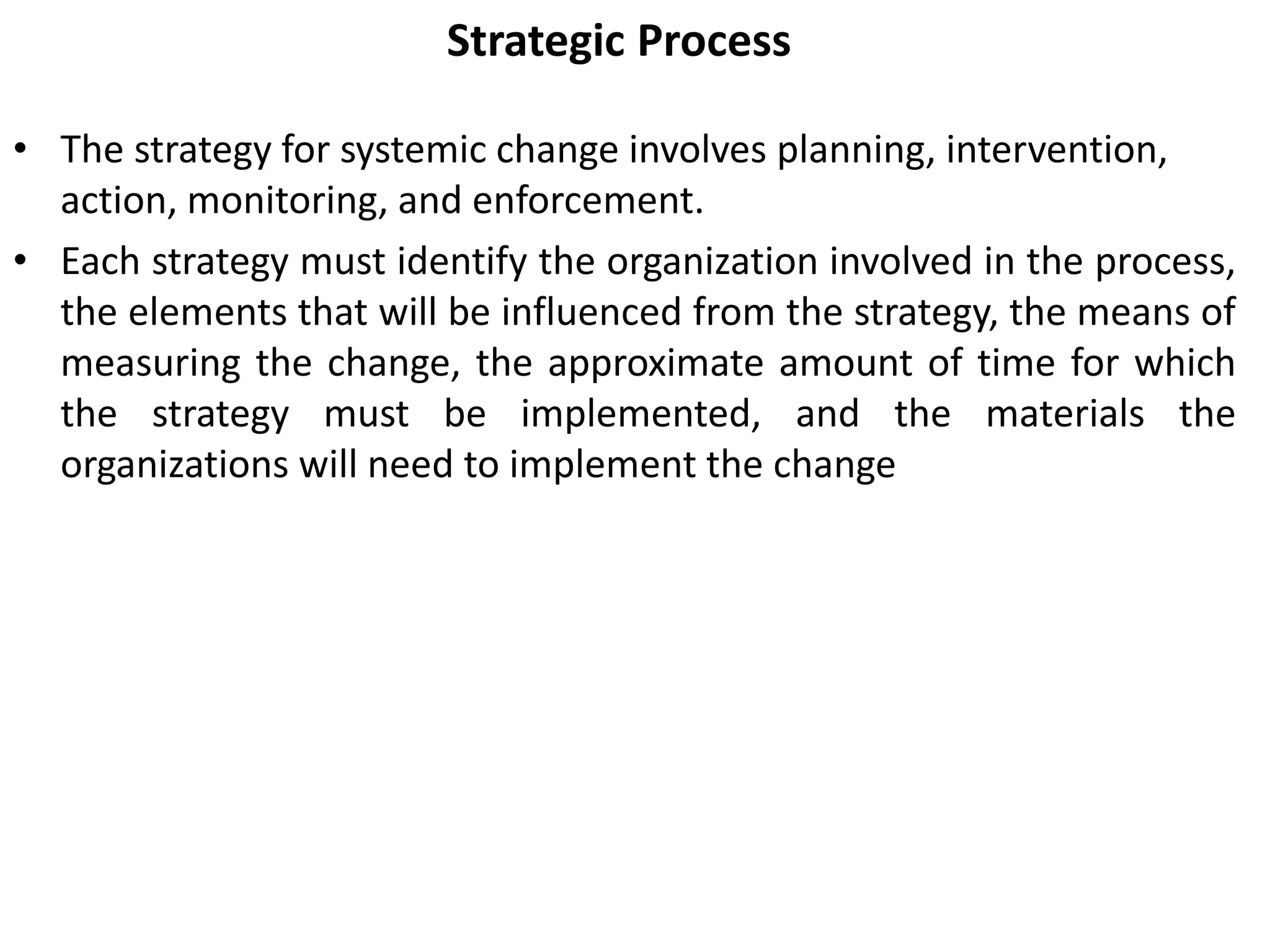
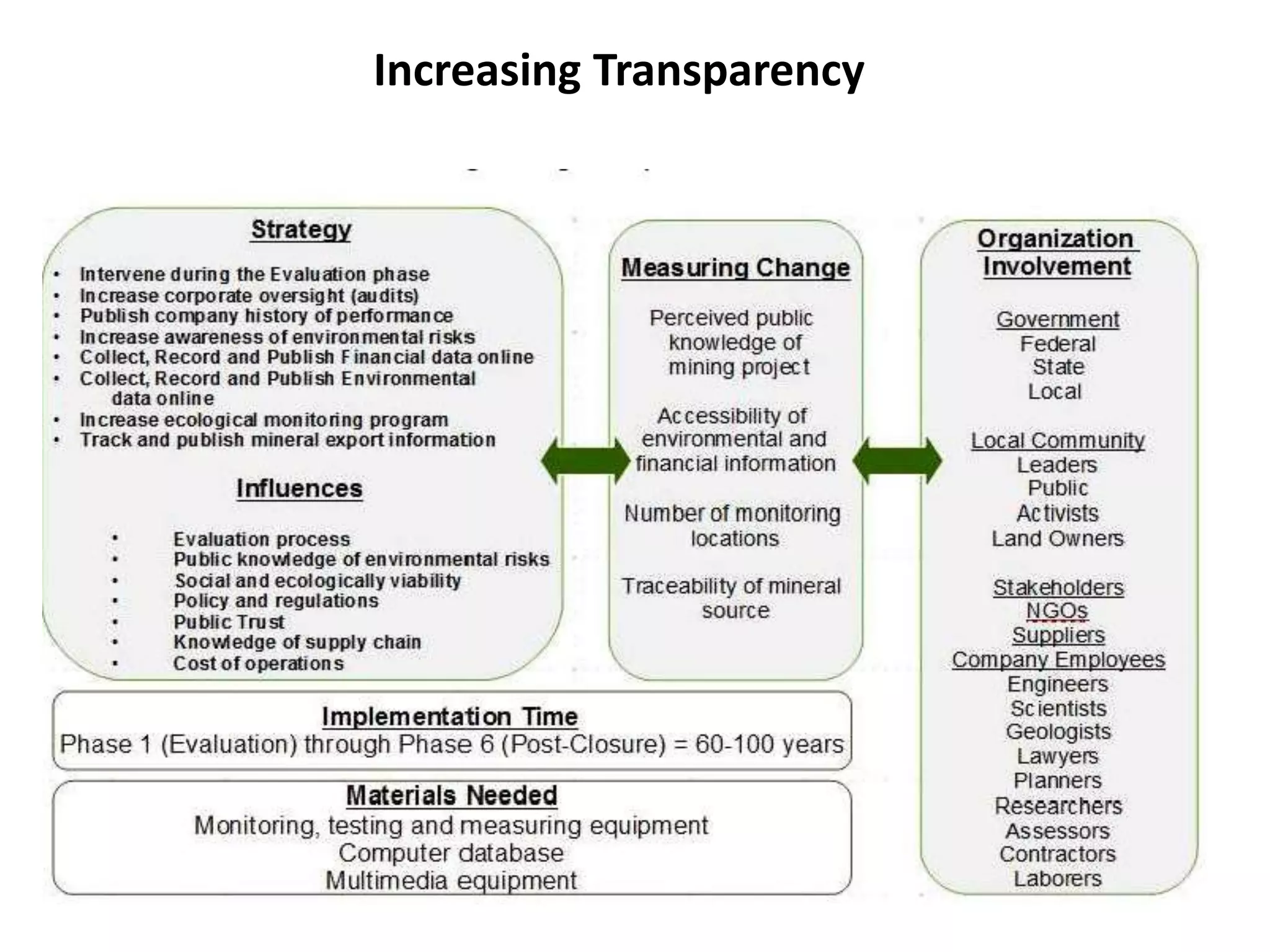
Strategic Process
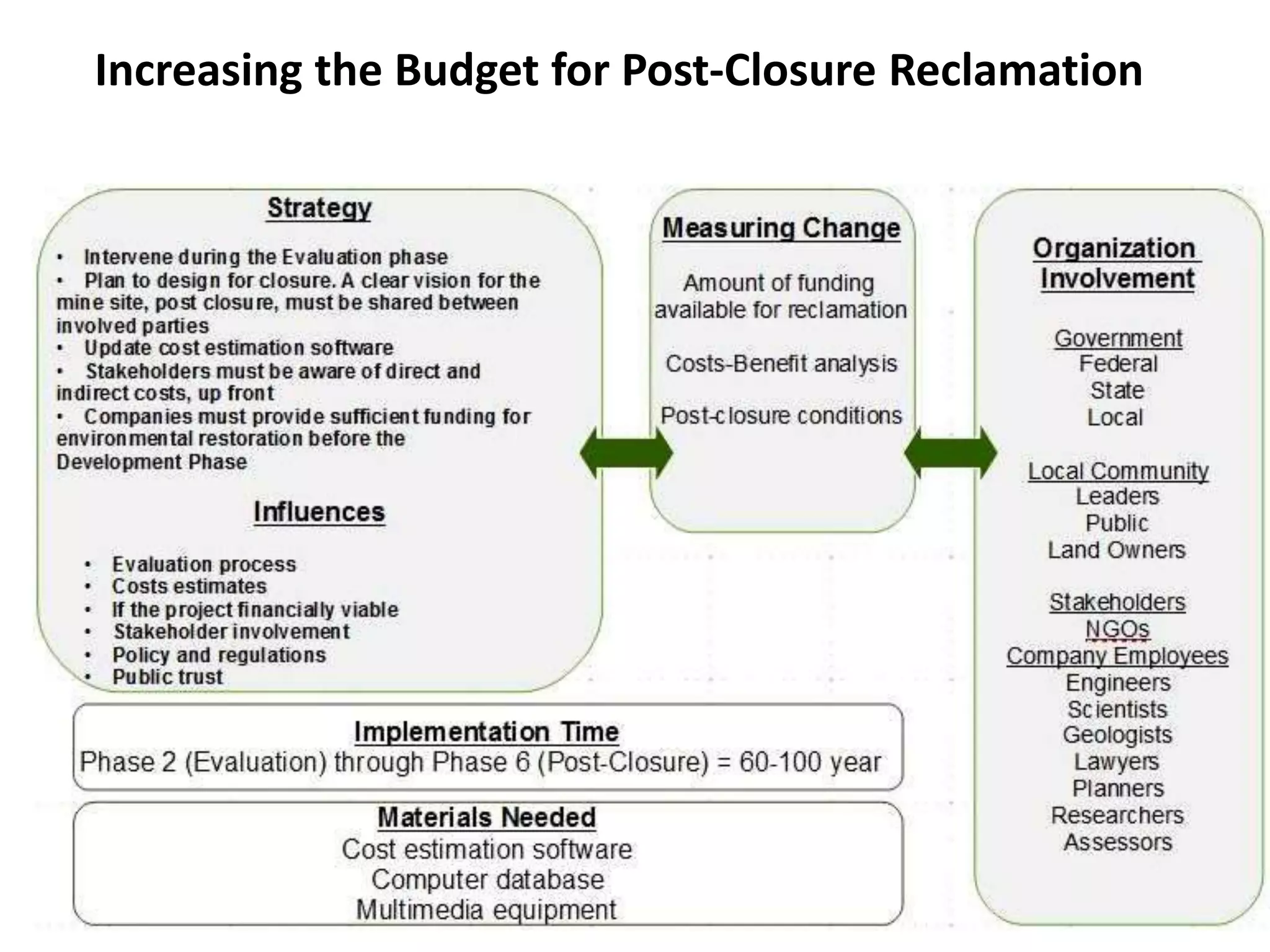
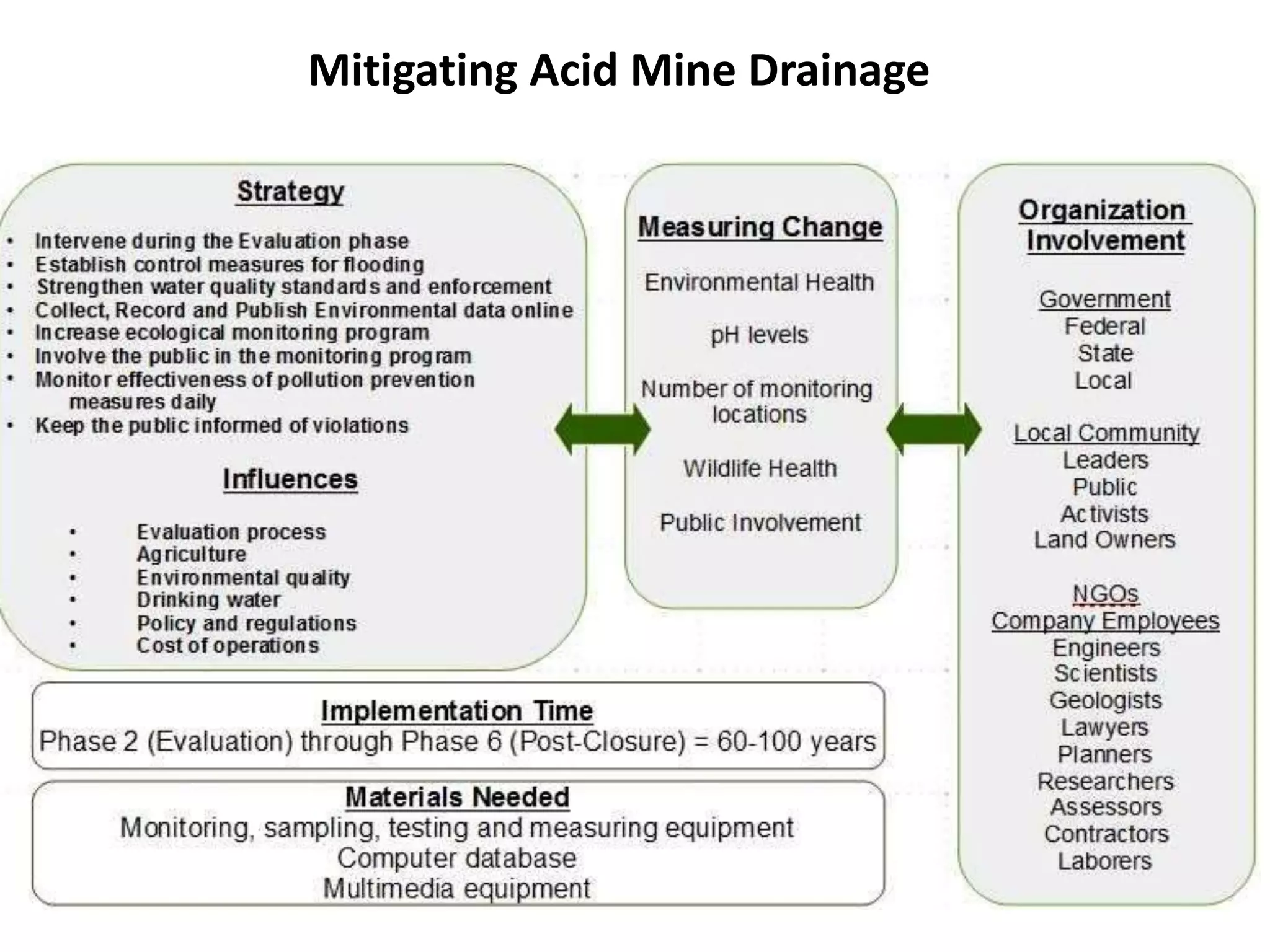
• The strategy for systemic change involves planning, intervention,
action, monitoring, and enforcement.
• Each strategy must identify the organization involved in the process,
the elements that will be influenced from the strategy, the means of
measuring the change, the approximate amount of time for which
the strategy must be implemented, and the materials the
organizations will need to implement the change
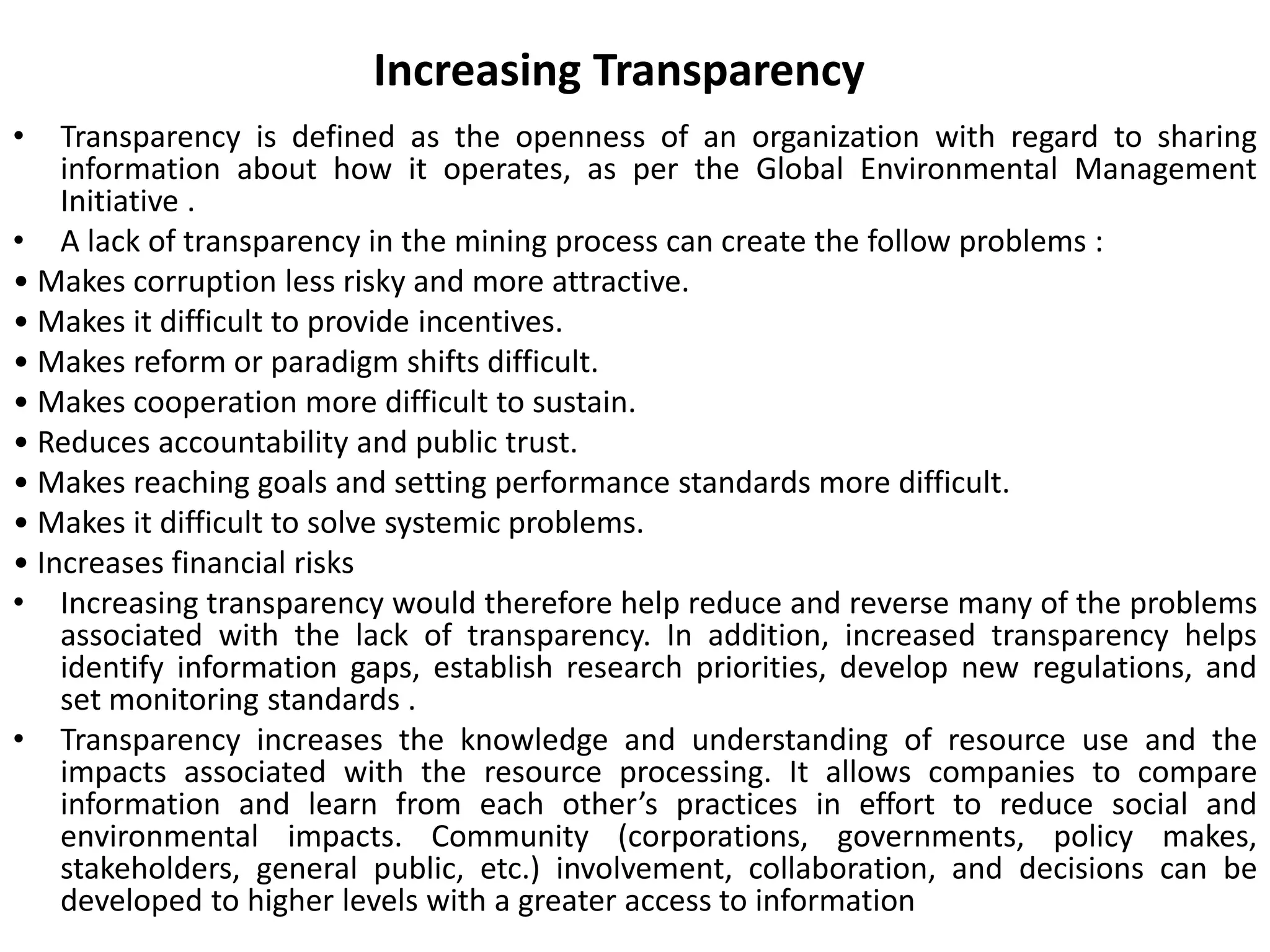
Increasing Transparency
• Transparency is defined as the openness of an organization with regard to sharing
information about how it operates, as per the Global Environmental Management
Initiative .
• A lack of transparency in the mining process can create the follow problems :
• Makes corruption less risky and more attractive.
• Makes it difficult to provide incentives.
• Makes reform or paradigm shifts difficult.
• Makes cooperation more difficult to sustain.
• Reduces accountability and public trust.
• Makes reaching goals and setting performance standards more difficult.
• Makes it difficult to solve systemic problems.
• Increases financial risks
• Increasing transparency would therefore help reduce and reverse many of the problems
associated with the lack of transparency. In addition, increased transparency helps
identify information gaps, establish research priorities, develop new regulations, and
set monitoring standards .
• Transparency increases the knowledge and understanding of resource use and the
impacts associated with the resource processing. It allows companies to compare
information and learn from each other’s practices in effort to reduce social and
environmental impacts. Community (corporations, governments, policy makes,
stakeholders, general public, etc.) involvement, collaboration, and decisions can be
developed to higher levels with a greater access to information
Increasing the Budget for Post-Closure Reclamation
• The long-term impacts of mining lie within the Post-Closure phase. Detailed planning
during the Exploration phase is critical. Prior to post-closure the mine site must
complete waste detoxification, removal of stored fuels and chemicals, removal and
capping of tailings, removal of roadways, and removal of erosion and sediment control
measures [17]; these measures occur during the Closure phase.
• The Closure planning process begins during the Evaluation phase. The initial closure
plans are based on projected market and environmental conditions. These conditions
change during the life cycle of the mine, for example new ore discoveries or advances
in technologies or new regulatory requirements change the Closure plans. The plans
need to be re-evaluated regularly throughout the mine's life cycle. Proper Closure
plans can eliminate the high costs of Post-Closure.
• The Post-Closure phase involves the reclamation and long term rehabilitation and
maintenance of the mine site. The greatest risk to sustainable Post-Closure is
improper financial planning to cover associated expenses. Currently, cost estimates for
reclamation do not cover the true expense of the Post-Closure phase.
• The strategies to budget for Post-Closure must consider a number of key objectives
from the start: Mitigate and eliminate environmental damage; Protect public health
and safety; Restore the land to a productive condition or to its original condition;
Provide social/economic benefits for the community. Ensuring sufficient financial
backing for closure costs from the start of the project will help mitigate social and
economic risks and consequences to the impacted community, the mining company,
and the financial stakeholders . The organizations involved must be well informed of
the financial risks from the start as well, projected costs may show that funding the
life cycle of the mine is not financially viable
Mitigating Acid Mine Drainage
• Acid mine drainage (AMD) occurs when sulfides, mainly iron pyrite or iron disulfide (in the
mined rock) are released into the environment and then interact with oxygen molecules in
the air and water; this chemical reaction creates sulfuric acid
• . When this acid makes its way into water systems it will kill all organisms that cannot
tolerate highly acidic waters. In addition, the acids dissolve harmful metals (which do not
break down in the environment) and are extremely toxic to fish and other aquatic life, as
well as to humans .
• One example of AMD is mercury contamination, which causes brain and kidney damage and
behavioral disorders in humans.
• “The mining industry has spent large amounts of money to prevent, mitigate, control and
otherwise stop the release of AMD using the best available technologies, yet AMD remains
as one the greatest environmental liabilities associated with mining, especially in pristine
environments with economically and ecologically valuable natural resources. Problematic to
the long-term operation of large scale metal mines is recognition that no hard rock surface
mines exist today that can demonstrate that AMD can be stopped once it occurs on a large
scale.”
• Current best practices for mitigating AMD involve a thorough site analysis. The analysis
includes: location, access, climate, ecology, history of previous mining, waste materials,
geology, hydrology, mineralogy, descriptions of all materials that will be excavated or
exposed, soils, reclamation objectives, end land uses, data tables, relevant figures, and other
pertinent information .
• The strategy for mitigating AMD must be one about prevention rather than remediation.
• The best practices and strategies to mitigate acid mine drainage
involve extensive geochemical, biological and hydrologic analysis
that must occur during the Evaluation phase. The strategies include
improving the knowledge and understanding of watersheds, water
patterns, water conveyance systems, rainfall intensities and
distributions, and the probabilities of natural disasters
Reducing Waste
Reducing Waste
• The greatest strategy to reduce waste from the mining process is to reduce the demand.
Reducing the demand of minerals is a major challenge however, due to global
population growth and economic growth in countries such as India and China.
Historically, economic growth and mineral consumption run parallel with each other.
• Mineral resource conservation by the landowners also reduces waste by reducing
extraction. Regulation and new mining laws can contribute to better conservation. In
addition, substituting rare mineral resources with a more abundant mineral resource
that has a longer manufactured lifespans helps. An example of this is substituting glass
fiber optic cables for copper cables in telephone wires or substituting wood for
aluminum in construction.
• Additional strategies to reduce demand include product stewardship, mineral/metal
reuse, and mineral/metal recycling. For example, the camera industry has nearly
eliminated the demand for silver thanks to the invention of digital processors.
Consumer stewardship, such as buying used not new, can increase the reuse of
products. Most metals can be infinitely recycled. Recycling is simplest for pure metals,
such as copper pipes and aluminum cans.
• But, it is more difficult to recycle alloys and complex technological products, such as
computers and phones. In addition to mitigating the negative impacts of increasing
metals, recycling also contributes to stable economic growth. China, for example, has
the largest municipal recycling park in the world. It is capable of recovering one million
tons of copper per year, which is more than twice that of their copper mine .
• Governments can help with mineral reduction strategies by incentivizing reuse and
recycling as well as building more advanced recycling facilities.
Recommendations for Best Practices
1. Establish a vision for a sustainable life cycle and share this vision with everyone involved
in the
process.
2. Use the “Four System Conditions for Sustainability” to guide plans and actions.
3. Use systematic approaches in the decision making process and ensure everyone involved
in the process is aware of the benefits and risks of every action.
4. Collect, record, and publish all financial and environmental information on a public
database.
5. Develop virtual platforms for information sharing.
6. Involve the community at the very first stage of the process and keep them informed of
plans, actions, impacts, risks, and other important information.
7. The federal government must have more authority be able to deny mining proposals that
could damage life-supporting resources. Empower local governments and communities
with more authority in deciding the use public lands for mining.
8. Require financial assurance for post-closure reclamation costs up front in phase one.
9. In effort to provide greater accountability of the mining industries practices, materials
produced and exported from the mining operation should be available on demand. For
example, a cell phone contains over forty elements, if someone wants to compile a
complete life cycle analysis of
a cell phone they will need to be able to trace back to what mine the minerals came from
and what type of practices that mining project used to create the product.
10. Establish environmental performance, monitoring, reporting, and reclamation
standards and ensure to the community that water quality will not be degraded.
Ensures sustainable land use following mine closure
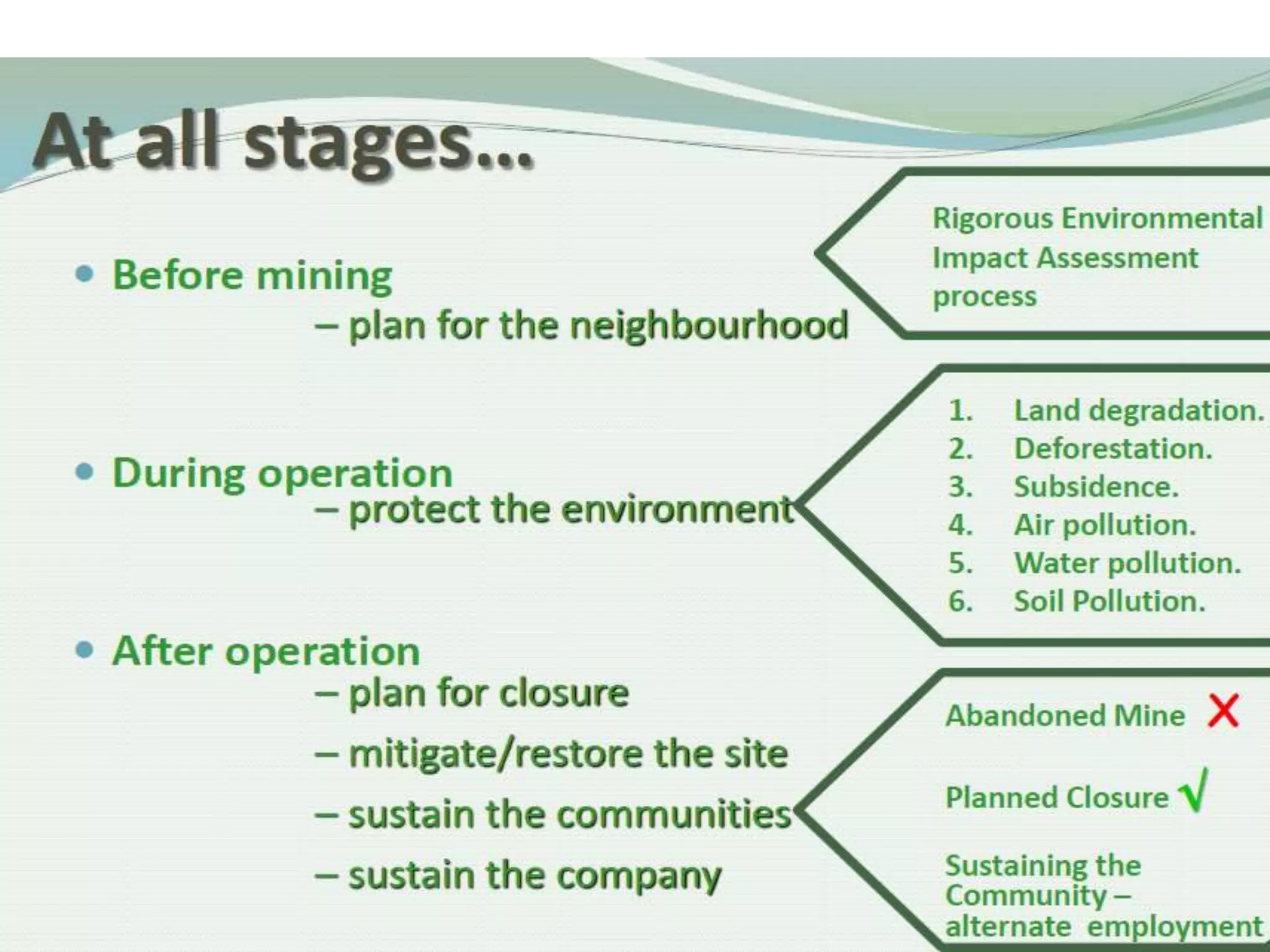
• The operation time for individual mines is limited. After that, the
mining areas will be restored to make them safe and to allow other
kinds of land use.
• Planning the controlled ending of mining operations and proper
measures for achieving this are started well before commencing
mining operations and they are be developed throughout the
project’s life cycle with the broad-based participation of local
residents and other stakeholders.
• Closure of a mine also requires functional and tested technical and
scientific methods, so that the quarries, waste areas and other
infrastructure can be restored in a way that allows further
sustainable use of the area according to plans.
• Post mining land use is a way towards sustainability
NEED
• THE WORLD NEEDS MINING TO CHANGE TOWARD SUSTAINABLE
MINING PRACTICES TO BENEFIT COMMUNITIES AND PROTECT THE
ENVIRONMENT.
• THERE IS A NEEDS TO THINK HOW WE CAN RE-BUILD AND RE-
BRAND MINING, TOGETHER.
• MINING IS AT A CRITICAL JUNCTURE. THERE IS TALK ABOUT “THE
MINE OF THE FUTURE” AND THE INTRODUCTION OF CRUCIAL
INNOVATIONS SUCH AS AUTOMATION AND MECHANIZATION
(ROBOTS) AND THE EXTENSIVE USE OF DATA ANALYTICS TO
OPTIMIZE MINING PERFORMANCE.
• WE MINING ENGINNERS BELEVE SUSTAINABILITY CAN BE A
CATALYST TO THESE CHANGES AS IT ADDRESSES ALL FACETS OF THE
MINING VALUE CHAIN, FROM INPUT SOURCING AND
DEVELOPMENT OF LOCAL SUPPLY AND RENEWABLE ENERGY TO
DELIVERING A SUSTAINABLE PRODUCT TO THE MARKET.

Sustanable mining

  • 1.
    “Sustainable Mining “Sustainable” basedon premise that resources currently used without compromising their availability to future generations SUSTAINABLE MINING design & build mining systems methods, equipment, technologies, management to perform optimally in the following contexts: technical, economic, environmental, social performance.
  • 2.
    Sustainable What? • MiningMinerals and Sustainable Development program = Breaking New Ground found: • “Triple bottom line” meaning a mine may be economically, ecologically and socially sustainable • Sustainable Development is developing in such a way that future people will have “enough and as good”* • Mining necessarily ends up depleting the resource it uses and is characterized by negative impacts. • However, it has significant potential for making positive impact. It is possible for mining to contribute to sustainable development through: • Enhancing the benefits while mitigating the negative impacts both when mining is taking place and subsequently as well as Improving stakeholder participation in the management of the resources. • This is however easier said than done…
  • 3.
    Problem • The miningprocess is extremely demanding on resources such as water, land, and energy. The ecological and social degradation that results from the mining process prevents the industry from complying with the “Four System Conditions for Sustainability” as per The Natural Step. The current practices of minimizing impacts and enforcing regulations do not address the systemic sustainability challenges within the process.
  • 4.
    Goal • The goalof this report is to evaluate the mining life cycle process and apply The Natural Step and systems thinking model to create sustainable practices within the mining industry
  • 5.
    • Sustainable MiningThere is no one definition of sustainability that has been universally adopted by the mining industry. Some useful descriptions include the following: • miners can achieve sustainable development by embracing the social, environment and economic pillars – James 1999. • offsetting or reinvesting the benefits from the depleting mineral asset – Labonne 1999. • the simultaneous pursuit of sustained or enhanced: environmental quality, economic growth, and social justice – Eggert 2006.
  • 6.
    Scope • Awareness ofthe environmental and social challenges is ever increasing. Significant opportunities • for change already exist within the mining process. These changes can allow the industry to • contribute to a sustainable society. The scope of this report will identify the current system in • place, apply a systems thinking framework to analyze the barriers and challenges and provide • strategic solutions to these challenges. The scope of the report is limited to the life cycle of the • mineral mining process – exploration, evaluation, development, production, closure, and postclosure.
  • 7.
    Economically feasible Ecologically viable Socially desirable Provide profit& benefit Use resource efficiently Internalize environmental & social cost Restore ecosystems & services it provides Engage neighbors Respect property, culture, & safety Follow spirit & letter of law Contribute to communities Sustainable Solution Active Mine Scenario Adapted from Burger, ASMR Newsletter Fall 2012
  • 8.
  • 10.
    • Safety;-For bothethical and business reasons, a mining operation should aim to prioritise safety. Characteristics of safe mines include a commitment to risk management; appropriate attitudes and behaviours; reporting systems need to be in place; a focus on education and training; and a focus on processes and equipment (Laurence 2005). • Economy Unless a mine is profitable, it cannot be sustainable. The aim for mine managers is to generate profit responsibly for as long as possible by keeping costs to a minimum while maximizing revenue. This will also maximize the equitable benefits to all stakeholders, including shareholders, employees, local communities and businesses, which depend on the mine, as well as the governments that benefit by means of taxes and royalties.
  • 11.
    • Resource Efficiency;-A mine also has to be efficient in the way the resource is managed and extracted. Mining engineers, geologists and metallurgists collaborate to optimize resource extraction. Examples of non-sustainable mining practices abound and include “high grading” the ore body, which entails mining only the highest grade material for short term gain. This is a practice used by companies and individuals within those companies with a short time frame. This, in turn, is a symptom of the high turnover at many mine sites and the drive to “make one’s name” as quickly as possible without regard for the longer-term extraction of the deposit. Particularly in these times of high commodity prices, it makes sense to consider mining lower grades which will extend the mine life and thus stakeholder benefits, without compromising the revenue stream. Another example is underground mining only the lowest horizon of a thick coal seam (>6 metres), rather than mining the full seam thickness. Mines in China have been criticised for their safety record but due to the implementation of novel techniques such as longwall top coal caving, it is possible to extract the full height of even a 10 metre seam, thus optimising the extraction of this valuable resource. Efficiency also encompasses the management dimension at a mine site, as poor management decisions can often lead to production difficulties or equipment breakdown or industrial relations or other factors that impact on optimum resource extraction.
  • 12.
    • Environment :-Adoptingleading environmental management practices on mine sites makes excellent business sense. Unless steps are taken in the planning and operational stages to protect environmental values, long-term liabilities such as acid mine drainage, may result. Thanks in part to the increasing awareness of environmental issues, there is considerable literature relating to the environment and sustainable development. • Community:- Finally, a mine needs a ‘social licence to operate’. Unless the community is engaged and supportive of a mining operation, opposition and confrontation may ensue. Mining operations run by corporations have been disrupted on many occasions in the recent past particularly from local artisanal and small-scale miners, who were mining in many cases before the commencement of the larger- scale operations.
  • 14.
    Urgency for SustainableDevelopment • Globalization means that many problems are no longer simply local or national concerns. • Growing evidence that ecosystems are seriously out of balance, posing new and poorly understood risks. • The problem of poverty is inseparably linked with global ecological problems which cannot be solved unless people have a stake in the outcome and the resources to manage the problems. • Governance systems have not yet emerged for the reality of a globalized economy. • Increased awareness and expectations flowing from the new world information regime.
  • 15.
    Key Principles 1.Leadership 2.Collaboration 3.Corporate SocialResponsibility 4.Sustainability 5.Communication 6.Community Engagement • The Miner of the 21st Century must know: 1.How to monitor emissions 2.How to protect the environment 3.How to restore a mine site back to other uses 4.How to get along with the neighbours
  • 16.
    Sustainable Development Principles 1.Implement and maintain ethical business practices and sound systems of corporate governance. 2. Integrate sustainable development considerations within the corporate decision-making process. 3. Uphold fundamental human rights and respect cultures, customs and values in dealings with 4. Implement risk management strategies based on valid data and sound science. 5. Seek continual improvement of our health and safety performance 6. Seek continual improvement of our environmental performance 7. Contribute to conservation of biodiversity and integrated approaches to land use planning 8. . Facilitate and encourage responsible product design, use, re-use, recycling and disposal of our products 9. Contribute to the social, economic and institutional development of the communities in which we operate 10. Implement effective and transparent engagement, communication and independently verified reporting arrangements with our stakeholders
  • 17.
    Sustainable Development Framework 1.Incorporating Environmental and Social Sensitivities in decisions on leases 2. Strategic Assessment in Key Mining regions 3. Managing impacts at the Mine level impact through sound management systems. 4. Addressing Land, Resettlement and Other Social Impacts 5. Community engagement, benefit sharing and contribution to socio-economic development 6. Mine Closure and Post Closure Mining operations must prepare, manage and progressively work on a process for eventual mine closure 7. Ethical functioning and responsible business practices 8. Assurance and Reporting
  • 18.
    • Mining todayis a balance of three elements: 1.Techno-economic issues 2.Environmental issues 3.Socio-political issues
  • 19.
    Key Challenges • Settingup and expansion of mining operations • Increase in workforce to support expansion • Accommodating the workforce – impact on forest areas • Impact of Operations on the environment • Balancing Local and National interests – local livelihood v/s mineral for development • Immediate, short, medium and long term management issues. • Mine Closure….
  • 20.
  • 21.
    Rewards of SustainableDevelopment • Production consumption and living patterns consistent with ecological balance. • Dramatic reduction of the numbers of people living in poverty. • Greater opportunity to develop individual and group potential. • More open, cooperative, transparent and consensual systems of governance.
  • 24.
    Schneider Electric –Sustainability in Mining: Technologies and Processes for Data Aggregation, Management, and Reporting– SME 2013 Sustainability in the Mining Industry ● The small 5% segment who want to avoid sustainable development issues Avoid Sustainability Issues Well Established with Good Management Common Sense, Contextual Approach ● The 80% who develop practices based on common sense in response to particular context, which in some cases results in good work but is generally not benchmarked to international standards and can be highly variable in the quality of both delivery and outcomes ● The 15% who are well managed, reporting material issues, showing improvements, and are recognized as leaders
  • 25.
    Schneider Electric –Sustainability in Mining: Technologies and Processes for Data Aggregation, Management, and Reporting– SME 2013 Evolution of a Sustainability Program 1. Develop Sustainability Strategy • Determine corporate profile • Set goals & objectives • Governance structure 2. Implement Reporting Program • Develop management plan • Establish measurement & reporting structure • Operations and Products / Supply Chain • Set baseline with third-party verification 3. Evaluate Footprint & Prioritize Actions • Identify portfolio opportunities • Commit to targets • Create performance metrics (KPIs) 4. Implement Optimization Activities • Reduce (raw material, energy, water, waste) • Renew (renewable energy, recycle, treat & reuse) • Restore (offset impact, manage credits) 5. Communicate Results & Performance • Employee & stakeholder engagement / functional teamwork • Voluntary / mandatory reporting • Investor / Customer scorecards • Supplier engagement and performance
  • 26.
    Schneider Electric –Sustainability in Mining: Technologies and Processes for Data Aggregation, Management, and Reporting– SME 2013 Sustainability Strategy ●Common Sustainability Challenges ● Connecting vision with execution ● Cost/benefit metrics for sustainable initiative decision making ● Determination of materiality
  • 29.
    • integrated SustainableDevelopment Strategy
  • 30.
  • 31.
    Methods • Literature reviewto gain an understanding of: 1. “The Natural Step” and “Systems Thinking” framework; 2. The mining life cycle process and the associated ecological and human impacts; 3. The current best practices for mineral mining. • Data collection: 1. The socioeconomic and environmental barriers 2. The organizations involved in the process 3. The current solutions to the challenges within the mining process • Systems diagrams and suggested strategies • Present recommendations to address the current unsustainable practices.
  • 34.
    Systematic Approach toSustainability Shared Vision of Success • The shared vision of success must be one that contributes to a sustainable society. The mining industry needs to constantly be aware of its actions and how they are assisting in moving the process towards its vision of success as constrained by Sustainability Principles . • Is the action: • Eliminating its contribution to systematic increases in concentrations of substances from the Earth’s crust? • Eliminate its contribution to systematic increases in concentrations of substances produced by society? • Eliminating its contribution to systematic physical degradation of nature through overharvesting, introduction and other forms of modification? • Eliminating its contribution to conditions that systematically undermine people’s capacity to meet their needs? System Awareness • Applying a systematic approach to the mining process requires that the elements of each system of sustainability to be identified. Not only will this method bring to light the interconnectedness between the environmental, social, and economic elements in the system, it will also help create new opportunities for improvement and identify gaps between current best practices and a desired vision of sustainability.
  • 35.
  • 36.
  • 37.
  • 38.
    Systems Diagram forSustainable Mining Practices • The reinforcing feedback loop diagram (below) displays a cyclical system involved in creating change in the mining process in an effort to create sustainable practices. • The mining process shown goes through three feedback loops- Mining Life Cycle, Environmental Quality, and Human Health. • The process leads to four stocks-Minerals contained within Tailings, Recycling facilities, Landfill facilities, and In-use (products). • Only a few of the many features (indicators) within the Mining Life- Cycle are identified in the diagram; these features are the Rates of: Energy use, Product demand and Recycling. • The Environmental Quality feedback loop uses features of: Air, Water, and Land. The Human Health feedback loop involves Physical, Mental, and Cultural features. These features allow for the application and measurement of change within the system
  • 40.
    Addressing Barriers • Inorder to create a sustainable system this report will address a number of the systemic barriers within the mining process that contribute to social and environmental impacts. These barriers include: • Lack of Transparency • Lack of Budgeting for Post-Closure Reclamation • Acid Mine Drainage (AMD) • Production and Accumulation of Waste
  • 41.
    Strategic Process • Thestrategy for systemic change involves planning, intervention, action, monitoring, and enforcement. • Each strategy must identify the organization involved in the process, the elements that will be influenced from the strategy, the means of measuring the change, the approximate amount of time for which the strategy must be implemented, and the materials the organizations will need to implement the change
  • 42.
  • 43.
    Increasing Transparency • Transparencyis defined as the openness of an organization with regard to sharing information about how it operates, as per the Global Environmental Management Initiative . • A lack of transparency in the mining process can create the follow problems : • Makes corruption less risky and more attractive. • Makes it difficult to provide incentives. • Makes reform or paradigm shifts difficult. • Makes cooperation more difficult to sustain. • Reduces accountability and public trust. • Makes reaching goals and setting performance standards more difficult. • Makes it difficult to solve systemic problems. • Increases financial risks • Increasing transparency would therefore help reduce and reverse many of the problems associated with the lack of transparency. In addition, increased transparency helps identify information gaps, establish research priorities, develop new regulations, and set monitoring standards . • Transparency increases the knowledge and understanding of resource use and the impacts associated with the resource processing. It allows companies to compare information and learn from each other’s practices in effort to reduce social and environmental impacts. Community (corporations, governments, policy makes, stakeholders, general public, etc.) involvement, collaboration, and decisions can be developed to higher levels with a greater access to information
  • 44.
    Increasing the Budgetfor Post-Closure Reclamation
  • 45.
    Increasing the Budgetfor Post-Closure Reclamation • The long-term impacts of mining lie within the Post-Closure phase. Detailed planning during the Exploration phase is critical. Prior to post-closure the mine site must complete waste detoxification, removal of stored fuels and chemicals, removal and capping of tailings, removal of roadways, and removal of erosion and sediment control measures [17]; these measures occur during the Closure phase. • The Closure planning process begins during the Evaluation phase. The initial closure plans are based on projected market and environmental conditions. These conditions change during the life cycle of the mine, for example new ore discoveries or advances in technologies or new regulatory requirements change the Closure plans. The plans need to be re-evaluated regularly throughout the mine's life cycle. Proper Closure plans can eliminate the high costs of Post-Closure. • The Post-Closure phase involves the reclamation and long term rehabilitation and maintenance of the mine site. The greatest risk to sustainable Post-Closure is improper financial planning to cover associated expenses. Currently, cost estimates for reclamation do not cover the true expense of the Post-Closure phase. • The strategies to budget for Post-Closure must consider a number of key objectives from the start: Mitigate and eliminate environmental damage; Protect public health and safety; Restore the land to a productive condition or to its original condition; Provide social/economic benefits for the community. Ensuring sufficient financial backing for closure costs from the start of the project will help mitigate social and economic risks and consequences to the impacted community, the mining company, and the financial stakeholders . The organizations involved must be well informed of the financial risks from the start as well, projected costs may show that funding the life cycle of the mine is not financially viable
  • 46.
  • 47.
    Mitigating Acid MineDrainage • Acid mine drainage (AMD) occurs when sulfides, mainly iron pyrite or iron disulfide (in the mined rock) are released into the environment and then interact with oxygen molecules in the air and water; this chemical reaction creates sulfuric acid • . When this acid makes its way into water systems it will kill all organisms that cannot tolerate highly acidic waters. In addition, the acids dissolve harmful metals (which do not break down in the environment) and are extremely toxic to fish and other aquatic life, as well as to humans . • One example of AMD is mercury contamination, which causes brain and kidney damage and behavioral disorders in humans. • “The mining industry has spent large amounts of money to prevent, mitigate, control and otherwise stop the release of AMD using the best available technologies, yet AMD remains as one the greatest environmental liabilities associated with mining, especially in pristine environments with economically and ecologically valuable natural resources. Problematic to the long-term operation of large scale metal mines is recognition that no hard rock surface mines exist today that can demonstrate that AMD can be stopped once it occurs on a large scale.” • Current best practices for mitigating AMD involve a thorough site analysis. The analysis includes: location, access, climate, ecology, history of previous mining, waste materials, geology, hydrology, mineralogy, descriptions of all materials that will be excavated or exposed, soils, reclamation objectives, end land uses, data tables, relevant figures, and other pertinent information . • The strategy for mitigating AMD must be one about prevention rather than remediation.
  • 48.
    • The bestpractices and strategies to mitigate acid mine drainage involve extensive geochemical, biological and hydrologic analysis that must occur during the Evaluation phase. The strategies include improving the knowledge and understanding of watersheds, water patterns, water conveyance systems, rainfall intensities and distributions, and the probabilities of natural disasters
  • 49.
  • 50.
    Reducing Waste • Thegreatest strategy to reduce waste from the mining process is to reduce the demand. Reducing the demand of minerals is a major challenge however, due to global population growth and economic growth in countries such as India and China. Historically, economic growth and mineral consumption run parallel with each other. • Mineral resource conservation by the landowners also reduces waste by reducing extraction. Regulation and new mining laws can contribute to better conservation. In addition, substituting rare mineral resources with a more abundant mineral resource that has a longer manufactured lifespans helps. An example of this is substituting glass fiber optic cables for copper cables in telephone wires or substituting wood for aluminum in construction. • Additional strategies to reduce demand include product stewardship, mineral/metal reuse, and mineral/metal recycling. For example, the camera industry has nearly eliminated the demand for silver thanks to the invention of digital processors. Consumer stewardship, such as buying used not new, can increase the reuse of products. Most metals can be infinitely recycled. Recycling is simplest for pure metals, such as copper pipes and aluminum cans. • But, it is more difficult to recycle alloys and complex technological products, such as computers and phones. In addition to mitigating the negative impacts of increasing metals, recycling also contributes to stable economic growth. China, for example, has the largest municipal recycling park in the world. It is capable of recovering one million tons of copper per year, which is more than twice that of their copper mine . • Governments can help with mineral reduction strategies by incentivizing reuse and recycling as well as building more advanced recycling facilities.
  • 51.
    Recommendations for BestPractices 1. Establish a vision for a sustainable life cycle and share this vision with everyone involved in the process. 2. Use the “Four System Conditions for Sustainability” to guide plans and actions. 3. Use systematic approaches in the decision making process and ensure everyone involved in the process is aware of the benefits and risks of every action. 4. Collect, record, and publish all financial and environmental information on a public database. 5. Develop virtual platforms for information sharing. 6. Involve the community at the very first stage of the process and keep them informed of plans, actions, impacts, risks, and other important information. 7. The federal government must have more authority be able to deny mining proposals that could damage life-supporting resources. Empower local governments and communities with more authority in deciding the use public lands for mining. 8. Require financial assurance for post-closure reclamation costs up front in phase one. 9. In effort to provide greater accountability of the mining industries practices, materials produced and exported from the mining operation should be available on demand. For example, a cell phone contains over forty elements, if someone wants to compile a complete life cycle analysis of a cell phone they will need to be able to trace back to what mine the minerals came from and what type of practices that mining project used to create the product. 10. Establish environmental performance, monitoring, reporting, and reclamation standards and ensure to the community that water quality will not be degraded.
  • 52.
    Ensures sustainable landuse following mine closure • The operation time for individual mines is limited. After that, the mining areas will be restored to make them safe and to allow other kinds of land use. • Planning the controlled ending of mining operations and proper measures for achieving this are started well before commencing mining operations and they are be developed throughout the project’s life cycle with the broad-based participation of local residents and other stakeholders. • Closure of a mine also requires functional and tested technical and scientific methods, so that the quarries, waste areas and other infrastructure can be restored in a way that allows further sustainable use of the area according to plans. • Post mining land use is a way towards sustainability
  • 53.
    NEED • THE WORLDNEEDS MINING TO CHANGE TOWARD SUSTAINABLE MINING PRACTICES TO BENEFIT COMMUNITIES AND PROTECT THE ENVIRONMENT. • THERE IS A NEEDS TO THINK HOW WE CAN RE-BUILD AND RE- BRAND MINING, TOGETHER. • MINING IS AT A CRITICAL JUNCTURE. THERE IS TALK ABOUT “THE MINE OF THE FUTURE” AND THE INTRODUCTION OF CRUCIAL INNOVATIONS SUCH AS AUTOMATION AND MECHANIZATION (ROBOTS) AND THE EXTENSIVE USE OF DATA ANALYTICS TO OPTIMIZE MINING PERFORMANCE. • WE MINING ENGINNERS BELEVE SUSTAINABILITY CAN BE A CATALYST TO THESE CHANGES AS IT ADDRESSES ALL FACETS OF THE MINING VALUE CHAIN, FROM INPUT SOURCING AND DEVELOPMENT OF LOCAL SUPPLY AND RENEWABLE ENERGY TO DELIVERING A SUSTAINABLE PRODUCT TO THE MARKET.