Alcohol Affects The
Body
Ch.10.1
ObjectivesObjectives
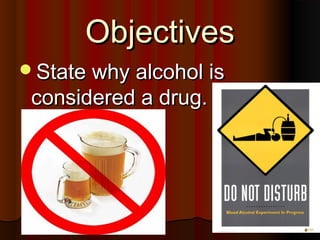
State why alcohol isState why alcohol is
considered a drug.considered a drug.
ObjectivesObjectives
List the short termList the short term
affects.affects.
ObjectivesObjectives
Describe the long termDescribe the long term
damage that alcoholdamage that alcohol
does to the organs of thedoes to the organs of the
body.body.
ObjectivesObjectives
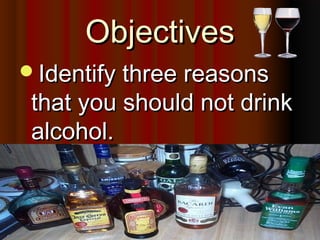
Identify three reasonsIdentify three reasons
that you should not drinkthat you should not drink
alcohol.alcohol.
What is alcohol?
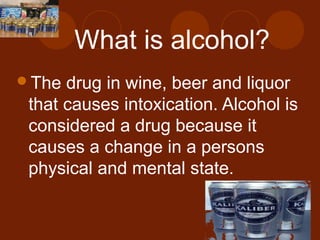
The drug in wine, beer and liquor
that causes intoxication. Alcohol is
considered a drug because it
causes a change in a persons
physical and mental state.
The physi cal and
ment al changes
pr oduced by dr i nki ng
al cohol .
Intoxication
What are the short-term effects of alcohol
on the body?
1. irritates the mouth, throat, esophagus
and stomach
2.alcohol makes the heart work harder
3.alcohol makes the body lose heat
4. alcohol causes the liver to work harder
5. alcohol causes dehydration
What are the short-term effects of alcohol
on the mind?
Depressant
 Slows down the nervous system
 Lose the ability to make good decisions
 Lose inhibitions
 Lose coordination
 Experience mood swings
 Aggressive
 relaxed
What is blood
alcohol concentration?
“BAC”-The amount of alcohol
in a person’s blood, expressed
as a percentage.
Legal limit (21 years +) = .08%
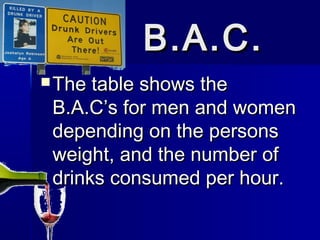
B.A.C.B.A.C.
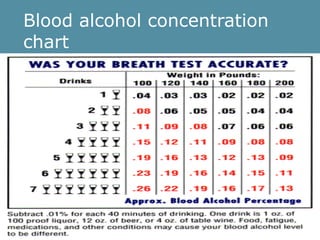
 The table shows theThe table shows the
B.A.C’s for men and womenB.A.C’s for men and women
depending on the personsdepending on the persons
weight, and the number ofweight, and the number of
drinks consumed per hour.drinks consumed per hour.
Blood alcohol concentration
chart
Fact
The ability to drive is affected
even at a B.A.C. of 0.02. Just
one drink can affect a
persons ability to drive safely
Myth
Teens: If you weigh 160 lbs, I
can drink three beers without
affecting my driving because
I’ll still be under the legal limit
of 0.08.
What is binge drinking?
The act of drinking 5 or more drinks in
one sitting. A person can drink a fatal
amount of alcohol before the effects
of severe intoxication sets in.
What are the long term effects of alcohol?
Permanent damage to the body
Permanent damage to the brain
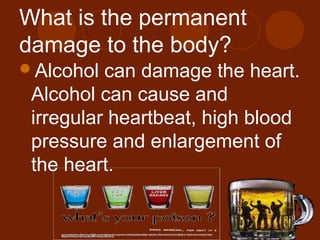
What is the permanent
damage to the body?
Alcohol can damage the heart.
Alcohol can cause and
irregular heartbeat, high blood
pressure and enlargement of
the heart.
Cirrhosis
a deadly disease that replaces
healthy liver tissue with scar
tissue. Most often caused by
long term alcohol abuse.
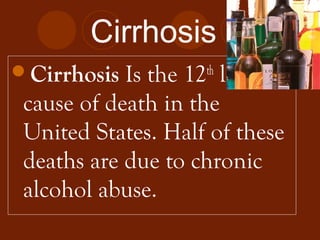
Cirrhosis
Cirrhosis Is the 12th
leading
cause of death in the
United States. Half of these
deaths are due to chronic
alcohol abuse.
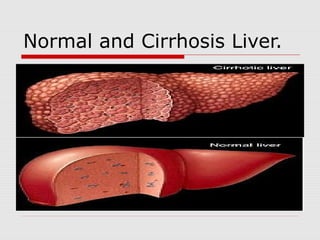
Normal and Cirrhosis Liver.
Damage to the
brain
Alcohol causes
permanent damage to
the brain due to cell
death from repeated
dehydration and lack of
oxygen.
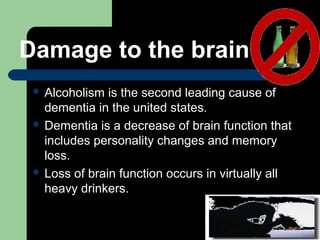
Damage to the brain
 Alcoholism is the second leading cause of
dementia in the united states.
 Dementia is a decrease of brain function that
includes personality changes and memory
loss.
 Loss of brain function occurs in virtually all
heavy drinkers.
classwork
Pg. 246 #1-10

Chapter 10.1

  • 1.
  • 2.
    ObjectivesObjectives State why alcoholisState why alcohol is considered a drug.considered a drug.
  • 3.
    ObjectivesObjectives List the shorttermList the short term affects.affects.
  • 4.
    ObjectivesObjectives Describe the longtermDescribe the long term damage that alcoholdamage that alcohol does to the organs of thedoes to the organs of the body.body.
  • 5.
    ObjectivesObjectives Identify three reasonsIdentifythree reasons that you should not drinkthat you should not drink alcohol.alcohol.
  • 6.
    What is alcohol? Thedrug in wine, beer and liquor that causes intoxication. Alcohol is considered a drug because it causes a change in a persons physical and mental state.
  • 7.
    The physi caland ment al changes pr oduced by dr i nki ng al cohol . Intoxication
  • 8.
    What are theshort-term effects of alcohol on the body? 1. irritates the mouth, throat, esophagus and stomach 2.alcohol makes the heart work harder 3.alcohol makes the body lose heat 4. alcohol causes the liver to work harder 5. alcohol causes dehydration
  • 9.
    What are theshort-term effects of alcohol on the mind? Depressant  Slows down the nervous system  Lose the ability to make good decisions  Lose inhibitions  Lose coordination  Experience mood swings  Aggressive  relaxed
  • 10.
    What is blood alcoholconcentration? “BAC”-The amount of alcohol in a person’s blood, expressed as a percentage. Legal limit (21 years +) = .08%
  • 11.
    B.A.C.B.A.C.  The tableshows theThe table shows the B.A.C’s for men and womenB.A.C’s for men and women depending on the personsdepending on the persons weight, and the number ofweight, and the number of drinks consumed per hour.drinks consumed per hour.
  • 12.
  • 13.
    Fact The ability todrive is affected even at a B.A.C. of 0.02. Just one drink can affect a persons ability to drive safely
  • 14.
    Myth Teens: If youweigh 160 lbs, I can drink three beers without affecting my driving because I’ll still be under the legal limit of 0.08.
  • 15.
    What is bingedrinking? The act of drinking 5 or more drinks in one sitting. A person can drink a fatal amount of alcohol before the effects of severe intoxication sets in.
  • 16.
    What are thelong term effects of alcohol? Permanent damage to the body Permanent damage to the brain
  • 17.
    What is thepermanent damage to the body? Alcohol can damage the heart. Alcohol can cause and irregular heartbeat, high blood pressure and enlargement of the heart.
  • 18.
    Cirrhosis a deadly diseasethat replaces healthy liver tissue with scar tissue. Most often caused by long term alcohol abuse.
  • 19.
    Cirrhosis Cirrhosis Is the12th leading cause of death in the United States. Half of these deaths are due to chronic alcohol abuse.
  • 20.
  • 21.
    Damage to the brain Alcoholcauses permanent damage to the brain due to cell death from repeated dehydration and lack of oxygen.
  • 22.
    Damage to thebrain  Alcoholism is the second leading cause of dementia in the united states.  Dementia is a decrease of brain function that includes personality changes and memory loss.  Loss of brain function occurs in virtually all heavy drinkers.
  • 23.