Surviving
Sepsis
Guidelines
Updated
Preview from the 41th Society of
  Critical Care Medicine Meeting
                    Jun 16, 2012
http://pulmccm.org/2012/critical-care-review/surviving-sepsis-guidelines-updated-at-sccm-meeting/
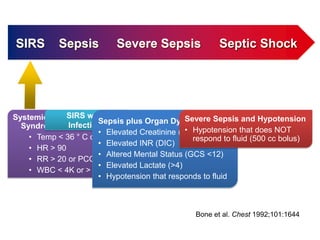
SIRS        Sepsis         Severe Sepsis                Septic Shock


              SIRS with
Systemic Inflammatory Response Organ Dysfunction
                                              Severe Sepsis and Hypotension
                      Sepsis plus
  Syndrome    Infection
                                              •
                      • Elevated Creatinine (>2)Hypotension that does NOT
    • Temp < 36 ° C or > 38.3 ° C               respond to fluid (500 cc bolus)
                      • Elevated INR (DIC)
    • HR > 90
                      • Altered Mental Status (GCS <12)
    • RR > 20 or PCO2 < 32
                      • Elevated Lactate (>4)
    • WBC < 4K or > 12K or bands > 10%
                      • Hypotension that responds to fluid


                                                 Bone et al. Chest 1992;101:1644
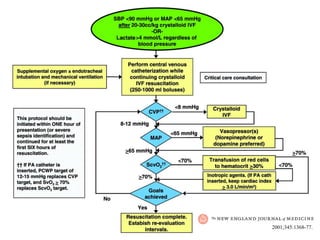
2001;345:1368-77.
Guide to Recommendations’
Strengths and Supporting
Evidence
1 = strong recommendation
2 = weak recommendation or suggestion

A = good evidence from randomized trials
B = moderate strength evidence from small
  randomized trial(s) or multiple good
  observational trials
C = weak or absent evidence, mostly driven by
  consensus opinion
New Fluid
Resuscitation
Recommendations
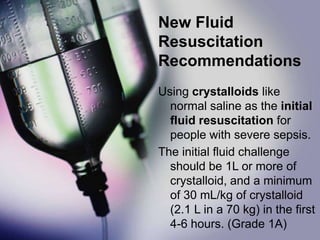
Using crystalloids like
  normal saline as the initial
  fluid resuscitation for
  people with severe sepsis.
The initial fluid challenge
  should be 1L or more of
  crystalloid, and a minimum
  of 30 mL/kg of crystalloid
  (2.1 L in a 70 kg) in the first
  4-6 hours. (Grade 1A)
New Fluid
Resuscitation
Recommendations
Incremental fluid boluses
  should be continued as
  long as patients continue
  to improve hemo-
  dynamically (in blood
  pressure, delta pulse
  pressure, or both)
  (Grade 1C)
New Fluid
Resuscitation
Recommendations
Adding albumin to initial fluid
  resuscitation with
  crystalloid for severe
  sepsis and septic shock
  (Grade 2B)
Don’t using hetastarches/
  hydroxyethyl starches
  greater than 200 kDa in
  molecular weight (Grade
  1B)
New Recommendations for
   Vasopressors, Inotropes
 Using norepinephrine (Levophed) as
 the first choice for vasopressor therapy
 (Grade 1B). Vasopressin 0.03 units /
 minute is an alternative to norepinephrine,
 or may be added to it (Grade 2A)
 When a second agent is needed,
 epinephrine is weakly-recommended
 vasopressor choice (Grade 2B)
New Recommendations for
   Vasopressors, Inotropes
 Dopamine was only recommended in highly
 selected patients whose risk for arrhythmias
 was felt to be very low and who had a low
 heart rate and/or cardiac output (Grade 2C)
 Dobutamine is strongly recommended (by
 itself or in addition to a vasopressor) for
 patients with cardiac dysfunction as evidenced
 by high filling pressures and low cardiac
 output, or clinical signs of hypoperfusion after
 achievement of restoration of blood pressure
 with effective volume resuscitation (Grade 1C)
Corticosteroid Recommendations
Don’t providing intravenous
 corticosteroid therapy to patients for
 whom fluid resuscitation and vasopressors
 can restore an adequate blood pressure.
 For those with vasopressor-refractory
 septic shock, they recommend IV
 hydrocortisone in a continuous infusion
 totaling 200 mg/24 hrs (Grade 2C)
Mechanical Ventilation for ARDS

For patients with ARDS due to
 severe sepsis:
   Using higher levels of PEEP (Grade 2C)
   Recruitment maneuvers for patients with
   severe hypoxemia while receiving high PEEP
   and FiO2 (Grade 2C)
   Prone positioning for patients with
   PaO2/FiO2 ratios < 100 despite such
   maneuvers (Grade 2C)
Other New Surviving Sepsis
Guidelines
Using normalization of lactate levels
 as an alternate goal in early goal-
 directed therapy for severe sepsis,
 if central venous oxygenation
 monitoring is not available (Grade 2C)
Other New Surviving Sepsis
Guidelines
For patients at risk for fungal infection as a
 source for severe sepsis, checking one
 of the newer assays for invasive
 candidiasis such as 1,3-beta-D-glucan,
 mannan, or anti-mannan ELISA
 antibody testing (Grade 2B/C)
Other New Surviving Sepsis
Guidelines
When no infection can be found during
 empiric antibiotic therapy, consider
 using a low procalcitonin level as a
 supportive tool for the decision to
 stop antibiotics (Grade 2C).
The Surviving Sepsis project was criticized in
 the mid 2000s when it was revealed that Eli
 Lilly (makers of since-discontinued Xigris)
 provided a reported ~90% of the funding,
 without disclosure by the committee.


                 Others (including the committee
                   itself) felt such criticism was
                   unfounded and unfair.

Surviving Sepsis Guidelines Updated

  • 1.
    Surviving Sepsis Guidelines Updated Preview from the41th Society of Critical Care Medicine Meeting Jun 16, 2012 http://pulmccm.org/2012/critical-care-review/surviving-sepsis-guidelines-updated-at-sccm-meeting/
  • 2.
    SIRS Sepsis Severe Sepsis Septic Shock SIRS with Systemic Inflammatory Response Organ Dysfunction Severe Sepsis and Hypotension Sepsis plus Syndrome Infection • • Elevated Creatinine (>2)Hypotension that does NOT • Temp < 36 ° C or > 38.3 ° C respond to fluid (500 cc bolus) • Elevated INR (DIC) • HR > 90 • Altered Mental Status (GCS <12) • RR > 20 or PCO2 < 32 • Elevated Lactate (>4) • WBC < 4K or > 12K or bands > 10% • Hypotension that responds to fluid Bone et al. Chest 1992;101:1644
  • 3.
  • 4.
    Guide to Recommendations’ Strengthsand Supporting Evidence 1 = strong recommendation 2 = weak recommendation or suggestion A = good evidence from randomized trials B = moderate strength evidence from small randomized trial(s) or multiple good observational trials C = weak or absent evidence, mostly driven by consensus opinion
  • 5.
    New Fluid Resuscitation Recommendations Using crystalloidslike normal saline as the initial fluid resuscitation for people with severe sepsis. The initial fluid challenge should be 1L or more of crystalloid, and a minimum of 30 mL/kg of crystalloid (2.1 L in a 70 kg) in the first 4-6 hours. (Grade 1A)
  • 6.
    New Fluid Resuscitation Recommendations Incremental fluidboluses should be continued as long as patients continue to improve hemo- dynamically (in blood pressure, delta pulse pressure, or both) (Grade 1C)
  • 7.
    New Fluid Resuscitation Recommendations Adding albuminto initial fluid resuscitation with crystalloid for severe sepsis and septic shock (Grade 2B) Don’t using hetastarches/ hydroxyethyl starches greater than 200 kDa in molecular weight (Grade 1B)
  • 8.
    New Recommendations for Vasopressors, Inotropes Using norepinephrine (Levophed) as the first choice for vasopressor therapy (Grade 1B). Vasopressin 0.03 units / minute is an alternative to norepinephrine, or may be added to it (Grade 2A) When a second agent is needed, epinephrine is weakly-recommended vasopressor choice (Grade 2B)
  • 9.
    New Recommendations for Vasopressors, Inotropes Dopamine was only recommended in highly selected patients whose risk for arrhythmias was felt to be very low and who had a low heart rate and/or cardiac output (Grade 2C) Dobutamine is strongly recommended (by itself or in addition to a vasopressor) for patients with cardiac dysfunction as evidenced by high filling pressures and low cardiac output, or clinical signs of hypoperfusion after achievement of restoration of blood pressure with effective volume resuscitation (Grade 1C)
  • 10.
    Corticosteroid Recommendations Don’t providingintravenous corticosteroid therapy to patients for whom fluid resuscitation and vasopressors can restore an adequate blood pressure. For those with vasopressor-refractory septic shock, they recommend IV hydrocortisone in a continuous infusion totaling 200 mg/24 hrs (Grade 2C)
  • 11.
    Mechanical Ventilation forARDS For patients with ARDS due to severe sepsis: Using higher levels of PEEP (Grade 2C) Recruitment maneuvers for patients with severe hypoxemia while receiving high PEEP and FiO2 (Grade 2C) Prone positioning for patients with PaO2/FiO2 ratios < 100 despite such maneuvers (Grade 2C)
  • 12.
    Other New SurvivingSepsis Guidelines Using normalization of lactate levels as an alternate goal in early goal- directed therapy for severe sepsis, if central venous oxygenation monitoring is not available (Grade 2C)
  • 13.
    Other New SurvivingSepsis Guidelines For patients at risk for fungal infection as a source for severe sepsis, checking one of the newer assays for invasive candidiasis such as 1,3-beta-D-glucan, mannan, or anti-mannan ELISA antibody testing (Grade 2B/C)
  • 14.
    Other New SurvivingSepsis Guidelines When no infection can be found during empiric antibiotic therapy, consider using a low procalcitonin level as a supportive tool for the decision to stop antibiotics (Grade 2C).
  • 15.
    The Surviving Sepsisproject was criticized in the mid 2000s when it was revealed that Eli Lilly (makers of since-discontinued Xigris) provided a reported ~90% of the funding, without disclosure by the committee. Others (including the committee itself) felt such criticism was unfounded and unfair.