

Sepsis and septic shock: What’s
new…
DR. SHIKHA PANWAR
MD,IDCCM
ASSOCIATE DIRECTOR & HEAD
CRITICAL CARE DEPARTMENT
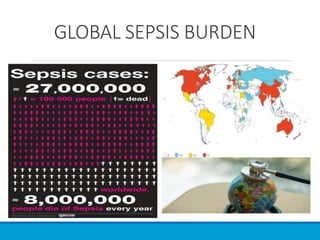
GLOBAL SEPSIS BURDEN
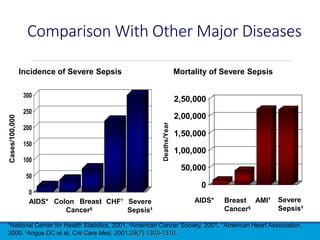
Comparison With Other Major Diseases
†National Center for Health Statistics, 2001. §American Cancer Society, 2001. *American Heart Association.
2000. ‡Angus DC et al. Crit Care Med. 2001;29(7):1303-1310.
AIDS* Colon Breast
Cancer§
CHF† Severe
Sepsis‡
Cases/100,000
0
50
100
150
200
250
300
Incidence of Severe Sepsis Mortality of Severe Sepsis
0
50,000
1,00,000
1,50,000
2,00,000
2,50,000
Deaths/Year
AIDS* Severe
Sepsis‡
AMI†Breast
Cancer§
A global program to:
Reduce mortality rates
Improve standards of care
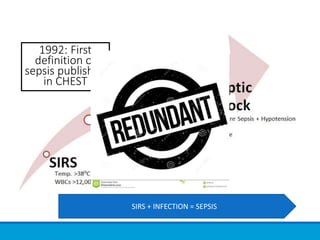
1992: First
definition of
sepsis published
in CHEST
SIRS + INFECTION = SEPSIS
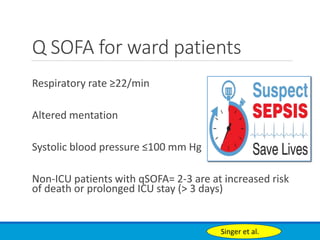
Q SOFA for ward patients
Respiratory rate ≥22/min
Altered mentation
Systolic blood pressure ≤100 mm Hg
Non-ICU patients with qSOFA= 2-3 are at increased risk
of death or prolonged ICU stay (> 3 days)
Singer et al.
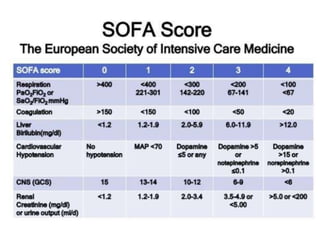
Limitation of SOFA and QSOFA
SOFA and qSOFA scores were designed as research tools at a
population level to predict which patients with sepsis were likely to
die…they do not define sepsis
Clinical deterioration in patients with a positive qSOFA score may
be due to causes other than sepsis
New organ dysfunction should prompt you to consider occult
infection
The addition of serum lactate to qSOFA did not significantly
change the ability of qSOFA to predict mortality.
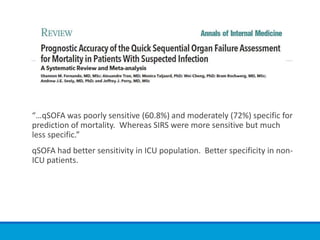
“…qSOFA was poorly sensitive (60.8%) and moderately (72%) specific for
prediction of mortality. Whereas SIRS were more sensitive but much
less specific.”
qSOFA had better sensitivity in ICU population. Better specificity in non-
ICU patients.
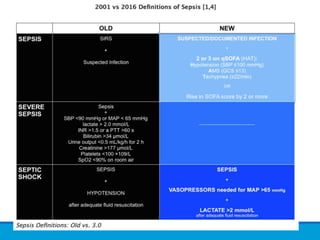
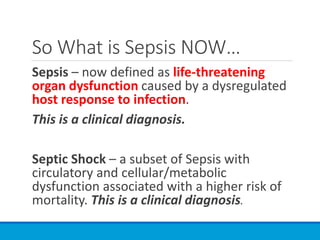
So What is Sepsis NOW…
Sepsis – now defined as life-threatening
organ dysfunction caused by a dysregulated
host response to infection.
This is a clinical diagnosis.
Septic Shock – a subset of Sepsis with
circulatory and cellular/metabolic
dysfunction associated with a higher risk of
mortality. This is a clinical diagnosis.
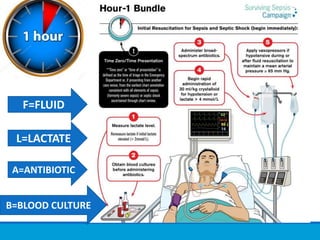
TREATMENT BUNDLES
F=FLUID
L=LACTATE
A=ANTIBIOTIC
B=BLOOD CULTURE
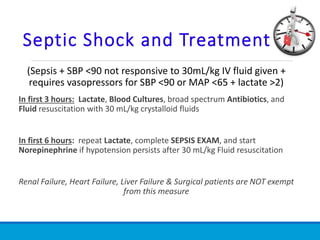
Septic Shock and Treatment
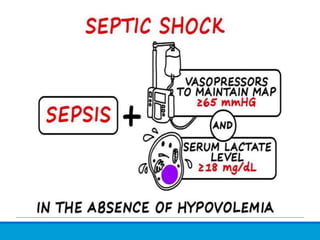
(Sepsis + SBP <90 not responsive to 30mL/kg IV fluid given +
requires vasopressors for SBP <90 or MAP <65 + lactate >2)
In first 3 hours: Lactate, Blood Cultures, broad spectrum Antibiotics, and
Fluid resuscitation with 30 mL/kg crystalloid fluids
In first 6 hours: repeat Lactate, complete SEPSIS EXAM, and start
Norepinephrine if hypotension persists after 30 mL/kg Fluid resuscitation
Renal Failure, Heart Failure, Liver Failure & Surgical patients are NOT exempt
from this measure
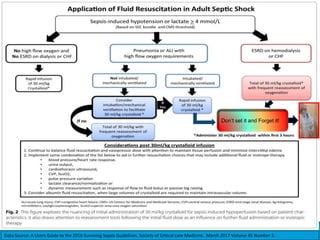
Don’t set it and Forget it!
Data Source: A Users Guide to the 2016 Surviving Sepsis Guidelines. Society of Critical care Medicine. March 2017 Volume 45 Number 3.
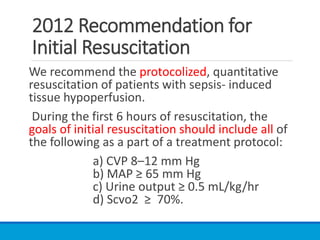
2012 Recommendation for
Initial Resuscitation
We recommend the protocolized, quantitative
resuscitation of patients with sepsis- induced
tissue hypoperfusion.
During the first 6 hours of resuscitation, the
goals of initial resuscitation should include all of
the following as a part of a treatment protocol:
a) CVP 8–12 mm Hg
b) MAP ≥ 65 mm Hg
c) Urine output ≥ 0.5 mL/kg/hr
d) Scvo2 ≥ 70%.
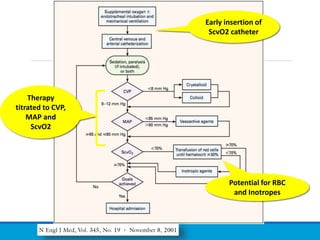
Potential for RBC
and Inotropes
Therapy
titrated to CVP,
MAP and
ScvO2
Early insertion of
ScvO2 catheter
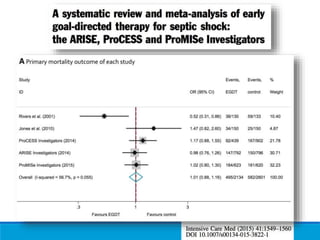
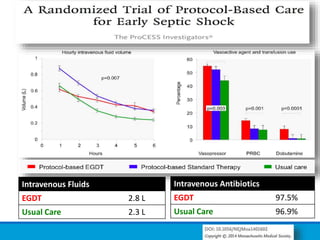
Intravenous Fluids
EGDT 2.8 L
Usual Care 2.3 L
Intravenous Antibiotics
EGDT 97.5%
Usual Care 96.9%
REASSESSMENT OF VOLUME STATUS
AND TISSUE PERFUSION
Repeat focused exam (after initial fluid resuscitation)
including vital signs ,cardiopulmonary, capillary refill, pulse,
and skin finding)
Perform bedside cardiovascular ultrasound to determine type
of shock.
Perform dynamic assessment over static variables to predict
fluid responsiveness.
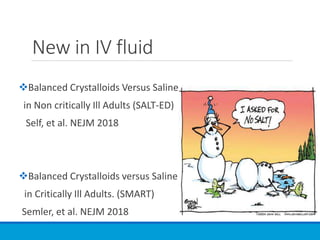
New in IV fluid
Balanced Crystalloids Versus Saline
in Non critically Ill Adults (SALT-ED)
Self, et al. NEJM 2018
Balanced Crystalloids versus Saline
in Critically Ill Adults. (SMART)
Semler, et al. NEJM 2018
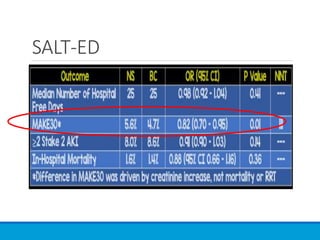
SALT-ED
Single centre
IVF alternated monthly between NS and balanced crystalloids (LR or
Plasma-Lyte A)
Saline Against Lactated Ringer’s or Plasma-Lyte in the Emergency
Department (SALT-ED)
Primary: Hospital-Free Days
Secondary: Major Adverse Kidney Events at 30d (MAKE30)
•BC = 6708 patients
•NS = 6639 patients
SALT-ED
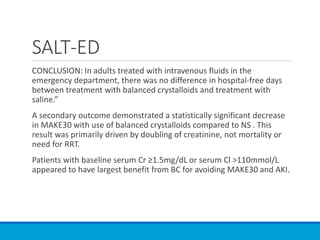
CONCLUSION: In adults treated with intravenous fluids in the
emergency department, there was no difference in hospital-free days
between treatment with balanced crystalloids and treatment with
saline.”
A secondary outcome demonstrated a statistically significant decrease
in MAKE30 with use of balanced crystalloids compared to NS . This
result was primarily driven by doubling of creatinine, not mortality or
need for RRT.
Patients with baseline serum Cr ≥1.5mg/dL or serum Cl >110mmol/L
appeared to have largest benefit from BC for avoiding MAKE30 and AKI.
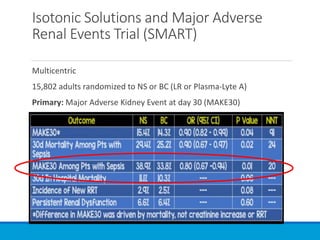
Isotonic Solutions and Major Adverse
Renal Events Trial (SMART)
Multicentric
15,802 adults randomized to NS or BC (LR or Plasma-Lyte A)
Primary: Major Adverse Kidney Event at day 30 (MAKE30)
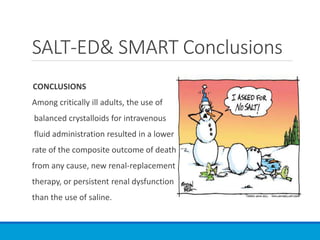
CONCLUSIONS
Among critically ill adults, the use of
balanced crystalloids for intravenous
fluid administration resulted in a lower
rate of the composite outcome of death
from any cause, new renal-replacement
therapy, or persistent renal dysfunction
than the use of saline.
SALT-ED& SMART Conclusions
Antimicrobial therapy
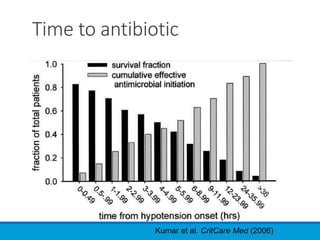
Time to antibiotic
Kumar et al. CritCare Med (2006)
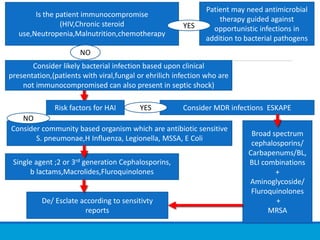
Is the patient immunocompromise
(HIV,Chronic steroid
use,Neutropenia,Malnutrition,chemotherapy
Patient may need antimicrobial
therapy guided against
opportunistic infections in
addition to bacterial pathogens
Consider likely bacterial infection based upon clinical
presentation,(patients with viral,fungal or ehrilich infection who are
not immunocompromised can also present in septic shock)
Risk factors for HAI Consider MDR infections ESKAPE
Consider community based organism which are antibiotic sensitive
S. pneumonae,H Influenza, Legionella, MSSA, E Coli
Broad spectrum
cephalosporins/
Carbapenums/BL,
BLI combinations
+
Aminoglycoside/
Fluroquinolones
+
MRSA
Single agent ;2 or 3rd generation Cephalosporins,
b lactams,Macrolides,Fluroquinolones
De/ Esclate according to sensitivty
reports
NO
YES
YES
NO
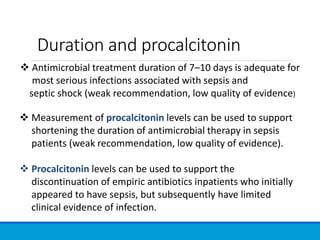
Duration and procalcitonin
 Antimicrobial treatment duration of 7–10 days is adequate for
most serious infections associated with sepsis and
septic shock (weak recommendation, low quality of evidence)
 Measurement of procalcitonin levels can be used to support
shortening the duration of antimicrobial therapy in sepsis
patients (weak recommendation, low quality of evidence).
 Procalcitonin levels can be used to support the
discontinuation of empiric antibiotics inpatients who initially
appeared to have sepsis, but subsequently have limited
clinical evidence of infection.
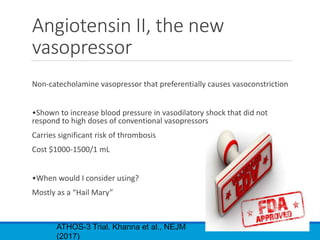
Angiotensin II, the new
vasopressor
Non-catecholamine vasopressor that preferentially causes vasoconstriction
•Shown to increase blood pressure in vasodilatory shock that did not
respond to high doses of conventional vasopressors
Carries significant risk of thrombosis
Cost $1000-1500/1 mL
•When would I consider using?
Mostly as a “Hail Mary”
ATHOS-3 Trial. Khanna et al., NEJM
(2017)
What else can be added to CRS :
Low dose steroids,
minerelocorticoids?
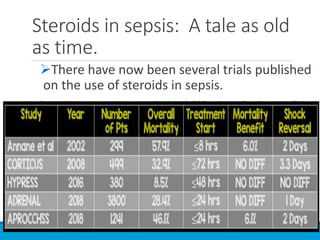
Steroids in sepsis: A tale as old
as time.
There have now been several trials published
on the use of steroids in sepsis.
 In 2002, we had the Annane Trial, with 299 patients showing mortality
and shock reversal benefit in sepsis with hydrocortisone.
 Then in 2008 we had the CORTICUS trial, with 499 patients, which found
a faster reversal of shock, but no benefit in mortality.
 Next the HYPRESS trial published in 2016 with 380 patients, with severe
sepsis, not septic shock, showed no difference in mortality or time to
reversal of shock.
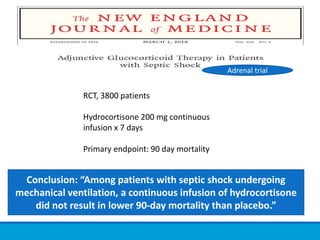
Adrenal trial
RCT, 3800 patients
Hydrocortisone 200 mg continuous
infusion x 7 days
Primary endpoint: 90 day mortality
Conclusion: “Among patients with septic shock undergoing
mechanical ventilation, a continuous infusion of hydrocortisone
did not result in lower 90-day mortality than placebo.”
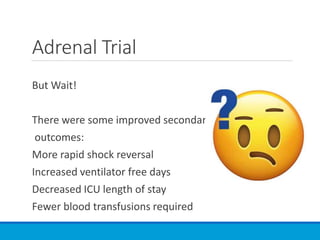
Adrenal Trial
But Wait!
There were some improved secondary
outcomes:
More rapid shock reversal
Increased ventilator free days
Decreased ICU length of stay
Fewer blood transfusions required
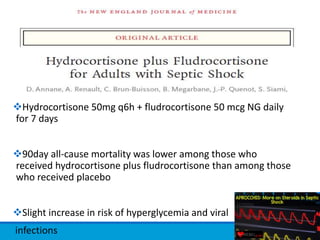
Hydrocortisone 50mg q6h + fludrocortisone 50 mcg NG daily
for 7 days
90day all-cause mortality was lower among those who
received hydrocortisone plus fludrocortisone than among those
who received placebo
Slight increase in risk of hyperglycemia and viral
infections
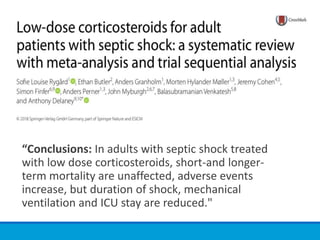
“Conclusions: In adults with septic shock treated
with low dose corticosteroids, short-and longer-
term mortality are unaffected, adverse events
increase, but duration of shock, mechanical
ventilation and ICU stay are reduced."
Steroids
Against using IV hydrocortisone to treat septic shock
patients if adequate fluid resuscitation and
vasopressor therapy are able to restore
hemodynamic stability. If this is not achievable, we
suggest IV hydrocortisone at a dose of 200 mg per
day (weak recommendation, low quality of
evidence).
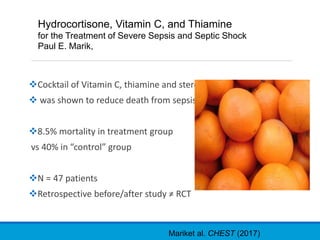
Cocktail of Vitamin C, thiamine and steroids
 was shown to reduce death from sepsis
8.5% mortality in treatment group
vs 40% in “control” group
N = 47 patients
Retrospective before/after study ≠ RCT
Mariket al. CHEST (2017)
Hydrocortisone, Vitamin C, and Thiamine
for the Treatment of Severe Sepsis and Septic Shock
Paul E. Marik,
Take home message
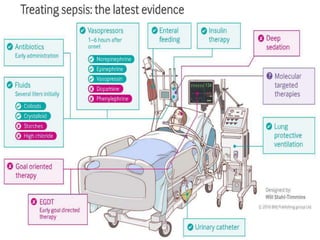
Sepsis is a life threatening organ dysfunction caused by
dysregulated host response to infection
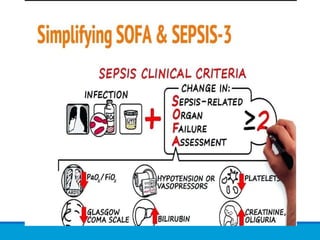
Apply SOFA, Q SOFA identify sepsis early
Surviving Sepsis 2018 bundle (1-3 hours)
Measure lactate, re-measure if elevated
Give antibiotics as early as possible
Fluid resuscitate for hypotension or lactate > 4; balanced
crystalloids are probably preferred
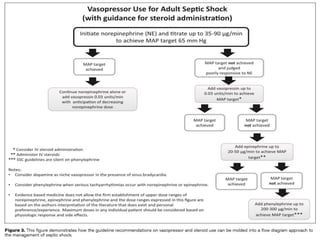
Start vasopressors for hypotension refractory to fluids; adjunct
steroids are reasonable for vasopressor dependent shock
Thank you

Sepsis 3

  • 1.
    Sepsis and septicshock: What’s new… DR. SHIKHA PANWAR MD,IDCCM ASSOCIATE DIRECTOR & HEAD CRITICAL CARE DEPARTMENT
  • 2.
  • 3.
    Comparison With OtherMajor Diseases †National Center for Health Statistics, 2001. §American Cancer Society, 2001. *American Heart Association. 2000. ‡Angus DC et al. Crit Care Med. 2001;29(7):1303-1310. AIDS* Colon Breast Cancer§ CHF† Severe Sepsis‡ Cases/100,000 0 50 100 150 200 250 300 Incidence of Severe Sepsis Mortality of Severe Sepsis 0 50,000 1,00,000 1,50,000 2,00,000 2,50,000 Deaths/Year AIDS* Severe Sepsis‡ AMI†Breast Cancer§
  • 4.
    A global programto: Reduce mortality rates Improve standards of care
  • 5.
    1992: First definition of sepsispublished in CHEST SIRS + INFECTION = SEPSIS
  • 10.
    Q SOFA forward patients Respiratory rate ≥22/min Altered mentation Systolic blood pressure ≤100 mm Hg Non-ICU patients with qSOFA= 2-3 are at increased risk of death or prolonged ICU stay (> 3 days) Singer et al.
  • 11.
    Limitation of SOFAand QSOFA SOFA and qSOFA scores were designed as research tools at a population level to predict which patients with sepsis were likely to die…they do not define sepsis Clinical deterioration in patients with a positive qSOFA score may be due to causes other than sepsis New organ dysfunction should prompt you to consider occult infection The addition of serum lactate to qSOFA did not significantly change the ability of qSOFA to predict mortality.
  • 12.
    “…qSOFA was poorlysensitive (60.8%) and moderately (72%) specific for prediction of mortality. Whereas SIRS were more sensitive but much less specific.” qSOFA had better sensitivity in ICU population. Better specificity in non- ICU patients.
  • 14.
    So What isSepsis NOW… Sepsis – now defined as life-threatening organ dysfunction caused by a dysregulated host response to infection. This is a clinical diagnosis. Septic Shock – a subset of Sepsis with circulatory and cellular/metabolic dysfunction associated with a higher risk of mortality. This is a clinical diagnosis.
  • 15.
  • 16.
  • 17.
    Septic Shock andTreatment (Sepsis + SBP <90 not responsive to 30mL/kg IV fluid given + requires vasopressors for SBP <90 or MAP <65 + lactate >2) In first 3 hours: Lactate, Blood Cultures, broad spectrum Antibiotics, and Fluid resuscitation with 30 mL/kg crystalloid fluids In first 6 hours: repeat Lactate, complete SEPSIS EXAM, and start Norepinephrine if hypotension persists after 30 mL/kg Fluid resuscitation Renal Failure, Heart Failure, Liver Failure & Surgical patients are NOT exempt from this measure
  • 18.
    Don’t set itand Forget it! Data Source: A Users Guide to the 2016 Surviving Sepsis Guidelines. Society of Critical care Medicine. March 2017 Volume 45 Number 3.
  • 19.
    2012 Recommendation for InitialResuscitation We recommend the protocolized, quantitative resuscitation of patients with sepsis- induced tissue hypoperfusion. During the first 6 hours of resuscitation, the goals of initial resuscitation should include all of the following as a part of a treatment protocol: a) CVP 8–12 mm Hg b) MAP ≥ 65 mm Hg c) Urine output ≥ 0.5 mL/kg/hr d) Scvo2 ≥ 70%.
  • 20.
    Potential for RBC andInotropes Therapy titrated to CVP, MAP and ScvO2 Early insertion of ScvO2 catheter
  • 22.
    Intravenous Fluids EGDT 2.8L Usual Care 2.3 L Intravenous Antibiotics EGDT 97.5% Usual Care 96.9%
  • 23.
    REASSESSMENT OF VOLUMESTATUS AND TISSUE PERFUSION Repeat focused exam (after initial fluid resuscitation) including vital signs ,cardiopulmonary, capillary refill, pulse, and skin finding) Perform bedside cardiovascular ultrasound to determine type of shock. Perform dynamic assessment over static variables to predict fluid responsiveness.
  • 24.
    New in IVfluid Balanced Crystalloids Versus Saline in Non critically Ill Adults (SALT-ED) Self, et al. NEJM 2018 Balanced Crystalloids versus Saline in Critically Ill Adults. (SMART) Semler, et al. NEJM 2018
  • 26.
    SALT-ED Single centre IVF alternatedmonthly between NS and balanced crystalloids (LR or Plasma-Lyte A) Saline Against Lactated Ringer’s or Plasma-Lyte in the Emergency Department (SALT-ED) Primary: Hospital-Free Days Secondary: Major Adverse Kidney Events at 30d (MAKE30) •BC = 6708 patients •NS = 6639 patients
  • 27.
    SALT-ED CONCLUSION: In adultstreated with intravenous fluids in the emergency department, there was no difference in hospital-free days between treatment with balanced crystalloids and treatment with saline.” A secondary outcome demonstrated a statistically significant decrease in MAKE30 with use of balanced crystalloids compared to NS . This result was primarily driven by doubling of creatinine, not mortality or need for RRT. Patients with baseline serum Cr ≥1.5mg/dL or serum Cl >110mmol/L appeared to have largest benefit from BC for avoiding MAKE30 and AKI.
  • 28.
    Isotonic Solutions andMajor Adverse Renal Events Trial (SMART) Multicentric 15,802 adults randomized to NS or BC (LR or Plasma-Lyte A) Primary: Major Adverse Kidney Event at day 30 (MAKE30)
  • 29.
    CONCLUSIONS Among critically illadults, the use of balanced crystalloids for intravenous fluid administration resulted in a lower rate of the composite outcome of death from any cause, new renal-replacement therapy, or persistent renal dysfunction than the use of saline. SALT-ED& SMART Conclusions
  • 30.
  • 31.
    Time to antibiotic Kumaret al. CritCare Med (2006)
  • 32.
    Is the patientimmunocompromise (HIV,Chronic steroid use,Neutropenia,Malnutrition,chemotherapy Patient may need antimicrobial therapy guided against opportunistic infections in addition to bacterial pathogens Consider likely bacterial infection based upon clinical presentation,(patients with viral,fungal or ehrilich infection who are not immunocompromised can also present in septic shock) Risk factors for HAI Consider MDR infections ESKAPE Consider community based organism which are antibiotic sensitive S. pneumonae,H Influenza, Legionella, MSSA, E Coli Broad spectrum cephalosporins/ Carbapenums/BL, BLI combinations + Aminoglycoside/ Fluroquinolones + MRSA Single agent ;2 or 3rd generation Cephalosporins, b lactams,Macrolides,Fluroquinolones De/ Esclate according to sensitivty reports NO YES YES NO
  • 33.
    Duration and procalcitonin Antimicrobial treatment duration of 7–10 days is adequate for most serious infections associated with sepsis and septic shock (weak recommendation, low quality of evidence)  Measurement of procalcitonin levels can be used to support shortening the duration of antimicrobial therapy in sepsis patients (weak recommendation, low quality of evidence).  Procalcitonin levels can be used to support the discontinuation of empiric antibiotics inpatients who initially appeared to have sepsis, but subsequently have limited clinical evidence of infection.
  • 35.
    Angiotensin II, thenew vasopressor Non-catecholamine vasopressor that preferentially causes vasoconstriction •Shown to increase blood pressure in vasodilatory shock that did not respond to high doses of conventional vasopressors Carries significant risk of thrombosis Cost $1000-1500/1 mL •When would I consider using? Mostly as a “Hail Mary” ATHOS-3 Trial. Khanna et al., NEJM (2017)
  • 36.
    What else canbe added to CRS : Low dose steroids, minerelocorticoids?
  • 37.
    Steroids in sepsis:A tale as old as time. There have now been several trials published on the use of steroids in sepsis.  In 2002, we had the Annane Trial, with 299 patients showing mortality and shock reversal benefit in sepsis with hydrocortisone.  Then in 2008 we had the CORTICUS trial, with 499 patients, which found a faster reversal of shock, but no benefit in mortality.  Next the HYPRESS trial published in 2016 with 380 patients, with severe sepsis, not septic shock, showed no difference in mortality or time to reversal of shock.
  • 38.
    Adrenal trial RCT, 3800patients Hydrocortisone 200 mg continuous infusion x 7 days Primary endpoint: 90 day mortality Conclusion: “Among patients with septic shock undergoing mechanical ventilation, a continuous infusion of hydrocortisone did not result in lower 90-day mortality than placebo.”
  • 39.
    Adrenal Trial But Wait! Therewere some improved secondary outcomes: More rapid shock reversal Increased ventilator free days Decreased ICU length of stay Fewer blood transfusions required
  • 40.
    Hydrocortisone 50mg q6h+ fludrocortisone 50 mcg NG daily for 7 days 90day all-cause mortality was lower among those who received hydrocortisone plus fludrocortisone than among those who received placebo Slight increase in risk of hyperglycemia and viral infections
  • 41.
    “Conclusions: In adultswith septic shock treated with low dose corticosteroids, short-and longer- term mortality are unaffected, adverse events increase, but duration of shock, mechanical ventilation and ICU stay are reduced."
  • 42.
    Steroids Against using IVhydrocortisone to treat septic shock patients if adequate fluid resuscitation and vasopressor therapy are able to restore hemodynamic stability. If this is not achievable, we suggest IV hydrocortisone at a dose of 200 mg per day (weak recommendation, low quality of evidence).
  • 43.
    Cocktail of VitaminC, thiamine and steroids  was shown to reduce death from sepsis 8.5% mortality in treatment group vs 40% in “control” group N = 47 patients Retrospective before/after study ≠ RCT Mariket al. CHEST (2017) Hydrocortisone, Vitamin C, and Thiamine for the Treatment of Severe Sepsis and Septic Shock Paul E. Marik,
  • 45.
    Take home message Sepsisis a life threatening organ dysfunction caused by dysregulated host response to infection Apply SOFA, Q SOFA identify sepsis early Surviving Sepsis 2018 bundle (1-3 hours) Measure lactate, re-measure if elevated Give antibiotics as early as possible Fluid resuscitate for hypotension or lactate > 4; balanced crystalloids are probably preferred Start vasopressors for hypotension refractory to fluids; adjunct steroids are reasonable for vasopressor dependent shock
  • 46.

Editor's Notes