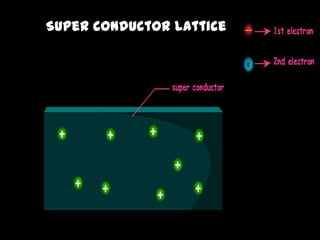
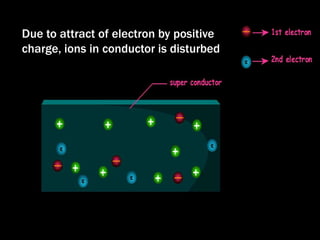
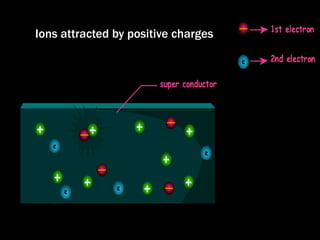
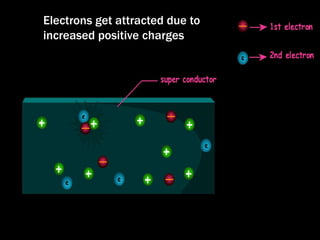
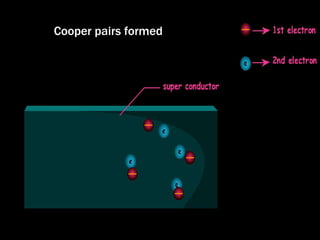
Superconductors exhibit nearly zero electrical resistance and perfect diamagnetism below a certain transition temperature, enabling them to conduct electricity without energy loss. They have significant applications in medical imaging, computing, and magnetic energy storage due to their ability to carry large currents and generate strong magnetic fields. The behavior of superconductors is explained by theories such as London theory and the Bardeen-Cooper-Schrieffer theory, which describe the formation of Cooper pairs that allow for resistance-free electron flow.