Paul ehrlich??????
MIC
 MBC is the lowest concentration of antibiotic that

kills 99.9 percent of bacteria
Superinfection
 Tetracycline>chloramphenicol>ampicillin>amoxy
cillin
Classification
 Broad spectrum

tetracycline
chloramphenicol
• Narrow spectrum
pencillin
streptomycin
erythromycin
Based on source
 Fungi

eg: pencillin ,cephalosporin, griesofulvin,streptomycin
 Bacteria
eg:polymyxin B,collistin,bacitracin,tryothrin
 Actinomyces
eg:aminoglycosides,macrolides,tetracycline,chloramp
henicol,
Mode of action
 Bacteriostatic

eg:sulphonamides,tetracycline, chloramphenicol,etha
mbutol,erythromycin
 Bacteriocidal
eg:clotrimoxazole,ciprofloxacin,pencillin,cephalospori
n,aminoglycoside,rifampicin,vancomycin
Mechanisms of action of
antimicrobial agents
 1. Inhibition of cell wall

 1.Penicillins, cephalosporins, bac











synthesis :
2. leakage of the cytoplasmic
membrane :
3. Inhibition of protein synthesis
&impairment of function of
ribosomes
4. Interference in
transcription/translation of
genetic:
5. Antimetabolite actions :
6. Binding to viral enzymes
essential for DNA synthesis

itracin,vancomycin,cycloserine






2.Polymixin, collistin, polyene, a
ntifungal antibiotics
3.Aminoglycosides,tetracycline,
chloramphenicol,Macrolide
antibiotics, and clindamycin
4.Quinolones, metronidazole
5.Sulfonamides, trimethoprim
6.Vidarabine and acyclovir
Superinfection
 New infection occurring during antimicrobial treatment

for another infection.
 Assoc c broad /extended spectrum antibiotics such as
tetracycline ,chloramphenicol,ampicillin ,newer
cephalosporins
 Eg:
1. Pt on CS therapy
2. AIDS pt
3. SLE & DLE
4. Leukemia & other malignancies
5. Autoimmune disorders (MM,MG)
6. Diabetes
Eg:
 Clostridium difficile treatment result in







pseduomembraneous colitis due to treatment with
clotrimoxazole,clindamycin,ampicillin,aminoglycoside
,tetracycline.
Resistant Staph enteritis due to treatment c cloxacillin
& its congeners.
Candida albicans result in oral thrush.
Pseudomonas
Proteus treatment result in UTI
Diarrhoea due to treatment c tetracycline
Combined use of drugs






To prevent drug resistance
To obtain synergism
To dec adverse effects
To broaden spectrum of activity
Eg:
1.2 static drusgs combined – additive effect
sulfamethoxazole+trimethoprim=clotrimoxazole
(septran)
2.2 cidal drugs combined – additive only if bact sensitive to both
3.Cidal + static =??
If bact sensitive to static drug =synergism
If bact sensitive to cidal drug =antagonism
Adverse effects
 Local toxicity – thrombophebitis
 Systemic –c high therapeutic index

eg:eythromycin,pencillin,cephalosporin
-c low therapeutic index (not safe)
eg: aminoglycoside,tetracycline,
chloramphenicol
- c very low
eg: polymyxin,vancomycin,amphotericin B
Hypersensitivity reaxn-pen,ceph,sterp
Qn
 Which one of the following patients is least likely to

require antimicrobial treatment tailored to the
individual’s condition?
A. Patient undergoing cancer chemotherapy.
B. Patient with kidney disease.
C. Elderly patient.
D. Patient with hypertension.
E. Patient with liver disease.
Qn
 In which one of the following clinical situations is the

prophylactic use of antibiotics not warranted?
A. Prevention of meningitis among individuals in close
contact with infected patients.
B. Patient with a hip prosthesis who is having a tooth
removed.
C. Presurgical treatment for implantation of a hip
prosthesis.
D. Patient who complains of frequent respiratory illness.
E. Presurgical treatment in gastrointestinal procedures.
Qn
 Which one of the following is the best route of

administration and dosing schedule for treatment with
aminoglycosides based on the drug’s
concentrationdependent killing property?
A. Oral every 8 hours.
B. Oral every 24 hours.
C. Parenterally by continuous intravenous infusion.
D. Parenterally every 8 hours.
E. Parenterally every 24 hours.
Qn
 A 57-year-old man complains of

fever, headache,confusion, aversion to light, and neck
rigidity. A presumptive diagnosis of bacterial meningitis is
made.Antimicrobial therapy should be initiated after
which one of the following occurrences?
A. Fever is reduced with antipyretic drugs.
B. Sample of blood and cerebrospinal fluid have been taken.
C. A Gram stain has been performed.
D. The results of antibacterial drug susceptibilitytests are
available.
E. Infecting organism(s) have been identified by the
microbiology laboratory
Sulfonamides

 First antibiotic to treat pyogenic infections .These agents are bacteristatic; and
get inactivated by presence of pus. Also called sulfa drugs.

Classification
1.Short Acting Sulfonamide:4-6hr
a. Sulfadiazine /orally given
b.Sulfisoxazole
2.Intermediate Acting Sulfonamide:8-12hr
a. Sulfamethoxazole
3.Long Acting Sulfonamide:7 days
a. Sulfadoxine
4. Special sulfonamides
for local application:
a. Mafenide-used in burns
b. Silver sulfadiazine –used in burns
c. Sulacetamide- ophthalmic use
for GIT disturbance:
a. Phthalyl sulfathiazole
b. Sulfasalazine-antidiarrhoeal/poorly absorbed from gut
uses
 Used rarely alone ;in combi c trimethprim

P.carnii,granuloma ingunale,chancroid
(STD)Earlier used in treatment of typhoid.
 Ocular sulfacetamide sodium –bact ocular infn
inclding chlamydia
 Sulfamethopyrazine&Sulfadoxine used c
pyrimethamine for chloroquine intolerant malaria.
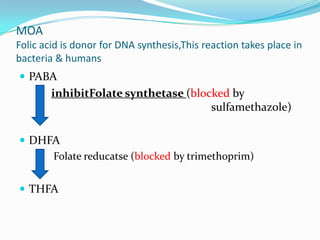
MOA
Folic acid is donor for DNA synthesis,This reaction takes place in
bacteria & humans
 PABA

inhibitFolate synthetase (blocked by
sulfamethazole)
 DHFA
Folate reducatse (blocked by trimethoprim)
 THFA
Adverse reactions
1.Urinary Tract Disturbances
 Sulfonamides may precipitate in urine producing crystalluria, hematuria or
even obstruction.(acetylated metabolites )/mcq
Crystalluria is treated by administration of sodium bicarbonate to alkalinize the
urine.
2. Hematopoietic Disturbances
 Sulfonamides can cause hemolytic or aplastic anemia (Blood dyscrasias).
 May provoke hemolytic reactions in patients whose red cells are deficient in
glucose-6-phosphate dehydrogenase/mcq
3.Hepatitis
4.Contact dematitis
5.Bm toxicity in elderly pt
6.Kernicterus in newborns. (trimethoprim)displace bilirubin from protein
binding,free bilirubin deposit in basal ganglia & thalamus /mcq
uses
 Nocardial infection
 Leprosy ,dapsone ( sulfone)
 Toxoplasmosis /Sulfadiazine
 Ulcerative colitis/Sulfasalazine
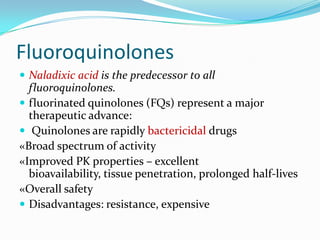
Fluoroquinolones
 Naladixic acid is the predecessor to all

fluoroquinolones.
 fluorinated quinolones (FQs) represent a major
therapeutic advance:
 Quinolones are rapidly bactericidal drugs
«Broad spectrum of activity
«Improved PK properties – excellent
bioavailability, tissue penetration, prolonged half-lives
«Overall safety
 Disadvantages: resistance, expensive
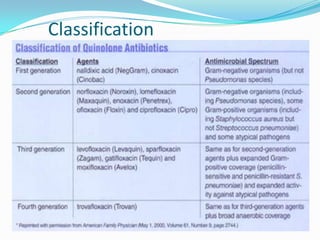
Classification
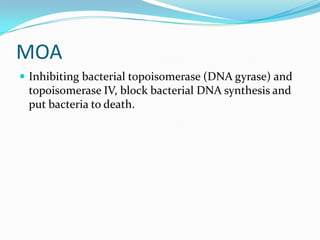
MOA
 Inhibiting bacterial topoisomerase (DNA gyrase) and

topoisomerase IV, block bacterial DNA synthesis and
put bacteria to death.
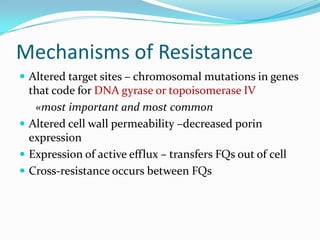
Mechanisms of Resistance
 Altered target sites – chromosomal mutations in genes

that code for DNA gyrase or topoisomerase IV
«most important and most common
 Altered cell wall permeability –decreased porin
expression
 Expression of active efflux – transfers FQs out of cell
 Cross-resistance occurs between FQs
Pharmacokinetics
 Ofloxacin, enoxacin and lomefloxacin are almost

completely absorbed orally; norfloxacin is 35-45%;
ciprofloxacin is 67% orally absorbed.
 The FQs are widely distributed in body fluids and
tissues , The concentrations in
prostate,kidney, neutrophils, and macrophages exceed
serum concentrations, but in the cerebrospinal fluid
are low.
 Most FQs are elimiated by renal mechanisms;therefore
the dosage must be adjusted according to renal fn
 Norfloxacin is the least active of FQs against both gram-









negative and gram-positive organisms.
Ciprofloxacin is the most active agent against gramnegatives, P.aeruginosa in particular.
Levofloxacin, the L-isomer of ofloxacin and twice as
potent, has superior activity against gram-positive
organisms, including S. pneumoniae.
Methicillin-susceptible strains of S. aureus are generally
susceptible to FQs, but methicillin-resistant strains of
staphylococci are often resistant.
Pneumococci and streptococci of group are resistant to
enoxacin.
In general, Penicillins and cephalosporins are more active
than FQs against streptococci and staphylococci
USES
 Urinary tract infections:FQs are effective for









uncomplicated and complicated UTI even when caused by
multidrug-resistant bacteria.
Ciprofloxacin and ofloxacin are effective forgonococcal
infection;
Ofloxacin is effective for chlamydial urethritis or cervicitis.
Intestinal tract infections:
effective for intraabdominal infections and bacterial
diarrhea caused by shigella, salmonella, E. coli, or
campylobacter.
prostatitis
USES
 Respiratory tract infections:Not been routinely

recommended for treatment of pneumonia and other
upper respiratory tract infections.These
infections, predominantly caused by pneumococci and
streptococci, are usually well treated with betalactams or
macrolides.
 However, levofloxacin, sparfloxacin, and newer FQs with
enhanced G+ activity and activity against
atypicalpneumonia pathogens (e.g.
chlamydia, mycoplasma, and legionella) are likely to be
effective and used increasingly for treatment of upper and
lower respiratory tract infections
 Infections of the bones, joints, skin and soft

tissues:Including those caused by multidrug-resistant
organisms such as pseudomonas and enterobacter.
 6. Others: Ciprofloxacin or ofloxacin is occasionally
used for treatment of tuberculosis and atypical
mycobacterial infections.
 Ciprofloxacin is also a second-line agent for
legionellosis.
Adverse effects
 1.Gastrointestinal upsets (the most
 common)Nausea, vomiting, diarrhea, dyspepsia

2.Allergy and anaphylaxis
3.Central Nervous System (1~7%)
 Headache, agitation, insomnia, dizziness, rarely,
 hallucinations and seizures (rarely)
4.Possibly damage to growing cartilage: NOT recommended
for patients younger than 14 years old, pregnant or nursing
women.
5.Concomitant administration of theophylline and
quinolones can lead to elevated levels of theophylline with
the risk of toxic effect, especially seizure.
Qn
 A 30-year-old male is diagnosed to be human

immunodeficiency virus (HIV) positive. His CD4+ count is
200 cells/mm3 and his viral load is 10,000 copies/mL. In
addition to receiving antiviral therapy, which of the
following is indicated to protect him against pneumonia
due to Pneumocystis jiroveci?
A. Trimethoprim.
B. Ciprofloxacin.
C. Cotrimoxazole.
D. Clindamycin.
E. Sulfamethoxazole.
Qn
 A 26-year-old young man presents with the symptoms

of gonorrhea. Because this condition is often
associated with an infection due to Chlamydia
trachomatis,which of the following quinolones would
be the best choice for treating him?
A. Ciprofloxacin.
B. Nalidixic acid.
C. Norfloxacin.
D. Levofloxacin.
E. Moxifloxacin.
Qn
 In which one of the following infections is

ciprofloxacin ineffective?
A. Urinary tract infections due to a β-lactamase
producing strain of Klebsiella.
B. Pneumonia due to Streptococcus pneumoniae.
C. Exacerbation of chronic bronchitis due to Moraxella
catarrhalis.
D. Urinary tract infection due to Escherichia coli.
E. Urinary tract infection due to Pseudomonas
aeruginosa.
Qn
Sulfonamides increase the risk of neonatal
kernicterus,because they:
A. Diminish the production of plasma albumin.
B. Increase the turnover of red blood cells.
C. Inhibit the metabolism of bilirubin.
D. Compete for bilirubin-binding sites on plasma
albumin.
E. Depress the bone marrow.
β Lactum antibiotics
Classification
1.Natural –pencillin G/benzathine (longest duration of action)
2.Semisynthetic pencillin
a) acid resistant –phenoxy methyl penicillin(pencillin V)
phenoxy ethyl penicillin
b)pencillinase resistant – methicillin (not acid resistant)
DOC in staphy infn
Cloxacillin, oral(acid resistant)
c)Extended spectrum-amino -ampicillin,amoxycillin
carboxy -carbenicillin,ticarcillin
ureido -mezlocillin,azlocillin,piperacillin
3.β lactamase inhibitors-clavulenic acid ,sulbactum
Pencillin G or benzyl pencillin










Bactericidal
Mold Penicillium chrysogenum.
Narrow spectrum
Acid labile
Food interfere c absorbtion,get destroyed by gastric acid
,oral route not given
IV/IM given
Anaphylaxsis seen SCRATCH test
Jarisch – Hexeimer reaction – seen in syphilis
pt,spirochetes release lytic products react c pencillin
Fever ,myalgia,rashes,angioedema noted
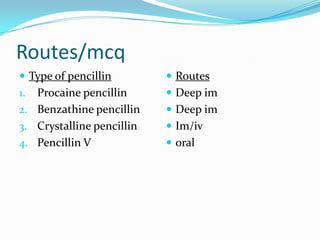
Routes/mcq
 Type of pencillin

 Routes

Procaine pencillin
2. Benzathine pencillin
3. Crystalline pencillin
4. Pencillin V

 Deep im

1.

 Deep im
 Im/iv
 oral
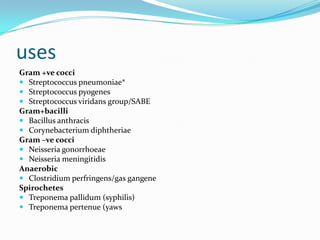
uses
Gram +ve cocci
 Streptococcus pneumoniae*
 Streptococcus pyogenes
 Streptococcus viridans group/SABE
Gram+bacilli
 Bacillus anthracis
 Corynebacterium diphtheriae
Gram –ve cocci
 Neisseria gonorrhoeae
 Neisseria meningitidis
Anaerobic
 Clostridium perfringens/gas gangene
Spirochetes
 Treponema pallidum (syphilis)
 Treponema pertenue (yaws
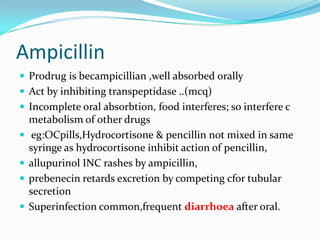
Ampicillin
 Prodrug is becampicillian ,well absorbed orally
 Act by inhibiting transpeptidase ..(mcq)
 Incomplete oral absorbtion, food interferes; so interfere c





metabolism of other drugs
eg:OCpills,Hydrocortisone & pencillin not mixed in same
syringe as hydrocortisone inhibit action of pencillin,
allupurinol INC rashes by ampicillin,
prebenecin retards excretion by competing cfor tubular
secretion
Superinfection common,frequent diarrhoea after oral.
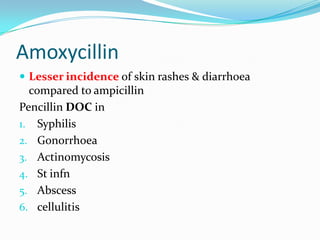
Amoxycillin
 Lesser incidence of skin rashes & diarrhoea

compared to ampicillin
Pencillin DOC in
1. Syphilis
2. Gonorrhoea
3. Actinomycosis
4. St infn
5. Abscess
6. cellulitis
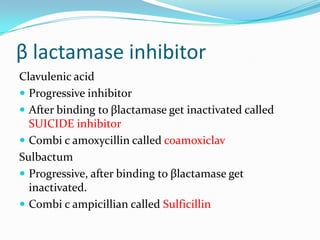
β lactamase inhibitor
Clavulenic acid
 Progressive inhibitor
 After binding to βlactamase get inactivated called
SUICIDE inhibitor
 Combi c amoxycillin called coamoxiclav
Sulbactum
 Progressive, after binding to βlactamase get
inactivated.
 Combi c ampicillian called Sulficillin
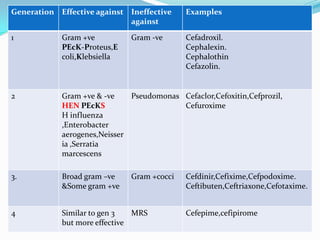
Generation Effective against Ineffective
against

Examples

1

Gram +ve
PEcK-Proteus,E
coli,Klebsiella

Cefadroxil.
Cephalexin.
Cephalothin
Cefazolin.

2

Gram +ve & -ve
Pseudomonas Cefaclor,Cefoxitin,Cefprozil,
HEN PEcKS
Cefuroxime
H influenza
,Enterobacter
aerogenes,Neisser
ia ,Serratia
marcescens

3.

Broad gram –ve
&Some gram +ve

4

Similar to gen 3
MRS
but more effective

Gram -ve

Gram +cocci

Cefdinir,Cefixime,Cefpodoxime.
Ceftibuten,Ceftriaxone,Cefotaxime.
Cefepime,cefipirome
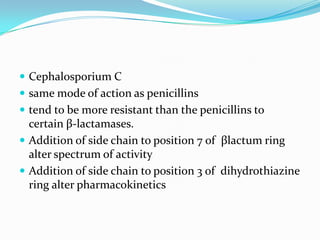
 Cephalosporium C
 same mode of action as penicillins
 tend to be more resistant than the penicillins to

certain β-lactamases.
 Addition of side chain to position 7 of βlactum ring
alter spectrum of activity
 Addition of side chain to position 3 of dihydrothiazine
ring alter pharmacokinetics
Adverse effects
 Diarrhoea & maculopapular rash-most common
 Nephrotoxicity (highest c Cephaloridine)
 Bleeding due to hypoprothrombinaemia (seen in

Cefoperaozone,Ceftriazone)
 Neutropenia& thrombocytopenia –Ceftazimide
 Disulfiram like reaction c alcohol–
Cefoperazone,cefotetan
Other βlactamases
 Carabapenems
 Monobactum
Carbapenem
 Carbapenems are synthetic β-lactam antibiotics that

differ in structure from the penicillins
 Broad spectrum activity
 Used in combi c Cilastatin , which prevents its rapid
hydrlysis at renal tubular cells
Monobactum
 Azotreonam- βlactam in which other ring s missing
 lacks cross sensitivity so promising in pt c pencillin

allergy
Qn
 An elderly diabetic patient is admitted to the hospital with

pneumonia. The sputum culture stains for a gram-negative
rod. The patient is started on IV ampicillin.Two days
later, the patient is not improving, and the microbiology
laboratory reports the organism to be a β-lactamase
producing H. influenzae.
What course of treatment is indicated?
A. Continue with the IV ampicillin.
B. Switch to IV cefotaxime.
C. Switch to oral vancomycin.
D. Add gentamicin to the ampicillin therapy
Qn
A 70-year-old alcoholic male with poor dental hygiene is to
have his remaining teeth extracted for subsequent
dentures. He has mitral valve stenosis with mild cardiac
insufficiency and is being treatedwith
captopril, digoxin, and furosemide. The dentist decides
that his medical history warrants prophylactic antibiotic
therapy prior to the procedure and prescribes which of the
following drugs?
A. Vancomycin.
B. Amoxicillin.
C. Tetracycline.
D. Cotrimoxazole.
E. Imipenem.
Qn
A patient with degenerative joint disease is to undergo
insertion of a hip prosthesis. To avoid complications due to
postoperative infection, the surgeon will pretreat this
patient with an antibiotic. This hospital has a significant
problem with MRSA. Which of the following antibiotics
should the surgeon select?
A. Ampicillin.
B. Imipenem/cilastatin.
C. Gentamicin/piperacillin.
D. Vancomycin.
E. Cefazolin.
Qn
 A 25-year-old male returns home from a holiday in the

Far East and complains of 3 days of dysuria and a
purulent urethral discharge. You diagnose this to be a
case of gonorrhea. Which of the following is
appropriate treatment?
A. Ceftriaxone IM.
B. Penicillin G IM.
C. Gentamicin IM.
D. Piperacillin/tazobactam IV.
E. Vancomycin IV.
Broad spectrum
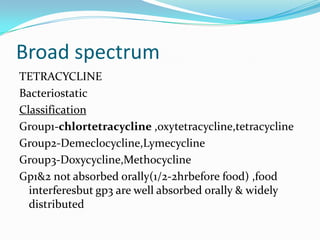
TETRACYCLINE
Bacteriostatic
Classification
Group1-chlortetracycline ,oxytetracycline,tetracycline
Group2-Demeclocycline,Lymecycline
Group3-Doxycycline,Methocycline
Gp1&2 not absorbed orally(1/2-2hrbefore food) ,food
interferesbut gp3 are well absorbed orally & widely
distributed
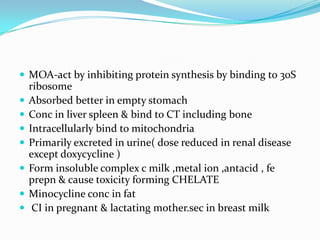
 MOA-act by inhibiting protein synthesis by binding to 30S









ribosome
Absorbed better in empty stomach
Conc in liver spleen & bind to CT including bone
Intracellularly bind to mitochondria
Primarily excreted in urine( dose reduced in renal disease
except doxycycline )
Form insoluble complex c milk ,metal ion ,antacid , fe
prepn & cause toxicity forming CHELATE
Minocycline conc in fat
CI in pregnant & lactating mother.sec in breast milk
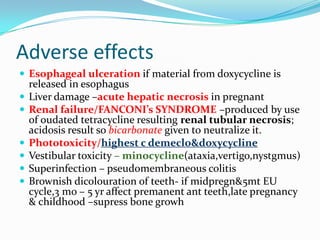
Adverse effects
 Esophageal ulceration if material from doxycycline is







released in esophagus
Liver damage –acute hepatic necrosis in pregnant
Renal failure/FANCONI’s SYNDROME –produced by use
of oudated tetracycline resulting renal tubular necrosis;
acidosis result so bicarbonate given to neutralize it.
Phototoxicity/highest c demeclo&doxycycline
Vestibular toxicity – minocycline(ataxia,vertigo,nystgmus)
Superinfection – pseudomembraneous colitis
Brownish dicolouration of teeth- if midpregn&5mt EU
cycle,3 mo – 5 yr affect premanent ant teeth,late pregnancy
& childhood –supress bone growh
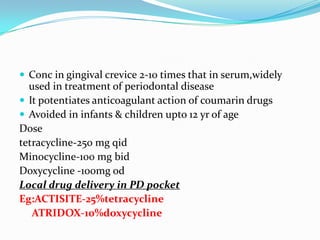
 Conc in gingival crevice 2-10 times that in serum,widely

used in treatment of periodontal disease
 It potentiates anticoagulant action of coumarin drugs
 Avoided in infants & children upto 12 yr of age
Dose
tetracycline-250 mg qid
Minocycline-100 mg bid
Doxycycline -100mg od
Local drug delivery in PD pocket
Eg:ACTISITE-25%tetracycline
ATRIDOX-10%doxycycline
Uses
 first choice of drug in LGV,
 Granuloma ingunale,
 cholera,
 PLAQUE,

 atypical pneumonia,
 rickketssial infn-Q fever/rocky mountain spotted

fever,
 brucellsis
Chloramphenicol
 Obtained from st venezulae
 Act by binding to 50s ribosome
 Broad spectrum & bacteriostatic
 Most common cause of BM depression causing aplastic

anemia,agranulocytosis,thrombocytopenia
 GRAY BABY SYNDROME-when given to neonates esp
premature infants .
 Metabolised by glucoronide conjugation ;def results
 Pneumonic tularemia results from infection by the







respiratory route or by bacteremic seeding of lungs.
Gentamicin is effective in treating this rare lymphoid
disease
Not ototoxic –netilmycin
used as anti TB drug???
Topical ???neo/gentamycin
Most resistant to bact inactivating enzymeAMIKACIN
Macrolides
 Macrolides are a class of antibiotics, the basis of the

chemical structure of which is macrocyclic lactone
ring
 Depending on the number of carbon atoms in the ring
14-membered
(erythromycin,roxithromycin,clarithromycin)
15-membered (azithromycin)
16-membered (midecamycin, spiramycin, josamycin).
Mechanism of action
 Inhibit protein synthesis by binding to the 50 s subunit
Pharmacokinetics
 Low conc bacteriostatic,high concentration






bactericidal
Absorption incomplete but adequate from intestine
Inactivated by gastric HCL, hence given as :
Enteric coated tablets or ester (stearate, ethyl succinate )
Food delays absorption
Not metabolized and actively secreted in bile ( major
route of excretion
Widely distributed into most tissues, except the brain and
CSF ; Cross the placental barrier
Indications
 Narrow antibacterial spectrum
 Used as alternative to pencillin/allergic pts

(Staph.Aureus,S. pyogens, S.pneumoniae,T.pallidum)
 Diphtheria & whooping cough – drug of choice

Legionnaires disease- drug of choice
 Pneumoniae ( M. pneumoniae ) – children

Chlamydia trachomatis
Azithromycin
 Extended spectrum
 Acid stable
 Rapid oral absorbtion
 Marked tissue distribution

 Intracellular penetration

Advantage over erythromycin & clarithromycin
Once daily dosing
No inhibition of cytochrome P- 450
Clindamycin
 Major problem –pseudomembraneous /c.difficle
 Drug for treatment –metronidazole or vancomycin
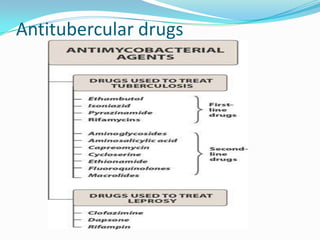
Antitubercular drugs
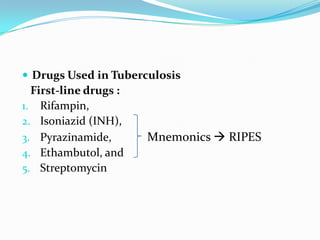
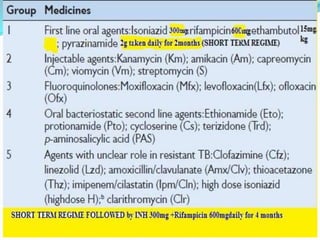
 Drugs Used in Tuberculosis

First-line drugs :
1. Rifampin,
2. Isoniazid (INH),
3. Pyrazinamide,
4. Ethambutol, and
5. Streptomycin

Mnemonics  RIPES
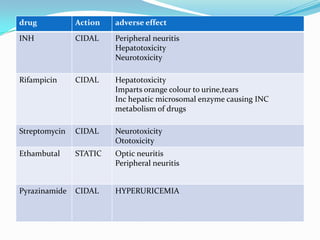
drug

Action

adverse effect

INH

CIDAL

Peripheral neuritis
Hepatotoxicity
Neurotoxicity

Rifampicin

CIDAL

Hepatotoxicity
Imparts orange colour to urine,tears
Inc hepatic microsomal enzyme causing INC
metabolism of drugs

Streptomycin

CIDAL

Neurotoxicity
Ototoxicity

Ethambutal

STATIC

Optic neuritis
Peripheral neuritis

Pyrazinamide

CIDAL

HYPERURICEMIA
Leprosy
. DAPSONE & OTHER SULFONES:
 used effectively in the long-term treatment of leprosy.

Mechanism of action :
 Dapsone like the sulfonamides, inhibits folate
synthesis (PABA antagonist).
 bacteriostatic
Clinical uses :
1.
2.

Tuberculoid leprosy: with rifampin
Lempromatous leprosy: with rifampin and clofazimine
Qn
 Desfuroxamide???????
 Granestron????
Chemotherapy

Chemotherapy

  • 1.
  • 2.
    MIC  MBC isthe lowest concentration of antibiotic that kills 99.9 percent of bacteria Superinfection  Tetracycline>chloramphenicol>ampicillin>amoxy cillin
  • 3.
    Classification  Broad spectrum tetracycline chloramphenicol •Narrow spectrum pencillin streptomycin erythromycin
  • 4.
    Based on source Fungi eg: pencillin ,cephalosporin, griesofulvin,streptomycin  Bacteria eg:polymyxin B,collistin,bacitracin,tryothrin  Actinomyces eg:aminoglycosides,macrolides,tetracycline,chloramp henicol,
  • 5.
    Mode of action Bacteriostatic eg:sulphonamides,tetracycline, chloramphenicol,etha mbutol,erythromycin  Bacteriocidal eg:clotrimoxazole,ciprofloxacin,pencillin,cephalospori n,aminoglycoside,rifampicin,vancomycin
  • 6.
    Mechanisms of actionof antimicrobial agents  1. Inhibition of cell wall  1.Penicillins, cephalosporins, bac       synthesis : 2. leakage of the cytoplasmic membrane : 3. Inhibition of protein synthesis &impairment of function of ribosomes 4. Interference in transcription/translation of genetic: 5. Antimetabolite actions : 6. Binding to viral enzymes essential for DNA synthesis itracin,vancomycin,cycloserine     2.Polymixin, collistin, polyene, a ntifungal antibiotics 3.Aminoglycosides,tetracycline, chloramphenicol,Macrolide antibiotics, and clindamycin 4.Quinolones, metronidazole 5.Sulfonamides, trimethoprim 6.Vidarabine and acyclovir
  • 7.
    Superinfection  New infectionoccurring during antimicrobial treatment for another infection.  Assoc c broad /extended spectrum antibiotics such as tetracycline ,chloramphenicol,ampicillin ,newer cephalosporins  Eg: 1. Pt on CS therapy 2. AIDS pt 3. SLE & DLE 4. Leukemia & other malignancies 5. Autoimmune disorders (MM,MG) 6. Diabetes
  • 8.
    Eg:  Clostridium difficiletreatment result in      pseduomembraneous colitis due to treatment with clotrimoxazole,clindamycin,ampicillin,aminoglycoside ,tetracycline. Resistant Staph enteritis due to treatment c cloxacillin & its congeners. Candida albicans result in oral thrush. Pseudomonas Proteus treatment result in UTI Diarrhoea due to treatment c tetracycline
  • 9.
    Combined use ofdrugs      To prevent drug resistance To obtain synergism To dec adverse effects To broaden spectrum of activity Eg: 1.2 static drusgs combined – additive effect sulfamethoxazole+trimethoprim=clotrimoxazole (septran) 2.2 cidal drugs combined – additive only if bact sensitive to both 3.Cidal + static =?? If bact sensitive to static drug =synergism If bact sensitive to cidal drug =antagonism
  • 10.
    Adverse effects  Localtoxicity – thrombophebitis  Systemic –c high therapeutic index eg:eythromycin,pencillin,cephalosporin -c low therapeutic index (not safe) eg: aminoglycoside,tetracycline, chloramphenicol - c very low eg: polymyxin,vancomycin,amphotericin B Hypersensitivity reaxn-pen,ceph,sterp
  • 11.
    Qn  Which oneof the following patients is least likely to require antimicrobial treatment tailored to the individual’s condition? A. Patient undergoing cancer chemotherapy. B. Patient with kidney disease. C. Elderly patient. D. Patient with hypertension. E. Patient with liver disease.
  • 12.
    Qn  In whichone of the following clinical situations is the prophylactic use of antibiotics not warranted? A. Prevention of meningitis among individuals in close contact with infected patients. B. Patient with a hip prosthesis who is having a tooth removed. C. Presurgical treatment for implantation of a hip prosthesis. D. Patient who complains of frequent respiratory illness. E. Presurgical treatment in gastrointestinal procedures.
  • 13.
    Qn  Which oneof the following is the best route of administration and dosing schedule for treatment with aminoglycosides based on the drug’s concentrationdependent killing property? A. Oral every 8 hours. B. Oral every 24 hours. C. Parenterally by continuous intravenous infusion. D. Parenterally every 8 hours. E. Parenterally every 24 hours.
  • 14.
    Qn  A 57-year-oldman complains of fever, headache,confusion, aversion to light, and neck rigidity. A presumptive diagnosis of bacterial meningitis is made.Antimicrobial therapy should be initiated after which one of the following occurrences? A. Fever is reduced with antipyretic drugs. B. Sample of blood and cerebrospinal fluid have been taken. C. A Gram stain has been performed. D. The results of antibacterial drug susceptibilitytests are available. E. Infecting organism(s) have been identified by the microbiology laboratory
  • 15.
    Sulfonamides  First antibioticto treat pyogenic infections .These agents are bacteristatic; and get inactivated by presence of pus. Also called sulfa drugs. Classification 1.Short Acting Sulfonamide:4-6hr a. Sulfadiazine /orally given b.Sulfisoxazole 2.Intermediate Acting Sulfonamide:8-12hr a. Sulfamethoxazole 3.Long Acting Sulfonamide:7 days a. Sulfadoxine 4. Special sulfonamides for local application: a. Mafenide-used in burns b. Silver sulfadiazine –used in burns c. Sulacetamide- ophthalmic use for GIT disturbance: a. Phthalyl sulfathiazole b. Sulfasalazine-antidiarrhoeal/poorly absorbed from gut
  • 16.
    uses  Used rarelyalone ;in combi c trimethprim P.carnii,granuloma ingunale,chancroid (STD)Earlier used in treatment of typhoid.  Ocular sulfacetamide sodium –bact ocular infn inclding chlamydia  Sulfamethopyrazine&Sulfadoxine used c pyrimethamine for chloroquine intolerant malaria.
  • 17.
    MOA Folic acid isdonor for DNA synthesis,This reaction takes place in bacteria & humans  PABA inhibitFolate synthetase (blocked by sulfamethazole)  DHFA Folate reducatse (blocked by trimethoprim)  THFA
  • 18.
    Adverse reactions 1.Urinary TractDisturbances  Sulfonamides may precipitate in urine producing crystalluria, hematuria or even obstruction.(acetylated metabolites )/mcq Crystalluria is treated by administration of sodium bicarbonate to alkalinize the urine. 2. Hematopoietic Disturbances  Sulfonamides can cause hemolytic or aplastic anemia (Blood dyscrasias).  May provoke hemolytic reactions in patients whose red cells are deficient in glucose-6-phosphate dehydrogenase/mcq 3.Hepatitis 4.Contact dematitis 5.Bm toxicity in elderly pt 6.Kernicterus in newborns. (trimethoprim)displace bilirubin from protein binding,free bilirubin deposit in basal ganglia & thalamus /mcq
  • 19.
    uses  Nocardial infection Leprosy ,dapsone ( sulfone)  Toxoplasmosis /Sulfadiazine  Ulcerative colitis/Sulfasalazine
  • 20.
    Fluoroquinolones  Naladixic acidis the predecessor to all fluoroquinolones.  fluorinated quinolones (FQs) represent a major therapeutic advance:  Quinolones are rapidly bactericidal drugs «Broad spectrum of activity «Improved PK properties – excellent bioavailability, tissue penetration, prolonged half-lives «Overall safety  Disadvantages: resistance, expensive
  • 21.
  • 22.
    MOA  Inhibiting bacterialtopoisomerase (DNA gyrase) and topoisomerase IV, block bacterial DNA synthesis and put bacteria to death.
  • 23.
    Mechanisms of Resistance Altered target sites – chromosomal mutations in genes that code for DNA gyrase or topoisomerase IV «most important and most common  Altered cell wall permeability –decreased porin expression  Expression of active efflux – transfers FQs out of cell  Cross-resistance occurs between FQs
  • 24.
    Pharmacokinetics  Ofloxacin, enoxacinand lomefloxacin are almost completely absorbed orally; norfloxacin is 35-45%; ciprofloxacin is 67% orally absorbed.  The FQs are widely distributed in body fluids and tissues , The concentrations in prostate,kidney, neutrophils, and macrophages exceed serum concentrations, but in the cerebrospinal fluid are low.  Most FQs are elimiated by renal mechanisms;therefore the dosage must be adjusted according to renal fn
  • 25.
     Norfloxacin isthe least active of FQs against both gram-      negative and gram-positive organisms. Ciprofloxacin is the most active agent against gramnegatives, P.aeruginosa in particular. Levofloxacin, the L-isomer of ofloxacin and twice as potent, has superior activity against gram-positive organisms, including S. pneumoniae. Methicillin-susceptible strains of S. aureus are generally susceptible to FQs, but methicillin-resistant strains of staphylococci are often resistant. Pneumococci and streptococci of group are resistant to enoxacin. In general, Penicillins and cephalosporins are more active than FQs against streptococci and staphylococci
  • 26.
    USES  Urinary tractinfections:FQs are effective for      uncomplicated and complicated UTI even when caused by multidrug-resistant bacteria. Ciprofloxacin and ofloxacin are effective forgonococcal infection; Ofloxacin is effective for chlamydial urethritis or cervicitis. Intestinal tract infections: effective for intraabdominal infections and bacterial diarrhea caused by shigella, salmonella, E. coli, or campylobacter. prostatitis
  • 27.
    USES  Respiratory tractinfections:Not been routinely recommended for treatment of pneumonia and other upper respiratory tract infections.These infections, predominantly caused by pneumococci and streptococci, are usually well treated with betalactams or macrolides.  However, levofloxacin, sparfloxacin, and newer FQs with enhanced G+ activity and activity against atypicalpneumonia pathogens (e.g. chlamydia, mycoplasma, and legionella) are likely to be effective and used increasingly for treatment of upper and lower respiratory tract infections
  • 28.
     Infections ofthe bones, joints, skin and soft tissues:Including those caused by multidrug-resistant organisms such as pseudomonas and enterobacter.  6. Others: Ciprofloxacin or ofloxacin is occasionally used for treatment of tuberculosis and atypical mycobacterial infections.  Ciprofloxacin is also a second-line agent for legionellosis.
  • 29.
    Adverse effects  1.Gastrointestinalupsets (the most  common)Nausea, vomiting, diarrhea, dyspepsia 2.Allergy and anaphylaxis 3.Central Nervous System (1~7%)  Headache, agitation, insomnia, dizziness, rarely,  hallucinations and seizures (rarely) 4.Possibly damage to growing cartilage: NOT recommended for patients younger than 14 years old, pregnant or nursing women. 5.Concomitant administration of theophylline and quinolones can lead to elevated levels of theophylline with the risk of toxic effect, especially seizure.
  • 30.
    Qn  A 30-year-oldmale is diagnosed to be human immunodeficiency virus (HIV) positive. His CD4+ count is 200 cells/mm3 and his viral load is 10,000 copies/mL. In addition to receiving antiviral therapy, which of the following is indicated to protect him against pneumonia due to Pneumocystis jiroveci? A. Trimethoprim. B. Ciprofloxacin. C. Cotrimoxazole. D. Clindamycin. E. Sulfamethoxazole.
  • 31.
    Qn  A 26-year-oldyoung man presents with the symptoms of gonorrhea. Because this condition is often associated with an infection due to Chlamydia trachomatis,which of the following quinolones would be the best choice for treating him? A. Ciprofloxacin. B. Nalidixic acid. C. Norfloxacin. D. Levofloxacin. E. Moxifloxacin.
  • 32.
    Qn  In whichone of the following infections is ciprofloxacin ineffective? A. Urinary tract infections due to a β-lactamase producing strain of Klebsiella. B. Pneumonia due to Streptococcus pneumoniae. C. Exacerbation of chronic bronchitis due to Moraxella catarrhalis. D. Urinary tract infection due to Escherichia coli. E. Urinary tract infection due to Pseudomonas aeruginosa.
  • 33.
    Qn Sulfonamides increase therisk of neonatal kernicterus,because they: A. Diminish the production of plasma albumin. B. Increase the turnover of red blood cells. C. Inhibit the metabolism of bilirubin. D. Compete for bilirubin-binding sites on plasma albumin. E. Depress the bone marrow.
  • 34.
    β Lactum antibiotics Classification 1.Natural–pencillin G/benzathine (longest duration of action) 2.Semisynthetic pencillin a) acid resistant –phenoxy methyl penicillin(pencillin V) phenoxy ethyl penicillin b)pencillinase resistant – methicillin (not acid resistant) DOC in staphy infn Cloxacillin, oral(acid resistant) c)Extended spectrum-amino -ampicillin,amoxycillin carboxy -carbenicillin,ticarcillin ureido -mezlocillin,azlocillin,piperacillin 3.β lactamase inhibitors-clavulenic acid ,sulbactum
  • 35.
    Pencillin G orbenzyl pencillin          Bactericidal Mold Penicillium chrysogenum. Narrow spectrum Acid labile Food interfere c absorbtion,get destroyed by gastric acid ,oral route not given IV/IM given Anaphylaxsis seen SCRATCH test Jarisch – Hexeimer reaction – seen in syphilis pt,spirochetes release lytic products react c pencillin Fever ,myalgia,rashes,angioedema noted
  • 36.
    Routes/mcq  Type ofpencillin  Routes Procaine pencillin 2. Benzathine pencillin 3. Crystalline pencillin 4. Pencillin V  Deep im 1.  Deep im  Im/iv  oral
  • 37.
    uses Gram +ve cocci Streptococcus pneumoniae*  Streptococcus pyogenes  Streptococcus viridans group/SABE Gram+bacilli  Bacillus anthracis  Corynebacterium diphtheriae Gram –ve cocci  Neisseria gonorrhoeae  Neisseria meningitidis Anaerobic  Clostridium perfringens/gas gangene Spirochetes  Treponema pallidum (syphilis)  Treponema pertenue (yaws
  • 38.
    Ampicillin  Prodrug isbecampicillian ,well absorbed orally  Act by inhibiting transpeptidase ..(mcq)  Incomplete oral absorbtion, food interferes; so interfere c     metabolism of other drugs eg:OCpills,Hydrocortisone & pencillin not mixed in same syringe as hydrocortisone inhibit action of pencillin, allupurinol INC rashes by ampicillin, prebenecin retards excretion by competing cfor tubular secretion Superinfection common,frequent diarrhoea after oral.
  • 39.
    Amoxycillin  Lesser incidenceof skin rashes & diarrhoea compared to ampicillin Pencillin DOC in 1. Syphilis 2. Gonorrhoea 3. Actinomycosis 4. St infn 5. Abscess 6. cellulitis
  • 40.
    β lactamase inhibitor Clavulenicacid  Progressive inhibitor  After binding to βlactamase get inactivated called SUICIDE inhibitor  Combi c amoxycillin called coamoxiclav Sulbactum  Progressive, after binding to βlactamase get inactivated.  Combi c ampicillian called Sulficillin
  • 42.
    Generation Effective againstIneffective against Examples 1 Gram +ve PEcK-Proteus,E coli,Klebsiella Cefadroxil. Cephalexin. Cephalothin Cefazolin. 2 Gram +ve & -ve Pseudomonas Cefaclor,Cefoxitin,Cefprozil, HEN PEcKS Cefuroxime H influenza ,Enterobacter aerogenes,Neisser ia ,Serratia marcescens 3. Broad gram –ve &Some gram +ve 4 Similar to gen 3 MRS but more effective Gram -ve Gram +cocci Cefdinir,Cefixime,Cefpodoxime. Ceftibuten,Ceftriaxone,Cefotaxime. Cefepime,cefipirome
  • 43.
     Cephalosporium C same mode of action as penicillins  tend to be more resistant than the penicillins to certain β-lactamases.  Addition of side chain to position 7 of βlactum ring alter spectrum of activity  Addition of side chain to position 3 of dihydrothiazine ring alter pharmacokinetics
  • 44.
    Adverse effects  Diarrhoea& maculopapular rash-most common  Nephrotoxicity (highest c Cephaloridine)  Bleeding due to hypoprothrombinaemia (seen in Cefoperaozone,Ceftriazone)  Neutropenia& thrombocytopenia –Ceftazimide  Disulfiram like reaction c alcohol– Cefoperazone,cefotetan
  • 45.
  • 46.
    Carbapenem  Carbapenems aresynthetic β-lactam antibiotics that differ in structure from the penicillins  Broad spectrum activity  Used in combi c Cilastatin , which prevents its rapid hydrlysis at renal tubular cells
  • 47.
    Monobactum  Azotreonam- βlactamin which other ring s missing  lacks cross sensitivity so promising in pt c pencillin allergy
  • 48.
    Qn  An elderlydiabetic patient is admitted to the hospital with pneumonia. The sputum culture stains for a gram-negative rod. The patient is started on IV ampicillin.Two days later, the patient is not improving, and the microbiology laboratory reports the organism to be a β-lactamase producing H. influenzae. What course of treatment is indicated? A. Continue with the IV ampicillin. B. Switch to IV cefotaxime. C. Switch to oral vancomycin. D. Add gentamicin to the ampicillin therapy
  • 49.
    Qn A 70-year-old alcoholicmale with poor dental hygiene is to have his remaining teeth extracted for subsequent dentures. He has mitral valve stenosis with mild cardiac insufficiency and is being treatedwith captopril, digoxin, and furosemide. The dentist decides that his medical history warrants prophylactic antibiotic therapy prior to the procedure and prescribes which of the following drugs? A. Vancomycin. B. Amoxicillin. C. Tetracycline. D. Cotrimoxazole. E. Imipenem.
  • 50.
    Qn A patient withdegenerative joint disease is to undergo insertion of a hip prosthesis. To avoid complications due to postoperative infection, the surgeon will pretreat this patient with an antibiotic. This hospital has a significant problem with MRSA. Which of the following antibiotics should the surgeon select? A. Ampicillin. B. Imipenem/cilastatin. C. Gentamicin/piperacillin. D. Vancomycin. E. Cefazolin.
  • 51.
    Qn  A 25-year-oldmale returns home from a holiday in the Far East and complains of 3 days of dysuria and a purulent urethral discharge. You diagnose this to be a case of gonorrhea. Which of the following is appropriate treatment? A. Ceftriaxone IM. B. Penicillin G IM. C. Gentamicin IM. D. Piperacillin/tazobactam IV. E. Vancomycin IV.
  • 52.
  • 53.
     MOA-act byinhibiting protein synthesis by binding to 30S        ribosome Absorbed better in empty stomach Conc in liver spleen & bind to CT including bone Intracellularly bind to mitochondria Primarily excreted in urine( dose reduced in renal disease except doxycycline ) Form insoluble complex c milk ,metal ion ,antacid , fe prepn & cause toxicity forming CHELATE Minocycline conc in fat CI in pregnant & lactating mother.sec in breast milk
  • 54.
    Adverse effects  Esophagealulceration if material from doxycycline is       released in esophagus Liver damage –acute hepatic necrosis in pregnant Renal failure/FANCONI’s SYNDROME –produced by use of oudated tetracycline resulting renal tubular necrosis; acidosis result so bicarbonate given to neutralize it. Phototoxicity/highest c demeclo&doxycycline Vestibular toxicity – minocycline(ataxia,vertigo,nystgmus) Superinfection – pseudomembraneous colitis Brownish dicolouration of teeth- if midpregn&5mt EU cycle,3 mo – 5 yr affect premanent ant teeth,late pregnancy & childhood –supress bone growh
  • 55.
     Conc ingingival crevice 2-10 times that in serum,widely used in treatment of periodontal disease  It potentiates anticoagulant action of coumarin drugs  Avoided in infants & children upto 12 yr of age Dose tetracycline-250 mg qid Minocycline-100 mg bid Doxycycline -100mg od Local drug delivery in PD pocket Eg:ACTISITE-25%tetracycline ATRIDOX-10%doxycycline
  • 56.
    Uses  first choiceof drug in LGV,  Granuloma ingunale,  cholera,  PLAQUE,  atypical pneumonia,  rickketssial infn-Q fever/rocky mountain spotted fever,  brucellsis
  • 57.
    Chloramphenicol  Obtained fromst venezulae  Act by binding to 50s ribosome  Broad spectrum & bacteriostatic  Most common cause of BM depression causing aplastic anemia,agranulocytosis,thrombocytopenia  GRAY BABY SYNDROME-when given to neonates esp premature infants .  Metabolised by glucoronide conjugation ;def results
  • 59.
     Pneumonic tularemiaresults from infection by the      respiratory route or by bacteremic seeding of lungs. Gentamicin is effective in treating this rare lymphoid disease Not ototoxic –netilmycin used as anti TB drug??? Topical ???neo/gentamycin Most resistant to bact inactivating enzymeAMIKACIN
  • 60.
    Macrolides  Macrolides area class of antibiotics, the basis of the chemical structure of which is macrocyclic lactone ring  Depending on the number of carbon atoms in the ring 14-membered (erythromycin,roxithromycin,clarithromycin) 15-membered (azithromycin) 16-membered (midecamycin, spiramycin, josamycin). Mechanism of action  Inhibit protein synthesis by binding to the 50 s subunit
  • 61.
    Pharmacokinetics  Low concbacteriostatic,high concentration     bactericidal Absorption incomplete but adequate from intestine Inactivated by gastric HCL, hence given as : Enteric coated tablets or ester (stearate, ethyl succinate ) Food delays absorption Not metabolized and actively secreted in bile ( major route of excretion Widely distributed into most tissues, except the brain and CSF ; Cross the placental barrier
  • 62.
    Indications  Narrow antibacterialspectrum  Used as alternative to pencillin/allergic pts (Staph.Aureus,S. pyogens, S.pneumoniae,T.pallidum)  Diphtheria & whooping cough – drug of choice  Legionnaires disease- drug of choice  Pneumoniae ( M. pneumoniae ) – children  Chlamydia trachomatis
  • 63.
    Azithromycin  Extended spectrum Acid stable  Rapid oral absorbtion  Marked tissue distribution  Intracellular penetration Advantage over erythromycin & clarithromycin Once daily dosing No inhibition of cytochrome P- 450
  • 64.
    Clindamycin  Major problem–pseudomembraneous /c.difficle  Drug for treatment –metronidazole or vancomycin
  • 65.
  • 66.
     Drugs Usedin Tuberculosis First-line drugs : 1. Rifampin, 2. Isoniazid (INH), 3. Pyrazinamide, 4. Ethambutol, and 5. Streptomycin Mnemonics  RIPES
  • 67.
    drug Action adverse effect INH CIDAL Peripheral neuritis Hepatotoxicity Neurotoxicity Rifampicin CIDAL Hepatotoxicity Impartsorange colour to urine,tears Inc hepatic microsomal enzyme causing INC metabolism of drugs Streptomycin CIDAL Neurotoxicity Ototoxicity Ethambutal STATIC Optic neuritis Peripheral neuritis Pyrazinamide CIDAL HYPERURICEMIA
  • 69.
    Leprosy . DAPSONE &OTHER SULFONES:  used effectively in the long-term treatment of leprosy. Mechanism of action :  Dapsone like the sulfonamides, inhibits folate synthesis (PABA antagonist).  bacteriostatic Clinical uses : 1. 2. Tuberculoid leprosy: with rifampin Lempromatous leprosy: with rifampin and clofazimine
  • 70.

Editor's Notes

  • #2 Agents produced by one microorganism used to kill other microorganisms…
  • #6 Static –slow down multiplication( arrest growth ),cidal –kill rapidly multiplying bacteria
  • #7 NeelimaInhibitors of cell membrane function=Isoniazid ,Amphotericin BInhibitors of nucleic acid function or synthesis=Fluoroquinolones ,Rifampin
  • #9 Combining bactericidal drugs may cause synergistic effect, especially with drugs with different mechanism of action, e.g. combination of penicillin with aminoglycosideresults in synergism against susceptibleE. coli, Klebsiella, Proteus, Pseudomonas
  • #10 combination of ampicillin and clavulanic acid acts synergistically, the latter drug inhibiting beta lactamase production by the organism and thus protects penicillin,This occurs because penicillin helps in entry of aminoglycoside through microbial cell wall.
  • #11 Therapeutic index=how safe the drug is?? High safetyClotrimoxazole when given c diurectics =THROMBOCYTOPENIA
  • #12 Ans :d Elevated blood pressure would not be expected to markedly influence the type of antimicrobial treatment used.
  • #13 Respiratory illness may beof viral origin. Furthermore, consequences of a chronic disorder may not warrant prophylactic use of antibiotics. Infection following implantation of a hip prosthesis is such a serious complication that prophylactic antibiotics are warranted.ans d
  • #14 Correct answer = E. Giving a drug that exhibits concentration-dependent killing by once-a-day bolus infusion achieves high peak levels, favoring rapid killing of the infecting pathogen. The highly polar, polycationic structure of the aminoglycosides prevents adequate absorption after oral administration.Therefore, all aminoglycosides (except neomycin) must be given parenterally to achieve adequate serum levels.
  • #15 Bacterial meningitis is a medical emergency that requires immediate diagnosis and treatment. Specimens for possible microbial identification must be obtained before drugs are administered whenever possible. Therapy should not be delayed until laboratory results are available
  • #16 Rapidly absorbed and excreted ??? Sulfuoxazole,sulfamethaoxazole,sulfadiazine
  • #18 1.The affinity of PABA with dihydrofolic acidsynthetase(DHFA) is 5000-15000 times more strongly than that of sulfonamides, 2. Sulfonamide resistance may occur as a result of mutations that cause overproduction of PABA, cause production of a folic acid synthesizing enzyme that has low affinity for sulfonamides, or cause a loss of permeabilityto the sulfonamide
  • #19 Inhibit metabolism of warfarin,phenytoin&tolbutamideIncrease in methotrexate toxicity
  • #21 Primarily active against ??????????????????????????gram –ve
  • #22 Ciprooxacin is the drug of choice for postexposure prophylaxis and for treatment of anthrax. Alternateagents include doxycycline (mcq)
  • #25 Cross placenta & conc in amniotic fluid
  • #26 1.Levofloxacin is often effective in treating infections unresponsive to β-lactam antibiotics, such as amoxacillin-clavulanic acid.2.Levofloxacin and moxioflxacin are known as “respiratory fluoroquinolones” due to their activity versus Streptococcus pneumoniae.3.Ciprooxacin is highly ecacious in treating acute diarrheal illnesses due to enteric pathogens.
  • #30 High photosensitivity-sparfloxacinMoxifloxacin – QT interval prolongation
  • #31 Prophylaxis with cotrimoxazole is the standard treatment for patients with human immunodeficiency virus with CD4+ counts at 200 cells/mm3 or lower. Trimethoprim and sulfamethoxazole are not effective as monotherapy. It can be used in combination with dapsone. Clindamycin is effective in pneumonia, which has already developed due to this organism, but is not used prophylactically because of its adverse effect on the gastrointestinal tract. Ciprofloxacin lacks activity against this organism.ans c
  • #32 Correct answer = D. Levofloxacin, a third-generation fluoroquinolone, shows increased activity against both gonorrheal and chlamydial infections compared to the second-generation examples, ciprofloxacin and norfloxacin. Nalidixic acid, a first-generation fluoroquinolone, lacks activity in these conditions. Moxifloxacin, a fourth-generation fluoroqinolone, also does not affect these atypical organisms.
  • #33 Ciprofloxacin does not have sufficient activity against S. pneumoniae to be effective. Because it is not a β-lactam, ciprofloxacin is effective in treating UTIs caused by β-lactamase producing organisms
  • #34 Increased release of albumin bound bilirubin increases the plasma concentration of free bilirubin, which can penetrate the central nervous system
  • #35 Carboxy active against p.aerogenosa, piperacillin 8 times more active against pseudomonasThe antibacterial effects of all β-lactam antibiotics are synergistic with the aminoglycosides
  • #36 Pseudomonas ????????????????????– ciprofloxacin,piperacillian,carboxy-carbenecillin/notgiven orally ,ticarcillin,ceftazidine,cefperazone,cefipime&other 3rd gen cephlosporins,,,duration of action 28 days …
  • #37 Drugs not given iv???????Paracetamol,diclofenac,chlorquine,adrenaline
  • #38 Prophylactic use –SABE,R.fever,Agranulocytosis pt
  • #39 Methicillinresistant Staphylococcus aureus (MRSA) is currently a source of serious community and nosocomial (hospital-acquired) infections and is resistant to all commercially available β-lactam antibiotics, including antistaphylococcalpenicillins. This organism is usually susceptible to glycopeptidevancomycin. The penicillinase-resistant penicillinshave no activity versus gram-negative infections
  • #41 Ampicillin (with or without the addition of gentamicin) is the drug of choice for the gram-positive bacillus Listeriamonocytogenes and susceptible Enterococcal species. These extended-spectrum agents are also widely used in the treatment of respiratory infections, and amoxicillin is employed prophylacticallyby dentists for patients with abnormal heart valves who are to undergo extensive oral surgery
  • #43 Doesn’t undergo metabolism in body except cefotaxime (3rd gen ) partially metabolised in liver. Excreted by kidney exception Cefperazone /biliary excretion .
  • #44 ceftriaxone or cefotaxime is effective in the treatment of neonatal and childhood meningitis caused by H. influenzae.
  • #45 Due to overuse nosocomialenterococci- notably resistant
  • #47 Compounding the imipenem with cilastatin protects the parent drug and, thus, prevents the formation of the toxic metabolite.Meropenem, ertapenem, and doripenem do not require co-administration of cilistatin. Ertapenem can be administered via IV or IM injection once daily
  • #48 Aztreonam [az-TREE-oh-nam], which is the only commercially available monobactam, has antimicrobial activity directed primarilyagainst the Enterobacteriaceae, including P. aeruginosa. safe alternative for treating patients who are allergic and unable to tolerate penicillinsand/or cephalosporins.
  • #53 Inactivation occurs if mixed c pencillin ????mcqnotadmins together
  • #54 Antimicrobial spectrum gram +vecocci&bacilli,gram-vecocci & bacilli,chlamydia,mycoplasma,treponema&helicobacter….
  • #55 Di-demeclocylineanatagonise ADH action & reduce urine conc ability of kidney ….
  • #56 Advantages of doxy over tetraLonger half life,Less chance of GI disturbance,Better GI distribution,High lipid solubility
  • #58 Doc for treating typhoid previously ,not used now
  • #59 Treatment includes tobramycinalone or in combination with anantipseudomonal penicillin, such as piperacillin or ticarcillin in immunocompromised patients, and in burn victims. INFECTIONS DUE TO ENTEROCOCCI-Recommended therapy is with gentamicin or streptomycin plus vancomycin or a β-lactam,such as ampicillin.
  • #60 Less ototoxicity -netilmycin
  • #66 Mycobacteria are intrinsically resistant to most antibiotics.They grow slowly compared with other bacteria, antibiotics that are most active against growing cells are relatively ineffective. so, that’s why we use cobination of drugs.Mycobacterial cells can also be dormant and thus completely resistant to many drugs or killed only very slowly.
  • #67 Isoniazid and Rifampin are the two most active drugsTo prevent resistance atleast 2 drugs used
  • #68 Safest drug in pregnancy – INH,EthambutolInethambutol toxicity red &green vision defect seenDrug penetrating into caseous necrosis in TB -rifampicin
  • #69 Anti Tn drug CI in pregnancy - Streptomycin
  • #70 rifampin and clofazimine –antiinflmm,immunosupressantDapsone-lepraereaxn/ag-abreaxn/DOC rifampicinSteroid supress collagen wound healing delayed so not used…