Structure and
function of placenta
Structure of placenta
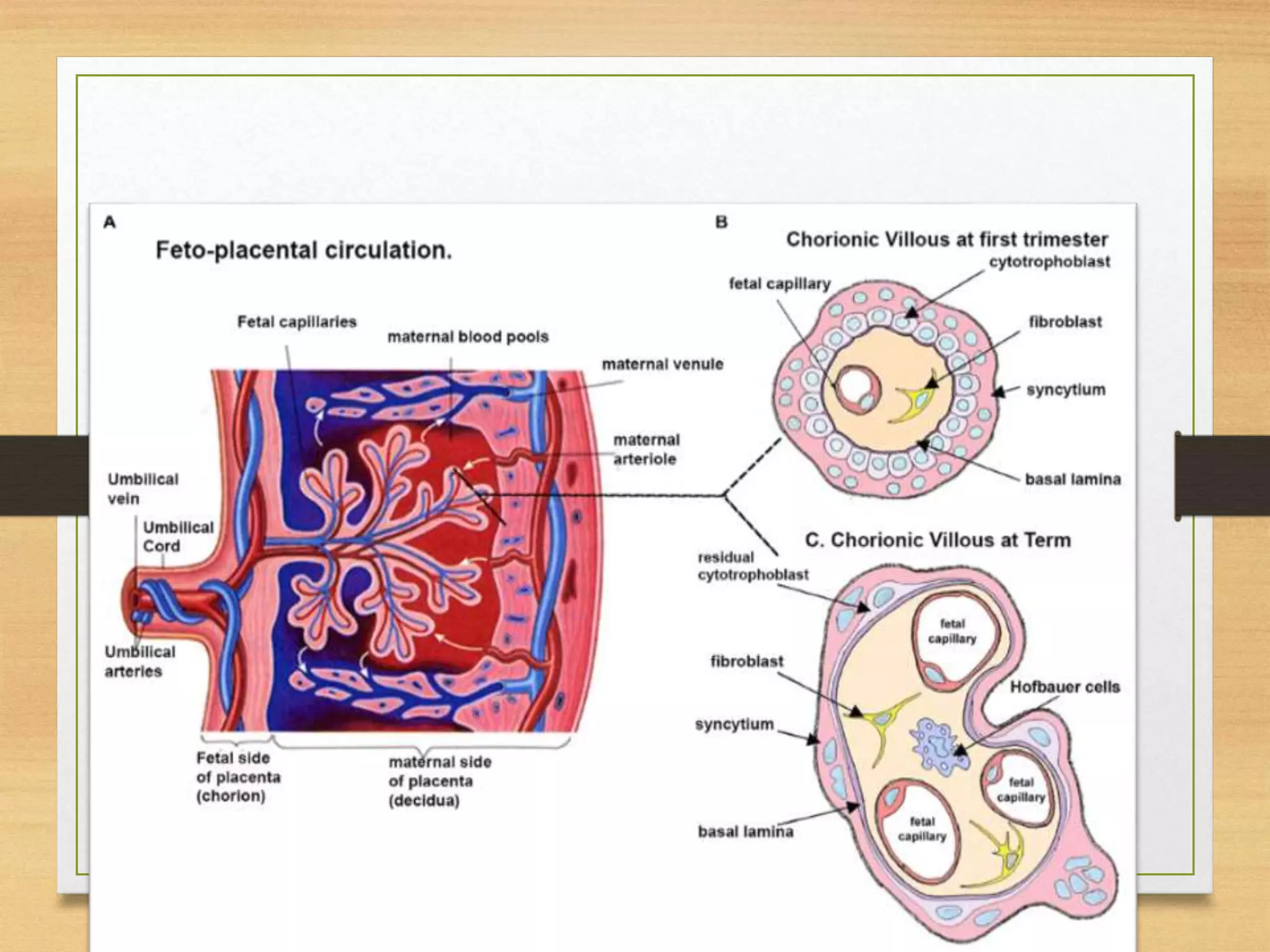
• At start of fourth month,placenta has 2 components:
• Fetal portion
• Maternal portion
• On fetal side the placenta is bordered by chorionic
plate and on its maternal side by decidual plate
• In the junctional zone , trophoblast and decidual cells
intermingle .it consists of giant syncitial and decidual
cell
• At this stage most of the trophoblasts cells have
been degenerated
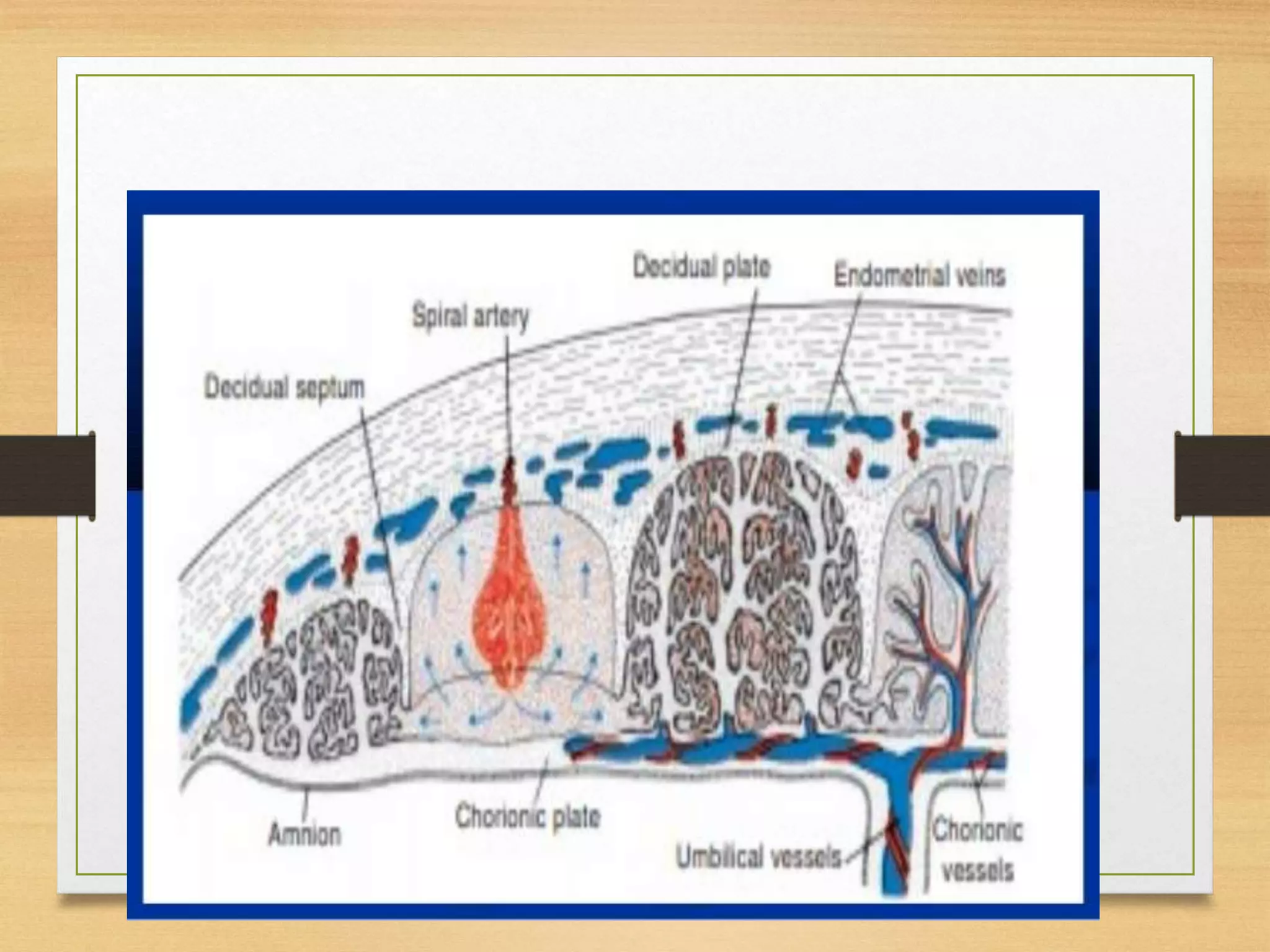
• Between the two chorionic and decidual plates are the
intervillous spaces which consists of maternal blood in it.
• During the fourth and fifth month
• Decidua forms decidual septa which project into
intervillous spaces but NOT reach the chorionic plates
• Due to this septum placenta is divided into a number of
compartments called cotyledons
Function of placenta
• EXCHANGE OF GASSES:oxygen ,
carbondioxxide and carbon monooxide takes place
by diffusion.
• at term fetus extracts 20-30ml of oxygen per minute
from maternal circulation
• Even a short term interruption of oxygen supply is
fatal to fetus
• Exchange of nutrients: exchange of nutrients and
electrolyte takes place including amino acids ,free
fatty acids, carbohydrates and vitamins .
• It increases as pregnancy advances.
• Transmission of maternal antibodies:
immunoglobulins consists of entirely maternal
immunoglobulins G(IgG), which begins to be
transported from mother to fetus at approximately
at 14 weeks. Via this the fetus gains passive immunity
against various infectious disease .newborns begin to
produce their own IgG but adult levels arenot
achieved until at the age of 3.
• Hormonal production: by the end of fourth month
• Progesterone is produced by placenta in sufficient
amount to maintain pregnancy.
• Estrogenic hormone is produced just before the
end of pregnancy .
• Human chorionic gonadotropin is excreted by
mother ,its presence is indicator of pregnancy
• Somatomamotropin it’s a growth like hormone

Structure and function of placenta

  • 1.
  • 2.
    Structure of placenta •At start of fourth month,placenta has 2 components: • Fetal portion • Maternal portion
  • 3.
    • On fetalside the placenta is bordered by chorionic plate and on its maternal side by decidual plate • In the junctional zone , trophoblast and decidual cells intermingle .it consists of giant syncitial and decidual cell • At this stage most of the trophoblasts cells have been degenerated
  • 4.
    • Between thetwo chorionic and decidual plates are the intervillous spaces which consists of maternal blood in it. • During the fourth and fifth month • Decidua forms decidual septa which project into intervillous spaces but NOT reach the chorionic plates • Due to this septum placenta is divided into a number of compartments called cotyledons
  • 7.
    Function of placenta •EXCHANGE OF GASSES:oxygen , carbondioxxide and carbon monooxide takes place by diffusion. • at term fetus extracts 20-30ml of oxygen per minute from maternal circulation • Even a short term interruption of oxygen supply is fatal to fetus
  • 8.
    • Exchange ofnutrients: exchange of nutrients and electrolyte takes place including amino acids ,free fatty acids, carbohydrates and vitamins . • It increases as pregnancy advances.
  • 9.
    • Transmission ofmaternal antibodies: immunoglobulins consists of entirely maternal immunoglobulins G(IgG), which begins to be transported from mother to fetus at approximately at 14 weeks. Via this the fetus gains passive immunity against various infectious disease .newborns begin to produce their own IgG but adult levels arenot achieved until at the age of 3.
  • 10.
    • Hormonal production:by the end of fourth month • Progesterone is produced by placenta in sufficient amount to maintain pregnancy. • Estrogenic hormone is produced just before the end of pregnancy . • Human chorionic gonadotropin is excreted by mother ,its presence is indicator of pregnancy • Somatomamotropin it’s a growth like hormone