Streptococcus
Streptococci
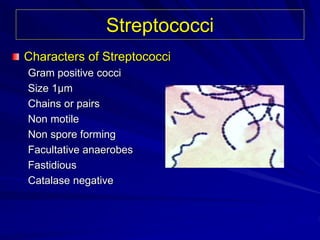
Characters of Streptococci
Gram positive cocci
Size 1µm
Chains or pairs
Non motile
Non spore forming
Facultative anaerobes
Fastidious
Catalase negative
Classification of Streptococci
According to:
– Oxygen requirement
Anaerobic (Peptostreptococcus)
Aerobic or facultative anaerobic (Streptococcus)
– Hemolysis on Blood Agar- α, β, Ƴ
– Lancefield classification- for β hemolytic
streptococci, based on C antigen
Hemolysis on Blood Agar
Hemolysis on BA
– -hemolysis
Partial hemolysis
Small zone
Viridans streptococci
Green discoloration around colonies
e.g. S. pneumoniae & S. viridans
– -hemolysis
Complete hemolysis
Clear zone of hemolysis around colonies
2-4mm zone
Hemolytic streptococci
e.g. Lancefield Group A & B (S. pyogenes & S. agalactiae)
– -hemolysis
No hemolysis
e.g. Group D (Enterococcus sp.)
Hemolysis on Blood agar
-hemolysis
-hemolysis
-hemolysis
Lancefield Classification- β hemolytic
Classification based on C- carbohydrate antigen of cell wall
20 Lancefield groups from A-H & K-V
One or more species per group
Group A- Further subdivided based on M, T, R protein
(Griffith typing) in to 80 sertypes
Streptococci
Group A
S. pyogenes
Group B
S. agalactiae
Group C
S. equisimitis
Group D
Enterococcus
Lanciefield classification
Other groups
(E-U)
A and O
Fibrin lysis
Dnase
RNase
A,B,C
Super antigen
TSS and scarlet fever
Antigens
Disease caused by S. pyogenes
(Group A)
Suppurative
Non-Invasive
Pharyngitis (Sore throat) - inflammation of the
pharynx, tonsillitis, otitis media, mastoiditis, rarely
meningitis
Pyoderma- Impetigo- localised pus-producing
lesions usually occur on face, arms, or legs
-
Suppurative
Invasive
Erysipelas- diffuse infection of skin, involves
superficial lymphatics. well demarcated borders
Cellulitis- infection of skin & subcutaneous tissue,
spreading
3. Necrotizing Fasciitis (Streptococcal Gangrene)—
This is infection of the subcutaneous tissues and fascia.There
is extensive and very rapidly spreading necrosis ofthe skin and
subcutaneous tissues
Puerperal Fever—If the streptococci enter the uterus after
delivery, puerperal fever develops, which is essentially a
septicemia originating in the infected wound (endometritis)
Bacteremia/Sepsis—Infection of traumatic or surgical
wounds with streptococci results in bacteremia
Toxin Mediated Diseases
Scarlet fever- rash begins on chest & spreads across body
Necrotizing fasciitis-Pyrogenic exotoxin produced by some
trains of S. pyogenes- Can lead to DIC.
Streptococcal Toxic Shock Syndrome
shock, bacteremia, respiratory failure, and multiorgan
failure
Scarlet fever
Pyrotoxin A-C
Skin rashes
Non Suppurative complications or sequelae
– Rheumatic fever: following pharyngitis
carditis, poly arthritis, damage to heart valves
fever, malaise, a migratory nonsuppurative polyarthritis,
and evidence of inflammation of all parts of the heart
(endocardium, myocardium, pericardium)
potentially fatal
– Acute Glomerulonephritits- following skin infection
Immune complex mediated disease
inflammation of glomeruli due to Ag-Ab complex deposit on
basement membrane
Clinically- Hematuria, Proteinuria, Hypertension
Good prognosis
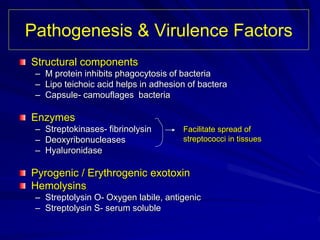
Pathogenesis & Virulence Factors
Structural components
– M protein inhibits phagocytosis of bacteria
– Lipo teichoic acid helps in adhesion of bactera
– Capsule- camouflages bacteria
Enzymes
– Streptokinases- fibrinolysin
– Deoxyribonucleases
– Hyaluronidase
Pyrogenic / Erythrogenic exotoxin
Hemolysins
– Streptolysin O- Oxygen labile, antigenic
– Streptolysin S- serum soluble
Facilitate spread of
streptococci in tissues
S.pneumoniae
Diagnosis
–
Acute infection – culture
–
Nonsuppurative complication – antibody
–
diagnosis
–
Presumptive – gram staining (Pus/CSF)
–
Sheep blood agar culture – hemolysis (-ve to
H.hemolyticus)
–
Rheumatic fever, glomerulonephritis – Ab to
toxin
–
Streptozyme test – passive hemagglutination
test
Prophylaxis
Prevention of rheumatic fever
Long term administration of penicillin
Prevents heart damage
Not applicable for glomerulonephritis
Treatment
Beta hemolytic group A- Penicillin G
Erythromycin and cephalexin – for allergic
Summary
Streptococcus general characters
Lancefield Classification
Toxins / Enzymes of S. pyogenes
Infections / Sequelae caused
Laboratory Diagnosis

Streptococcus

  • 1.
  • 2.
    Streptococci Characters of Streptococci Grampositive cocci Size 1µm Chains or pairs Non motile Non spore forming Facultative anaerobes Fastidious Catalase negative
  • 3.
    Classification of Streptococci Accordingto: – Oxygen requirement Anaerobic (Peptostreptococcus) Aerobic or facultative anaerobic (Streptococcus) – Hemolysis on Blood Agar- α, β, Ƴ – Lancefield classification- for β hemolytic streptococci, based on C antigen
  • 4.
    Hemolysis on BloodAgar Hemolysis on BA – -hemolysis Partial hemolysis Small zone Viridans streptococci Green discoloration around colonies e.g. S. pneumoniae & S. viridans – -hemolysis Complete hemolysis Clear zone of hemolysis around colonies 2-4mm zone Hemolytic streptococci e.g. Lancefield Group A & B (S. pyogenes & S. agalactiae) – -hemolysis No hemolysis e.g. Group D (Enterococcus sp.)
  • 5.
    Hemolysis on Bloodagar -hemolysis -hemolysis -hemolysis
  • 6.
    Lancefield Classification- βhemolytic Classification based on C- carbohydrate antigen of cell wall 20 Lancefield groups from A-H & K-V One or more species per group Group A- Further subdivided based on M, T, R protein (Griffith typing) in to 80 sertypes Streptococci Group A S. pyogenes Group B S. agalactiae Group C S. equisimitis Group D Enterococcus Lanciefield classification Other groups (E-U)
  • 7.
    A and O Fibrinlysis Dnase RNase A,B,C Super antigen TSS and scarlet fever Antigens
  • 8.
    Disease caused byS. pyogenes (Group A) Suppurative Non-Invasive Pharyngitis (Sore throat) - inflammation of the pharynx, tonsillitis, otitis media, mastoiditis, rarely meningitis Pyoderma- Impetigo- localised pus-producing lesions usually occur on face, arms, or legs -
  • 9.
    Suppurative Invasive Erysipelas- diffuse infectionof skin, involves superficial lymphatics. well demarcated borders Cellulitis- infection of skin & subcutaneous tissue, spreading 3. Necrotizing Fasciitis (Streptococcal Gangrene)— This is infection of the subcutaneous tissues and fascia.There is extensive and very rapidly spreading necrosis ofthe skin and subcutaneous tissues Puerperal Fever—If the streptococci enter the uterus after delivery, puerperal fever develops, which is essentially a septicemia originating in the infected wound (endometritis) Bacteremia/Sepsis—Infection of traumatic or surgical wounds with streptococci results in bacteremia
  • 10.
    Toxin Mediated Diseases Scarletfever- rash begins on chest & spreads across body Necrotizing fasciitis-Pyrogenic exotoxin produced by some trains of S. pyogenes- Can lead to DIC. Streptococcal Toxic Shock Syndrome shock, bacteremia, respiratory failure, and multiorgan failure
  • 11.
  • 12.
    Non Suppurative complicationsor sequelae – Rheumatic fever: following pharyngitis carditis, poly arthritis, damage to heart valves fever, malaise, a migratory nonsuppurative polyarthritis, and evidence of inflammation of all parts of the heart (endocardium, myocardium, pericardium) potentially fatal – Acute Glomerulonephritits- following skin infection Immune complex mediated disease inflammation of glomeruli due to Ag-Ab complex deposit on basement membrane Clinically- Hematuria, Proteinuria, Hypertension Good prognosis
  • 13.
    Pathogenesis & VirulenceFactors Structural components – M protein inhibits phagocytosis of bacteria – Lipo teichoic acid helps in adhesion of bactera – Capsule- camouflages bacteria Enzymes – Streptokinases- fibrinolysin – Deoxyribonucleases – Hyaluronidase Pyrogenic / Erythrogenic exotoxin Hemolysins – Streptolysin O- Oxygen labile, antigenic – Streptolysin S- serum soluble Facilitate spread of streptococci in tissues
  • 15.
  • 16.
    Diagnosis – Acute infection –culture – Nonsuppurative complication – antibody – diagnosis – Presumptive – gram staining (Pus/CSF) – Sheep blood agar culture – hemolysis (-ve to H.hemolyticus) – Rheumatic fever, glomerulonephritis – Ab to toxin – Streptozyme test – passive hemagglutination test
  • 17.
    Prophylaxis Prevention of rheumaticfever Long term administration of penicillin Prevents heart damage Not applicable for glomerulonephritis
  • 18.
    Treatment Beta hemolytic groupA- Penicillin G Erythromycin and cephalexin – for allergic
  • 19.
    Summary Streptococcus general characters LancefieldClassification Toxins / Enzymes of S. pyogenes Infections / Sequelae caused Laboratory Diagnosis