1
2
3
Qom University of Medical Sciences And Health Services
Medical School
Supervisor: Dr. Javad Khodadadi
Provisioner: Mohammad Mahdi Shater
Streptococcal Infections
4
Streptococcus
Streptos(like chain) + coccus(like Sphere)
• Many varieties of them are normal flora
• GAS , S.pyogenes:
one of the most common bacterial infections of
school-age children, post infectious syndromes of ARF
and PSGN.
• GBS, S. agalactiae:
cause of bacterial sepsis and meningitis in newborns
• Viridans streptococci:
are the most common cause of bacterial endocarditis
• Enterococci:
E. faecalis, E. faecium
5
Streptococcus
• Gram positive
• Most are facultative anaerobes, although some
are strict anaerobes
• fastidious
6
Streptococcus
7
Lancefield Classification
• a serologic grouping based on the reaction of
specific antisera with bacterial cell-wall
carbohydrate antigens
8
A,B,C,G/β
D/γ
variable/α
9
A,B,C,G/β D/γvariable/α
●
●
●
●
Group A Streptococci
• S.pyogenes
• 500,000 deaths per year
10
Group A Streptococci
• Virulence factor:
M-protein
Hyaluronic acid capsule
Streptolysins S and O
pyrogenic exotoxins(erythrogenic toxins)
11
CLINICAL
MANIFESTATIONS
12
Pharyngitis
Seen in patients of all ages
Respiratory droplets are the usual mechanism
of spread, other routes, including food-borne
outbreaks
13
A culture positive case of
streptococcal pharyngitis
with typical tonsillar
exudate in a 16 year old.
14
Pharyngitis
The incubation period is 1–4 days
Symptoms include:
 sore throat
 fever and chills
 malaise
sometimes abdominal complaints and
vomiting, particularly in children
Symptoms are mild to severe
sore throat fever and chills
malaise, fever and chills abdominal complaints & vomiting
15
16
17
18
19
the large tonsils with white
exudate.
the petechiae, or small red
spots, on the soft palate.
large tonsils in the back of the
throat covered in white
exudate.
Differential Diagnosis
• Viral infections is more probable if we see:
• conjunctivitis
• Coryza
• Cough
• hoarseness
• discrete ulcerative lesions of the buccal or
pharyngeal mucosa
20
21
22
Diagnose
• The throat culture remains the diagnostic gold standard
• Vigorous rubbing of a sterile swab over both tonsillar pillars
• Rapid diagnostic kits generally are >95% specific
• A negative result should be confirmed by throat culture
23
Complications
• uncommon with the widespread use of antibiotics
• spread of infection from the pharyngeal mucosa to deeper
tissues by direct extension or by the hematogenous or
lymphatic route
• Cervical lymphadenitis
• Peritonsillar or retropharyngeal abscess,
• Sinusitis
• Otitis media
• Meningitis
• Bacteremia
• Endocarditis
• Pneumonia
24
• ARF
• PSGN
The Asymptomatic Carrier State
• No symptoms with positive culture
25
26
Scarlet Fever
consists of streptococcal infection, usually
pharyngitis, accompanied by rash
streptococcal pyrogenic exotoxins A, B, and C
Susceptibility to scarlet fever was correlated
with results of the Dick test
scarlet fever rash may reflect a hypersensitivity
reaction
27
Scarlet Fever
Symptoms of pharyngitis
On the first or second day of illness over the
upper trunk
28
Scarlet Fever
Then involve back and abdomen
29
Scarlet Fever
spreading to involve the extremities but
sparing the palms and soles
30
Scarlet Fever
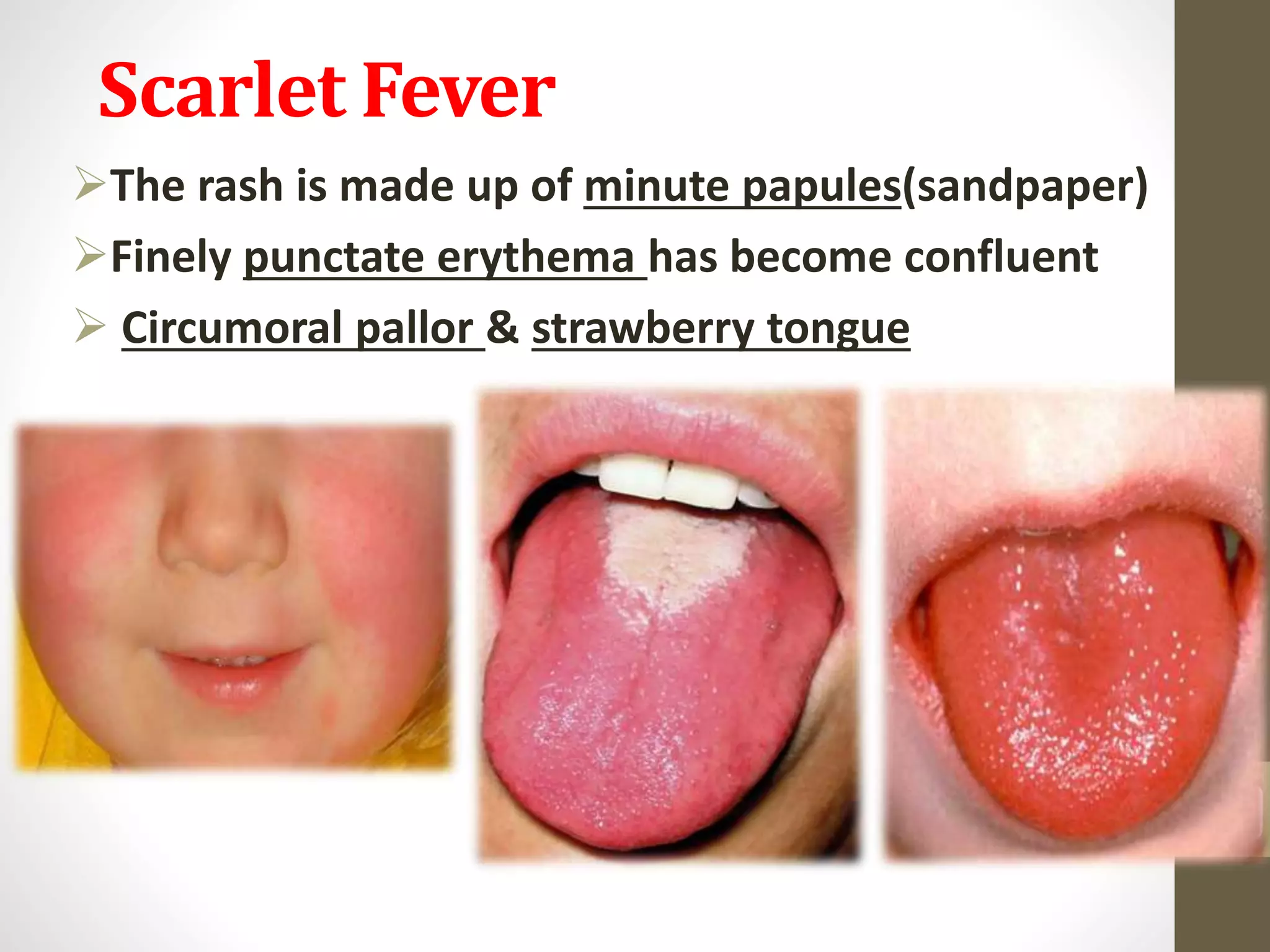
The rash is made up of minute papules(sandpaper)
Finely punctate erythema has become confluent
 Circumoral pallor & strawberry tongue
31
Scarlet Fever
Pastia’s line
32
Scarlet Fever
Subsidence of the rash in 6–9 days is followed after
several days by desquamation of the palms and soles
33
Differential Diagnosis
• Other causes of fever and generalized rash:
• Measles and other viral exanthems
• Kawasaki disease
• Toxic shock syndrome
• Systemic allergic reactions (e.g., drug eruptions).
34
35
Skin and Soft Tissue Infections
Impetigo(Pyoderma)
Cellulitis
36
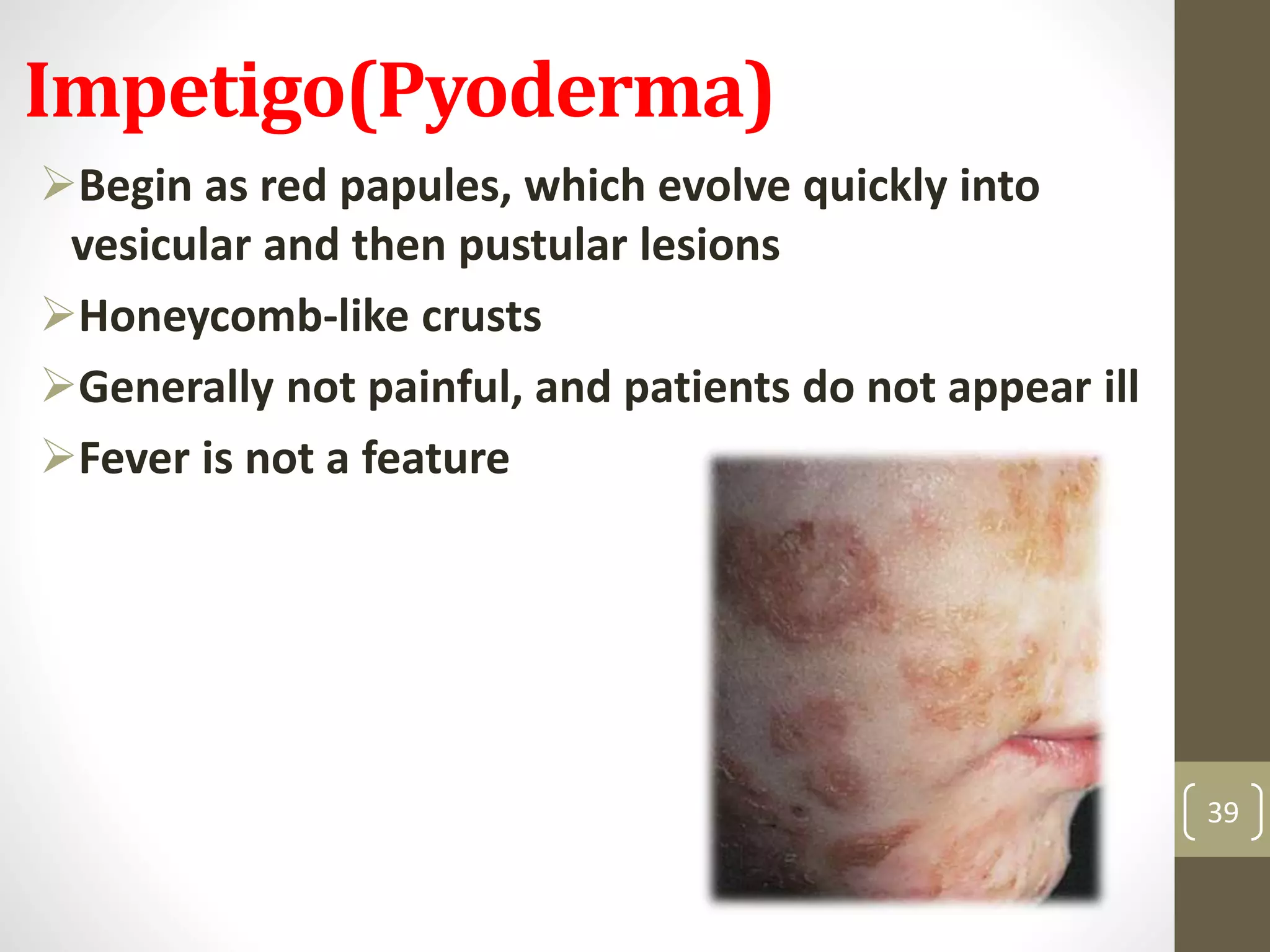
Impetigo(Pyoderma)
 a superficial infection of the skin
caused by GAS and or Staphylococcus aureus
most often in young children (poor hygiene)
Minor trauma, such as a scratch or an insect bite
usual sites of involvement are the face (particularly
around the nose and mouth) and the legs
37
38
39
Impetigo(Pyoderma)
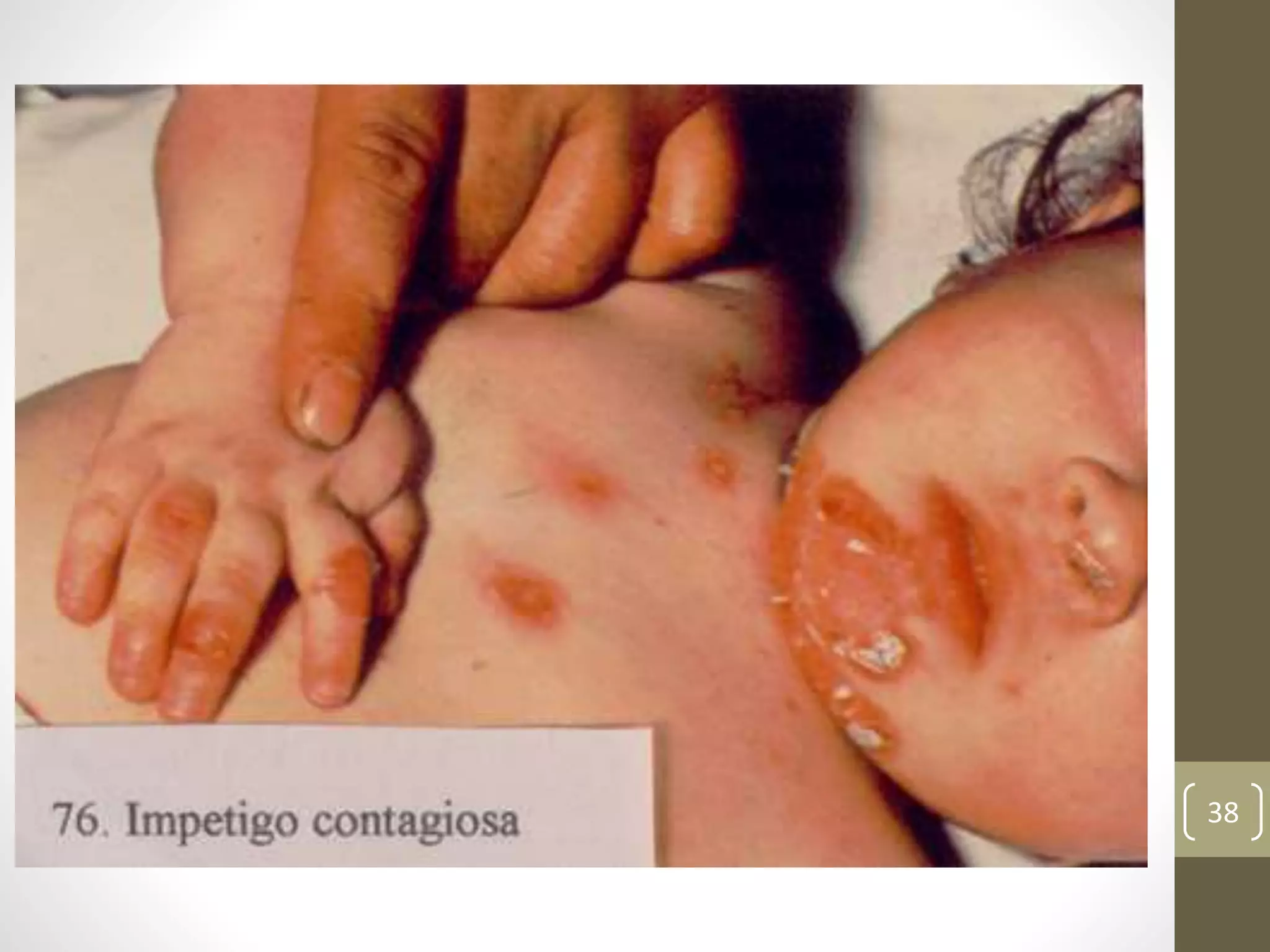
Begin as red papules, which evolve quickly into
vesicular and then pustular lesions
Honeycomb-like crusts
Generally not painful, and patients do not appear ill
Fever is not a feature
40
Differential Diagnosis
• Bullous impetigo due to S. aureus
more extensive & paper-like crusts
• herpetic lesions
more discrete, grouped vesicles
positive Tzanck test
• culture In difficult cases
41
Cellulitis
 Inoculation of organisms into the skin may lead to
cellulitis
infection involving the skin and subcutaneous
tissues
 may also be associated with lymphangitis
One form of streptococcal cellulitis, erysipelas
42
Erysipelas
a bright red swollen appearance of the involved skin
lesion is warm to the touch & may be tender
peau d'orange texture(involvement of superficial lymphatics)
superficial blebs(usually 2–3 days after onset)
Fever and chills
Most occur on the malar area of the face
43
44
45
Deep Soft-Tissue Infections
streptococcal myositis
Necrotizing fasciitis (hemolytic streptococcal
gangrene) involves the superficial and/or deep fascia
investing the muscles of an extremity or the trunk.
The source of the infection is the skin & bowel flora
Usually quite acute
Severe pain at the site of involvement
Malaise, fever, chills
Toxic appearance
the severity and extent of symptoms worsen
skin appearance(erythema and edema)
46
47
Pneumonia and Empyema
GAS is an occasional cause of pneumonia
Pleuritic chest pain
Fever & chills
Dyspnea
Cough is usually present
Pleural effusion(≈ one-half of patients and always infected )
Empyema fluid is usually visible by chest radiography
48
Bacteremia, Puerperal Sepsis
Bacteremia occurs rarely with otherwise
uncomplicated pharyngitis, occasionally with
cellulitis or pneumonia, and relatively frequently
with necrotizing fasciitis.
 raises the possibility of endocarditis, an occult
abscess, or osteomyelitis
49
Streptococcal Toxic Shock Syndrome
Shock with multisystem organ failure
Prevention
• No vaccine against GAS is commercially available
50
Streptococci of Groups C and G
• occasionally cause human infections similar to those
caused by GAS
• S. dysgalactiae
• Pharyngitis
• Pneumonia
• Bacteremia
• Endocarditis
• Septic arthritis
• Puerperal sepsis
• Cellulitis and soft-tissue infections
• Some of species of group C Lancefield are zoonotic and
acquired from contact with animals or unpasteurized milk
51
• Meningitis
• Epidural abscess
• Intraabdominal abscess
• Urinary tract infection
• Aneonatal sepsis
Group B Streptococci
• GBS major cause of sepsis and meningitis in human
neonates
• frequent cause of peripartum fever in women and an
occasional cause of serious infection in nonpregnant
adults
• S. agalactiae
52
Infection in Neonates
53
 Early-onset infections
 Late-onset infections
54
 Occur within the first week of life
 Acquired from the colonized maternal genital tract
 Prematurity and maternal risk factors (prolonged labor,
obstetric complications, and maternal fever)
 Presentation of neonatal sepsis
 Pneumonia respiratory distress
 Lethargy
 Hypotension
 Bacteremic
 Meningitis
Early-onset infections
55
 occur in infants 1 week to 3 months old
 acquired during delivery or during later contact with a
colonized mother, nursery personnel, or another source
 Meningitis is the most common manifestation
 fever, lethargy or irritability, poor feeding, and seizures
 Bacteremia, osteomyelitis, septic arthritis, and facial
cellulitis, submandibular or preauricular adenitis
Late-onset infections
56
 Identification of high-risk carrier mothers and treatment
with antibiotic or immunoprophylaxis
 Screening for anogenital colonization at 35–37 weeks of
pregnancy by a swab culture of the lower vagina and
anorectum
 Risk factors: preterm delivery, early rupture of
membranes (>24 h before delivery), prolonged labor,
fever, or chorioamnionitis
 Vaccine may be for future
Prevention
57
 Peripartum fever, the most common manifestation
 Related to symptoms of endometritis or chorioamnionitis
 transitory bacteremia, meningitis or endocarditis
 In old or chronic illness(diabetes mellitus or a malignancy):
 Cellulitis and soft tissue infection , UTI, pneumonia,
endocarditis, and septic arthritis meningitis, osteomyelitis,
and intraabdominal or pelvic abscesses
Infection in Adults
Nonenterococcal Group D Streptococci
• S.bovis (S.gallolyticus, S.infantarius, S.pasteurianus,
S.letetiensis)
• S. bovis endocarditis is often associated with
neoplasms of the GIT-most frequently, a colon
carcinoma or polyp-but is also reported in association
with other bowel lesions.
58
Viridans Streptococci
• S. salivarius, S. mitis, S. sanguis, and S. mutans
Normal flora of the mouth
Endocarditis
frequently in neutropenic patients, particularly after bone
marrow transplantation or high-dose chemotherapy for
cancer
sepsis syndrome with high fever and shock
59
60
Viridans Streptococci
• S. intermedius, S. anginosus, and S. constellatus
 abscesses of brain and abdominal viscera
 infections of oral cavity or respiratory tract
Other Streptococci
Abiotrophia & Granulicatella Species (Nutritionally
Variant Streptococci)
They cause infections like viridans Streptococci
S.suis cause meningitis in humans people that exposure
to pigs
S.iniae infected humans who have handled live or freshly
killed fish(Cellulitis, bacteremia, endocarditis)
61
62

Streptococcal infections

  • 1.
  • 2.
  • 3.
    3 Qom University ofMedical Sciences And Health Services Medical School Supervisor: Dr. Javad Khodadadi Provisioner: Mohammad Mahdi Shater Streptococcal Infections
  • 4.
  • 5.
    • Many varietiesof them are normal flora • GAS , S.pyogenes: one of the most common bacterial infections of school-age children, post infectious syndromes of ARF and PSGN. • GBS, S. agalactiae: cause of bacterial sepsis and meningitis in newborns • Viridans streptococci: are the most common cause of bacterial endocarditis • Enterococci: E. faecalis, E. faecium 5 Streptococcus
  • 6.
    • Gram positive •Most are facultative anaerobes, although some are strict anaerobes • fastidious 6 Streptococcus
  • 7.
  • 8.
    Lancefield Classification • aserologic grouping based on the reaction of specific antisera with bacterial cell-wall carbohydrate antigens 8 A,B,C,G/β D/γ variable/α
  • 9.
  • 10.
    Group A Streptococci •S.pyogenes • 500,000 deaths per year 10
  • 11.
    Group A Streptococci •Virulence factor: M-protein Hyaluronic acid capsule Streptolysins S and O pyrogenic exotoxins(erythrogenic toxins) 11
  • 12.
  • 13.
    Pharyngitis Seen in patientsof all ages Respiratory droplets are the usual mechanism of spread, other routes, including food-borne outbreaks 13 A culture positive case of streptococcal pharyngitis with typical tonsillar exudate in a 16 year old.
  • 14.
    14 Pharyngitis The incubation periodis 1–4 days Symptoms include:  sore throat  fever and chills  malaise sometimes abdominal complaints and vomiting, particularly in children Symptoms are mild to severe
  • 15.
    sore throat feverand chills malaise, fever and chills abdominal complaints & vomiting 15
  • 16.
  • 17.
  • 18.
  • 19.
    19 the large tonsilswith white exudate. the petechiae, or small red spots, on the soft palate. large tonsils in the back of the throat covered in white exudate.
  • 20.
    Differential Diagnosis • Viralinfections is more probable if we see: • conjunctivitis • Coryza • Cough • hoarseness • discrete ulcerative lesions of the buccal or pharyngeal mucosa 20
  • 21.
  • 22.
  • 23.
    Diagnose • The throatculture remains the diagnostic gold standard • Vigorous rubbing of a sterile swab over both tonsillar pillars • Rapid diagnostic kits generally are >95% specific • A negative result should be confirmed by throat culture 23
  • 24.
    Complications • uncommon withthe widespread use of antibiotics • spread of infection from the pharyngeal mucosa to deeper tissues by direct extension or by the hematogenous or lymphatic route • Cervical lymphadenitis • Peritonsillar or retropharyngeal abscess, • Sinusitis • Otitis media • Meningitis • Bacteremia • Endocarditis • Pneumonia 24 • ARF • PSGN
  • 25.
    The Asymptomatic CarrierState • No symptoms with positive culture 25
  • 26.
    26 Scarlet Fever consists ofstreptococcal infection, usually pharyngitis, accompanied by rash streptococcal pyrogenic exotoxins A, B, and C Susceptibility to scarlet fever was correlated with results of the Dick test scarlet fever rash may reflect a hypersensitivity reaction
  • 27.
    27 Scarlet Fever Symptoms ofpharyngitis On the first or second day of illness over the upper trunk
  • 28.
  • 29.
    29 Scarlet Fever spreading toinvolve the extremities but sparing the palms and soles
  • 30.
    30 Scarlet Fever The rashis made up of minute papules(sandpaper) Finely punctate erythema has become confluent  Circumoral pallor & strawberry tongue
  • 31.
  • 32.
    32 Scarlet Fever Subsidence ofthe rash in 6–9 days is followed after several days by desquamation of the palms and soles
  • 33.
    33 Differential Diagnosis • Othercauses of fever and generalized rash: • Measles and other viral exanthems • Kawasaki disease • Toxic shock syndrome • Systemic allergic reactions (e.g., drug eruptions).
  • 34.
  • 35.
    35 Skin and SoftTissue Infections Impetigo(Pyoderma) Cellulitis
  • 36.
    36 Impetigo(Pyoderma)  a superficialinfection of the skin caused by GAS and or Staphylococcus aureus most often in young children (poor hygiene) Minor trauma, such as a scratch or an insect bite usual sites of involvement are the face (particularly around the nose and mouth) and the legs
  • 37.
  • 38.
  • 39.
    39 Impetigo(Pyoderma) Begin as redpapules, which evolve quickly into vesicular and then pustular lesions Honeycomb-like crusts Generally not painful, and patients do not appear ill Fever is not a feature
  • 40.
    40 Differential Diagnosis • Bullousimpetigo due to S. aureus more extensive & paper-like crusts • herpetic lesions more discrete, grouped vesicles positive Tzanck test • culture In difficult cases
  • 41.
    41 Cellulitis  Inoculation oforganisms into the skin may lead to cellulitis infection involving the skin and subcutaneous tissues  may also be associated with lymphangitis One form of streptococcal cellulitis, erysipelas
  • 42.
    42 Erysipelas a bright redswollen appearance of the involved skin lesion is warm to the touch & may be tender peau d'orange texture(involvement of superficial lymphatics) superficial blebs(usually 2–3 days after onset) Fever and chills Most occur on the malar area of the face
  • 43.
  • 44.
  • 45.
    45 Deep Soft-Tissue Infections streptococcalmyositis Necrotizing fasciitis (hemolytic streptococcal gangrene) involves the superficial and/or deep fascia investing the muscles of an extremity or the trunk. The source of the infection is the skin & bowel flora Usually quite acute Severe pain at the site of involvement Malaise, fever, chills Toxic appearance the severity and extent of symptoms worsen skin appearance(erythema and edema)
  • 46.
  • 47.
    47 Pneumonia and Empyema GASis an occasional cause of pneumonia Pleuritic chest pain Fever & chills Dyspnea Cough is usually present Pleural effusion(≈ one-half of patients and always infected ) Empyema fluid is usually visible by chest radiography
  • 48.
    48 Bacteremia, Puerperal Sepsis Bacteremiaoccurs rarely with otherwise uncomplicated pharyngitis, occasionally with cellulitis or pneumonia, and relatively frequently with necrotizing fasciitis.  raises the possibility of endocarditis, an occult abscess, or osteomyelitis
  • 49.
    49 Streptococcal Toxic ShockSyndrome Shock with multisystem organ failure
  • 50.
    Prevention • No vaccineagainst GAS is commercially available 50
  • 51.
    Streptococci of GroupsC and G • occasionally cause human infections similar to those caused by GAS • S. dysgalactiae • Pharyngitis • Pneumonia • Bacteremia • Endocarditis • Septic arthritis • Puerperal sepsis • Cellulitis and soft-tissue infections • Some of species of group C Lancefield are zoonotic and acquired from contact with animals or unpasteurized milk 51 • Meningitis • Epidural abscess • Intraabdominal abscess • Urinary tract infection • Aneonatal sepsis
  • 52.
    Group B Streptococci •GBS major cause of sepsis and meningitis in human neonates • frequent cause of peripartum fever in women and an occasional cause of serious infection in nonpregnant adults • S. agalactiae 52
  • 53.
    Infection in Neonates 53 Early-onset infections  Late-onset infections
  • 54.
    54  Occur withinthe first week of life  Acquired from the colonized maternal genital tract  Prematurity and maternal risk factors (prolonged labor, obstetric complications, and maternal fever)  Presentation of neonatal sepsis  Pneumonia respiratory distress  Lethargy  Hypotension  Bacteremic  Meningitis Early-onset infections
  • 55.
    55  occur ininfants 1 week to 3 months old  acquired during delivery or during later contact with a colonized mother, nursery personnel, or another source  Meningitis is the most common manifestation  fever, lethargy or irritability, poor feeding, and seizures  Bacteremia, osteomyelitis, septic arthritis, and facial cellulitis, submandibular or preauricular adenitis Late-onset infections
  • 56.
    56  Identification ofhigh-risk carrier mothers and treatment with antibiotic or immunoprophylaxis  Screening for anogenital colonization at 35–37 weeks of pregnancy by a swab culture of the lower vagina and anorectum  Risk factors: preterm delivery, early rupture of membranes (>24 h before delivery), prolonged labor, fever, or chorioamnionitis  Vaccine may be for future Prevention
  • 57.
    57  Peripartum fever,the most common manifestation  Related to symptoms of endometritis or chorioamnionitis  transitory bacteremia, meningitis or endocarditis  In old or chronic illness(diabetes mellitus or a malignancy):  Cellulitis and soft tissue infection , UTI, pneumonia, endocarditis, and septic arthritis meningitis, osteomyelitis, and intraabdominal or pelvic abscesses Infection in Adults
  • 58.
    Nonenterococcal Group DStreptococci • S.bovis (S.gallolyticus, S.infantarius, S.pasteurianus, S.letetiensis) • S. bovis endocarditis is often associated with neoplasms of the GIT-most frequently, a colon carcinoma or polyp-but is also reported in association with other bowel lesions. 58
  • 59.
    Viridans Streptococci • S.salivarius, S. mitis, S. sanguis, and S. mutans Normal flora of the mouth Endocarditis frequently in neutropenic patients, particularly after bone marrow transplantation or high-dose chemotherapy for cancer sepsis syndrome with high fever and shock 59
  • 60.
    60 Viridans Streptococci • S.intermedius, S. anginosus, and S. constellatus  abscesses of brain and abdominal viscera  infections of oral cavity or respiratory tract
  • 61.
    Other Streptococci Abiotrophia &Granulicatella Species (Nutritionally Variant Streptococci) They cause infections like viridans Streptococci S.suis cause meningitis in humans people that exposure to pigs S.iniae infected humans who have handled live or freshly killed fish(Cellulitis, bacteremia, endocarditis) 61
  • 62.