STREPTOCOCCUS
INFECTION
By,
ARSHIDA NESLIN P.A
• Streptococci are also gram-positive cocci but unlike
staphylococci, they are more known for their non-
suppurative autoimmune complications than
suppurative inflammatory responses.
Streptococcal infections occur throughout the world
but their problems are greater in underprivileged
populations where antibiotics are not instituted
readily.
CLASSIFICATION
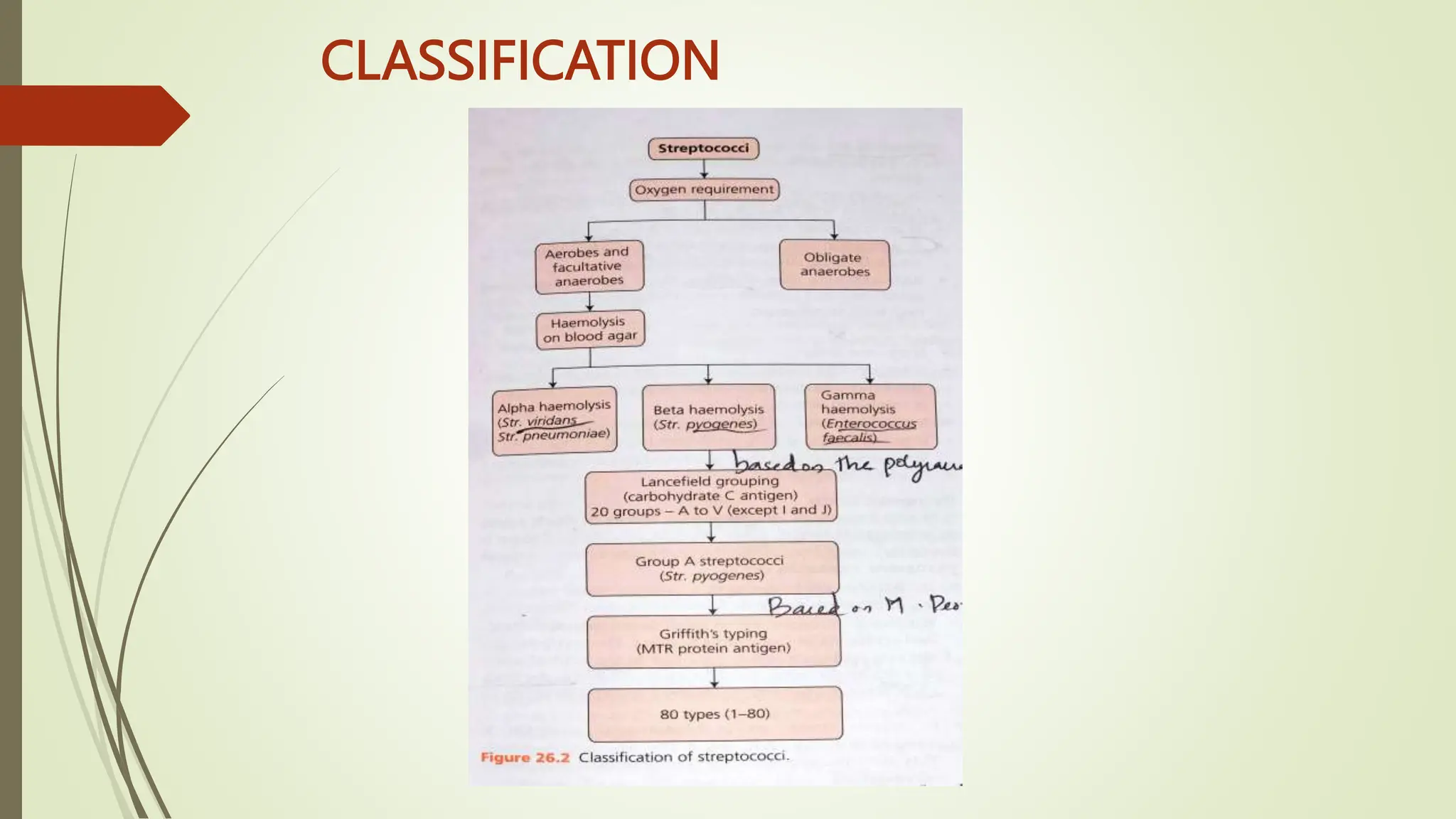
1. Group A or Streptococcus pyogenes, also called
ẞ-haemolyticstreptococci, are involved in causing
upper respiratory tract infection and cutaneous
infections (erysipelas). In addition, ẞ-haemolytic
streptococci are involved in autoimmune reactions
in the form of rheumatic heart disease (RHD).
 2 . Group B or Streptococcus agalactiae produces
infections in the newborn and is involved in non-
suppurative post-streptococcal site of complications such as
RHD and acute glomerulonephritis.
 3.Group C and G streptococci are responsible for
respiratory infections.
 4. Group D or Streptococcus faecalis, also called
enterococci are important in causation of urinary tract
infection, bacterial endocarditis, septicaemia etc.
 5. Untypablea-haemolytic streptococci such as
Streptococcus viridans constitute the normal flora of the
mouth and may cause bacterial endocarditis.
 6. Pneumoconiosis or Streptococcus pneumonia are
agents for bacterial pneumonia,meningitis and septicaemia.
 Cellulitis: An infection that targets tissues deep beneath your skin.
 Erysipelas: An infection that targets the top layers of skin.
 Impetigo: Sores and blisters that form near your mouth and nose or on your
arms and legs.
 Sore throat: Pain and discomfort in your throat.
 Strep throat: An infection in your throat and tonsils.
Group A streptococcal infections
Mild illness:-
Erysipelas
Impetigo
• Severe illness:-
. Scarlet fever
. Rheumatic fever
. Flesh eating disease
SCARLET FEVER
. Scarlet fever is an infection that causes a sore throat and a rash.
• It occurs commonly in Children.
• It has a sudden onset and the more severe cases
present with a sore throat, shivering, pyrexia,
headache and vomiting.
SIGHS AND SYMPTOMS
 Scarlet fever usually starts with a sudden fever associated with sore throat,
swollen neck glands, headache, nausea, vomiting, loss of appetite, swollen
and red strawberry tongue, abdominal pain, body aches, and malaise.
 The characteristic rash appears 12-48 hours after the start of the fever. The
rash usually starts below the ears, neck, chest, armpits and groin before
spreading to the rest of the body over 24 hours.
 The classic scarlet fever rash initially appears as tiny red papules on the
chest and abdomen. Papules may then spread over the body. The rash
resembles sunburn, feels like rough sandpaper, and lasts about 2 to 5 days.
Strawberry tongue Sandpaper rush
TREATMENT
 The treatment of scarlet fever normally involves a 10-day course of oral
antibiotics, usually penicillin.
 Patients who are allergic to penicillin may take erythromycin or another
antibiotic instead.

 It is also important that the patient drinks plenty of liquids, especially if
there is a loss of appetite.
Rheumatic fever
 It is an inflammatory disorder, occurs in < 3% of patients in the weeks after
untreated GABHS pharyngitisto due to Streptococcus pyogenes.
 Acute rheumatic fever is usually characterized by fever and affects multiple organ
systems.
 Rheumatic fever causes inflammation, especially of the heart, blood vessels and
joints.
 Pencilling prophylaxis is essential.
FLESH EATING DISEASE
 Also called: Necrotizing fasciitis.
 A serious bacterial infection that destroys the tissue under the skin very
rapidly.
 Flesh-eating disease occurs when bacteria enter the body through a break
in the skin. People with a weakened immune system can be at greater risk
of developing this condition.
PATHOGENISIS
• Suppurative diseases:
1. Respiratory infections
2. Skin and soft tissue infections
3. Genital infections
Non suppurative :
1. Acute rheumatic fever
2. Acute glomerulonephritis
Respiratory infections:
• Primary site – throat
• Adherence – by pili
• Tonsillitis
• Pharyngitis
• Streptococcal pneumonia
Skin and soft tissue infections:
. Cellulitis
• Septicemia
• Erysipelas
• Impetigo
Genital infections:
• Normal inhabitants of the female genitalia
• Puerperal sepsis
Acute glomerulonephritis:
 Less frequent consequence of streptococcal infection.
 Produced by group A and some group C streptococci.
 Pathogenesis is due to antigenic cross-reaction between the
glomerular membrane antigen and the cell membranes of
nephrogenic streptococci.
PREVENTION:
 Wash your hands. Proper hand-washing is the best way to
prevent all kinds of infections.
 Cover your mouth especially after cough or sneeze.
 Don’t share personal items. Don’t share drinking glasses or
eating utensils.
🇹🇭🇦🇳🇰 🇾🇴🇺

Streptococcus infections ppt download free

  • 1.
  • 2.
    • Streptococci arealso gram-positive cocci but unlike staphylococci, they are more known for their non- suppurative autoimmune complications than suppurative inflammatory responses. Streptococcal infections occur throughout the world but their problems are greater in underprivileged populations where antibiotics are not instituted readily.
  • 3.
  • 5.
    1. Group Aor Streptococcus pyogenes, also called ẞ-haemolyticstreptococci, are involved in causing upper respiratory tract infection and cutaneous infections (erysipelas). In addition, ẞ-haemolytic streptococci are involved in autoimmune reactions in the form of rheumatic heart disease (RHD).
  • 6.
     2 .Group B or Streptococcus agalactiae produces infections in the newborn and is involved in non- suppurative post-streptococcal site of complications such as RHD and acute glomerulonephritis.  3.Group C and G streptococci are responsible for respiratory infections.  4. Group D or Streptococcus faecalis, also called enterococci are important in causation of urinary tract infection, bacterial endocarditis, septicaemia etc.
  • 7.
     5. Untypablea-haemolyticstreptococci such as Streptococcus viridans constitute the normal flora of the mouth and may cause bacterial endocarditis.  6. Pneumoconiosis or Streptococcus pneumonia are agents for bacterial pneumonia,meningitis and septicaemia.
  • 9.
     Cellulitis: Aninfection that targets tissues deep beneath your skin.  Erysipelas: An infection that targets the top layers of skin.  Impetigo: Sores and blisters that form near your mouth and nose or on your arms and legs.  Sore throat: Pain and discomfort in your throat.  Strep throat: An infection in your throat and tonsils. Group A streptococcal infections Mild illness:-
  • 11.
  • 12.
    • Severe illness:- .Scarlet fever . Rheumatic fever . Flesh eating disease
  • 13.
    SCARLET FEVER . Scarletfever is an infection that causes a sore throat and a rash. • It occurs commonly in Children. • It has a sudden onset and the more severe cases present with a sore throat, shivering, pyrexia, headache and vomiting.
  • 14.
    SIGHS AND SYMPTOMS Scarlet fever usually starts with a sudden fever associated with sore throat, swollen neck glands, headache, nausea, vomiting, loss of appetite, swollen and red strawberry tongue, abdominal pain, body aches, and malaise.  The characteristic rash appears 12-48 hours after the start of the fever. The rash usually starts below the ears, neck, chest, armpits and groin before spreading to the rest of the body over 24 hours.  The classic scarlet fever rash initially appears as tiny red papules on the chest and abdomen. Papules may then spread over the body. The rash resembles sunburn, feels like rough sandpaper, and lasts about 2 to 5 days.
  • 15.
  • 16.
    TREATMENT  The treatmentof scarlet fever normally involves a 10-day course of oral antibiotics, usually penicillin.  Patients who are allergic to penicillin may take erythromycin or another antibiotic instead.   It is also important that the patient drinks plenty of liquids, especially if there is a loss of appetite.
  • 17.
    Rheumatic fever  Itis an inflammatory disorder, occurs in < 3% of patients in the weeks after untreated GABHS pharyngitisto due to Streptococcus pyogenes.  Acute rheumatic fever is usually characterized by fever and affects multiple organ systems.  Rheumatic fever causes inflammation, especially of the heart, blood vessels and joints.  Pencilling prophylaxis is essential.
  • 18.
    FLESH EATING DISEASE Also called: Necrotizing fasciitis.  A serious bacterial infection that destroys the tissue under the skin very rapidly.  Flesh-eating disease occurs when bacteria enter the body through a break in the skin. People with a weakened immune system can be at greater risk of developing this condition.
  • 20.
    PATHOGENISIS • Suppurative diseases: 1.Respiratory infections 2. Skin and soft tissue infections 3. Genital infections Non suppurative : 1. Acute rheumatic fever 2. Acute glomerulonephritis
  • 21.
    Respiratory infections: • Primarysite – throat • Adherence – by pili • Tonsillitis • Pharyngitis • Streptococcal pneumonia
  • 22.
    Skin and softtissue infections: . Cellulitis • Septicemia • Erysipelas • Impetigo Genital infections: • Normal inhabitants of the female genitalia • Puerperal sepsis
  • 23.
    Acute glomerulonephritis:  Lessfrequent consequence of streptococcal infection.  Produced by group A and some group C streptococci.  Pathogenesis is due to antigenic cross-reaction between the glomerular membrane antigen and the cell membranes of nephrogenic streptococci.
  • 25.
    PREVENTION:  Wash yourhands. Proper hand-washing is the best way to prevent all kinds of infections.  Cover your mouth especially after cough or sneeze.  Don’t share personal items. Don’t share drinking glasses or eating utensils.
  • 26.