SUMITTED TO: SUBMITTED BY:
Prof. (Dr.) K. V. S. Rao Shiv Shanker
Prof. & Head 15/947
DEPARTMENT OF RENEWABLE ENERGY
RAJASTHAN TECHNICAL UNIVERSITY, KOTA
 Introduction
 Types
 Fire-Tube boilers
 Water-Tube boilers
 Diff b/w fire-tube boiler &water-tube boiler
2
 A Steam Generator generate steam at desired rate at the desired pressure and
temperature.
 The steam generation is done by burning fuel in the furnace .
 A steam generator is a complex integration of furnance, superheater, reheater,
boiler or evaporator, economiser and air preheater along with various
auxiliaries such as pulverizers, burners, fans, stokers, dust collectors and
precipitators, ash-handing equipment, and chimney or stack.
3
1. On the basis of flows of fuel gases and water:
 Fire-Tube Boilers(P=18bar)
 Water-Tube Boilers(P=180bar)
2. From the point of view of applications:
 Utility steam generators (P=130-180bar)
 Industrial steam generators (P=5-105bar)
 Marine steam generators(P=60-65bar)
4
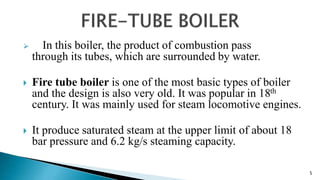
 In this boiler, the product of combustion pass
through its tubes, which are surrounded by water.
 Fire tube boiler is one of the most basic types of boiler
and the design is also very old. It was popular in 18th
century. It was mainly used for steam locomotive engines.
 It produce saturated steam at the upper limit of about 18
bar pressure and 6.2 kg/s steaming capacity.
5
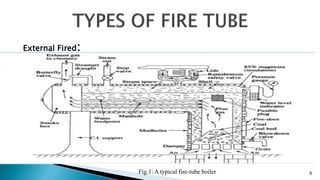
External Fired:
6Fig.1: A typical fire-tube boiler
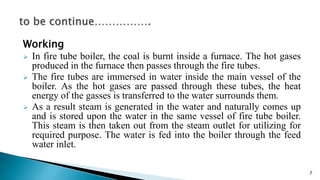
Working
 In fire tube boiler, the coal is burnt inside a furnace. The hot gases
produced in the furnace then passes through the fire tubes.
 The fire tubes are immersed in water inside the main vessel of the
boiler. As the hot gases are passed through these tubes, the heat
energy of the gasses is transferred to the water surrounds them.
 As a result steam is generated in the water and naturally comes up
and is stored upon the water in the same vessel of fire tube boiler.
This steam is then taken out from the steam outlet for utilizing for
required purpose. The water is fed into the boiler through the feed
water inlet.
7
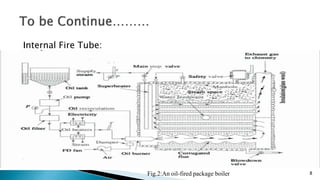
Internal Fire Tube:
8Fig.2:An oil-fired package boiler
Working
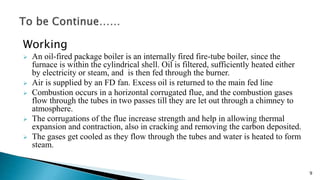
 An oil-fired package boiler is an internally fired fire-tube boiler, since the
furnace is within the cylindrical shell. Oil is filtered, sufficiently heated either
by electricity or steam, and is then fed through the burner.
 Air is supplied by an FD fan. Excess oil is returned to the main fed line
 Combustion occurs in a horizontal corrugated flue, and the combustion gases
flow through the tubes in two passes till they are let out through a chimney to
atmosphere.
 The corrugations of the flue increase strength and help in allowing thermal
expansion and contraction, also in cracking and removing the carbon deposited.
 The gases get cooled as they flow through the tubes and water is heated to form
steam.
9
Advantages:
 Low installation cost
 Reliability in operation
 Need of only unskilled labour
 Quick response to load changes
Disadvantages
 As the water required for operation of the boiler is quite large, it requires
long time for rising steam at desired pressure.
 As the water and steam are in same vessel the very high pressure of steam
is not possible.
 The steam received from fire tube boiler is not very dry.
10
 Water-tube boilers were developed to permit increases in
boiler pressure and capacity with reasonable metal
stresses.
 In water tube boilers, water flows through the tubes and
flue gases flow outside them. Puts the pressure in the
tubes and the relatively small diameter drums, which are
capable of withstanding extreme pressures of the modern
steam generator.
11
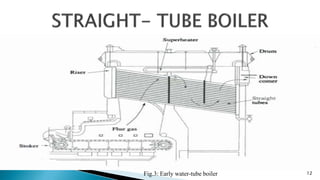
12Fig.3: Early water-tube boiler
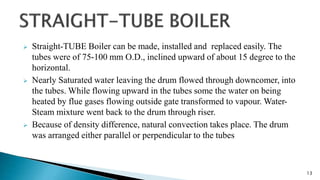
 Straight-TUBE Boiler can be made, installed and replaced easily. The
tubes were of 75-100 mm O.D., inclined upward of about 15 degree to the
horizontal.
 Nearly Saturated water leaving the drum flowed through downcomer, into
the tubes. While flowing upward in the tubes some the water on being
heated by flue gases flowing outside gate transformed to vapour. Water-
Steam mixture went back to the drum through riser.
 Because of density difference, natural convection takes place. The drum
was arranged either parallel or perpendicular to the tubes
13
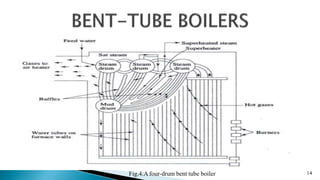
14Fig.4:A four-drum bent tube boiler
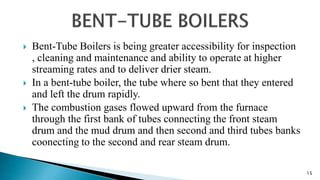
 Bent-Tube Boilers is being greater accessibility for inspection
, cleaning and maintenance and ability to operate at higher
streaming rates and to deliver drier steam.
 In a bent-tube boiler, the tube where so bent that they entered
and left the drum rapidly.
 The combustion gases flowed upward from the furnace
through the first bank of tubes connecting the front steam
drum and the mud drum and then second and third tubes banks
coonecting to the second and rear steam drum.
15
16
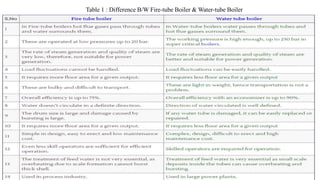
Table 1 : Difference B/W Fire-tube Boiler & Water-tube Boiler
THANK YOU
17

Steam generator & its type.

  • 1.
    SUMITTED TO: SUBMITTEDBY: Prof. (Dr.) K. V. S. Rao Shiv Shanker Prof. & Head 15/947 DEPARTMENT OF RENEWABLE ENERGY RAJASTHAN TECHNICAL UNIVERSITY, KOTA
  • 2.
     Introduction  Types Fire-Tube boilers  Water-Tube boilers  Diff b/w fire-tube boiler &water-tube boiler 2
  • 3.
     A SteamGenerator generate steam at desired rate at the desired pressure and temperature.  The steam generation is done by burning fuel in the furnace .  A steam generator is a complex integration of furnance, superheater, reheater, boiler or evaporator, economiser and air preheater along with various auxiliaries such as pulverizers, burners, fans, stokers, dust collectors and precipitators, ash-handing equipment, and chimney or stack. 3
  • 4.
    1. On thebasis of flows of fuel gases and water:  Fire-Tube Boilers(P=18bar)  Water-Tube Boilers(P=180bar) 2. From the point of view of applications:  Utility steam generators (P=130-180bar)  Industrial steam generators (P=5-105bar)  Marine steam generators(P=60-65bar) 4
  • 5.
     In thisboiler, the product of combustion pass through its tubes, which are surrounded by water.  Fire tube boiler is one of the most basic types of boiler and the design is also very old. It was popular in 18th century. It was mainly used for steam locomotive engines.  It produce saturated steam at the upper limit of about 18 bar pressure and 6.2 kg/s steaming capacity. 5
  • 6.
    External Fired: 6Fig.1: Atypical fire-tube boiler
  • 7.
    Working  In firetube boiler, the coal is burnt inside a furnace. The hot gases produced in the furnace then passes through the fire tubes.  The fire tubes are immersed in water inside the main vessel of the boiler. As the hot gases are passed through these tubes, the heat energy of the gasses is transferred to the water surrounds them.  As a result steam is generated in the water and naturally comes up and is stored upon the water in the same vessel of fire tube boiler. This steam is then taken out from the steam outlet for utilizing for required purpose. The water is fed into the boiler through the feed water inlet. 7
  • 8.
    Internal Fire Tube: 8Fig.2:Anoil-fired package boiler
  • 9.
    Working  An oil-firedpackage boiler is an internally fired fire-tube boiler, since the furnace is within the cylindrical shell. Oil is filtered, sufficiently heated either by electricity or steam, and is then fed through the burner.  Air is supplied by an FD fan. Excess oil is returned to the main fed line  Combustion occurs in a horizontal corrugated flue, and the combustion gases flow through the tubes in two passes till they are let out through a chimney to atmosphere.  The corrugations of the flue increase strength and help in allowing thermal expansion and contraction, also in cracking and removing the carbon deposited.  The gases get cooled as they flow through the tubes and water is heated to form steam. 9
  • 10.
    Advantages:  Low installationcost  Reliability in operation  Need of only unskilled labour  Quick response to load changes Disadvantages  As the water required for operation of the boiler is quite large, it requires long time for rising steam at desired pressure.  As the water and steam are in same vessel the very high pressure of steam is not possible.  The steam received from fire tube boiler is not very dry. 10
  • 11.
     Water-tube boilerswere developed to permit increases in boiler pressure and capacity with reasonable metal stresses.  In water tube boilers, water flows through the tubes and flue gases flow outside them. Puts the pressure in the tubes and the relatively small diameter drums, which are capable of withstanding extreme pressures of the modern steam generator. 11
  • 12.
  • 13.
     Straight-TUBE Boilercan be made, installed and replaced easily. The tubes were of 75-100 mm O.D., inclined upward of about 15 degree to the horizontal.  Nearly Saturated water leaving the drum flowed through downcomer, into the tubes. While flowing upward in the tubes some the water on being heated by flue gases flowing outside gate transformed to vapour. Water- Steam mixture went back to the drum through riser.  Because of density difference, natural convection takes place. The drum was arranged either parallel or perpendicular to the tubes 13
  • 14.
  • 15.
     Bent-Tube Boilersis being greater accessibility for inspection , cleaning and maintenance and ability to operate at higher streaming rates and to deliver drier steam.  In a bent-tube boiler, the tube where so bent that they entered and left the drum rapidly.  The combustion gases flowed upward from the furnace through the first bank of tubes connecting the front steam drum and the mud drum and then second and third tubes banks coonecting to the second and rear steam drum. 15
  • 16.
    16 Table 1 :Difference B/W Fire-tube Boiler & Water-tube Boiler
  • 17.