Water Tube Boilers
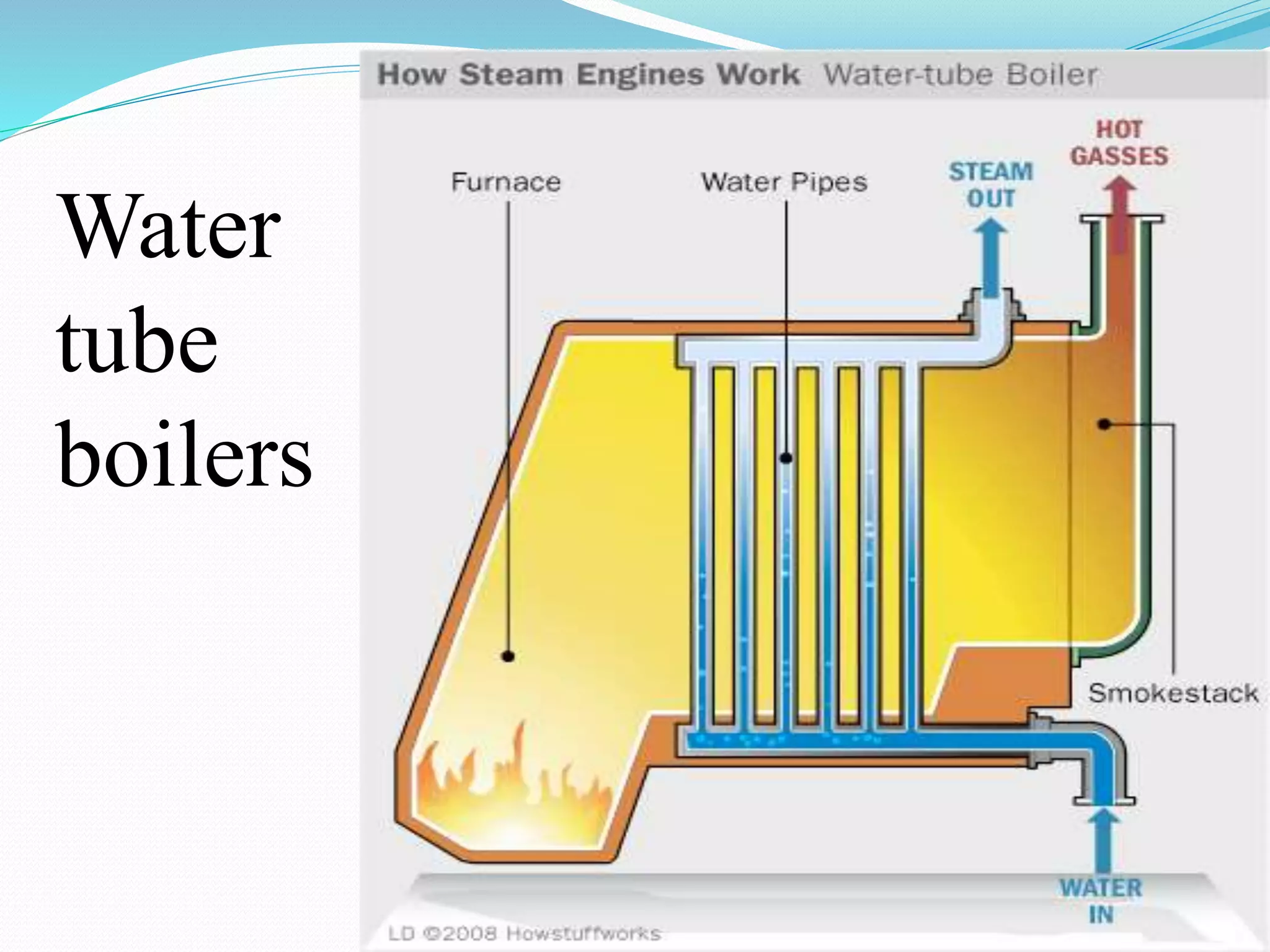
 In this type of boiler water passes through the tubes while the
gases remain in the shell side, passing over the tube surfaces
• Used for high steam demand and pressure requirements
• Capacity range of 4,000 – 120,000 kg/hour
Water
tube
boilers
Difference bw water tube & fire
tube boiler
 Water tube.
 Water circulate inside the tubes.
 Steam generation capacity is high.
 Higher efficiency.
 It has greater heating surface.
 Its cleaning is easy.
 Its shape is drum type.
 Each type of fuel is burned in it.
 Transportation is easy from one place to other.
Fire tube boiler
 Fire circulate inside the tubes.
 Steam generation capacity is lower then water tube.
 Lower efficiency.
 Shell type.
 Complicated in design.
 Heating surface is less.
 Cleaning is difficult.
 Specific fuel is used.
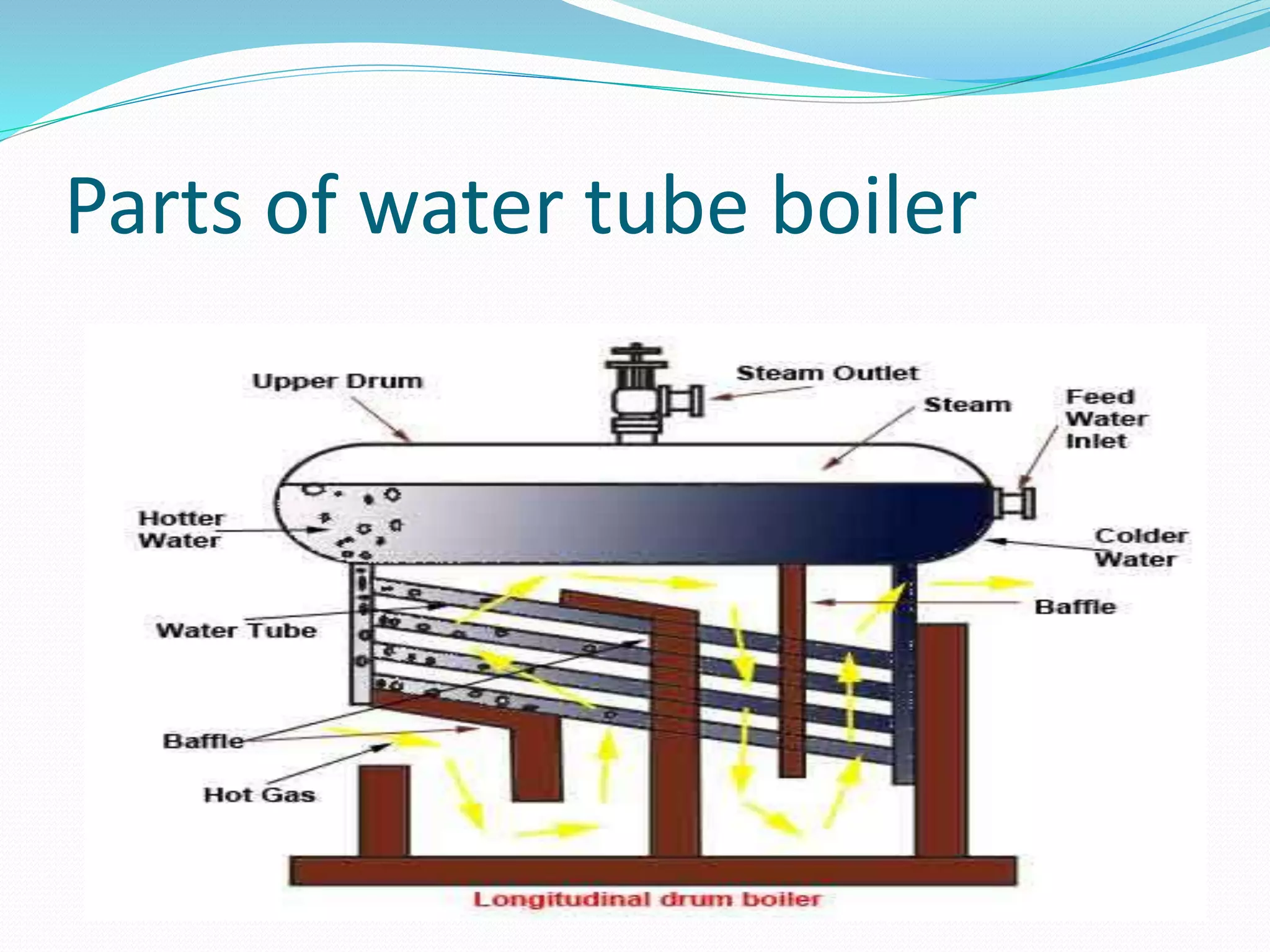
Parts of water tube boiler
BOILER MAIN COMPONENTS
 BOILER SHELL- The outer
cylindrical portion of a pressure vessel.
 BURNER - A device for the
introduction of fuel and air into a
furnace at the desired velocitie.The
burner is the principal device for the
firing of oil and/or gas.
BOILER MAIN COMPONENTS
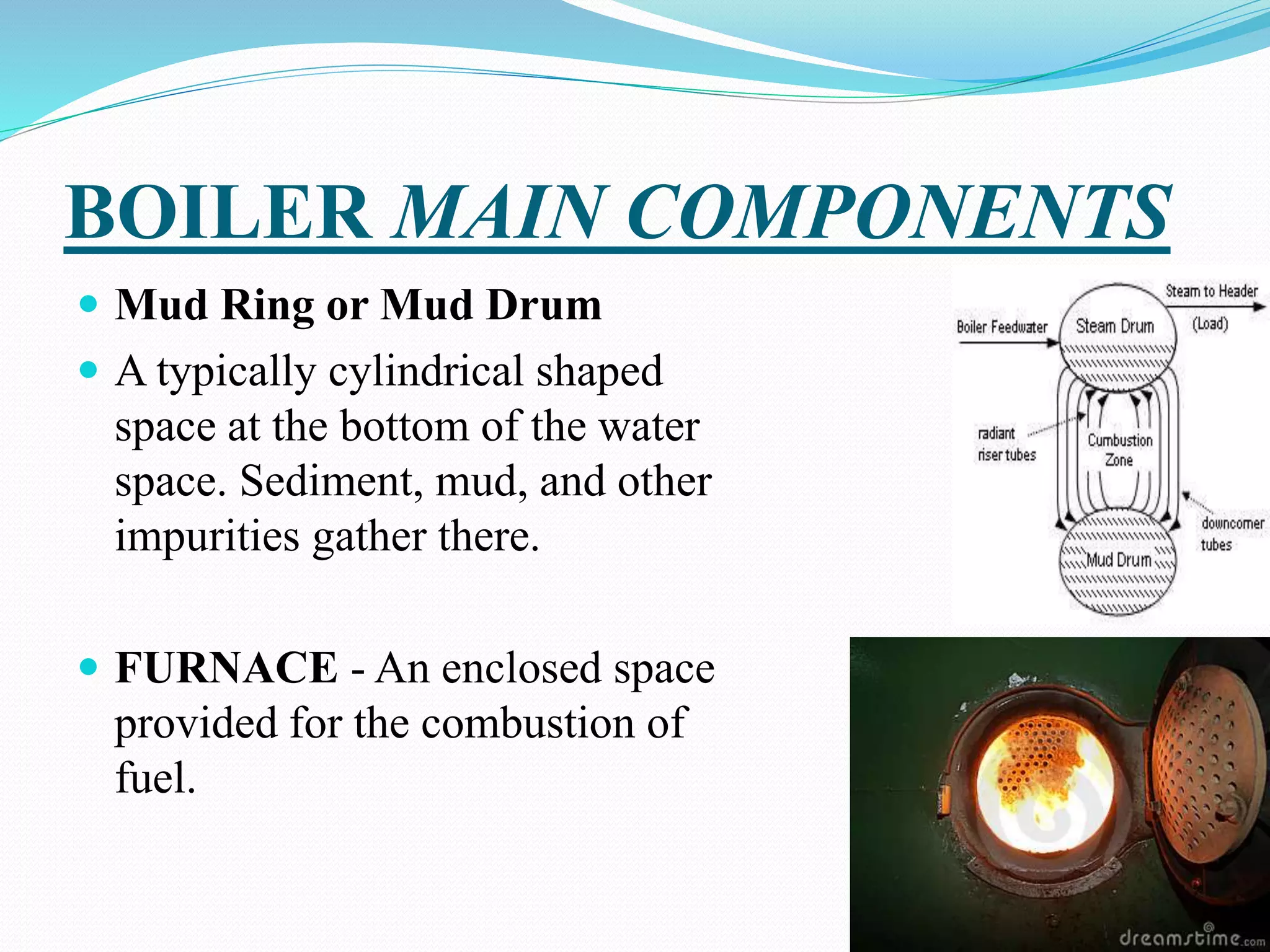
 Mud Ring or Mud Drum
 A typically cylindrical shaped
space at the bottom of the water
space. Sediment, mud, and other
impurities gather there.
 FURNACE - An enclosed space
provided for the combustion of
fuel.
BOILER MAIN COMPONENTS
 SAFETY VALVE - A spring loaded
valve that automatically opens when
pressure attains the valve setting.
Used to prevent excessive pressure
from building up in a boiler.
BOILER MAIN
COMPONENTS
 STRAINER - A device, such as
a filter, to retain solid particles
allowing a liquid to pass.
 SIGHT GLASS- A glass tube
used on steam boilers to give a
visible indication of the boiler's
water level
BOILER MAIN COMPONENTS
 Feed Check Valve. The
high pressure feed water is
supplied to the boiler
through this valve. This
valve opens towards the
boiler only and feeds the
water to the boiler.
 Steam Stop Valve.
 It regulates the flow of
steam supply outside.
Type of water tube boiler
 Simple vertical boiler
 A vertical boiler is a type of water-
tube boiler where the boiler barrel
is oriented vertically instead of the
more common horizontal
orientation. Vertical boilers were
used for a variety of steam-
powered vehicles and other mobile
machines, including early steam
locomotives.
Type of water tube boiler
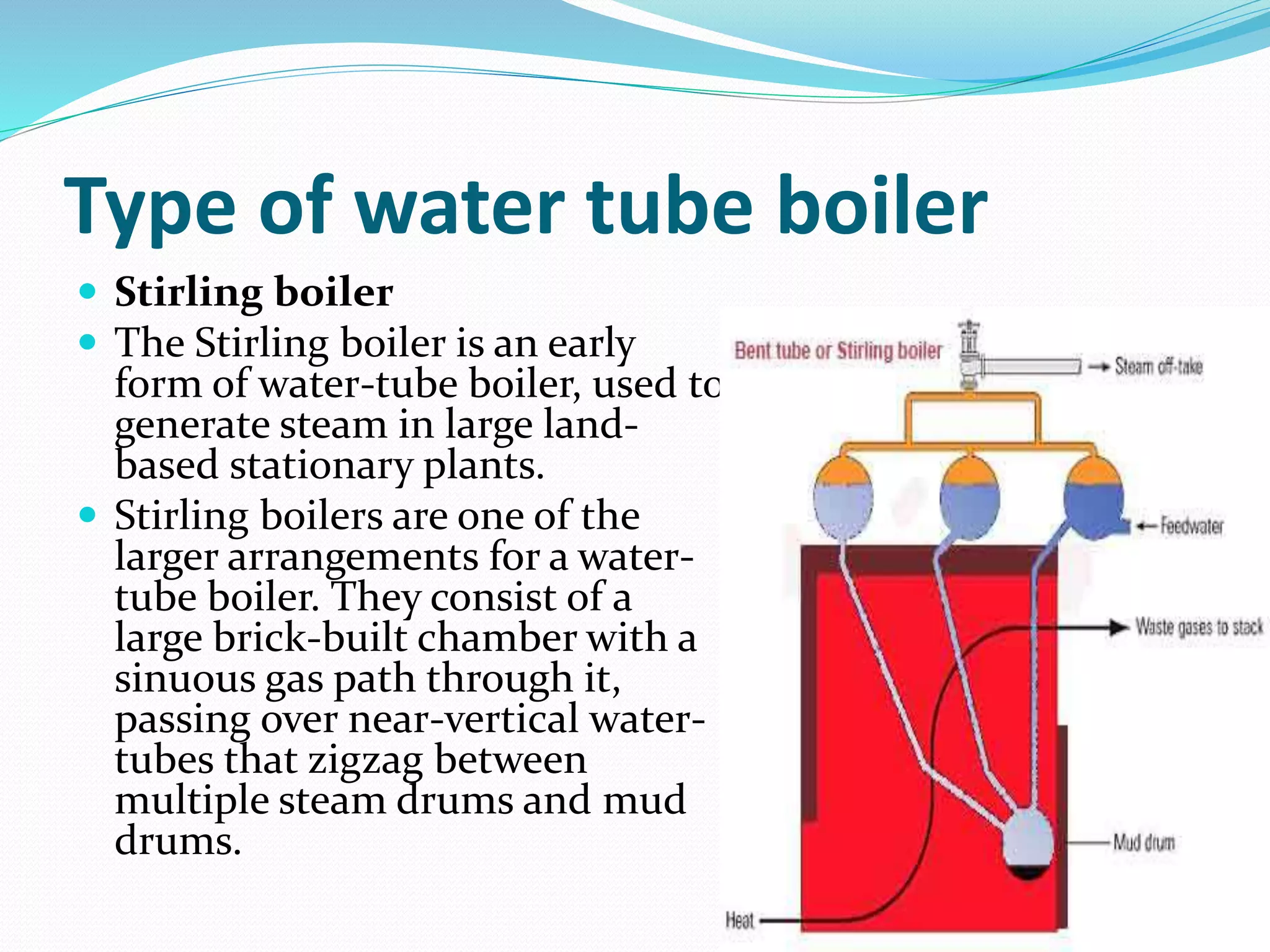
 Stirling boiler
 The Stirling boiler is an early
form of water-tube boiler, used to
generate steam in large land-
based stationary plants.
 Stirling boilers are one of the
larger arrangements for a water-
tube boiler. They consist of a
large brick-built chamber with a
sinuous gas path through it,
passing over near-vertical water-
tubes that zigzag between
multiple steam drums and mud
drums.
Type of water tube boiler
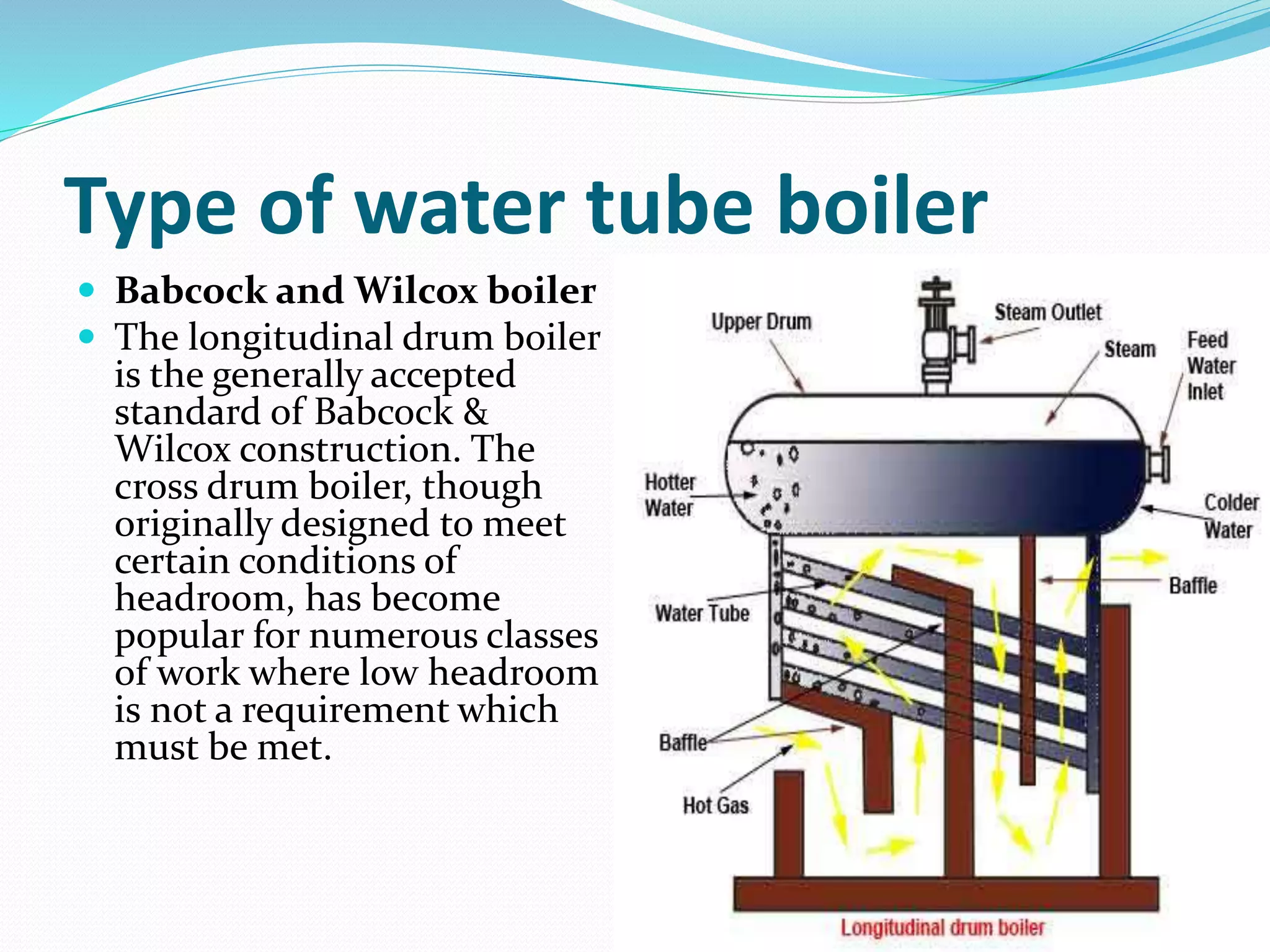
 Babcock and Wilcox boiler
 The longitudinal drum boiler
is the generally accepted
standard of Babcock &
Wilcox construction. The
cross drum boiler, though
originally designed to meet
certain conditions of
headroom, has become
popular for numerous classes
of work where low headroom
is not a requirement which
must be met.
MERITS OF WATER TUBE BOILERS
OVERFIRE TUBE BOILERS
 1. Generation of steam is much quicker due to small
ratio of water content to steam content. This also helps
in reaching the steaming temperature in short time.
 2. Its evaporative capacity is larger and the steam
pressure range is also high-200 bar.
 3. Heating surfaces are more effective as the hot gases
travel at right angles to the direction of water flow.
MERITS OF WATER TUBE BOILERS
OVERFIRE TUBE BOILERS
 4. The combustion efficiency is higher because complete
combustion of fuel is possible as the combustion space is
much larger.
 5. The thermal stresses in the boiler parts are less as
different parts of the boiler remain at uniform temperature
due to quick circulation of water.
 6. The boiler can be easily transported and easily its
different parts can be separated.
MERITS OF WATER TUBE BOILERS
OVERFIRE TUBE BOILERS
 7. All parts of the water tube boilers are easily accessible
for cleaning, inspecting and repairing.
Demerits :
 1. It is less suitable for impure and sedimentary water, as a
small deposit of scale may cause the overheating and
bursting of tube. Therefore, use of pure feed water is
essential.
 2. They require careful attention. The maintenance costs
are higher.
 3. Failure in feed water supply even for short period is
liable to make the boiler over-heated.
Water tube boiler working and function

Water tube boiler working and function

  • 1.
    Water Tube Boilers In this type of boiler water passes through the tubes while the gases remain in the shell side, passing over the tube surfaces • Used for high steam demand and pressure requirements • Capacity range of 4,000 – 120,000 kg/hour
  • 2.
  • 3.
    Difference bw watertube & fire tube boiler  Water tube.  Water circulate inside the tubes.  Steam generation capacity is high.  Higher efficiency.  It has greater heating surface.  Its cleaning is easy.  Its shape is drum type.  Each type of fuel is burned in it.  Transportation is easy from one place to other.
  • 4.
    Fire tube boiler Fire circulate inside the tubes.  Steam generation capacity is lower then water tube.  Lower efficiency.  Shell type.  Complicated in design.  Heating surface is less.  Cleaning is difficult.  Specific fuel is used.
  • 5.
    Parts of watertube boiler
  • 6.
    BOILER MAIN COMPONENTS BOILER SHELL- The outer cylindrical portion of a pressure vessel.  BURNER - A device for the introduction of fuel and air into a furnace at the desired velocitie.The burner is the principal device for the firing of oil and/or gas.
  • 7.
    BOILER MAIN COMPONENTS Mud Ring or Mud Drum  A typically cylindrical shaped space at the bottom of the water space. Sediment, mud, and other impurities gather there.  FURNACE - An enclosed space provided for the combustion of fuel.
  • 8.
    BOILER MAIN COMPONENTS SAFETY VALVE - A spring loaded valve that automatically opens when pressure attains the valve setting. Used to prevent excessive pressure from building up in a boiler.
  • 9.
    BOILER MAIN COMPONENTS  STRAINER- A device, such as a filter, to retain solid particles allowing a liquid to pass.  SIGHT GLASS- A glass tube used on steam boilers to give a visible indication of the boiler's water level
  • 10.
    BOILER MAIN COMPONENTS Feed Check Valve. The high pressure feed water is supplied to the boiler through this valve. This valve opens towards the boiler only and feeds the water to the boiler.  Steam Stop Valve.  It regulates the flow of steam supply outside.
  • 11.
    Type of watertube boiler  Simple vertical boiler  A vertical boiler is a type of water- tube boiler where the boiler barrel is oriented vertically instead of the more common horizontal orientation. Vertical boilers were used for a variety of steam- powered vehicles and other mobile machines, including early steam locomotives.
  • 12.
    Type of watertube boiler  Stirling boiler  The Stirling boiler is an early form of water-tube boiler, used to generate steam in large land- based stationary plants.  Stirling boilers are one of the larger arrangements for a water- tube boiler. They consist of a large brick-built chamber with a sinuous gas path through it, passing over near-vertical water- tubes that zigzag between multiple steam drums and mud drums.
  • 13.
    Type of watertube boiler  Babcock and Wilcox boiler  The longitudinal drum boiler is the generally accepted standard of Babcock & Wilcox construction. The cross drum boiler, though originally designed to meet certain conditions of headroom, has become popular for numerous classes of work where low headroom is not a requirement which must be met.
  • 14.
    MERITS OF WATERTUBE BOILERS OVERFIRE TUBE BOILERS  1. Generation of steam is much quicker due to small ratio of water content to steam content. This also helps in reaching the steaming temperature in short time.  2. Its evaporative capacity is larger and the steam pressure range is also high-200 bar.  3. Heating surfaces are more effective as the hot gases travel at right angles to the direction of water flow.
  • 15.
    MERITS OF WATERTUBE BOILERS OVERFIRE TUBE BOILERS  4. The combustion efficiency is higher because complete combustion of fuel is possible as the combustion space is much larger.  5. The thermal stresses in the boiler parts are less as different parts of the boiler remain at uniform temperature due to quick circulation of water.  6. The boiler can be easily transported and easily its different parts can be separated.
  • 16.
    MERITS OF WATERTUBE BOILERS OVERFIRE TUBE BOILERS  7. All parts of the water tube boilers are easily accessible for cleaning, inspecting and repairing.
  • 17.
    Demerits :  1.It is less suitable for impure and sedimentary water, as a small deposit of scale may cause the overheating and bursting of tube. Therefore, use of pure feed water is essential.  2. They require careful attention. The maintenance costs are higher.  3. Failure in feed water supply even for short period is liable to make the boiler over-heated.