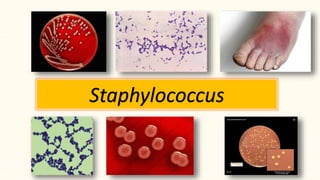
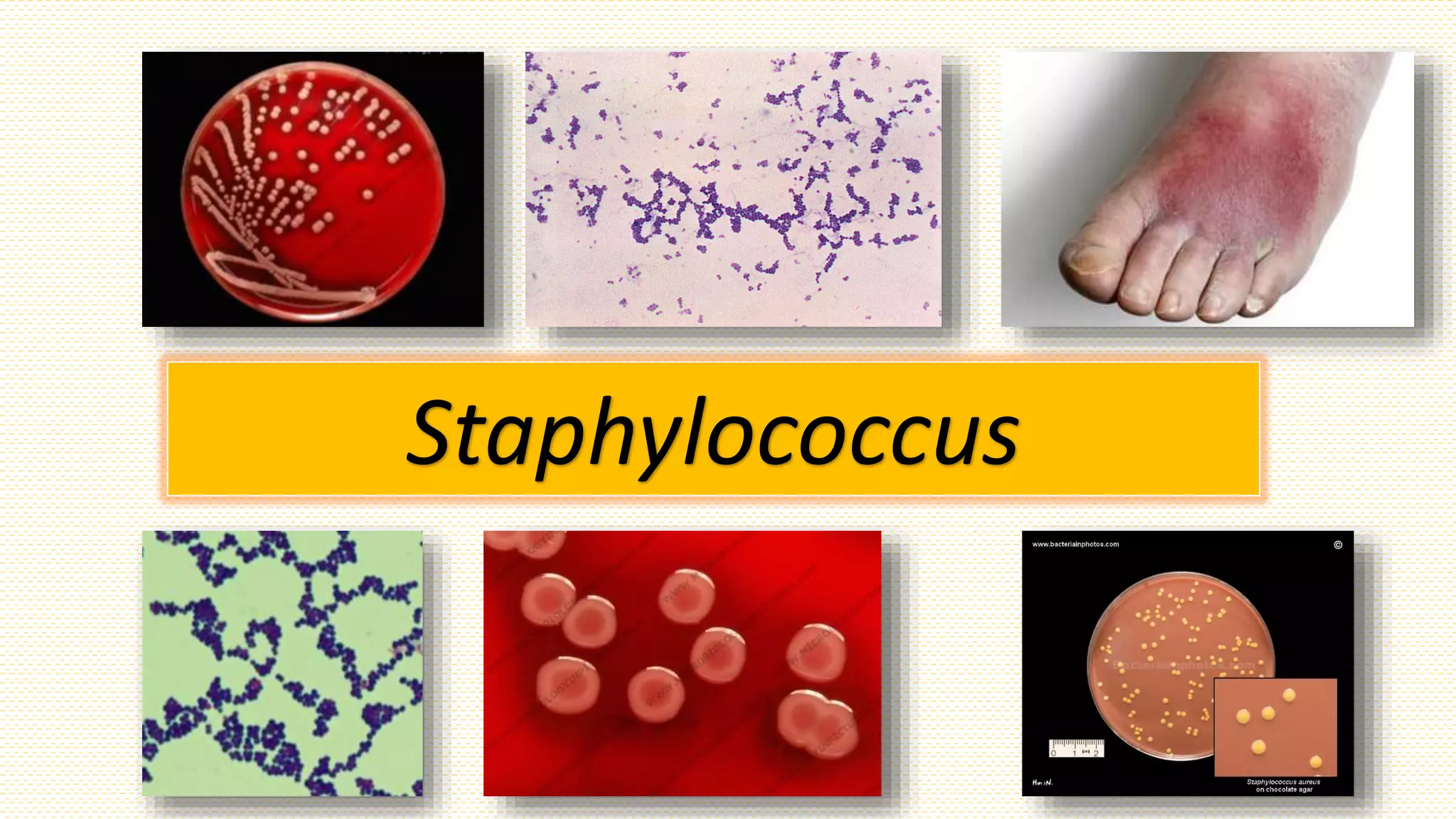
Staphylococcus
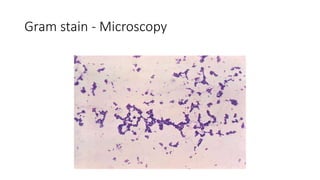
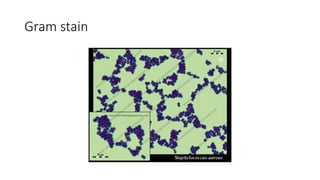
Gram stain - Microscopy
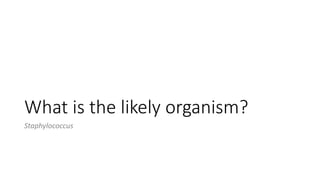
What is the likely organism?
Staphylococcus
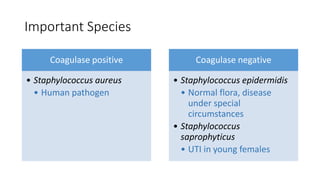
Important Species
Coagulase positive
• Staphylococcus aureus
• Human pathogen
Coagulase negative
• Staphylococcus epidermidis
• Normal flora, disease
under special
circumstances
• Staphylococcus
saprophyticus
• UTI in young females
What is the shape of the colony?
Grape like/ cluster like
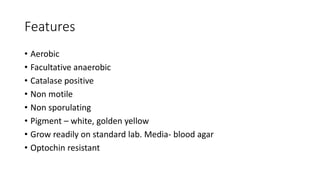
Features
• Aerobic
• Facultative anaerobic
• Catalase positive
• Non motile
• Non sporulating
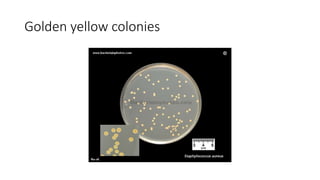
• Pigment – white, golden yellow
• Grow readily on standard lab. Media- blood agar
• Optochin resistant
Gram stain
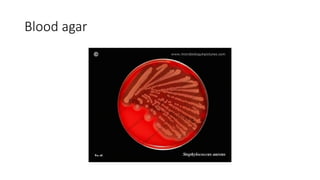
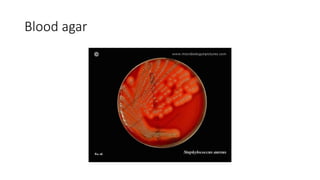
Blood agar
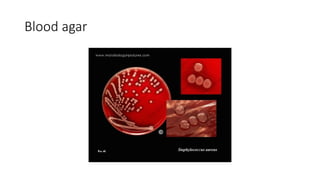
Blood agar
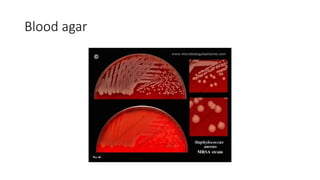
Blood agar
Blood agar
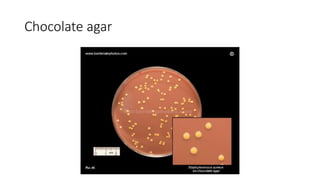
Chocolate agar
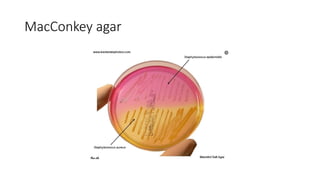
MacConkey agar
Golden yellow colonies
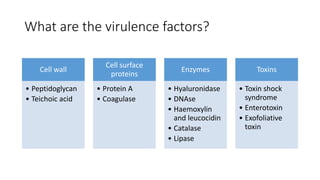
What are the virulence factors?
Cell wall
• Peptidoglycan
• Teichoic acid
Cell surface
proteins
• Protein A
• Coagulase
Enzymes
• Hyaluronidase
• DNAse
• Haemoxylin
and leucocidin
• Catalase
• Lipase
Toxins
• Toxin shock
syndrome
• Enterotoxin
• Exofoliative
toxin
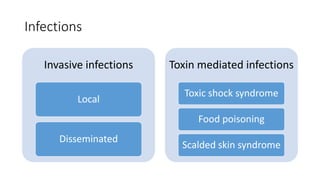
Infections
Invasive infections
Local
Disseminated
Toxin mediated infections
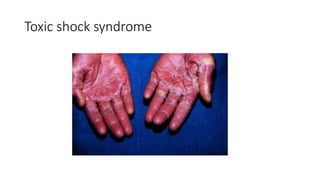
Toxic shock syndrome
Food poisoning
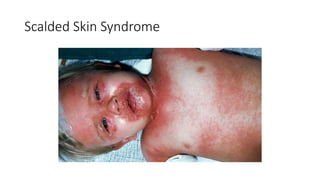
Scalded skin syndrome
Local infections
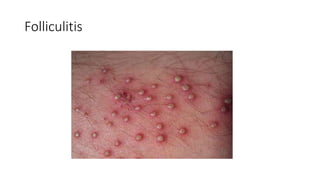
• Folliculitis
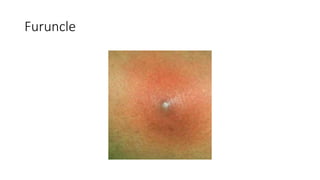
• Furuncle
• Carbuncle
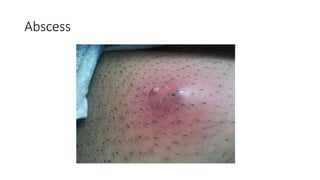
• Abscess
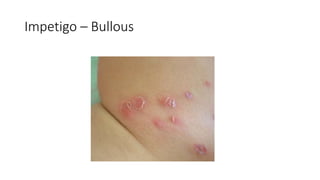
• Impetigo
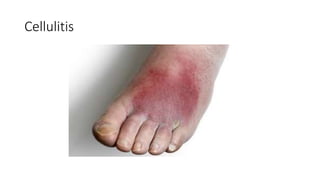
• Cellulitis
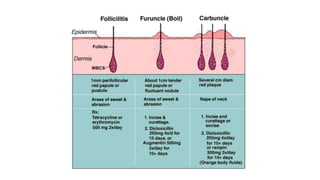
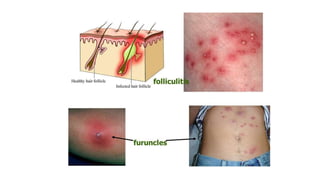
Folliculitis
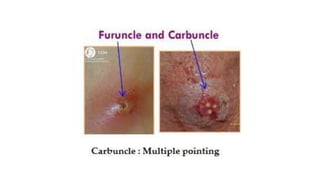
Furuncle
Carbuncle
Abscess
Cellulitis
Impetigo – Bullous
Disseminated Infections
• Septicaemia
• Osteomyelitis – most common cause
• Meningitis
• Pneumonia
• Endocarditis
• Pyelonephritis
Toxin-mediated
• Toxic shock syndrome
• Food poisoning
• Scalded skin syndrome
Scalded Skin Syndrome
Toxic shock syndrome
Risk factors
• Viral upper respiratory tract infection (Influenza)
• Skin disease
• Neoplasia
• Diabetes
• Foreign body
• Liver disease
• Renal failure
• Trauma
• Broad spectrum antibiotic use
Antibiotics
1st line
• Cloxacillin
• Flucloxacillin / methicillin / nafcillin
• Erthromycin/ gentamicin/ cotrimazole
2nd line
• Fusidic acid/ rifampicin/ clindamycin
• Quinolones - ciprofloxacin
• Aminoglycosides – amikacin/ netimycin
• Vancomycin - MRSA
Thank
You

Staphylococcus