No
commercially
available
malaria
vaccine at the
present time.
RTS,S/AS01 is
the most
advanced
vaccine
candidate
against
malaria.
Overview
Requirement of a Malaria
Vaccine
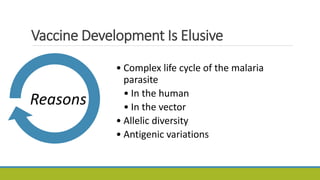
Vaccine Development Is
Elusive
To Combat Malaria
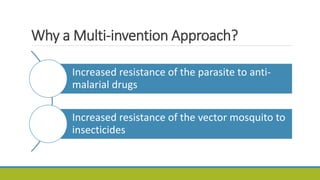
Why a Multi-invention
Approach?
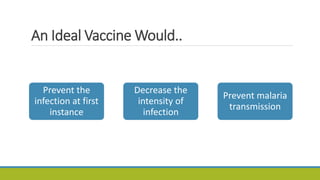
An Ideal Vaccine Would..
Challenges in Research on
Malaria Vaccine
Malaria Life Cycle
Immunity In Malaria
Immunological Boosting
Immune Response
Malaria Vaccine Approaches
Requirement of a Malaria Vaccine
Commonest infectious disease in the tropics
• 200 millions per year affected with malaria
• 3 millions per year die due to malaria
Increased mortality and morbidity related to malaria
A vaccine would be a safe and effective way to control the disease
Vaccine Development Is Elusive
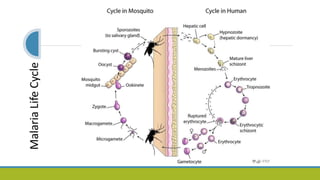
• Complex life cycle of the malaria
parasite
• In the human
• In the vector
• Allelic diversity
• Antigenic variations
Reasons
To Combat Malaria
Multi-intervention approach may be the best
Why a Multi-invention Approach?
Increased resistance of the parasite to anti-
malarial drugs
Increased resistance of the vector mosquito to
insecticides
An Ideal Vaccine Would..
Prevent the
infection at first
instance
Decrease the
intensity of
infection
Prevent malaria
transmission
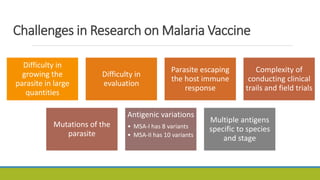
Challenges in Research on Malaria Vaccine
Difficulty in
growing the
parasite in large
quantities
Difficulty in
evaluation
Parasite escaping
the host immune
response
Complexity of
conducting clinical
trails and field trials
Mutations of the
parasite
Antigenic variations
• MSA-I has 8 variants
• MSA-II has 10 variants
Multiple antigens
specific to species
and stage
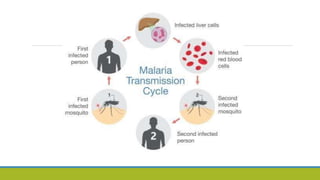
MalariaLifeCycle
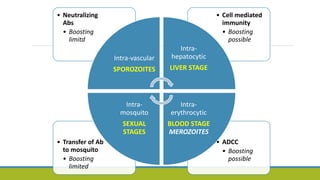
IMMUNITY IN MALARIA
• ADCC
• Boosting
possible
• Transfer of Ab
to mosquito
• Boosting
limited
• Cell mediated
immunity
• Boosting
possible
• Neutralizing
Abs
• Boosting
limitd
Intra-vascular
SPOROZOITES
Intra-
hepatocytic
LIVER STAGE
Intra-
erythrocytic
BLOOD STAGE
MEROZOITES
Intra-
mosquito
SEXUAL
STAGES
Immunological Boosting
Sporozoites are
free swimming
• Hence antibodies can
target sporozoites
1 sporozoite gives
rise to ~40,000
merozoites
• So must be neutralized
Antibody level
should be very high
to achieve long
lasting protection
So, immunologic
boosting via natural
infection is limited
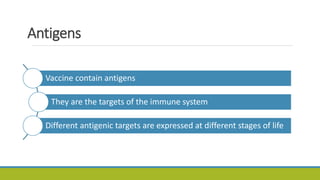
Antigens
Vaccine contain antigens
They are the targets of the immune system
Different antigenic targets are expressed at different stages of life
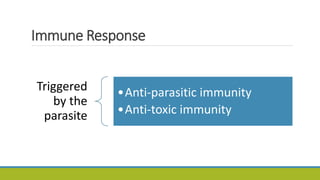
Immune Response
Triggered
by the
parasite
•Anti-parasitic immunity
•Anti-toxic immunity
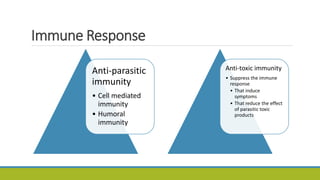
Immune Response
Anti-parasitic
immunity
• Cell mediated
immunity
• Humoral
immunity
Anti-toxic immunity
• Suppress the immune
response
• That induce
symptoms
• That reduce the effect
of parasitic toxic
products
Immune Response
In liver stage
Blood stage
Sexual stage
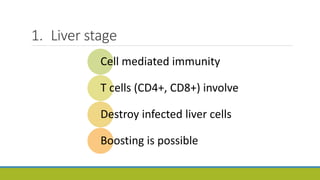
1. Liver stage
Cell mediated immunity
T cells (CD4+, CD8+) involve
Destroy infected liver cells
Boosting is possible
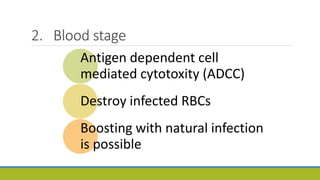
2. Blood stage
Antigen dependent cell
mediated cytotoxity (ADCC)
Destroy infected RBCs
Boosting with natural infection
is possible
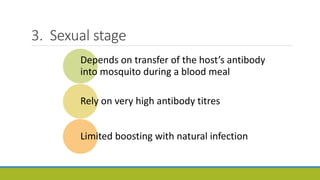
3. Sexual stage
Depends on transfer of the host’s antibody
into mosquito during a blood meal
Rely on very high antibody titres
Limited boosting with natural infection
MALARIA VACCINE
APPROACHES
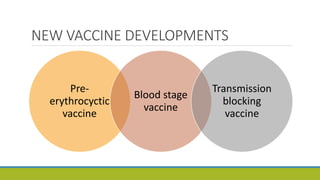
NEW VACCINE DEVELOPMENTS
Pre-
erythrocyctic
vaccine
Blood stage
vaccine
Transmission
blocking
vaccine
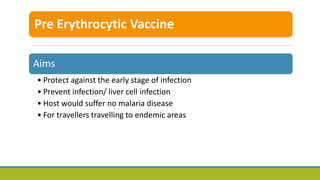
Pre Erythrocytic Vaccine
Aims
• Protect against the early stage of infection
• Prevent infection/ liver cell infection
• Host would suffer no malaria disease
• For travellers travelling to endemic areas
Blood Stage Vaccine
Blood stage
• Most destructive stage
• Rapid replication in RBC
Does not aim to block all infection
Aims
• Reduce parasitic load in blood
• Reduce severity of the disease
For children and adults living in endemic areas
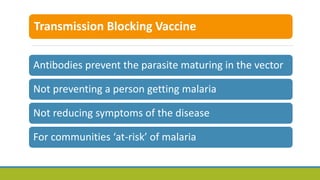
Transmission Blocking Vaccine
Antibodies prevent the parasite maturing in the vector
Not preventing a person getting malaria
Not reducing symptoms of the disease
For communities ‘at-risk’ of malaria
RTS,S /AS01 Vaccine
• The world’s first malaria vaccine that has been shown to provide
partial protection against malaria in young children.
• Acts against Plasmodium falciparum
• The phase III trial, conducted over 5 years (from 2009 to 2014),
enrolled approximately 15 000 young children and infants in 7 sub-
saharan african countries
• Phase III trial was successful
• Children who received 4 doses of the vaccine had a significantly
lower risk of developing malaria, including severe malaria
• Vaccinations are due to begin in 2018.
Thank
You

Malaria vaccine

  • 2.
    No commercially available malaria vaccine at the presenttime. RTS,S/AS01 is the most advanced vaccine candidate against malaria.
  • 3.
    Overview Requirement of aMalaria Vaccine Vaccine Development Is Elusive To Combat Malaria Why a Multi-invention Approach? An Ideal Vaccine Would.. Challenges in Research on Malaria Vaccine Malaria Life Cycle Immunity In Malaria Immunological Boosting Immune Response Malaria Vaccine Approaches
  • 4.
    Requirement of aMalaria Vaccine Commonest infectious disease in the tropics • 200 millions per year affected with malaria • 3 millions per year die due to malaria Increased mortality and morbidity related to malaria A vaccine would be a safe and effective way to control the disease
  • 5.
    Vaccine Development IsElusive • Complex life cycle of the malaria parasite • In the human • In the vector • Allelic diversity • Antigenic variations Reasons
  • 6.
    To Combat Malaria Multi-interventionapproach may be the best
  • 7.
    Why a Multi-inventionApproach? Increased resistance of the parasite to anti- malarial drugs Increased resistance of the vector mosquito to insecticides
  • 8.
    An Ideal VaccineWould.. Prevent the infection at first instance Decrease the intensity of infection Prevent malaria transmission
  • 9.
    Challenges in Researchon Malaria Vaccine Difficulty in growing the parasite in large quantities Difficulty in evaluation Parasite escaping the host immune response Complexity of conducting clinical trails and field trials Mutations of the parasite Antigenic variations • MSA-I has 8 variants • MSA-II has 10 variants Multiple antigens specific to species and stage
  • 10.
  • 11.
  • 12.
    • ADCC • Boosting possible •Transfer of Ab to mosquito • Boosting limited • Cell mediated immunity • Boosting possible • Neutralizing Abs • Boosting limitd Intra-vascular SPOROZOITES Intra- hepatocytic LIVER STAGE Intra- erythrocytic BLOOD STAGE MEROZOITES Intra- mosquito SEXUAL STAGES
  • 13.
    Immunological Boosting Sporozoites are freeswimming • Hence antibodies can target sporozoites 1 sporozoite gives rise to ~40,000 merozoites • So must be neutralized Antibody level should be very high to achieve long lasting protection So, immunologic boosting via natural infection is limited
  • 14.
    Antigens Vaccine contain antigens Theyare the targets of the immune system Different antigenic targets are expressed at different stages of life
  • 15.
  • 16.
    Immune Response Anti-parasitic immunity • Cellmediated immunity • Humoral immunity Anti-toxic immunity • Suppress the immune response • That induce symptoms • That reduce the effect of parasitic toxic products
  • 17.
    Immune Response In liverstage Blood stage Sexual stage
  • 18.
    1. Liver stage Cellmediated immunity T cells (CD4+, CD8+) involve Destroy infected liver cells Boosting is possible
  • 19.
    2. Blood stage Antigendependent cell mediated cytotoxity (ADCC) Destroy infected RBCs Boosting with natural infection is possible
  • 20.
    3. Sexual stage Dependson transfer of the host’s antibody into mosquito during a blood meal Rely on very high antibody titres Limited boosting with natural infection
  • 21.
  • 22.
    NEW VACCINE DEVELOPMENTS Pre- erythrocyctic vaccine Bloodstage vaccine Transmission blocking vaccine
  • 23.
    Pre Erythrocytic Vaccine Aims •Protect against the early stage of infection • Prevent infection/ liver cell infection • Host would suffer no malaria disease • For travellers travelling to endemic areas
  • 24.
    Blood Stage Vaccine Bloodstage • Most destructive stage • Rapid replication in RBC Does not aim to block all infection Aims • Reduce parasitic load in blood • Reduce severity of the disease For children and adults living in endemic areas
  • 25.
    Transmission Blocking Vaccine Antibodiesprevent the parasite maturing in the vector Not preventing a person getting malaria Not reducing symptoms of the disease For communities ‘at-risk’ of malaria
  • 27.
    RTS,S /AS01 Vaccine •The world’s first malaria vaccine that has been shown to provide partial protection against malaria in young children. • Acts against Plasmodium falciparum • The phase III trial, conducted over 5 years (from 2009 to 2014), enrolled approximately 15 000 young children and infants in 7 sub- saharan african countries • Phase III trial was successful • Children who received 4 doses of the vaccine had a significantly lower risk of developing malaria, including severe malaria • Vaccinations are due to begin in 2018.
  • 28.