If Everyone Was a Vegetarian
By Boris Pavic
A CSU Fresno Honors 102 Project
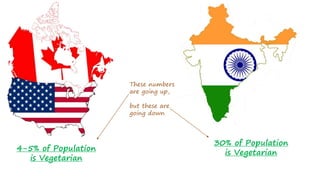
4-5% of Population
is Vegetarian
30% of Population
is Vegetarian
These numbers
are going up,
but these are
going down
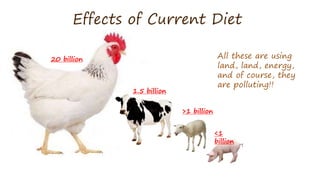
Effects of Current Diet
20 billion
1.5 billion
>1 billion
<1
billion
All these are using
land, land, energy,
and of course, they
are polluting!!
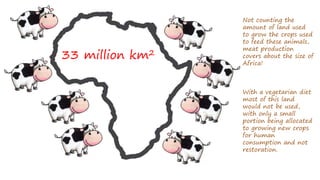
33 million km2
Not counting the
amount of land used
to grow the crops used
to feed these animals,
meat production
covers about the size of
Africa!
With a vegetarian diet
most of this land
would not be used,
with only a small
portion being allocated
to growing new crops
for human
consumption and not
restoration.
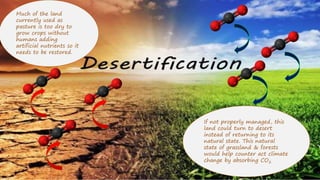
Much of the land
currently used as
pasture is too dry to
grow crops without
humans adding
artificial nutrients so it
needs to be restored.
If not properly managed, this
land could turn to desert
instead of returning to its
natural state. This natural
state of grassland & forests
would help counter act climate
change by absorbing CO2
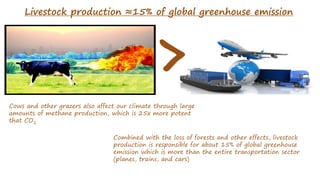
Livestock production ≈15% of global greenhouse emission
>
Cows and other grazers also affect our climate through large
amounts of methane production, which is 25x more potent
that CO2
Combined with the loss of forests and other effects, livestock
production is responsible for about 15% of global greenhouse
emission which is more than the entire transportation sector
(planes, trains, and cars)
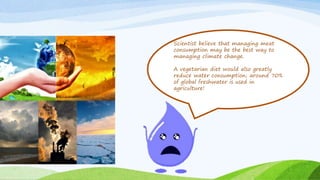
Scientist believe that managing meat
consumption may be the best way to
managing climate change.
A vegetarian diet would also greatly
reduce water consumption; around 70%
of global freshwater is used in
agriculture!
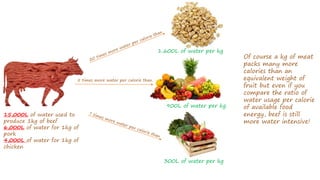
15,000L of water used to
produce 1kg of beef
6,000L of water for 1kg of
pork
4,000L of water for 1kg of
chicken
1,600L of water per kg
900L of water per kg
300L of water per kg
5 times more water per calorie than
Of course a kg of meat
packs many more
calories than an
equivalent weight of
fruit but even if you
compare the ratio of
water usage per calorie
of available food
energy, beef is still
more water intensive!
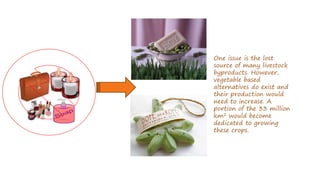
One issue is the lost
source of many livestock
byproducts. However,
vegetable based
alternatives do exist and
their production would
need to increase. A
portion of the 33 million
km2 would become
dedicated to growing
these crops.
A more complicated fact is that
raising animals is a fulltime job for
1 billion people and many would
have to switch to either producing
eggs, milk or growing vegetable
crops as their current job becomes
obsolete.
However, any change to a
vegetarian diet will be a
gradual process rather
than a sudden cut-off
giving people time to
adjust.
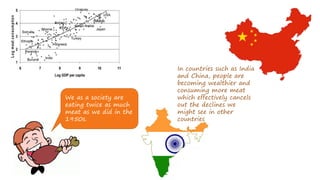
In countries such as India
and China, people are
becoming wealthier and
consuming more meat
which effectively cancels
out the declines we
might see in other
countries
We as a society are
eating twice as much
meat as we did in the
1950s.
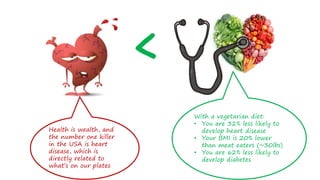
<
Health is wealth, and
the number one killer
in the USA is heart
disease, which is
directly related to
what’s on our plates
With a vegetarian diet:
• You are 32% less likely to
develop heart disease
• Your BMI is 20% lower
than meat eaters (~30lbs)
• You are 62% less likely to
develop diabetes
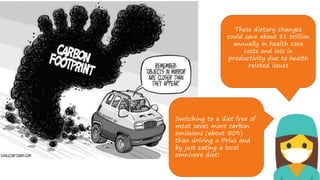
These dietary changes
could save about $1 trillion
annually in health care
costs and loss in
productivity due to health
related issues
Switching to a diet free of
meat saves more carbon
emissions (about 50%)
than driving a Prius and
by just eating a local
omnivore diet!
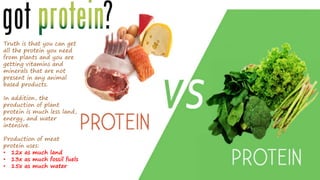
Truth is that you can get
all the protein you need
from plants and you are
getting vitamins and
minerals that are not
present in any animal
based products.
In addition, the
production of plant
protein is much less land,
energy, and water
intensive.
Production of meat
protein uses:
• 12x as much land
• 13x as much fossil fuels
• 15x as much water
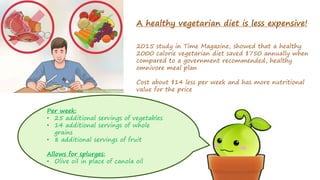
A healthy vegetarian diet is less expensive!
2015 study in Time Magazine, showed that a healthy
2000 calorie vegetarian diet saved $750 annually when
compared to a government recommended, healthy
omnivore meal plan
Cost about $14 less per week and has more nutritional
value for the price
Per week:
• 25 additional servings of vegetables
• 14 additional servings of whole
grains
• 8 additional servings of fruit
Allows for splurges:
• Olive oil in place of canola oil
Solutions
According to the Intergovernmental Panel for
Climate Change, we realistically need to eat 50%
less beef and animal products
Easy way to start is Meatless Mondays – if all
Americans participated, it would have the same
effect as removing 7.6 million cars from the road
for a year!
Solutions
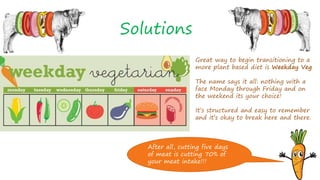
Great way to begin transitioning to a
more plant based diet is Weekday Veg
The name says it all: nothing with a
face Monday through Friday and on
the weekend its your choice!
It’s structured and easy to remember
and it’s okay to break here and there.
After all, cutting five days
of meat is cutting 70% of
your meat intake!!!
So, please ask yourselves, for your health, for your
wallet, for the environment, and for the animals:
What's stopping you from giving at least Weekday
Veg a shot?
You wouldn’t be worried about having your last
hamburger and after all, if all of us ate half as
much meat, it would be like half of us were
vegetarians.
Thank You

If Everyone Was a Vegetarian

  • 1.
    If Everyone Wasa Vegetarian By Boris Pavic A CSU Fresno Honors 102 Project
  • 3.
    4-5% of Population isVegetarian 30% of Population is Vegetarian These numbers are going up, but these are going down
  • 4.
    Effects of CurrentDiet 20 billion 1.5 billion >1 billion <1 billion All these are using land, land, energy, and of course, they are polluting!!
  • 5.
    33 million km2 Notcounting the amount of land used to grow the crops used to feed these animals, meat production covers about the size of Africa! With a vegetarian diet most of this land would not be used, with only a small portion being allocated to growing new crops for human consumption and not restoration.
  • 6.
    Much of theland currently used as pasture is too dry to grow crops without humans adding artificial nutrients so it needs to be restored. If not properly managed, this land could turn to desert instead of returning to its natural state. This natural state of grassland & forests would help counter act climate change by absorbing CO2
  • 7.
    Livestock production ≈15%of global greenhouse emission > Cows and other grazers also affect our climate through large amounts of methane production, which is 25x more potent that CO2 Combined with the loss of forests and other effects, livestock production is responsible for about 15% of global greenhouse emission which is more than the entire transportation sector (planes, trains, and cars)
  • 8.
    Scientist believe thatmanaging meat consumption may be the best way to managing climate change. A vegetarian diet would also greatly reduce water consumption; around 70% of global freshwater is used in agriculture!
  • 9.
    15,000L of waterused to produce 1kg of beef 6,000L of water for 1kg of pork 4,000L of water for 1kg of chicken 1,600L of water per kg 900L of water per kg 300L of water per kg 5 times more water per calorie than Of course a kg of meat packs many more calories than an equivalent weight of fruit but even if you compare the ratio of water usage per calorie of available food energy, beef is still more water intensive!
  • 10.
    One issue isthe lost source of many livestock byproducts. However, vegetable based alternatives do exist and their production would need to increase. A portion of the 33 million km2 would become dedicated to growing these crops.
  • 11.
    A more complicatedfact is that raising animals is a fulltime job for 1 billion people and many would have to switch to either producing eggs, milk or growing vegetable crops as their current job becomes obsolete. However, any change to a vegetarian diet will be a gradual process rather than a sudden cut-off giving people time to adjust.
  • 12.
    In countries suchas India and China, people are becoming wealthier and consuming more meat which effectively cancels out the declines we might see in other countries We as a society are eating twice as much meat as we did in the 1950s.
  • 13.
    < Health is wealth,and the number one killer in the USA is heart disease, which is directly related to what’s on our plates With a vegetarian diet: • You are 32% less likely to develop heart disease • Your BMI is 20% lower than meat eaters (~30lbs) • You are 62% less likely to develop diabetes
  • 14.
    These dietary changes couldsave about $1 trillion annually in health care costs and loss in productivity due to health related issues Switching to a diet free of meat saves more carbon emissions (about 50%) than driving a Prius and by just eating a local omnivore diet!
  • 15.
    Truth is thatyou can get all the protein you need from plants and you are getting vitamins and minerals that are not present in any animal based products. In addition, the production of plant protein is much less land, energy, and water intensive. Production of meat protein uses: • 12x as much land • 13x as much fossil fuels • 15x as much water
  • 16.
    A healthy vegetariandiet is less expensive! 2015 study in Time Magazine, showed that a healthy 2000 calorie vegetarian diet saved $750 annually when compared to a government recommended, healthy omnivore meal plan Cost about $14 less per week and has more nutritional value for the price Per week: • 25 additional servings of vegetables • 14 additional servings of whole grains • 8 additional servings of fruit Allows for splurges: • Olive oil in place of canola oil
  • 17.
    Solutions According to theIntergovernmental Panel for Climate Change, we realistically need to eat 50% less beef and animal products Easy way to start is Meatless Mondays – if all Americans participated, it would have the same effect as removing 7.6 million cars from the road for a year!
  • 18.
    Solutions Great way tobegin transitioning to a more plant based diet is Weekday Veg The name says it all: nothing with a face Monday through Friday and on the weekend its your choice! It’s structured and easy to remember and it’s okay to break here and there. After all, cutting five days of meat is cutting 70% of your meat intake!!!
  • 19.
    So, please askyourselves, for your health, for your wallet, for the environment, and for the animals: What's stopping you from giving at least Weekday Veg a shot? You wouldn’t be worried about having your last hamburger and after all, if all of us ate half as much meat, it would be like half of us were vegetarians.
  • 20.