SSG Black Land Nav
SSG Black Land Nav
SSG Black Land Nav
SSG Black Land Nav
SSG Black Land Nav
SSG Black Land Nav
SSG Black Land Nav
SSG Black Land Nav
SSG Black Land Nav
SSG Black Land Nav
SSG Black Land Nav
SSG Black Land Nav
SSG Black Land Nav
SSG Black Land Nav
SSG Black Land Nav
SSG Black Land Nav
SSG Black Land Nav
SSG Black Land Nav
SSG Black Land Nav
SSG Black Land Nav
SSG Black Land Nav
SSG Black Land Nav
SSG Black Land Nav
SSG Black Land Nav
SSG Black Land Nav
SSG Black Land Nav
SSG Black Land Nav
SSG Black Land Nav
SSG Black Land Nav
SSG Black Land Nav
SSG Black Land Nav
SSG Black Land Nav
SSG Black Land Nav
SSG Black Land Nav
SSG Black Land Nav
SSG Black Land Nav
SSG Black Land Nav
SSG Black Land Nav
SSG Black Land Nav
SSG Black Land Nav
SSG Black Land Nav
SSG Black Land Nav
SSG Black Land Nav
SSG Black Land Nav
SSG Black Land Nav
SSG Black Land Nav
SSG Black Land Nav
SSG Black Land Nav
SSG Black Land Nav
SSG Black Land Nav
SSG Black Land Nav
SSG Black Land Nav
SSG Black Land Nav
SSG Black Land Nav
SSG Black Land Nav
SSG Black Land Nav
SSG Black Land Nav
SSG Black Land Nav
SSG Black Land Nav
SSG Black Land Nav
SSG Black Land Nav
SSG Black Land Nav
SSG Black Land Nav
SSG Black Land Nav
SSG Black Land Nav
SSG Black Land Nav
SSG Black Land Nav
SSG Black Land Nav
SSG Black Land Nav
SSG Black Land Nav
SSG Black Land Nav
SSG Black Land Nav
SSG Black Land Nav
SSG Black Land Nav
SSG Black Land Nav
SSG Black Land Nav
SSG Black Land Nav
SSG Black Land Nav
SSG Black Land Nav
SSG Black Land Nav
SSG Black Land Nav
SSG Black Land Nav
SSG Black Land Nav
SSG Black Land Nav
SSG Black Land Nav
SSG Black Land Nav
SSG Black Land Nav
SSG Black Land Nav
SSG Black Land Nav
SSG Black Land Nav
SSG Black Land Nav
SSG Black Land Nav
SSG Black Land Nav
SSG Black Land Nav

Editor's Notes

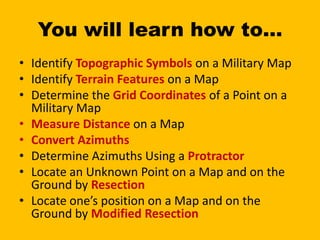
  • #3 1. There are no special safety considerations for this lesson. Small Group Instructors will use the local safety Standard Operating Procedures to provide a safety brief as part of the introduction. Solders will react to any emergency situation IAW the SOP. 2. In the event of a fire, Soldiers will exit the classroom in an orderly manner (last one out closes the door); meet at the location the Small Group Instructor has designated; class leader will hold an accountability formation and report his findings to Small Group Instructor. 3. In the event of severe weather or tornado, Soldiers will exit the classroom in an orderly manner; move to the location the Small Group Instructor has designated (basement or center of building); class leader will hold an accountability formation and report his findings to Small Group Instructor.  Low - The Primary Instructor will prepare a risk assessment using the before, during, and after checklist IAW FM 5-19. It will be prepared prior to the block of instructions, event or activity. Soldiers will be briefed on indentified hazards and required controls.   NOTE: It is the responsibility of all Soldiers and DA civilians to protect the environment from damage.Performance oriented training.  This will be your refresher period of instruction on Map reading. Through the mastery of the skills presented today, you will be better prepared to proceed successfully through the complex and operational type of instructions that will follow. In the near future you will be required to navigate from one point on the ground to another while dismounted. Today you will learn to identify topographic symbols, identify terrain features on a map, determine grid coordinates, measure distance, determine and convert azimuths, and locate unknown points using resection and modified resection. Later you will learn how to use the lensatic compass, determine a pace count, and navigate using the dead reckoning technique. It all starts with marginal information.  
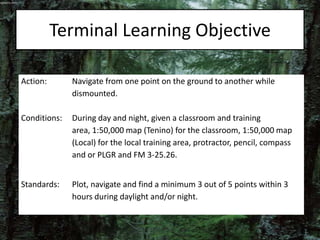
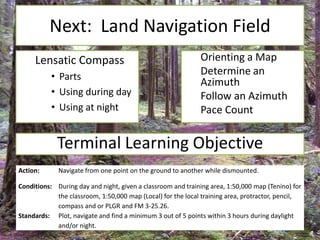
  • #13  NOTE: Inform the students of the following Terminal Learning Objective requirements.At the completion of this lesson, you [the student] will:  Action: Navigate from one point on the ground to another while dismounted.  Conditions: During day and night, given a classroom and training area, 1:50,000 map (Tenino) for the classroom, 1:50,000 map (Local) for the local training area, protractor, pencil, compass and or PLGR and FM 3-25.26.   Standards: Plot, navigate and find a minimum 3 out of 5 points within 3 hours during daylight and/or night.   
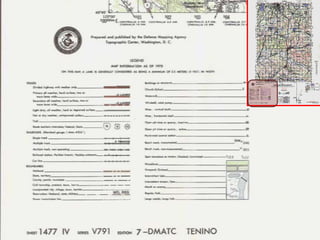
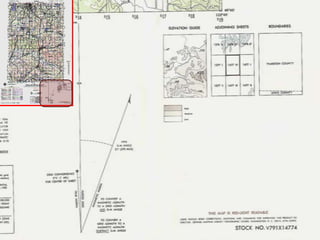
  • #16 TRANSITION: A map can be compared to any piece of equipment, in that before it is placed into operation the user must read the instructions. These instructions are placed around the edge of the map and are known as the marginal information. All maps are not the same, so it becomes necessary every time a different map is used to examine the marginal information carefully.
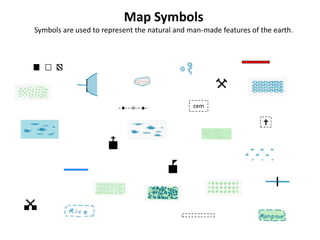
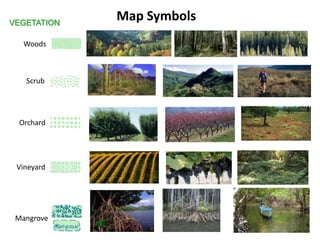
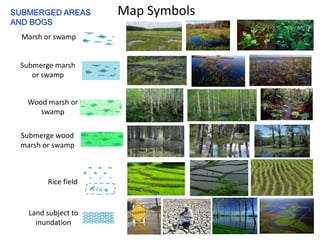
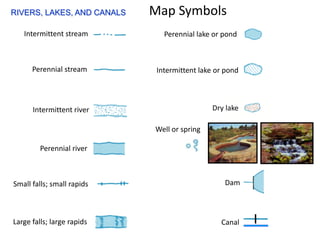
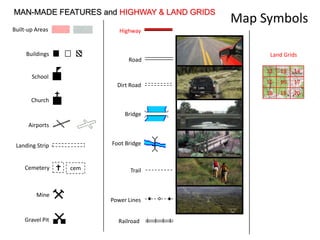
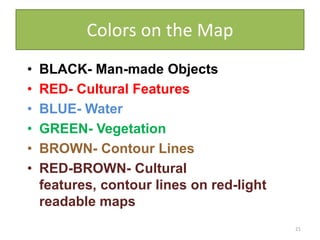
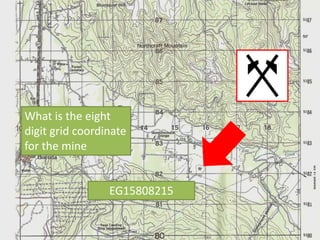
  • #22 The military map has six basic colors. Black show's natural and man-made objects and red classifies those objects as to their use. Blue is used to show water and drainage, green is used to show vegetation and brown is used to show relief. The sixth color is Red-Brown. The colors red and brown are combined to identify cultural features, all relief features, non-surveyed spot elevations, and elevation, such as contour lines on red-light readable maps. As stated before, black denotes man-made structures and red classifies them as to their use. 1. BLACK:  A. TRAIL: A trail is a broken black line. The map shows important footpaths foot trails, and pack trails which can accommodate 1/4 ton trucks in dry weather. B. PROMINENT FENCE: A prominent fence is a fence that provides a definite landmark in an area where sparse culture is shown.  ? Question: What would be another example of a prominent fence?  Answer: A fence around a farm or cattle area in the Midwest or a fence around an airfield. These fences can be used as navigational aids, if you can locate them on the map and on the ground. C. RAILROADS 1. SINGLE TRACK: A single-track railroad is a single black line intersected with perpendicular tick marks. This means that there can be only one train moving in one direction at any given time. 2. DOUBLE OR MULTIPLE TRACKS: A multiple track railroad is two solid black lines intersected with perpendicular tick marks. This means that there can be two trains moving in the same or opposite direction at the same time. ? Question: How many have been to New York, San Francisco, or Germany?  Note: In these areas where transportation by rail is heavy, there will be three or more mainline tracks paralleling each other.  ? Question: In these areas how does the mapmaker let you know how many tracks are located on the ground?   Answer: In the legend the double / multiple track symbol is shown with the number of actual tracks that are present on the ground. D. BUILDINGS:   ? Question: How tall is the reverse L shaped building?   Answer: You cannot tell. 1. Remember that earlier I stated it is not practical for the features to appear on the map in their true proportion, position, and shape. However, these symbols resemble, as close as possible, the actual features themselves as viewed from above.   ? Question: What is the definition of a map?  Answer: A map is a graphic representation of the earth’s surface or part of it drawn to scale as seen from above.  2. The symbol of a building with the flag on top represents a school. If the school were a college campus the flag would be positioned on the administration building.  3. The symbol of a building with the cross on top represents a church. These buildings are all identified in the same manner on all military maps. These buildings are identified because in times of need this is where civilians will congregate. Also the navigator can utilize these buildings as navigational aids when moving through urban areas.  E. MINE OR QUARRY:  ? Question: What is the meaning of the cross-pick and pick-ax symbol?  Answer: This symbol represents an open pit mine or quarry. Note: If the symbol was upside down the mine or quarry would be closed. F. CEMETERY: 1. To the right of the mine you see the old and new symbol for a cemetery. The broken black box with the letters CEM represent the old symbol for the cemetery. 2. The black box with the cross in the middle represents the new symbol for the cemetery G. BRIDGE:  ? Question: What is the symbol in the bottom right corner of the slide?   Answer: This is the symbol for a bridge   The distinction between a bridge and a viaduct is that a bridge passes over what is predominantly water while a viaduct passes over what is predominantly land. The bridge is colored in red because of its classification. Red classifies cultural man-made features such as populated areas, roads, and boundaries on older maps. 2. RED: A. HEAVY DUTY ROADS: Heavy-duty roads are identified on your map as the solid red lines bordered in black. The term heavy duty means, this road is capable of supporting all weight classes, and requires a minimum amount of maintenance. B. MEDIUM DUTY ROADS: Unlike the heavy-duty road, the medium duty road has a weight limitation posted on it. Additionally the medium duty road requires occasional maintenance. It is depicted on your map as a candy-cane stripe line bordered in black lines. C. IMPROVED ROADS: The improved road can carry light loads in all weather. Its construction consists of stabilized or oiled-surface gravel or stone, or graded and drained gravel or stone. Periodic maintenance is required on these roads. They are normally hard surface roads less than two lanes wide. D. UNIMPROVED ROADS: The unimproved road is suitable only for light loads in dry weather. They are without surface improvements and are seldom maintained. It has no drainage. As a leader of any kind of unit, moving in an area that has a road along your proposed route, it would be important to know if the road is improved or unimproved. Has there been a heavy rain in the past few days? Will this road aid your unit by allowing it to move swiftly along to it's objective? Or will it slow you down and make you vulnerable to an enemy attack? 3. BLUE: A. PERENNIAL STREAM: A perennial stream is a stream that contains water most of the year. B. INTERMITTENT STREAM: An intermittent stream is a stream that contains water during only part of the year. C. LAKE OR POND: A lake or pond has the same factors as the perennial stream. The shoreline of the lake or pond you see on the slide has been surveyed. If the shoreline is indefinite or unsurveyed a broken blue line will outline it.  D. INTERMITTENT LAKE OR POND: An intermittent lake or pond has the same factors as the intermittent stream. The shoreline of an intermittent lake or pond is represented as indefinite and approximate. 4. GREEN: TRANSITION: There are several symbols for types of vegetation. A marsh, grassland, wooded areas, and vineyards or orchards. Notice that the symbol for a marsh is colored blue, yet grass appears in it.  ? Question: Why is marsh depicted in blue instead of green?  Answer: The color blue is more significant to the map-reader than the color green. A. MARSH/SWAMP: The water in the swamp is of greater military significance then the vegetation. B. GRASSLAND: For grass to be depicted on the map it has to be 1 meter or higher. This is done to show the map-reader that either enemy or friendly troops can use this area for concealment.  ? Question: Where in the world could you find grass of that height?  Answer: In Panama, Southeast Asia (elephant grass). C. WOODED AREA: As you can see, there are two different symbols for woods, the first shows a densely wooded area, while the second shows light or sparsely woods.   ? Question: Why do you think the mapmaker chose two different symbols to show woods?  Answer: The reason for this is because a mechanized unit will not be able to maneuver in a densely wooded area and a light unit could use the sparsely wooded area for concealment. However, both can use the wood-line as a navigational aid. D. VINEYARD/ORCHARD OR PLANTATION: You notice that the objects in the vineyard or orchard symbols are located symmetrically. This is because certain crops such as rubber, tea, apples, grapes, or peanuts are usually planted in this manner.  We have talked about four of the five basic colors on the map, what color has yet to be mentioned? BROWN. 5. BROWN:
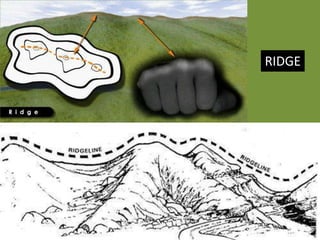
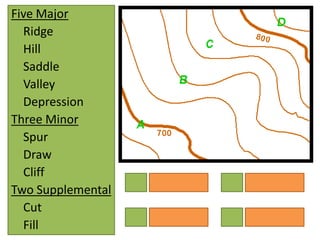
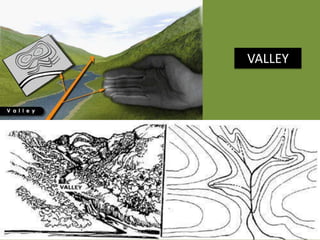
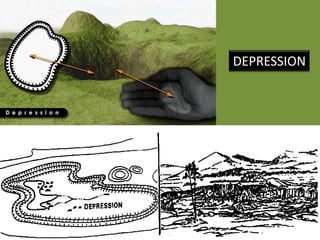
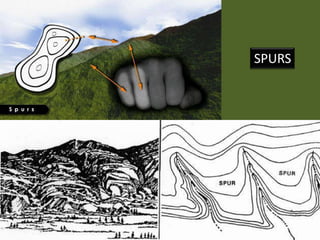
  • #29 TRANSITION: All terrain features are derived from a complex landmass known as a mountain or ridgeline. The term ridgeline is not interchangeable with the term ridge. A ridgeline is a line of high ground, usually with changes in elevation along its top and low ground on all sides, from which a total of ten natural or man-made terrain features are classified.
  • #50 TRANSITION: In a city, it is quite simple to find a location; the streets are named and the buildings have numbers. The only thing needed is the address. However, finding locations in undeveloped areas or in unfamiliar parts of the world can be a problem. To cope with this problem, a uniform and precise system of referencing has been developed.
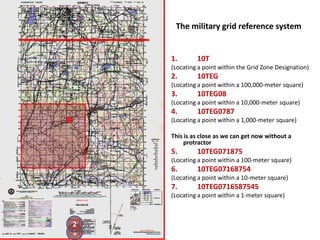
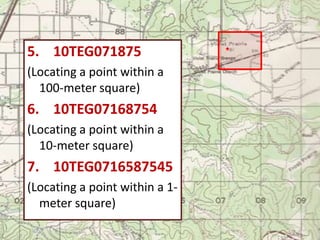
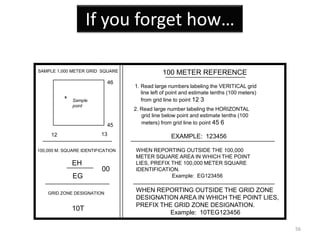
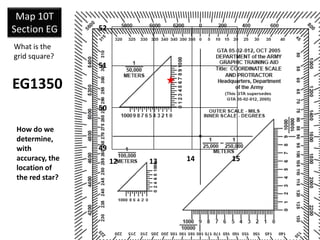
  • #55 TRANSITION: Specific locations on a map can be referenced by grid coordinates which identify the grid square and the relative position of the point within the grid square.
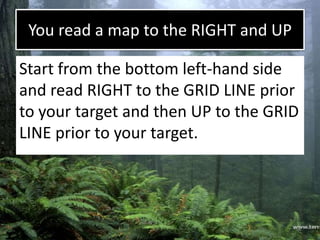
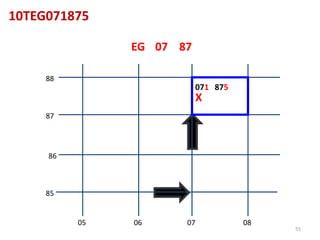
  • #56 Suppose you wish to reference Spot Elevation 154. To locate this spot to within 1,000 meters you simply locate the Grid Square in which the point lies. To do this, start at the left of the map sheet and read right to the North-South grid line that immediately proceeds the point. In this case the North-South grid line is 11. Then read up from the bottom of the map sheet to the East-West grid line that immediately proceeds the point. In this case it is East-West grid line 82.The value of the two grid lines gives you a four-digit coordinate, which locates the point to within 1,000 meters.
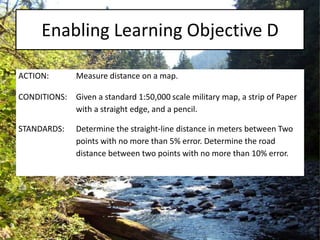
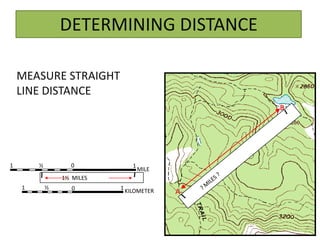
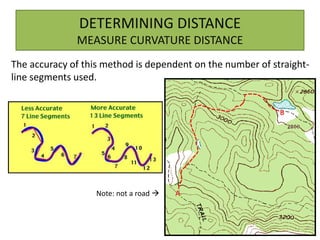
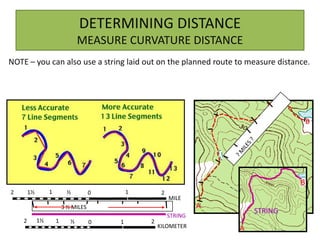
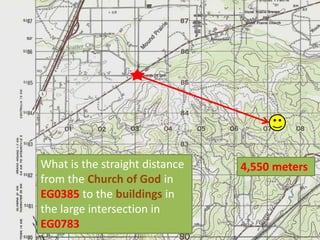
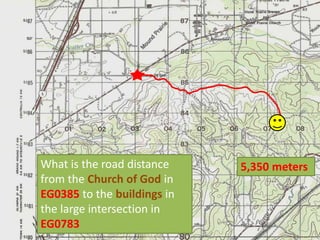
  • #63 TRANSITION: You have seen how you can use grid coordinates to locate a specific point on a map. If you can locate one point, you can locate two, and the next logical question that comes to mind is how far is point A from point B. In order to convert ground distance from map distance, or vice versa, you will need an aid. The mapmaker has given you this aid in the bar scales located in the bottom center margin of the map. Here you see the three bar scales that you will need and generally find on a map. They are miles, meters and yards. In order to measure correctly, there are two things you must remember. First, use the appropriate scale. If you want a measurement in meters, make sure you are using the metric bar scale. Second, notice that the zero, or starting point of the scale, is located within the scale and not at the end. This divides the scale into two parts. From zero to the right is the primary scale, divided into standard units of measurements. For example, miles and kilometers. From zero to the left is the extension scale and is divided into tenths of miles and hundreds of meters. In the military we are concerned with two types of distance, straight line and road distance. You would use road distance when planning convoys and road marches. Straight-line distance can be obtained from a military map by one of two methods:
  • #70 TRANSITION: Being able to determine distance between two points would be of little value unless you consider direction also. When you look at a map you can probably tell the cardinal directions of north, south, east and west. This is not always accurate enough for our use. We must be more specific, no matter where you are located on the face of the earth. You can think of yourself as being in the center of an imaginary circle. This circle is divided into 360 degrees. In the military, directions are given by using degrees or mils. Instead of the word direction, however; the word azimuth is used. An azimuth is defined as a horizontal angle measured clockwise from a base direction. This base direction is always north.
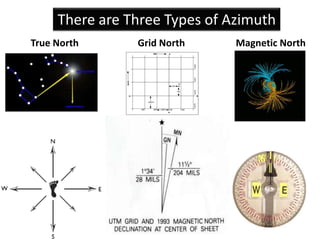
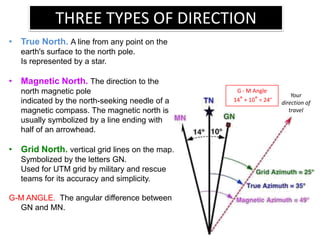
  • #75 TRANSITION: You learned that an azimuth is defined as a horizontal angle measured clockwise from a base direction and the base direction is always north. However, there are three base directions of north These are Grid North, True North, and Magnetic North. In the military you will not need to know true north to keep from getting lost during combat or training exercises.
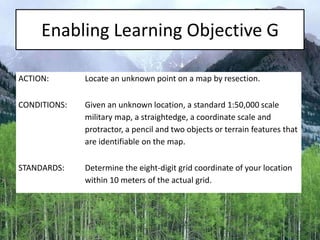
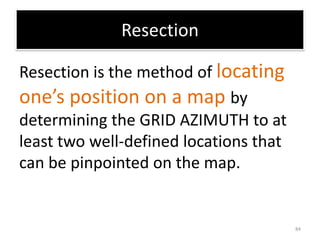
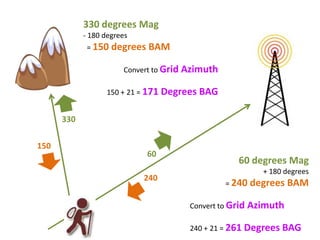
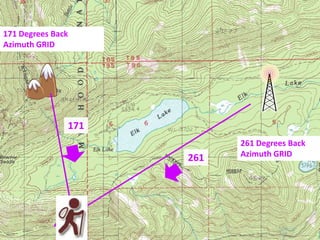
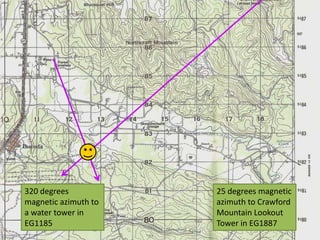
  • #85 RESECTION: Resection is the method of locating one's position on a map by determining the grid azimuth to at least two well-defined locations that can be pinpointed on the map. For greater accuracy, the desired method of resection would be to use three or more well-defined locations.
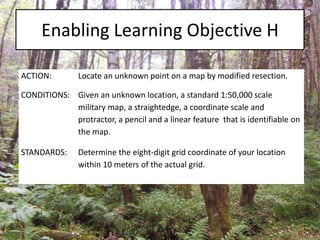
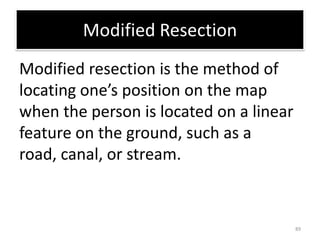
  • #89 TRANSITION: If you happen to be located along a road, stream, canal, or any other linear object, you may use the method of modified resection to determine your location.
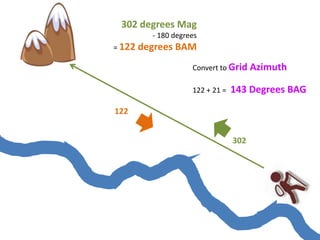
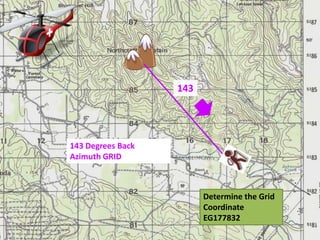
  • #90 To use this method, you must physically be located on a linear object. You must also be able to determine an azimuth from your unknown location to a known point and then use this azimuth to intersect back to your unknown location. The steps discussed in resection will be applied in the application of a modified resection.