Sponsorship & Event Marketing
• Sponsorship is the financial or in-kind support of an activity, used
primarily to reach specified business goals.
• "Sponsorship should not be confused with advertising. Advertising is
considered a quantitative medium, whereas sponsorship is
considered a qualitative medium. It promotes a company in
association with the sponsee.“
• A large number of events these days use sponsorship support to offer
more exciting programs and to help defray rising costs. Sponsorship
allows you to reach specifically ​targeted niche markets without any
waste. In addition, it is a powerful complement to other marketing
programs, in addition to having a dramatic influence on customer
relations.
Why Growth in Sponsorships
• Avoid the clutter inherent in advertising media
• Help companies respond to consumers’ changing media habits
• Help companies gain the approval of various constituencies
• Can enhance a brand’s equity
• Enables marketers to target their efforts to geographic regions
and/or to lifestyle groups
Event Marketing
Integrating a variety of communications elements behind an event theme.
Event Sponsorship
Financial support of an event in return for advertising privileges.
Sports Sponsorship Strategies
A company can invest a lot or a little. The benefits are the same but on a
different level.
• Global
• International
• National
• Regional
• Local
Some companies such as McDonald’s
and Coca-Cola provide support at all
levels. Events and sponsorships are
integral aspects of their marketing
strategies.
Sports marketing is extremely competitive so
companies look for advantage by any means.
1. Ambush Marketing
2. Venue Sponsorships and Marketing
3. Value-Added Sponsorships (Celebrity
Association)
Ambush Marketing
Entertainment Sponsorships
Entertainment opportunities are ideal for companies wanting to
reach youth and young adult targets.
• Rock Concerts and Tours
• Film Festivals
With entertainment the goal is to leverage the sponsorship in
order to to gain maximum benefit.
Culture and Arts Sponsorships
Culture and the arts reaches a more selective and upscale audience. It is
“class” reach instead of “mass” reach.
Dance
Theatre
Music
Literature
Stratford Festival
Shaw Festival
Just for Laughs Festival
The primary benefit is goodwill; it is part of a company’s
corporate citizenship program.
Cause Marketing Sponsorships
Association with a cause has a positive effect on consumer’s
perceptions of a brand or company.
CIBC Run for
the Cure
Ronald McDonald’s
Children’s Charities
A means of emotionally
connecting with consumers.
Some companies develop and
sponsor their own good causes.
Product Promotional Tours
Experiential
Marketing
Finding ways for a target
audience to interact directly
with a product.
A team arrives at pre-determined locations to actively promote and
distribute a product.
Mountain Dew implements themed skateboarding tours.
To Participate or Not?
The decision to participate in event marketing should be based on
predetermined criteria.
• Exclusivity
• Must compliment other IMC strategies
• Reach target effectively
• Appropriate image
• Media coverage opportunity.
The “fit” between event and sponsor is crucial.
Event Marketing Planning
IMC
Plan Event Marketing
Plan
Concept
Objectives
Strategies
Execution
Evaluation and
Measurement
Advertising
and PR
Strategy
Event Concept
Event Concept
and Design Theme
Venue
$ Resources
Timing
Rooms & Layout
Technical & A/V
Suppliers
Accomodations
Number of and extent of decisions
depends on size and scope of the
event.
Event Objectives
Objectives are essential in order to justify investment. Some possible
objectives include:
• Size of audience reached
• Ability to reach target
• Sponsor recognition levels
• Potential sales
• Economic Impact
Objectives are included in an event proposal along with
organizational details and a timeline.
Event Marketing Strategies
An event is much like a product so the marketing strategies are
similar.
• Define the product (the event)
• Establish price
• Distribution (of tickets)
• Marketing Communications
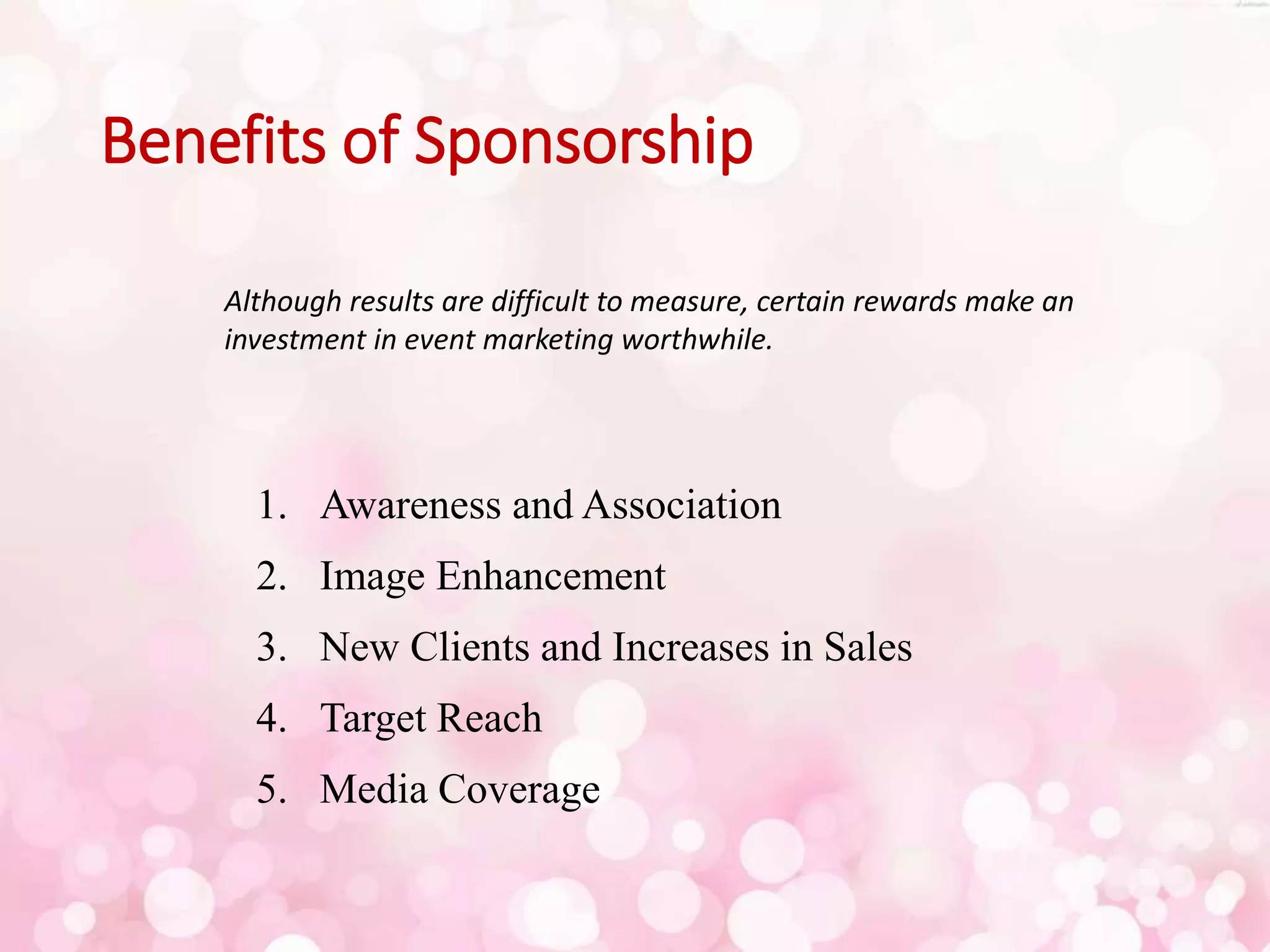
Benefits of Sponsorship
Although results are difficult to measure, certain rewards make an
investment in event marketing worthwhile.
1. Awareness and Association
2. Image Enhancement
3. New Clients and Increases in Sales
4. Target Reach
5. Media Coverage
Drawbacks of Sponsorships
Events can be sexy and glamorous, but there are some drawbacks.
1. Cost of associating with “big” events
2. Advertising clutter at events
3. Effectiveness difficult to measure
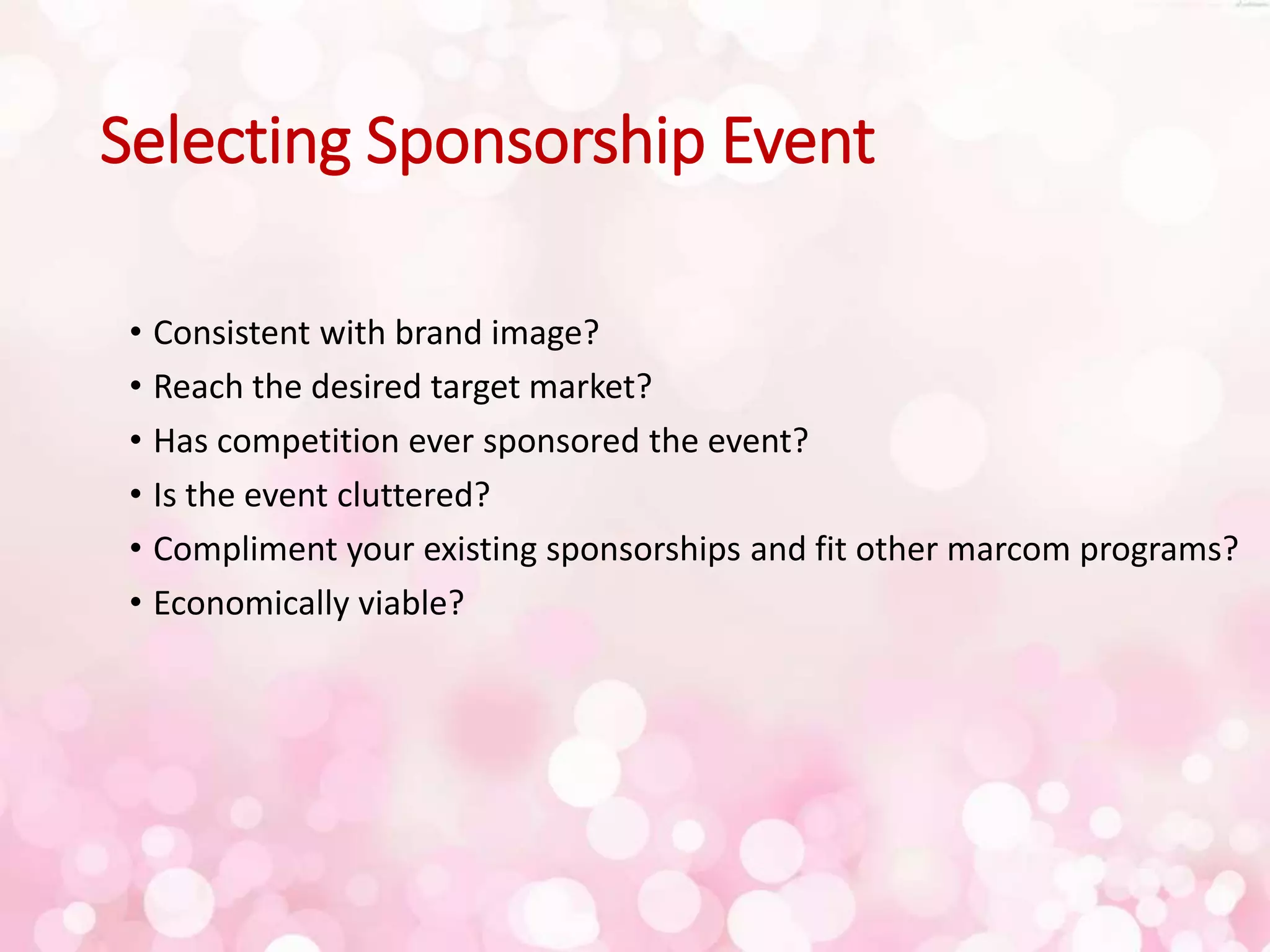
Selecting Sponsorship Event
• Consistent with brand image?
• Reach the desired target market?
• Has competition ever sponsored the event?
• Is the event cluttered?
• Compliment your existing sponsorships and fit other marcom programs?
• Economically viable?
Sponsorship and Event Marketing

Sponsorship and Event Marketing

  • 1.
  • 2.
    Sponsorship & EventMarketing • Sponsorship is the financial or in-kind support of an activity, used primarily to reach specified business goals. • "Sponsorship should not be confused with advertising. Advertising is considered a quantitative medium, whereas sponsorship is considered a qualitative medium. It promotes a company in association with the sponsee.“ • A large number of events these days use sponsorship support to offer more exciting programs and to help defray rising costs. Sponsorship allows you to reach specifically ​targeted niche markets without any waste. In addition, it is a powerful complement to other marketing programs, in addition to having a dramatic influence on customer relations.
  • 3.
    Why Growth inSponsorships • Avoid the clutter inherent in advertising media • Help companies respond to consumers’ changing media habits • Help companies gain the approval of various constituencies • Can enhance a brand’s equity • Enables marketers to target their efforts to geographic regions and/or to lifestyle groups Event Marketing Integrating a variety of communications elements behind an event theme. Event Sponsorship Financial support of an event in return for advertising privileges.
  • 4.
    Sports Sponsorship Strategies Acompany can invest a lot or a little. The benefits are the same but on a different level. • Global • International • National • Regional • Local Some companies such as McDonald’s and Coca-Cola provide support at all levels. Events and sponsorships are integral aspects of their marketing strategies. Sports marketing is extremely competitive so companies look for advantage by any means. 1. Ambush Marketing 2. Venue Sponsorships and Marketing 3. Value-Added Sponsorships (Celebrity Association)
  • 5.
  • 6.
    Entertainment Sponsorships Entertainment opportunitiesare ideal for companies wanting to reach youth and young adult targets. • Rock Concerts and Tours • Film Festivals With entertainment the goal is to leverage the sponsorship in order to to gain maximum benefit.
  • 7.
    Culture and ArtsSponsorships Culture and the arts reaches a more selective and upscale audience. It is “class” reach instead of “mass” reach. Dance Theatre Music Literature Stratford Festival Shaw Festival Just for Laughs Festival The primary benefit is goodwill; it is part of a company’s corporate citizenship program.
  • 8.
    Cause Marketing Sponsorships Associationwith a cause has a positive effect on consumer’s perceptions of a brand or company. CIBC Run for the Cure Ronald McDonald’s Children’s Charities A means of emotionally connecting with consumers. Some companies develop and sponsor their own good causes.
  • 10.
    Product Promotional Tours Experiential Marketing Findingways for a target audience to interact directly with a product. A team arrives at pre-determined locations to actively promote and distribute a product. Mountain Dew implements themed skateboarding tours.
  • 12.
    To Participate orNot? The decision to participate in event marketing should be based on predetermined criteria. • Exclusivity • Must compliment other IMC strategies • Reach target effectively • Appropriate image • Media coverage opportunity. The “fit” between event and sponsor is crucial.
  • 13.
    Event Marketing Planning IMC PlanEvent Marketing Plan Concept Objectives Strategies Execution Evaluation and Measurement Advertising and PR Strategy
  • 14.
    Event Concept Event Concept andDesign Theme Venue $ Resources Timing Rooms & Layout Technical & A/V Suppliers Accomodations Number of and extent of decisions depends on size and scope of the event.
  • 15.
    Event Objectives Objectives areessential in order to justify investment. Some possible objectives include: • Size of audience reached • Ability to reach target • Sponsor recognition levels • Potential sales • Economic Impact Objectives are included in an event proposal along with organizational details and a timeline.
  • 16.
    Event Marketing Strategies Anevent is much like a product so the marketing strategies are similar. • Define the product (the event) • Establish price • Distribution (of tickets) • Marketing Communications
  • 17.
    Benefits of Sponsorship Althoughresults are difficult to measure, certain rewards make an investment in event marketing worthwhile. 1. Awareness and Association 2. Image Enhancement 3. New Clients and Increases in Sales 4. Target Reach 5. Media Coverage
  • 18.
    Drawbacks of Sponsorships Eventscan be sexy and glamorous, but there are some drawbacks. 1. Cost of associating with “big” events 2. Advertising clutter at events 3. Effectiveness difficult to measure
  • 19.
    Selecting Sponsorship Event •Consistent with brand image? • Reach the desired target market? • Has competition ever sponsored the event? • Is the event cluttered? • Compliment your existing sponsorships and fit other marcom programs? • Economically viable?