Spermatogenesis vs. Oogenesis
   Gametogenesis using Meiosis in Males and Females
What is the name of the special
 cells that undergo meiosis?
Gametogenesis


∗ The process whereby haploid gametes (reproductive
  sex cells) are created.
∗ Spermatogenesis in males
∗ Oogenesis in females
Spermatogenesis


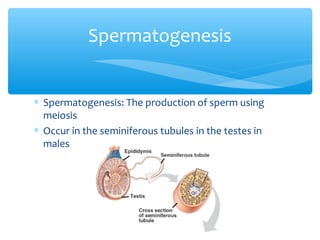
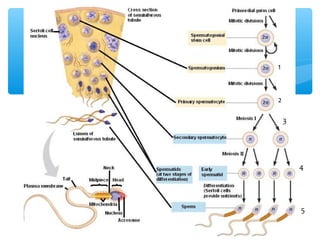
∗ Spermatogenesis: The production of sperm using
  meiosis
∗ Occur in the seminiferous tubules in the testes in
  males
Spermatogenesis


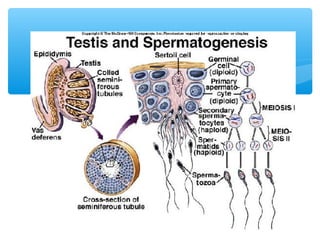
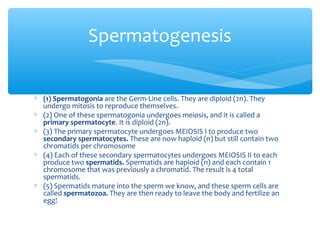
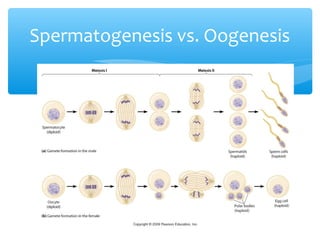
∗ (1) Spermatogonia are the Germ-Line cells. They are diploid (2n). They
  undergo mitosis to reproduce themselves.
∗ (2) One of these spermatogonia undergoes meiosis, and it is called a
  primary spermatocyte. It is diploid (2n).
∗ (3) The primary spermatocyte undergoes MEIOSIS I to produce two
  secondary spermatocytes. These are now haploid (n) but still contain two
  chromatids per chromosome
∗ (4) Each of these secondary spermatocytes undergoes MEIOSIS II to each
  produce two spermatids. Spermatids are haploid (n) and each contain 1
  chromosome that was previously a chromatid. The result is 4 total
  spermatids.
∗ (5) Spermatids mature into the sperm we know, and these sperm cells are
  called spermatozoa. They are then ready to leave the body and fertilize an
  egg!
1


2

    3


        4


        5
Spermatogenesis


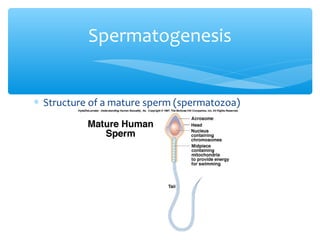
∗ Structure of a mature sperm (spermatozoa)
Spermatogenesis


∗ Also, Sertoli cells are in the seminiferous tubules and help
  the process of spermatogenesis. They engulf (take in)
  extra cytoplasm from the spermatids.

∗ SUMMARY of SPERMATOGENESIS:
  ∗ 4 haploid spermatozoa (mature sperm) are created via
    meiosis from an original diploid spermatogonium (germ line
    cell)
  ∗ Occurs in the testes in the seminiferous tubules
  ∗ The production of sperm is an ongoing process in the
    seminiferous tubules
Oogenesis


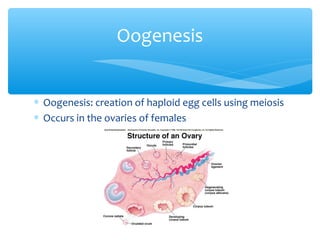
∗ Oogenesis: creation of haploid egg cells using meiosis
∗ Occurs in the ovaries of females
Oogenesis


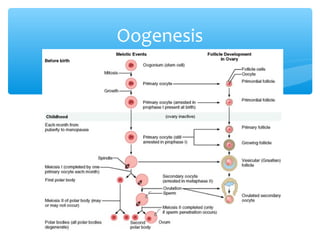
∗ Follicles in the ovaries are structures that contain
  primary oocytes. The germ line cells, oogonia,
  produced all of the primary oocytes while the fetus
  was developing. Therefore, when a baby female is
  born all of her follicles contain primary oocytes! They
  stay this way unless they undergo ovulation.
∗ Females are born with 1 million follicles in their
  ovaries!
Oogenesis


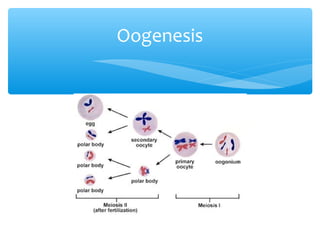
∗ The primary oocytes that are diploid (2n) are arrested (paused)
  at Prophase I of Meiosis I.
∗ When a female undergoes ovulation once a month, one of these
  follicles with the primary oocyte matures. It fully undergoes
  Meiosis I and results in two different structures:
  ∗ ONE haploid (n) secondary oocyte. It contains half the number
     of chromosomes but still has sister chromatids.
  ∗ ONE haploid (n) structure called a polar body!
∗ The polar body does not go on to become an egg. Through
  UNEQUAL CYTOKINESIS, the secondary oocyte gets most of the
  cytoplasm and the polar body is left with little cytoplasm. Why
  do you think this occurs?
Oogenesis
Oogenesis


∗ After Meiosis I occurs, the secondary oocyte that is haploid
  (n) is arrested (paused) at Metaphase II of Meiosis II. It
  stays in this state until FERTILIZATION!
∗ Once fertilization occurs, the secondary oocyte undergoes
  Meiosis II and the result again is two separate structure:
  ∗ ONE haploid ovum (egg)
  ∗ ONE polar body!
∗ The other polar body from the previous step contained
  chromatids, so it also undergoes Meiosis II and produces
  TWO polar bodies.
Oogenesis
Oogenesis


∗ SUMMARY of OOGENESIS:
 ∗ Results in three POLAR BODIES and one OVUM (egg)
   that has extra cytoplasm
 ∗ Meiosis I occurs during ovulation
 ∗ Meiosis II occurs after fertilization
 ∗ Occurs in the ovaries (and fallopian tubes for meiosis II)
   in females
Spermatogenesis vs. Oogenesis
References


∗   Biology Textbook
∗   Images:
∗   http://faculty.southwest.tn.edu/rburkett/A&P2_r7.jpg
∗   http://bio1152.nicerweb.com/Locked/media/ch46/
    46_12Spermatogenesis.jpg
∗   http://bio1151.nicerweb.com/doc/class/bio1152/Locked/media/ch46/
    46_12Testis.jpg
∗   http://www.northland.cc.mn.us/biology/ap2online/ap2lab/lab10/images/
    sperm.jpg
∗   http://bohone.wikispaces.com/file/view/ovary.jpg/31077243/ovary.jpg
∗   http://www.mun.ca/biology/desmid/brian/BIOL2060/BIOL2060-20/2009.jpg
∗   http://mac122.icu.ac.jp/biobk/oogenesis.jpg
∗   http://www.colorado.edu/intphys/iphy4480tsai/oogenesis.jpg

Spermatogenesis vs. oogenesis_-_germinario

  • 1.
    Spermatogenesis vs. Oogenesis Gametogenesis using Meiosis in Males and Females
  • 2.
    What is thename of the special cells that undergo meiosis?
  • 3.
    Gametogenesis ∗ The processwhereby haploid gametes (reproductive sex cells) are created. ∗ Spermatogenesis in males ∗ Oogenesis in females
  • 4.
    Spermatogenesis ∗ Spermatogenesis: Theproduction of sperm using meiosis ∗ Occur in the seminiferous tubules in the testes in males
  • 6.
    Spermatogenesis ∗ (1) Spermatogoniaare the Germ-Line cells. They are diploid (2n). They undergo mitosis to reproduce themselves. ∗ (2) One of these spermatogonia undergoes meiosis, and it is called a primary spermatocyte. It is diploid (2n). ∗ (3) The primary spermatocyte undergoes MEIOSIS I to produce two secondary spermatocytes. These are now haploid (n) but still contain two chromatids per chromosome ∗ (4) Each of these secondary spermatocytes undergoes MEIOSIS II to each produce two spermatids. Spermatids are haploid (n) and each contain 1 chromosome that was previously a chromatid. The result is 4 total spermatids. ∗ (5) Spermatids mature into the sperm we know, and these sperm cells are called spermatozoa. They are then ready to leave the body and fertilize an egg!
  • 7.
    1 2 3 4 5
  • 8.
    Spermatogenesis ∗ Structure ofa mature sperm (spermatozoa)
  • 9.
    Spermatogenesis ∗ Also, Sertolicells are in the seminiferous tubules and help the process of spermatogenesis. They engulf (take in) extra cytoplasm from the spermatids. ∗ SUMMARY of SPERMATOGENESIS: ∗ 4 haploid spermatozoa (mature sperm) are created via meiosis from an original diploid spermatogonium (germ line cell) ∗ Occurs in the testes in the seminiferous tubules ∗ The production of sperm is an ongoing process in the seminiferous tubules
  • 10.
    Oogenesis ∗ Oogenesis: creationof haploid egg cells using meiosis ∗ Occurs in the ovaries of females
  • 11.
    Oogenesis ∗ Follicles inthe ovaries are structures that contain primary oocytes. The germ line cells, oogonia, produced all of the primary oocytes while the fetus was developing. Therefore, when a baby female is born all of her follicles contain primary oocytes! They stay this way unless they undergo ovulation. ∗ Females are born with 1 million follicles in their ovaries!
  • 12.
    Oogenesis ∗ The primaryoocytes that are diploid (2n) are arrested (paused) at Prophase I of Meiosis I. ∗ When a female undergoes ovulation once a month, one of these follicles with the primary oocyte matures. It fully undergoes Meiosis I and results in two different structures: ∗ ONE haploid (n) secondary oocyte. It contains half the number of chromosomes but still has sister chromatids. ∗ ONE haploid (n) structure called a polar body! ∗ The polar body does not go on to become an egg. Through UNEQUAL CYTOKINESIS, the secondary oocyte gets most of the cytoplasm and the polar body is left with little cytoplasm. Why do you think this occurs?
  • 13.
  • 14.
    Oogenesis ∗ After MeiosisI occurs, the secondary oocyte that is haploid (n) is arrested (paused) at Metaphase II of Meiosis II. It stays in this state until FERTILIZATION! ∗ Once fertilization occurs, the secondary oocyte undergoes Meiosis II and the result again is two separate structure: ∗ ONE haploid ovum (egg) ∗ ONE polar body! ∗ The other polar body from the previous step contained chromatids, so it also undergoes Meiosis II and produces TWO polar bodies.
  • 15.
  • 16.
    Oogenesis ∗ SUMMARY ofOOGENESIS: ∗ Results in three POLAR BODIES and one OVUM (egg) that has extra cytoplasm ∗ Meiosis I occurs during ovulation ∗ Meiosis II occurs after fertilization ∗ Occurs in the ovaries (and fallopian tubes for meiosis II) in females
  • 17.
  • 18.
    References ∗ Biology Textbook ∗ Images: ∗ http://faculty.southwest.tn.edu/rburkett/A&P2_r7.jpg ∗ http://bio1152.nicerweb.com/Locked/media/ch46/ 46_12Spermatogenesis.jpg ∗ http://bio1151.nicerweb.com/doc/class/bio1152/Locked/media/ch46/ 46_12Testis.jpg ∗ http://www.northland.cc.mn.us/biology/ap2online/ap2lab/lab10/images/ sperm.jpg ∗ http://bohone.wikispaces.com/file/view/ovary.jpg/31077243/ovary.jpg ∗ http://www.mun.ca/biology/desmid/brian/BIOL2060/BIOL2060-20/2009.jpg ∗ http://mac122.icu.ac.jp/biobk/oogenesis.jpg ∗ http://www.colorado.edu/intphys/iphy4480tsai/oogenesis.jpg