SPARK CORE
SHIJIE ZHANG
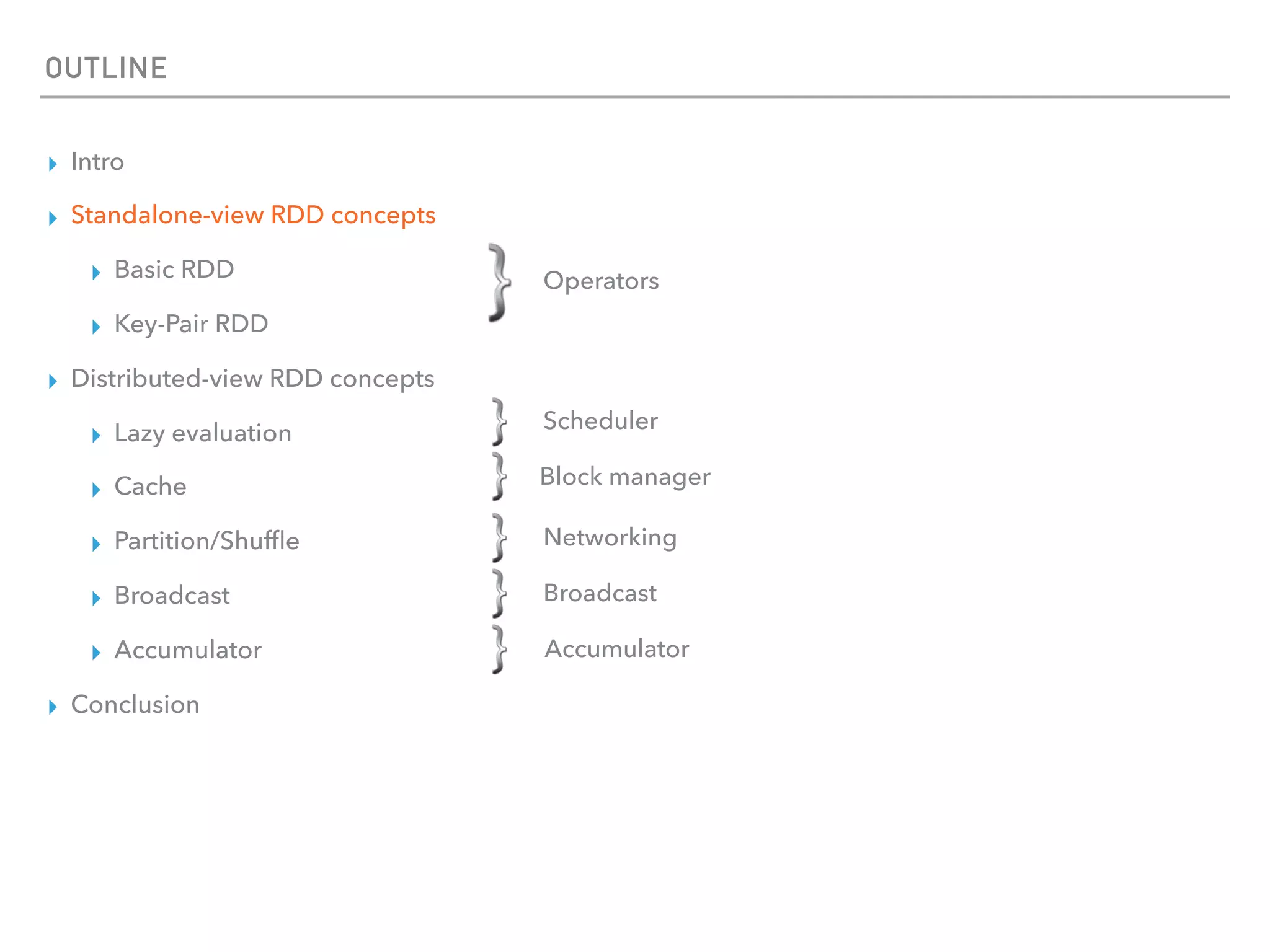
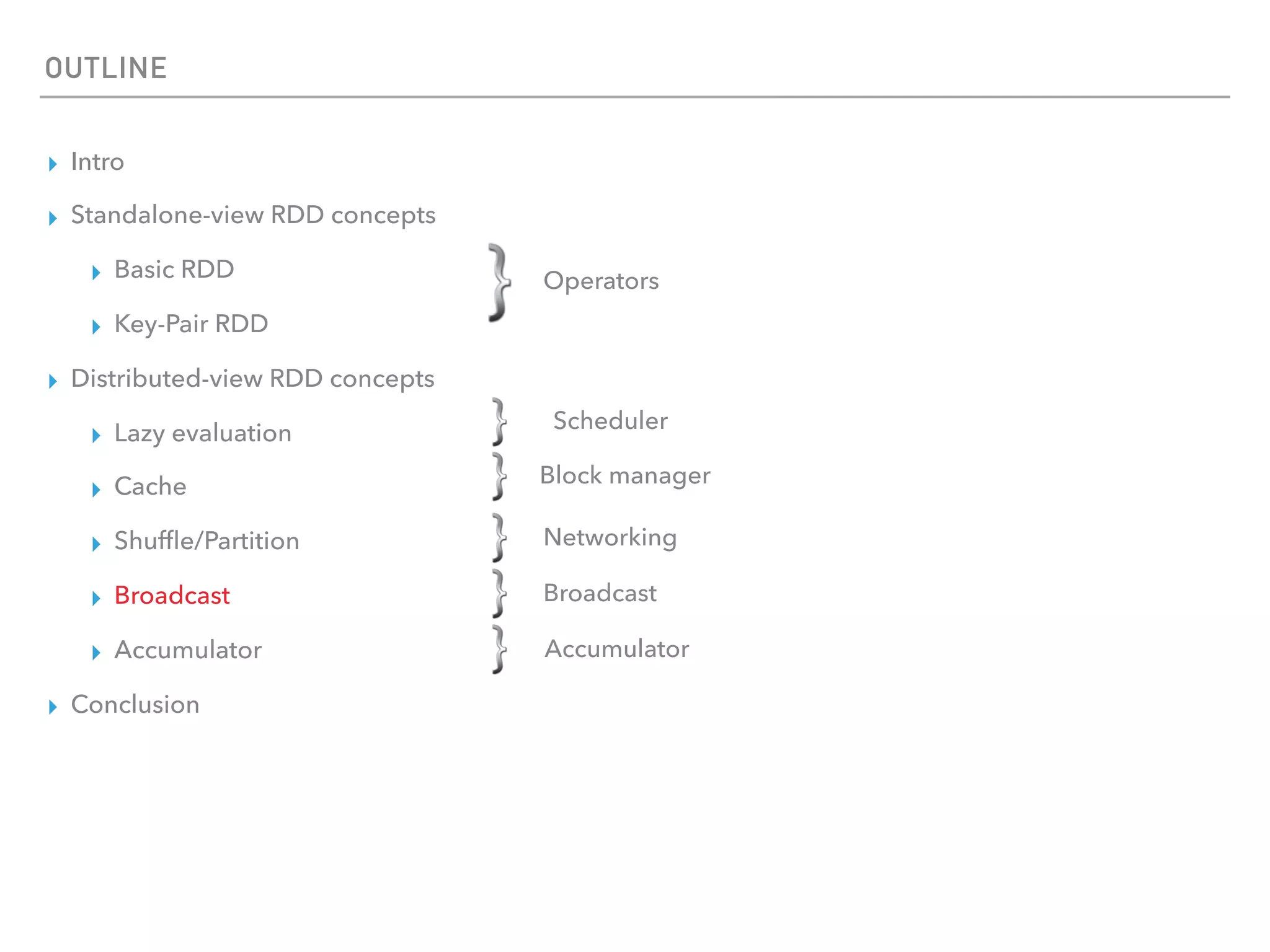
OUTLINE
▸ Intro
▸ Standalone-view RDD concepts
▸ Basic RDD
▸ Key-Pair RDD
▸ Distributed-view RDD concepts
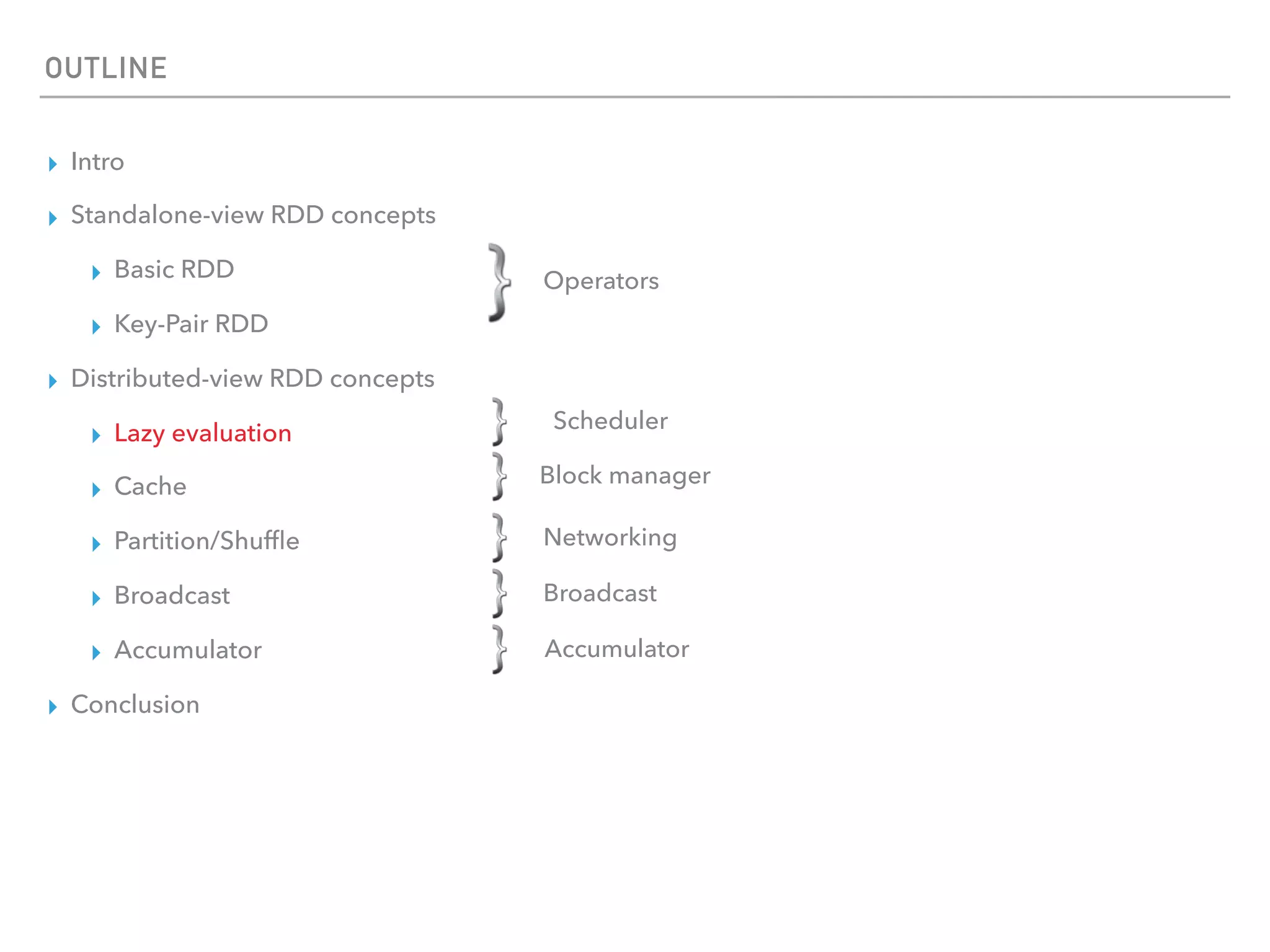
▸ Lazy evaluation
▸ Cache
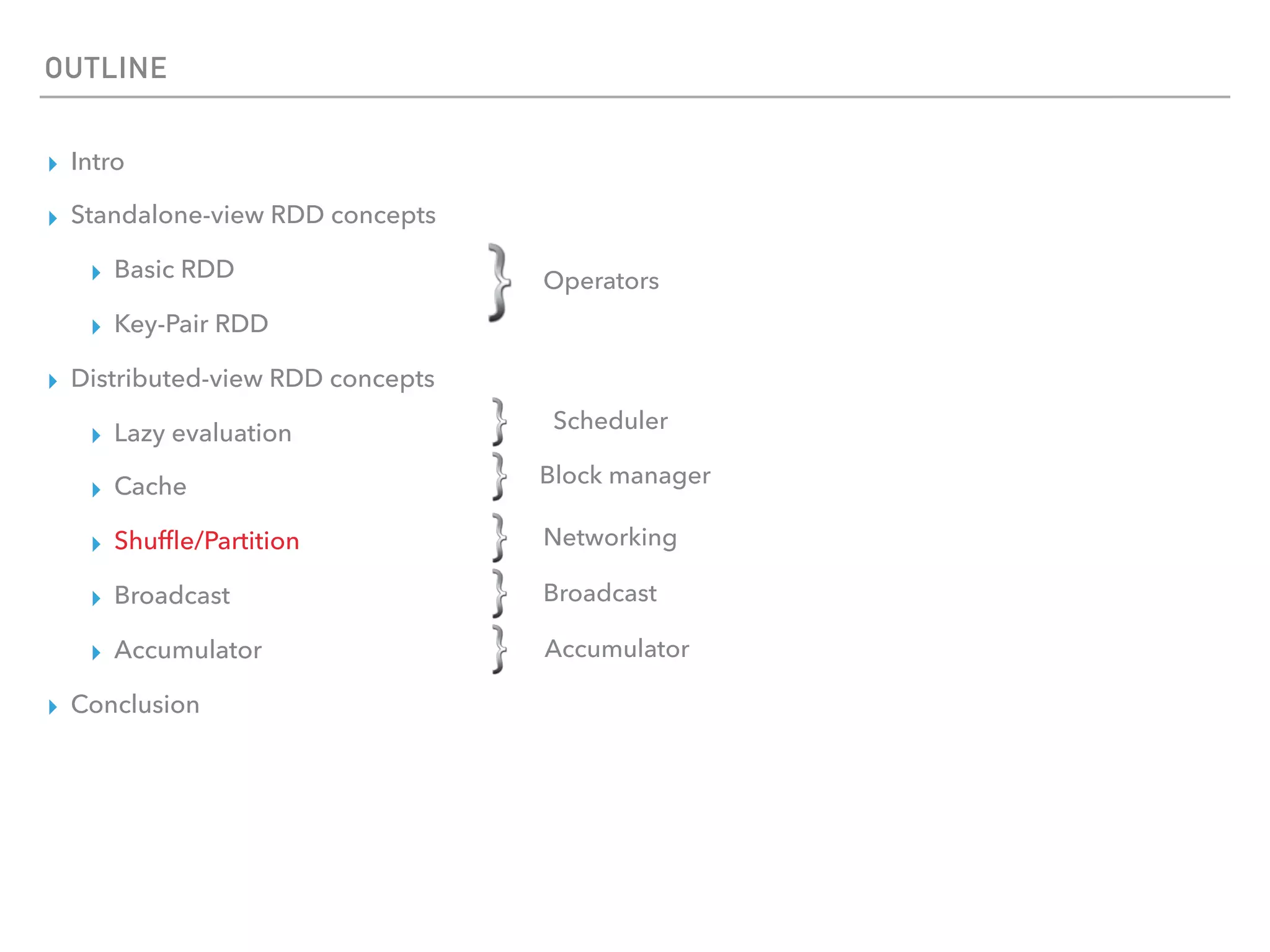
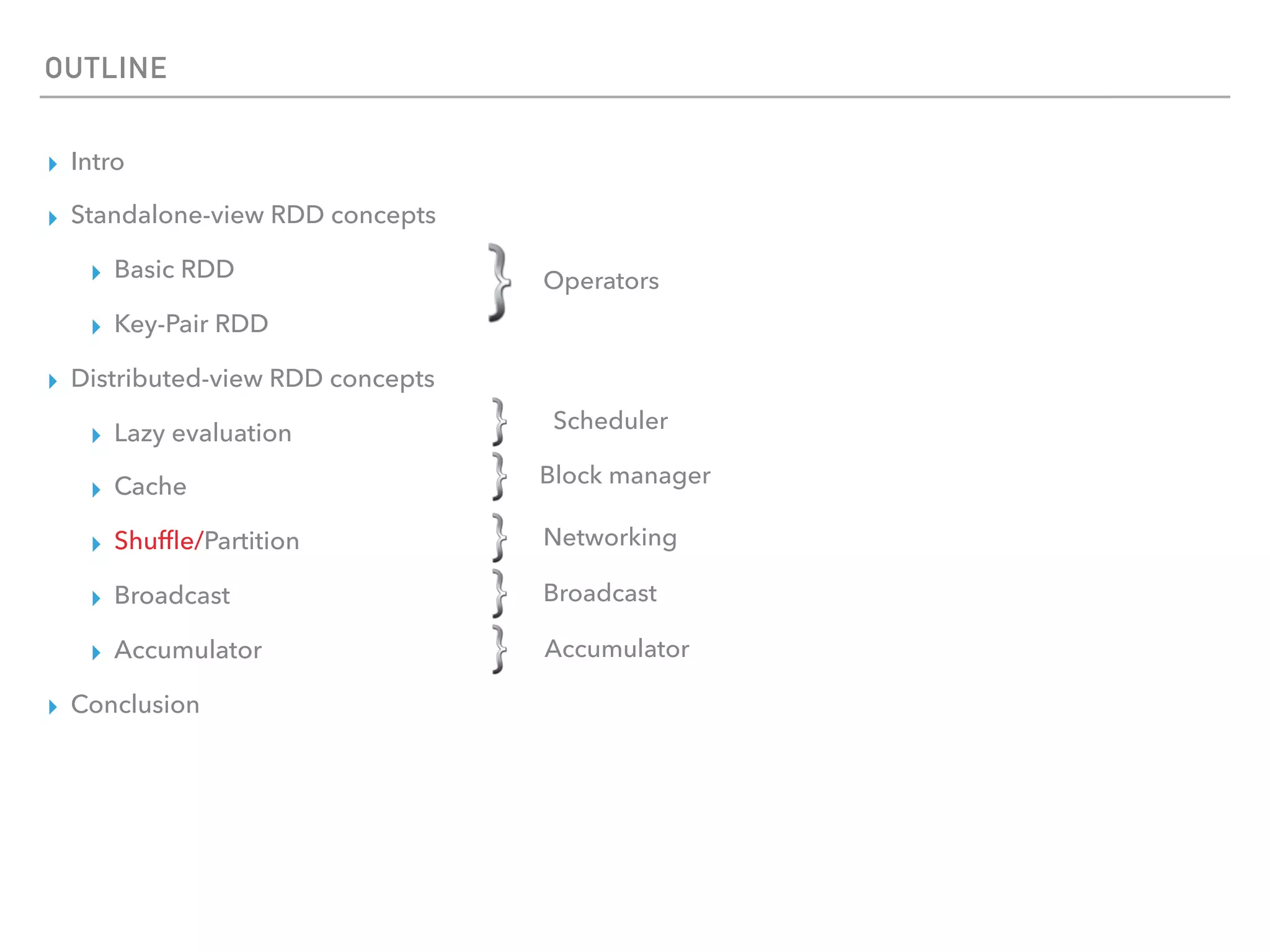
▸ Shuffle/Partition
▸ Broadcast
▸ Accumulator
▸ Conclusion
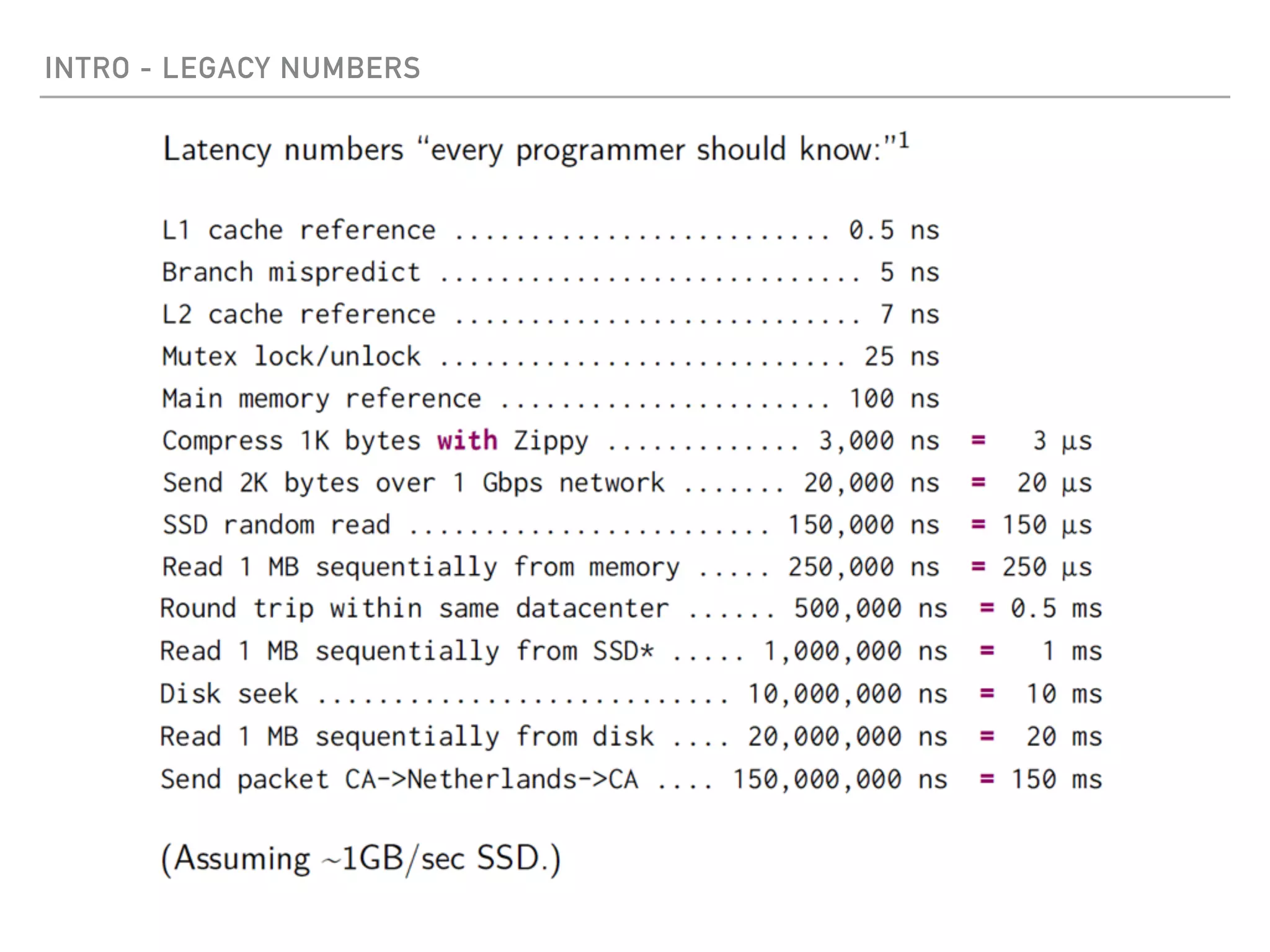
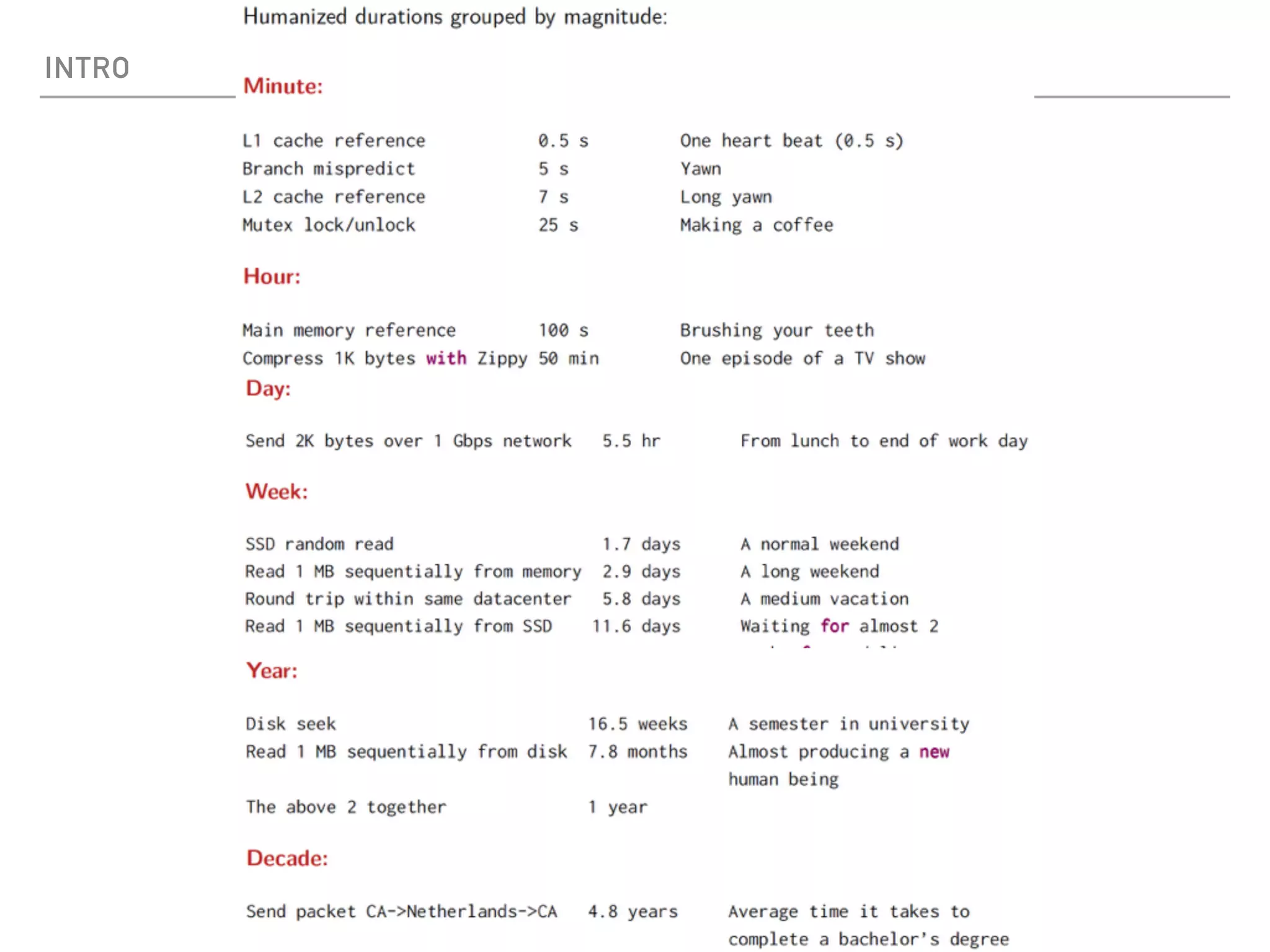
INTRO - LEGACY NUMBERS
INTRO
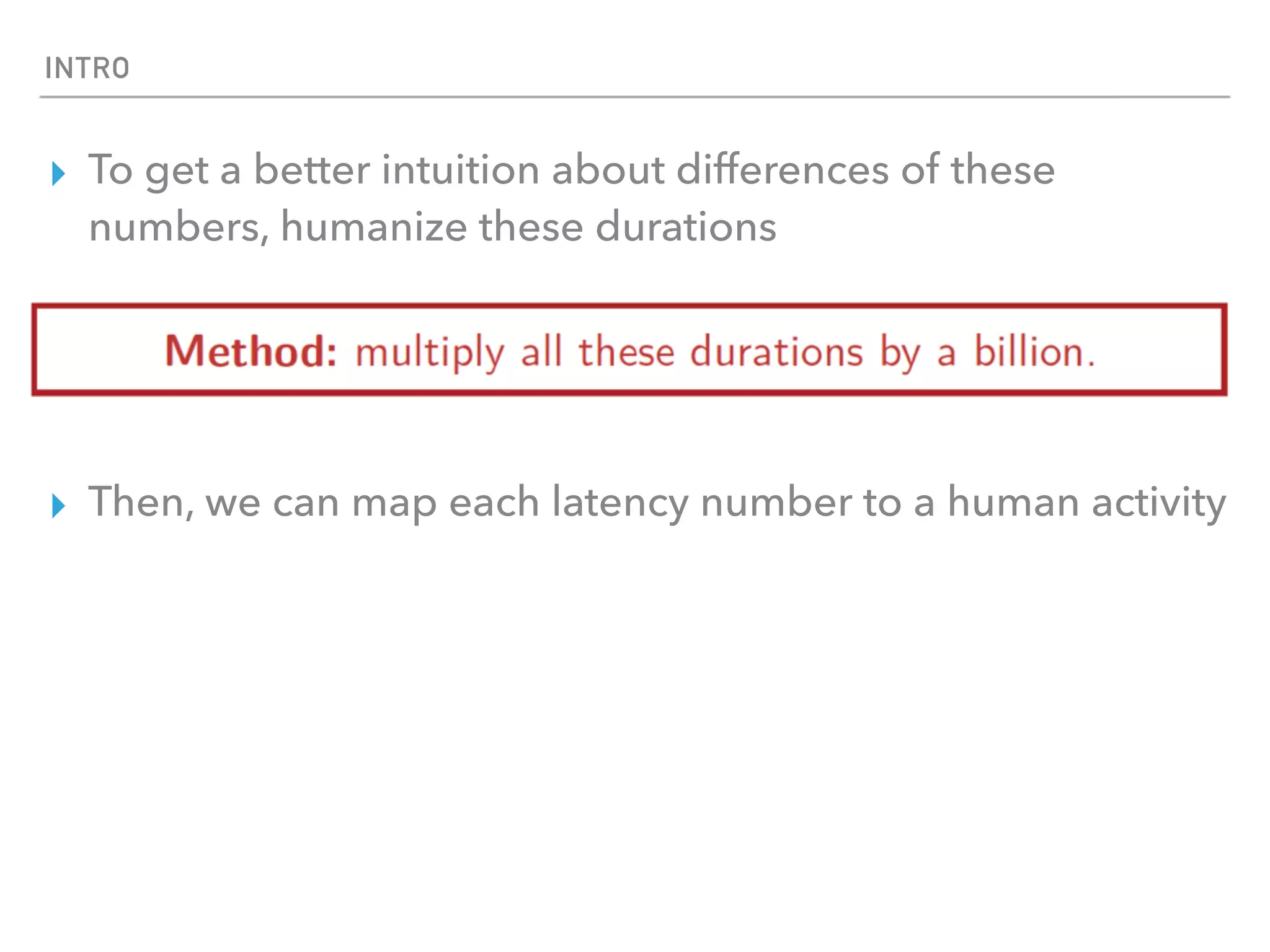
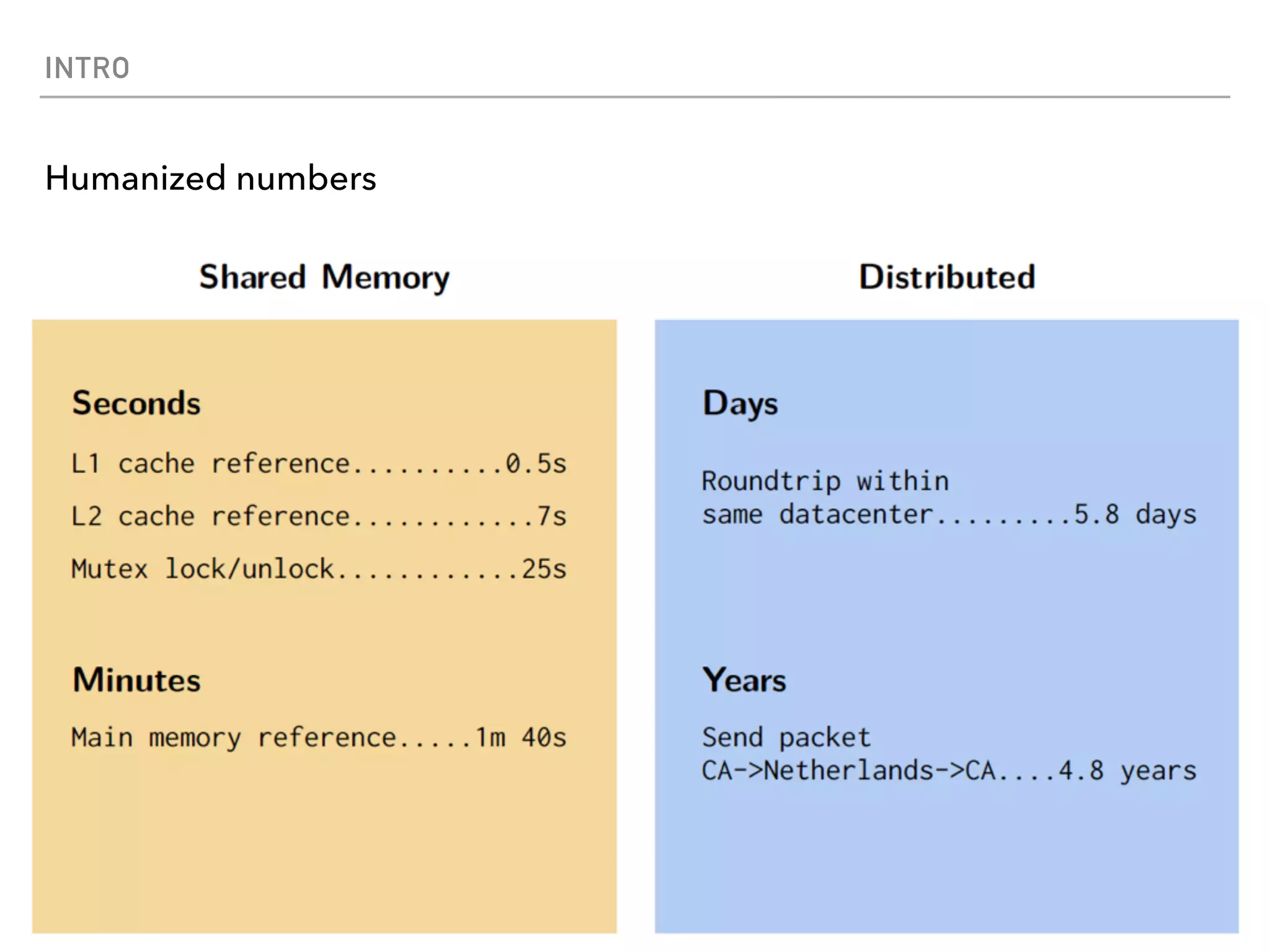
▸ To get a better intuition about differences of these
numbers, humanize these durations
▸ Then, we can map each latency number to a human activity
INTRO
INTRO
Humanized numbers
INTRO
INTRO
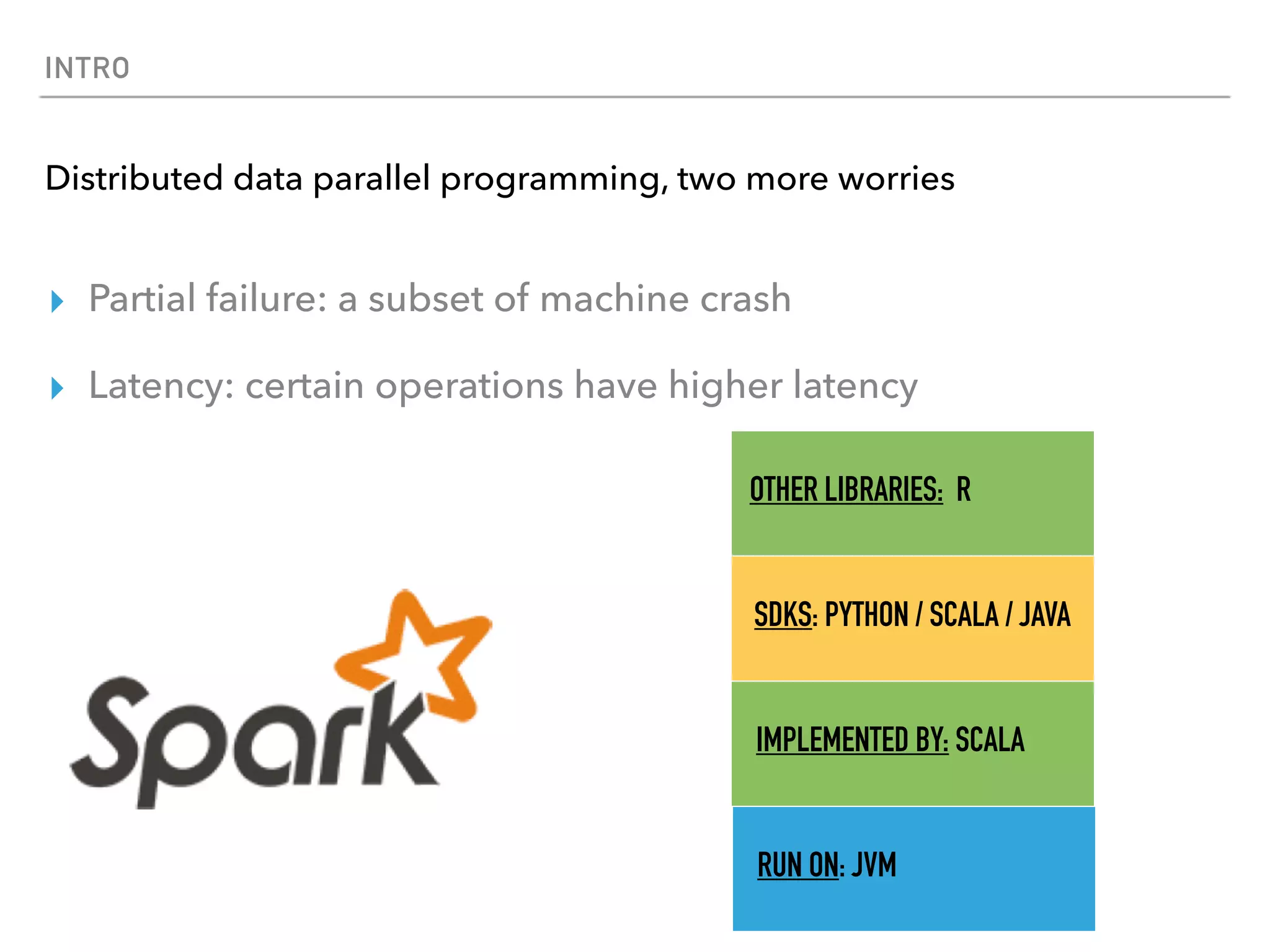
Distributed data parallel programming, two more worries
▸ Partial failure: a subset of machine crash
▸ Latency: certain operations have higher latency
RUN ON: JVM
IMPLEMENTED BY: SCALA
SDKS: PYTHON / SCALA / JAVA
OTHER LIBRARIES: R
INTRO
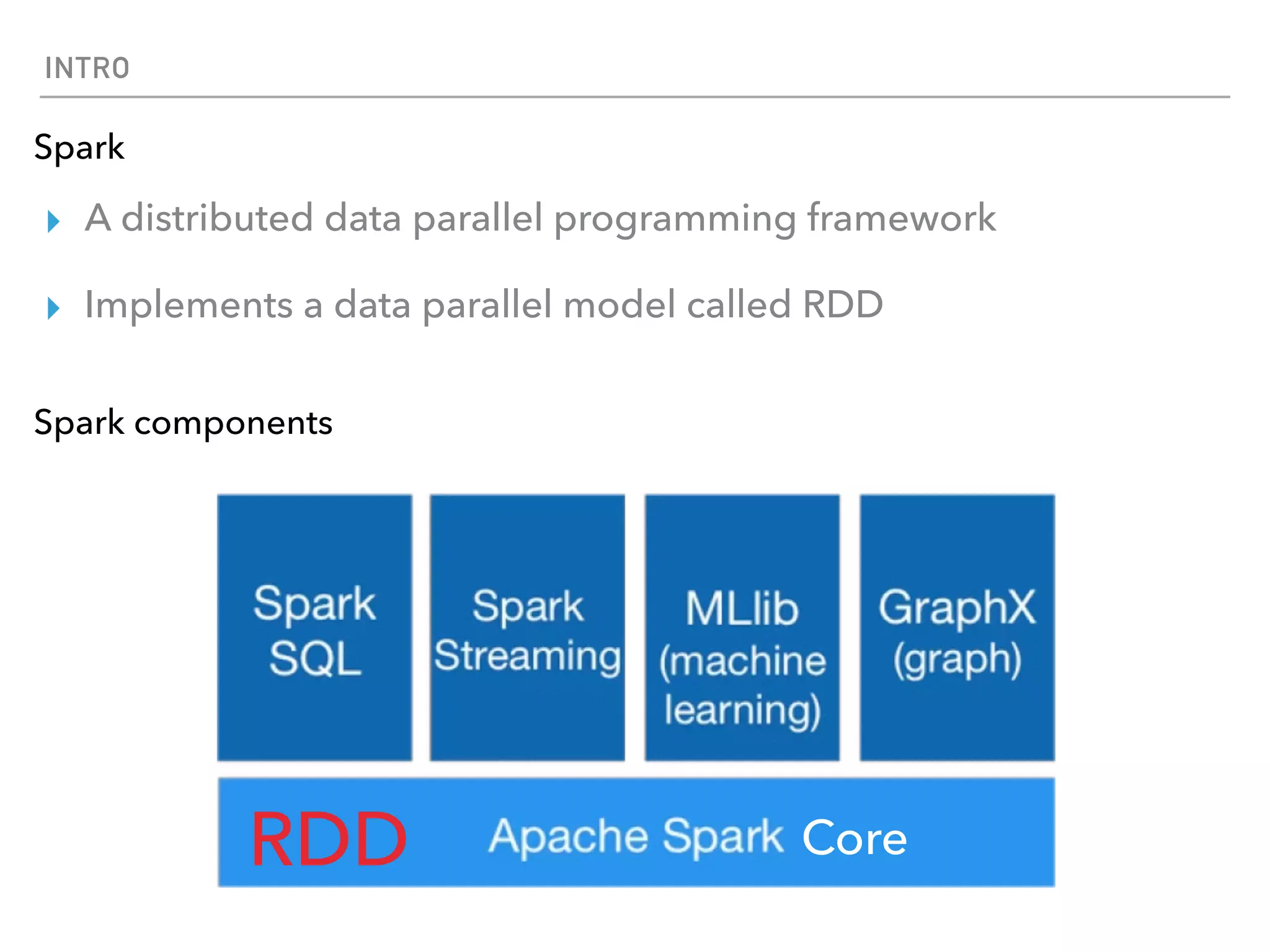
Spark components
Spark
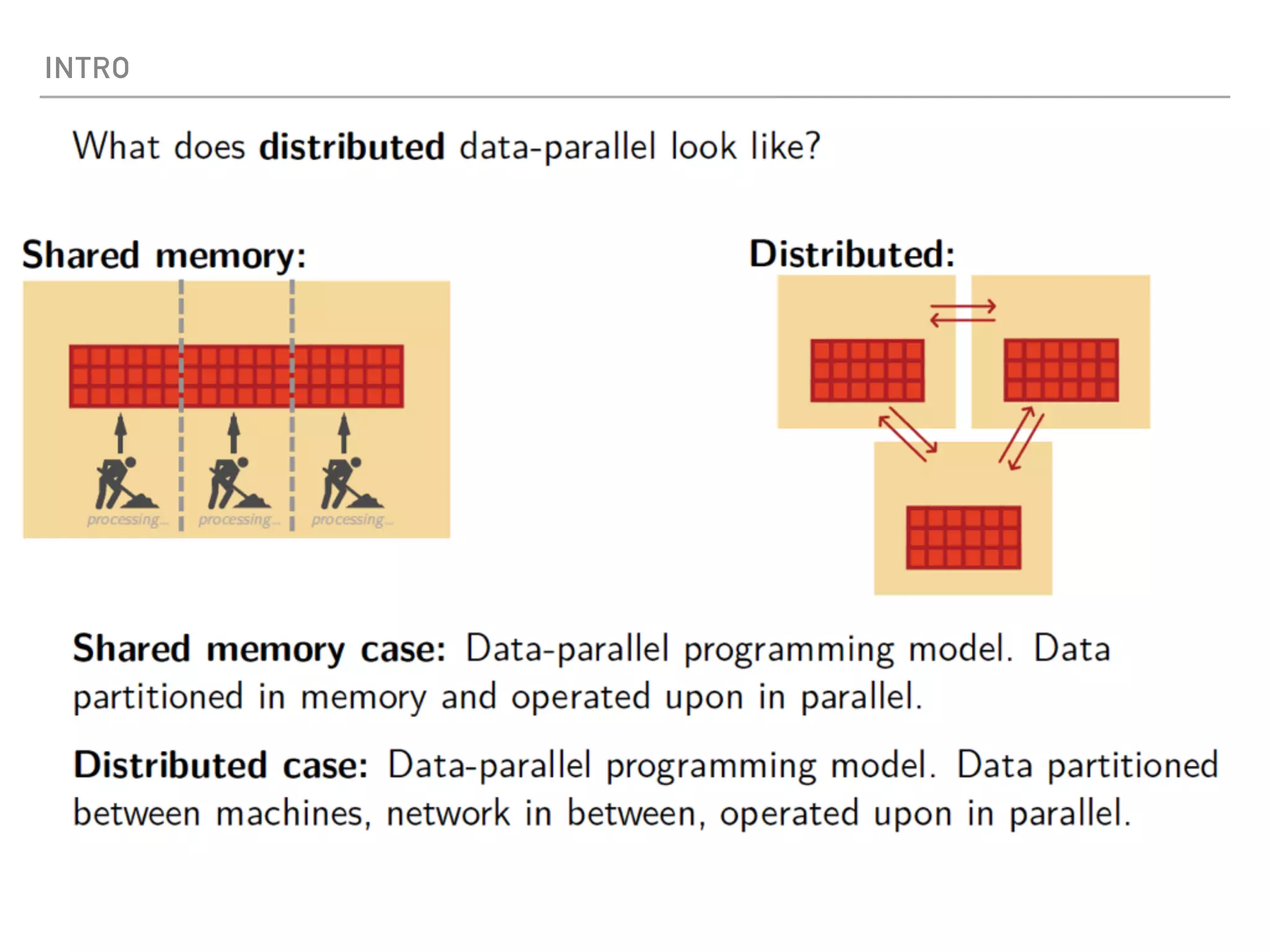
▸ A distributed data parallel programming framework
▸ Implements a data parallel model called RDD
RDD Core
INTRO
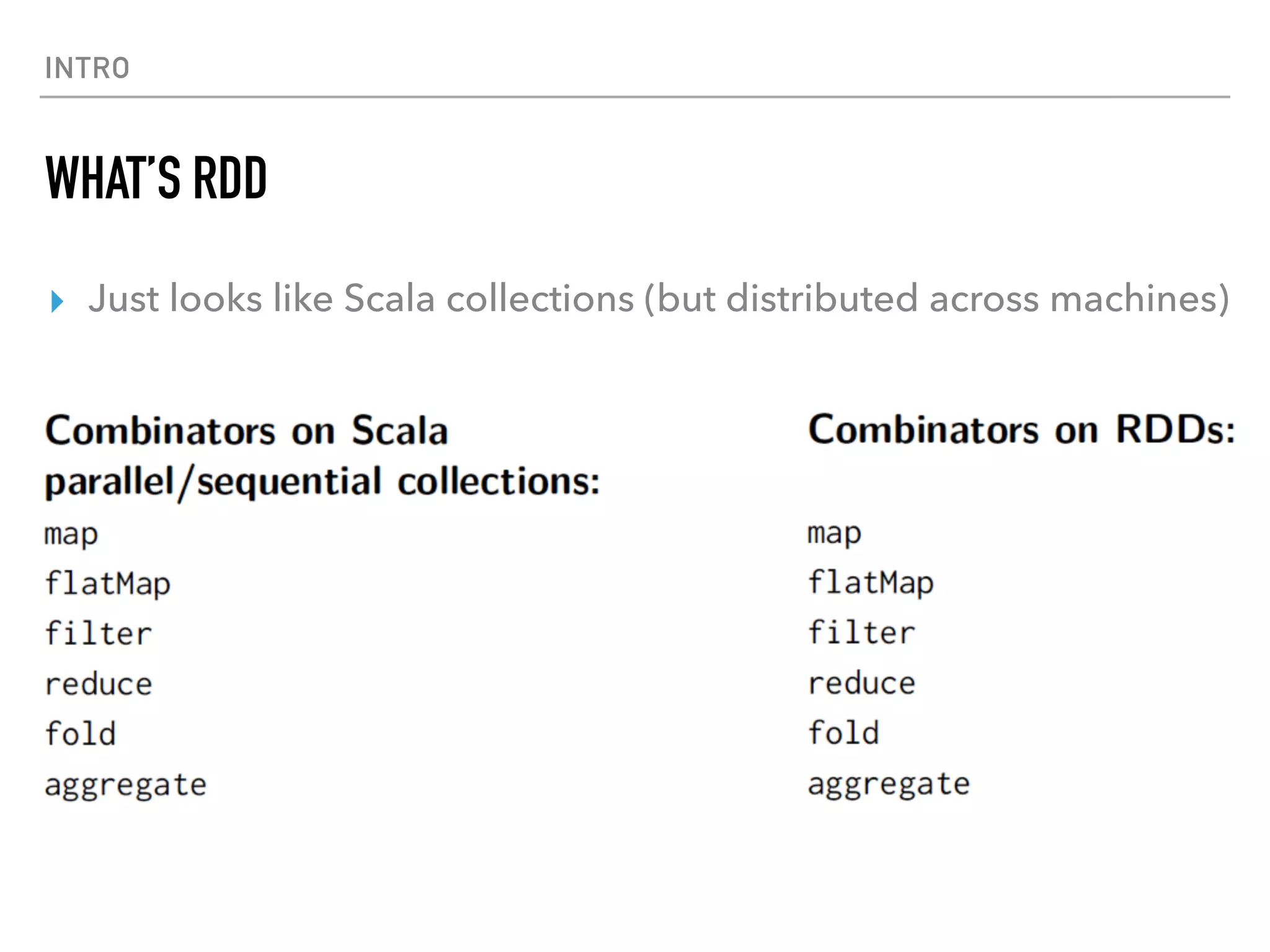
WHAT’S RDD
▸ Just looks like Scala collections (but distributed across machines)
INTRO
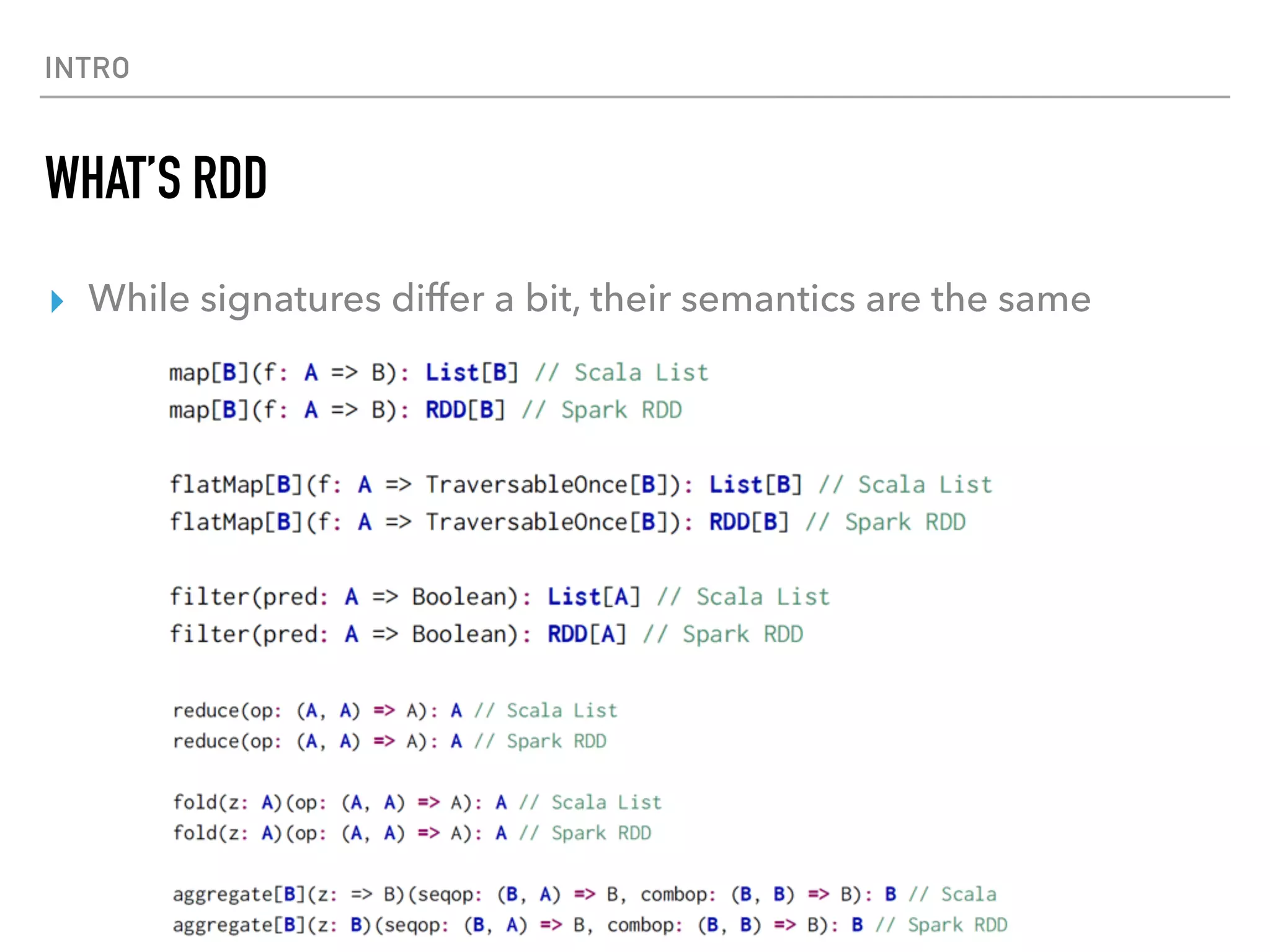
WHAT’S RDD
▸ While signatures differ a bit, their semantics are the same
INTRO
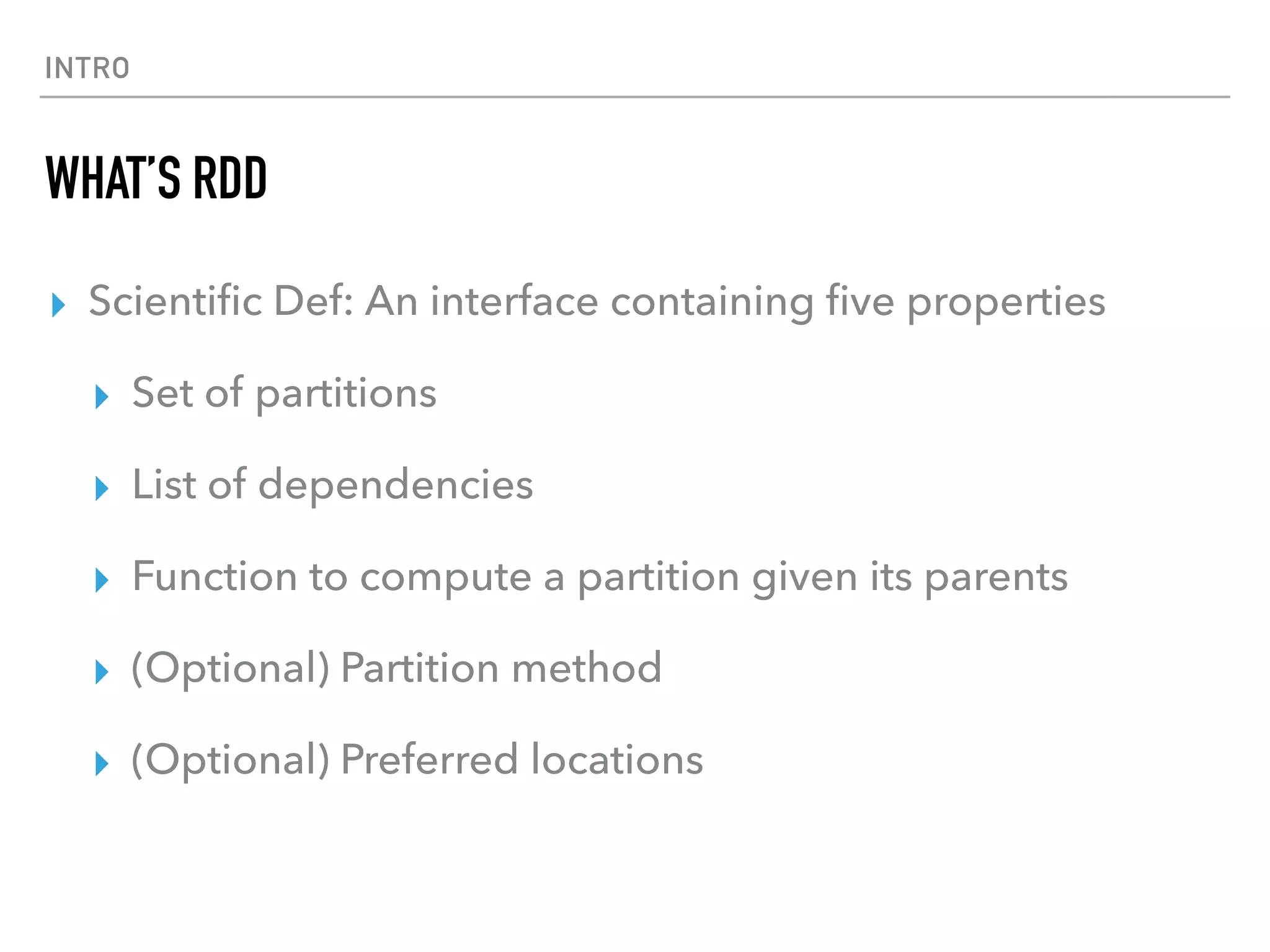
WHAT’S RDD
▸ Scientific Def: An interface containing five properties
▸ Set of partitions
▸ List of dependencies
▸ Function to compute a partition given its parents
▸ (Optional) Partition method
▸ (Optional) Preferred locations
INTRO
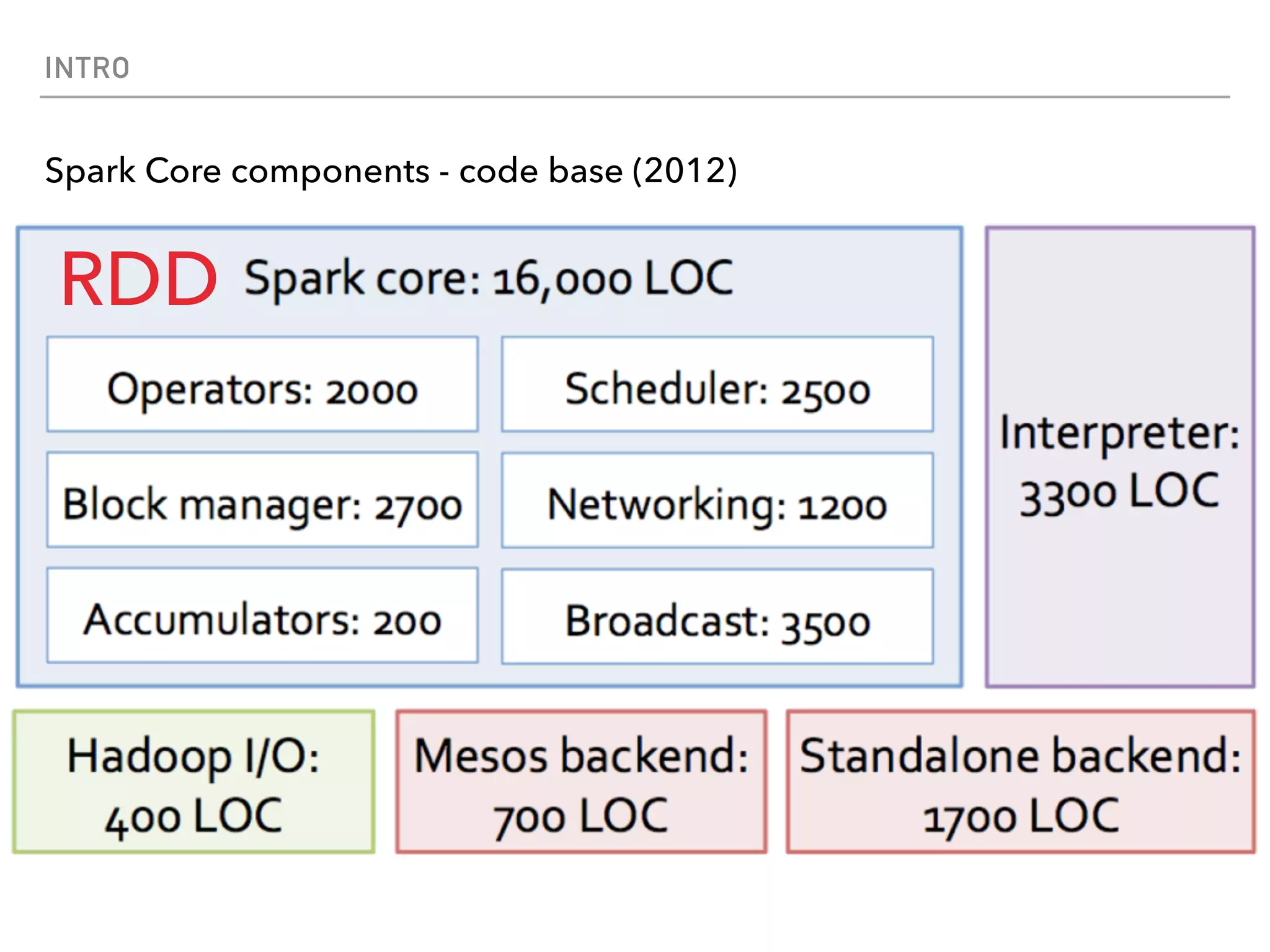
Spark Core components - code base (2012)
RDD
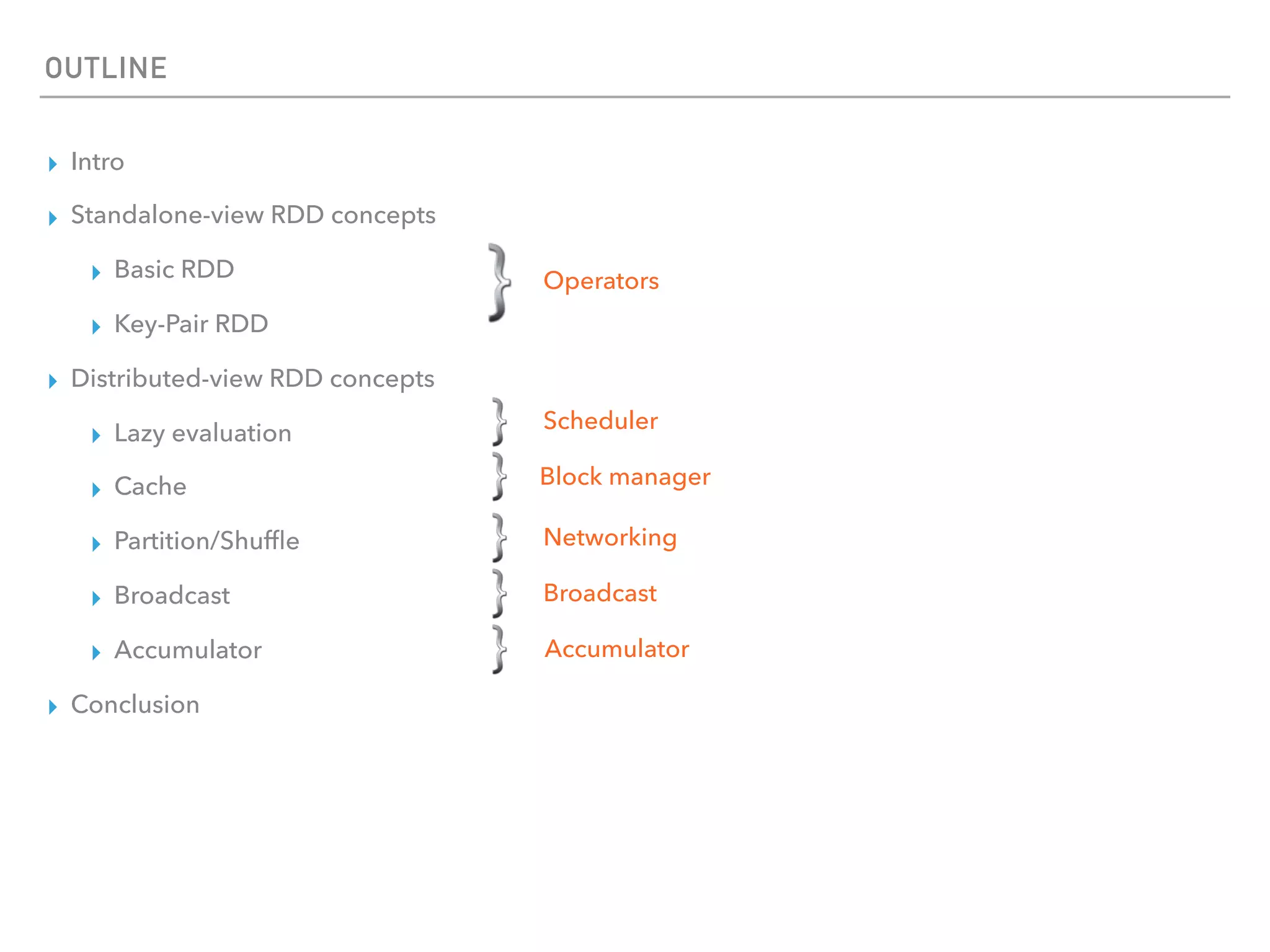
OUTLINE
▸ Intro
▸ Standalone-view RDD concepts
▸ Basic RDD
▸ Key-Pair RDD
▸ Distributed-view RDD concepts
▸ Lazy evaluation
▸ Cache
▸ Partition/Shuffle
▸ Broadcast
▸ Accumulator
▸ Conclusion
Operators
Scheduler
Block manager
Networking
Broadcast
Accumulator
OUTLINE
▸ Intro
▸ Standalone-view RDD concepts
▸ Basic RDD
▸ Key-Pair RDD
▸ Distributed-view RDD concepts
▸ Lazy evaluation
▸ Cache
▸ Partition/Shuffle
▸ Broadcast
▸ Accumulator
▸ Conclusion
Operators
Scheduler
Block manager
Networking
Broadcast
Accumulator
INTRO
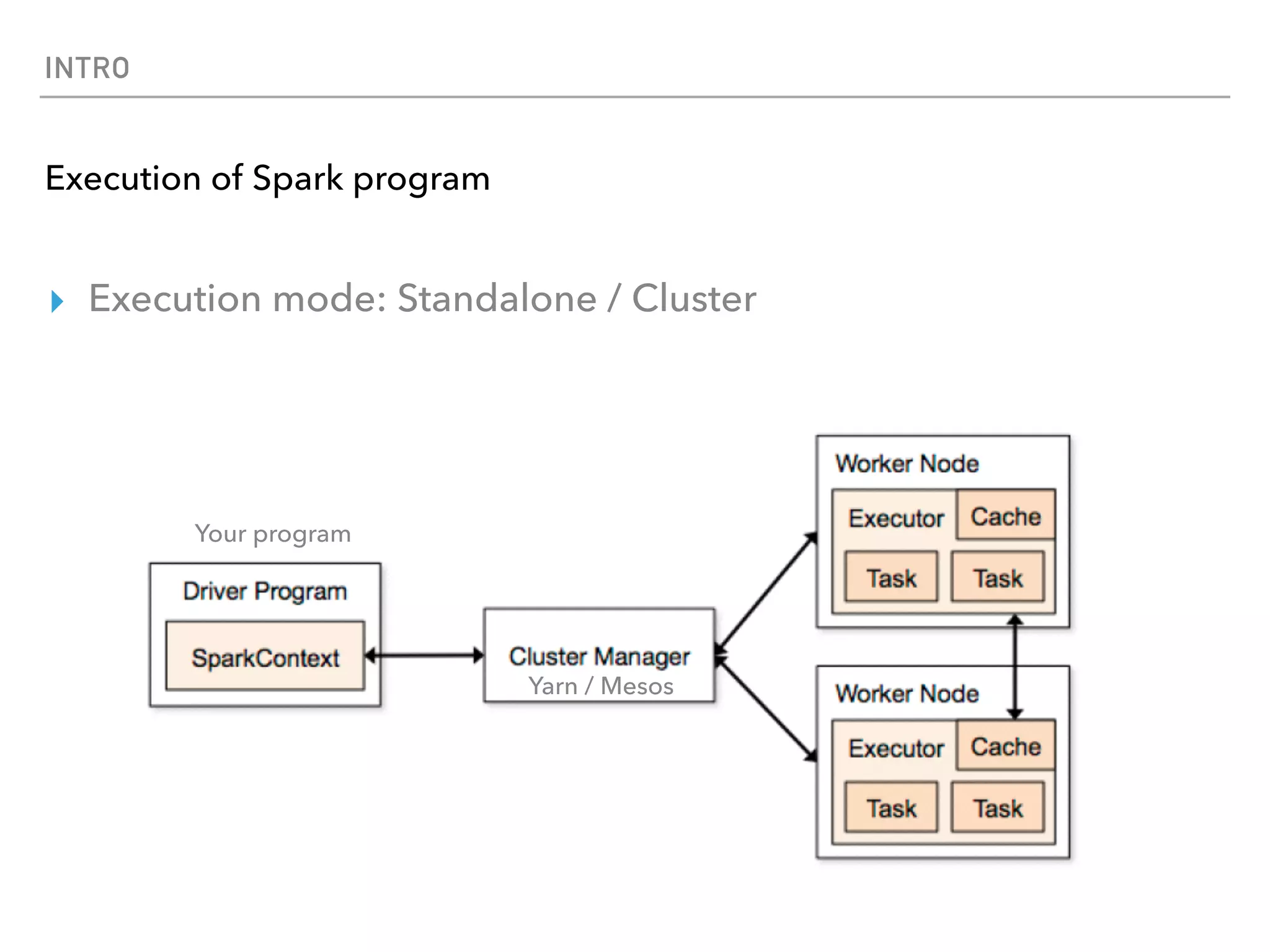
Execution of Spark program
▸ Execution mode: Standalone / Cluster
Yarn / Mesos
Your program
OUTLINE
▸ Intro
▸ Standalone-view RDD concepts
▸ Basic RDD
▸ Key-Pair RDD
▸ Distributed-view RDD concepts
▸ Lazy evaluation
▸ Cache
▸ Partition/Shuffle
▸ Broadcast
▸ Accumulator
▸ Conclusion
Operators
Scheduler
Block manager
Networking
Broadcast
Accumulator
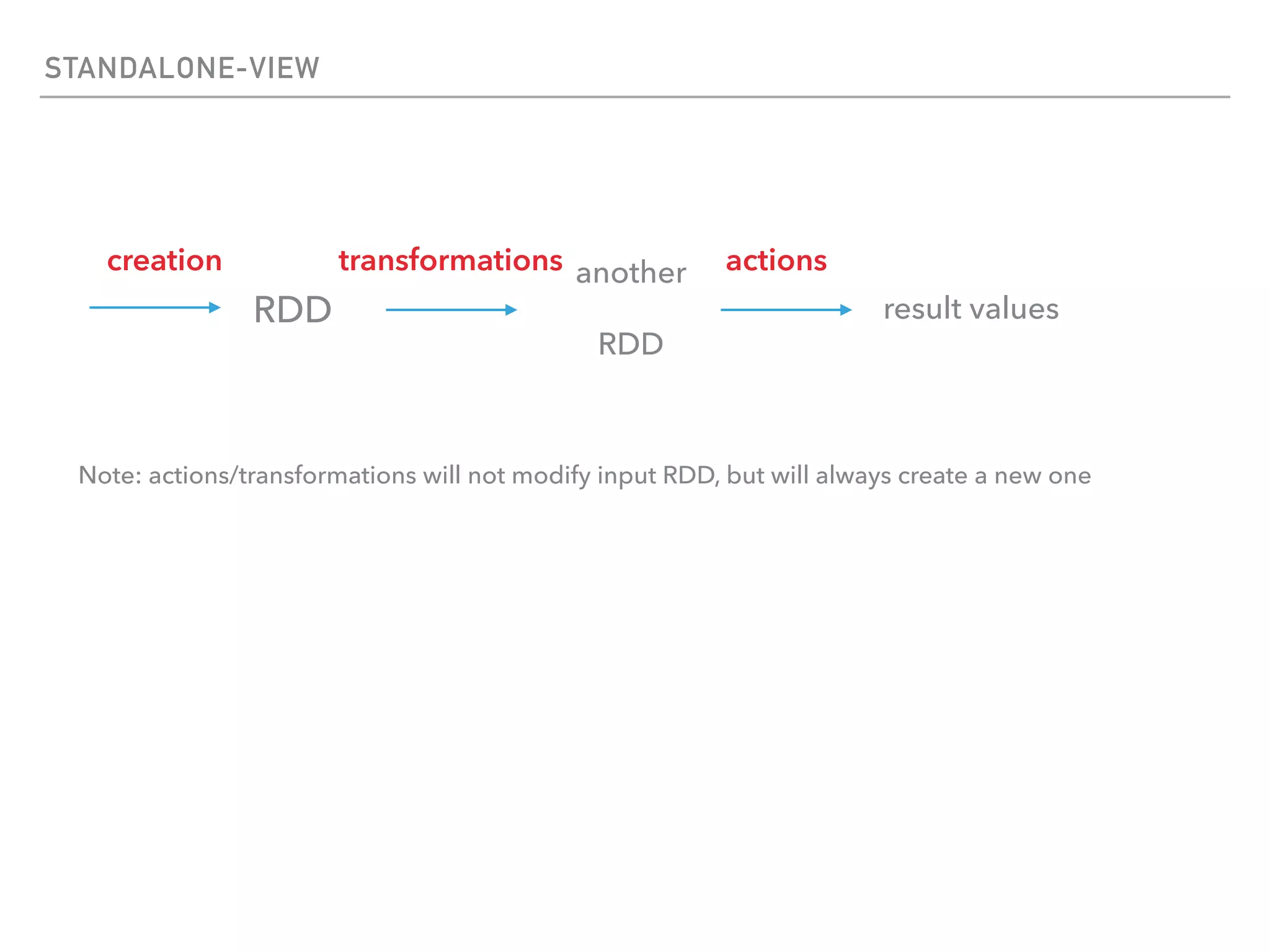
STANDALONE-VIEW
RDD
transformations another
RDD
actions
result values
creation
Note: actions/transformations will not modify input RDD, but will always create a new one
STANDALONE-VIEW
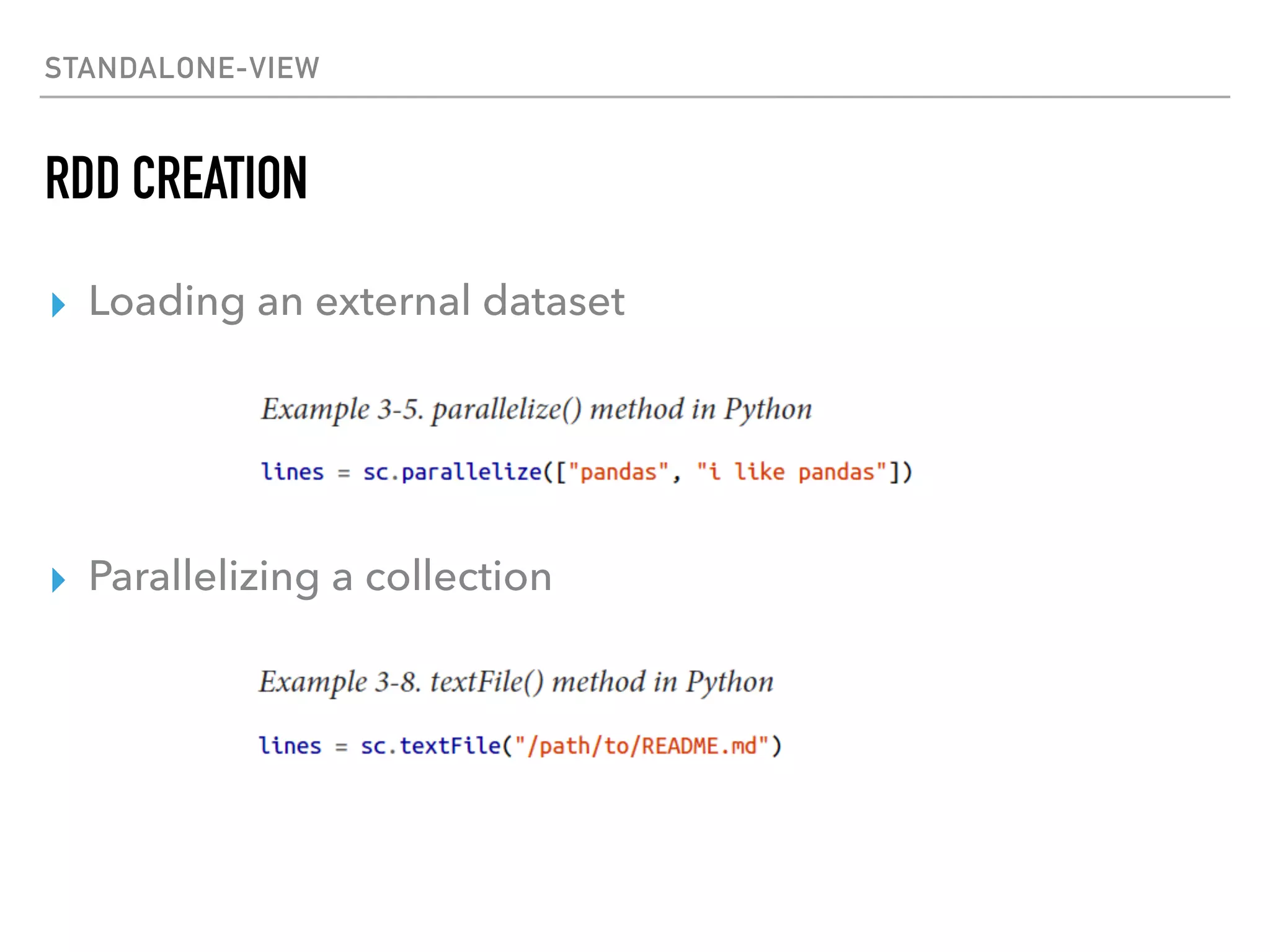
RDD CREATION
▸ Loading an external dataset
▸ Parallelizing a collection
STANDALONE-VIEW
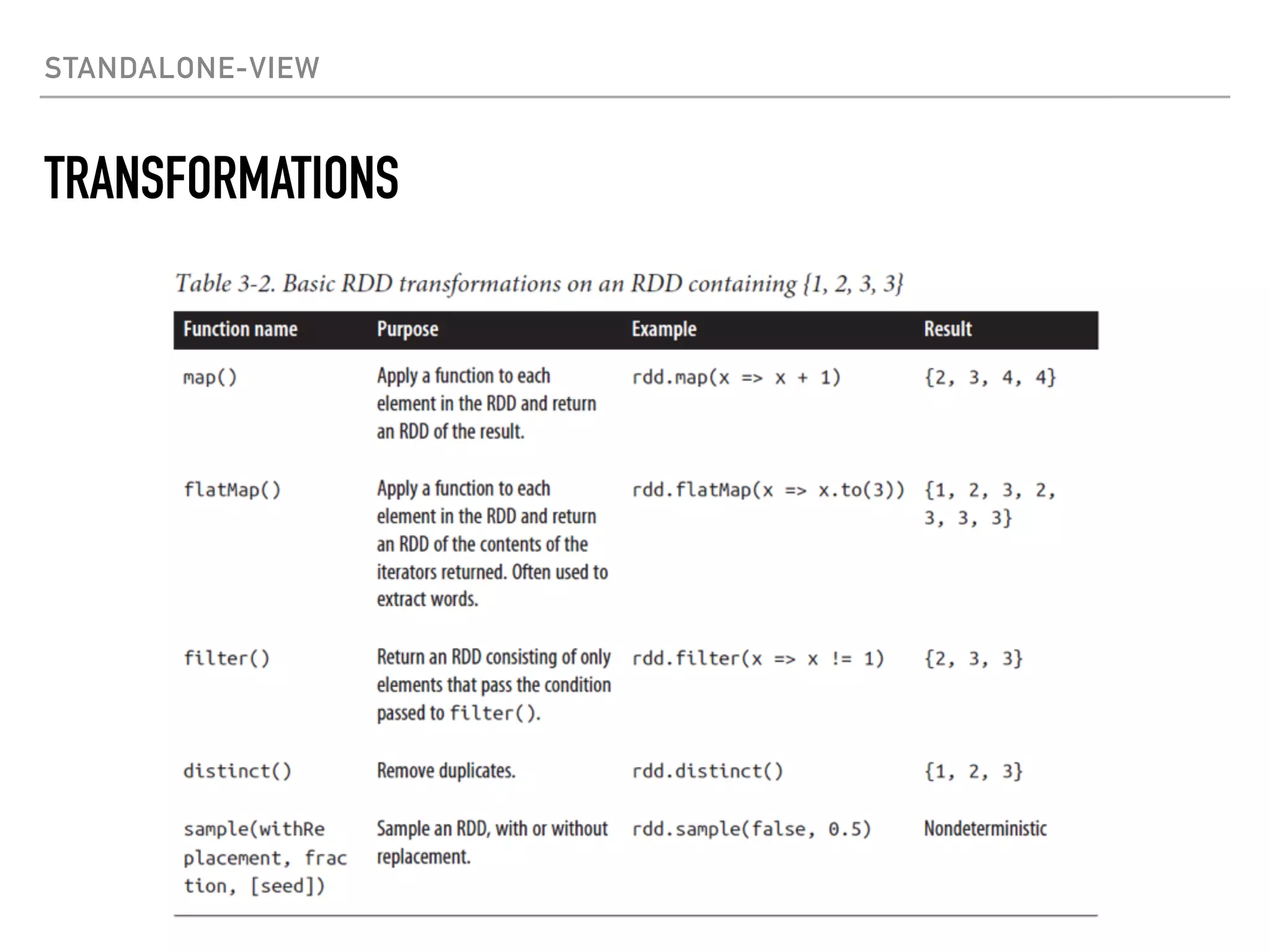
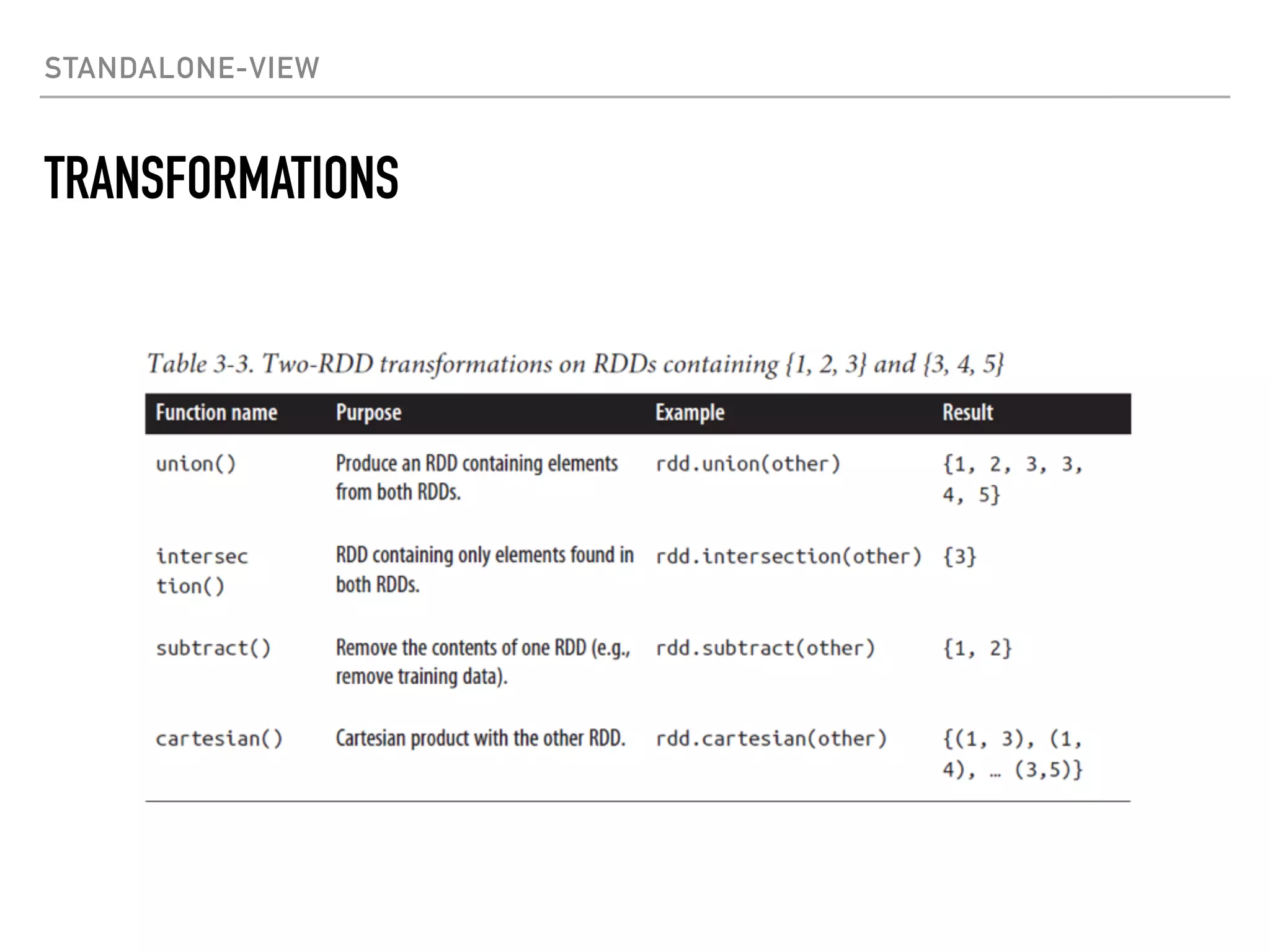
TRANSFORMATIONS
STANDALONE-VIEW
TRANSFORMATIONS
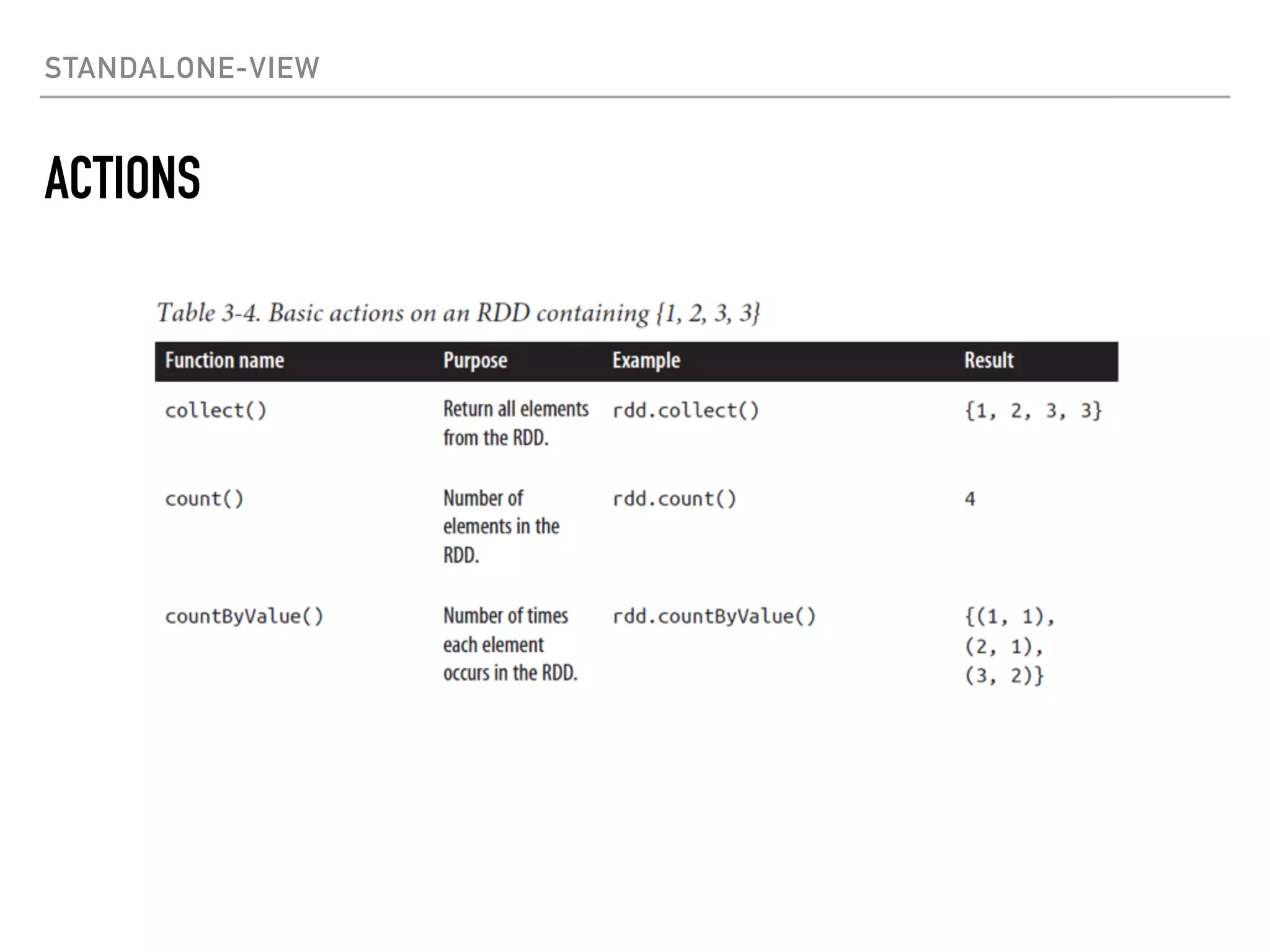
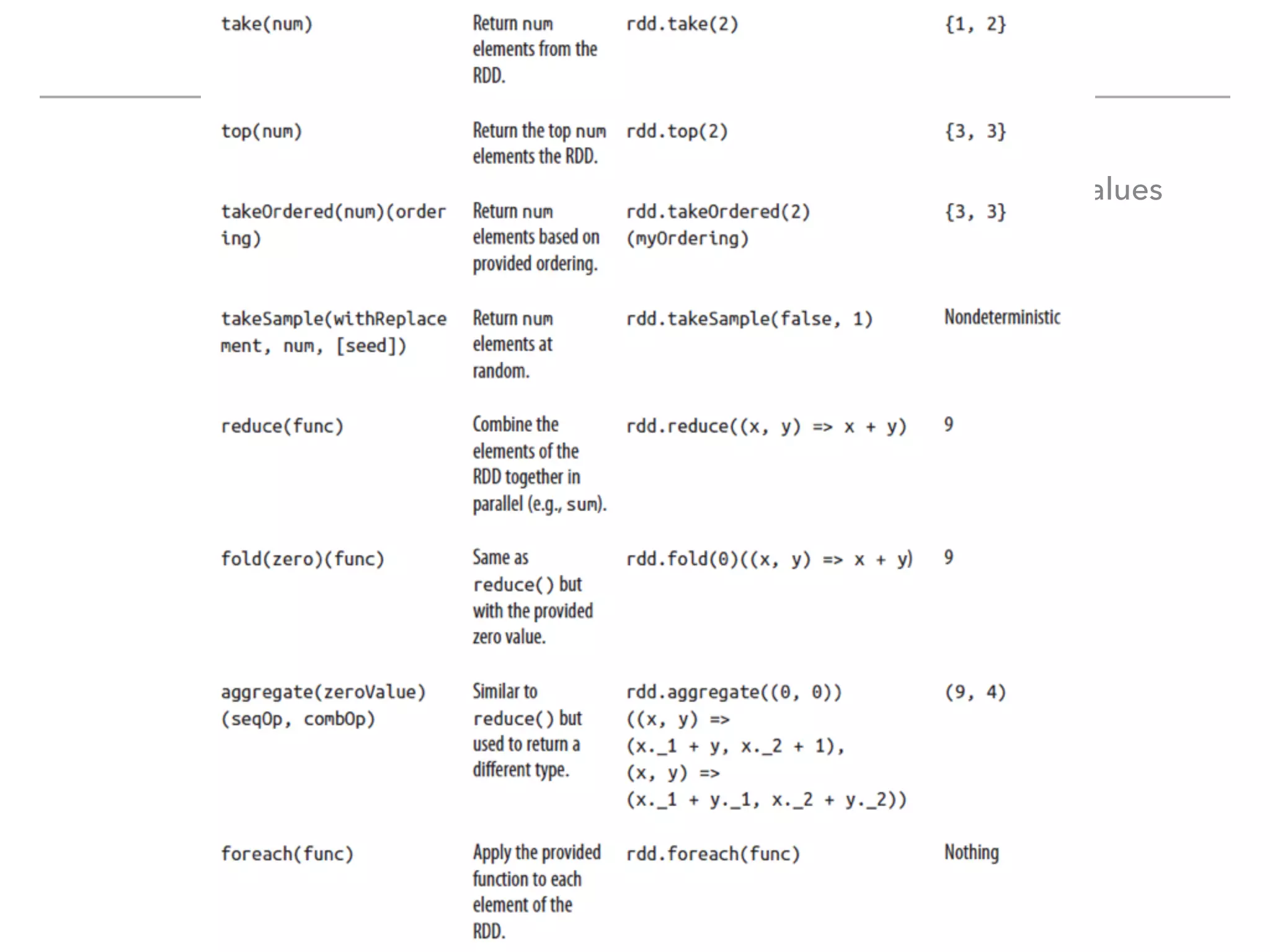
STANDALONE-VIEW
ACTIONS
transformations another
RDD
actions
single values
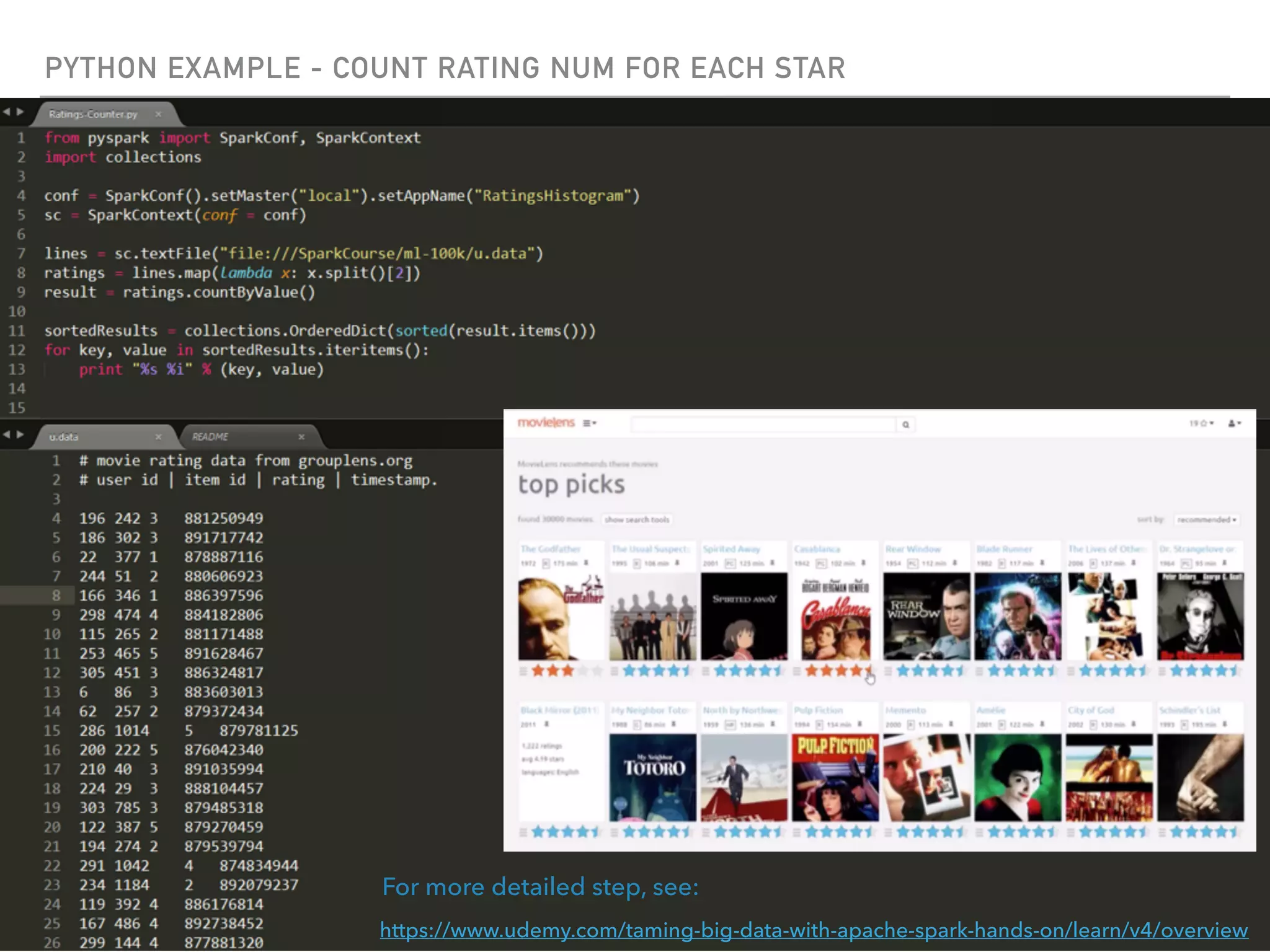
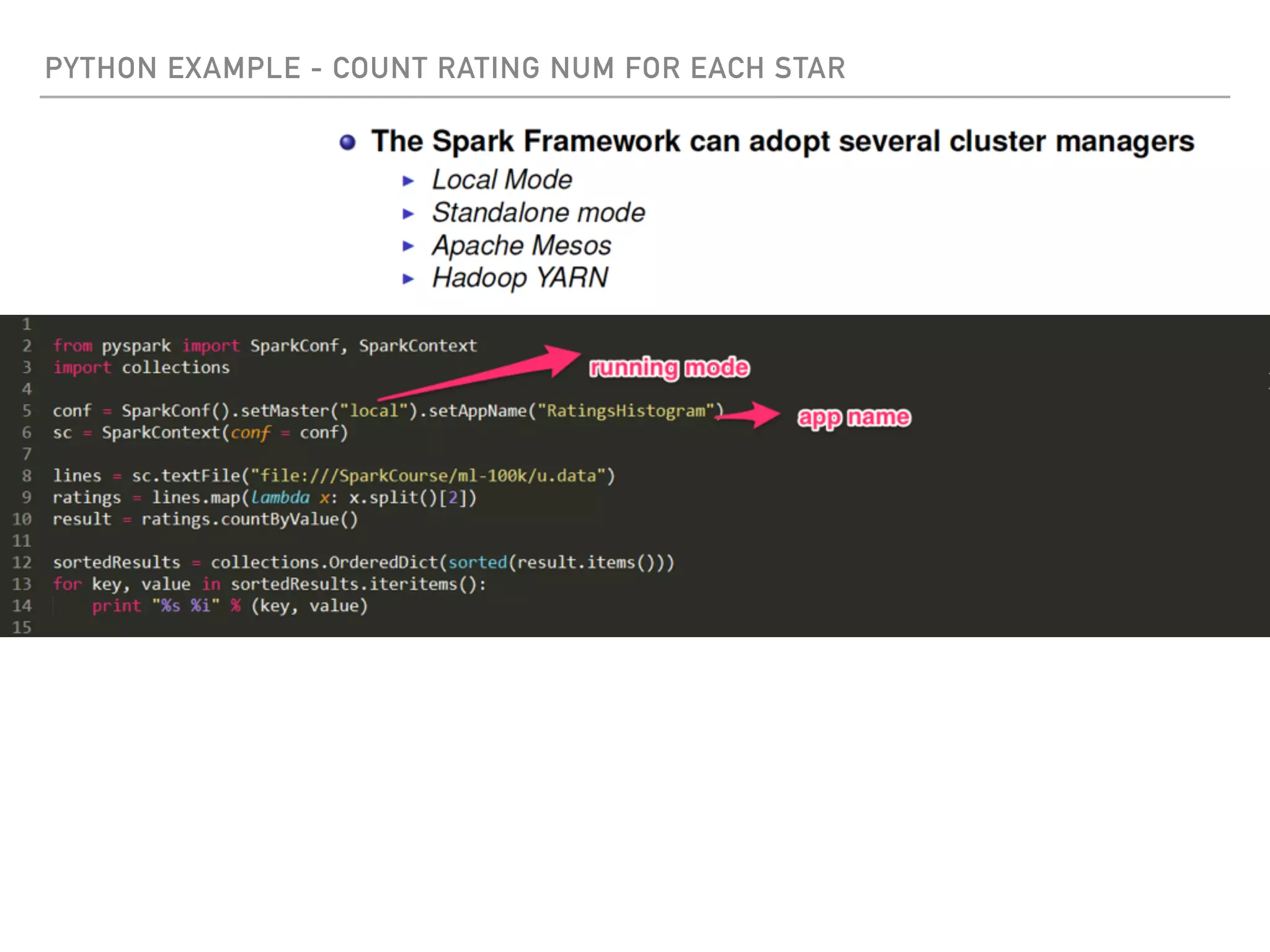
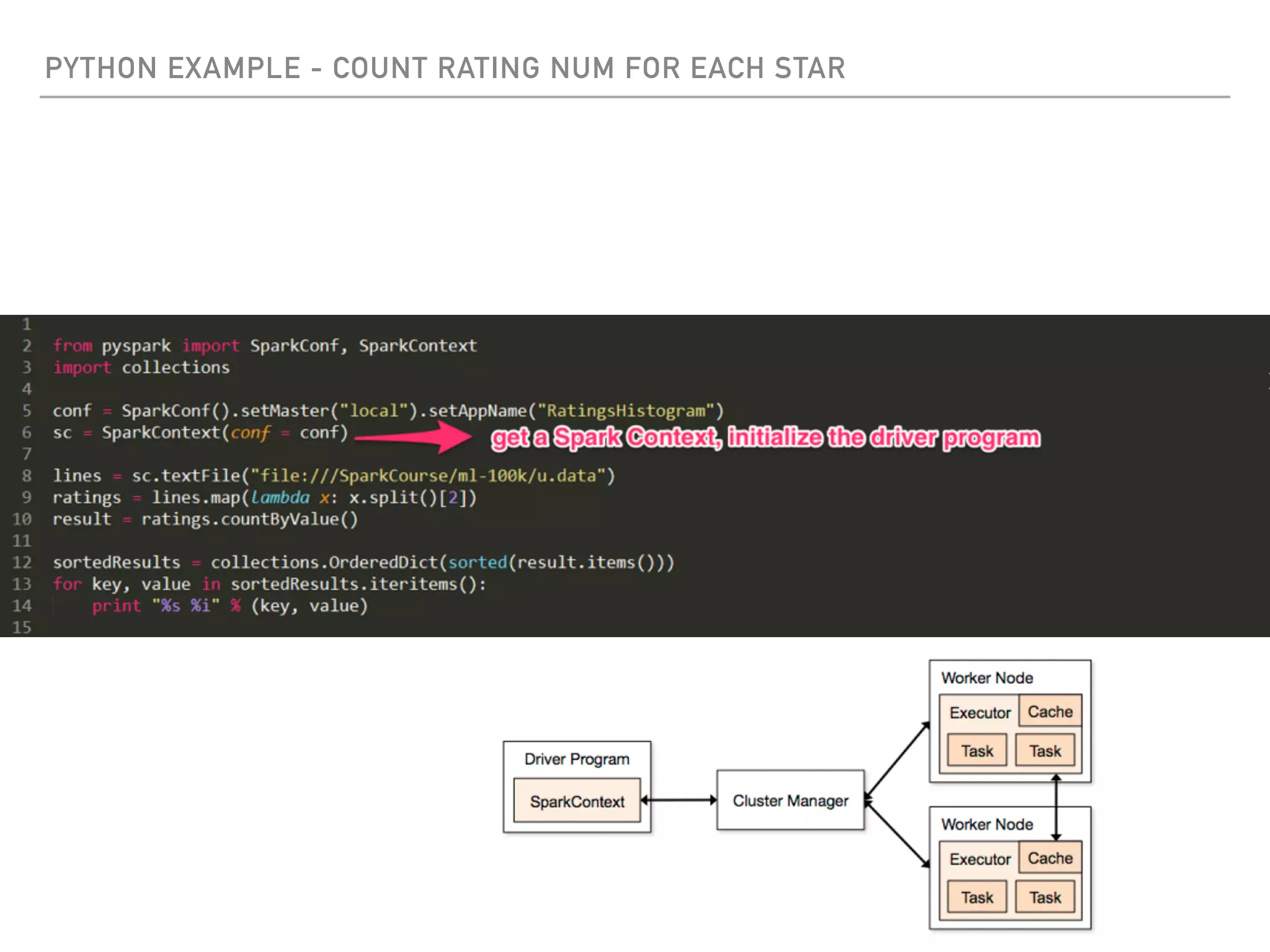
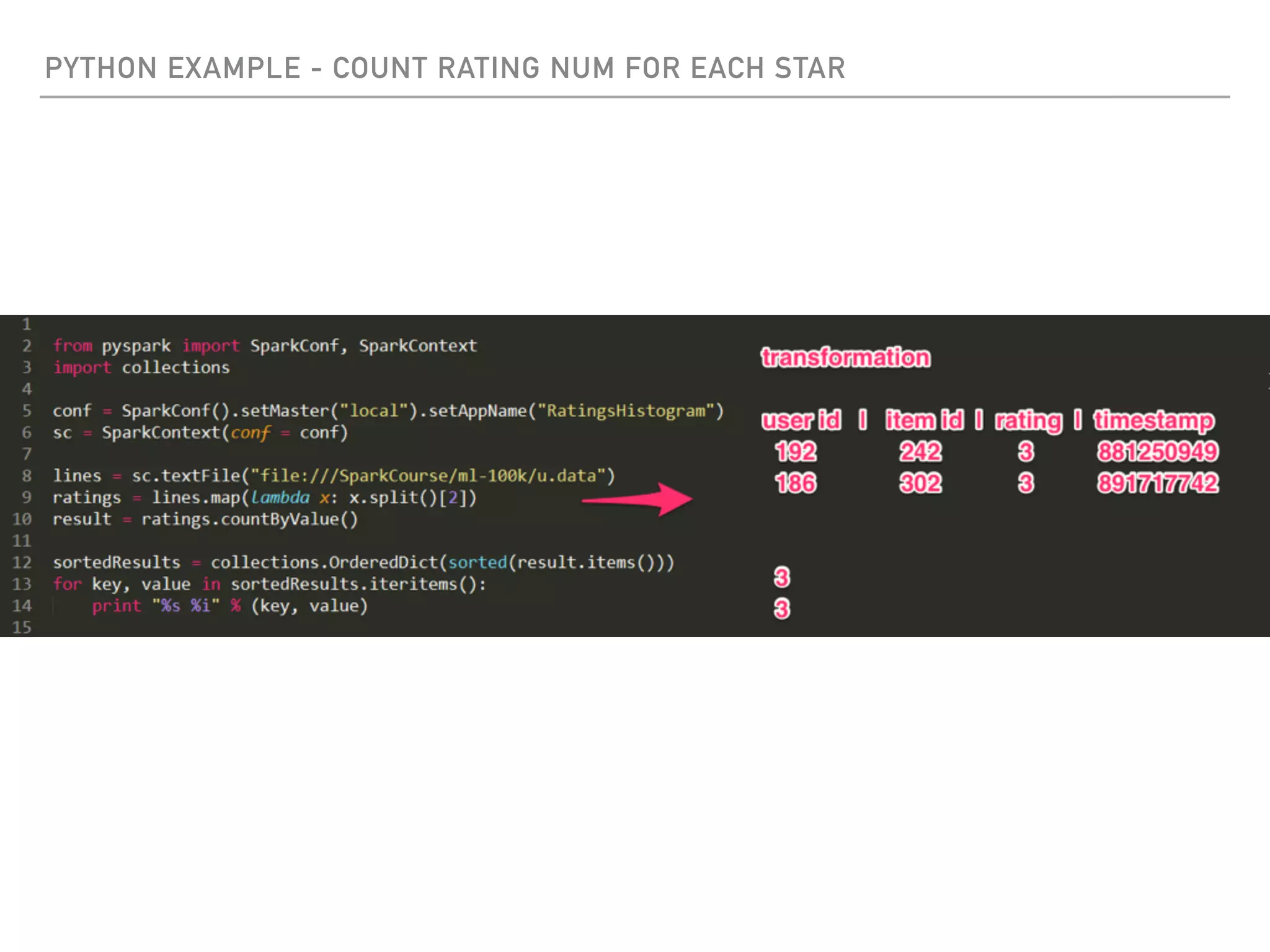
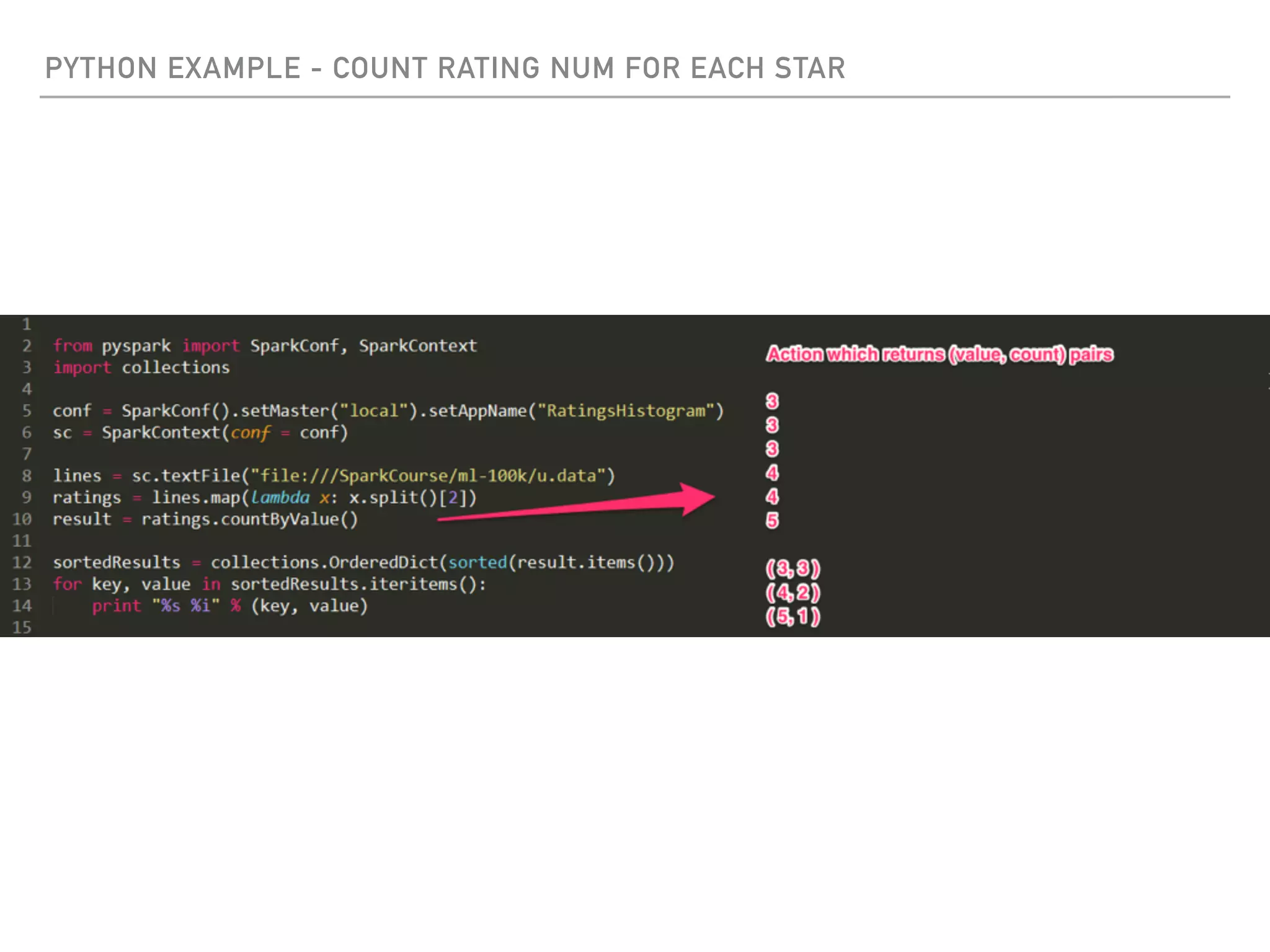
PYTHON EXAMPLE - COUNT RATING NUM FOR EACH STAR
https://www.udemy.com/taming-big-data-with-apache-spark-hands-on/learn/v4/overview
For more detailed step, see:
PYTHON EXAMPLE - COUNT RATING NUM FOR EACH STAR
KEY-PAIR RDD
▸ Def: RDDs containing key/value pairs
▸ Motivation: allows to act on each key
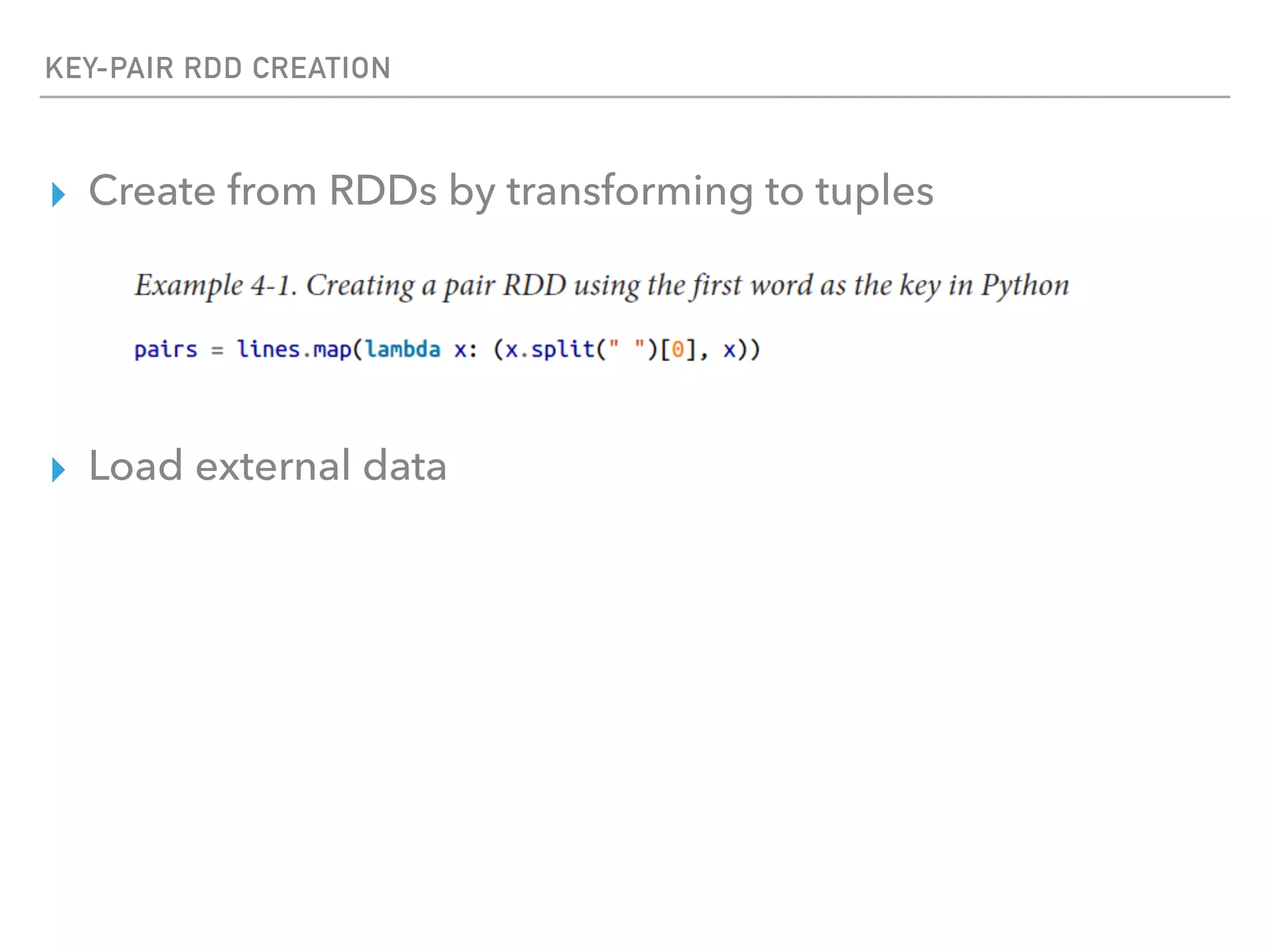
KEY-PAIR RDD CREATION
▸ Create from RDDs by transforming to tuples
▸ Load external data
KEY-PAIR RDD TRANSFORMATIONS
▸ Key-Pair RDDs have all transformations available to standard RDDs
KEY-PAIR RDD TRANSFORMATIONS
▸ Key-Pair RDDs have all transformations available to standard RDDs
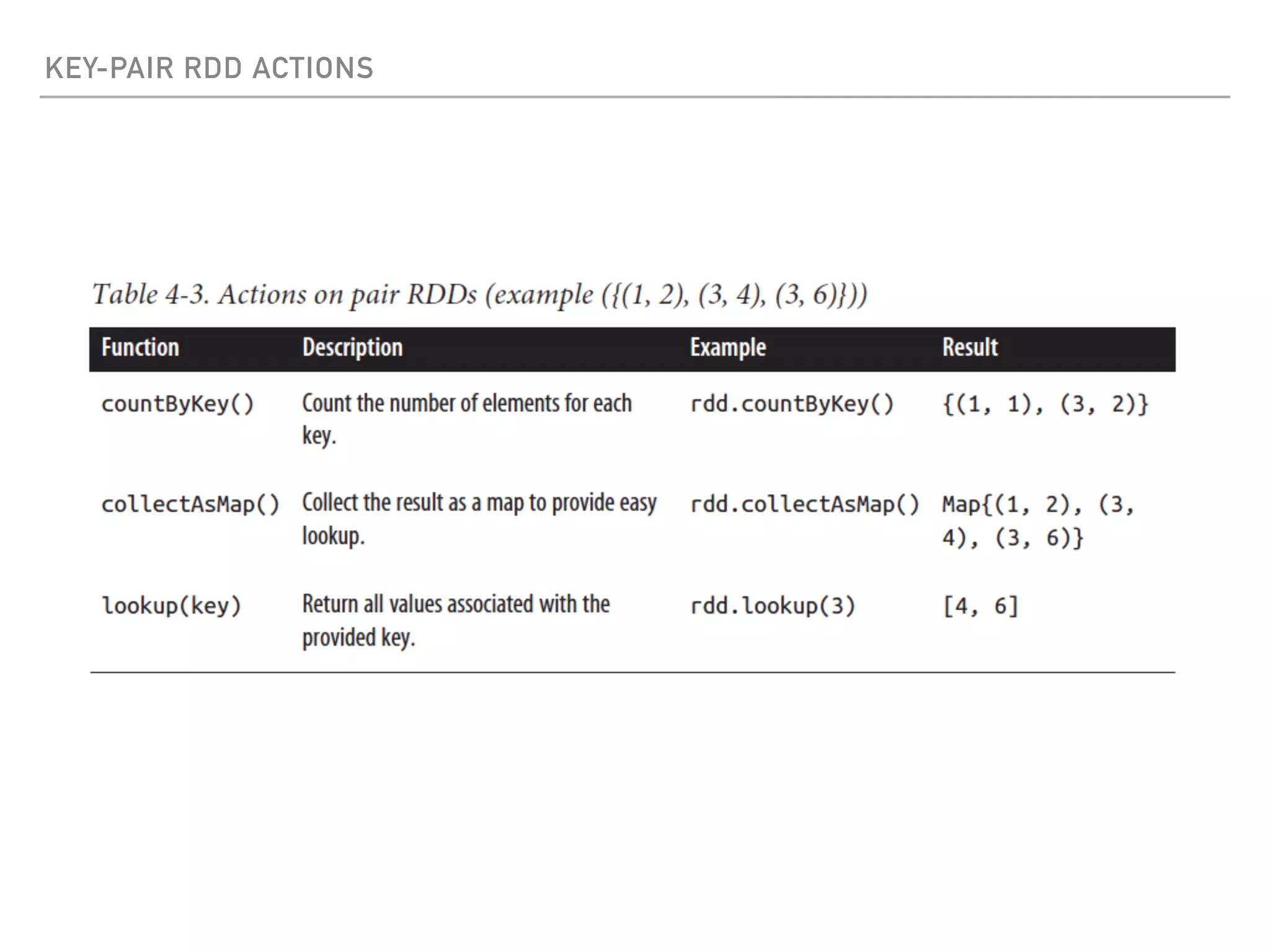
KEY-PAIR RDD ACTIONS
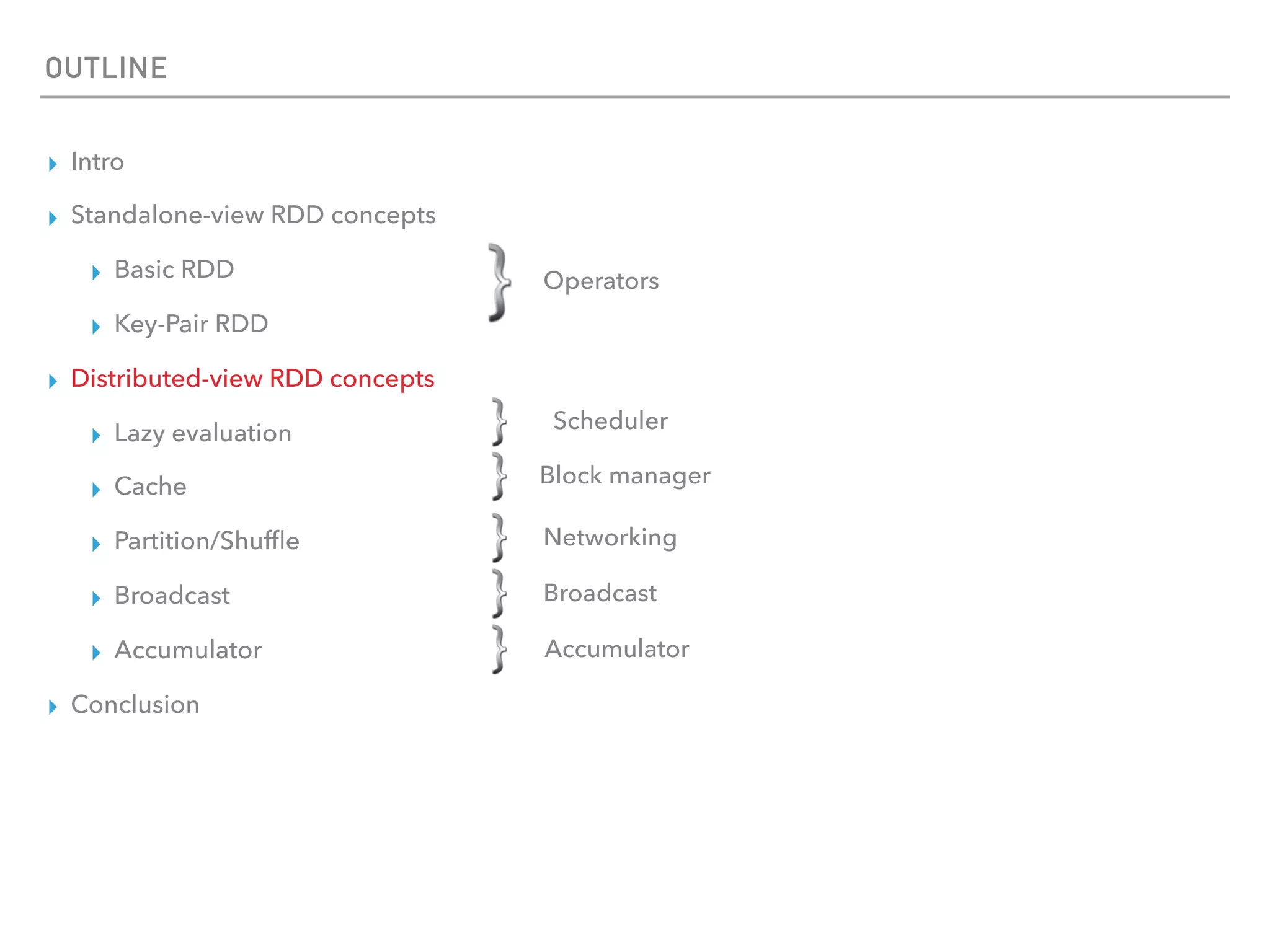
OUTLINE
▸ Intro
▸ Standalone-view RDD concepts
▸ Basic RDD
▸ Key-Pair RDD
▸ Distributed-view RDD concepts
▸ Lazy evaluation
▸ Cache
▸ Partition/Shuffle
▸ Broadcast
▸ Accumulator
▸ Conclusion
Operators
Scheduler
Networking
Broadcast
Accumulator
Block manager
OUTLINE
▸ Intro
▸ Standalone-view RDD concepts
▸ Basic RDD
▸ Key-Pair RDD
▸ Distributed-view RDD concepts
▸ Lazy evaluation
▸ Cache
▸ Partition/Shuffle
▸ Broadcast
▸ Accumulator
▸ Conclusion
Operators
Scheduler
Networking
Broadcast
Accumulator
Block manager
LAZY-EVALUATION
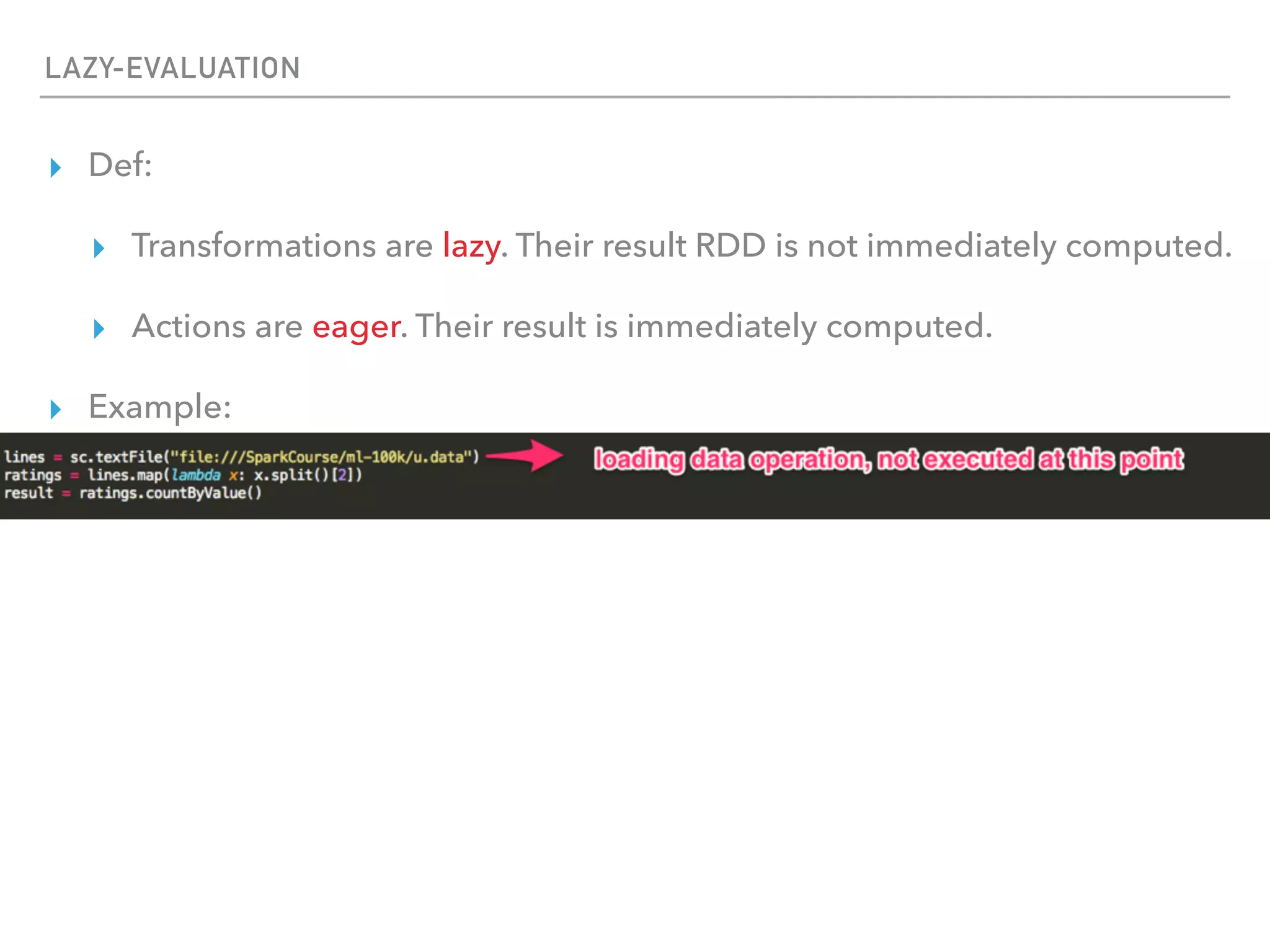
▸ Def:
▸ Transformations are lazy. Their result RDD is not immediately computed.
▸ Actions are eager. Their result is immediately computed.
▸ Example:
LAZY-EVALUATION
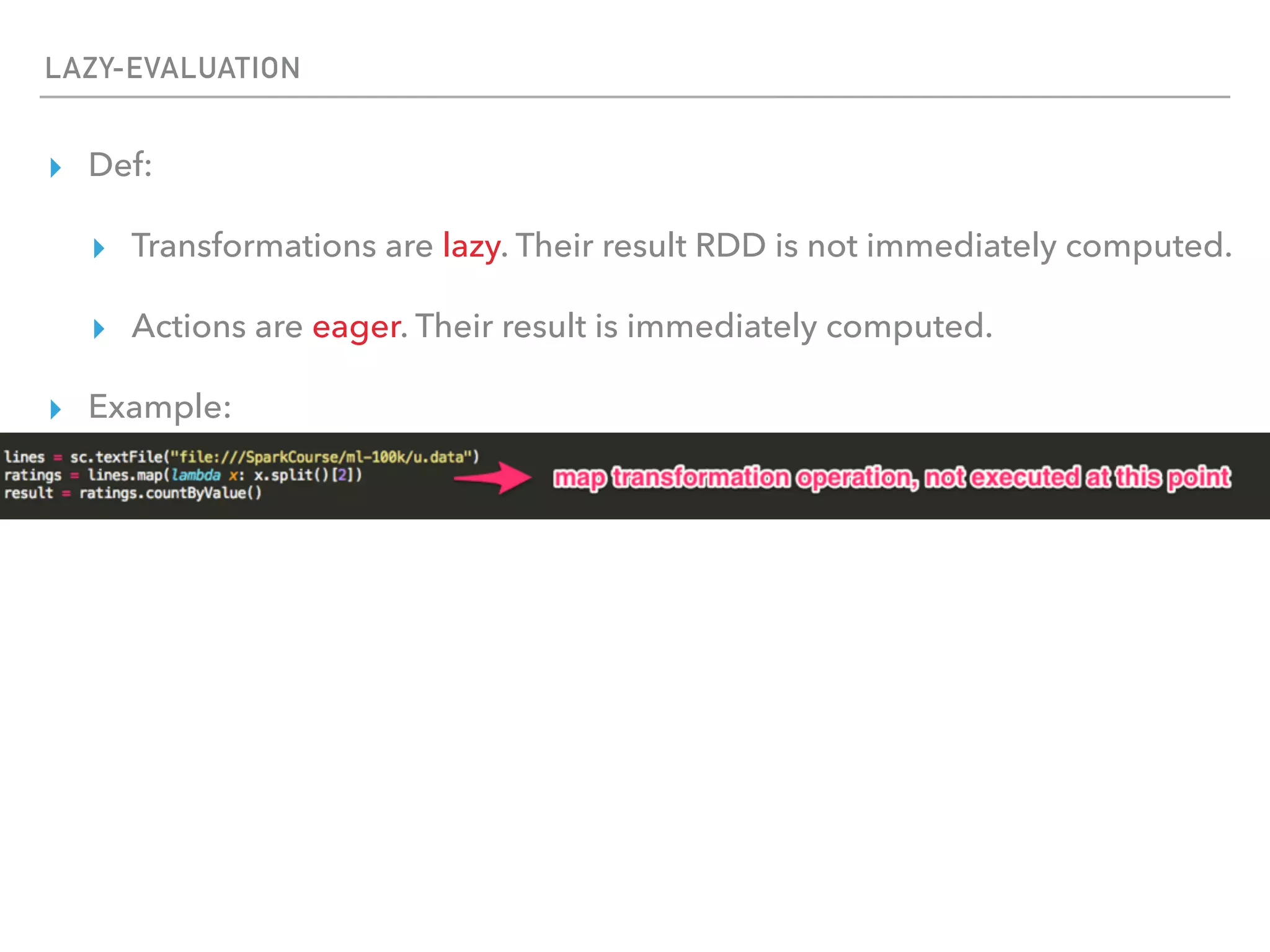
▸ Def:
▸ Transformations are lazy. Their result RDD is not immediately computed.
▸ Actions are eager. Their result is immediately computed.
▸ Example:
LAZY-EVALUATION
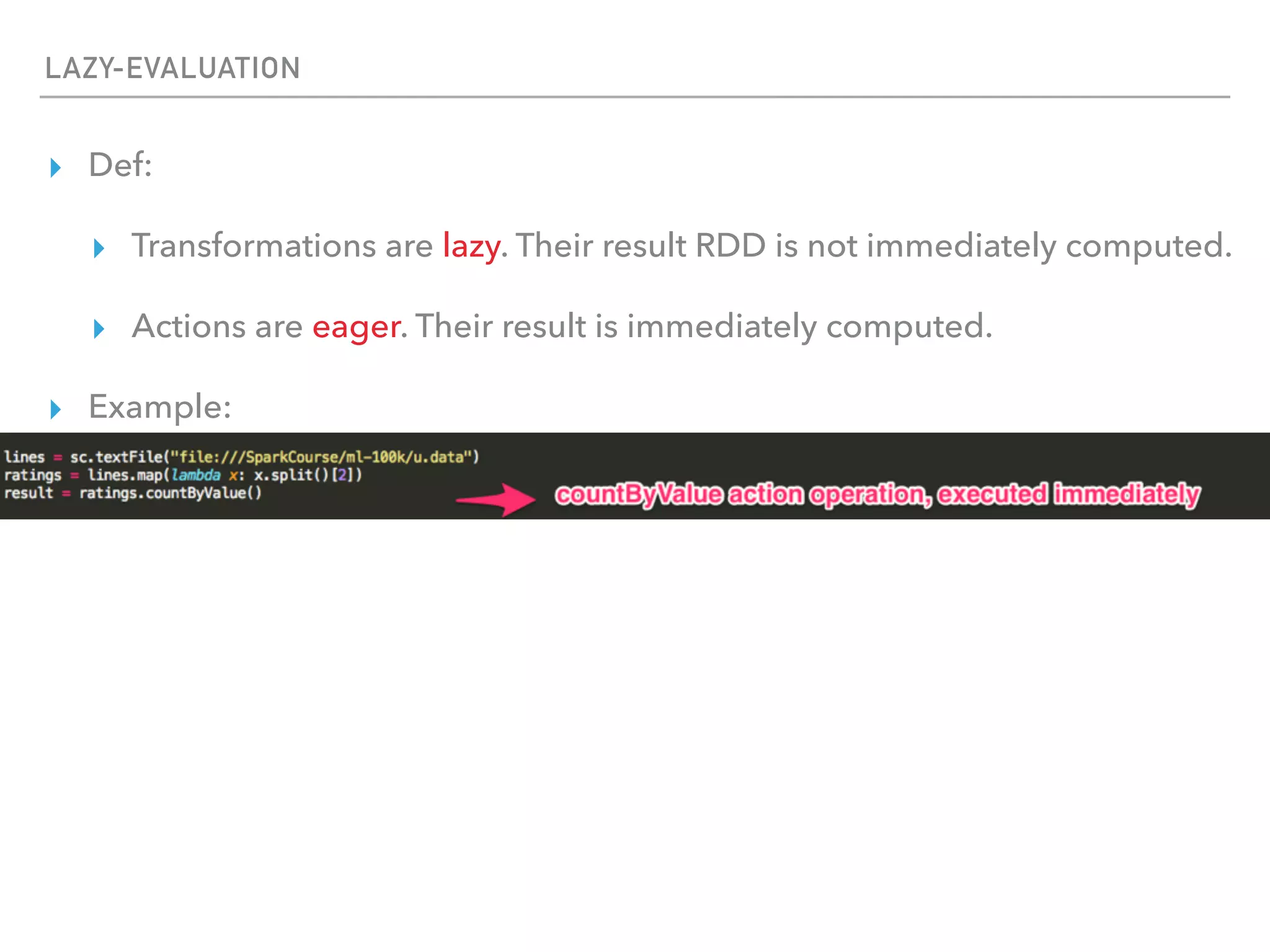
▸ Def:
▸ Transformations are lazy. Their result RDD is not immediately computed.
▸ Actions are eager. Their result is immediately computed.
▸ Example:
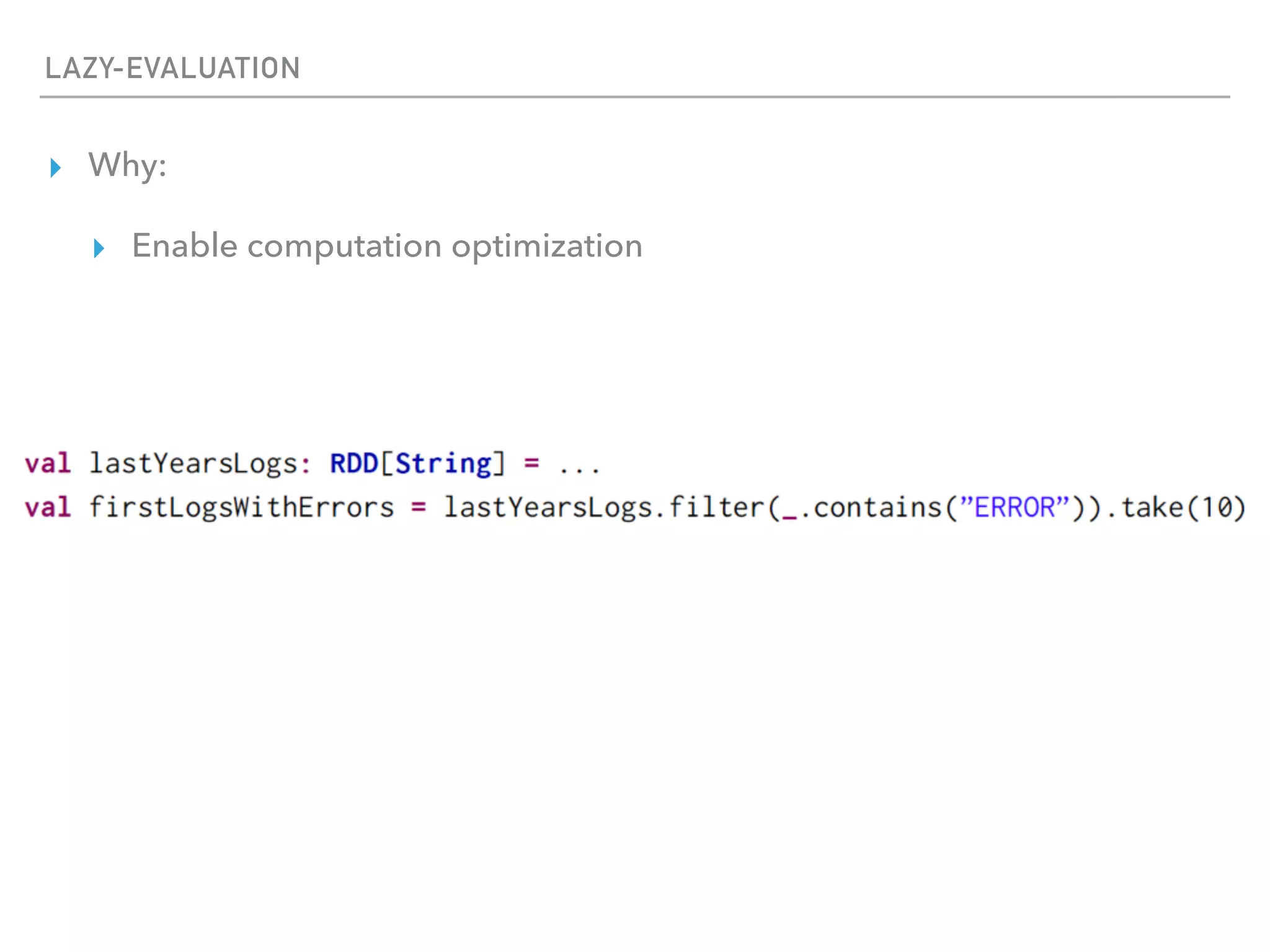
LAZY-EVALUATION
▸ Why:
▸ Enable computation optimization
LAZY-EVALUATION
▸ Why:
▸ Limit network communication
▸ If you perform an action, its result returns back to the driver program
RDD results return back
RDD transformations and actions
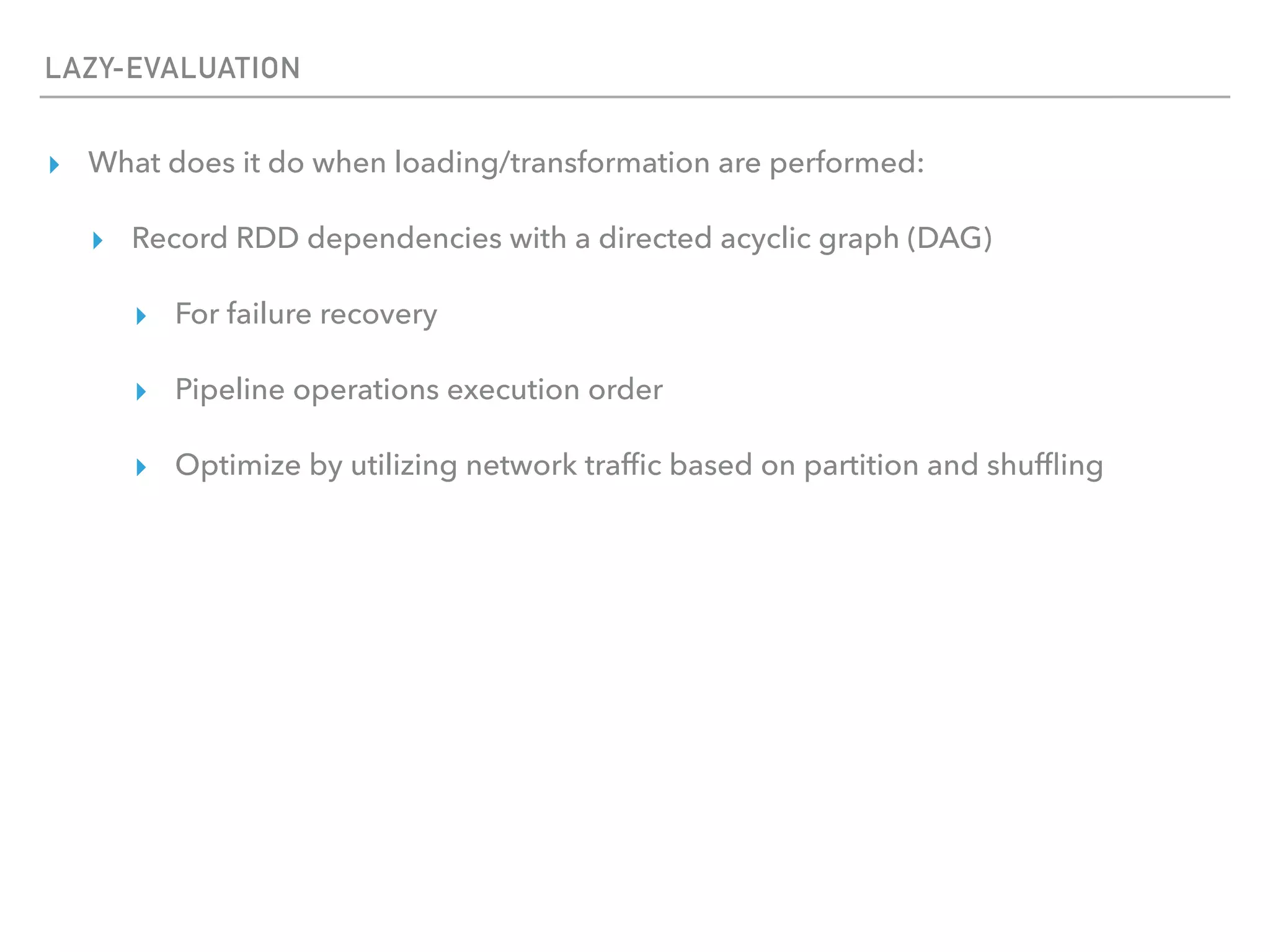
LAZY-EVALUATION
▸ What does it do when loading/transformation are performed:
▸ Record RDD dependencies with a directed acyclic graph (DAG)
▸ For failure recovery
▸ Pipeline operations execution order
▸ Optimize by utilizing network traffic based on partition and shuffling
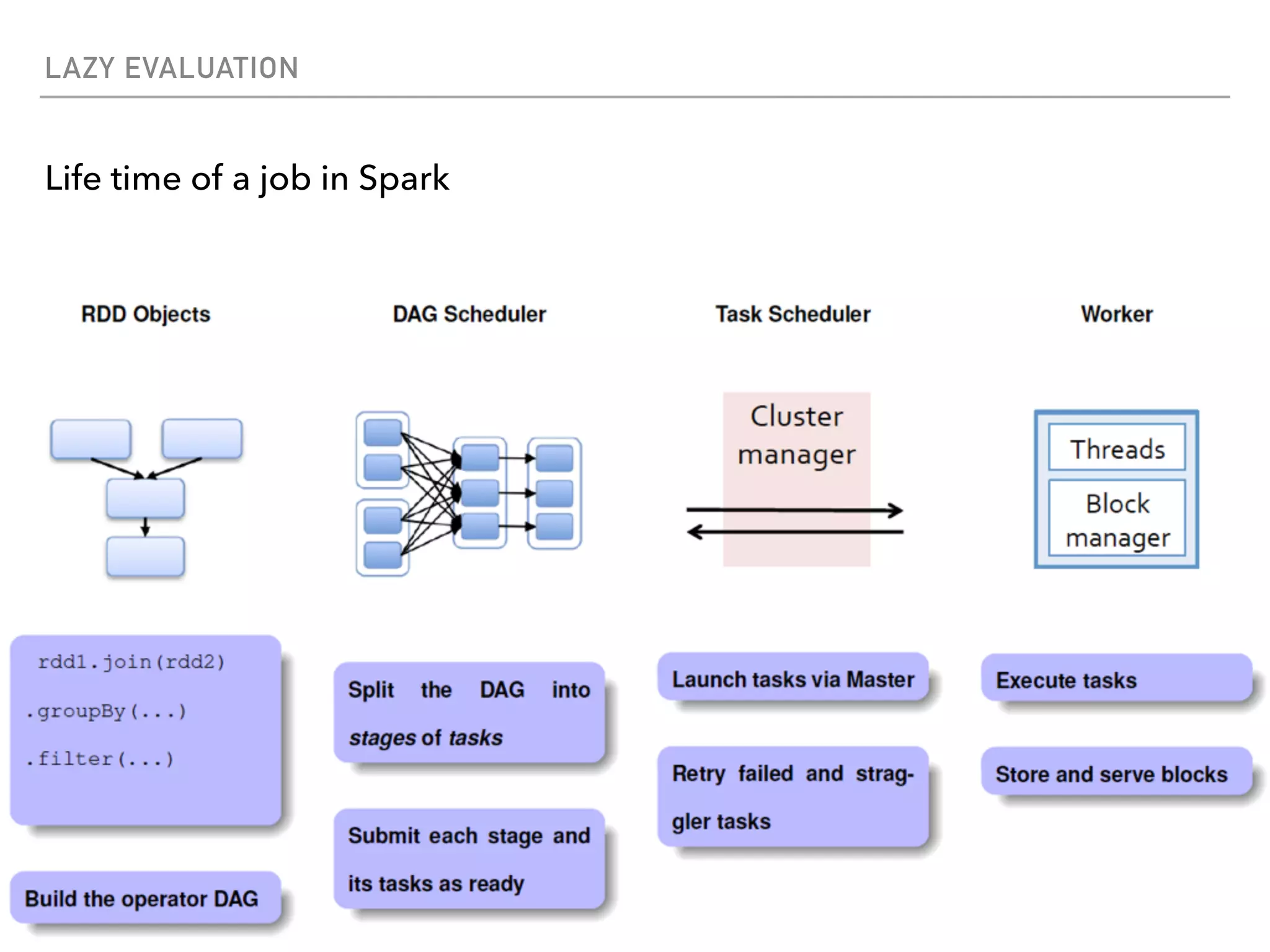
LAZY EVALUATION
Life time of a job in Spark
OUTLINE
▸ Intro
▸ Standalone-view RDD concepts
▸ Basic RDD
▸ Key-Pair RDD
▸ Distributed-view RDD concepts
▸ Lazy evaluation
▸ Cache
▸ Partition/Shuffle
▸ Broadcast
▸ Accumulator
▸ Conclusion
Operators
Scheduler
Networking
Broadcast
Accumulator
Block manager
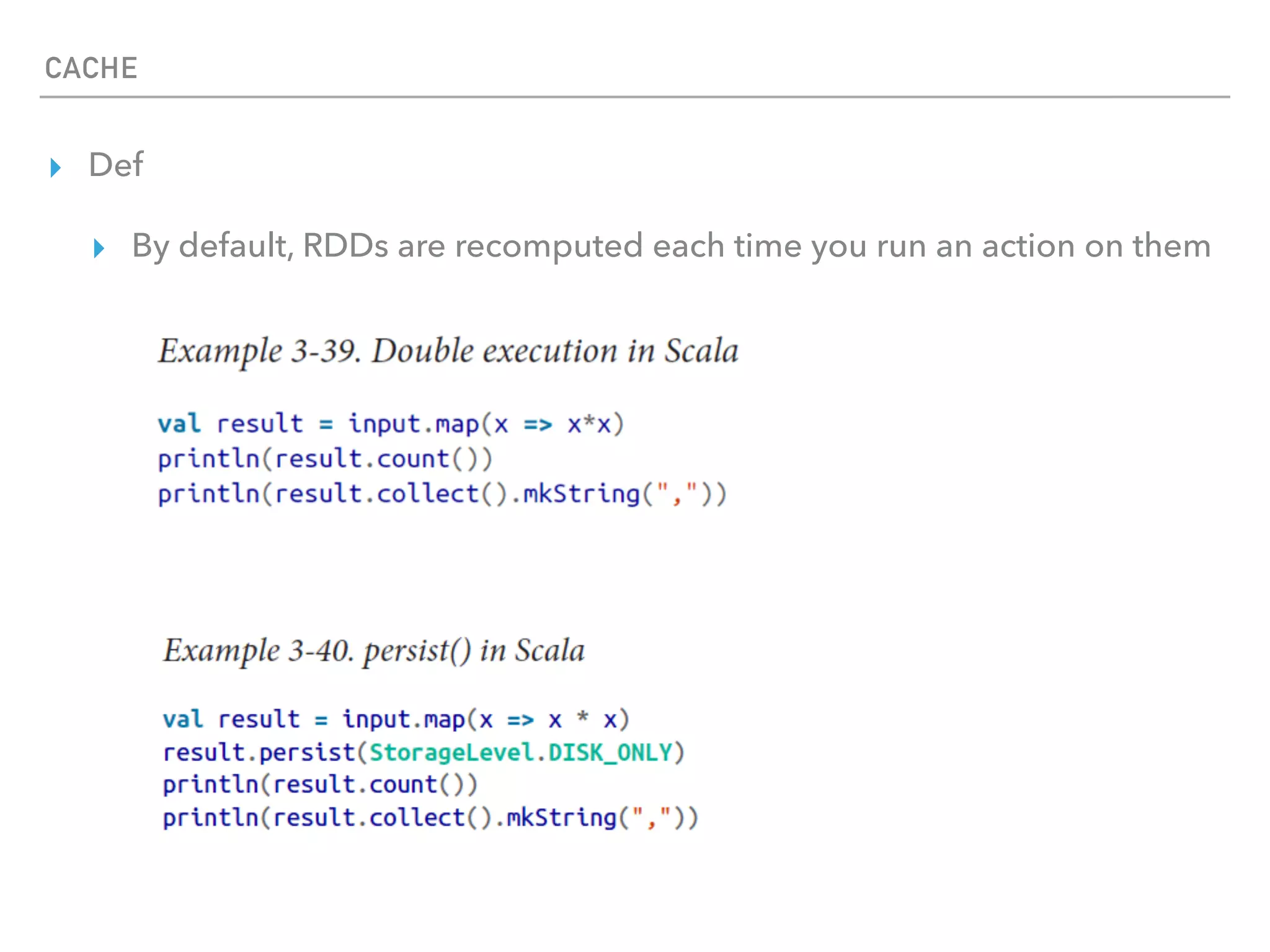
CACHE
▸ Def
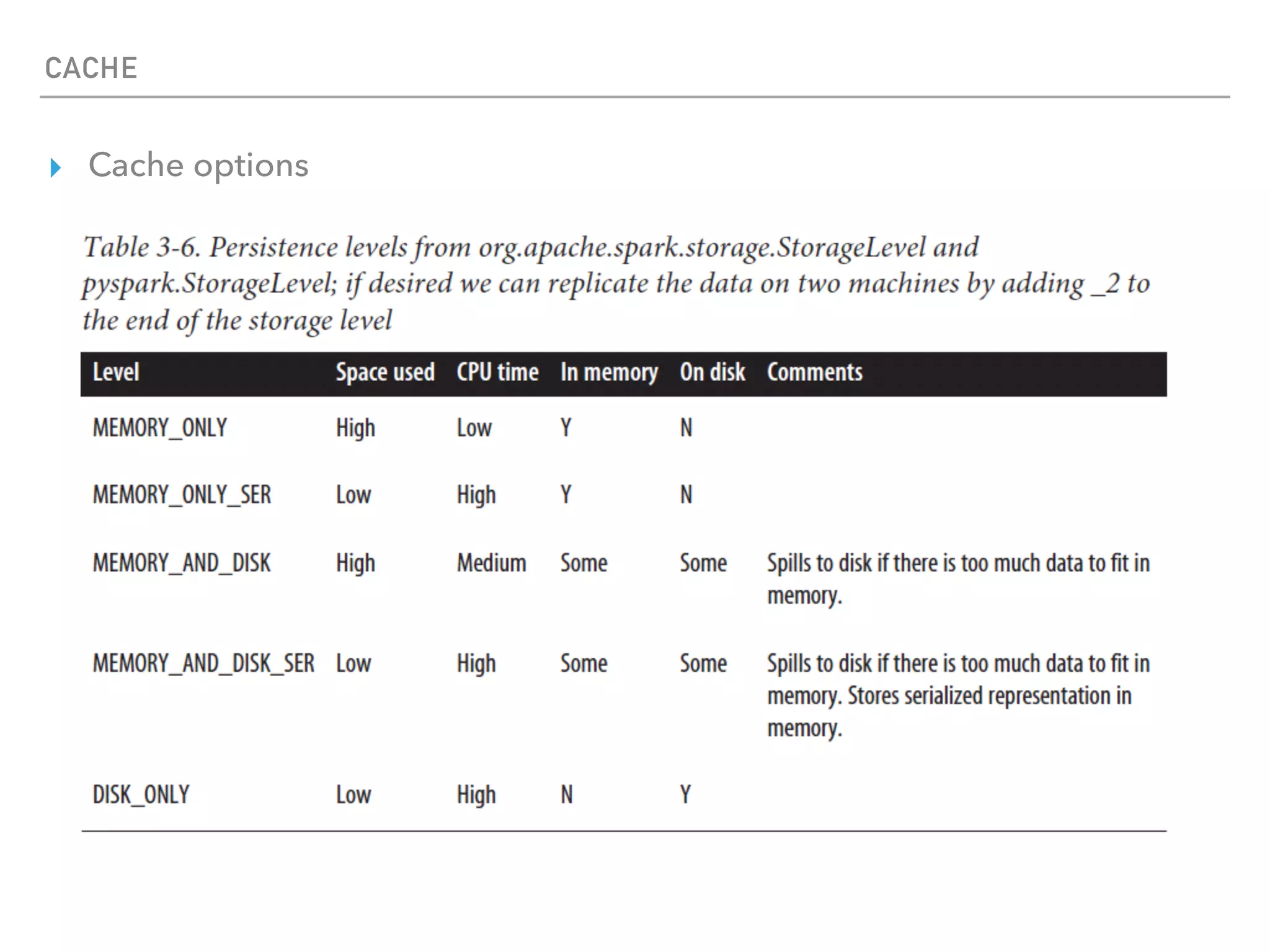
▸ By default, RDDs are recomputed each time you run an action on them
CACHE
▸ Cache options
CACHE
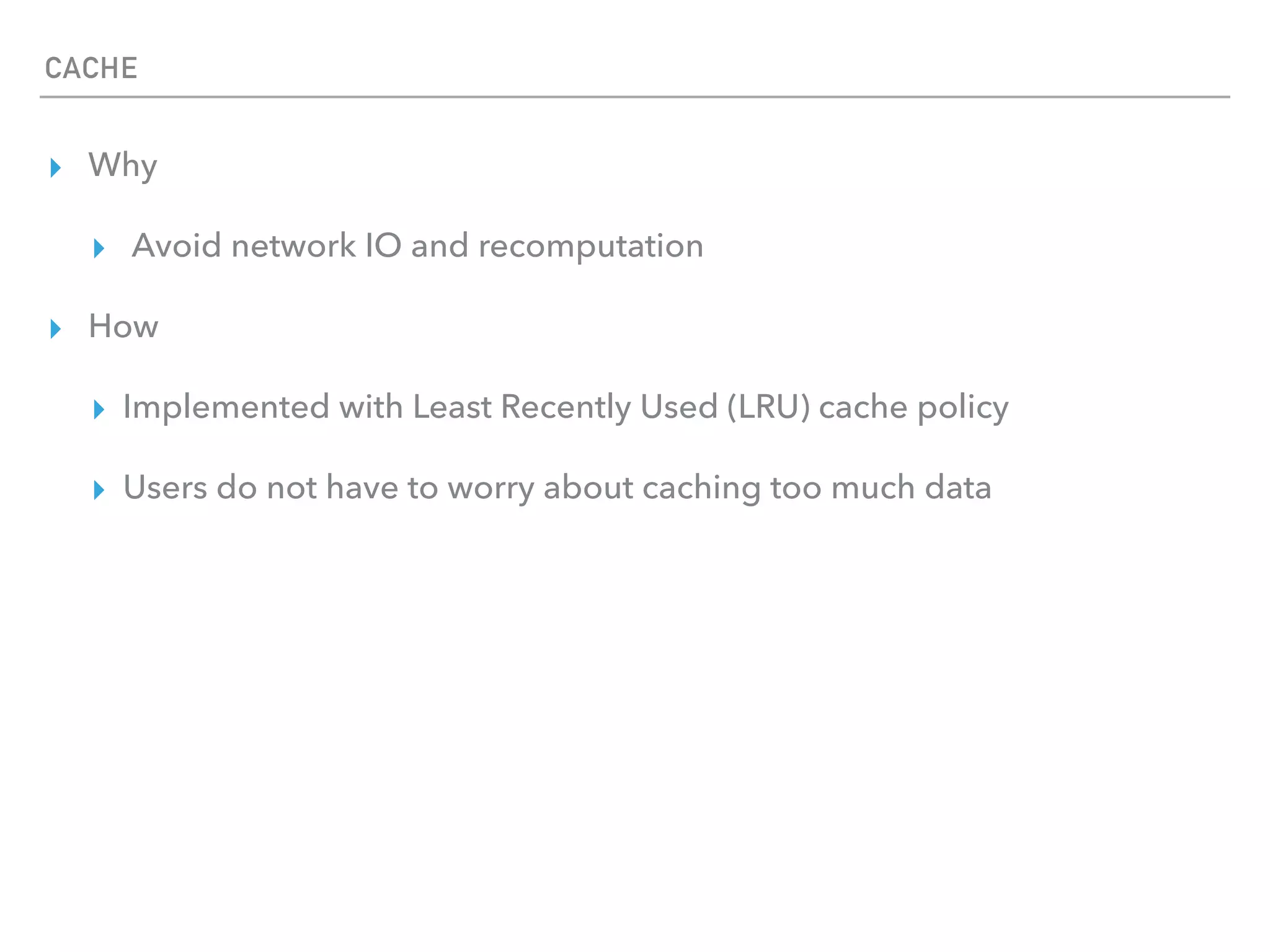
▸ Why
▸ Avoid network IO and recomputation
▸ How
▸ Implemented with Least Recently Used (LRU) cache policy
▸ Users do not have to worry about caching too much data
OUTLINE
▸ Intro
▸ Standalone-view RDD concepts
▸ Basic RDD
▸ Key-Pair RDD
▸ Distributed-view RDD concepts
▸ Lazy evaluation
▸ Cache
▸ Shuffle/Partition
▸ Broadcast
▸ Accumulator
▸ Conclusion
Operators
Scheduler
Networking
Broadcast
Accumulator
Block manager
OUTLINE
▸ Intro
▸ Standalone-view RDD concepts
▸ Basic RDD
▸ Key-Pair RDD
▸ Distributed-view RDD concepts
▸ Lazy evaluation
▸ Cache
▸ Shuffle/Partition
▸ Broadcast
▸ Accumulator
▸ Conclusion
Operators
Scheduler
Networking
Broadcast
Accumulator
Block manager
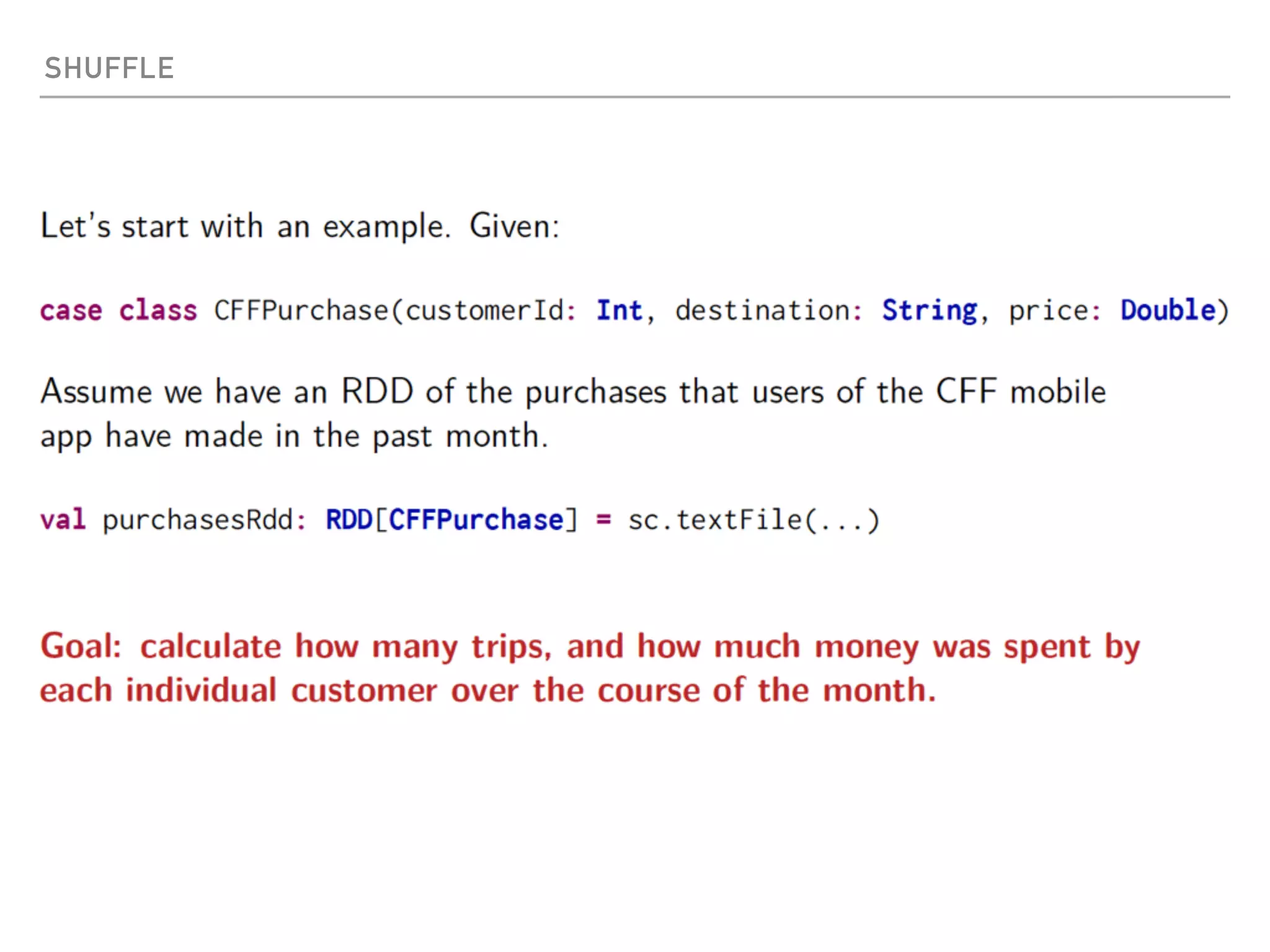
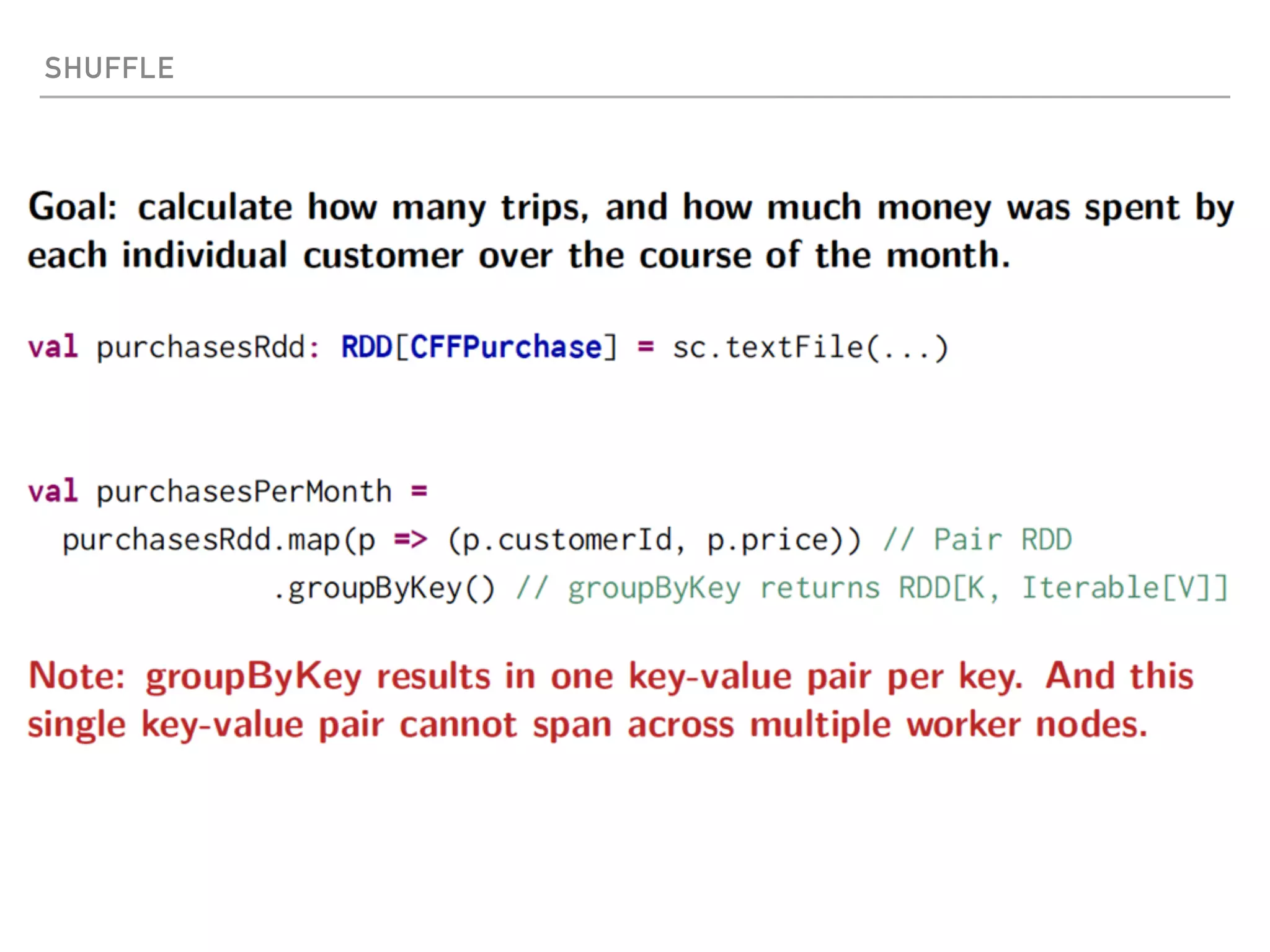
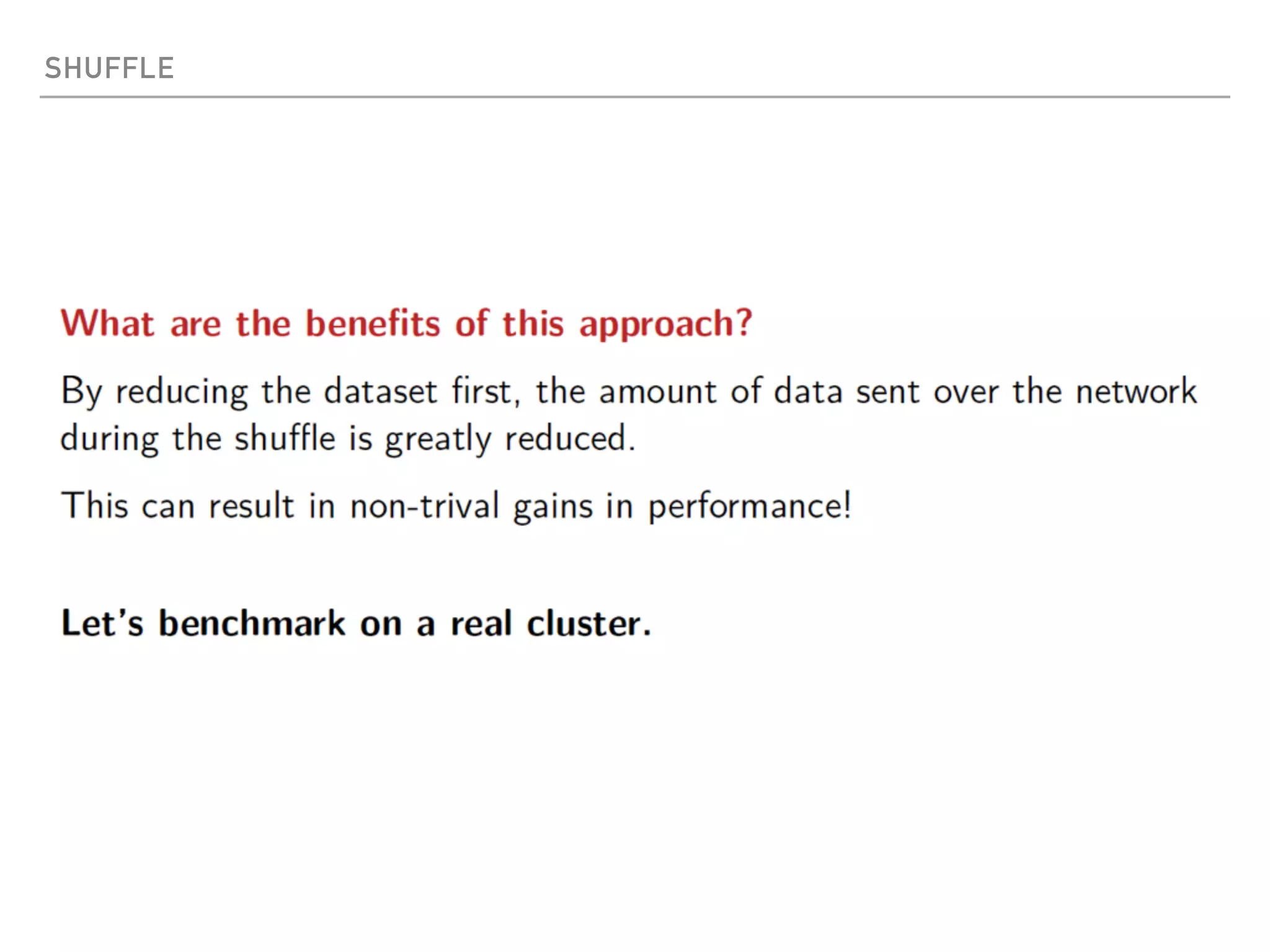
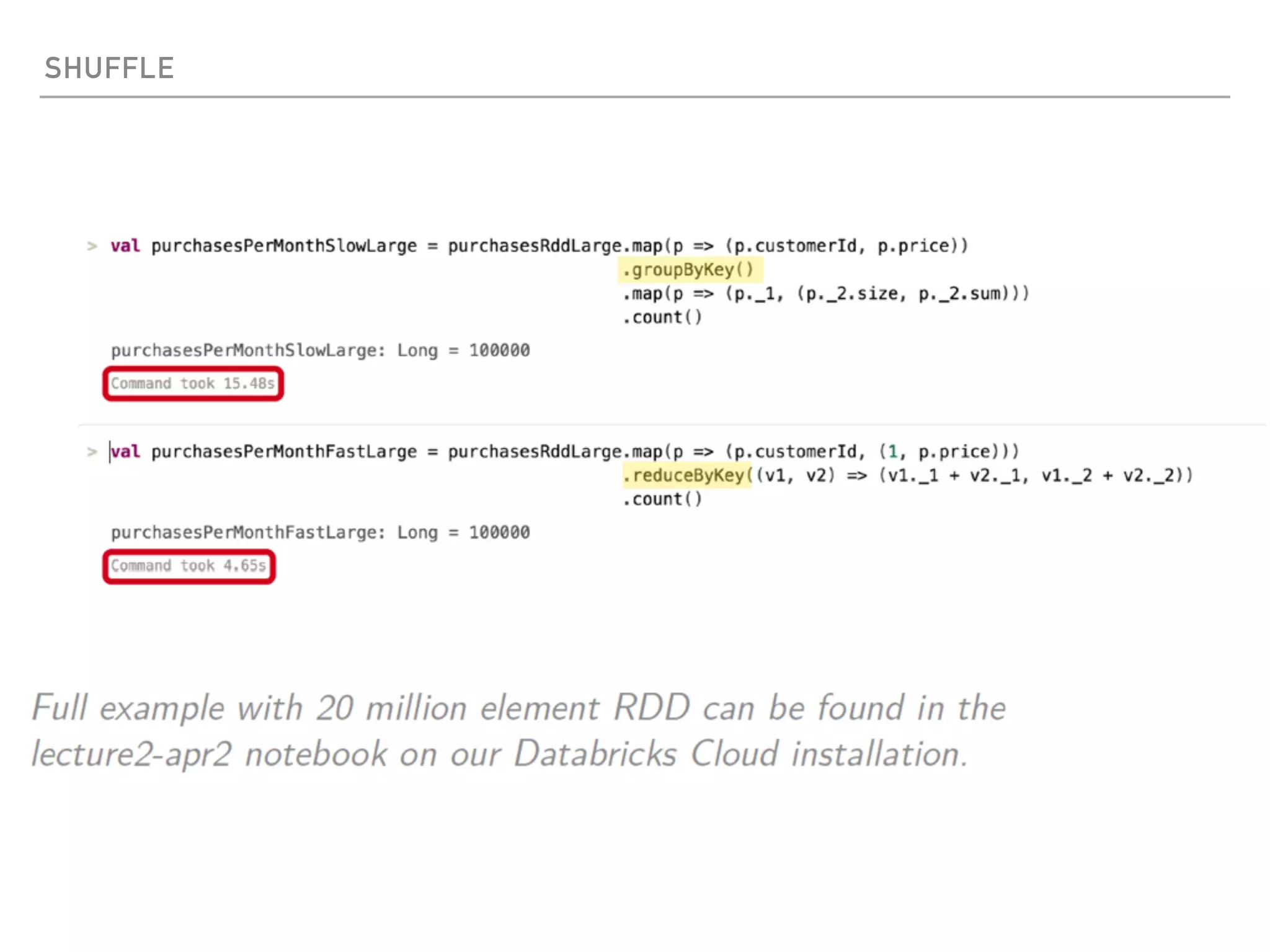
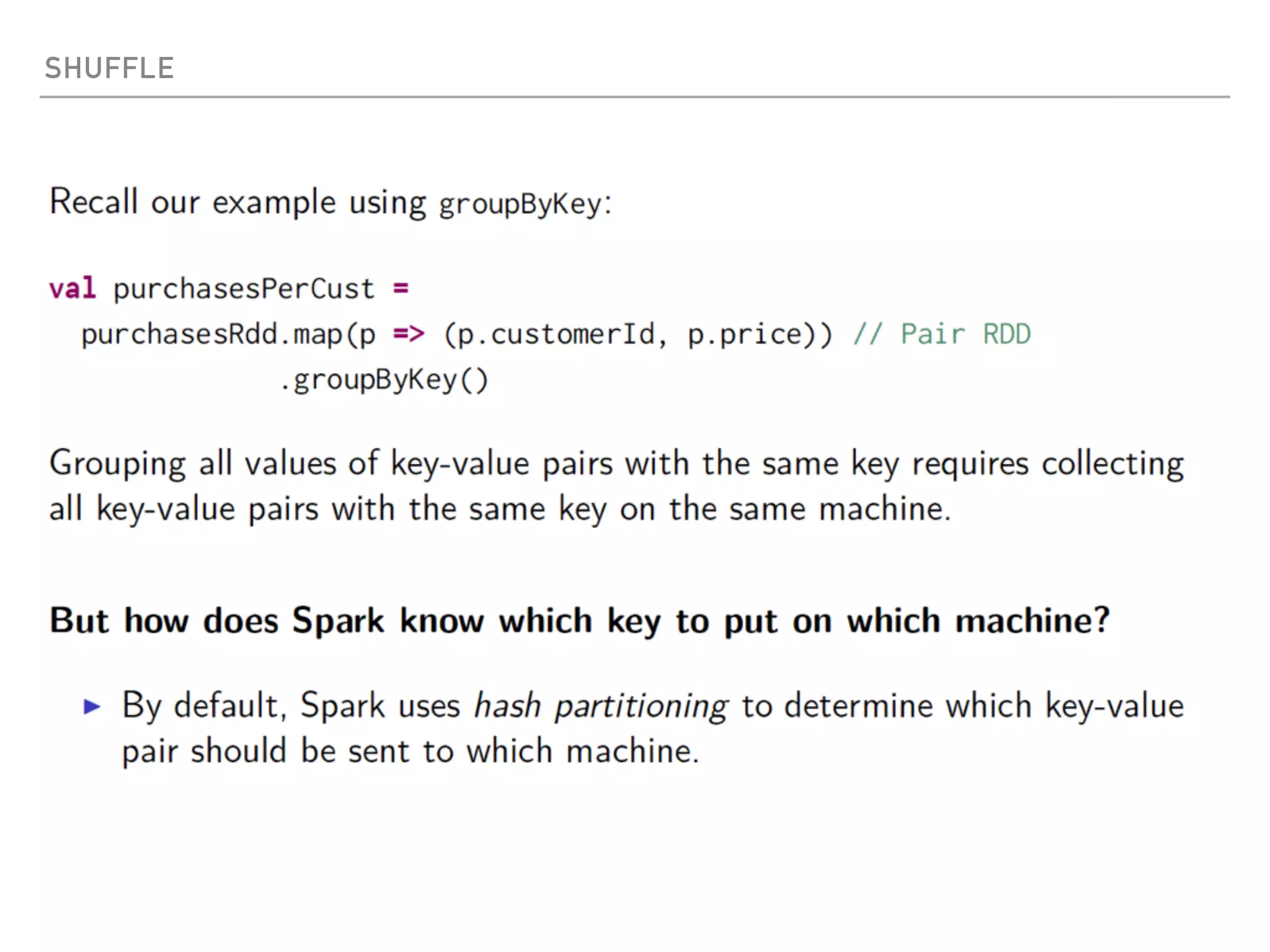
SHUFFLE
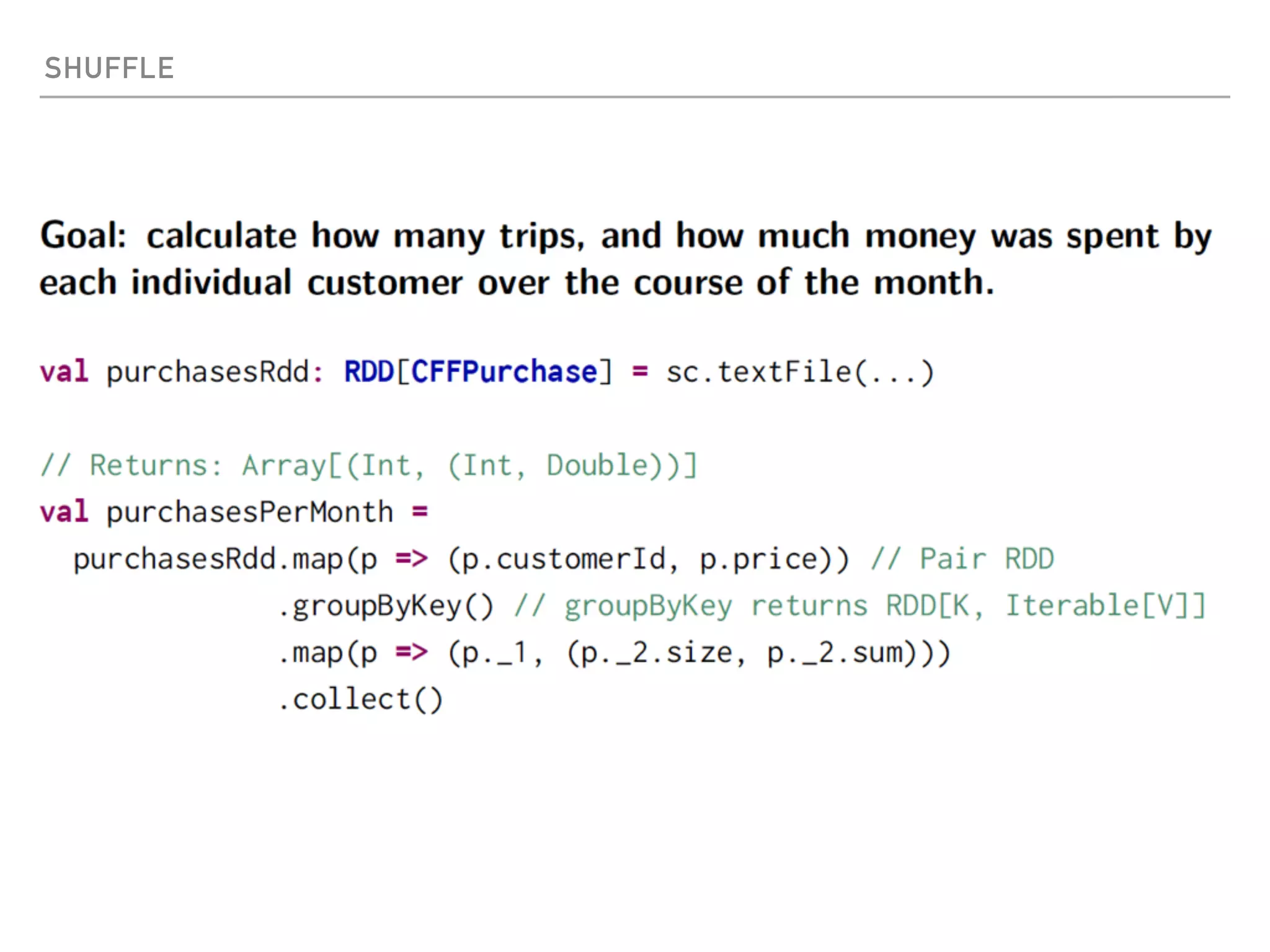
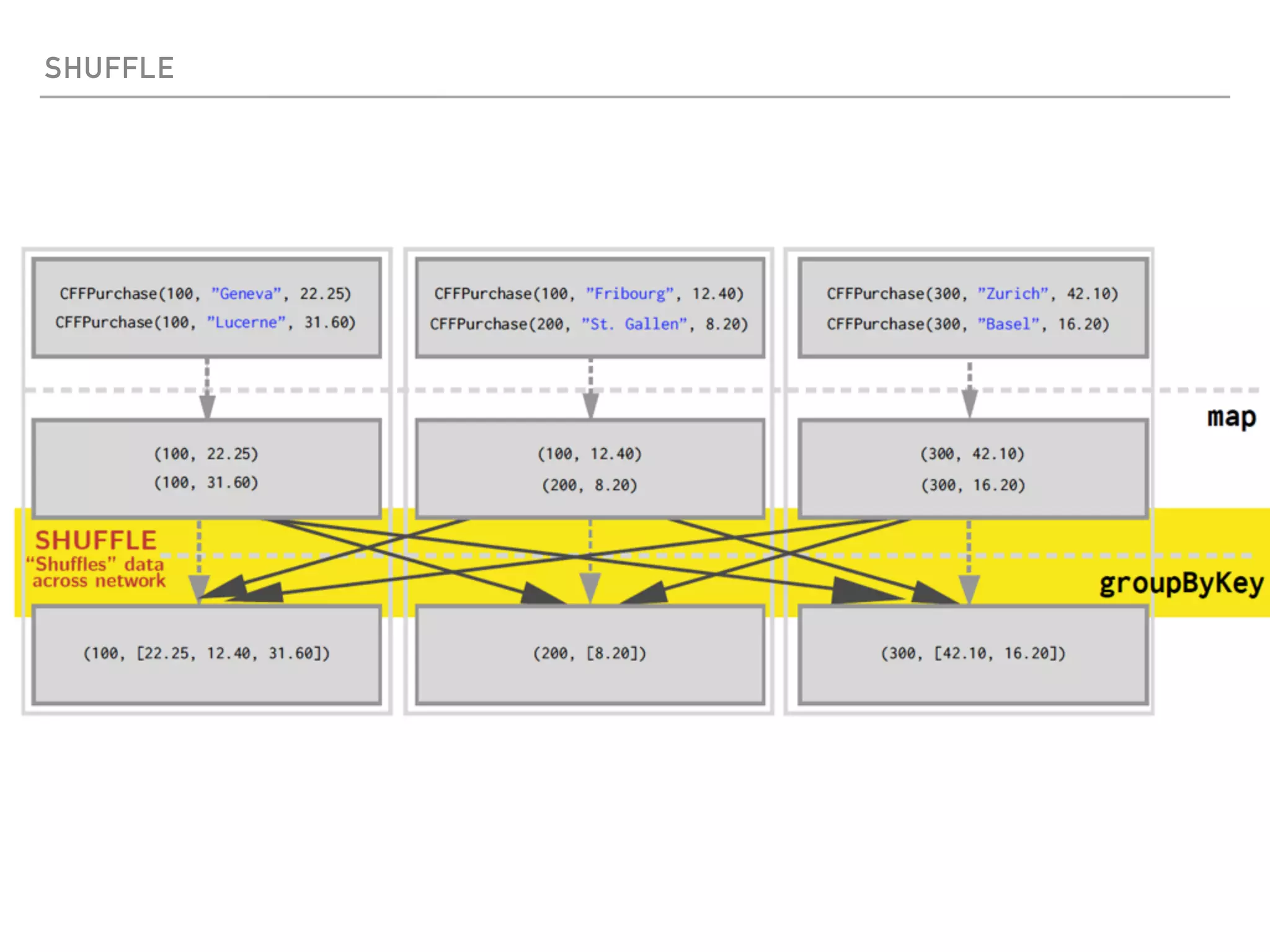
SHUFFLE
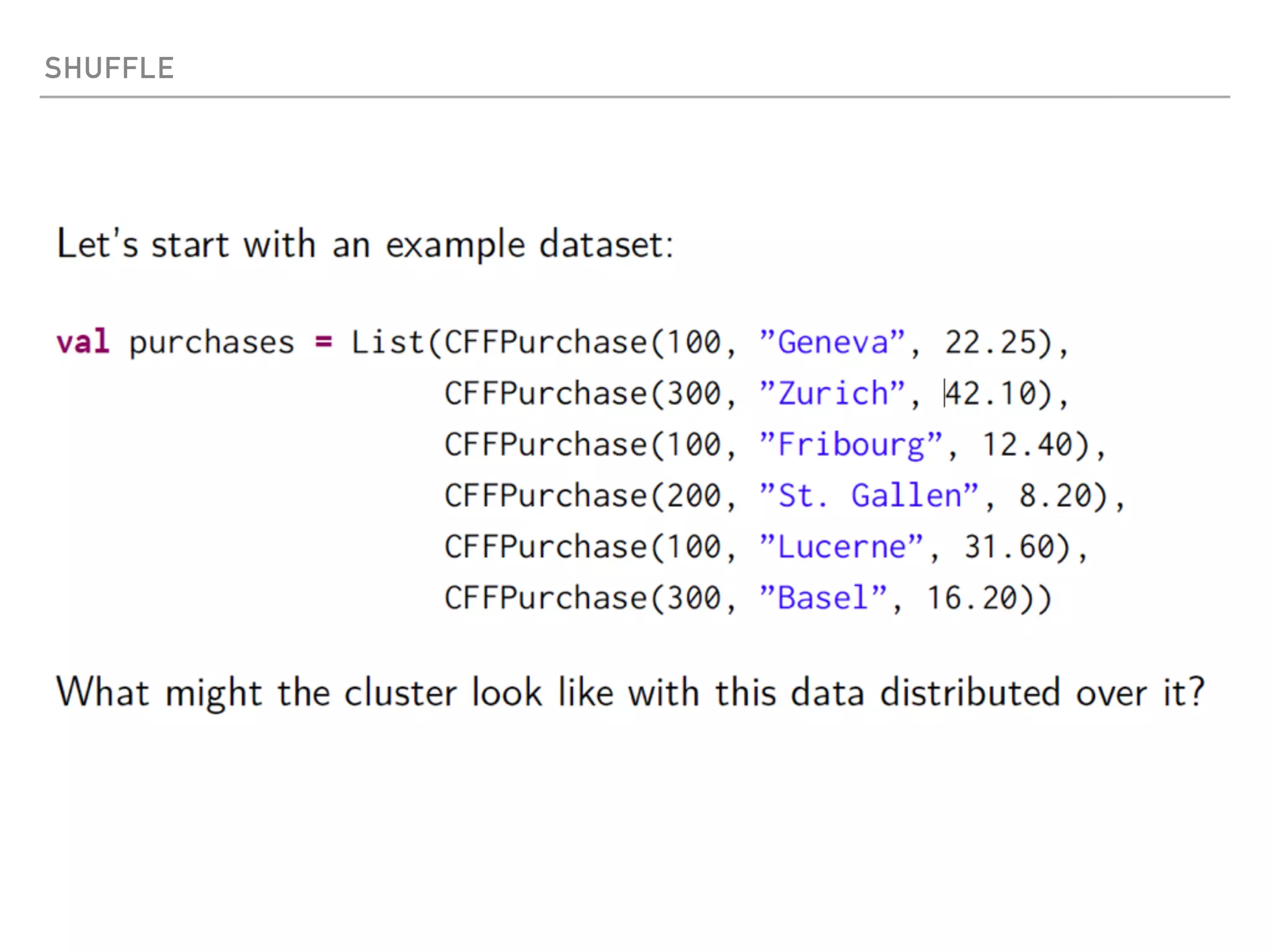
SHUFFLE
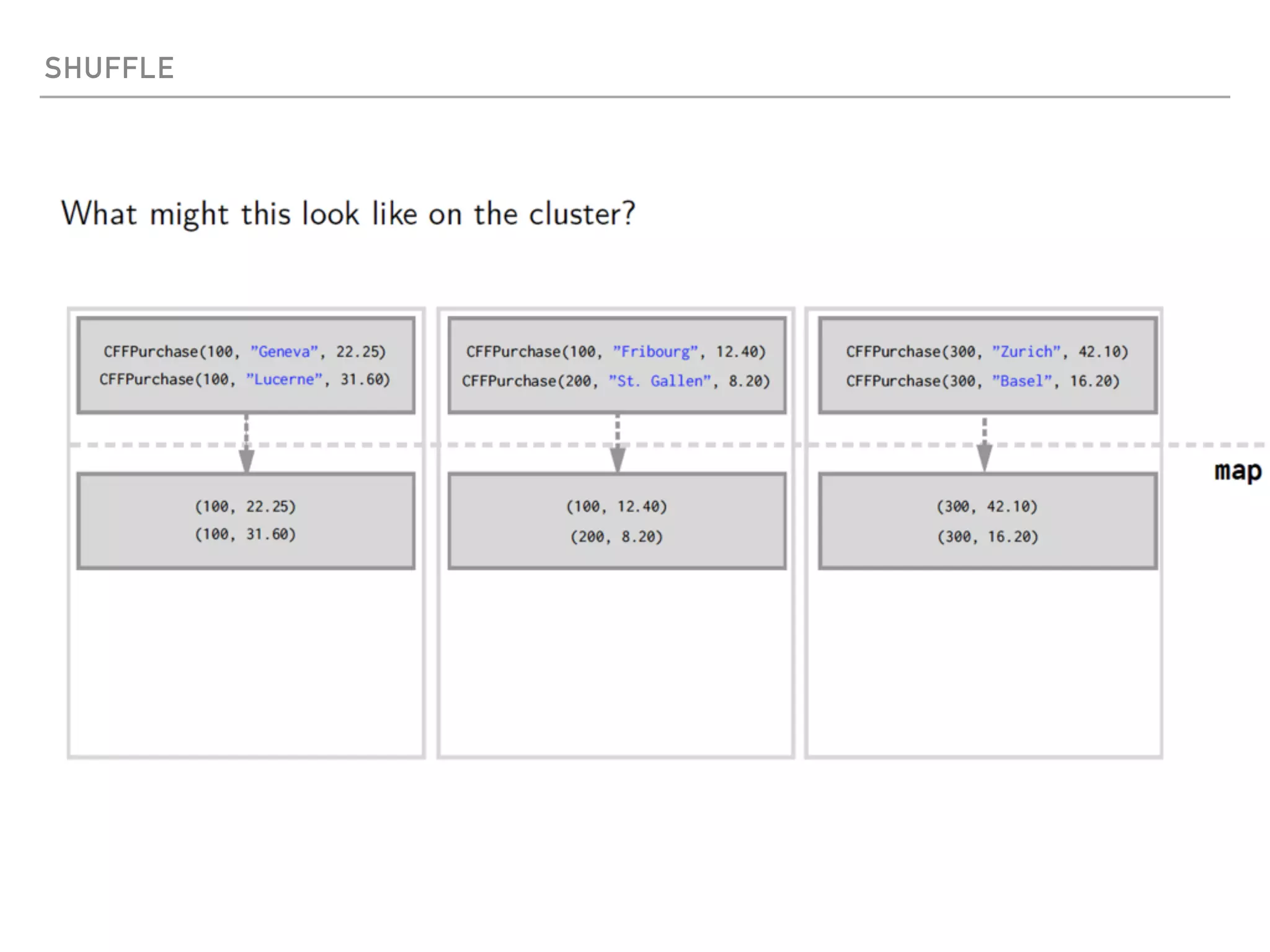
SHUFFLE
SHUFFLE
SHUFFLE
SHUFFLE
REMINDER: LATENCY MATTERS (HUMANIZED)
SHUFFLE
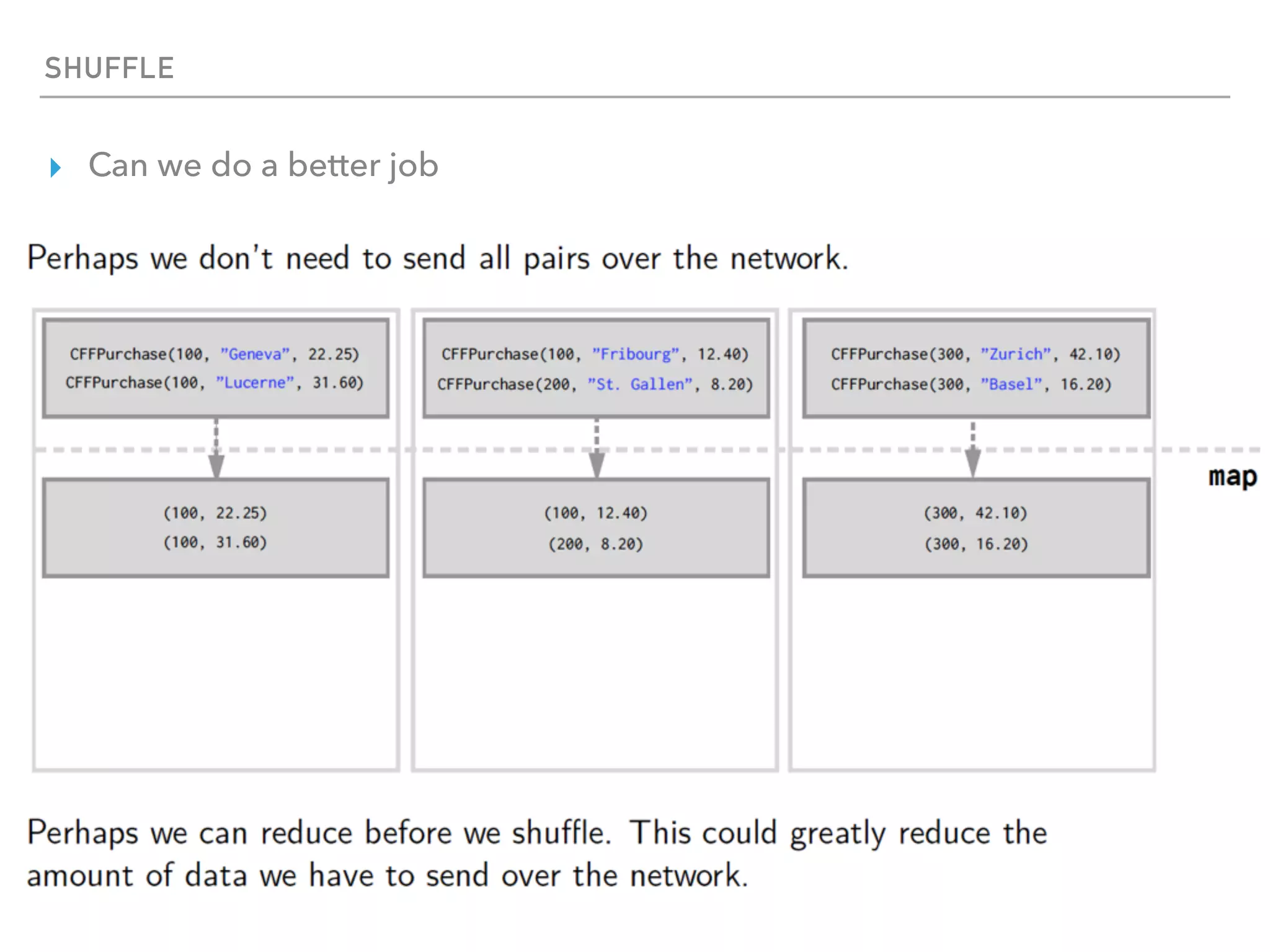
▸ Can we do a better job
SHUFFLE
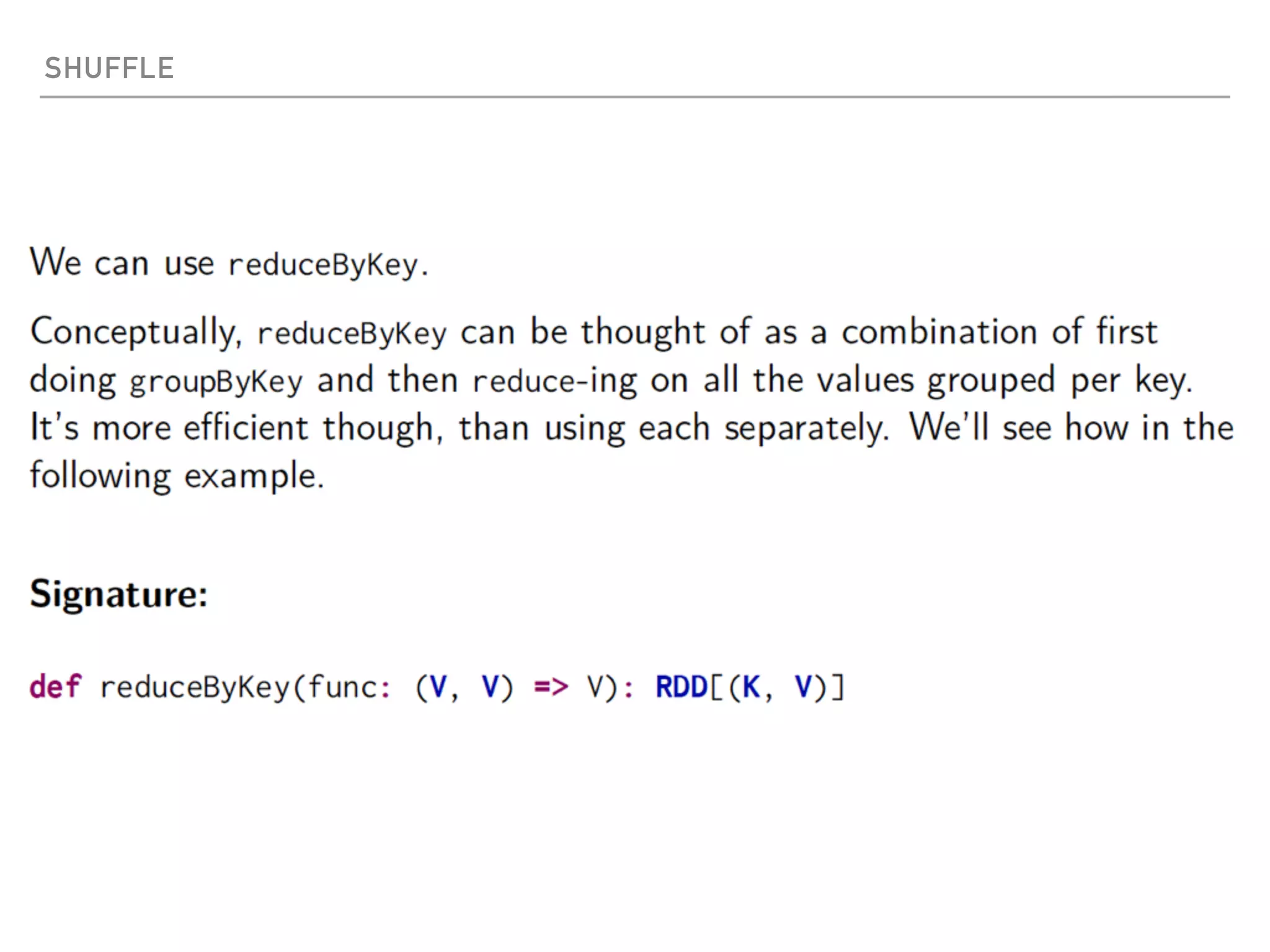
SHUFFLE
SHUFFLE
SHUFFLE
SHUFFLE
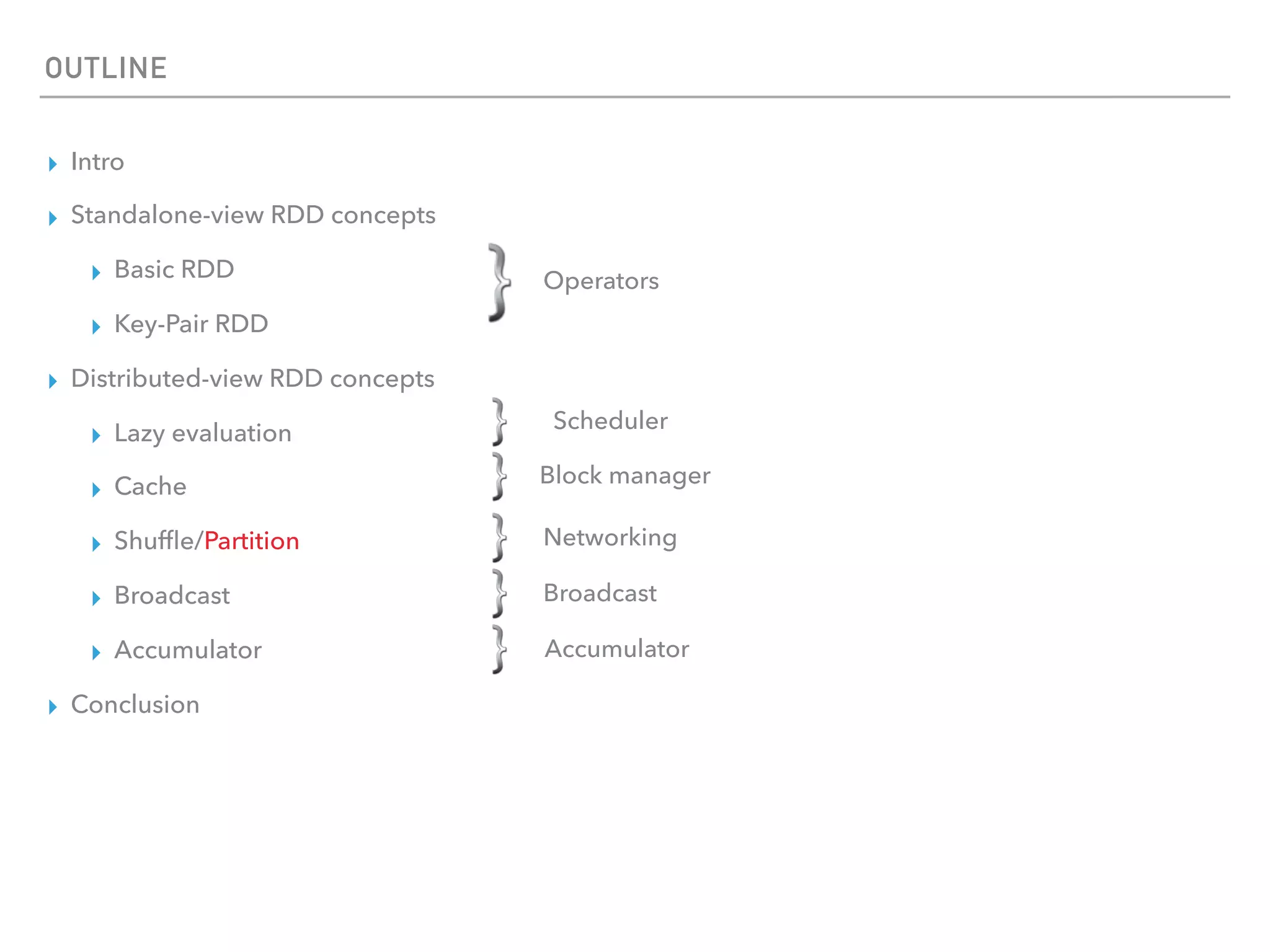
OUTLINE
▸ Intro
▸ Standalone-view RDD concepts
▸ Basic RDD
▸ Key-Pair RDD
▸ Distributed-view RDD concepts
▸ Lazy evaluation
▸ Cache
▸ Shuffle/Partition
▸ Broadcast
▸ Accumulator
▸ Conclusion
Operators
Scheduler
Networking
Broadcast
Accumulator
Block manager
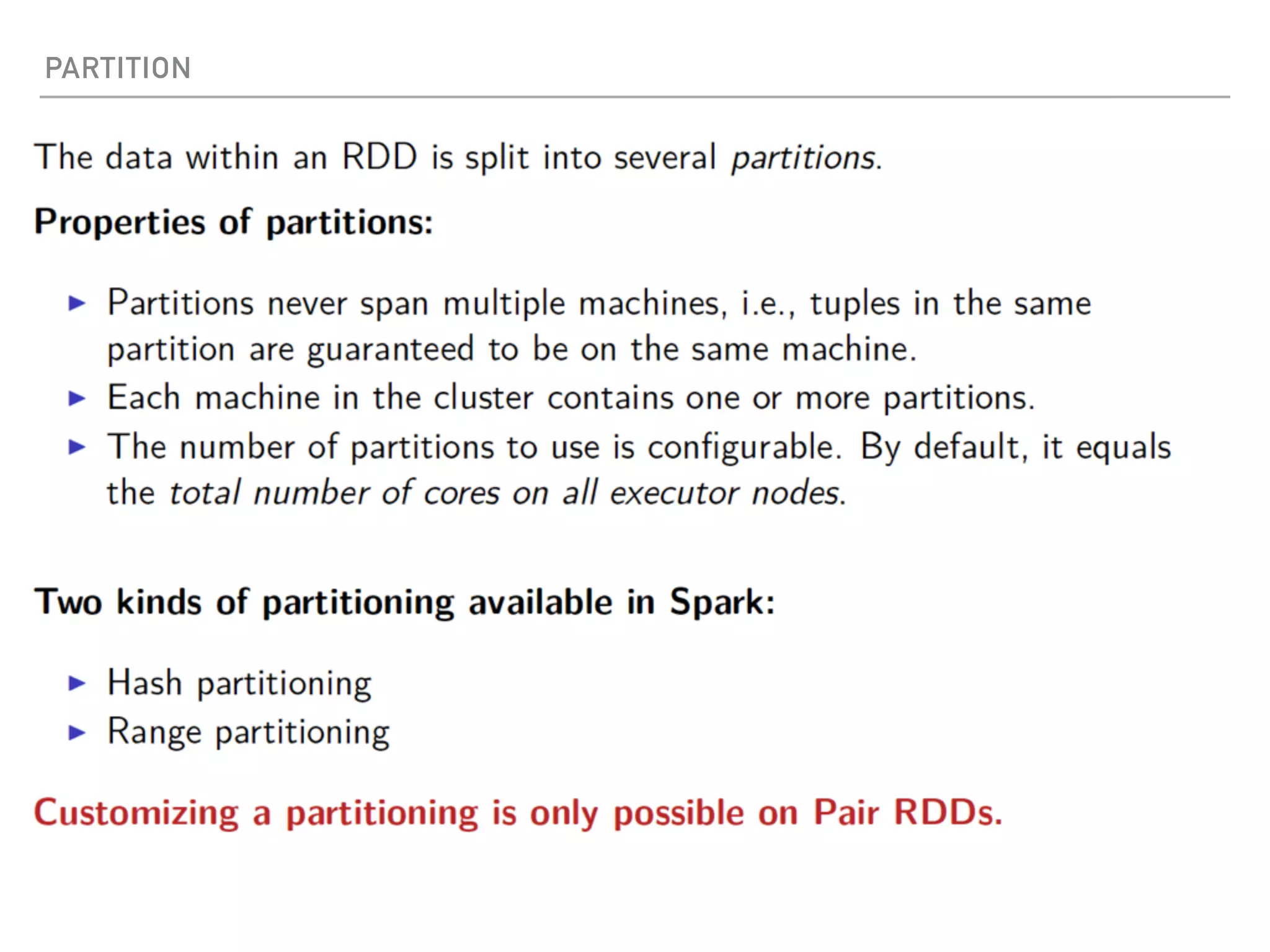
PARTITION
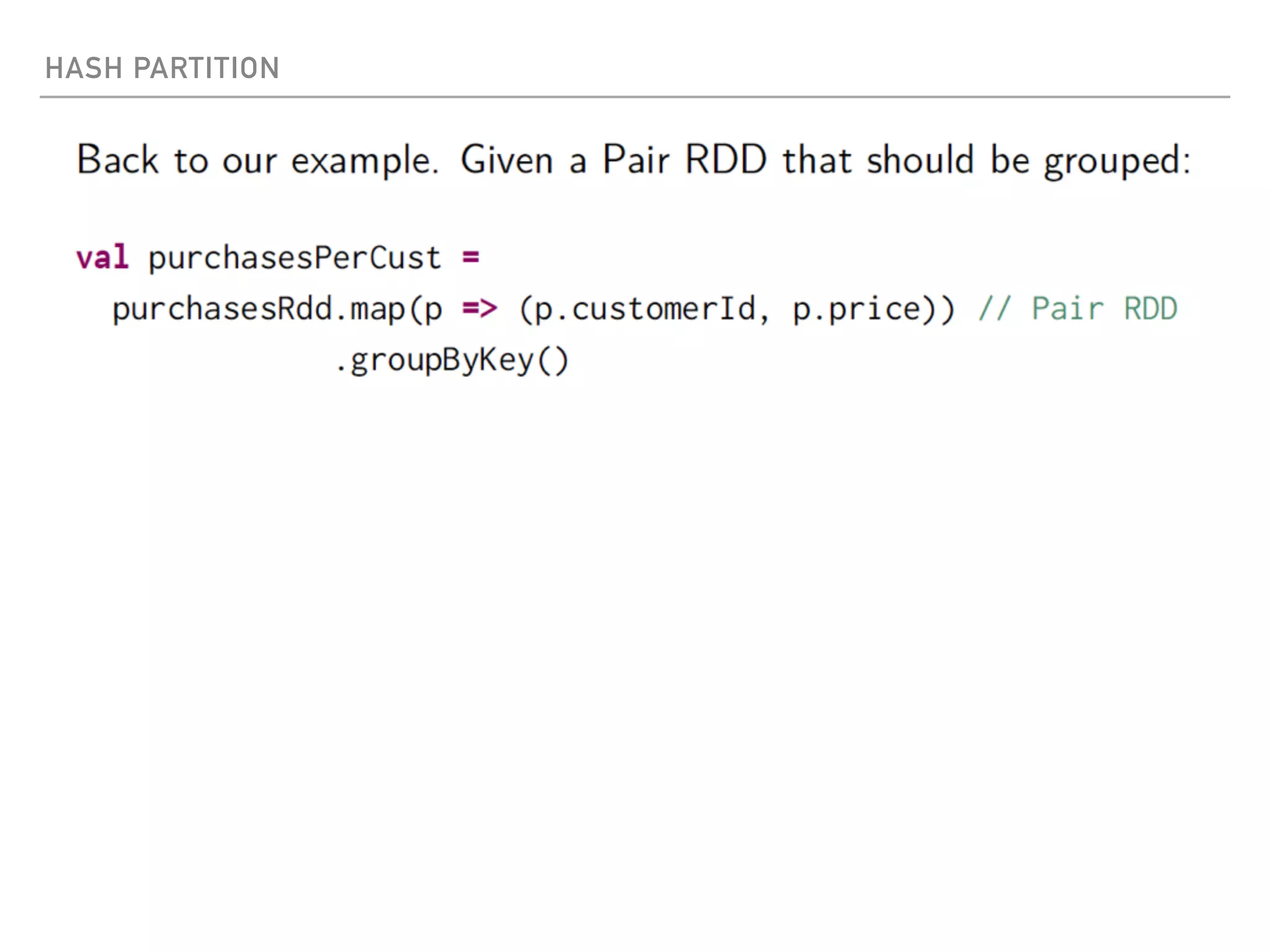
HASH PARTITION
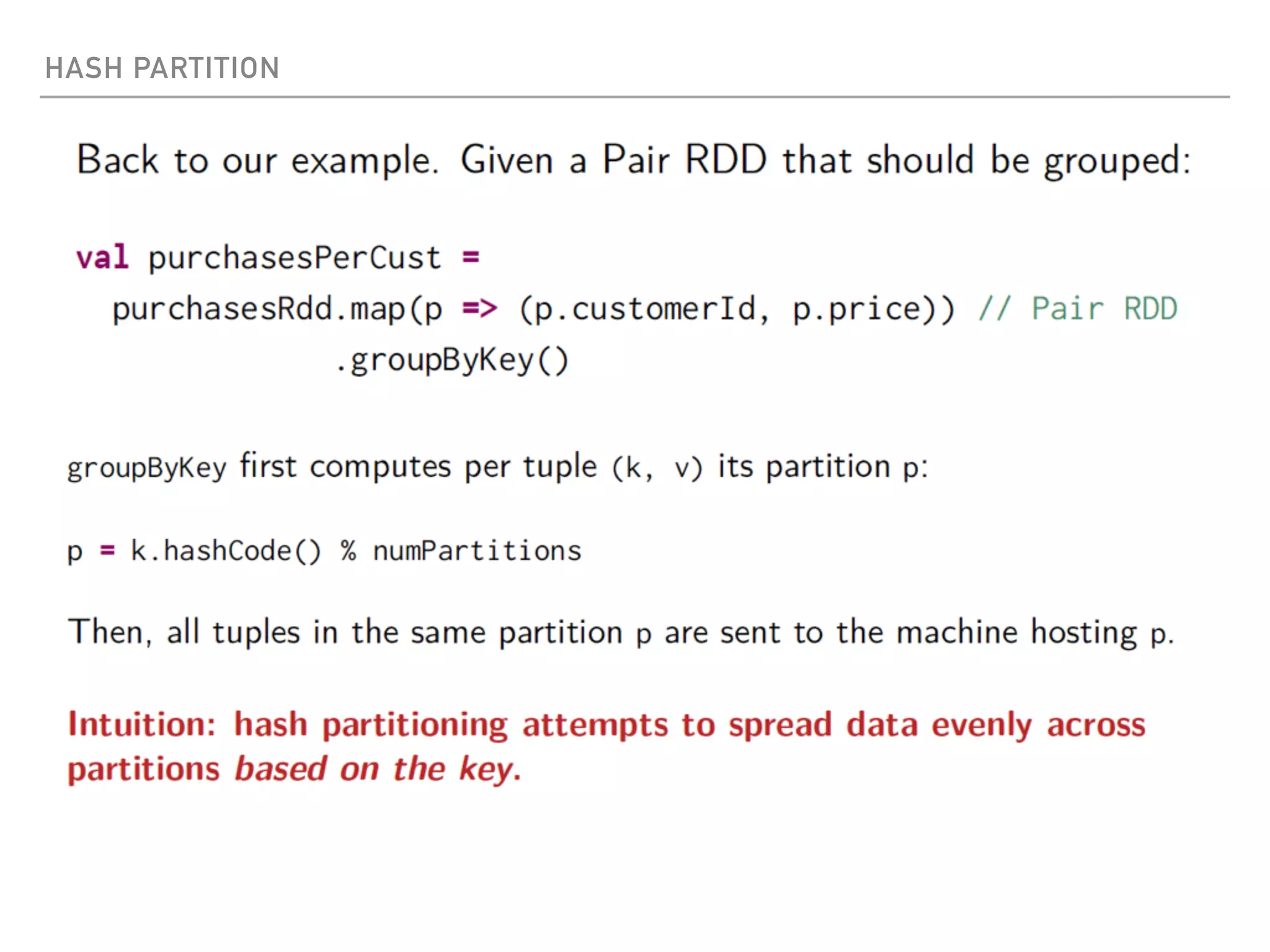
HASH PARTITION
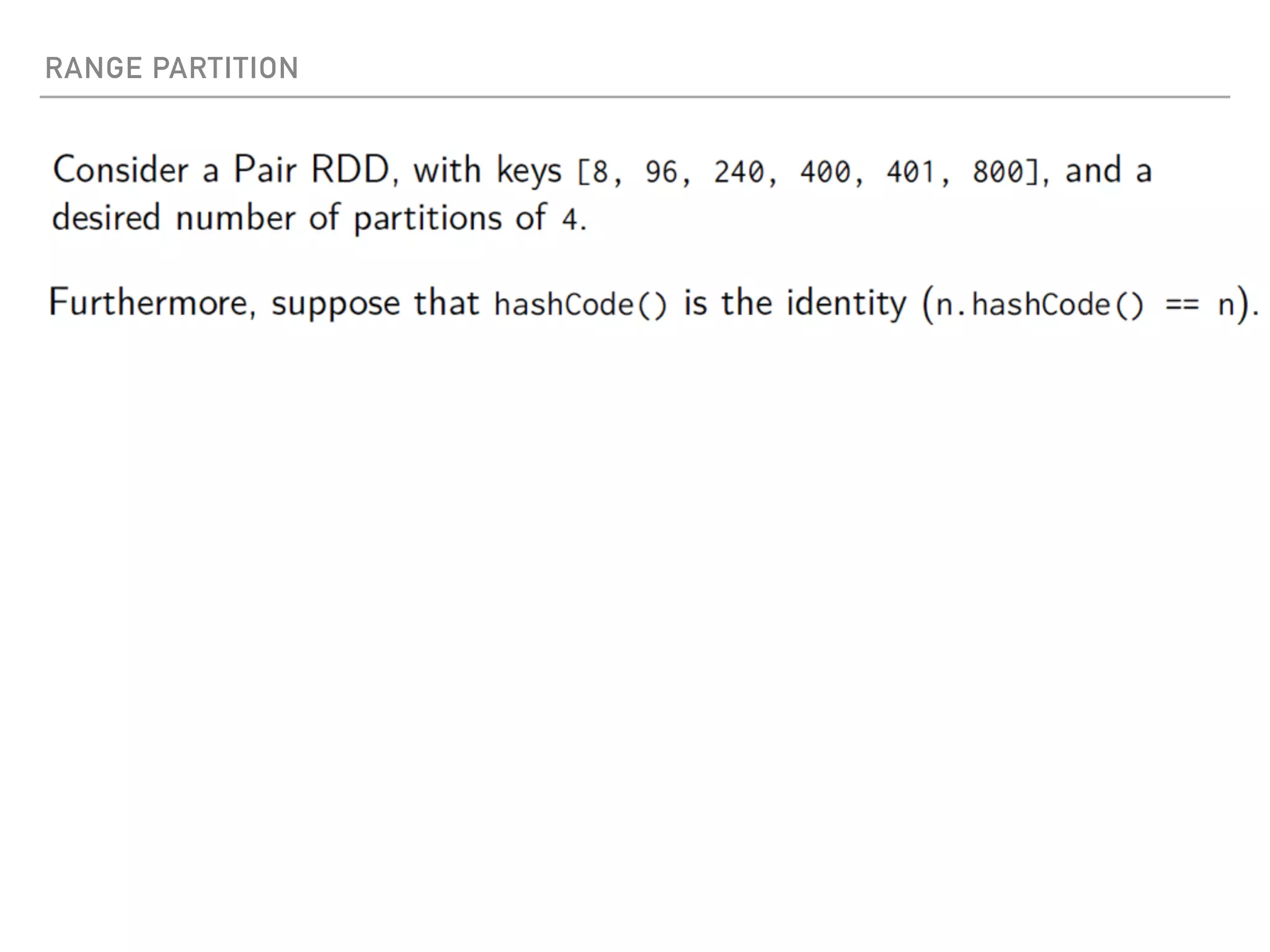
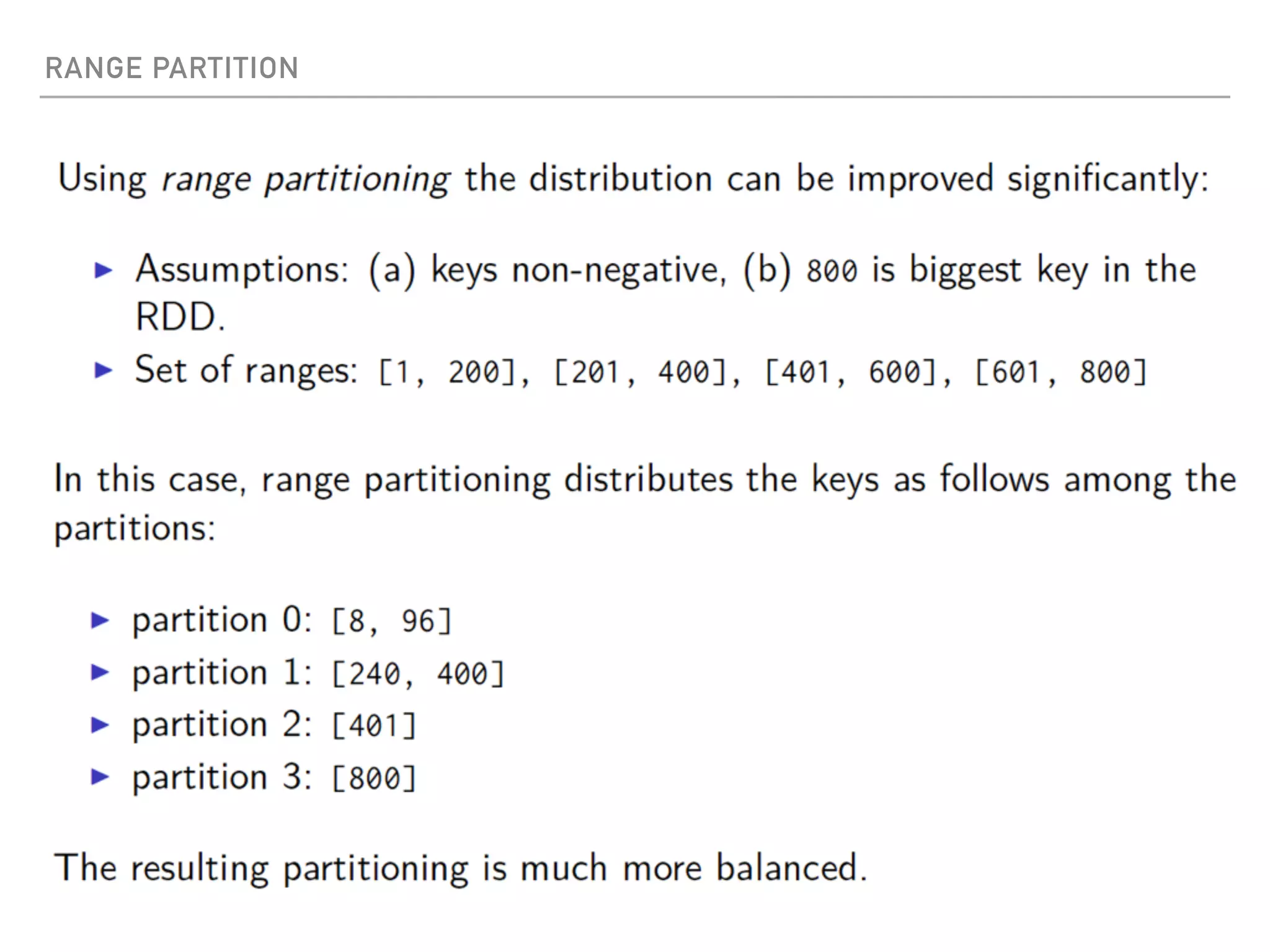
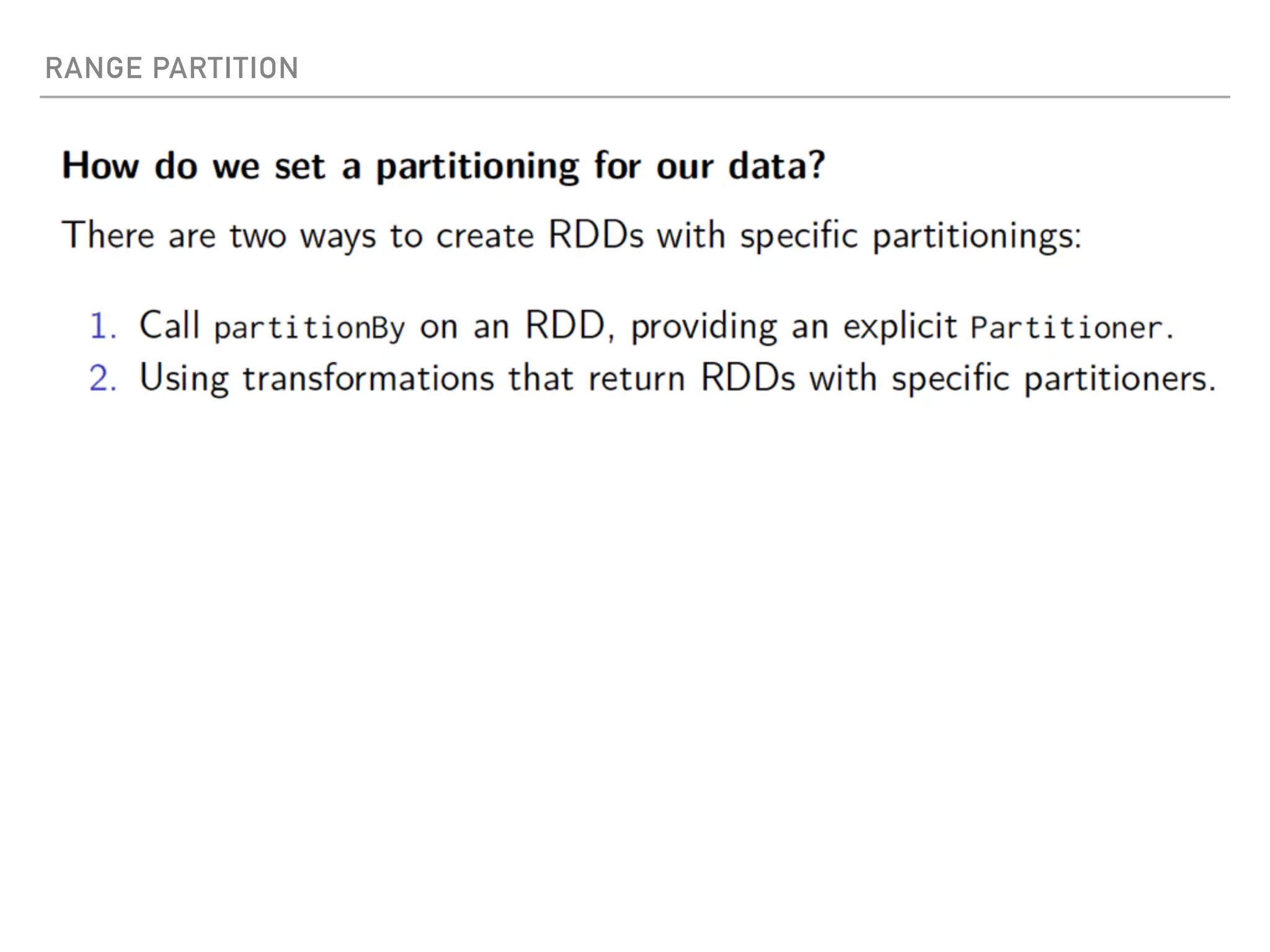
RANGE PARTITION
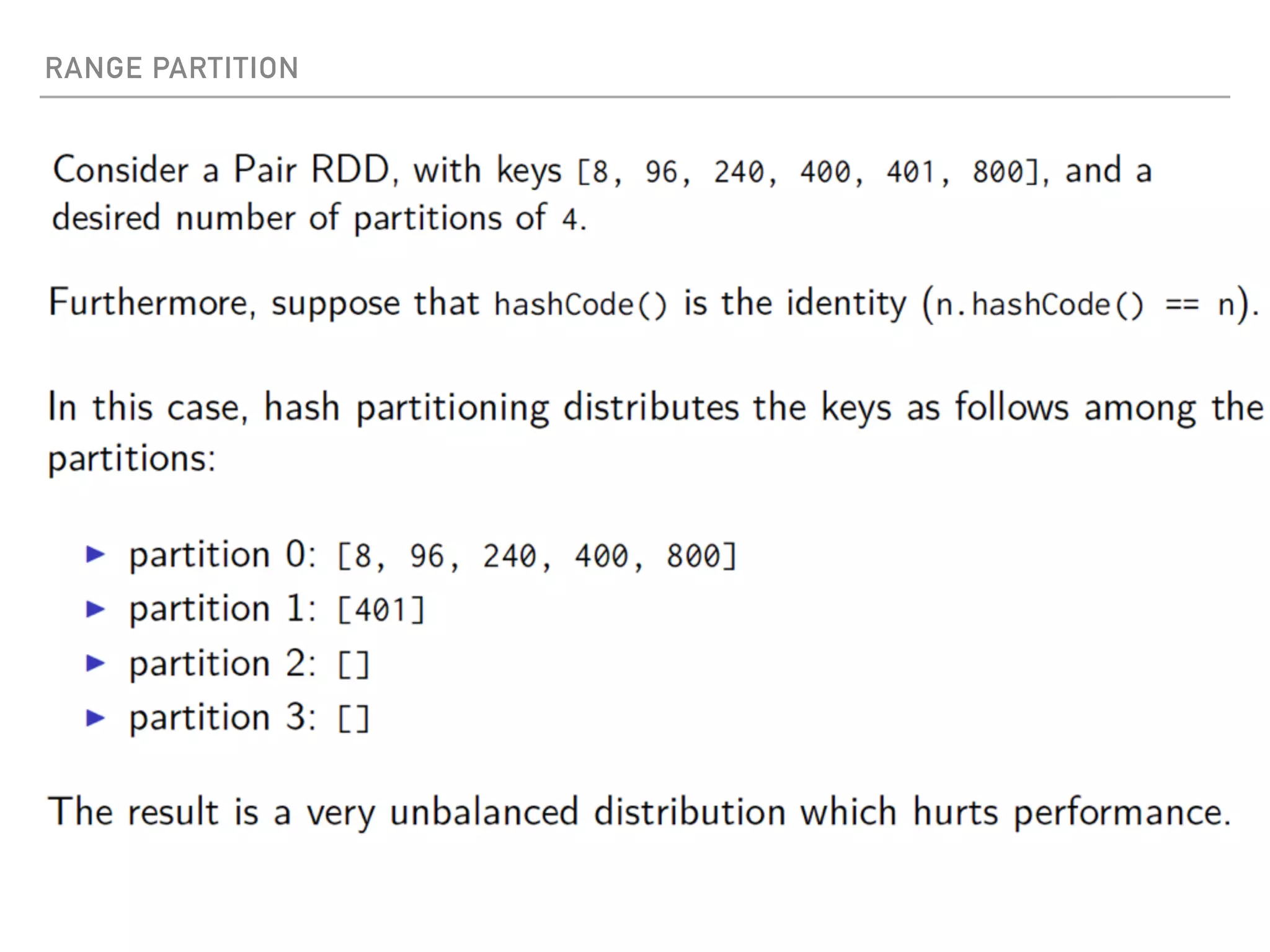
RANGE PARTITION
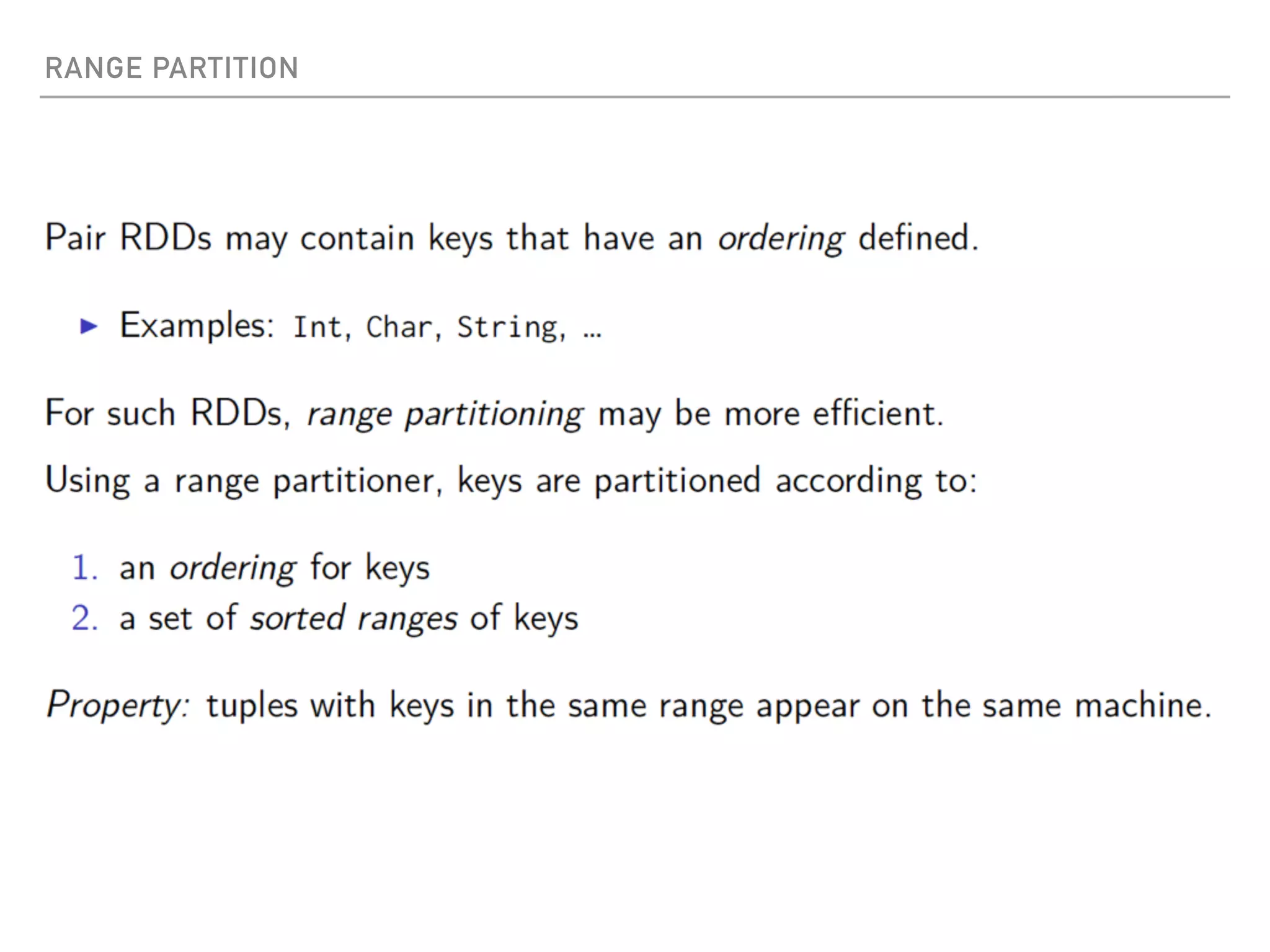
RANGE PARTITION
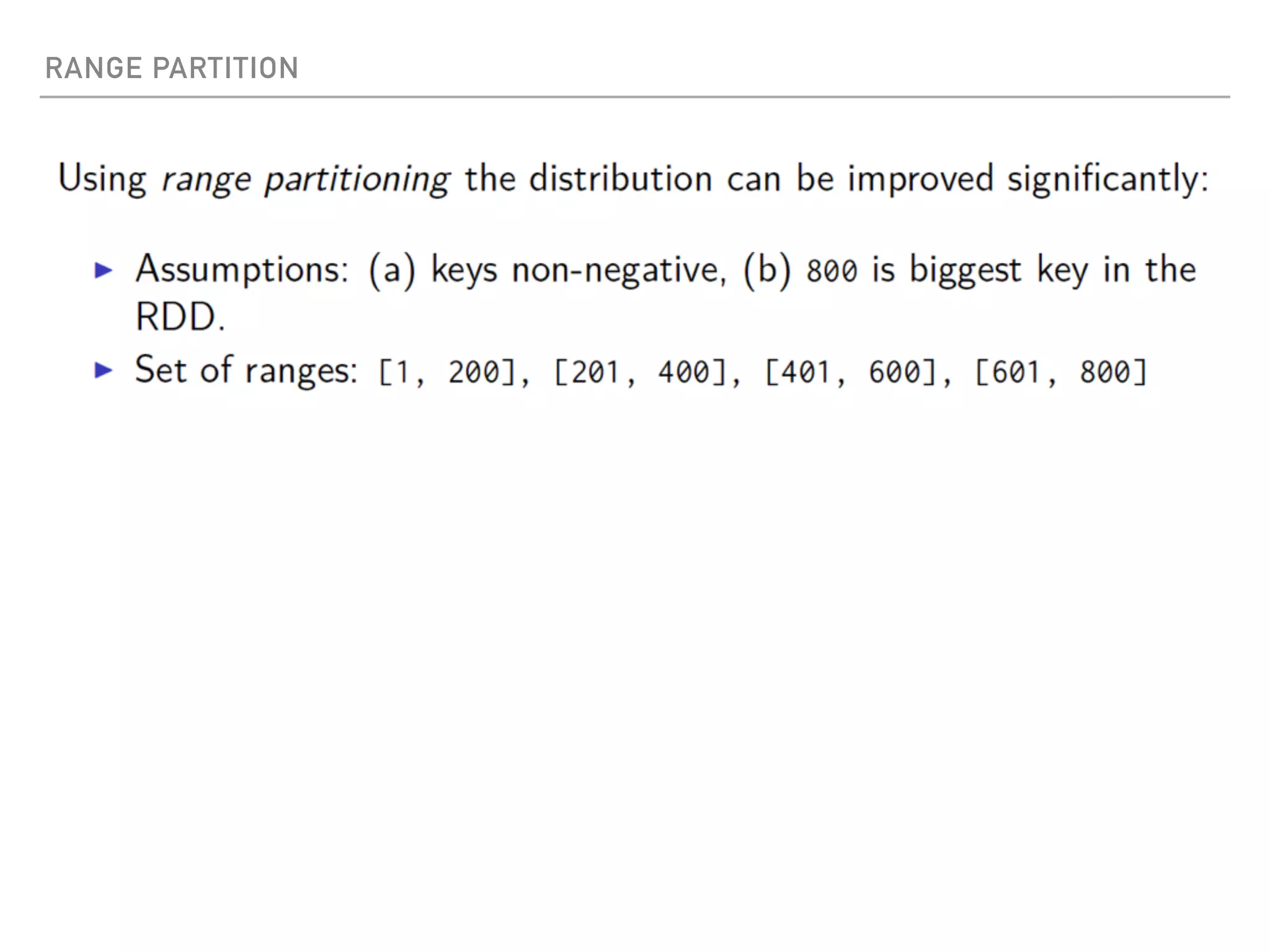
RANGE PARTITION
RANGE PARTITION
RANGE PARTITION
RANGE PARTITION
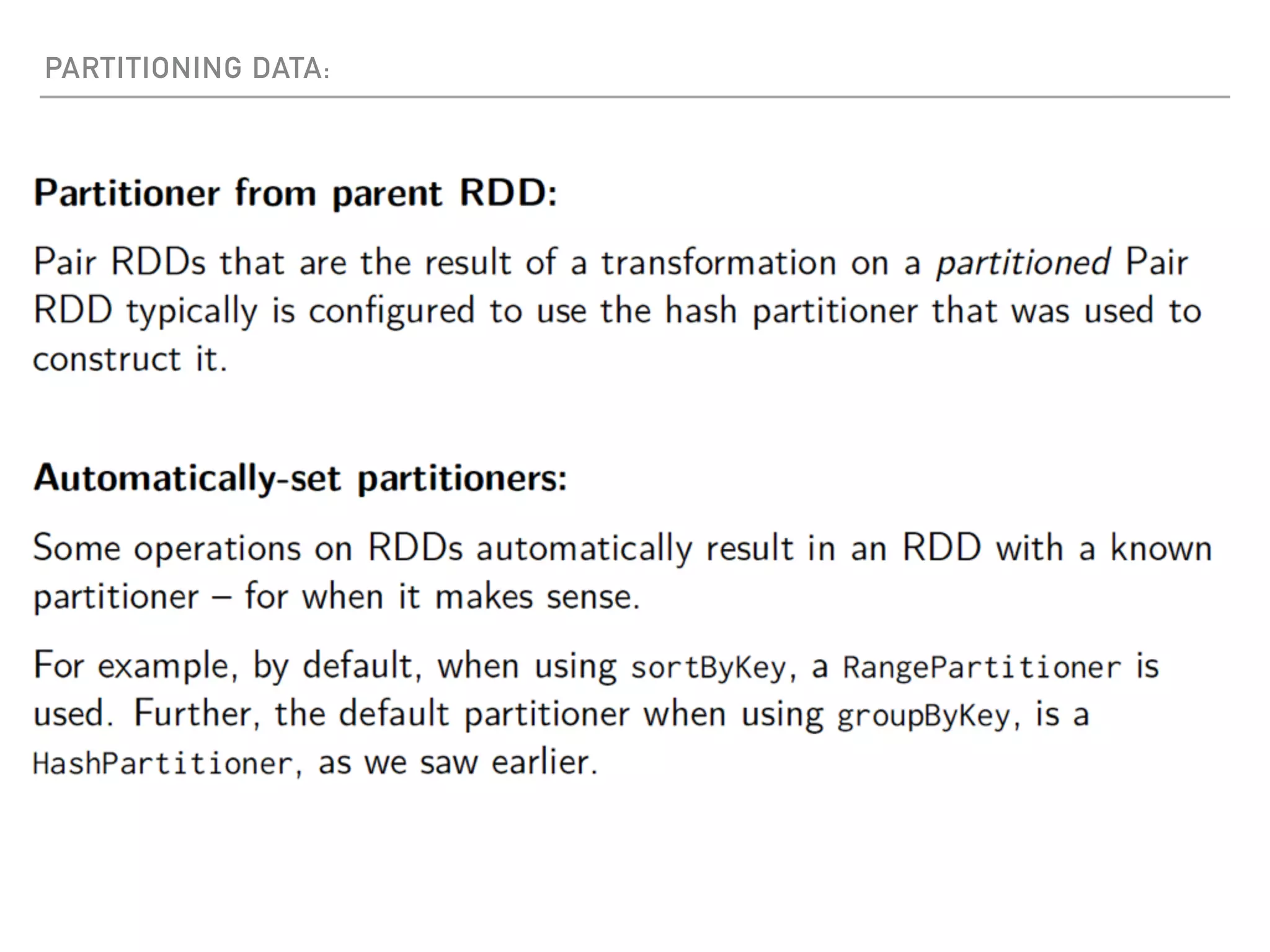
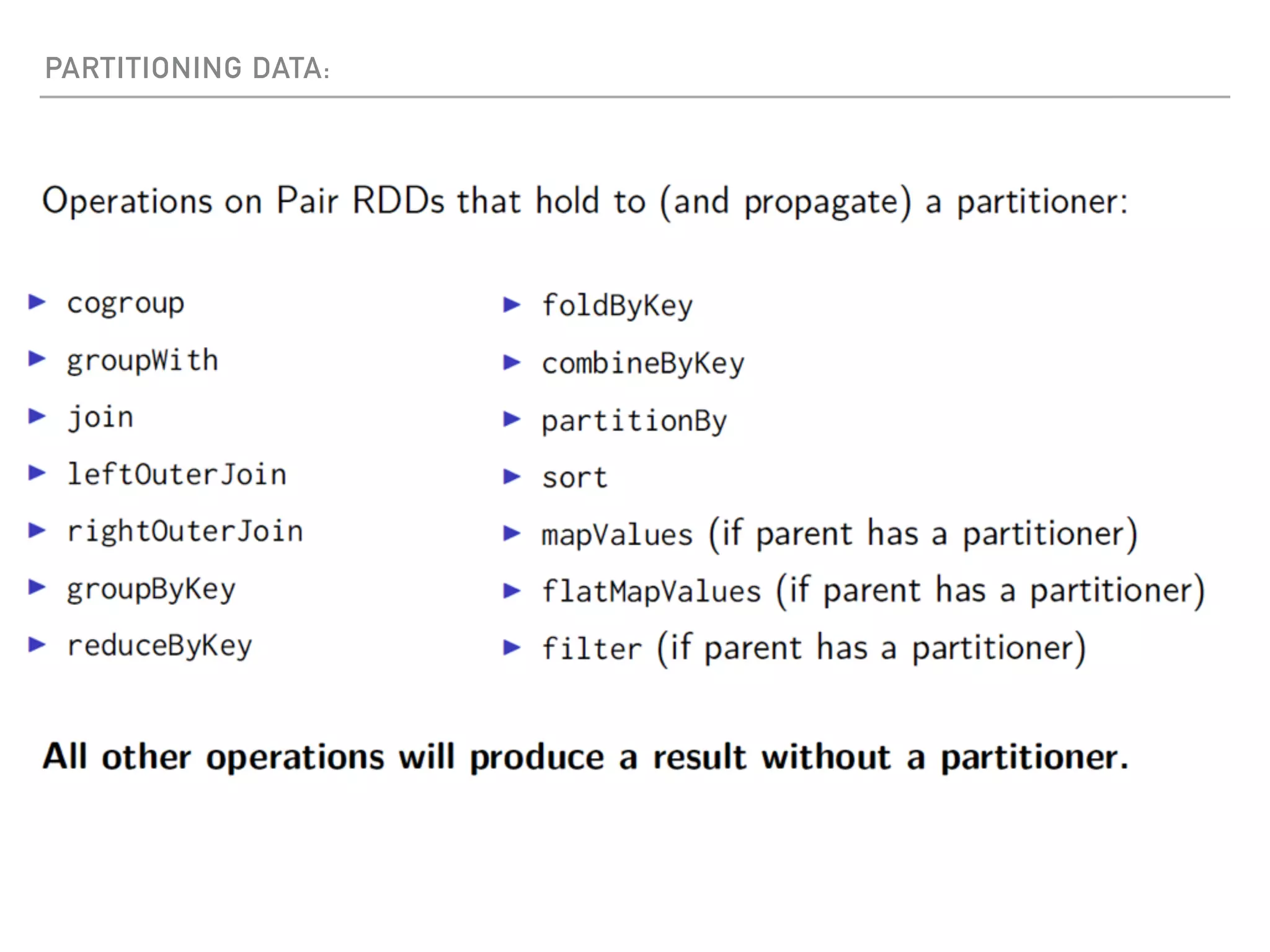
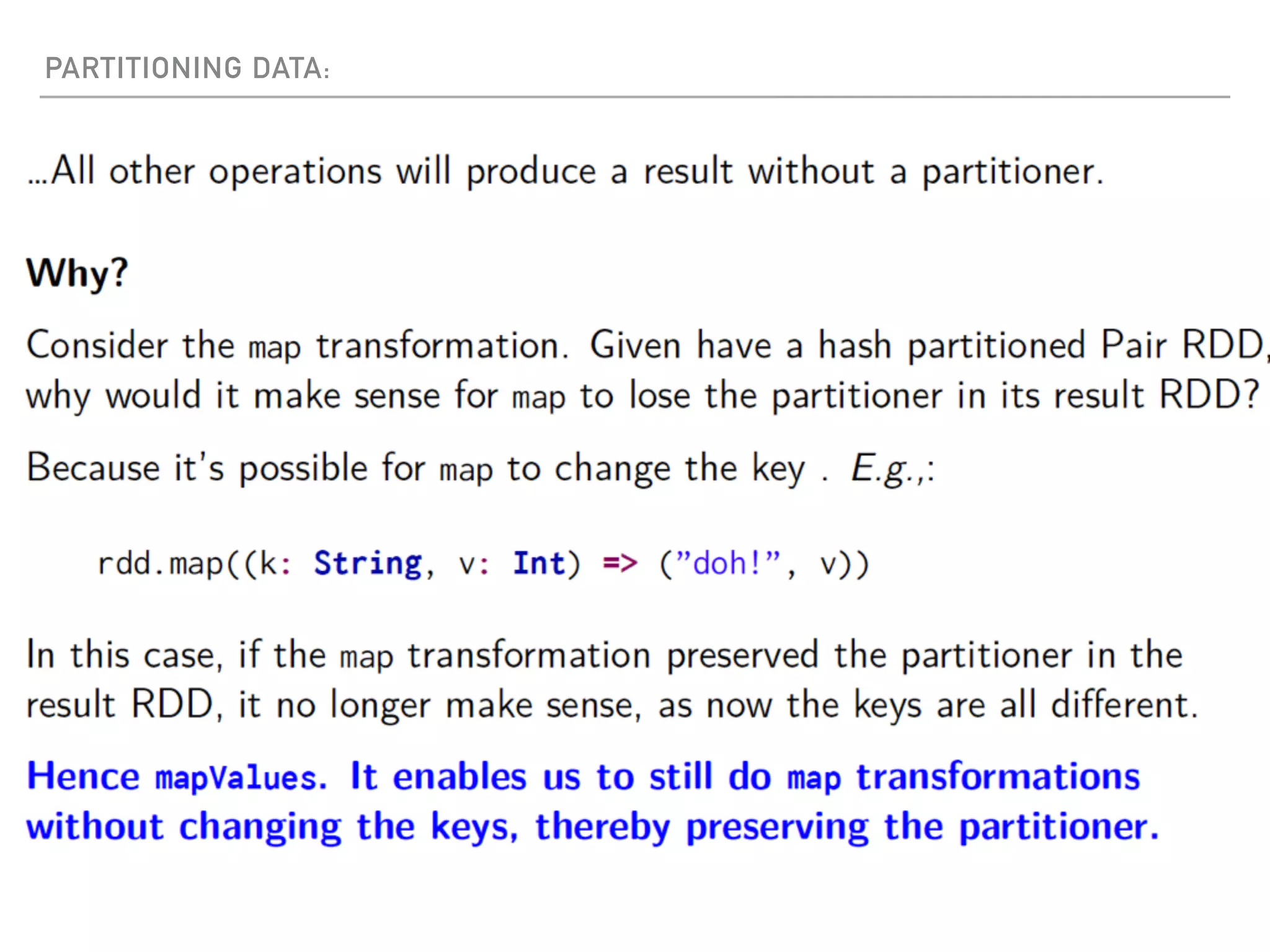
PARTITIONING DATA:
PARTITIONING DATA:
PARTITIONING DATA:
PARTITIONING DATA:
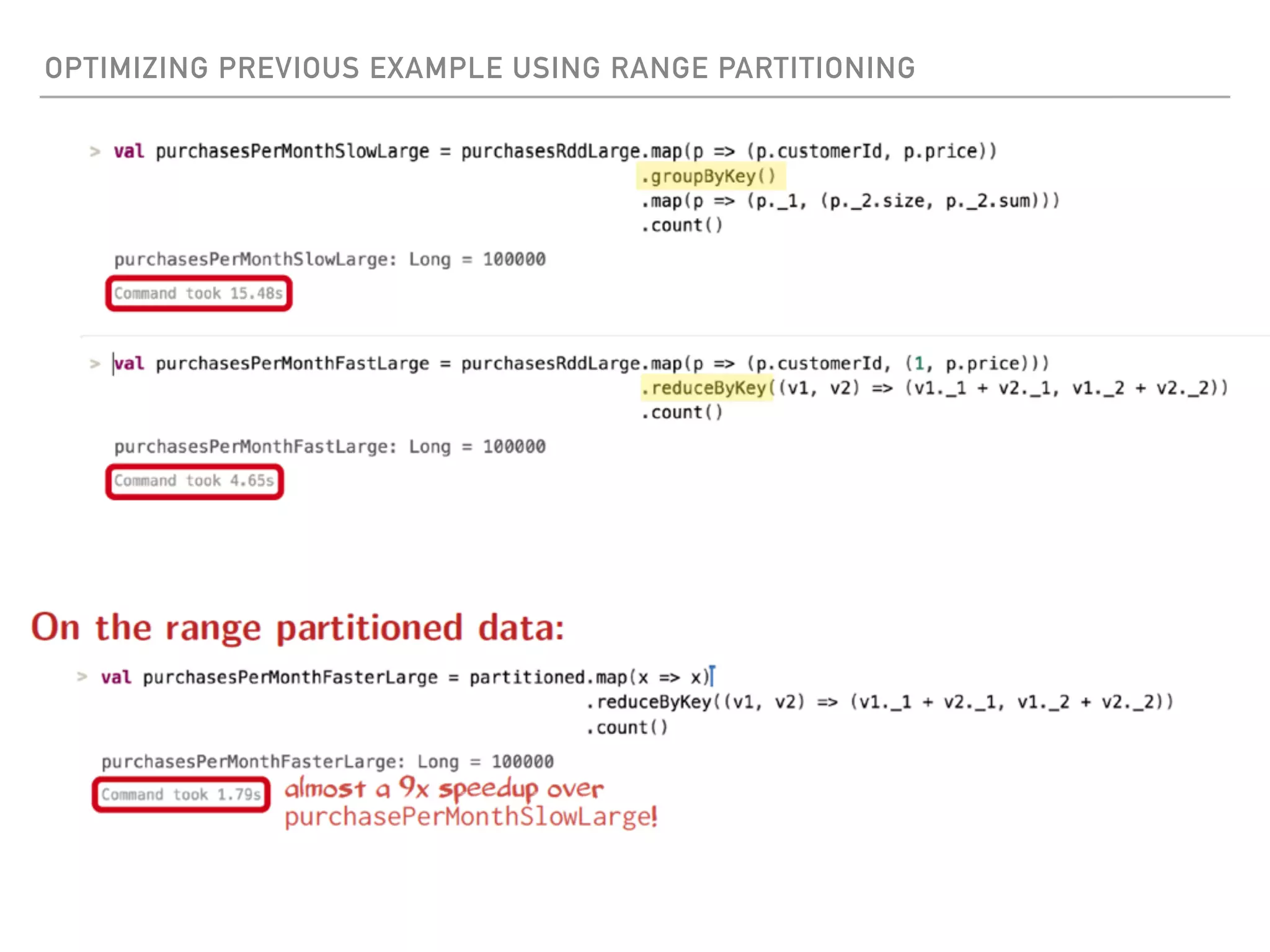
OPTIMIZING PREVIOUS EXAMPLE USING RANGE PARTITIONING
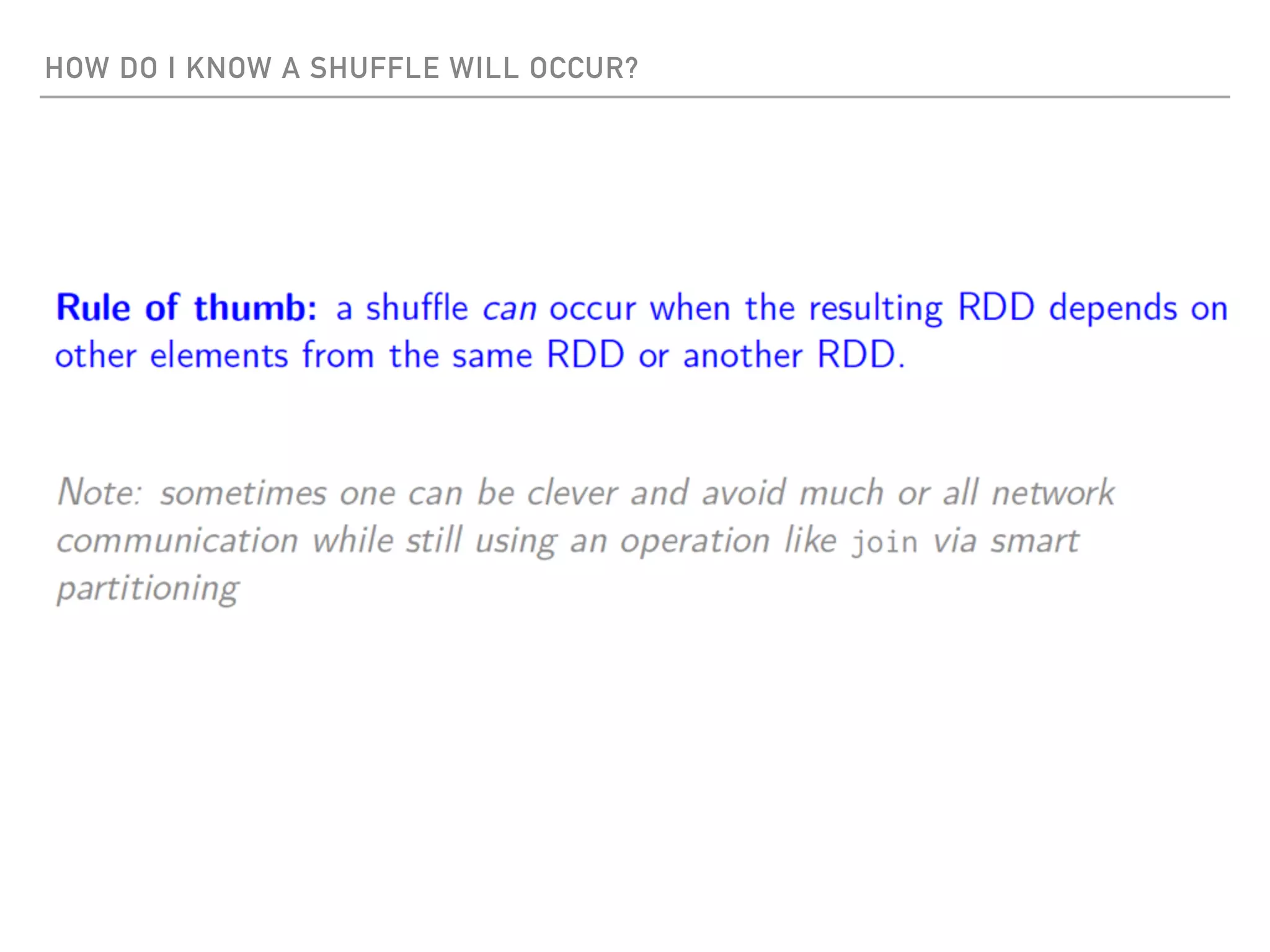
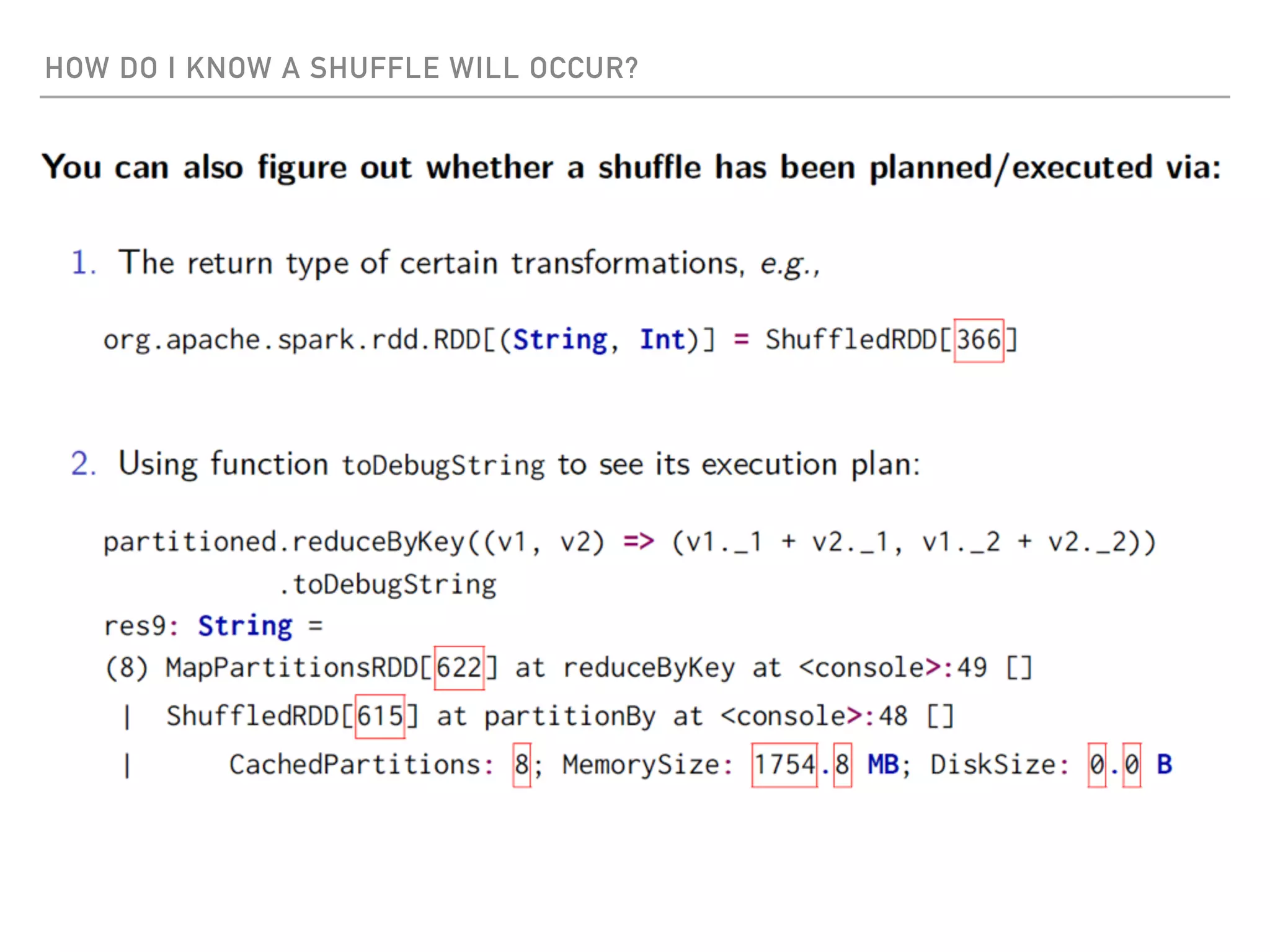
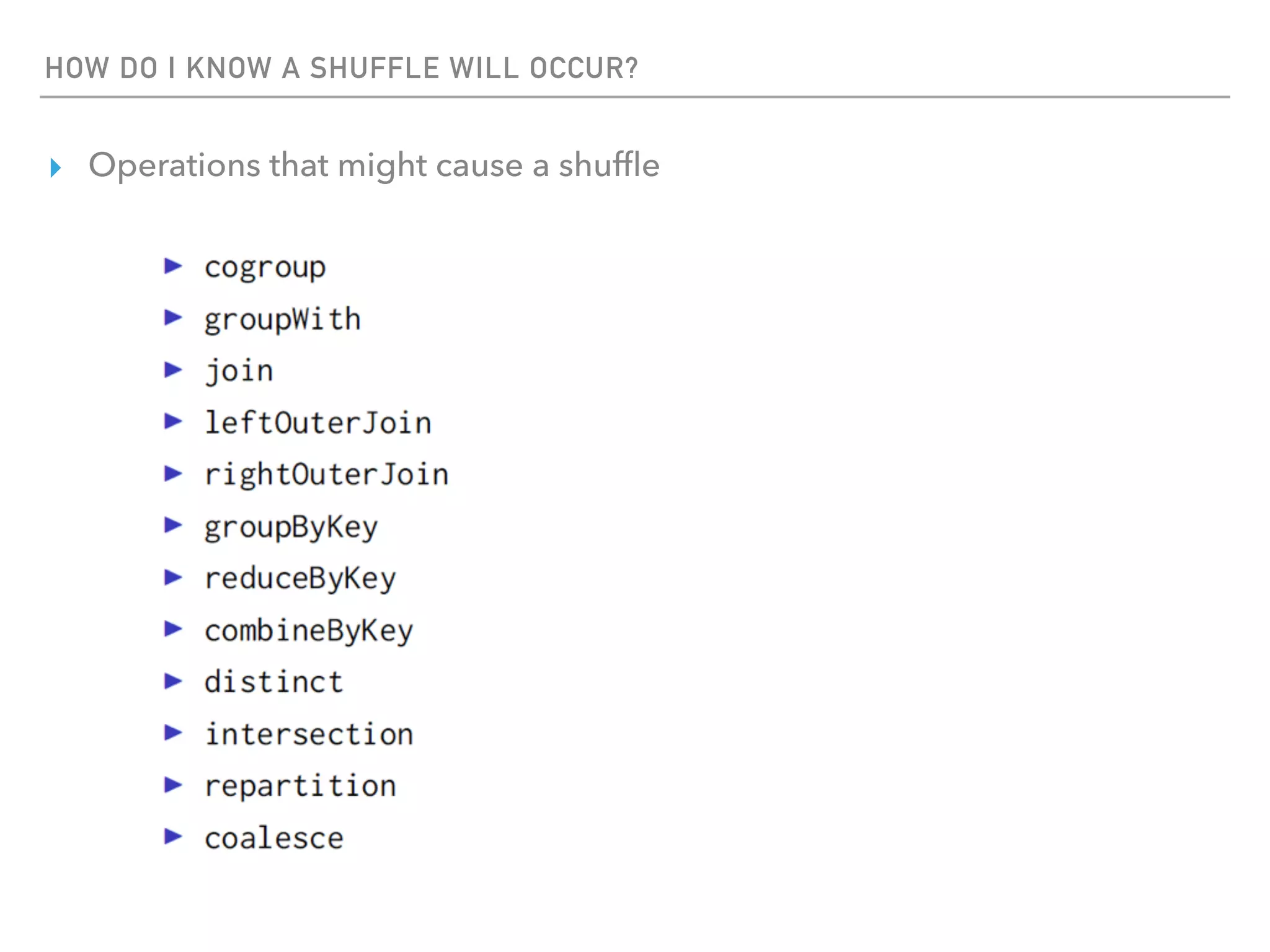
HOW DO I KNOW A SHUFFLE WILL OCCUR?
▸ Operations that might cause a shuffle
OUTLINE
▸ Intro
▸ Standalone-view RDD concepts
▸ Basic RDD
▸ Key-Pair RDD
▸ Distributed-view RDD concepts
▸ Lazy evaluation
▸ Cache
▸ Shuffle/Partition
▸ Broadcast
▸ Accumulator
▸ Conclusion
Operators
Scheduler
Networking
Broadcast
Accumulator
Block manager
SHARED VARIABLES
▸ Start with an example
BROADCAST VARIABLES
▸ Motivation:
▸ Normally, Spark closures, including variables they use, are sent separately within each task.
▸ But in same cases, the same variable will be used in multiple parallel operations
▸ By default, Spark task launching mechanism is optimized for small task sizes.
▸ But in some cases, a large read-only variable needs to be shared across tasks, or across operations
▸ Examples: large lookup tables
OUTLINE
▸ Intro
▸ Standalone-view RDD concepts
▸ Basic RDD
▸ Key-Pair RDD
▸ Distributed-view RDD concepts
▸ Lazy evaluation
▸ Cache
▸ Shuffle/Partition
▸ Broadcast
▸ Accumulator
▸ Conclusion
Operators
Scheduler
Networking
Broadcast
Accumulator
Block manager
BROADCAST VARIABLES
ACCUMULATORS
▸ Motivation:
▸ Normally, Spark closures, including variables they use, are sent separately within each task.
▸ But values inside worker nodes are not propagated back to the driver
▸ Normally, we could get the entire RDD back with reduce(),
▸ But sometimes, we just need a simpler way
▸ Examples: counters
OUTLINE
▸ Intro
▸ Standalone-view RDD concepts
▸ Basic RDD
▸ Key-Pair RDD
▸ Distributed-view RDD concepts
▸ Lazy evaluation
▸ Cache
▸ Shuffle/Partition
▸ Broadcast
▸ Accumulator
▸ Conclusion
Operators
Scheduler
Networking
Broadcast
Accumulator
Block manager
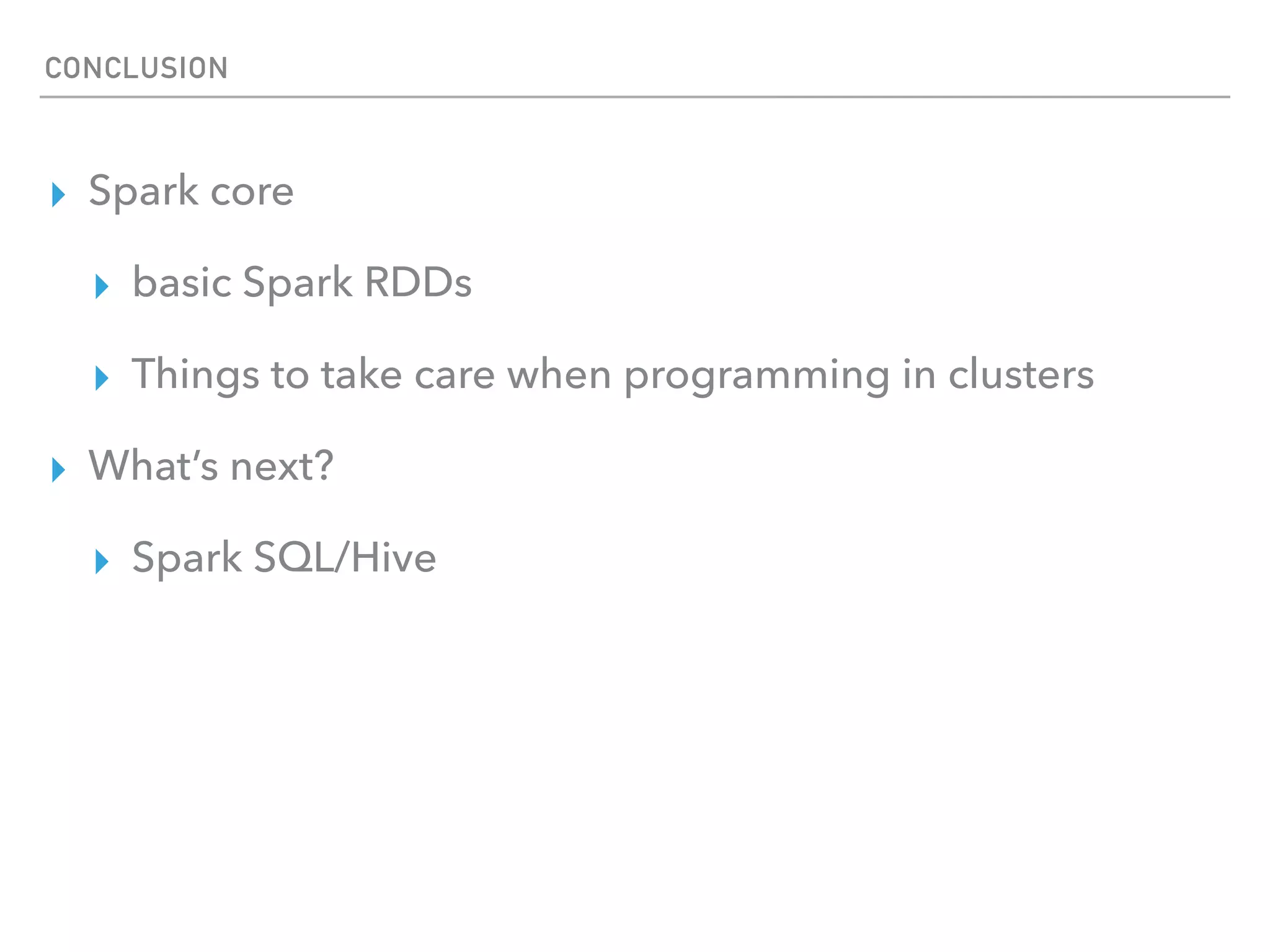
CONCLUSION
▸ Spark core
▸ basic Spark RDDs
▸ Things to take care when programming in clusters
▸ What’s next?
▸ Spark SQL/Hive
REFERENCES
▸ Udemy hands-one course
▸ https://www.udemy.com/taming-big-data-with-apache-spark-hands-on/
learn/v4/overview
▸ Several slides:
▸ http://heather.miller.am/teaching/cs212/slides
▸ http://ampcamp.berkeley.edu/wp-content/uploads/2012/06/matei-zaharia-
amp-camp-2012-advanced-spark.pdf
▸ https://databricks-training.s3.amazonaws.com/slides/advanced-spark-
training.pdf
▸ <<Learning Spark>>

Spark core