Soil & Nitrogen Management in Maize
(Research for Development)
Dinesh Panday
Doctoral Student | Graduate Research Assistant
Department of Agronomy and Horticulture
University of Nebraska-Lincoln
13th Asian Maize Conference | October 8-10, 2018 | Ludhiana, Punjab, India
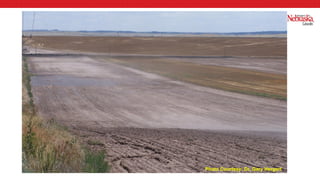
Photo Courtesy: Dr. Gary Hergert
Technologies/ practices are required to both
decrease environmental N losses from soils
and enhance N use efficiency.
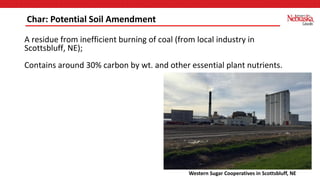
A residue from inefficient burning of coal (from local industry in
Scottsbluff, NE);
Contains around 30% carbon by wt. and other essential plant nutrients.
Char: Potential Soil Amendment
Western Sugar Cooperatives in Scottsbluff, NE
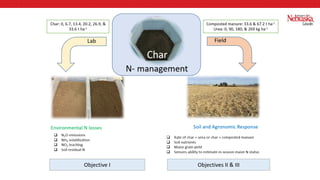
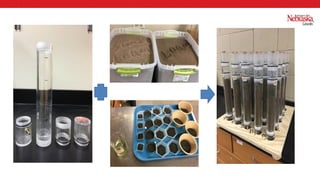
I. To measure N losses in form of N2O emission, NH3 volatilization, and NO3
-
leaching from fertilized loam and sandy loam soils after adding various rates
of char compared to soils with no char at a laboratory setting;
II. To evaluate the effect of char in maize field fertilized with urea and
composted manure;
III. To test the ability of active and passive sensors to estimate in-season
maize N status.
Objectives
Evaluating effects of char in N management
in agricultural soils of semi-arid region
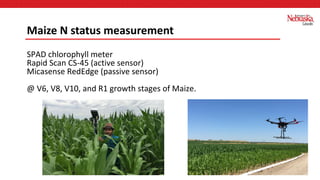
SPAD chlorophyll meter
Rapid Scan CS-45 (active sensor)
Micasense RedEdge (passive sensor)
@ V6, V8, V10, and R1 growth stages of Maize.
Maize N status measurement
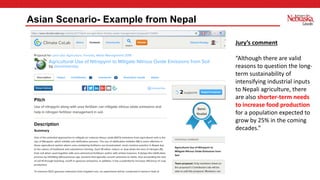
Asian Scenario- Example from Nepal
Jury’s comment
“Although there are valid
reasons to question the long-
term sustainability of
intensifying industrial inputs
to Nepali agriculture, there
are also shorter-term needs
to increase food production
for a population expected to
grow by 25% in the coming
decades.”
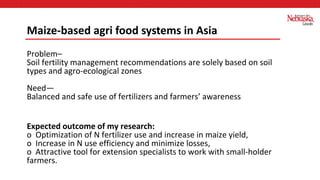
Problem–
Soil fertility management recommendations are solely based on soil
types and agro-ecological zones
Need—
Balanced and safe use of fertilizers and farmers’ awareness
Maize-based agri food systems in Asia
Expected outcome of my research:
o Optimization of N fertilizer use and increase in maize yield,
o Increase in N use efficiency and minimize losses,
o Attractive tool for extension specialists to work with small-holder
farmers.
Further expansion through MAIZE project needs—
o Linkage of farmers’ indigenous knowledge with science;
o Development of maize varieties to make cropping system resilient;
o Institutional coordination to reach out to farmers.
Maize-based agri food systems in Asia
Dr. Bijesh Maharjan, UNL-PREC
Rex Nielsen, UNL-PREC
UNL Research Council
Western Sugar Cooperative, Scottsbluff, NE
---
Dr. B. M. Prasanna
Dr. Victor Kommerell
Claudia Velasco
Jennifer Johnson
Acknowledgment
Thank You!

Soil and nitrogen management in maize

  • 1.
    Soil & NitrogenManagement in Maize (Research for Development) Dinesh Panday Doctoral Student | Graduate Research Assistant Department of Agronomy and Horticulture University of Nebraska-Lincoln 13th Asian Maize Conference | October 8-10, 2018 | Ludhiana, Punjab, India
  • 2.
    Photo Courtesy: Dr.Gary Hergert
  • 3.
    Technologies/ practices arerequired to both decrease environmental N losses from soils and enhance N use efficiency.
  • 4.
    A residue frominefficient burning of coal (from local industry in Scottsbluff, NE); Contains around 30% carbon by wt. and other essential plant nutrients. Char: Potential Soil Amendment Western Sugar Cooperatives in Scottsbluff, NE
  • 5.
    I. To measureN losses in form of N2O emission, NH3 volatilization, and NO3 - leaching from fertilized loam and sandy loam soils after adding various rates of char compared to soils with no char at a laboratory setting; II. To evaluate the effect of char in maize field fertilized with urea and composted manure; III. To test the ability of active and passive sensors to estimate in-season maize N status. Objectives Evaluating effects of char in N management in agricultural soils of semi-arid region
  • 8.
    SPAD chlorophyll meter RapidScan CS-45 (active sensor) Micasense RedEdge (passive sensor) @ V6, V8, V10, and R1 growth stages of Maize. Maize N status measurement
  • 9.
    Asian Scenario- Examplefrom Nepal Jury’s comment “Although there are valid reasons to question the long- term sustainability of intensifying industrial inputs to Nepali agriculture, there are also shorter-term needs to increase food production for a population expected to grow by 25% in the coming decades.”
  • 10.
    Problem– Soil fertility managementrecommendations are solely based on soil types and agro-ecological zones Need— Balanced and safe use of fertilizers and farmers’ awareness Maize-based agri food systems in Asia Expected outcome of my research: o Optimization of N fertilizer use and increase in maize yield, o Increase in N use efficiency and minimize losses, o Attractive tool for extension specialists to work with small-holder farmers.
  • 11.
    Further expansion throughMAIZE project needs— o Linkage of farmers’ indigenous knowledge with science; o Development of maize varieties to make cropping system resilient; o Institutional coordination to reach out to farmers. Maize-based agri food systems in Asia
  • 12.
    Dr. Bijesh Maharjan,UNL-PREC Rex Nielsen, UNL-PREC UNL Research Council Western Sugar Cooperative, Scottsbluff, NE --- Dr. B. M. Prasanna Dr. Victor Kommerell Claudia Velasco Jennifer Johnson Acknowledgment
  • 13.