Downloaded 41 times

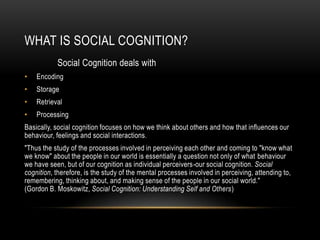
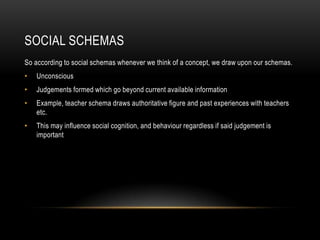
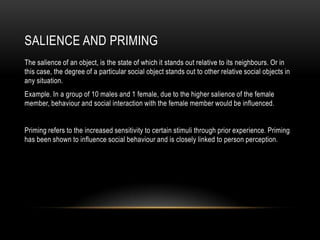


Social cognition deals with encoding, storage, retrieval, and processing of information about others. It focuses on how we think about and make sense of people in our social world, and how that influences our behavior, feelings, and social interactions. Unconscious social schemas draw on past experiences and judgments to influence social cognition beyond available information. Salience and priming affect how certain social stimuli stand out and influence behavior. Person perception involves making inferences and impressions of others through interactions and appearances to form judgments and categorize people into social groups, which can influence behavior despite potential inaccuracies. Implicit personality theory assumes traits are linked, so finding one trait leads to assumptions of other linked traits that may influence social encounters.


