School of Health
development day
Prof Alejandro Armellini
Institute of L&T in HE
Structure
• Part 1: Personal academic tutors
• Part 2: Northampton’s strategic commitment
in learning and teaching
• Part 3: A vision
• Part 4: Discussion
PATting students for academic
skills development
Purpose
To share practical ideas to enable you, as
PATs, to help students enhance their academic
skills.
Outline
1. Opinion v Evidence for critical thinking
2. Skills audit
3. Recording evidence in usable formats
4. Pointers
Opinion v Evidence for critical
thinking
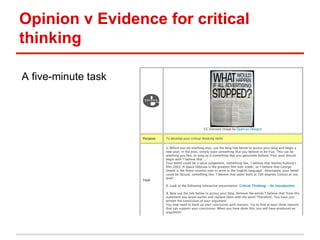
A five-minute task
Skills audit
Skill: I can... Yes No Not sure Action
...interact with my peers effectively
as we tackle a task together
[teamwork].
...meet deadlines [time
management].
...take responsibility for our team
and its outputs [leadership].
...step into someone else's role at
short notice [problem solving,
negotiation].
...summarise project findings clearly
and concisely, both orally and in
writing [academic writing and
presentation].
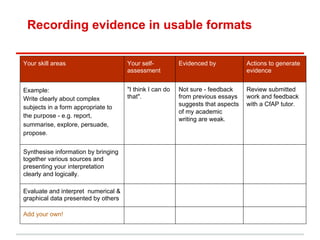
Recording evidence in usable formats
Your skill areas Your self-
assessment
Evidenced by Actions to generate
evidence
Example:
Write clearly about complex
subjects in a form appropriate to
the purpose - e.g. report,
summarise, explore, persuade,
propose.
"I think I can do
that".
Not sure - feedback
from previous essays
suggests that aspects
of my academic
writing are weak.
Review submitted
work and feedback
with a CfAP tutor.
Synthesise information by bringing
together various sources and
presenting your interpretation
clearly and logically.
Evaluate and interpret numerical &
graphical data presented by others
Add your own!
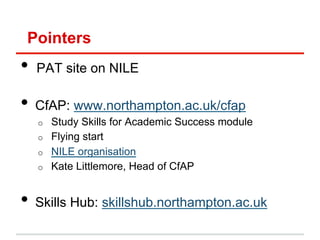
Pointers
•  PAT site on NILE
•  CfAP: www.northampton.ac.uk/cfap
o  Study Skills for Academic Success module
o  Flying start
o  NILE organisation
o  Kate Littlemore, Head of CfAP
•  Skills Hub: skillshub.northampton.ac.uk
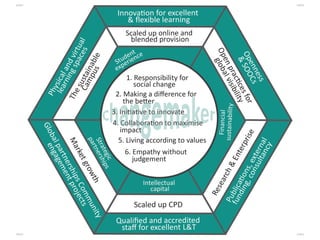
Learning and teaching: strategic
commitments
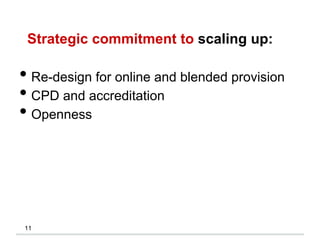
Strategic commitment to scaling up:
11
• Re-design for online and blended provision
• CPD and accreditation
• Openness
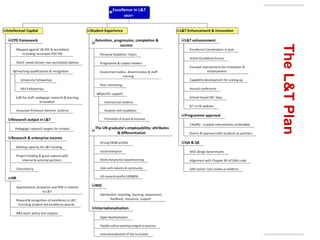
The L&T Plan
12
• Intellectual capital
• Student experience
• Enhancement and innovation in L&T
13
TheL&TPlan
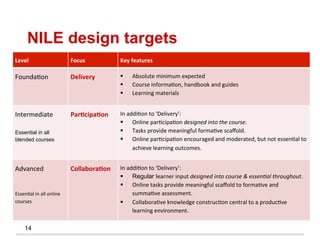
NILE design targets
14
Level	
   Focus	
   Key	
  features	
  
Founda'on	
   Delivery	
   §  Absolute	
  minimum	
  expected	
  
§  Course	
  informa'on,	
  handbook	
  and	
  guides	
  
§  Learning	
  materials	
  
Intermediate	


Essential in all
blended courses	
  
Par4cipa4on	
   In	
  addi'on	
  to	
  ‘Delivery’:	
  
§  Online	
  par'cipa'on	
  designed	
  into	
  the	
  course.	
  	
  
§  Tasks	
  provide	
  meaningful	
  forma've	
  scaffold.	
  
§  Online	
  par'cipa'on	
  encouraged	
  and	
  moderated,	
  but	
  not	
  essen'al	
  to	
  
achieve	
  learning	
  outcomes.	
  
Advanced	


Essen'al	
  in	
  all	
  online	
  
courses	
  
Collabora4on	
   In	
  addi'on	
  to	
  ‘Delivery’:	
  
§  Regular learner	
  input	
  designed	
  into	
  course	
  &	
  essen/al	
  throughout.	
  
§  Online	
  tasks	
  provide	
  meaningful	
  scaffold	
  to	
  forma've	
  and	
  
summa've	
  assessment.	
  	
  
§  Collabora've	
  knowledge	
  construc'on	
  central	
  to	
  a	
  produc've	
  
learning	
  environment.	
  
Effective course design…
15
• Is team-based
• Focuses on the different types of interaction
• Is not obsessed with content
• Offers low cost but high value
• Requires digital literacy skills
• Must be innovative, participative and fun
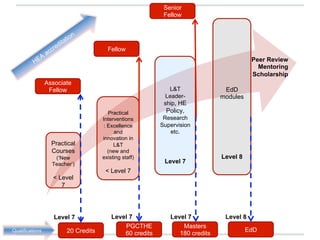
Practical
Courses
(‘New
Teacher’)
< Level
7
Practical
Interventions
: Excellence
and
innovation in
L&T
(new and
existing staff)
< Level 7
L&T
Leader-
ship, HE
Policy,
Research
Supervision
etc.
Level 7
EdD
modules
Level 8
Associate
Fellow
Fellow
Senior
Fellow
20 Credits
PGCTHE
60 credits
Masters
180 credits
EdD
Peer Review
Mentoring
Scholarship
Level 7 Level 8Level 7Level 7
Qualifications
Open Northampton
17
Aim
To put Northampton on the global OER-OEP
map within 24 months.
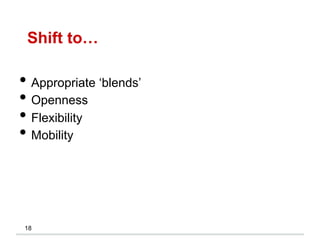
Shift to…
18
• Appropriate ‘blends’
• Openness
• Flexibility
• Mobility
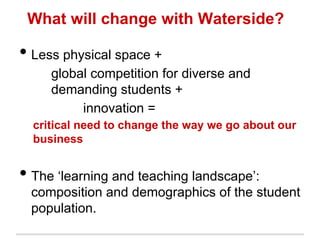
What will change with Waterside?
• Less physical space +
global competition for diverse and
demanding students +
innovation =
critical need to change the way we go about our
business
• The ‘learning and teaching landscape’:
composition and demographics of the student
population.
So h 3 july

So h 3 july

  • 1.
    School of Health developmentday Prof Alejandro Armellini Institute of L&T in HE
  • 2.
    Structure • Part 1: Personalacademic tutors • Part 2: Northampton’s strategic commitment in learning and teaching • Part 3: A vision • Part 4: Discussion
  • 3.
    PATting students foracademic skills development
  • 4.
    Purpose To share practicalideas to enable you, as PATs, to help students enhance their academic skills.
  • 5.
    Outline 1. Opinion v Evidencefor critical thinking 2. Skills audit 3. Recording evidence in usable formats 4. Pointers
  • 6.
    Opinion v Evidencefor critical thinking A five-minute task
  • 7.
    Skills audit Skill: Ican... Yes No Not sure Action ...interact with my peers effectively as we tackle a task together [teamwork]. ...meet deadlines [time management]. ...take responsibility for our team and its outputs [leadership]. ...step into someone else's role at short notice [problem solving, negotiation]. ...summarise project findings clearly and concisely, both orally and in writing [academic writing and presentation].
  • 8.
    Recording evidence inusable formats Your skill areas Your self- assessment Evidenced by Actions to generate evidence Example: Write clearly about complex subjects in a form appropriate to the purpose - e.g. report, summarise, explore, persuade, propose. "I think I can do that". Not sure - feedback from previous essays suggests that aspects of my academic writing are weak. Review submitted work and feedback with a CfAP tutor. Synthesise information by bringing together various sources and presenting your interpretation clearly and logically. Evaluate and interpret numerical & graphical data presented by others Add your own!
  • 9.
    Pointers •  PAT siteon NILE •  CfAP: www.northampton.ac.uk/cfap o  Study Skills for Academic Success module o  Flying start o  NILE organisation o  Kate Littlemore, Head of CfAP •  Skills Hub: skillshub.northampton.ac.uk
  • 10.
    Learning and teaching:strategic commitments
  • 11.
    Strategic commitment toscaling up: 11 • Re-design for online and blended provision • CPD and accreditation • Openness
  • 12.
    The L&T Plan 12 • Intellectualcapital • Student experience • Enhancement and innovation in L&T
  • 13.
  • 14.
    NILE design targets 14 Level   Focus   Key  features   Founda'on   Delivery   §  Absolute  minimum  expected   §  Course  informa'on,  handbook  and  guides   §  Learning  materials   Intermediate     Essential in all blended courses   Par4cipa4on   In  addi'on  to  ‘Delivery’:   §  Online  par'cipa'on  designed  into  the  course.     §  Tasks  provide  meaningful  forma've  scaffold.   §  Online  par'cipa'on  encouraged  and  moderated,  but  not  essen'al  to   achieve  learning  outcomes.   Advanced       Essen'al  in  all  online   courses   Collabora4on   In  addi'on  to  ‘Delivery’:   §  Regular learner  input  designed  into  course  &  essen/al  throughout.   §  Online  tasks  provide  meaningful  scaffold  to  forma've  and   summa've  assessment.     §  Collabora've  knowledge  construc'on  central  to  a  produc've   learning  environment.  
  • 15.
    Effective course design… 15 • Isteam-based • Focuses on the different types of interaction • Is not obsessed with content • Offers low cost but high value • Requires digital literacy skills • Must be innovative, participative and fun
  • 16.
    Practical Courses (‘New Teacher’) < Level 7 Practical Interventions : Excellence and innovationin L&T (new and existing staff) < Level 7 L&T Leader- ship, HE Policy, Research Supervision etc. Level 7 EdD modules Level 8 Associate Fellow Fellow Senior Fellow 20 Credits PGCTHE 60 credits Masters 180 credits EdD Peer Review Mentoring Scholarship Level 7 Level 8Level 7Level 7 Qualifications
  • 17.
    Open Northampton 17 Aim To putNorthampton on the global OER-OEP map within 24 months.
  • 18.
  • 19.
    What will changewith Waterside? • Less physical space + global competition for diverse and demanding students + innovation = critical need to change the way we go about our business • The ‘learning and teaching landscape’: composition and demographics of the student population.