Downloaded 142 times
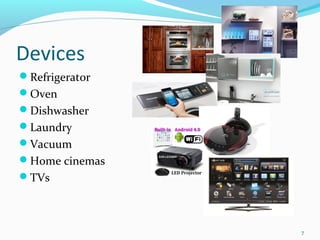
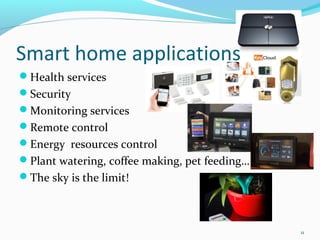
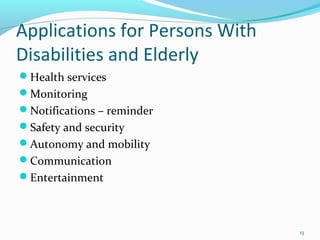
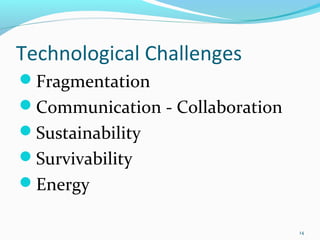
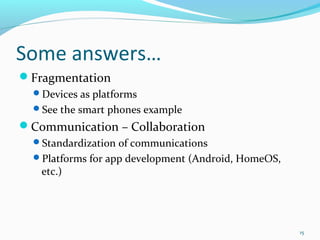
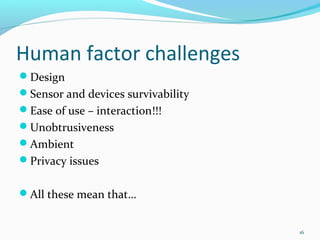
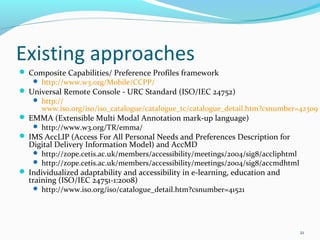
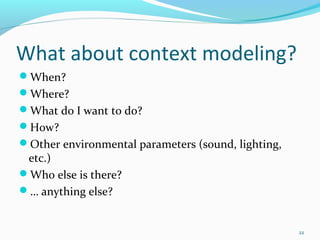
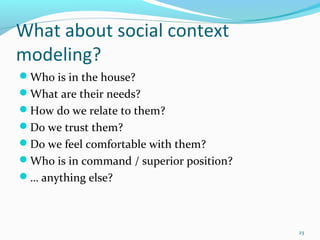
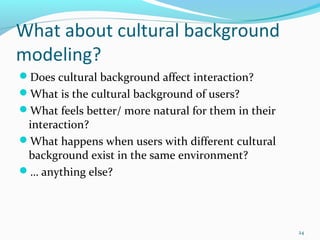

This document discusses smart homes and their potential benefits for people with disabilities and the elderly. It begins by defining smart homes as houses equipped with automated systems that can be remotely controlled. It then outlines the main components of smart homes, including sensors, devices, networks, and control mechanisms. The document explains how smart home applications could provide health monitoring, safety, communication, and entertainment services for those with disabilities or elderly. However, it also notes technological challenges around fragmentation, communication, and human factors like design, ease of use, and privacy. Overall, the document advocates for placing people's needs first and developing personalized and adaptive technologies to meet the needs of all users.


