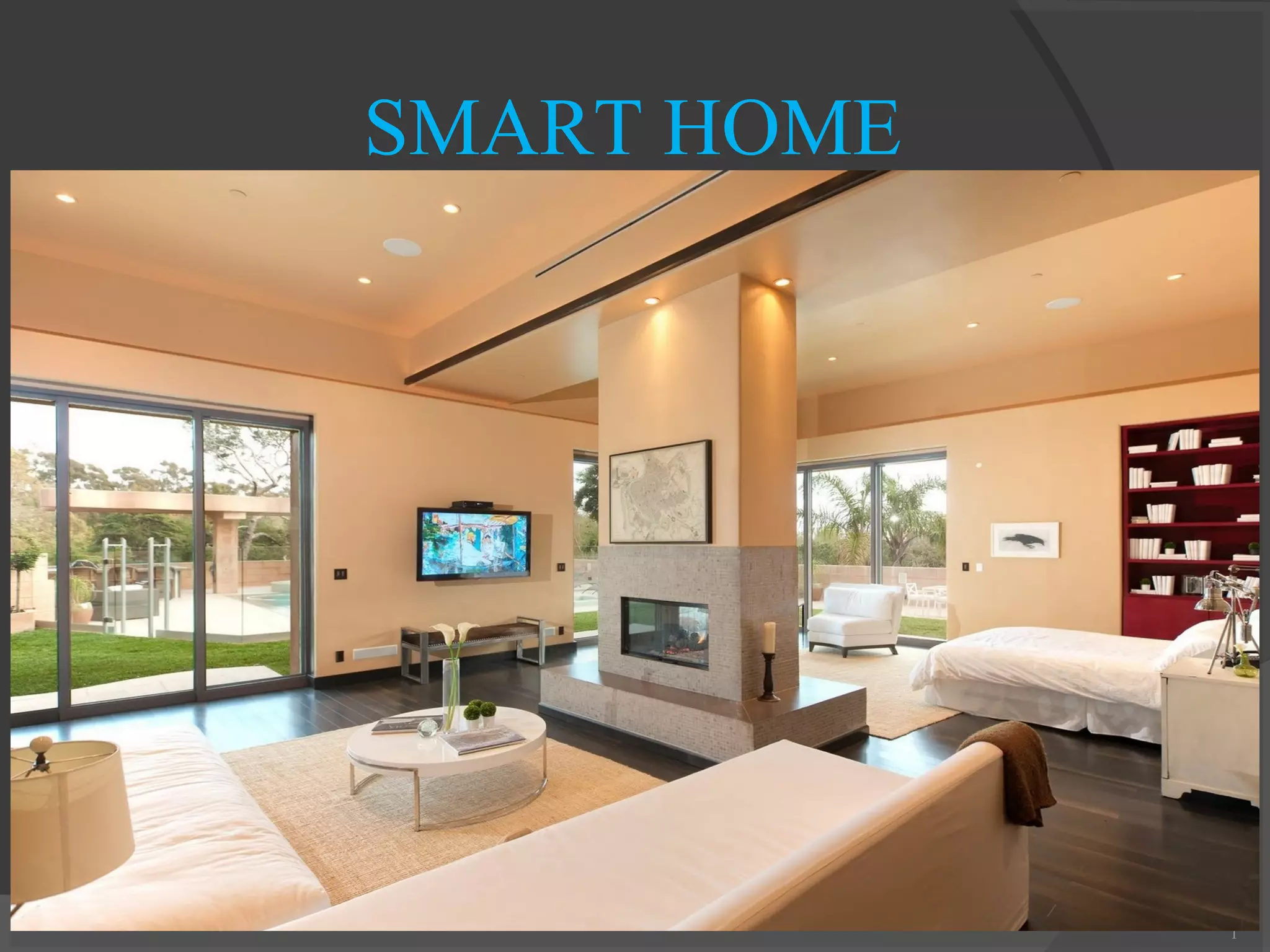
SMART HOME
1
Outline
2
 Introduction
 Smart Home System
 Future Home
 Research Challenges
 Concluding Remarks
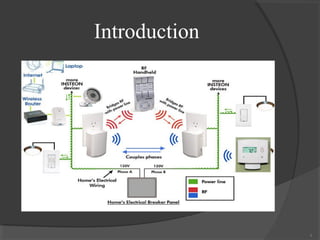
Introduction
3
What is a Smart Home?
“A house incorporating a communications network that
connects the key electrical and services, and allows them to
be remotely (both within the house and outside of the
house) controlled, monitored or accessed.”
Elements of a Smart Home
 Communication network: wire/wireless/mixed.
 Intelligent control: system management.
 Home automation: Components and systems
Introduction
4
Introduction
5
Smart Home Environment: What does it do?
 It improves comfort level for the user
 It senses situations through sensor network.
 It ensures security and controlled access.
 It assists the user with special needs.
 It reduces operational cost of a home.
Introduction
6
Major Areas of Application
 Home application: oven, fridge, … etc.
 Environment: lighting, water,… etc.
 Health care: care for elderly and disable people.
 Entertainment: multimedia distribution.
 Security: person recognition, alarms, … etc.
 Information and communication: telephone, internet.
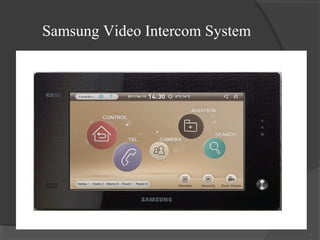
Samsung Video Intercom System
7
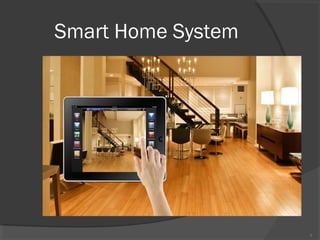
Smart Home System
8
Smart Home System
9
Typical example of a smart home environment [2, 3].
Smart Home System
10
Typical architecture for smart home system [4].
Smart Home System
11
Networking Technologies
Power Line (Example: X-10, HomePlug, …)
 Low installation cost.
 Only suitable for fixed application.
Wireless (Example: Bluetooth, Zigbee, …)
 Higher installation cost.
 Suitable for both mobile and fixed applications.
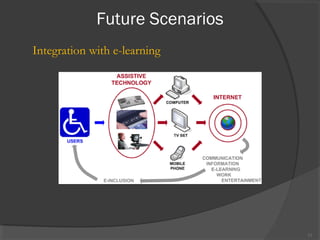
Future Scenarios
12
Integration with e-learning
Research Issues
13
 Privacy and secrecy: as smart home is connected toPrivacy and secrecy: as smart home is connected to
Internet.Internet.
 System complexity: various kind of networks exist withinSystem complexity: various kind of networks exist within
a smart home environment. For example wireless sensora smart home environment. For example wireless sensor
network and body area network (BAN).network and body area network (BAN).
 Cost effectiveness.Cost effectiveness.
 Bandwidth managementBandwidth management
 Social impact: Smart home may have some impactsSocial impact: Smart home may have some impacts
society. For example some people might be isolatedsociety. For example some people might be isolated
from society.from society.
Concluding Remarks
14
 Smart home deals with multiple aspects of life.Smart home deals with multiple aspects of life.
 There is no worldwide acceptable standards for smartThere is no worldwide acceptable standards for smart
home implementations.home implementations.
 It is not necessary to implement all the features of smartIt is not necessary to implement all the features of smart
home in every home. It should be implemented based onhome in every home. It should be implemented based on
occupants’ need.occupants’ need.
 Smart home is a user friendly technology.Smart home is a user friendly technology.
15
Questions???
Thank you!Thank you!

Smart home

  • 1.
  • 2.
    Outline 2  Introduction  SmartHome System  Future Home  Research Challenges  Concluding Remarks
  • 3.
    Introduction 3 What is aSmart Home? “A house incorporating a communications network that connects the key electrical and services, and allows them to be remotely (both within the house and outside of the house) controlled, monitored or accessed.” Elements of a Smart Home  Communication network: wire/wireless/mixed.  Intelligent control: system management.  Home automation: Components and systems
  • 4.
  • 5.
    Introduction 5 Smart Home Environment:What does it do?  It improves comfort level for the user  It senses situations through sensor network.  It ensures security and controlled access.  It assists the user with special needs.  It reduces operational cost of a home.
  • 6.
    Introduction 6 Major Areas ofApplication  Home application: oven, fridge, … etc.  Environment: lighting, water,… etc.  Health care: care for elderly and disable people.  Entertainment: multimedia distribution.  Security: person recognition, alarms, … etc.  Information and communication: telephone, internet.
  • 7.
  • 8.
  • 9.
    Smart Home System 9 Typicalexample of a smart home environment [2, 3].
  • 10.
    Smart Home System 10 Typicalarchitecture for smart home system [4].
  • 11.
    Smart Home System 11 NetworkingTechnologies Power Line (Example: X-10, HomePlug, …)  Low installation cost.  Only suitable for fixed application. Wireless (Example: Bluetooth, Zigbee, …)  Higher installation cost.  Suitable for both mobile and fixed applications.
  • 12.
  • 13.
    Research Issues 13  Privacyand secrecy: as smart home is connected toPrivacy and secrecy: as smart home is connected to Internet.Internet.  System complexity: various kind of networks exist withinSystem complexity: various kind of networks exist within a smart home environment. For example wireless sensora smart home environment. For example wireless sensor network and body area network (BAN).network and body area network (BAN).  Cost effectiveness.Cost effectiveness.  Bandwidth managementBandwidth management  Social impact: Smart home may have some impactsSocial impact: Smart home may have some impacts society. For example some people might be isolatedsociety. For example some people might be isolated from society.from society.
  • 14.
    Concluding Remarks 14  Smarthome deals with multiple aspects of life.Smart home deals with multiple aspects of life.  There is no worldwide acceptable standards for smartThere is no worldwide acceptable standards for smart home implementations.home implementations.  It is not necessary to implement all the features of smartIt is not necessary to implement all the features of smart home in every home. It should be implemented based onhome in every home. It should be implemented based on occupants’ need.occupants’ need.  Smart home is a user friendly technology.Smart home is a user friendly technology.
  • 15.