The Design of
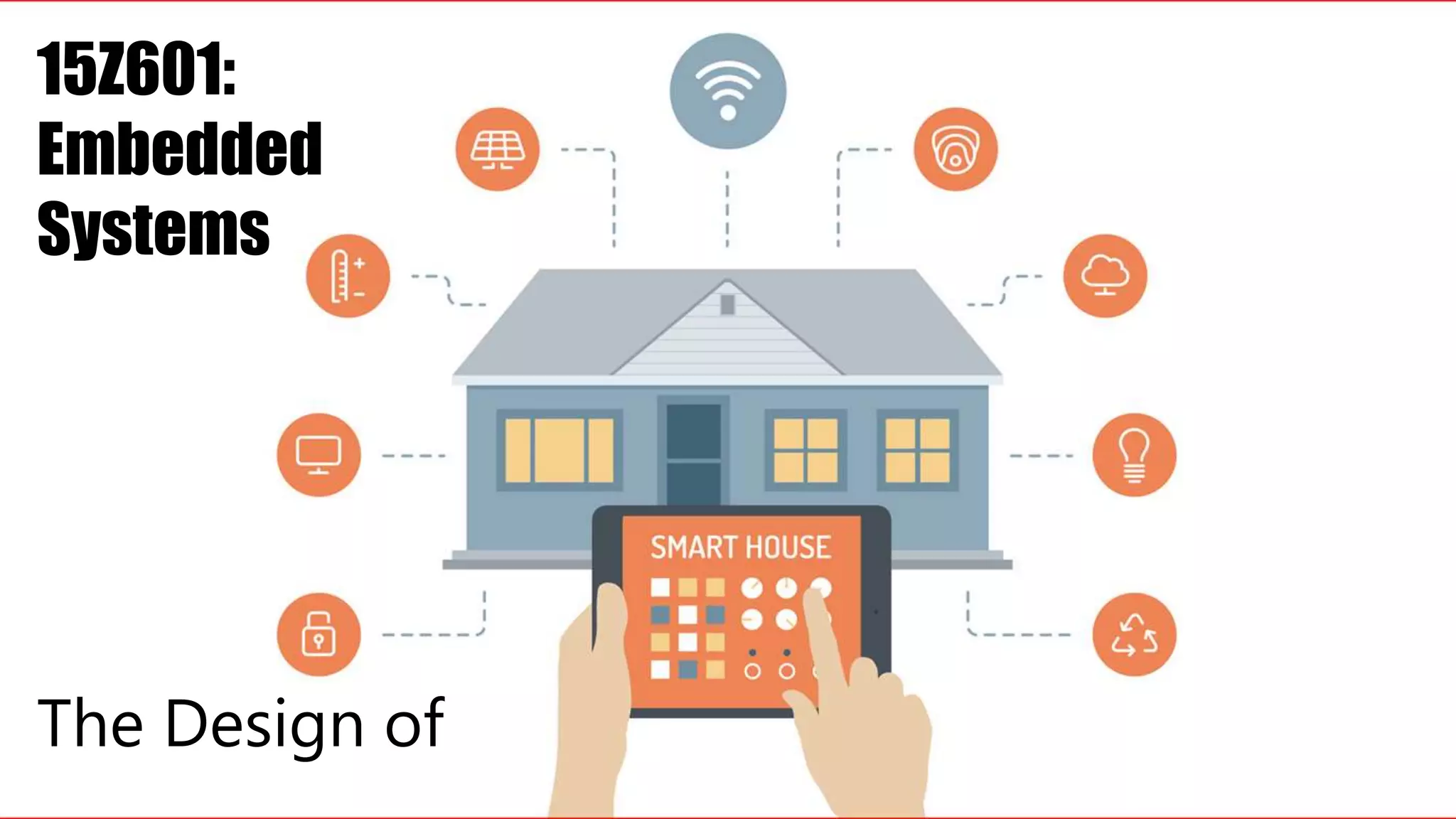
15Z601:
Embedded
Systems
Internet of Things
IoT is the network of “things” that are embedded with electronics,
software, sensors and Internet access which enables them to connect
and exchange data.
A “thing” in the context of IoT implies the physical entity that possesses
an unique identifier, an embedded system and the ability to transfer data
over a network.
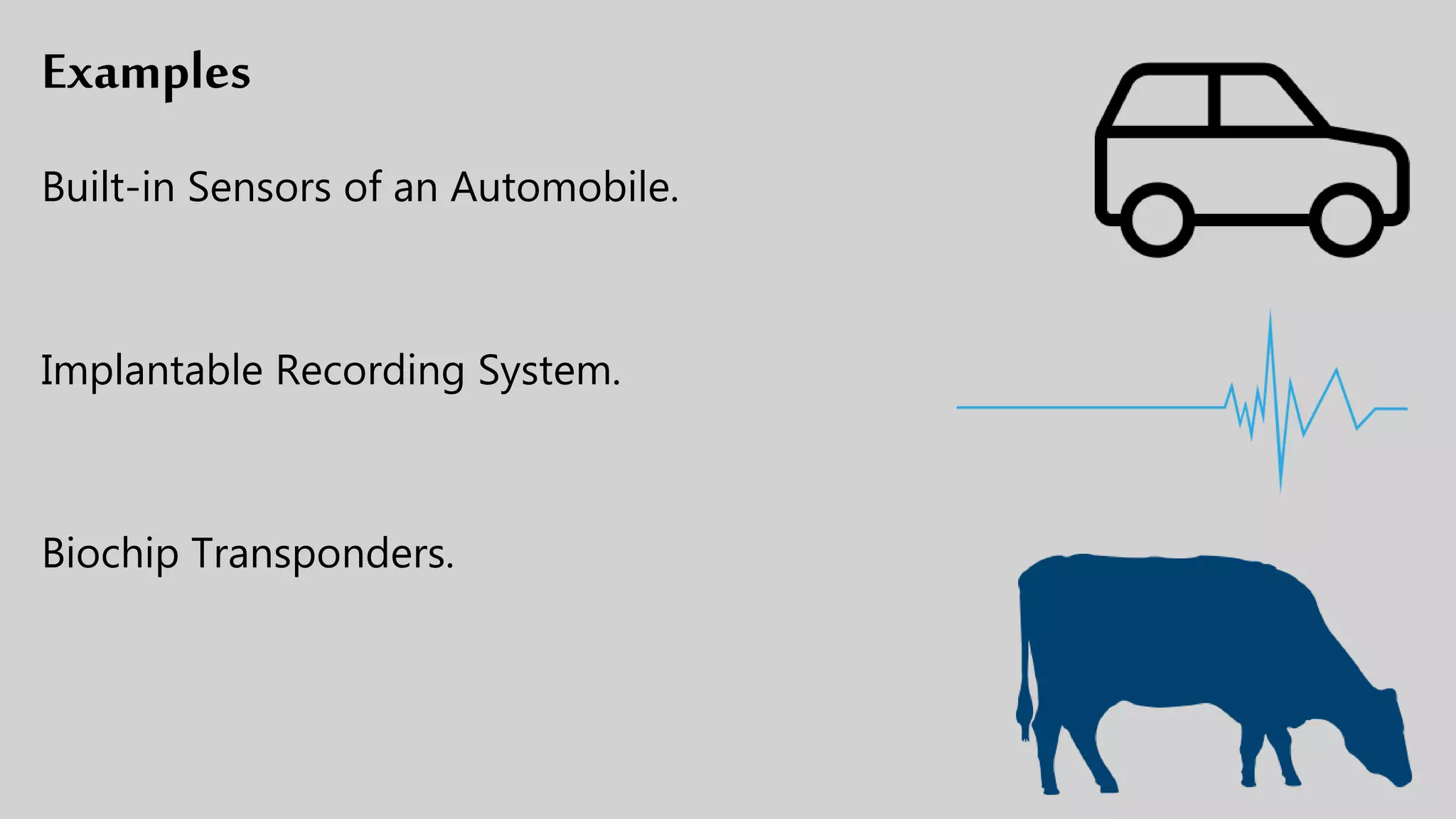
Examples
Built-in Sensors of an Automobile.
Implantable Recording System.
Biochip Transponders.
The Father of IoT
Who coined the term in 1999.
Advancement Goals
 The figure of online capable devices increased 31% from 2016 to $8.4
B in 2017.
 Experts estimate that the IoT will consist of about 30 billion objects by
2020.
 It is also estimated that the global market value of IoT will reach $7.1 T
by 2020.
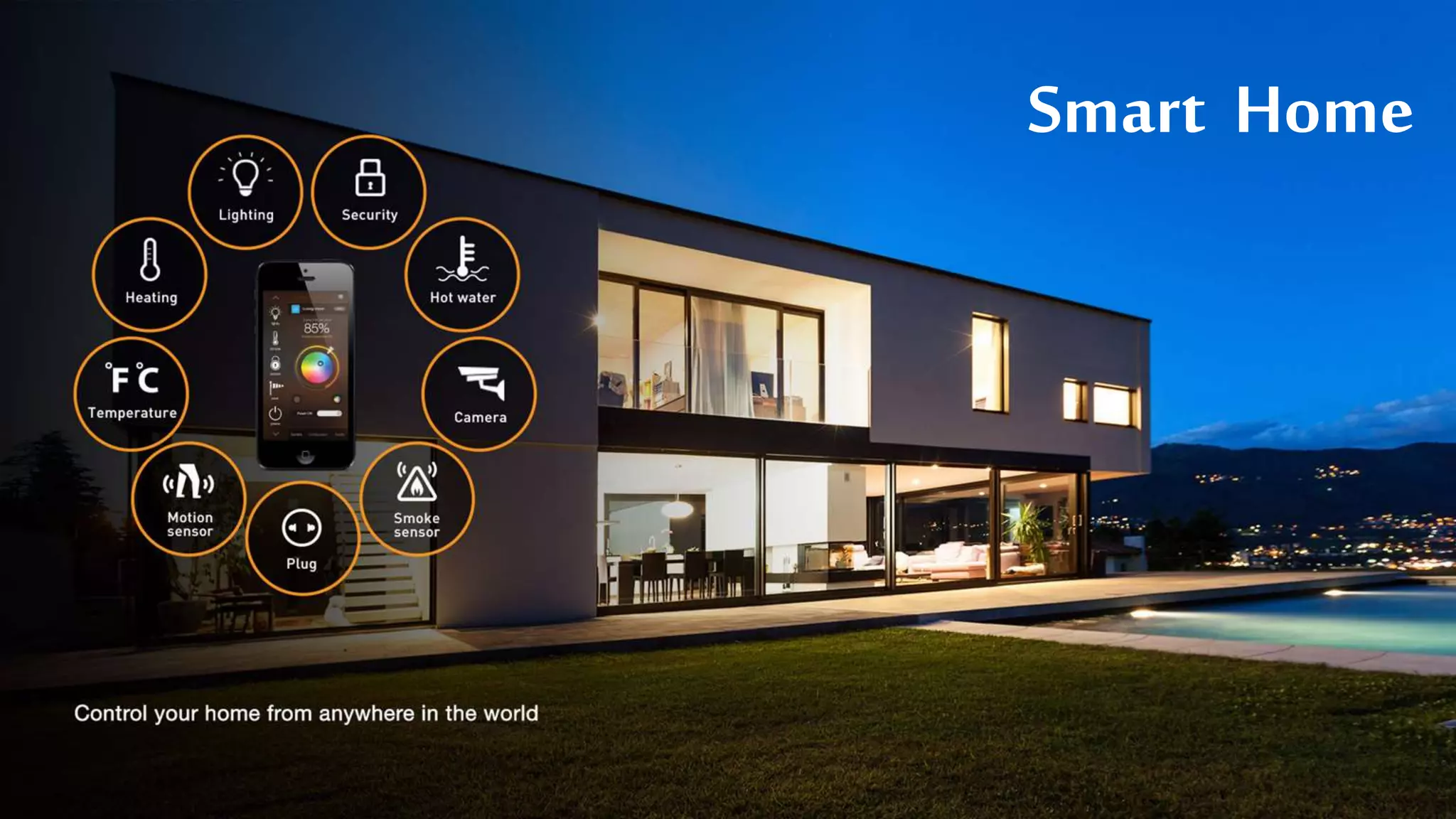
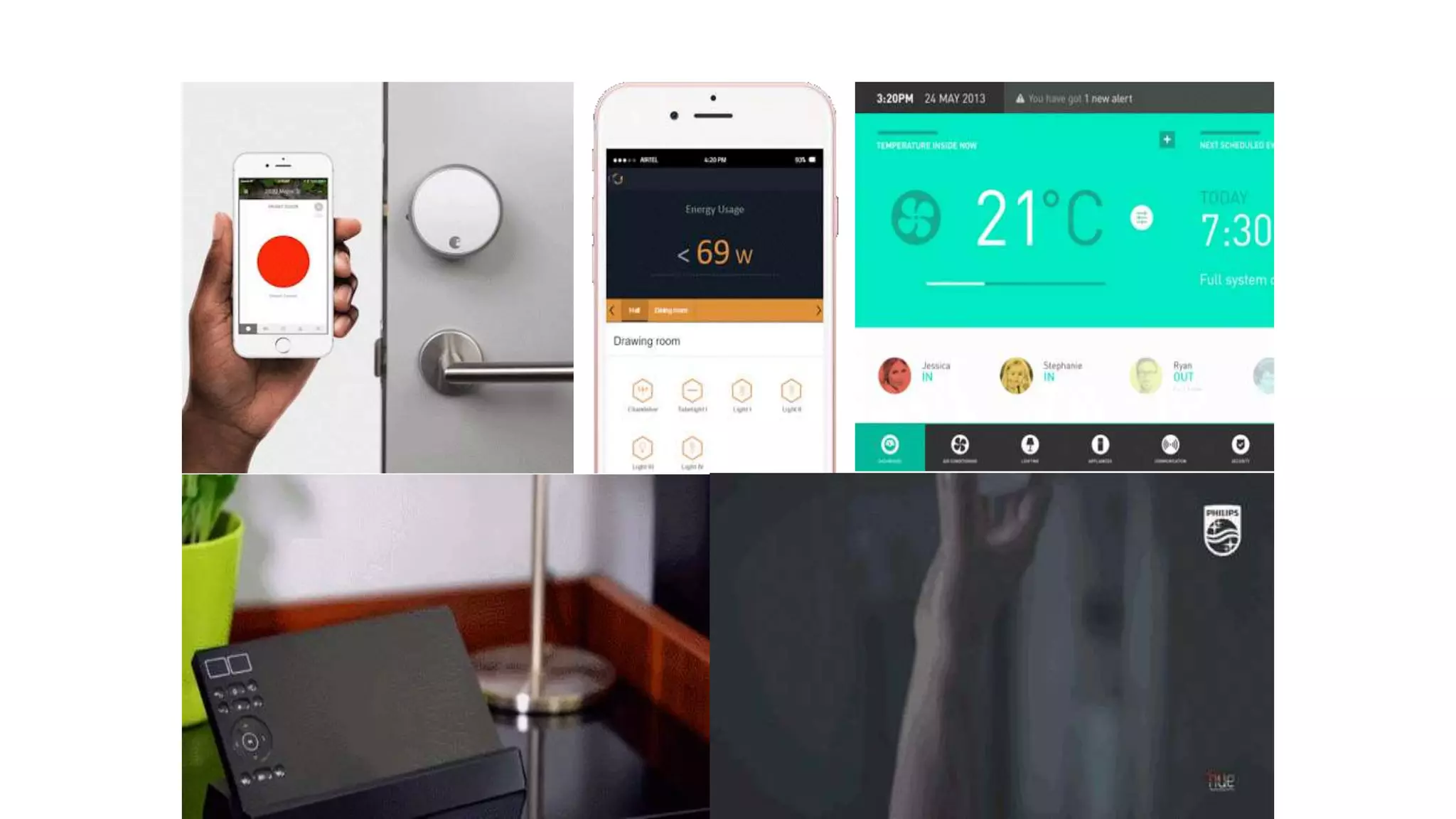
Smart Home
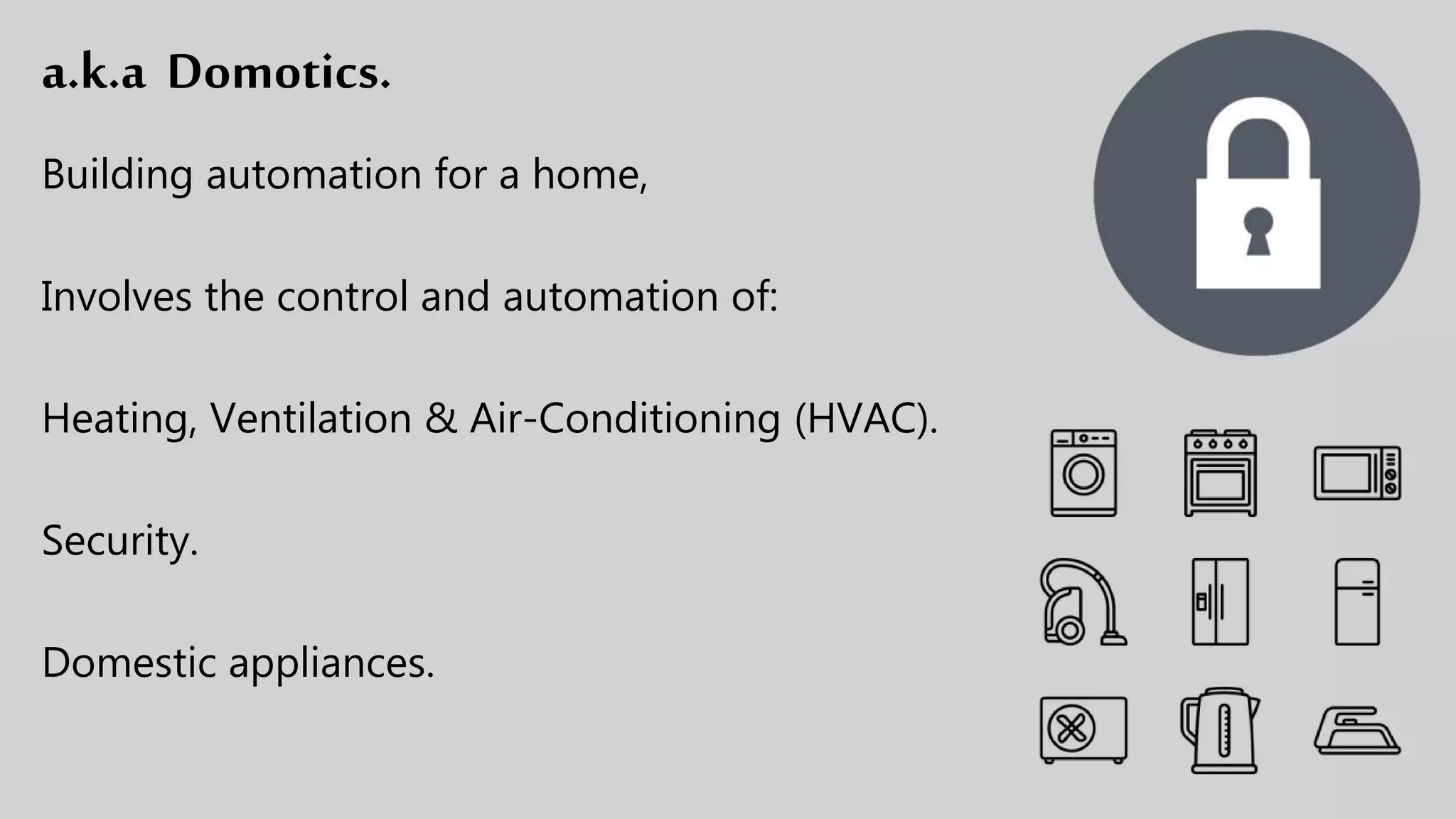
a.k.a Domotics.
Building automation for a home,
Involves the control and automation of:
Heating, Ventilation & Air-Conditioning (HVAC).
Security.
Domestic appliances.
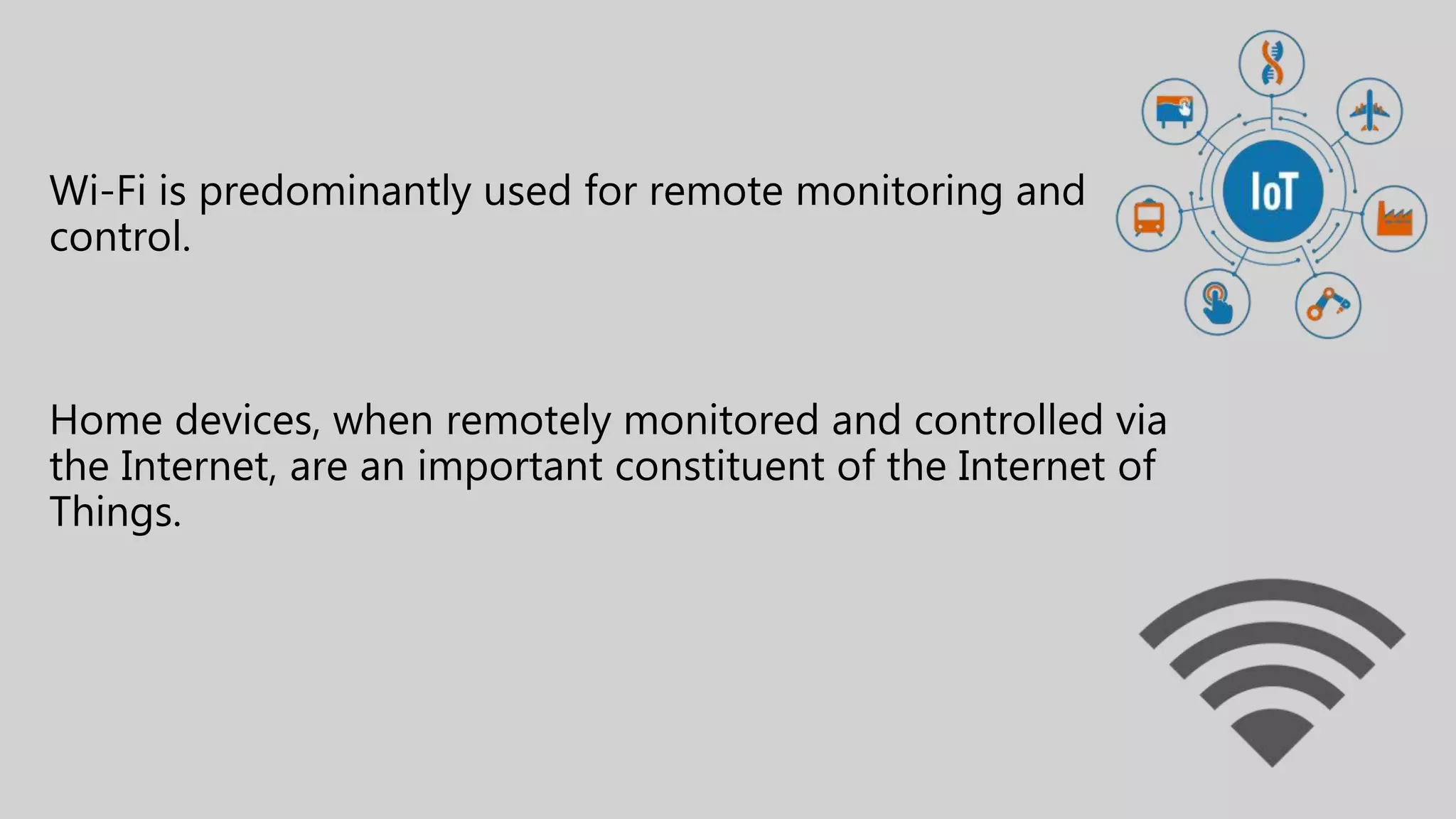
Wi-Fi is predominantly used for remote monitoring and
control.
Home devices, when remotely monitored and controlled via
the Internet, are an important constituent of the Internet of
Things.
Hardware
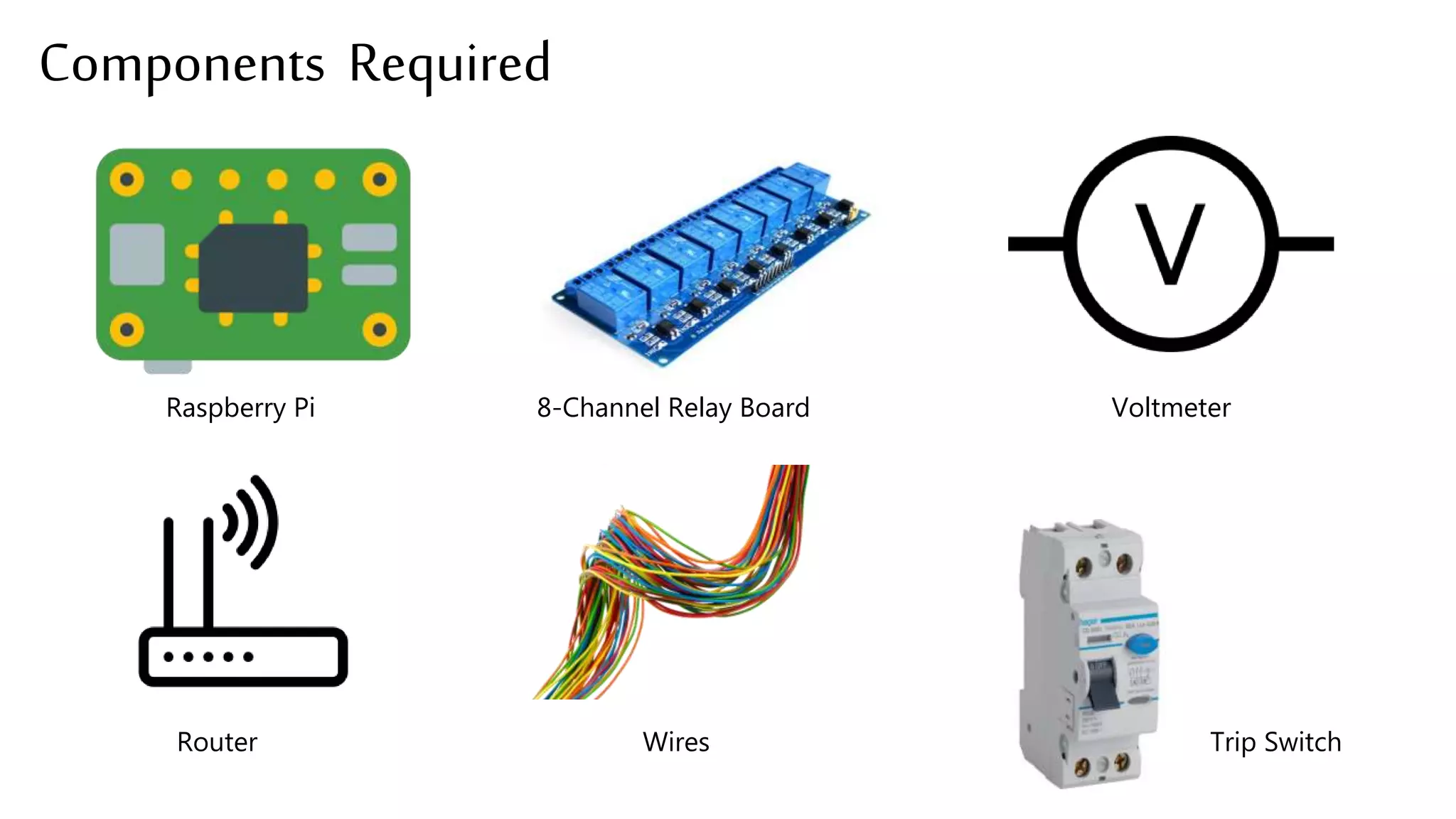
Components Required
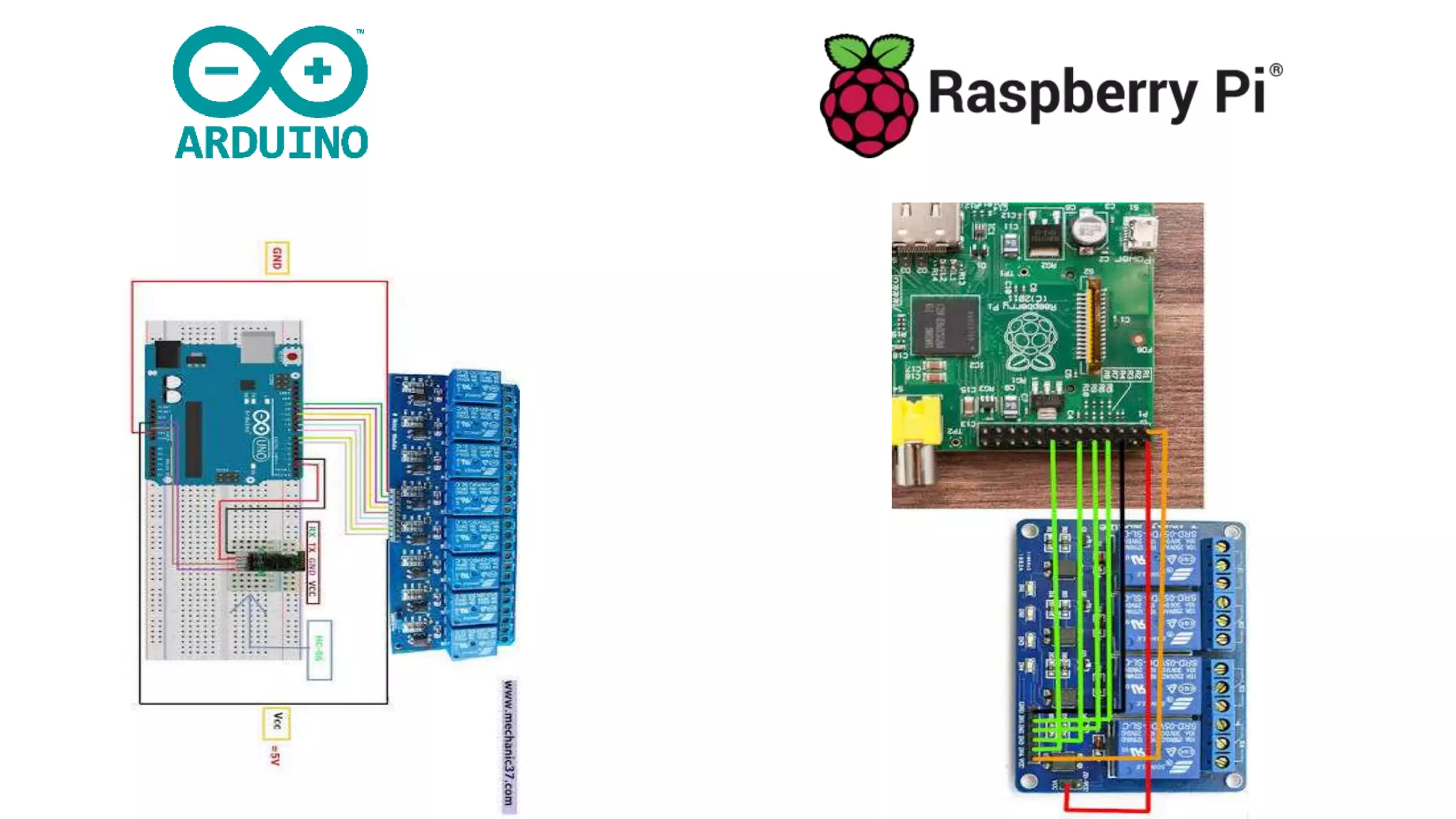
Raspberry Pi 8-Channel Relay Board Voltmeter
Router Wires Trip Switch
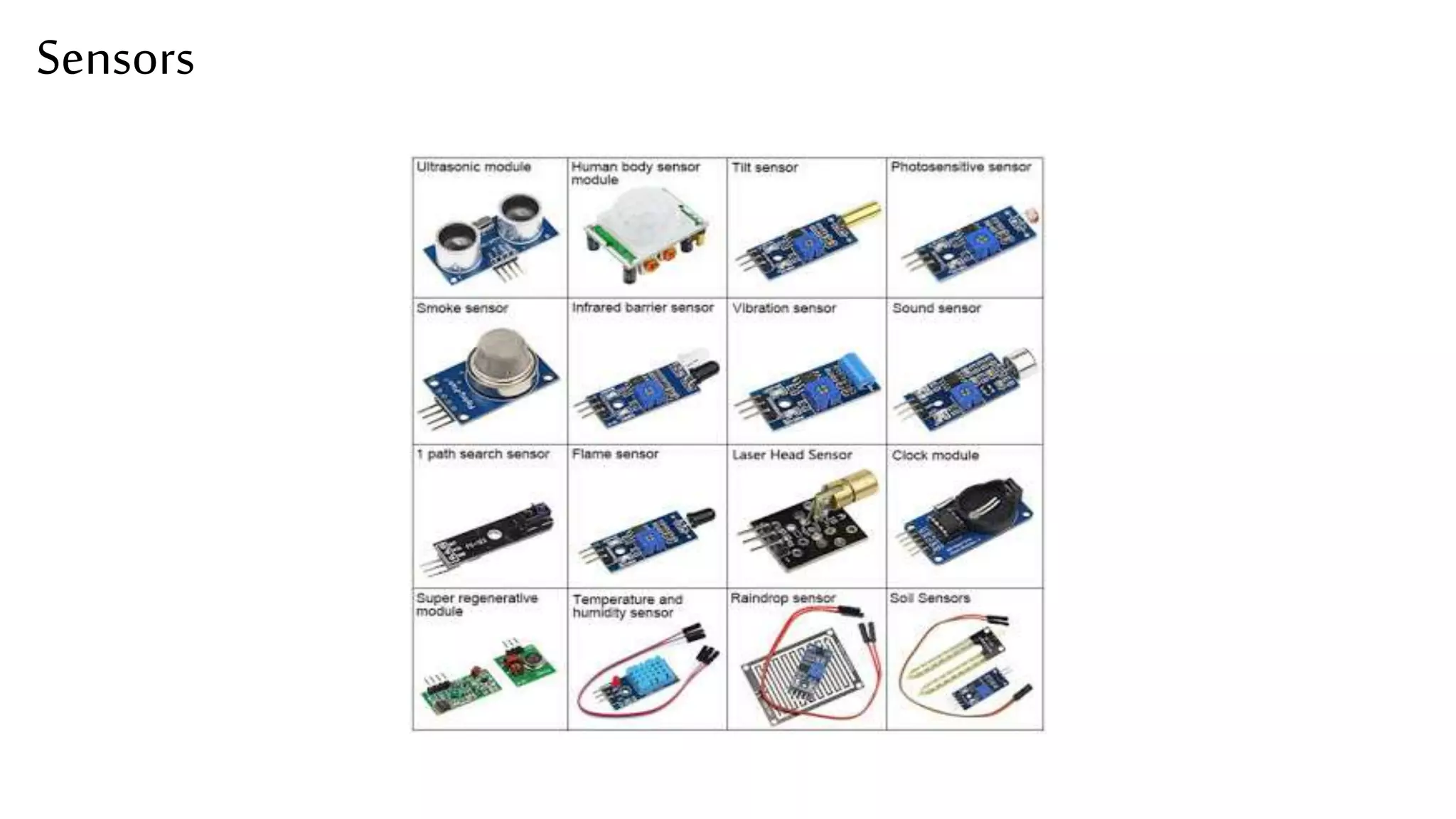
Sensors
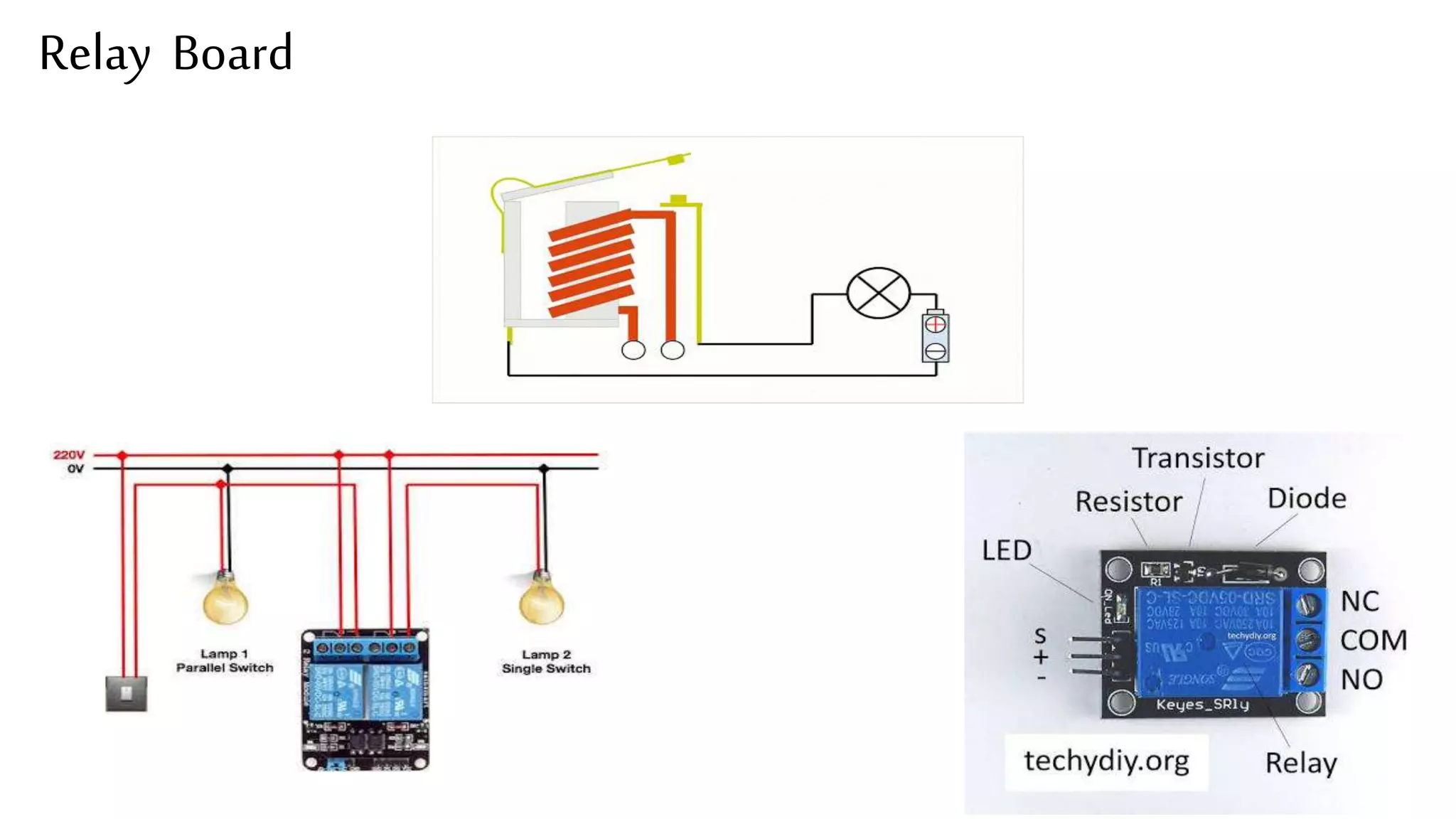
Relay Board
Smart Devices
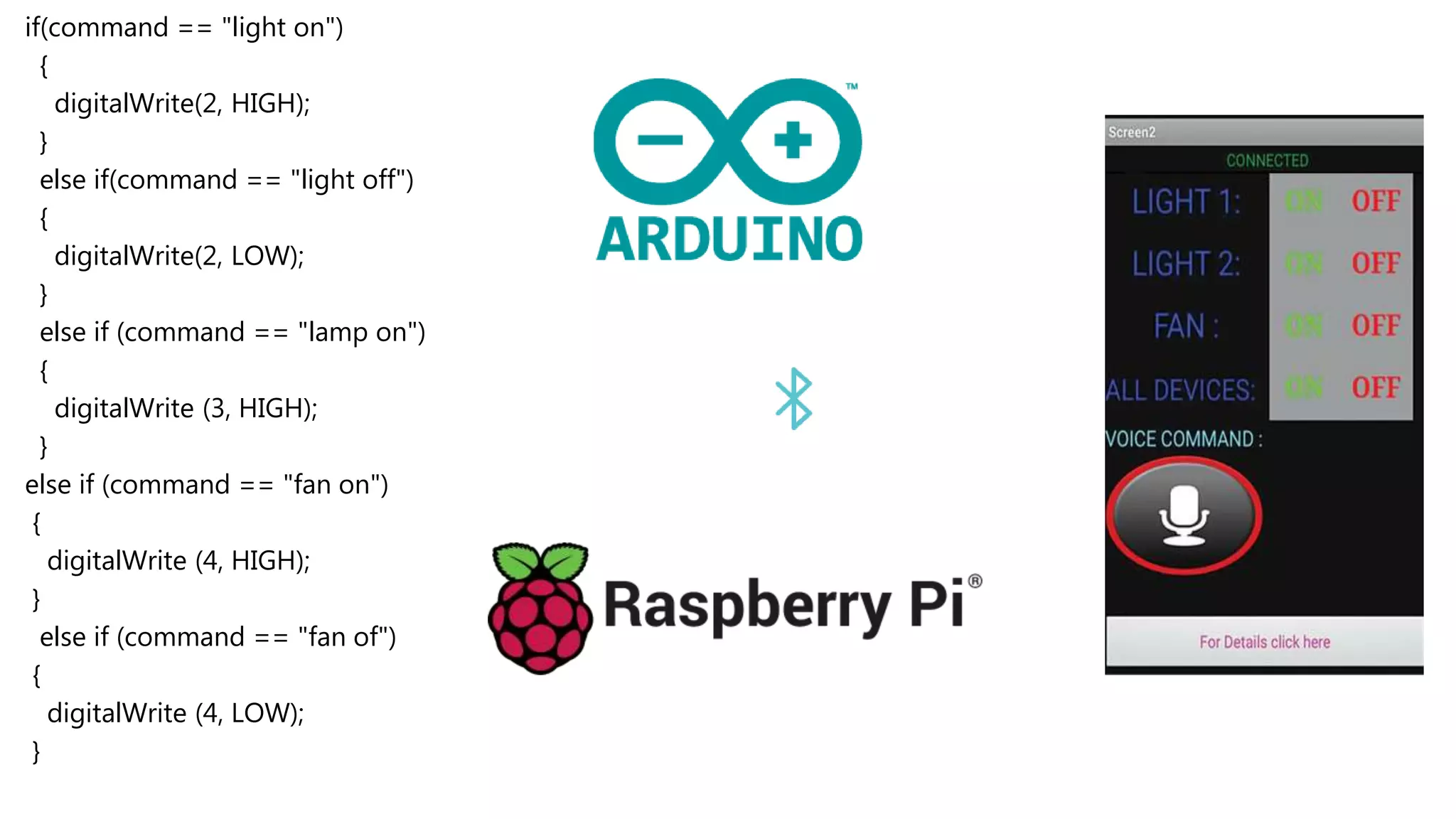
if(command == "light on")
{
digitalWrite(2, HIGH);
}
else if(command == "light off")
{
digitalWrite(2, LOW);
}
else if (command == "lamp on")
{
digitalWrite (3, HIGH);
}
else if (command == "fan on")
{
digitalWrite (4, HIGH);
}
else if (command == "fan of")
{
digitalWrite (4, LOW);
}
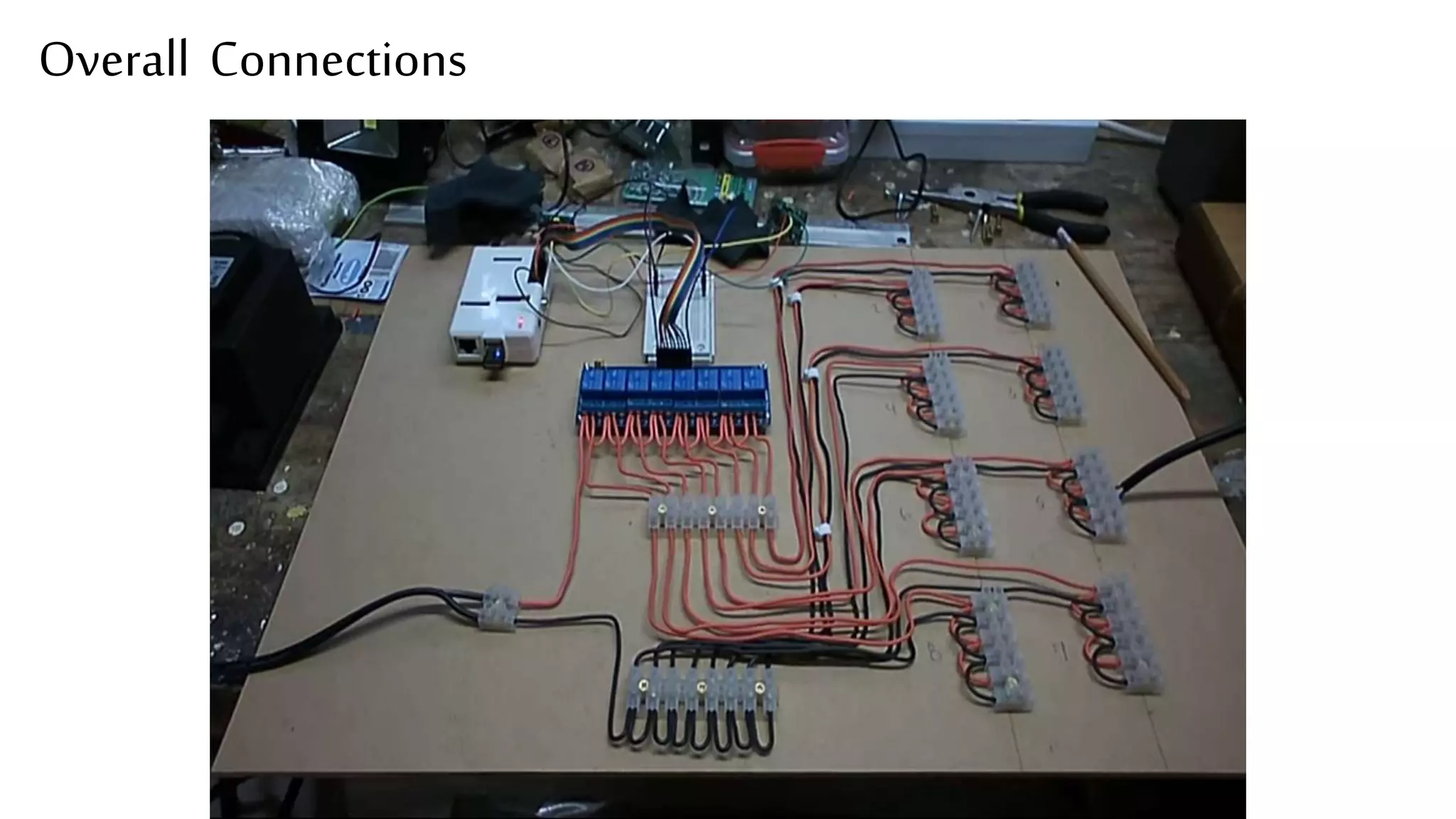
Overall Connections
Software
Components Required
Software Interface
A programming tool for wiring the
hardware devices, APIs and online
services together; in new and
innovative ways.
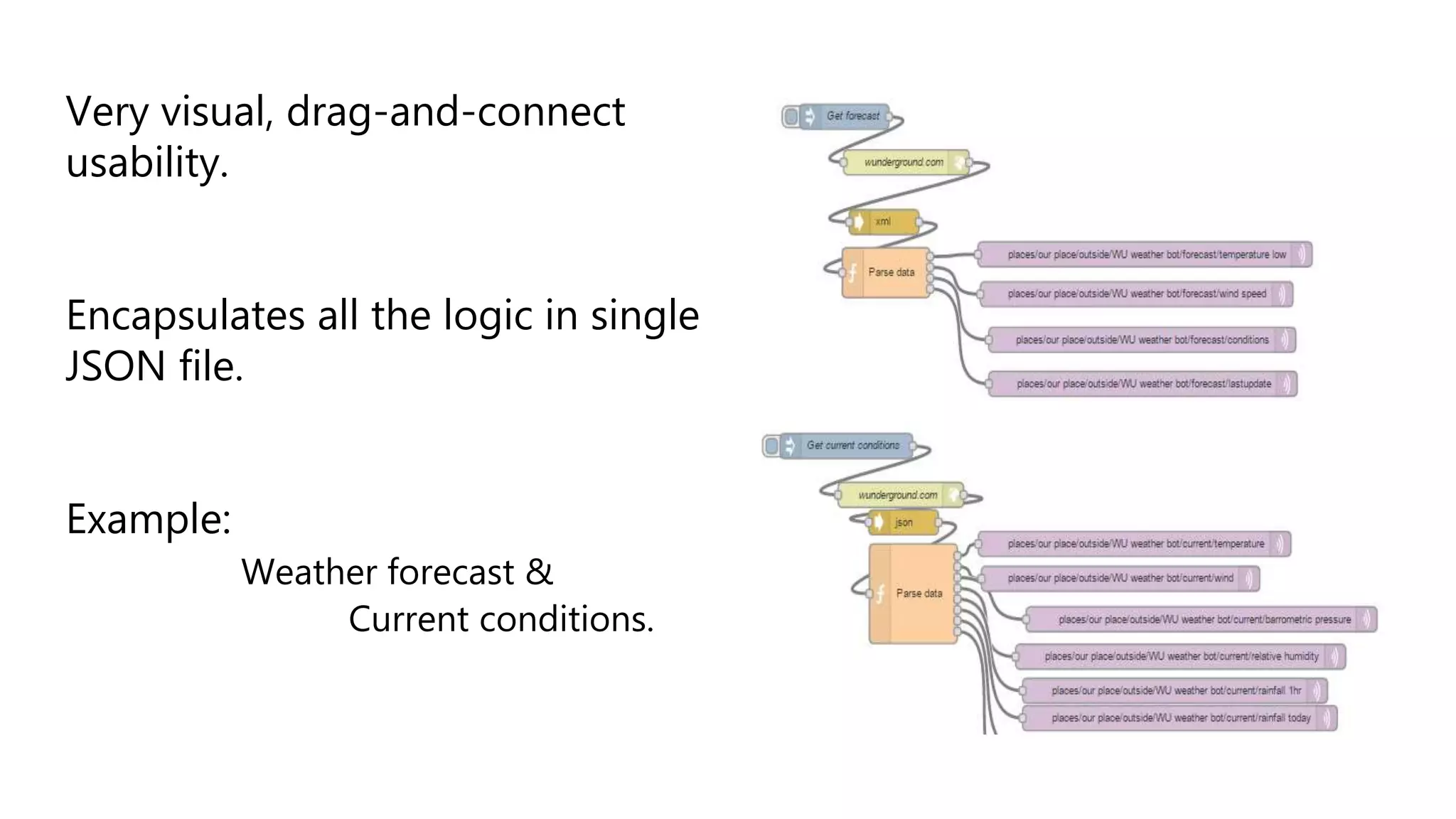
Very visual, drag-and-connect
usability.
Encapsulates all the logic in single
JSON file.
Example:
Weather forecast &
Current conditions.
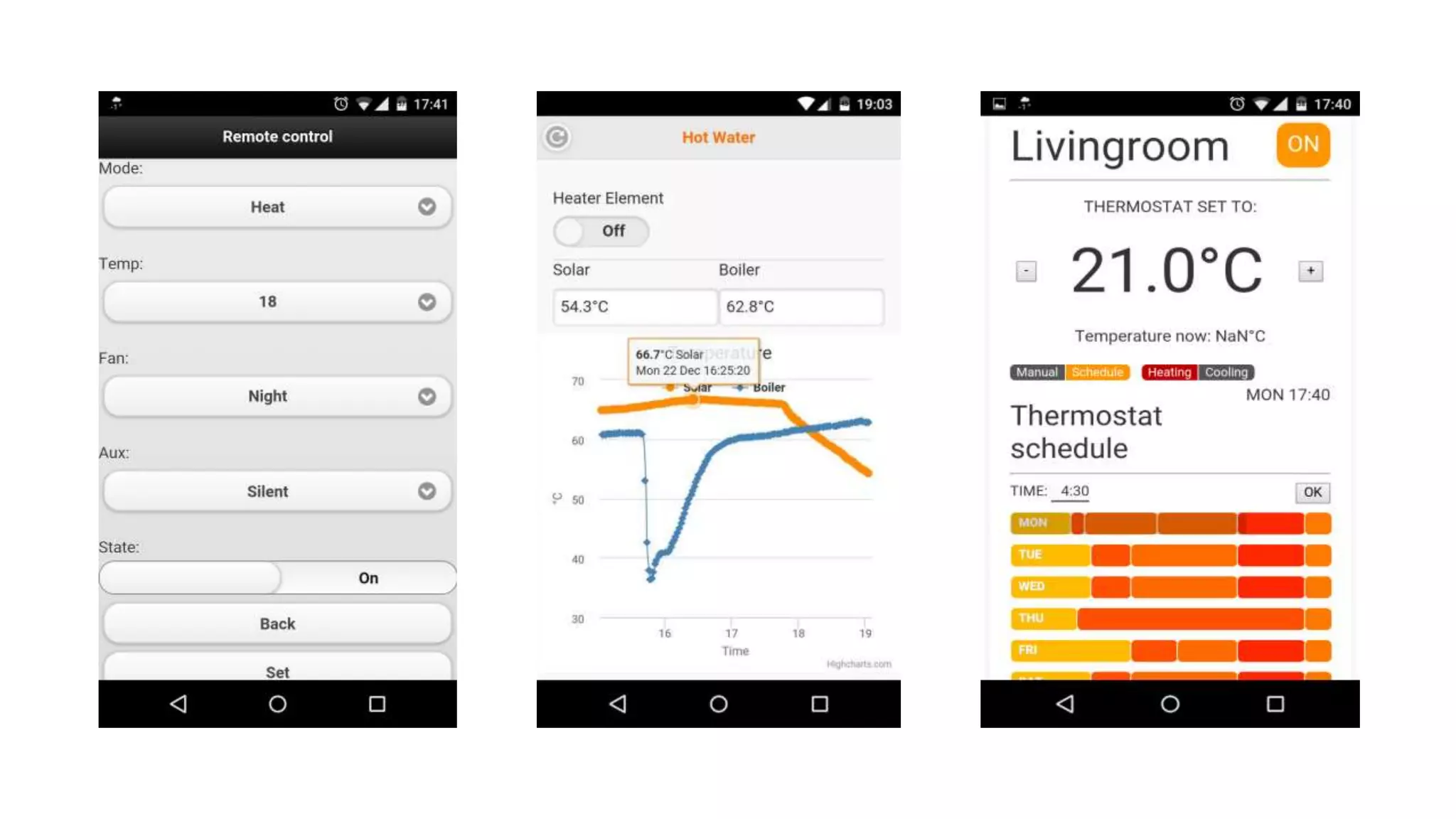
UI Design
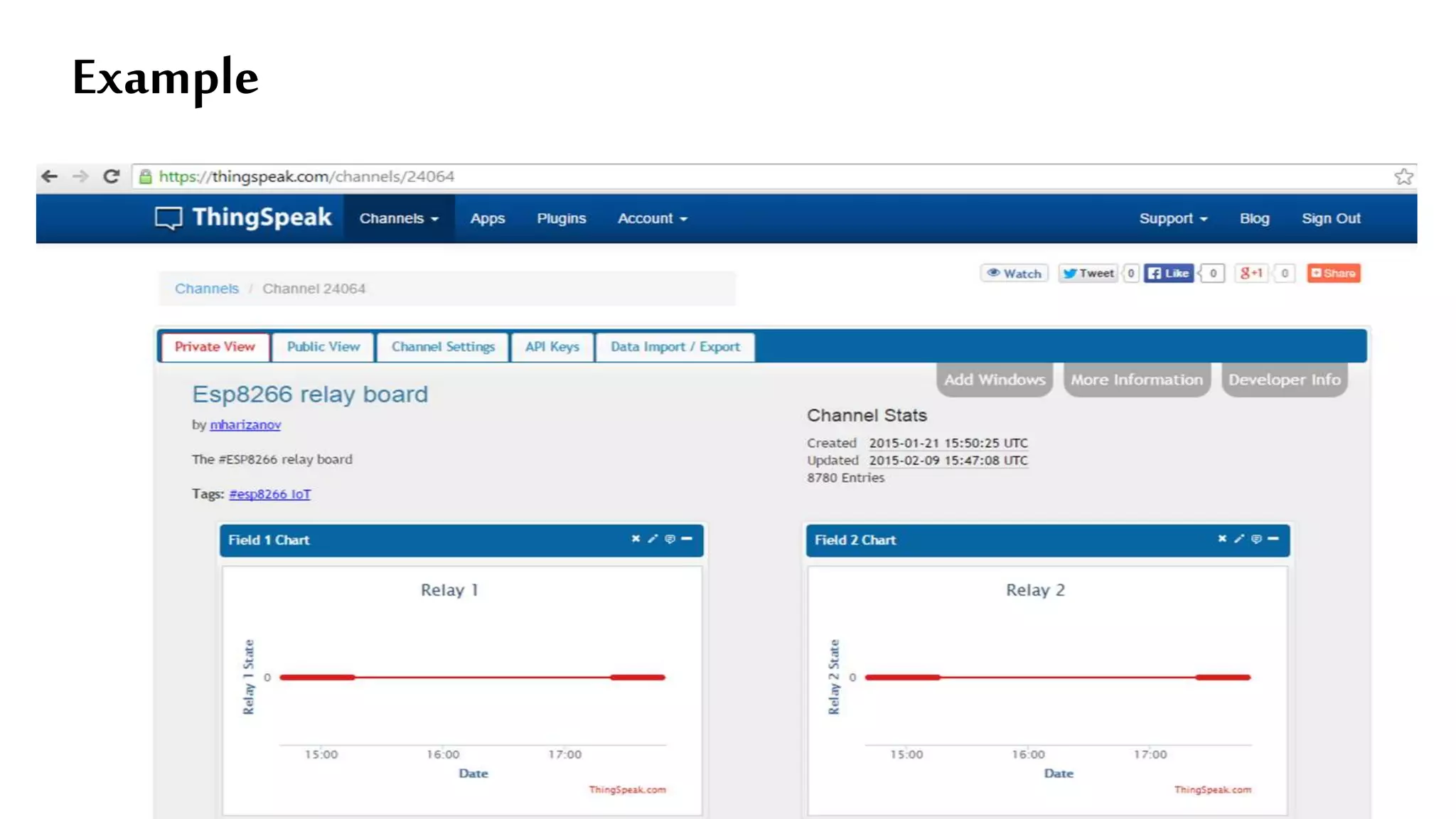
Example
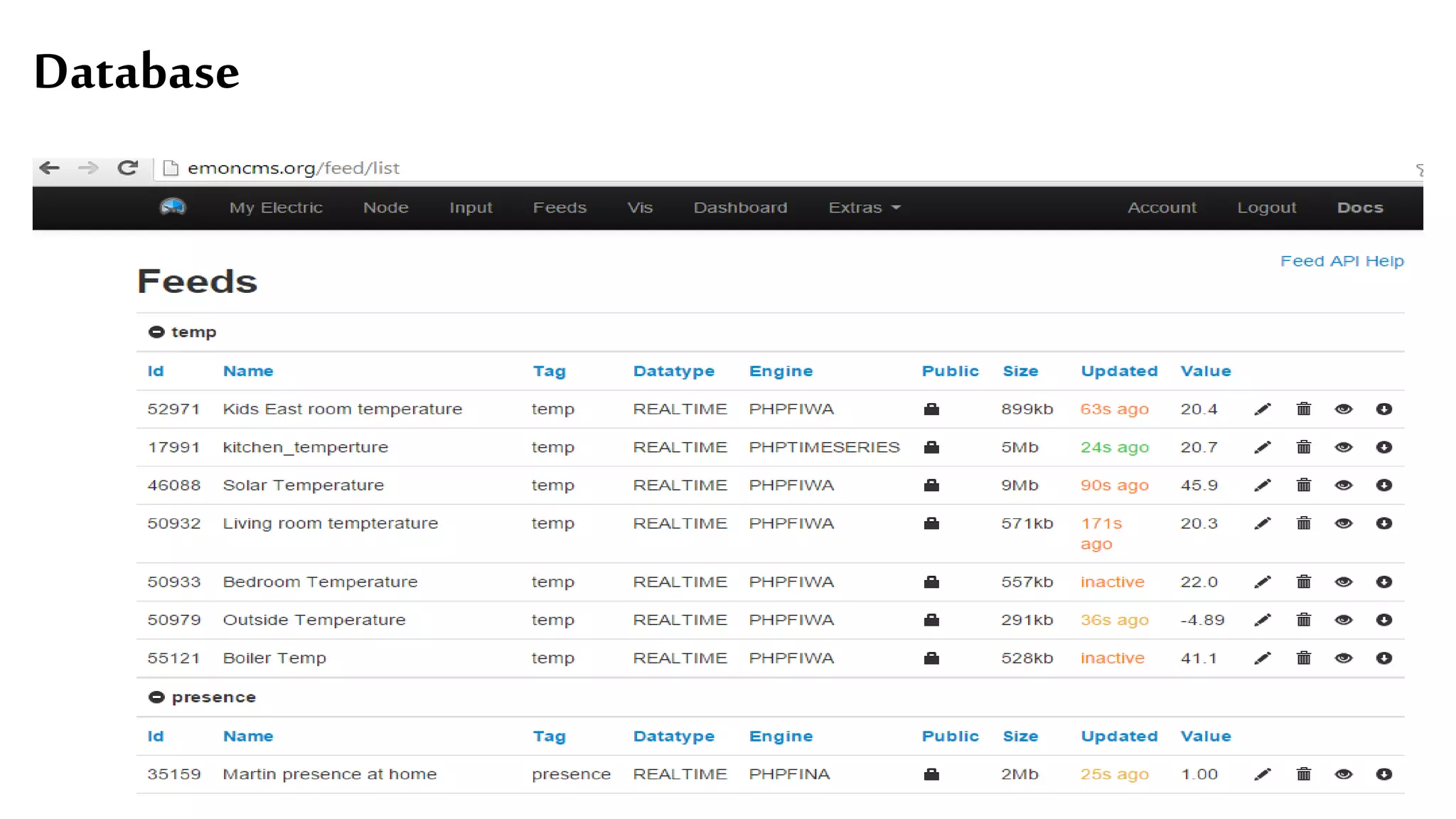
Database
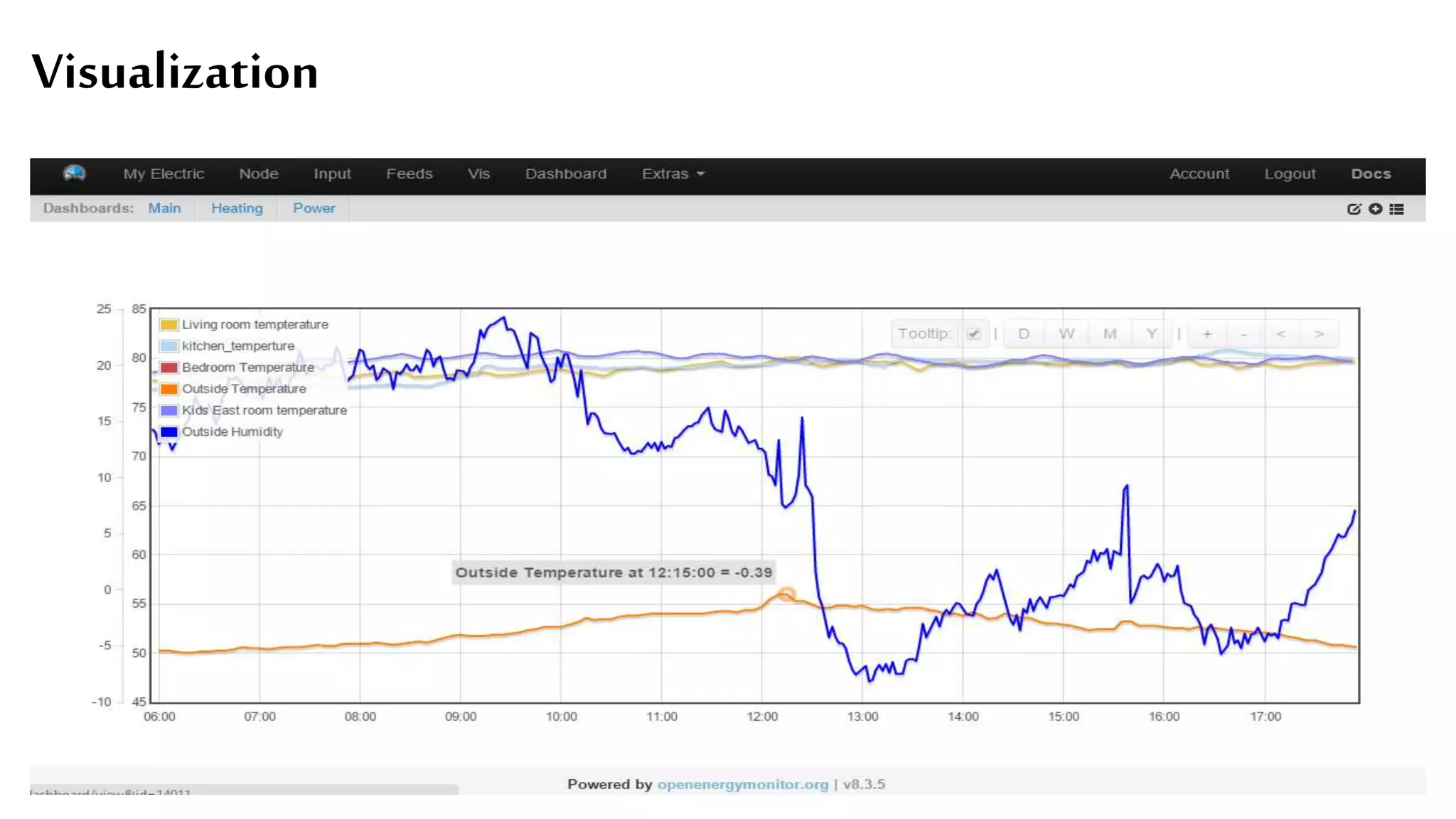
Visualization
ConsPros
Pros
 Smart homes provide energy efficient savings.
 Systems like Z-Wave and ZigBee put some devices at a reduced level of
functionality so that they can go to sleep and wake up when
commands are given.
 Electric bills go down when lights are automatically turned off at
empty rooms and rooms can be heated or cooled based on who's
there at any given moment.
 Some devices can track how much energy each appliance is using and
command power hogs to use less.
 Smart home technology promises tremendous benefits for elderly
people living alone.
 Easy-to-control automated systems would provide benefits to
those
with disabilities or a limited range of movement.
Cons
 Lack of trust in technology.
 Complexity.
 Requires a significant amount of investment in both cash and time.
 Comes with security concerns.
 Hackers who find a way to access the network may have the ability to
turn off alarm systems and lights, leaving the home vulnerable to a
break-in.
 They could also cause mischief like turning devices on and off rapidly,
which could ruin some electronics or -- in an extreme case -- possibly
cause a fire.
 No general standard.
Thank you.

The Design of Smart Home

  • 1.
  • 3.
    Internet of Things IoTis the network of “things” that are embedded with electronics, software, sensors and Internet access which enables them to connect and exchange data. A “thing” in the context of IoT implies the physical entity that possesses an unique identifier, an embedded system and the ability to transfer data over a network.
  • 4.
    Examples Built-in Sensors ofan Automobile. Implantable Recording System. Biochip Transponders.
  • 5.
    The Father ofIoT Who coined the term in 1999.
  • 6.
    Advancement Goals  Thefigure of online capable devices increased 31% from 2016 to $8.4 B in 2017.  Experts estimate that the IoT will consist of about 30 billion objects by 2020.  It is also estimated that the global market value of IoT will reach $7.1 T by 2020.
  • 7.
  • 8.
    a.k.a Domotics. Building automationfor a home, Involves the control and automation of: Heating, Ventilation & Air-Conditioning (HVAC). Security. Domestic appliances.
  • 9.
    Wi-Fi is predominantlyused for remote monitoring and control. Home devices, when remotely monitored and controlled via the Internet, are an important constituent of the Internet of Things.
  • 10.
  • 11.
    Components Required Raspberry Pi8-Channel Relay Board Voltmeter Router Wires Trip Switch
  • 12.
  • 13.
  • 14.
  • 17.
    if(command == "lighton") { digitalWrite(2, HIGH); } else if(command == "light off") { digitalWrite(2, LOW); } else if (command == "lamp on") { digitalWrite (3, HIGH); } else if (command == "fan on") { digitalWrite (4, HIGH); } else if (command == "fan of") { digitalWrite (4, LOW); }
  • 18.
  • 20.
  • 21.
  • 22.
    Software Interface A programmingtool for wiring the hardware devices, APIs and online services together; in new and innovative ways.
  • 23.
    Very visual, drag-and-connect usability. Encapsulatesall the logic in single JSON file. Example: Weather forecast & Current conditions.
  • 24.
  • 26.
  • 27.
  • 28.
  • 30.
  • 31.
    Pros  Smart homesprovide energy efficient savings.  Systems like Z-Wave and ZigBee put some devices at a reduced level of functionality so that they can go to sleep and wake up when commands are given.  Electric bills go down when lights are automatically turned off at empty rooms and rooms can be heated or cooled based on who's there at any given moment.
  • 32.
     Some devicescan track how much energy each appliance is using and command power hogs to use less.  Smart home technology promises tremendous benefits for elderly people living alone.  Easy-to-control automated systems would provide benefits to those with disabilities or a limited range of movement.
  • 33.
    Cons  Lack oftrust in technology.  Complexity.  Requires a significant amount of investment in both cash and time.  Comes with security concerns.
  • 34.
     Hackers whofind a way to access the network may have the ability to turn off alarm systems and lights, leaving the home vulnerable to a break-in.  They could also cause mischief like turning devices on and off rapidly, which could ruin some electronics or -- in an extreme case -- possibly cause a fire.  No general standard.
  • 35.