SMALL BOWEL
OBSTRUCTION
Topic discussion : Acute Abdomen
นศพ.ณัฐริกา กานาค ชั้นปีที่ 4
Small Bowel
Obstruction
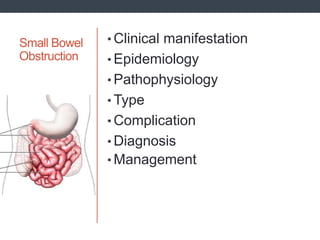
• Clinical manifestation
• Epidemiology
• Pathophysiology
• Type
• Complication
• Diagnosis
• Management
Clinical manifestation
• The 4 cardinals signs
• Abdominal colicky pain
• Vomiting
• Abdominal distension
• Absolute constipation (Obstipation)
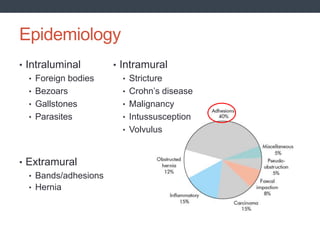
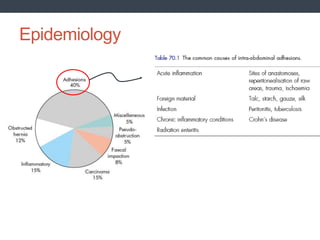
Epidemiology
• Intraluminal
• Foreign bodies
• Bezoars
• Gallstones
• Parasites
• Extramural
• Bands/adhesions
• Hernia
• Intramural
• Stricture
• Crohn’s disease
• Malignancy
• Intussusception
• Volvulus
Epidemiology
Pathophysiology
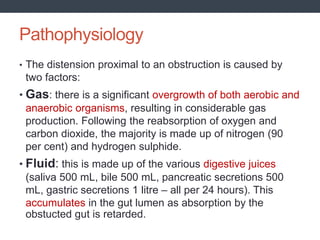
• The distension proximal to an obstruction is caused by
two factors:
• Gas: there is a significant overgrowth of both aerobic and
anaerobic organisms, resulting in considerable gas
production. Following the reabsorption of oxygen and
carbon dioxide, the majority is made up of nitrogen (90
per cent) and hydrogen sulphide.
• Fluid: this is made up of the various digestive juices
(saliva 500 mL, bile 500 mL, pancreatic secretions 500
mL, gastric secretions 1 litre – all per 24 hours). This
accumulates in the gut lumen as absorption by the
obstucted gut is retarded.
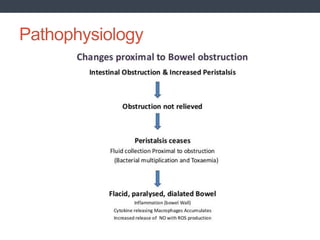
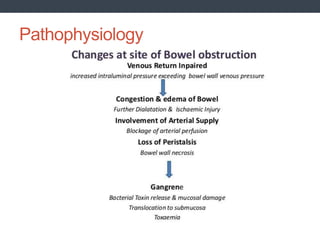
Pathophysiology
Pathophysiology
Pathophysiology
• Dehydration and electrolyte loss are therefore due to:
• reduced oral intake
• defective intestinal absorption
• losses as a result of vomiting
• sequestration in the bowel lumen
• transudation of fluid into the peritoneal cavity
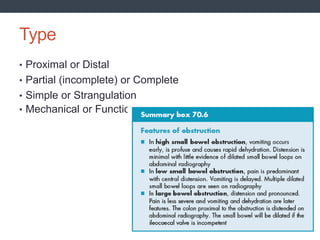
Type
• Proximal or Distal
• Partial (incomplete) or Complete
• Simple or Strangulation
• Mechanical or Functional
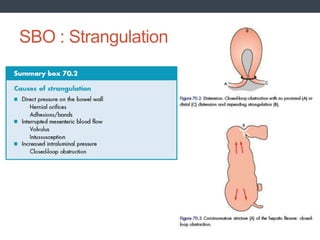
SBO : Strangulation
SBO : Strangulation
• Localized abdominal tenderness
• Constant pain, severe pain
• Fever
• Tachycardia
• Leukocytosis
• Acidosis
Diagnosis
• History
• Physical
examination
• Acute abdomen
series
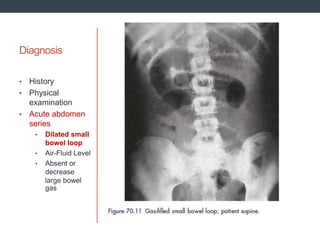
• Dilated small
bowel loop
• Air-Fluid Level
• Absent or
decrease
large bowel
gas
Diagnosis
• History
• Physical
examination
• Acute abdomen
series
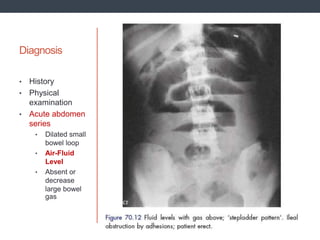
• Dilated small
bowel loop
• Air-Fluid
Level
• Absent or
decrease
large bowel
gas
Diagnosis
• History
• Physical
examination
• Acute abdomen
series
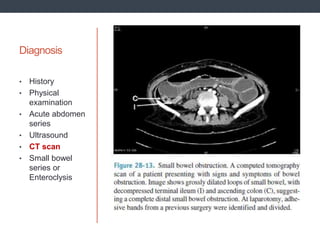
• Ultrasound
• CT scan
• Small bowel
series or
Enteroclysis
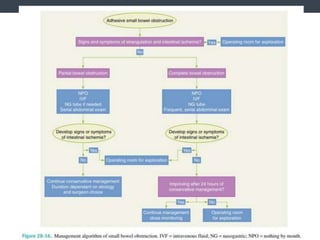
Management
Supportive Tx
• NPO
• Fluid Resuscitation & urine output monitoring
• Pass NG tube( diagnostic/therapeutic purpose)
• I.V antibiotics if indicated : Enteric Gram-negative bacilli,
anaerobes, enterococci
Symptomatic Tx
• Analgesia after confirming diagnosis
Specific Tx
• Surgery
Management
Management
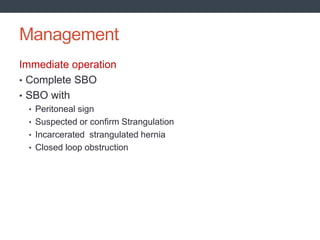
Immediate operation
• Complete SBO
• SBO with
• Peritoneal sign
• Suspected or confirm Strangulation
• Incarcerated strangulated hernia
• Closed loop obstruction
Management
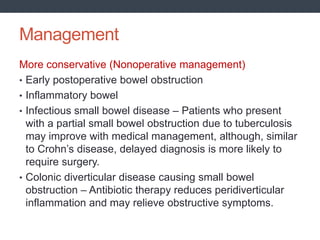
More conservative (Nonoperative management)
• Early postoperative bowel obstruction
• Inflammatory bowel
• Infectious small bowel disease – Patients who present
with a partial small bowel obstruction due to tuberculosis
may improve with medical management, although, similar
to Crohn’s disease, delayed diagnosis is more likely to
require surgery.
• Colonic diverticular disease causing small bowel
obstruction – Antibiotic therapy reduces peridiverticular
inflammation and may relieve obstructive symptoms.

Small bowel obstruction

  • 1.
    SMALL BOWEL OBSTRUCTION Topic discussion: Acute Abdomen นศพ.ณัฐริกา กานาค ชั้นปีที่ 4
  • 2.
    Small Bowel Obstruction • Clinicalmanifestation • Epidemiology • Pathophysiology • Type • Complication • Diagnosis • Management
  • 3.
    Clinical manifestation • The4 cardinals signs • Abdominal colicky pain • Vomiting • Abdominal distension • Absolute constipation (Obstipation)
  • 4.
    Epidemiology • Intraluminal • Foreignbodies • Bezoars • Gallstones • Parasites • Extramural • Bands/adhesions • Hernia • Intramural • Stricture • Crohn’s disease • Malignancy • Intussusception • Volvulus
  • 5.
  • 6.
    Pathophysiology • The distensionproximal to an obstruction is caused by two factors: • Gas: there is a significant overgrowth of both aerobic and anaerobic organisms, resulting in considerable gas production. Following the reabsorption of oxygen and carbon dioxide, the majority is made up of nitrogen (90 per cent) and hydrogen sulphide. • Fluid: this is made up of the various digestive juices (saliva 500 mL, bile 500 mL, pancreatic secretions 500 mL, gastric secretions 1 litre – all per 24 hours). This accumulates in the gut lumen as absorption by the obstucted gut is retarded.
  • 7.
  • 8.
  • 9.
    Pathophysiology • Dehydration andelectrolyte loss are therefore due to: • reduced oral intake • defective intestinal absorption • losses as a result of vomiting • sequestration in the bowel lumen • transudation of fluid into the peritoneal cavity
  • 10.
    Type • Proximal orDistal • Partial (incomplete) or Complete • Simple or Strangulation • Mechanical or Functional
  • 11.
  • 12.
    SBO : Strangulation •Localized abdominal tenderness • Constant pain, severe pain • Fever • Tachycardia • Leukocytosis • Acidosis
  • 13.
    Diagnosis • History • Physical examination •Acute abdomen series • Dilated small bowel loop • Air-Fluid Level • Absent or decrease large bowel gas
  • 14.
    Diagnosis • History • Physical examination •Acute abdomen series • Dilated small bowel loop • Air-Fluid Level • Absent or decrease large bowel gas
  • 15.
    Diagnosis • History • Physical examination •Acute abdomen series • Ultrasound • CT scan • Small bowel series or Enteroclysis
  • 16.
    Management Supportive Tx • NPO •Fluid Resuscitation & urine output monitoring • Pass NG tube( diagnostic/therapeutic purpose) • I.V antibiotics if indicated : Enteric Gram-negative bacilli, anaerobes, enterococci Symptomatic Tx • Analgesia after confirming diagnosis Specific Tx • Surgery
  • 17.
  • 18.
    Management Immediate operation • CompleteSBO • SBO with • Peritoneal sign • Suspected or confirm Strangulation • Incarcerated strangulated hernia • Closed loop obstruction
  • 19.
    Management More conservative (Nonoperativemanagement) • Early postoperative bowel obstruction • Inflammatory bowel • Infectious small bowel disease – Patients who present with a partial small bowel obstruction due to tuberculosis may improve with medical management, although, similar to Crohn’s disease, delayed diagnosis is more likely to require surgery. • Colonic diverticular disease causing small bowel obstruction – Antibiotic therapy reduces peridiverticular inflammation and may relieve obstructive symptoms.