Life sciences grade 10
Life at Molecular ,Cellular and
Tissue Level
Ms Mbatha.
ORGANIC COMPOUNDS
o Organic compounds are substances which all contain the
element carbon (C) together with hydrogen (H). Oxygen
(O) is usually but not always present in organic
compounds. Some organic compounds may contain
other elements such as Nitrogen (N), and Phosphorus
(P).
o Examples of organic compounds we are going to study IN
this chapter are:.
 Carbohydrates
 Lipids
 Proteins
 Nucleic Acids
 Vitamins
2
CARBOHYDRATES
Carbohydrates are made up of the elements
carbon, hydrogen and oxygen only.
The number of hydrogen atom in a
carbohydrate molecule is usually double the
number of oxygen atoms.
Groups of Carbohydrates
Monosaccharides
Disaccharides
polysaccharides
3
Monosaccharides
These are simple or single sugars (mono means
one).
Examples of monosaccharides are glucose,
fructose and galactose.
Disaccharides
sugars which are made up of two
monosaccharide units put together (di means
two).
Examples of disaccharides includes Sucrose
(cane sugar) and Lactose ( milk sugar).
Glucose + Glucose = Maltose
Glucose + fructose = Sucrose
Glucose + galactose = Lactose
4
Polysaccharides
Are carbohydrates which are made up of more
than two monosaccharide unit (poly means
many).
Examples are cellulose and glycogen.
Functions of Carbohydrates
They serve as an important source of energy.
They serve as a substance in which energy is
stored.
They supply cells with materials needed to build
cell structures. For example, cellulose is used to
make cell walls.
5
6
Lipids (Fats and Oils)
Lipids are like carbohydrates in that they are
made up of carbon, hydrogen and oxygen.
They may also contain other elements such
as phosphorous ( as in phospholipids that
make up cell membranes) whereas
carbohydrates carbon, hydrogen and oxygen
only.
The ratio of hydrogen to oxygen is greater
than 2:1 i.e. there are many more hydrogen
atoms whereas in carbohydrates the ratio of
hydrogen to oxygen is 2:1
Lipids continues…
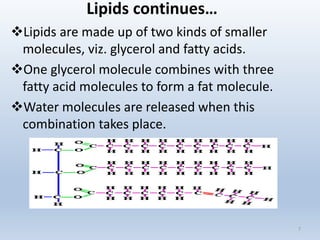
Lipids are made up of two kinds of smaller
molecules, viz. glycerol and fatty acids.
One glycerol molecule combines with three
fatty acid molecules to form a fat molecule.
Water molecules are released when this
combination takes place.
7
Types of Fats
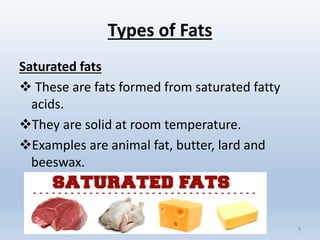
Saturated fats
 These are fats formed from saturated fatty
acids.
They are solid at room temperature.
Examples are animal fat, butter, lard and
beeswax.
8
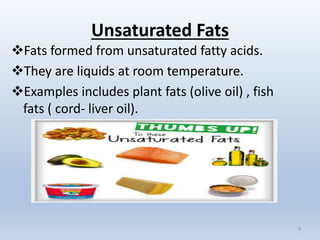
Unsaturated Fats
Fats formed from unsaturated fatty acids.
They are liquids at room temperature.
Examples includes plant fats (olive oil) , fish
fats ( cord- liver oil).
9
Functions of Lipids
They are able to store a lot of energy.
They act as a packing tissue between organs.
They reduce heat loss from the body.
A particular type of fat called phospholipid
goes up to make the cell membrane.
10
Saturated fats, Cholesterol and heart
diseases.
There are many causes of heart diseases.
Heredity, age, gender, smoking ,lack of
exercise, etc.
Atherosclerosis- the blockage of coronary
arteries.
11
Spot test
1. What is the key element found in all organic
compounds?
2. Carbohydrates made up of more than two
monosaccharides.
3. The organic compound which has the element
carbon, hydrogen and oxygen only with hydrogen and
oxygen in the ratio 2:1.
4. The building blocks of lipids.
5. The type of lipid found in cell membranes.
6. Type of fat which is usually solid at room
temperature.
12
PROTEINS
• Protein molecules are different from
carbohydrates and lipids.
• All proteins must have the element carbon,
hydrogen, oxygen and nitrogen. Some
proteins may also have the elements sulphur
(S), phosphorus (p), and iron (Fe).
• Building blocks of proteins are amino acids.
13
Proteins cont.…
• The structure of proteins may easily be
changed by extremely high or extremely low
temperatures, as well as by changes in pH.
• If the structure of a protein is changed, we say
that it is denatured.
• When proteins are denatured, they not only
loose their structure, they only loose their
functions.
14
Functions of proteins
• Proteins store energy.
• They are used to form many parts of the cell
such as cell membranes and chromosomes.
• Enzymes are proteins and enzymes control
many functions within living organisms.
15
Enzymes
• Enzymes belong to a special group of proteins
called organic catalysts.
• As catalysts, enzymes speed up chemical
reactions without being used up in the
reaction themselves.
• They control and regulate all chemical
reactions that take place in the cell, so that
they occur at the best possible or optimum
rate.
16
Enzymes cont.…
• Each enzyme has a particular pH at which it
works best.
• The action of enzymes is also affected by the
temperature.
• They mostly work best just below 40 decrees'
Celsius.
• The cooler it is, the more slowly they work.
• They are usually destroyed at temperatures
above 40 decrees' Celsius.
17
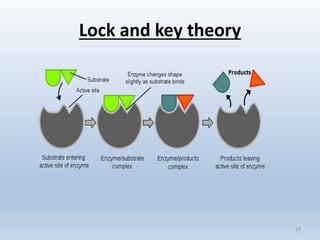
Lock and key theory
• According to this theory…
• Each enzyme has a particular shape.
• The substrate on which the enzyme works fits
into the enzyme.
• An enzyme –substrate complex is formed.
• A chemical reaction occurs and the substrate is
changed.
• The enzyme and the products are then separated.
• The enzyme is free to react with more of the
substrate.
18
Lock and key theory
19
Use of Enzymes in Industry
Enzymes are being used in industry in many
ways such as:.
• Tenderizing meat
• Removing hair from the skin.
• Making beer, wine and vinegar.
• Making of chocolates and syrups.
• Making washing powder to clean clothing.
20
Nucleic acids
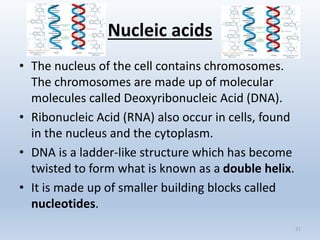
• The nucleus of the cell contains chromosomes.
The chromosomes are made up of molecular
molecules called Deoxyribonucleic Acid (DNA).
• Ribonucleic Acid (RNA) also occur in cells, found
in the nucleus and the cytoplasm.
• DNA is a ladder-like structure which has become
twisted to form what is known as a double helix.
• It is made up of smaller building blocks called
nucleotides.
21
Genes
• A specific length of DNA constitutes a gene.
Functions of genes:.
• Each gene carries a code within it that decides
which proteins are going to be formed.
• Each gene carries a code within it which
determines which enzymes are going to be
formed.
• They control the inheritance of characteristics
from parent to offspring.
22
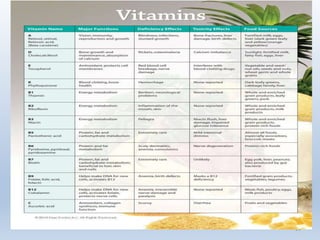
Vitamins
• Vitamins are complex organic compounds
which are found in very small quantities in
natural foods.
• They are required for the maintenance of
normal metabolic processes in the body.
• In this grade we are going to look at five
vitamins, which are vitamin A, B1, C, D and E.
23
24
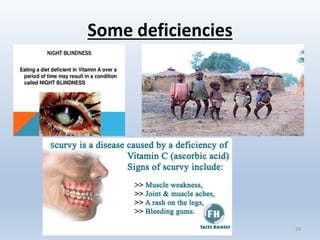
Some deficiencies
25
Activity
1. What are the organic molecules that make up
chromosomes? [1]
2. Building blocks of DNA?[1]
3. The twisted ladder-like appearance of DNA.[1]
Name the vitamin that applies to each of the following
functions, sources or deficiencies.[5]
• Scurvy.
• Rickets.
• Night- blindness.
• Essential for the correct functioning of the eye.
• Abundant in citrus fruits.
26

Life sciences grade 10

  • 1.
    Life sciences grade10 Life at Molecular ,Cellular and Tissue Level Ms Mbatha.
  • 2.
    ORGANIC COMPOUNDS o Organiccompounds are substances which all contain the element carbon (C) together with hydrogen (H). Oxygen (O) is usually but not always present in organic compounds. Some organic compounds may contain other elements such as Nitrogen (N), and Phosphorus (P). o Examples of organic compounds we are going to study IN this chapter are:.  Carbohydrates  Lipids  Proteins  Nucleic Acids  Vitamins 2
  • 3.
    CARBOHYDRATES Carbohydrates are madeup of the elements carbon, hydrogen and oxygen only. The number of hydrogen atom in a carbohydrate molecule is usually double the number of oxygen atoms. Groups of Carbohydrates Monosaccharides Disaccharides polysaccharides 3
  • 4.
    Monosaccharides These are simpleor single sugars (mono means one). Examples of monosaccharides are glucose, fructose and galactose. Disaccharides sugars which are made up of two monosaccharide units put together (di means two). Examples of disaccharides includes Sucrose (cane sugar) and Lactose ( milk sugar). Glucose + Glucose = Maltose Glucose + fructose = Sucrose Glucose + galactose = Lactose 4
  • 5.
    Polysaccharides Are carbohydrates whichare made up of more than two monosaccharide unit (poly means many). Examples are cellulose and glycogen. Functions of Carbohydrates They serve as an important source of energy. They serve as a substance in which energy is stored. They supply cells with materials needed to build cell structures. For example, cellulose is used to make cell walls. 5
  • 6.
    6 Lipids (Fats andOils) Lipids are like carbohydrates in that they are made up of carbon, hydrogen and oxygen. They may also contain other elements such as phosphorous ( as in phospholipids that make up cell membranes) whereas carbohydrates carbon, hydrogen and oxygen only. The ratio of hydrogen to oxygen is greater than 2:1 i.e. there are many more hydrogen atoms whereas in carbohydrates the ratio of hydrogen to oxygen is 2:1
  • 7.
    Lipids continues… Lipids aremade up of two kinds of smaller molecules, viz. glycerol and fatty acids. One glycerol molecule combines with three fatty acid molecules to form a fat molecule. Water molecules are released when this combination takes place. 7
  • 8.
    Types of Fats Saturatedfats  These are fats formed from saturated fatty acids. They are solid at room temperature. Examples are animal fat, butter, lard and beeswax. 8
  • 9.
    Unsaturated Fats Fats formedfrom unsaturated fatty acids. They are liquids at room temperature. Examples includes plant fats (olive oil) , fish fats ( cord- liver oil). 9
  • 10.
    Functions of Lipids Theyare able to store a lot of energy. They act as a packing tissue between organs. They reduce heat loss from the body. A particular type of fat called phospholipid goes up to make the cell membrane. 10
  • 11.
    Saturated fats, Cholesteroland heart diseases. There are many causes of heart diseases. Heredity, age, gender, smoking ,lack of exercise, etc. Atherosclerosis- the blockage of coronary arteries. 11
  • 12.
    Spot test 1. Whatis the key element found in all organic compounds? 2. Carbohydrates made up of more than two monosaccharides. 3. The organic compound which has the element carbon, hydrogen and oxygen only with hydrogen and oxygen in the ratio 2:1. 4. The building blocks of lipids. 5. The type of lipid found in cell membranes. 6. Type of fat which is usually solid at room temperature. 12
  • 13.
    PROTEINS • Protein moleculesare different from carbohydrates and lipids. • All proteins must have the element carbon, hydrogen, oxygen and nitrogen. Some proteins may also have the elements sulphur (S), phosphorus (p), and iron (Fe). • Building blocks of proteins are amino acids. 13
  • 14.
    Proteins cont.… • Thestructure of proteins may easily be changed by extremely high or extremely low temperatures, as well as by changes in pH. • If the structure of a protein is changed, we say that it is denatured. • When proteins are denatured, they not only loose their structure, they only loose their functions. 14
  • 15.
    Functions of proteins •Proteins store energy. • They are used to form many parts of the cell such as cell membranes and chromosomes. • Enzymes are proteins and enzymes control many functions within living organisms. 15
  • 16.
    Enzymes • Enzymes belongto a special group of proteins called organic catalysts. • As catalysts, enzymes speed up chemical reactions without being used up in the reaction themselves. • They control and regulate all chemical reactions that take place in the cell, so that they occur at the best possible or optimum rate. 16
  • 17.
    Enzymes cont.… • Eachenzyme has a particular pH at which it works best. • The action of enzymes is also affected by the temperature. • They mostly work best just below 40 decrees' Celsius. • The cooler it is, the more slowly they work. • They are usually destroyed at temperatures above 40 decrees' Celsius. 17
  • 18.
    Lock and keytheory • According to this theory… • Each enzyme has a particular shape. • The substrate on which the enzyme works fits into the enzyme. • An enzyme –substrate complex is formed. • A chemical reaction occurs and the substrate is changed. • The enzyme and the products are then separated. • The enzyme is free to react with more of the substrate. 18
  • 19.
    Lock and keytheory 19
  • 20.
    Use of Enzymesin Industry Enzymes are being used in industry in many ways such as:. • Tenderizing meat • Removing hair from the skin. • Making beer, wine and vinegar. • Making of chocolates and syrups. • Making washing powder to clean clothing. 20
  • 21.
    Nucleic acids • Thenucleus of the cell contains chromosomes. The chromosomes are made up of molecular molecules called Deoxyribonucleic Acid (DNA). • Ribonucleic Acid (RNA) also occur in cells, found in the nucleus and the cytoplasm. • DNA is a ladder-like structure which has become twisted to form what is known as a double helix. • It is made up of smaller building blocks called nucleotides. 21
  • 22.
    Genes • A specificlength of DNA constitutes a gene. Functions of genes:. • Each gene carries a code within it that decides which proteins are going to be formed. • Each gene carries a code within it which determines which enzymes are going to be formed. • They control the inheritance of characteristics from parent to offspring. 22
  • 23.
    Vitamins • Vitamins arecomplex organic compounds which are found in very small quantities in natural foods. • They are required for the maintenance of normal metabolic processes in the body. • In this grade we are going to look at five vitamins, which are vitamin A, B1, C, D and E. 23
  • 24.
  • 25.
  • 26.
    Activity 1. What arethe organic molecules that make up chromosomes? [1] 2. Building blocks of DNA?[1] 3. The twisted ladder-like appearance of DNA.[1] Name the vitamin that applies to each of the following functions, sources or deficiencies.[5] • Scurvy. • Rickets. • Night- blindness. • Essential for the correct functioning of the eye. • Abundant in citrus fruits. 26