Science
Shree Shitaladevi Community Secondary School
www.yepnepal.com @santoshpaudel
Grade - 9
sntos29c@gmail.com
UNIT: Chemical Reaction
• Matter: The Various substances of around us, which have a weight
and volume are called matters. Glass, Plastic, Air, Iron, Paper etc.
are example of Matter. Matter exists in three states I.e. solid, liquid
and gas.
• Physical Change: A temporary and usually reversible change in
which no new substance is formed.
- A physical change is a change in properties like state, colour,
speed, motion, shape, size etc. but the chemical composition of the
substance remains same.
For Example: Melting of Ice, Magnetizing a needle, solution of salt
and water etc.
9/22/2020www.yepnepal.com
1
Chemical Reaction
Chemical Change:
A chemical Change is a permanent change and gives rise to a new
substance having composition and properties altogether different
from original substances. It is usually irreversible.
For Example: Formation of curd from the milk, Rusting of iron,
burning of magnesium ribbon, burning wood etc.
Di- atomic element:
• The elements whose molecules are made up of two atoms are
called di- atomic elements. The molecules of gases like Hydrogen,
Nitrogen, Oxygen, Fluorine, Chlorine, Bromine, Iodine are di-
atomic. 9/22/2020
www.yepnepal.com
2
Chemical Reaction
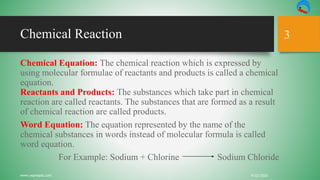
Chemical Equation: The chemical reaction which is expressed by
using molecular formulae of reactants and products is called a chemical
equation.
Reactants and Products: The substances which take part in chemical
reaction are called reactants. The substances that are formed as a result
of chemical reaction are called products.
Word Equation: The equation represented by the name of the
chemical substances in words instead of molecular formula is called
word equation.
For Example: Sodium + Chlorine Sodium Chloride
9/22/2020www.yepnepal.com
3
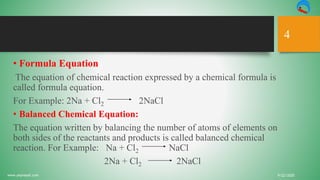
• Formula Equation
The equation of chemical reaction expressed by a chemical formula is
called formula equation.
For Example: 2Na + Cl2 2NaCl
• Balanced Chemical Equation:
The equation written by balancing the number of atoms of elements on
both sides of the reactants and products is called balanced chemical
reaction. For Example: Na + Cl2 NaCl
2Na + Cl2 2NaCl
9/22/2020www.yepnepal.com
4
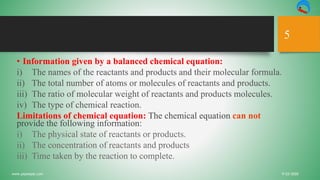
• Information given by a balanced chemical equation:
i) The names of the reactants and products and their molecular formula.
ii) The total number of atoms or molecules of reactants and products.
iii) The ratio of molecular weight of reactants and products molecules.
iv) The type of chemical reaction.
Limitations of chemical equation: The chemical equation can not
provide the following information:
i) The physical state of reactants or products.
ii) The concentration of reactants and products
iii) Time taken by the reaction to complete.
9/22/2020www.yepnepal.com
5
Types of Chemical Reaction
9/22/2020www.yepnepal.com
6
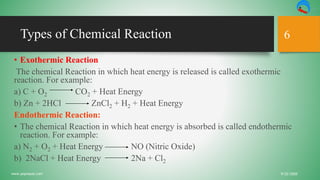
• Exothermic Reaction
The chemical Reaction in which heat energy is released is called exothermic
reaction. For example:
a) C + O2 CO2 + Heat Energy
b) Zn + 2HCl ZnCl2 + H2 + Heat Energy
Endothermic Reaction:
• The chemical Reaction in which heat energy is absorbed is called endothermic
reaction. For example:
a) N2 + O2 + Heat Energy NO (Nitric Oxide)
b) 2NaCl + Heat Energy 2Na + Cl2
Catalyst
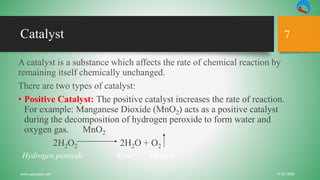
A catalyst is a substance which affects the rate of chemical reaction by
remaining itself chemically unchanged.
There are two types of catalyst:
• Positive Catalyst: The positive catalyst increases the rate of reaction.
For example: Manganese Dioxide (MnO2) acts as a positive catalyst
during the decomposition of hydrogen peroxide to form water and
oxygen gas. MnO2
2H2O2 2H2O + O2
Hydrogen peroxide Water Oxygen
9/22/2020www.yepnepal.com
7
Catalyst
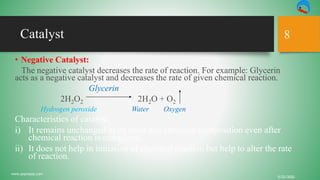
• Negative Catalyst:
The negative catalyst decreases the rate of reaction. For example: Glycerin
acts as a negative catalyst and decreases the rate of given chemical reaction.
Glycerin
2H2O2 2H2O + O2
Hydrogen peroxide Water Oxygen
Characteristics of catalyst:
i) It remains unchanged in its mass and chemical composition even after
chemical reaction is completed.
ii) It does not help in initiation of chemical reaction but help to alter the rate
of reaction.
9/22/2020
www.yepnepal.com
8
Any Questions?
www.yepnepal.com @santoshpaudel sntos29c@gmail.com
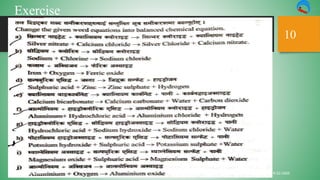
Exercise
9/22/2020www.yepnepal.com
10
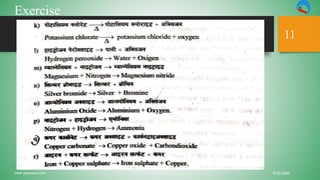
Exercise
9/22/2020www.yepnepal.com
11
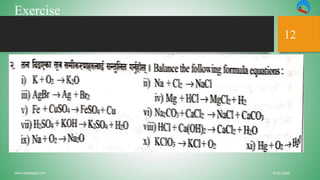
Exercise
9/22/2020www.yepnepal.com
12
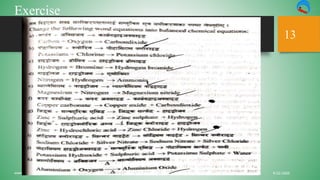
Exercise
9/22/2020www.yepnepal.com
13
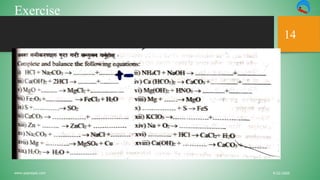
Exercise
9/22/2020www.yepnepal.com
14
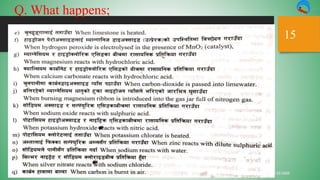
Q. What happens;
9/22/2020www.yepnepal.com
15

Chemical Reaction - Science (Grade - 9)

  • 1.
    Science Shree Shitaladevi CommunitySecondary School www.yepnepal.com @santoshpaudel Grade - 9 sntos29c@gmail.com
  • 2.
    UNIT: Chemical Reaction •Matter: The Various substances of around us, which have a weight and volume are called matters. Glass, Plastic, Air, Iron, Paper etc. are example of Matter. Matter exists in three states I.e. solid, liquid and gas. • Physical Change: A temporary and usually reversible change in which no new substance is formed. - A physical change is a change in properties like state, colour, speed, motion, shape, size etc. but the chemical composition of the substance remains same. For Example: Melting of Ice, Magnetizing a needle, solution of salt and water etc. 9/22/2020www.yepnepal.com 1
  • 3.
    Chemical Reaction Chemical Change: Achemical Change is a permanent change and gives rise to a new substance having composition and properties altogether different from original substances. It is usually irreversible. For Example: Formation of curd from the milk, Rusting of iron, burning of magnesium ribbon, burning wood etc. Di- atomic element: • The elements whose molecules are made up of two atoms are called di- atomic elements. The molecules of gases like Hydrogen, Nitrogen, Oxygen, Fluorine, Chlorine, Bromine, Iodine are di- atomic. 9/22/2020 www.yepnepal.com 2
  • 4.
    Chemical Reaction Chemical Equation:The chemical reaction which is expressed by using molecular formulae of reactants and products is called a chemical equation. Reactants and Products: The substances which take part in chemical reaction are called reactants. The substances that are formed as a result of chemical reaction are called products. Word Equation: The equation represented by the name of the chemical substances in words instead of molecular formula is called word equation. For Example: Sodium + Chlorine Sodium Chloride 9/22/2020www.yepnepal.com 3
  • 5.
    • Formula Equation Theequation of chemical reaction expressed by a chemical formula is called formula equation. For Example: 2Na + Cl2 2NaCl • Balanced Chemical Equation: The equation written by balancing the number of atoms of elements on both sides of the reactants and products is called balanced chemical reaction. For Example: Na + Cl2 NaCl 2Na + Cl2 2NaCl 9/22/2020www.yepnepal.com 4
  • 6.
    • Information givenby a balanced chemical equation: i) The names of the reactants and products and their molecular formula. ii) The total number of atoms or molecules of reactants and products. iii) The ratio of molecular weight of reactants and products molecules. iv) The type of chemical reaction. Limitations of chemical equation: The chemical equation can not provide the following information: i) The physical state of reactants or products. ii) The concentration of reactants and products iii) Time taken by the reaction to complete. 9/22/2020www.yepnepal.com 5
  • 7.
    Types of ChemicalReaction 9/22/2020www.yepnepal.com 6 • Exothermic Reaction The chemical Reaction in which heat energy is released is called exothermic reaction. For example: a) C + O2 CO2 + Heat Energy b) Zn + 2HCl ZnCl2 + H2 + Heat Energy Endothermic Reaction: • The chemical Reaction in which heat energy is absorbed is called endothermic reaction. For example: a) N2 + O2 + Heat Energy NO (Nitric Oxide) b) 2NaCl + Heat Energy 2Na + Cl2
  • 8.
    Catalyst A catalyst isa substance which affects the rate of chemical reaction by remaining itself chemically unchanged. There are two types of catalyst: • Positive Catalyst: The positive catalyst increases the rate of reaction. For example: Manganese Dioxide (MnO2) acts as a positive catalyst during the decomposition of hydrogen peroxide to form water and oxygen gas. MnO2 2H2O2 2H2O + O2 Hydrogen peroxide Water Oxygen 9/22/2020www.yepnepal.com 7
  • 9.
    Catalyst • Negative Catalyst: Thenegative catalyst decreases the rate of reaction. For example: Glycerin acts as a negative catalyst and decreases the rate of given chemical reaction. Glycerin 2H2O2 2H2O + O2 Hydrogen peroxide Water Oxygen Characteristics of catalyst: i) It remains unchanged in its mass and chemical composition even after chemical reaction is completed. ii) It does not help in initiation of chemical reaction but help to alter the rate of reaction. 9/22/2020 www.yepnepal.com 8
  • 10.
  • 11.
  • 12.
  • 13.
  • 14.
  • 15.
  • 16.