BIOLOGICAL
MOLECULES
OBJECTIVES
1. distinguish between carbohydrates, proteins, lipids,
and nucleic acids;
2. summarize the general characteristics of each
biomolecule; and
3. relate the structures of the biomolecules with their
properties.
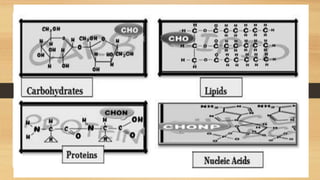
Biological macromolecules are
large, organic molecule such as
carbohydrates, lipids, proteins,
and nucleic acids
-Biomolecules have a huge variety
of functions, such as storing
energy, protection
BIOLOGICAL
MACROMOLECULES
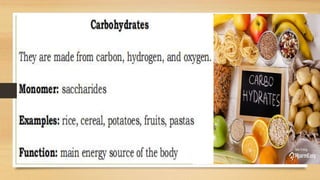
1. CARBOHYDRATES
-Carboh + hydrate
-another term is saccharide
-Classified either simple or complex sugar.
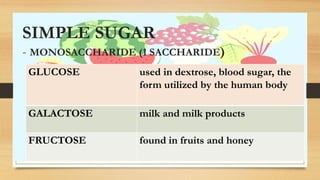
SIMPLE SUGAR
- MONOSACCHARIDE (1 SACCHARIDE)
GLUCOSE used in dextrose, blood sugar, the
form utilized by the human body
GALACTOSE milk and milk products
FRUCTOSE found in fruits and honey
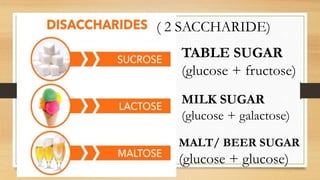
2
( 2 SACCHARIDE)
TABLE SUGAR
(glucose + fructose)
MILK SUGAR
(glucose + galactose)
MALT/ BEER SUGAR
(glucose + glucose)
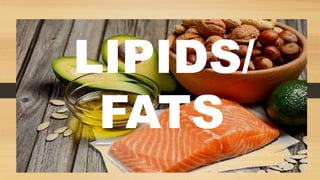
LIPIDS/
FATS
Classification: Lipids or Fats
•triglyceride
•phospholipid
•wax
•steroid
Fat -solid triglyceride usually
from animal sources such as
meat, milk, butter, margarine,
eggs, and cheese.
Oil - liquid triglycerides from plant
sources.
-Examples:olive oil, corn oil,
sunflower oil, and soybean oil.
-mostly unsaturated fatty acids.
Lipids or fats
- eating too many especially unhealthy fats such
as saturated fats and trans fats can lead to heart
disease, cancer, and obesity.
-Lipids functions are material for cell
membrane, insulation to maintain body
temperature, aid in digestion, and as signal
molecules.
Lipids
- carbon, hydrogen, and oxygen
-Monomer: fatty acid
-soluble (dissolve) in oil but are insoluble
(don’t dissolve) in water.
Examples: fats and oils
Function: long-term storage of energy in the
body
Two classes:
1. Saturated fats
-have two carbons attached to each carbon
(except the one at the end). Saturated fats are
unhealthy fats like butter.
2. Unsaturated fats are missing at least one
hydrogen and are curl in shape. The
unsaturated fats are healthy, and include oils.
Fat and oil are the most common
examples of lipids. They are under
triglycerides because they are
composed of glycerol and three
fatty acids.
PROTEIN
PROTEIN
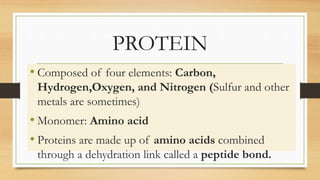
• Composed of four elements: Carbon,
Hydrogen,Oxygen, and Nitrogen (Sulfur and other
metals are sometimes)
• Monomer: Amino acid
• Proteins are made up of amino acids combined
through a dehydration link called a peptide bond.
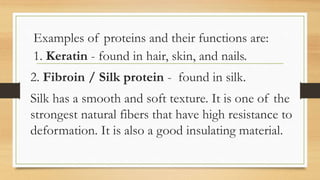
Examples of proteins and their functions are:
1. Keratin - found in hair, skin, and nails.
2. Fibroin / Silk protein - found in silk.
Silk has a smooth and soft texture. It is one of the
strongest natural fibers that have high resistance to
deformation. It is also a good insulating material.
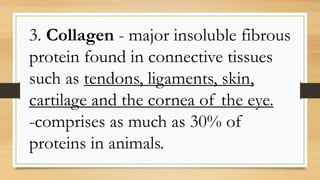
3. Collagen - major insoluble fibrous
protein found in connective tissues
such as tendons, ligaments, skin,
cartilage and the cornea of the eye.
-comprises as much as 30% of
proteins in animals.
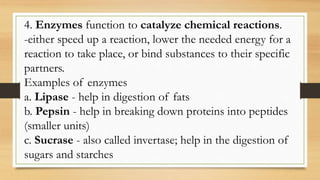
4. Enzymes function to catalyze chemical reactions.
-either speed up a reaction, lower the needed energy for a
reaction to take place, or bind substances to their specific
partners.
Examples of enzymes
a. Lipase - help in digestion of fats
b. Pepsin - help in breaking down proteins into peptides
(smaller units)
c. Sucrase - also called invertase; help in the digestion of
sugars and starches
5. Myoglobin-polypeptide that stores
oxygen in muscles. It contains a heme
group which has an iron where the
oxygen is stored.
Nucleic Acids
Nucleic acids
• also known as polynucleotides.
• Monomers: nucleotides.
• essential role in the storage, transfer, and
expression of genetic information.
• discovered Swiss physician named Friedrich
Miescher in 1868.
-He was puzzled that an unknown substance in
white blood cells did not resemble
carbohydrates, proteins, or lipids.
-He was able to isolate the substance from the
nucleus and initially called it nuclein.
-He eventually was able to break down nuclein
into protein and nucleic acids.
Nucleic Acids
- carbon, hydrogen, oxygen, nitrogen,
and phosphorus.
Monomer: nucleotide
Examples: DNA and RNA
Function: involves the genetic materials
Examples of nucleic acids:
1. DNA (deoxyribonucleic acid) -nucleic acid
that carries the genetic code of organisms.
- the blueprint of life.
2. RNA(ribonucleic acid)carries the information
from the DNA to the cellular factories for the
synthesis of proteins.
Three parts of nucleotide:
1. Nitrogenous base
2. Five-carbon carbohydrate or
sugar
3. Phosphate group
PHYSICAL SCIENCE BIOLOGICAL MACROMOLECULES.pptx

PHYSICAL SCIENCE BIOLOGICAL MACROMOLECULES.pptx

  • 1.
  • 2.
    OBJECTIVES 1. distinguish betweencarbohydrates, proteins, lipids, and nucleic acids; 2. summarize the general characteristics of each biomolecule; and 3. relate the structures of the biomolecules with their properties.
  • 6.
    Biological macromolecules are large,organic molecule such as carbohydrates, lipids, proteins, and nucleic acids -Biomolecules have a huge variety of functions, such as storing energy, protection
  • 9.
    BIOLOGICAL MACROMOLECULES 1. CARBOHYDRATES -Carboh +hydrate -another term is saccharide -Classified either simple or complex sugar.
  • 10.
    SIMPLE SUGAR - MONOSACCHARIDE(1 SACCHARIDE) GLUCOSE used in dextrose, blood sugar, the form utilized by the human body GALACTOSE milk and milk products FRUCTOSE found in fruits and honey
  • 11.
    2 ( 2 SACCHARIDE) TABLESUGAR (glucose + fructose) MILK SUGAR (glucose + galactose) MALT/ BEER SUGAR (glucose + glucose)
  • 14.
  • 15.
    Classification: Lipids orFats •triglyceride •phospholipid •wax •steroid
  • 16.
    Fat -solid triglycerideusually from animal sources such as meat, milk, butter, margarine, eggs, and cheese.
  • 18.
    Oil - liquidtriglycerides from plant sources. -Examples:olive oil, corn oil, sunflower oil, and soybean oil. -mostly unsaturated fatty acids.
  • 20.
    Lipids or fats -eating too many especially unhealthy fats such as saturated fats and trans fats can lead to heart disease, cancer, and obesity. -Lipids functions are material for cell membrane, insulation to maintain body temperature, aid in digestion, and as signal molecules.
  • 21.
    Lipids - carbon, hydrogen,and oxygen -Monomer: fatty acid -soluble (dissolve) in oil but are insoluble (don’t dissolve) in water. Examples: fats and oils Function: long-term storage of energy in the body
  • 22.
    Two classes: 1. Saturatedfats -have two carbons attached to each carbon (except the one at the end). Saturated fats are unhealthy fats like butter. 2. Unsaturated fats are missing at least one hydrogen and are curl in shape. The unsaturated fats are healthy, and include oils.
  • 23.
    Fat and oilare the most common examples of lipids. They are under triglycerides because they are composed of glycerol and three fatty acids.
  • 24.
  • 25.
    PROTEIN • Composed offour elements: Carbon, Hydrogen,Oxygen, and Nitrogen (Sulfur and other metals are sometimes) • Monomer: Amino acid • Proteins are made up of amino acids combined through a dehydration link called a peptide bond.
  • 26.
    Examples of proteinsand their functions are: 1. Keratin - found in hair, skin, and nails. 2. Fibroin / Silk protein - found in silk. Silk has a smooth and soft texture. It is one of the strongest natural fibers that have high resistance to deformation. It is also a good insulating material.
  • 27.
    3. Collagen -major insoluble fibrous protein found in connective tissues such as tendons, ligaments, skin, cartilage and the cornea of the eye. -comprises as much as 30% of proteins in animals.
  • 28.
    4. Enzymes functionto catalyze chemical reactions. -either speed up a reaction, lower the needed energy for a reaction to take place, or bind substances to their specific partners. Examples of enzymes a. Lipase - help in digestion of fats b. Pepsin - help in breaking down proteins into peptides (smaller units) c. Sucrase - also called invertase; help in the digestion of sugars and starches
  • 29.
    5. Myoglobin-polypeptide thatstores oxygen in muscles. It contains a heme group which has an iron where the oxygen is stored.
  • 30.
  • 31.
    Nucleic acids • alsoknown as polynucleotides. • Monomers: nucleotides. • essential role in the storage, transfer, and expression of genetic information. • discovered Swiss physician named Friedrich Miescher in 1868.

  • 32.
    -He was puzzledthat an unknown substance in white blood cells did not resemble carbohydrates, proteins, or lipids. -He was able to isolate the substance from the nucleus and initially called it nuclein. -He eventually was able to break down nuclein into protein and nucleic acids.
  • 33.
    Nucleic Acids - carbon,hydrogen, oxygen, nitrogen, and phosphorus. Monomer: nucleotide Examples: DNA and RNA Function: involves the genetic materials
  • 34.
    Examples of nucleicacids: 1. DNA (deoxyribonucleic acid) -nucleic acid that carries the genetic code of organisms. - the blueprint of life. 2. RNA(ribonucleic acid)carries the information from the DNA to the cellular factories for the synthesis of proteins.
  • 35.
    Three parts ofnucleotide: 1. Nitrogenous base 2. Five-carbon carbohydrate or sugar 3. Phosphate group