• Is the representation or
picture of all or part of the
surface of the earth.
• The best guides & sources of
general information.
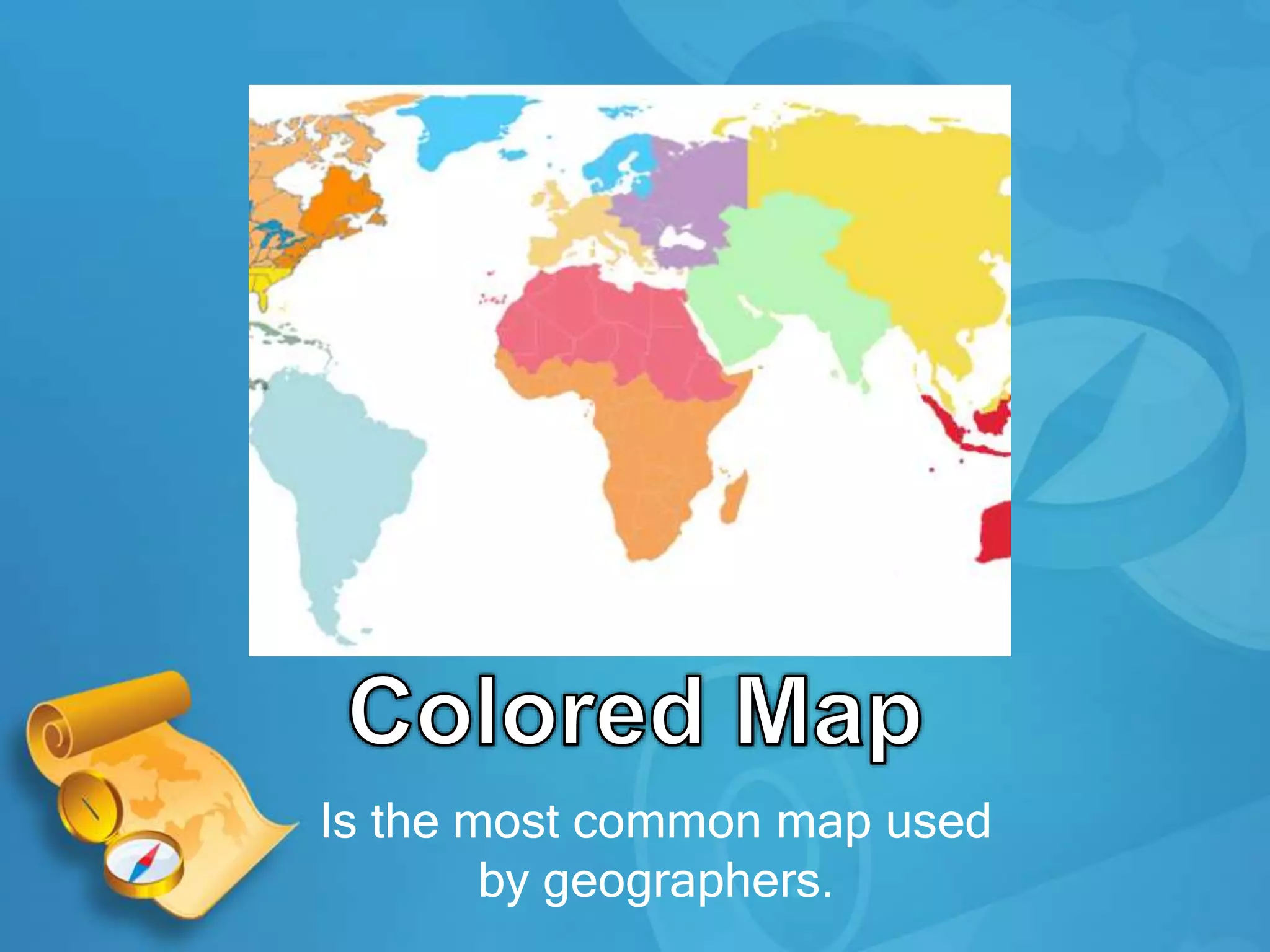
Is the most common map used
by geographers.
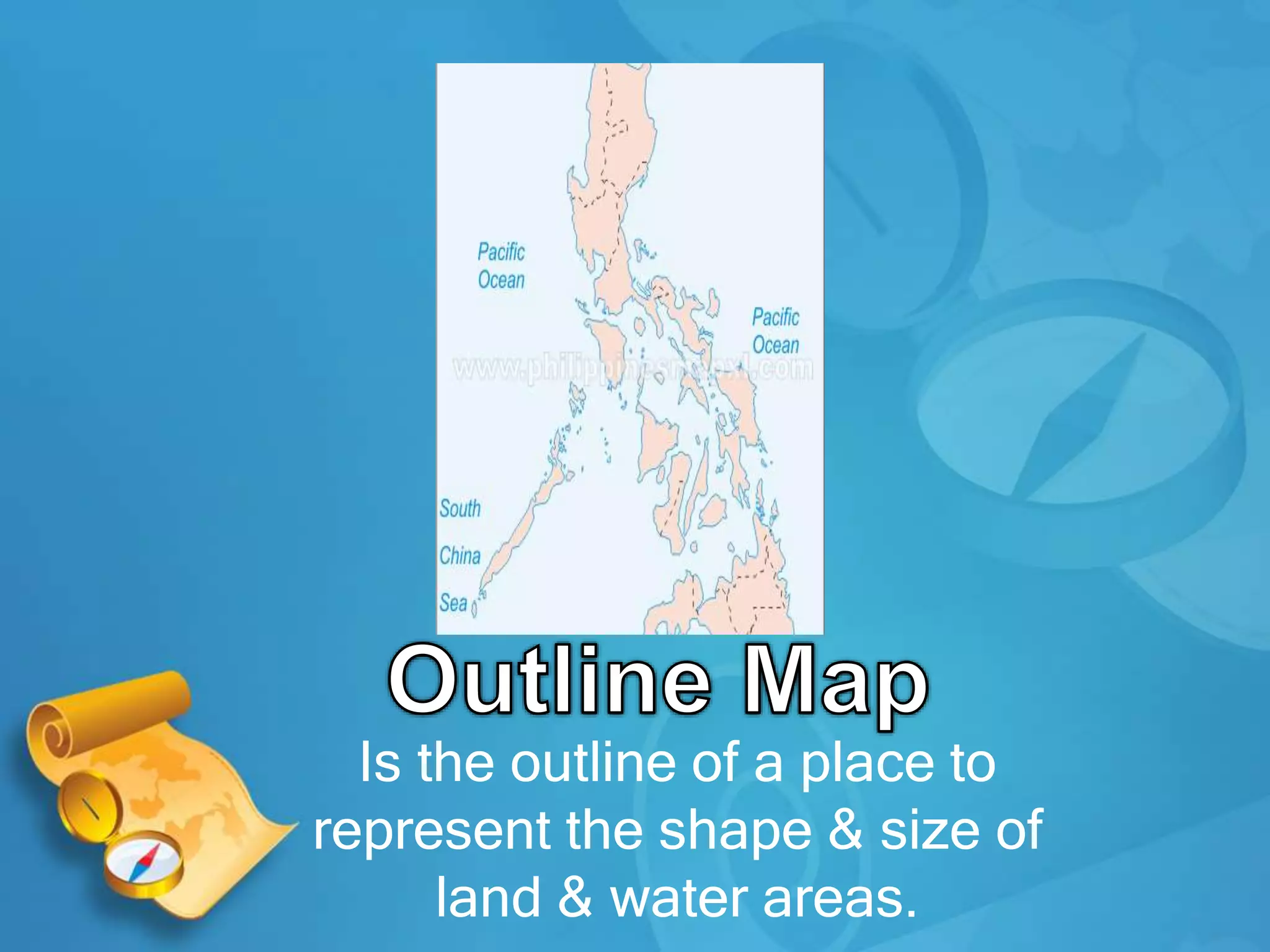
Is the outline of a place to
represent the shape & size of
land & water areas.
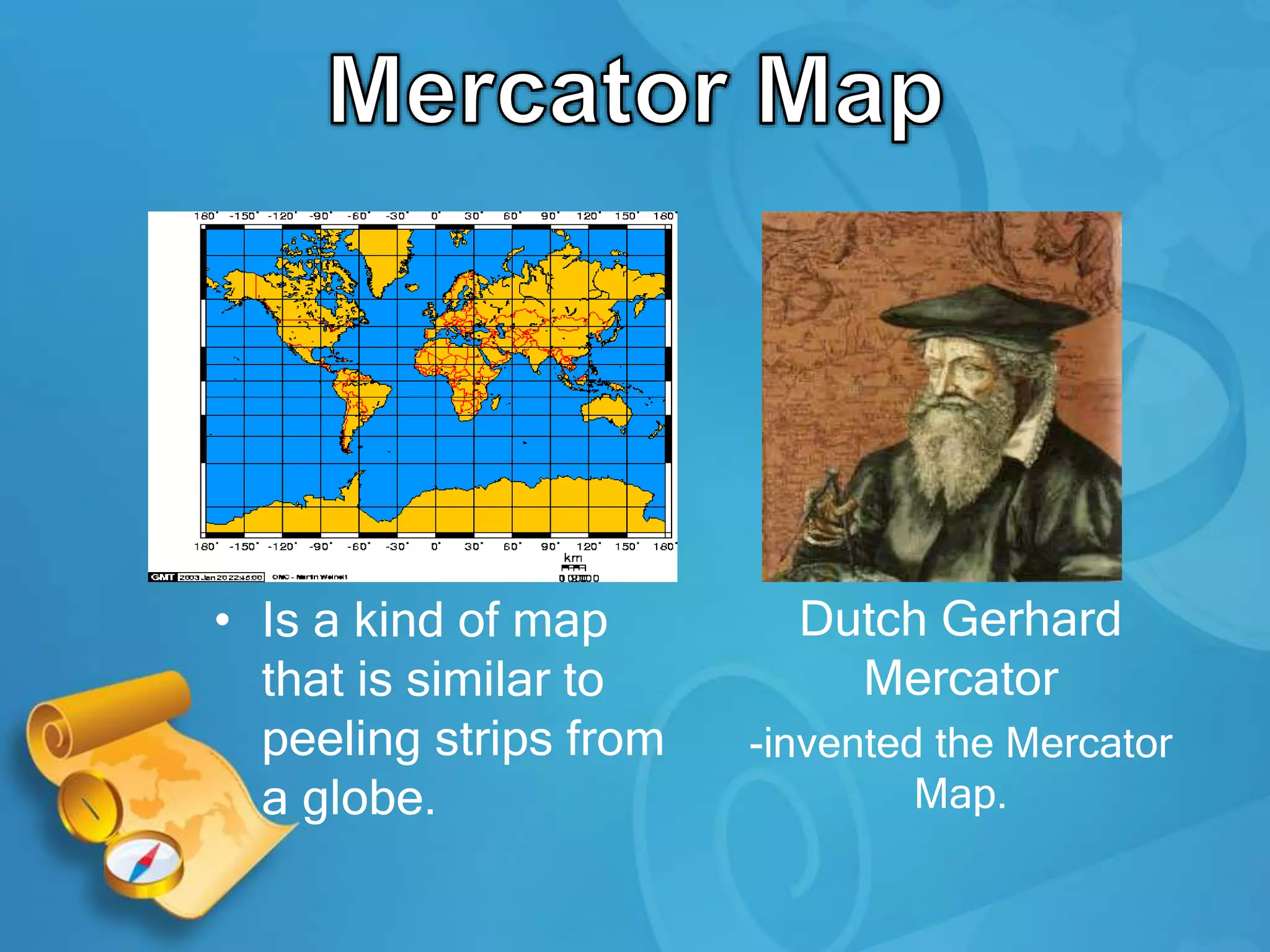
• Is a kind of map
that is similar to
peeling strips from
a globe.
Dutch Gerhard
Mercator
-invented the Mercator
Map.
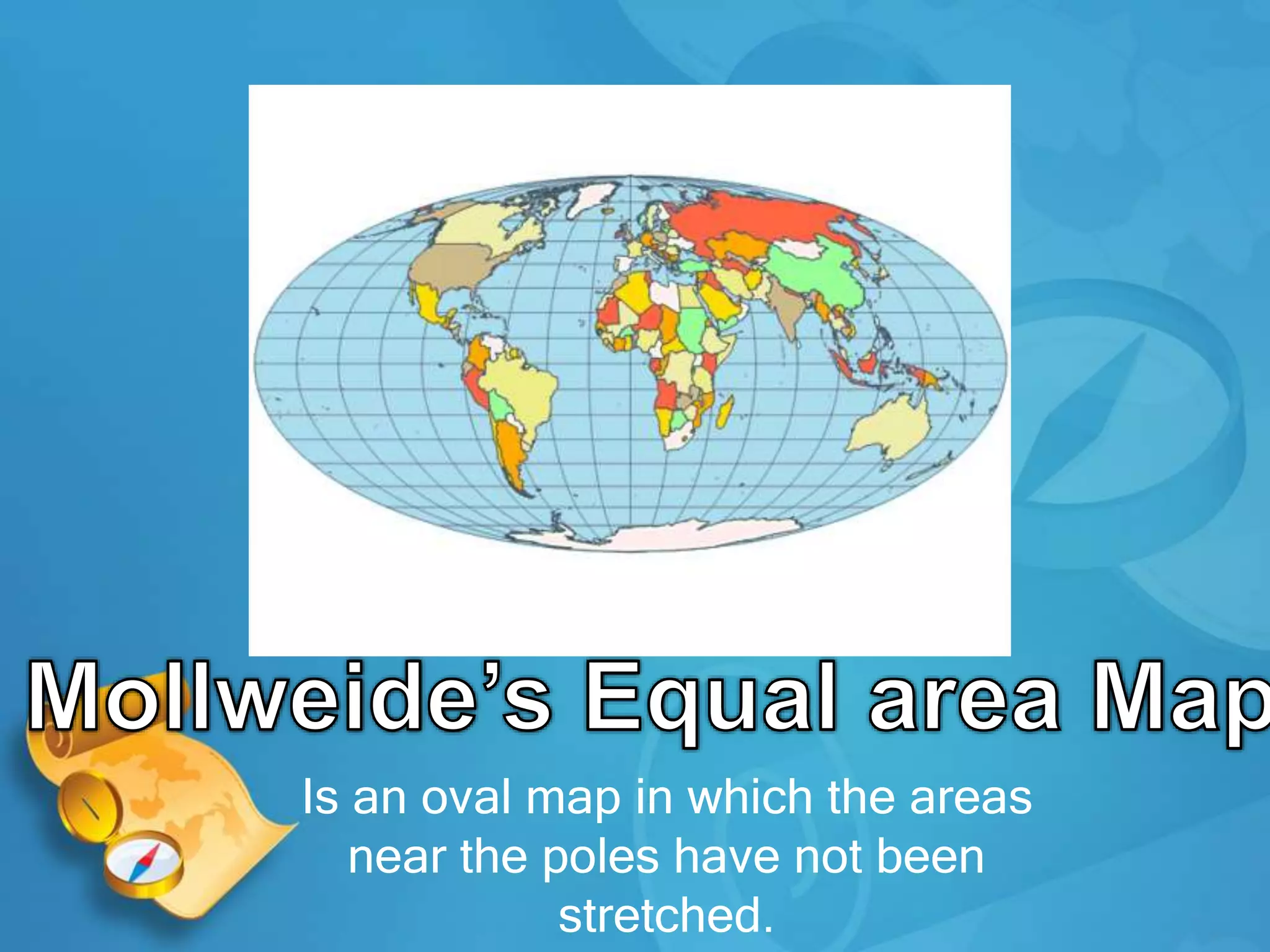
Is an oval map in which the areas
near the poles have not been
stretched.
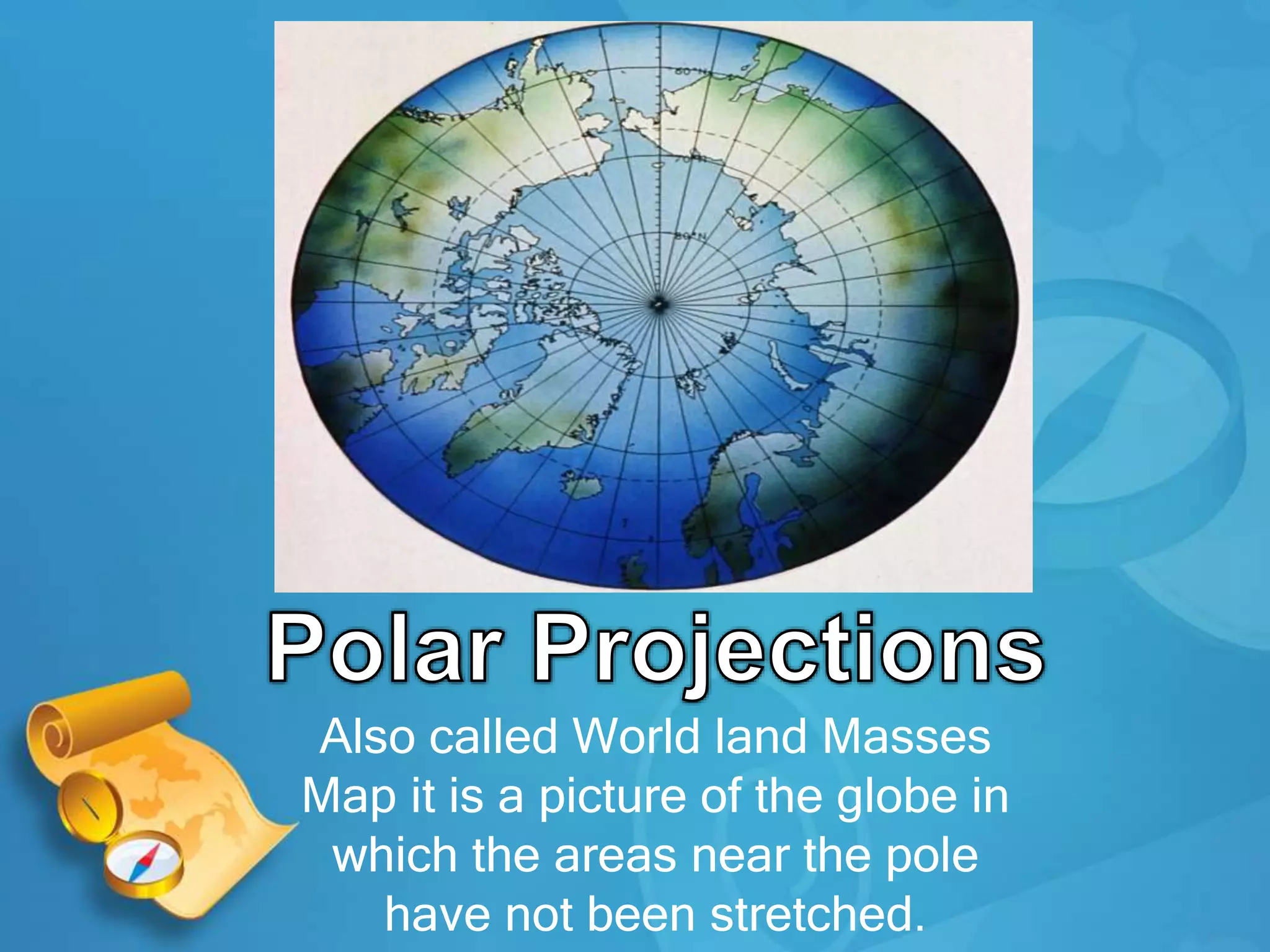
Also called World land Masses
Map it is a picture of the globe in
which the areas near the pole
have not been stretched.
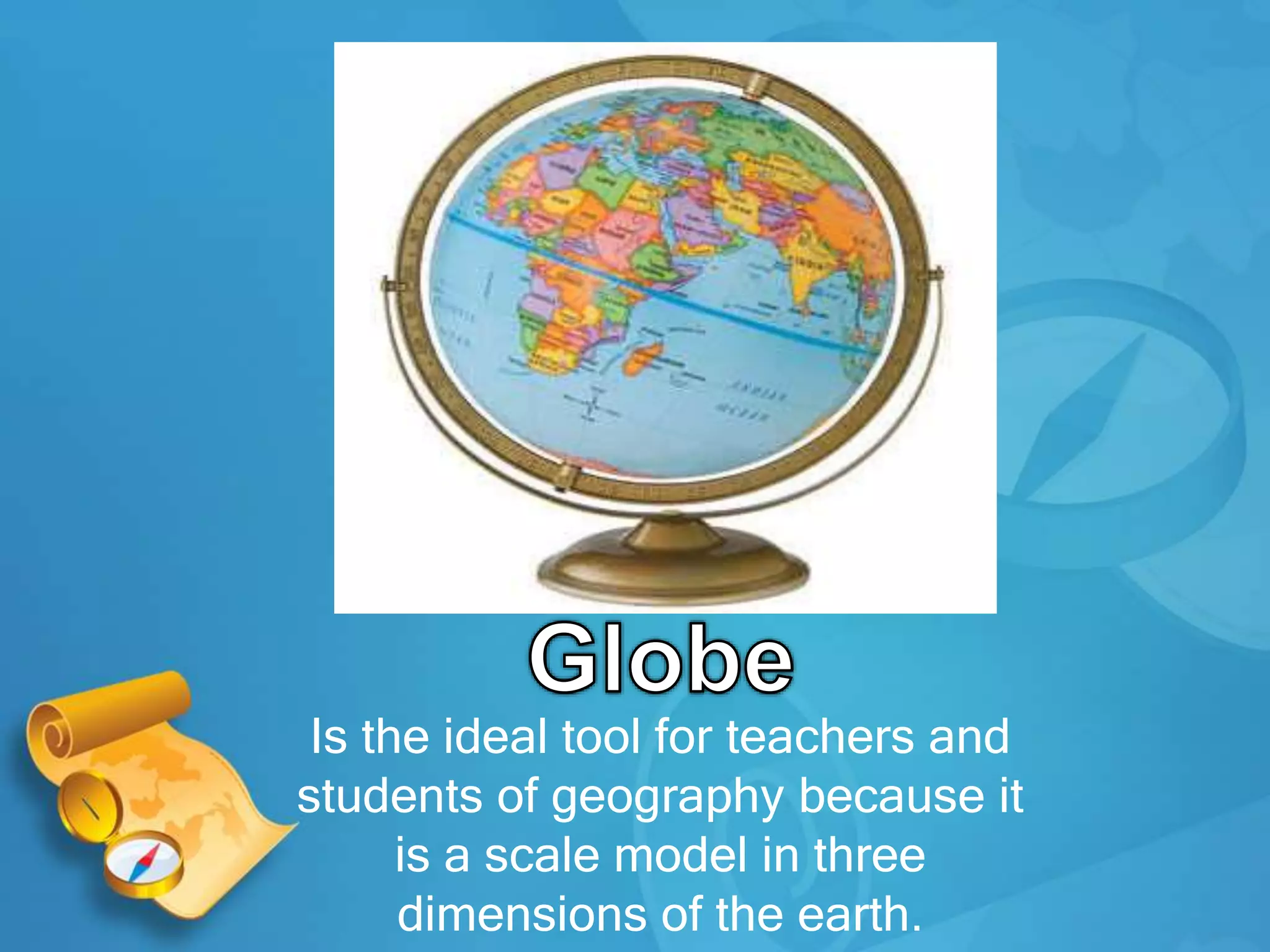
Is the ideal tool for teachers and
students of geography because it
is a scale model in three
dimensions of the earth.
• Is the condition of
the air at any one
time.
• It indicates how
warm or cold, wet
or dry, sunny,
cloudy, stormy or
calm is on a given
day.
• Is the pattern of
changes in
weather over a
number of years.
• Equinox
 is the number of daylight hours and nighttime
hours is exactly equal all over the world.
• Summer Solstice
 it is the longest day of the year to the
Northern hemisphere.
• Winter Solstice
 shortest day and the longest night of the
year.
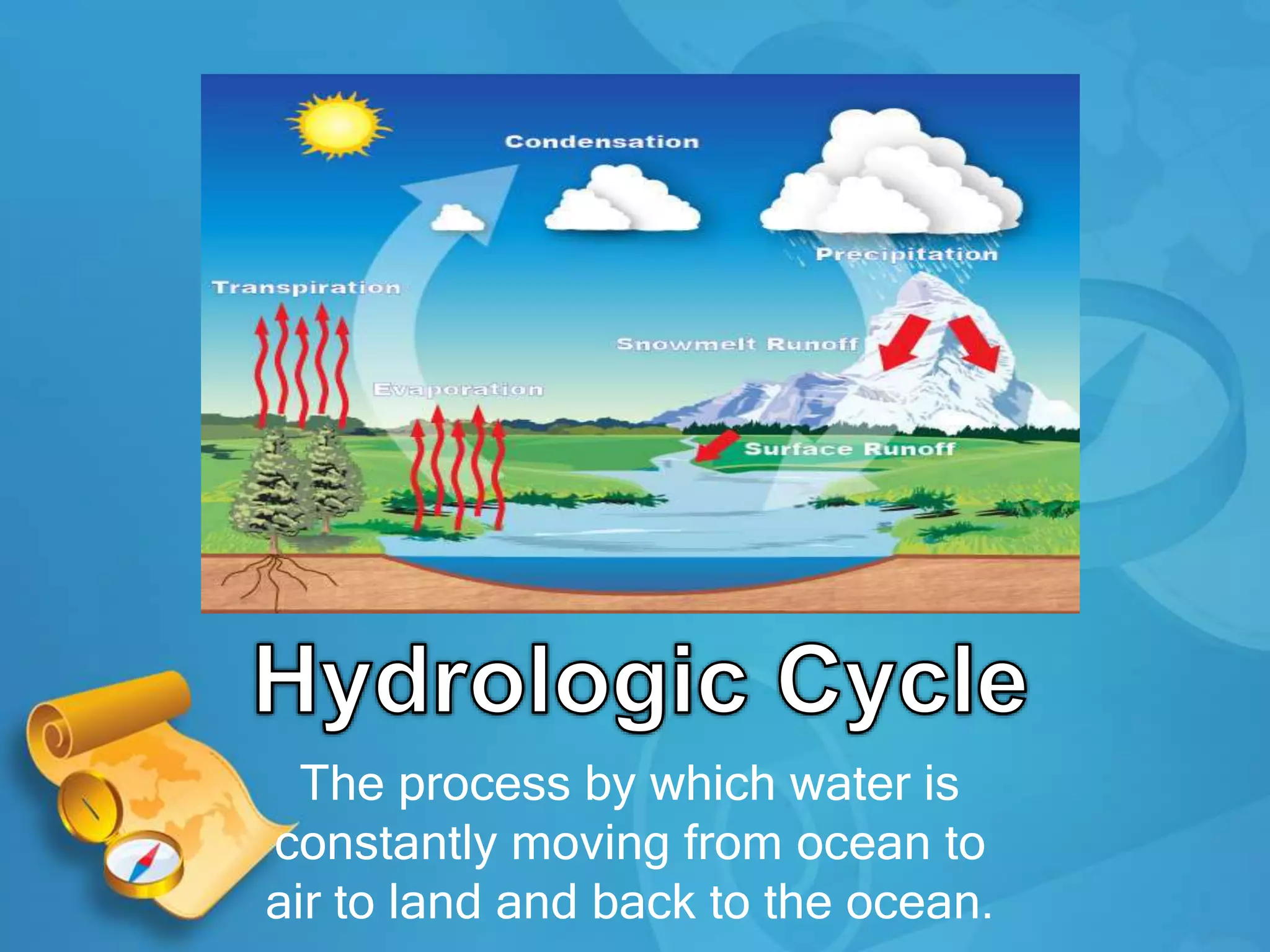
The process by which water is
constantly moving from ocean to
air to land and back to the ocean.
 The process when water or
liquid changes into gas or water
vapor.
 The process of plants emitting water
vapor.
 The process of cooling the air and
the water vapor in it changes into liquid.
 The result of water that falls to earth.
Are found near the equator.
Average temperatures for these
climates are high-over 18 degrees C.
 Have warm temperatures all year.
Have little rainfall.
Very dry, or arid climate, little or no
rain falls during the year.
Are classified into three different
types:
a. Humid Oceanic Cold Climate
b. Humid Continental Cold Climate
c. Sub-artic Climate
 Are classified into cool-summer
polar and year-round polar climates.
 Are found in mountain regions.
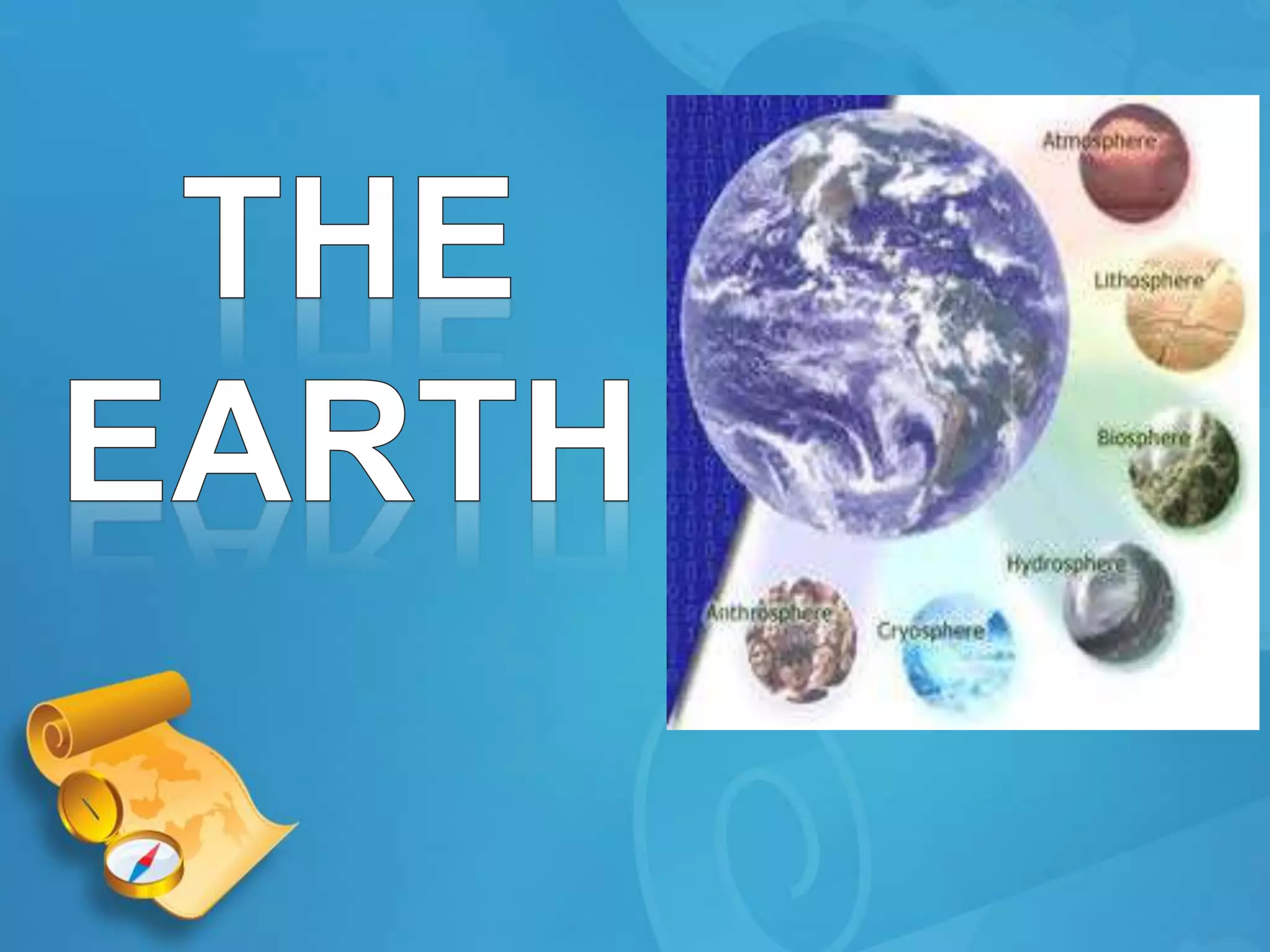
Also called rock sphere.
It is the solid portion.
 Also called water sphere because it
is made up of liquid portion.
 It is the air portion.
 Is a line drawn around the globe that
divides the north & south parts of the
earth.
 Are the lines drawn around the
global parallel to each other showing
the position of a place north or south of
the equator.
 Tells how far east or west is and is
measured from the 0 degree line called
the prime meridian, to a line numbered
180 degrees.
 Are the parallel lines of latitude and
meridians of longitude cross upon each
other around the globe.

Maps, Solar System, Earth and World's Climate

  • 2.
    • Is therepresentation or picture of all or part of the surface of the earth. • The best guides & sources of general information.
  • 4.
    Is the mostcommon map used by geographers.
  • 5.
    Is the outlineof a place to represent the shape & size of land & water areas.
  • 6.
    • Is akind of map that is similar to peeling strips from a globe. Dutch Gerhard Mercator -invented the Mercator Map.
  • 7.
    Is an ovalmap in which the areas near the poles have not been stretched.
  • 8.
    Also called Worldland Masses Map it is a picture of the globe in which the areas near the pole have not been stretched.
  • 9.
    Is the idealtool for teachers and students of geography because it is a scale model in three dimensions of the earth.
  • 11.
    • Is thecondition of the air at any one time. • It indicates how warm or cold, wet or dry, sunny, cloudy, stormy or calm is on a given day. • Is the pattern of changes in weather over a number of years.
  • 12.
    • Equinox  isthe number of daylight hours and nighttime hours is exactly equal all over the world. • Summer Solstice  it is the longest day of the year to the Northern hemisphere. • Winter Solstice  shortest day and the longest night of the year.
  • 14.
    The process bywhich water is constantly moving from ocean to air to land and back to the ocean.
  • 15.
     The processwhen water or liquid changes into gas or water vapor.
  • 16.
     The processof plants emitting water vapor.
  • 17.
     The processof cooling the air and the water vapor in it changes into liquid.
  • 18.
     The resultof water that falls to earth.
  • 20.
    Are found nearthe equator. Average temperatures for these climates are high-over 18 degrees C.
  • 21.
     Have warmtemperatures all year.
  • 22.
    Have little rainfall. Verydry, or arid climate, little or no rain falls during the year.
  • 23.
    Are classified intothree different types: a. Humid Oceanic Cold Climate b. Humid Continental Cold Climate c. Sub-artic Climate
  • 24.
     Are classifiedinto cool-summer polar and year-round polar climates.
  • 25.
     Are foundin mountain regions.
  • 27.
    Also called rocksphere. It is the solid portion.
  • 28.
     Also calledwater sphere because it is made up of liquid portion.
  • 29.
     It isthe air portion.
  • 30.
     Is aline drawn around the globe that divides the north & south parts of the earth.
  • 31.
     Are thelines drawn around the global parallel to each other showing the position of a place north or south of the equator.
  • 32.
     Tells howfar east or west is and is measured from the 0 degree line called the prime meridian, to a line numbered 180 degrees.
  • 33.
     Are theparallel lines of latitude and meridians of longitude cross upon each other around the globe.