Created by tbonnar.
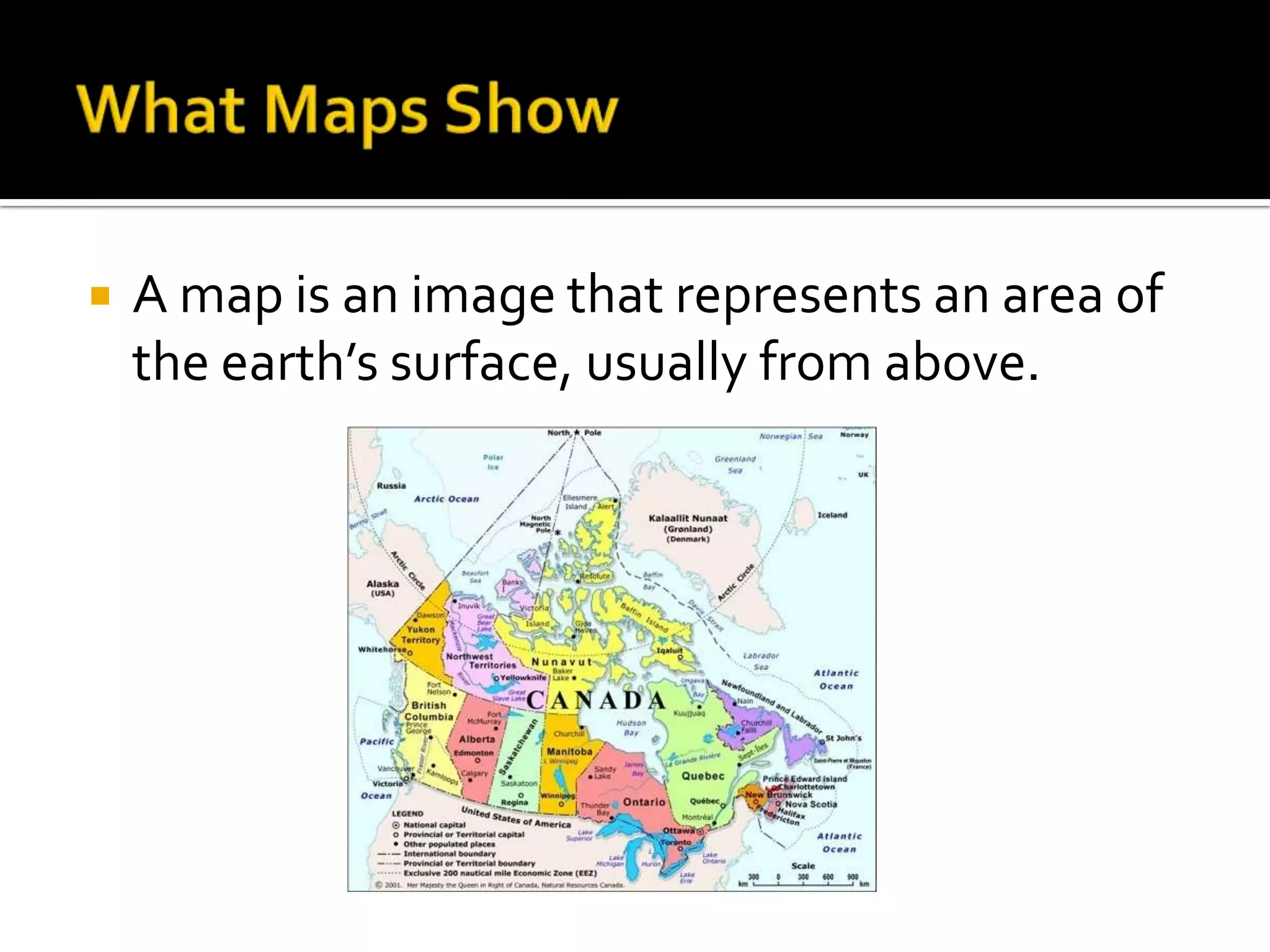
   A map is an image that represents an area of
    the earth’s surface, usually from above.
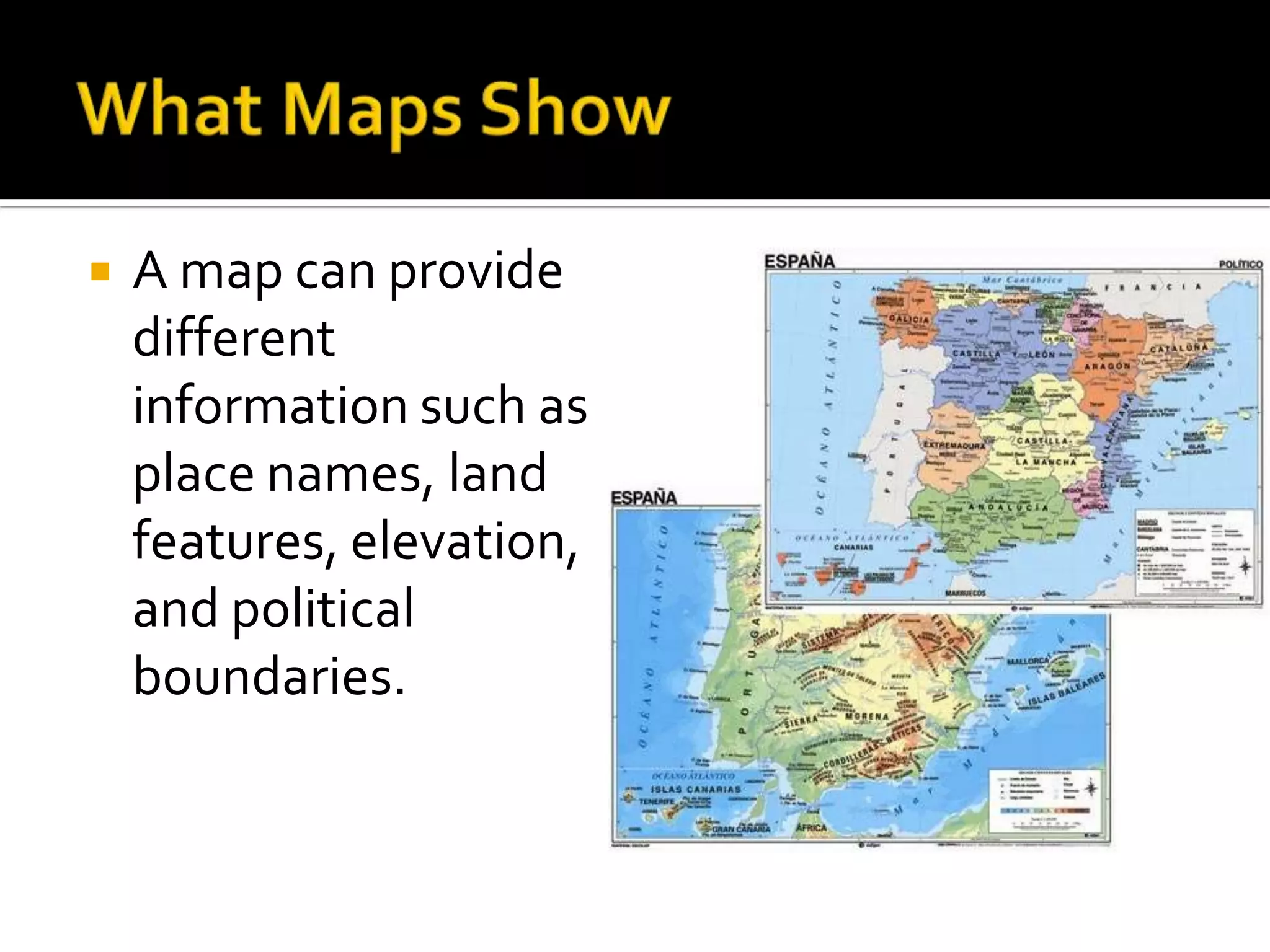
   A map can provide
    different
    information such as
    place names, land
    features, elevation,
    and political
    boundaries.
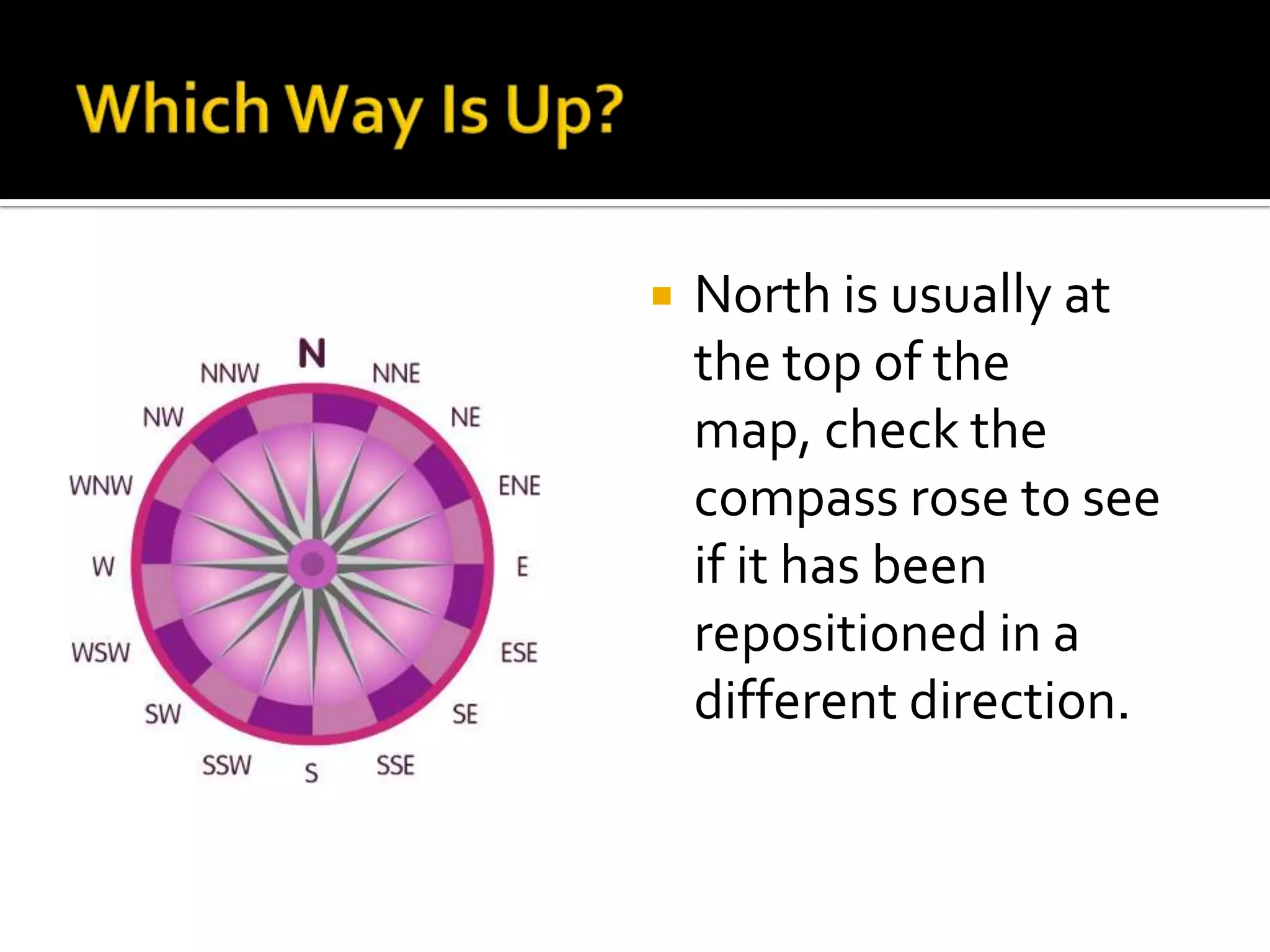
   North is usually at
    the top of the
    map, check the
    compass rose to see
    if it has been
    repositioned in a
    different direction.
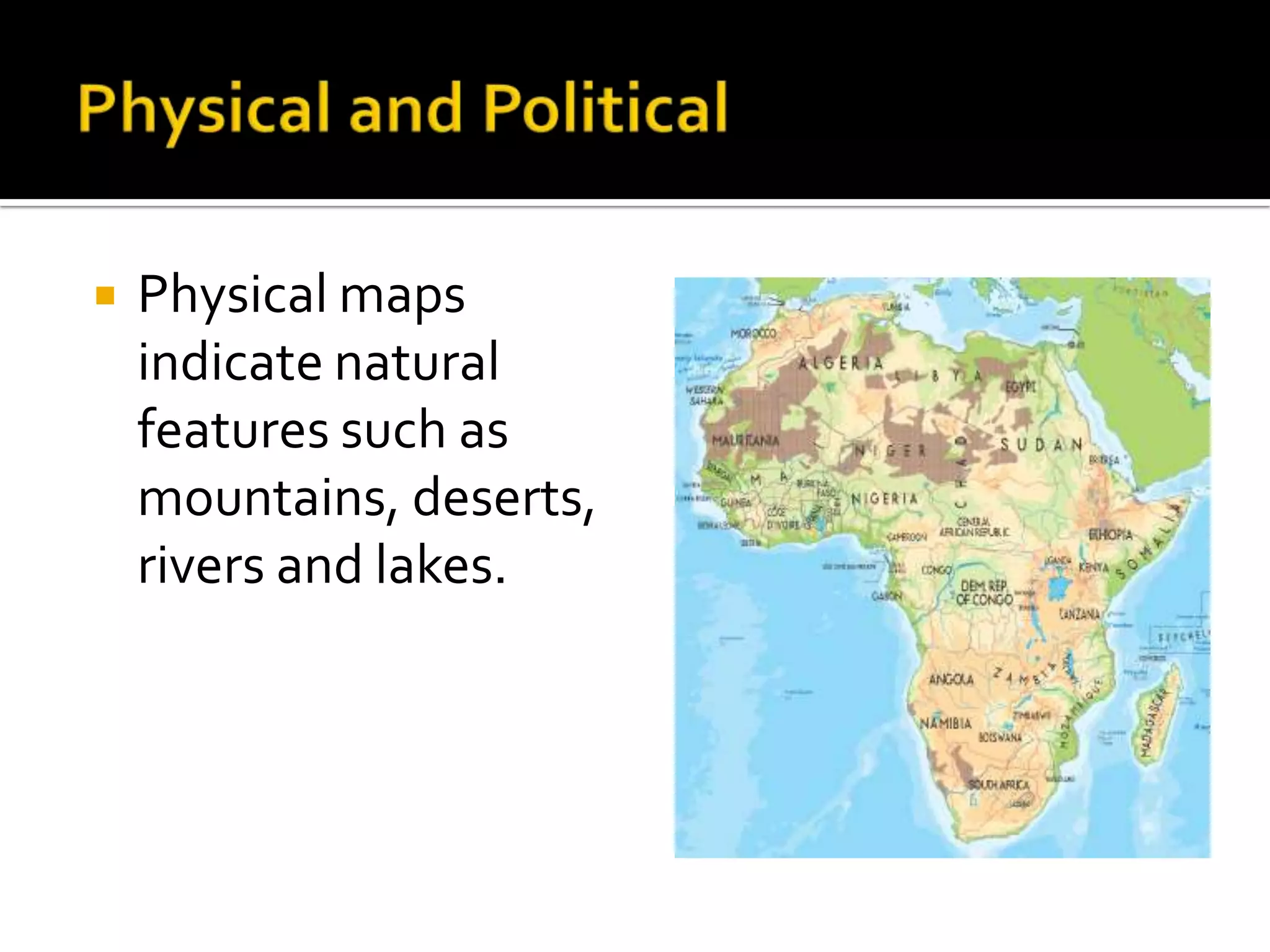
   Physical maps
    indicate natural
    features such as
    mountains, deserts,
    rivers and lakes.
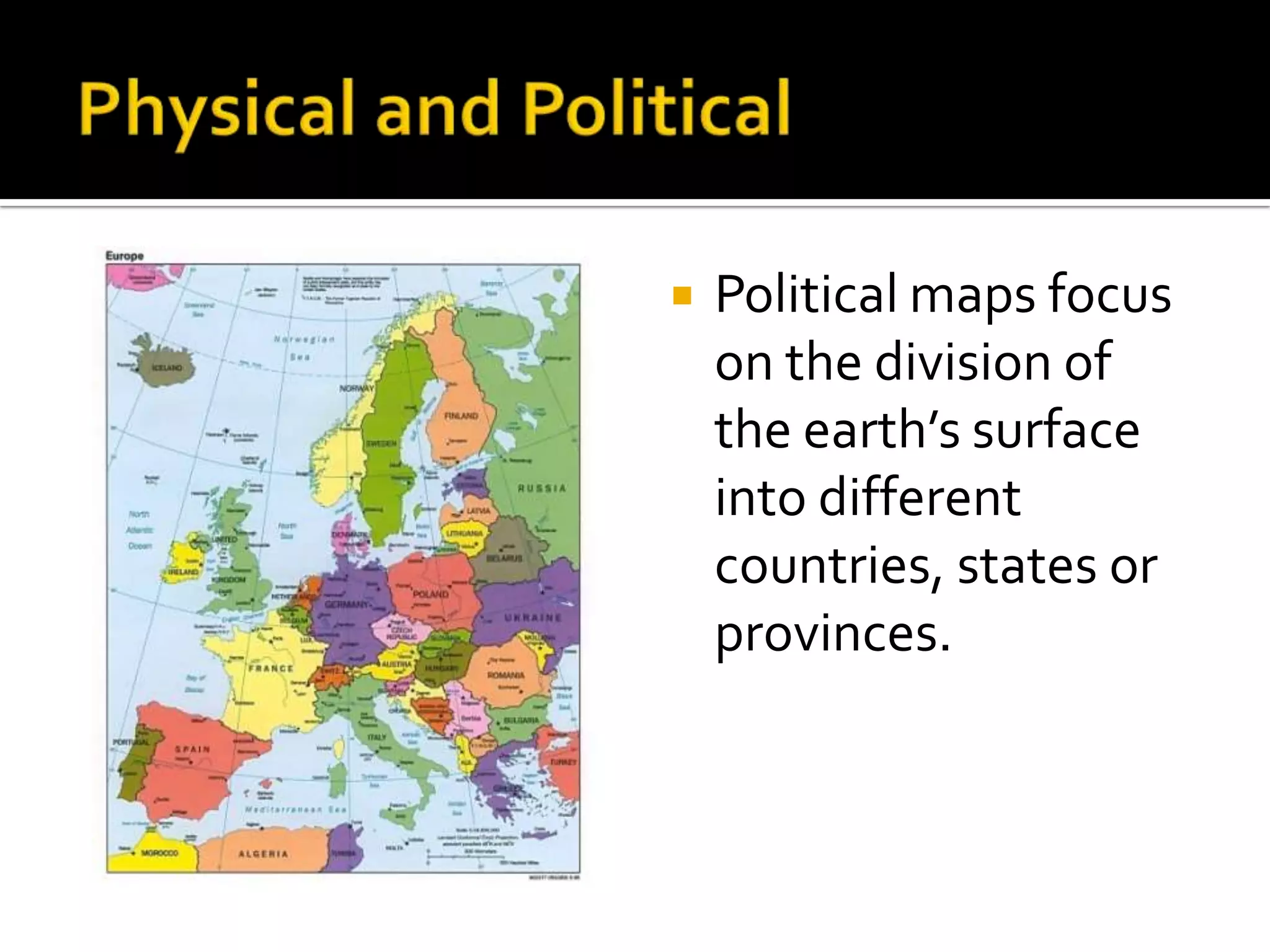
   Political maps focus
    on the division of
    the earth’s surface
    into different
    countries, states or
    provinces.
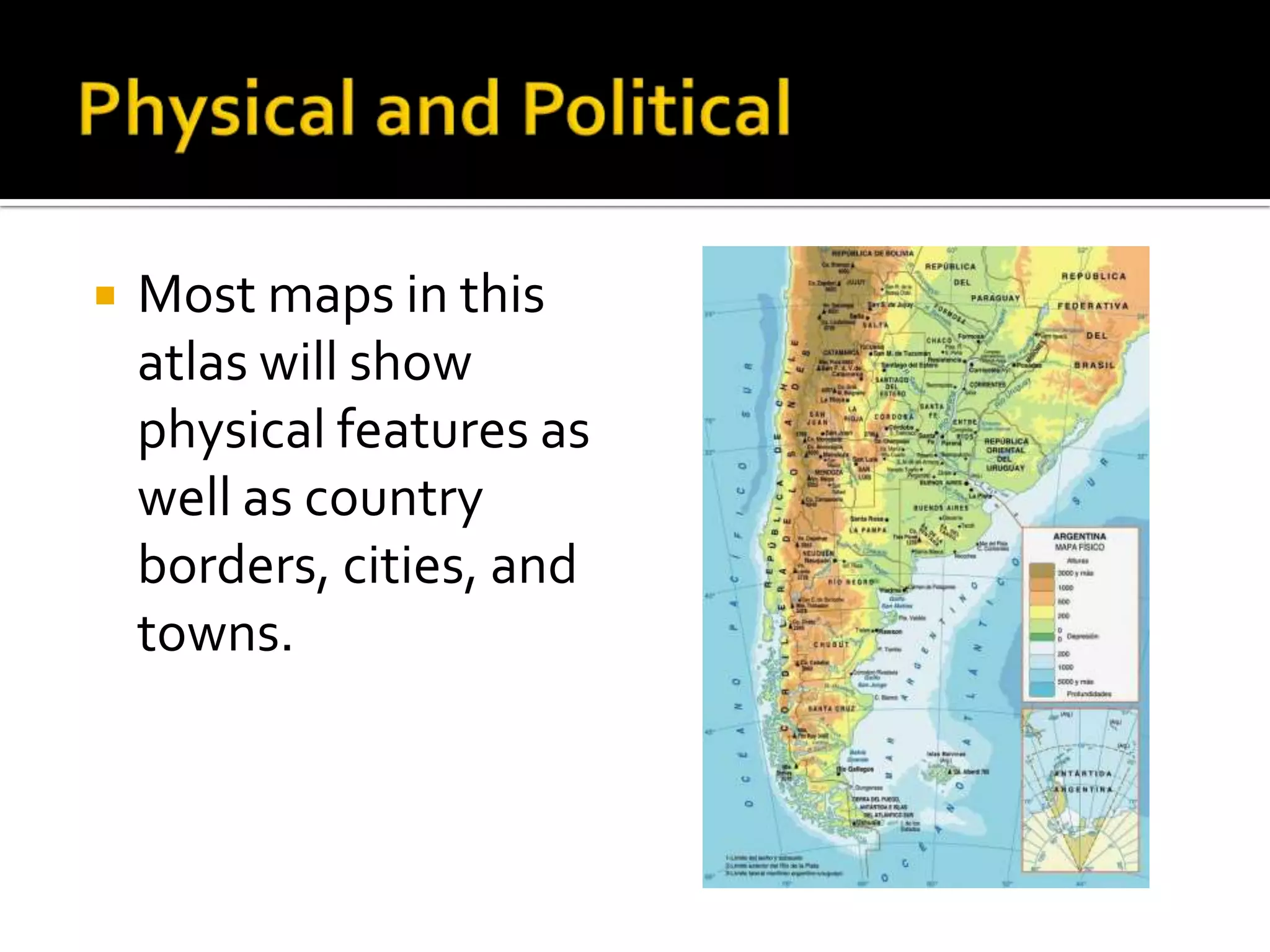
   Most maps in this
    atlas will show
    physical features as
    well as country
    borders, cities, and
    towns.
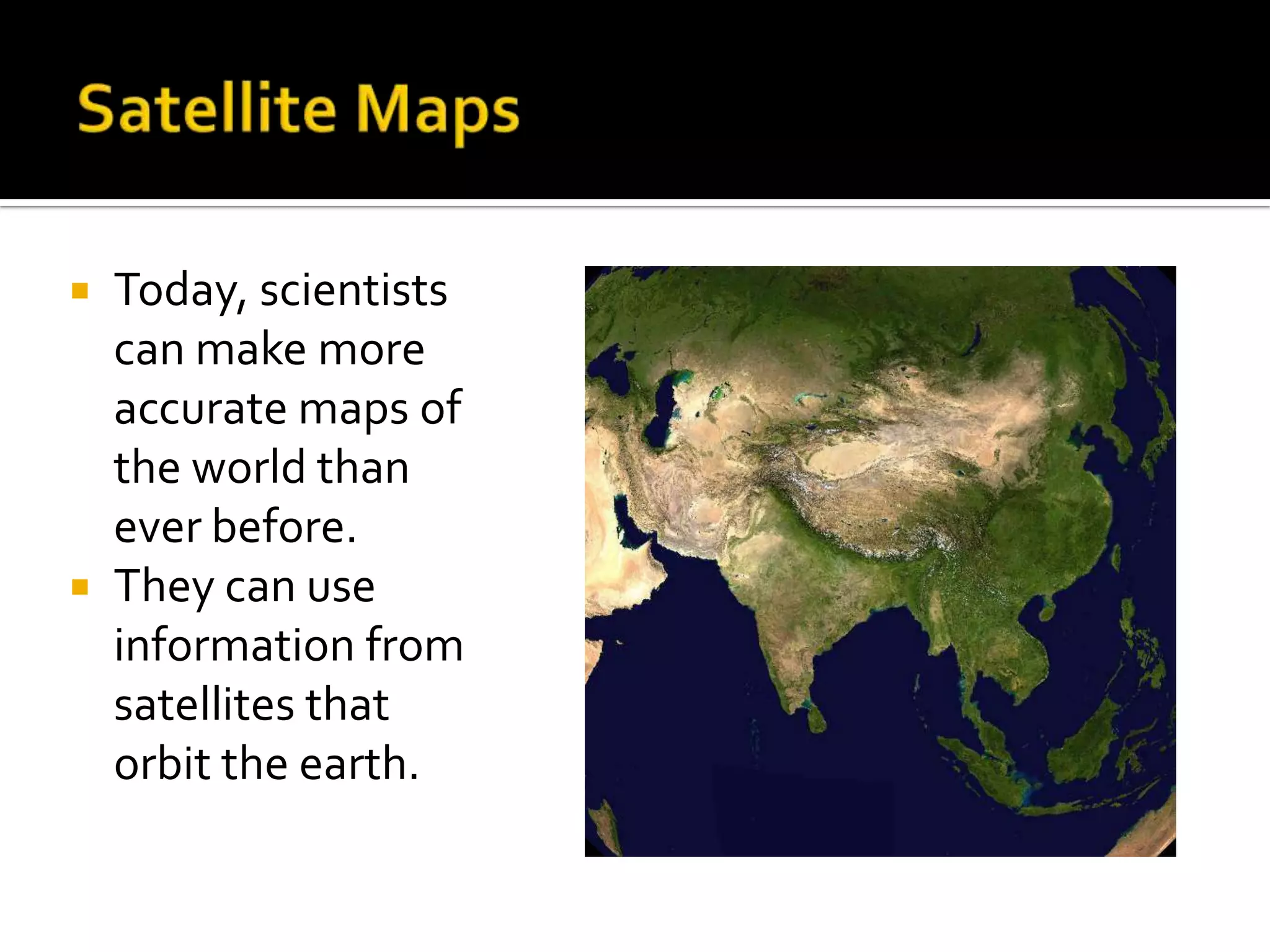
 Today, scientists
  can make more
  accurate maps of
  the world than
  ever before.
 They can use
  information from
  satellites that
  orbit the earth.
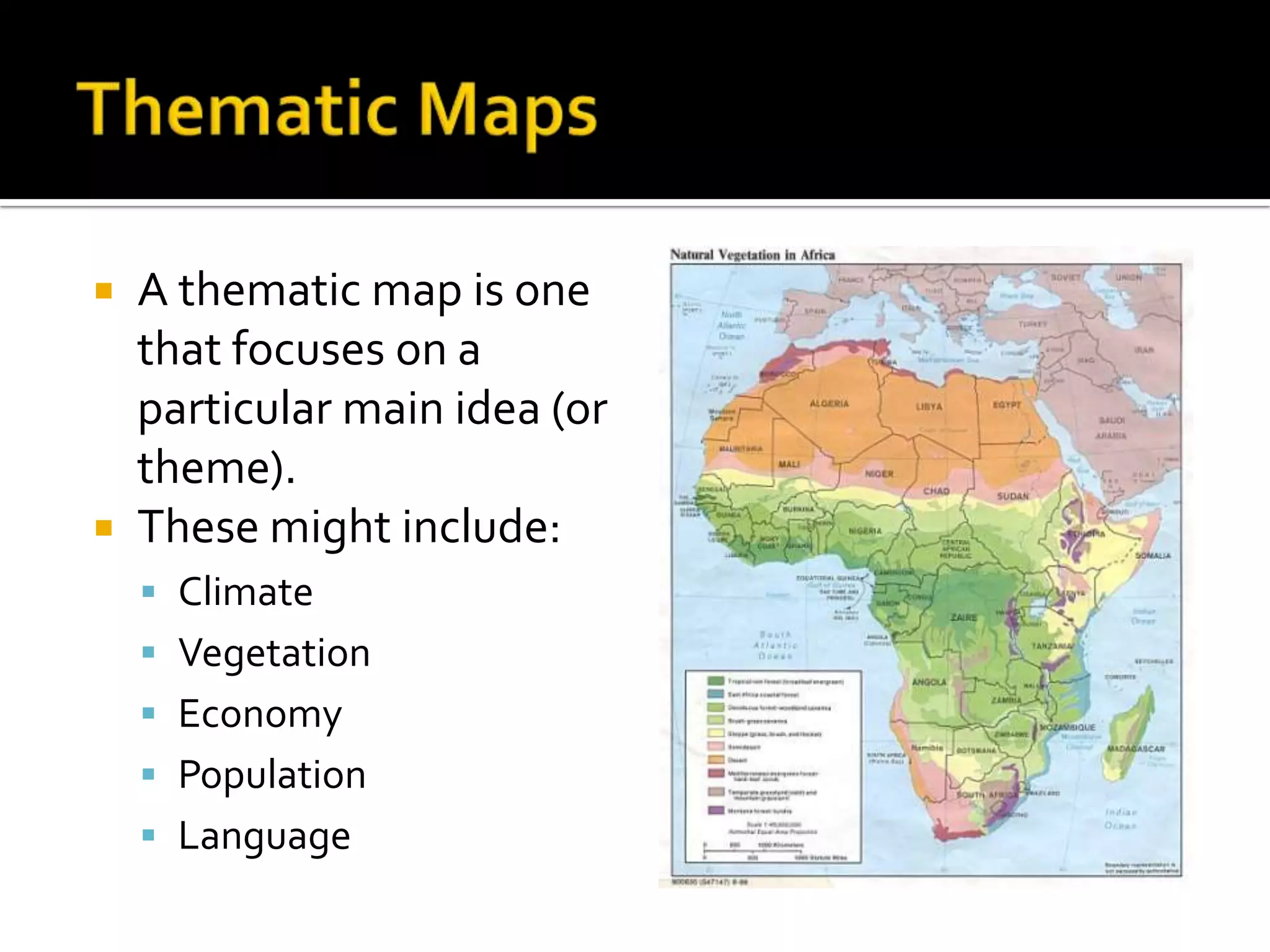
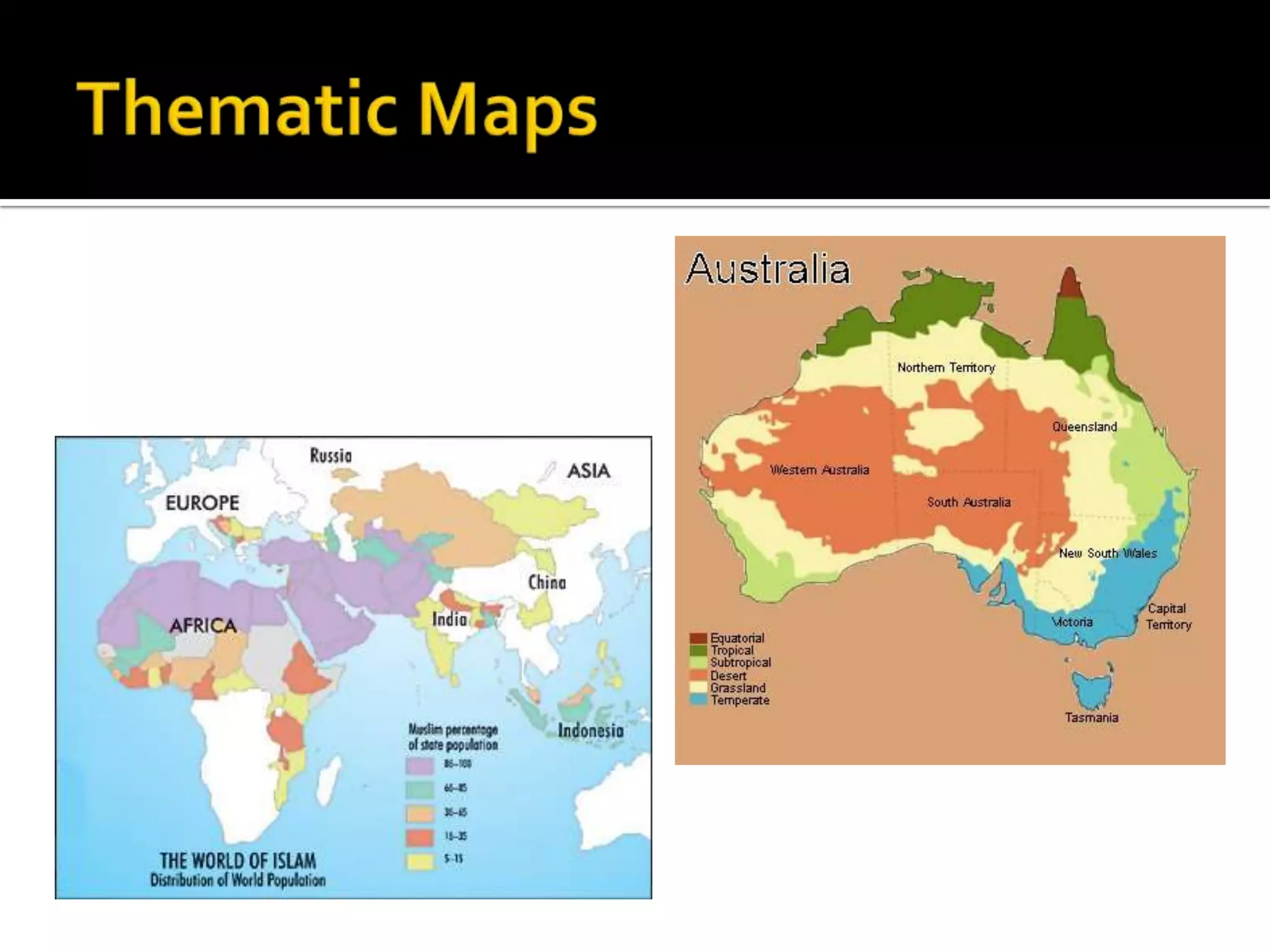
 A thematic map is one
  that focuses on a
  particular main idea (or
  theme).
 These might include:
     Climate
     Vegetation
     Economy
     Population
     Language
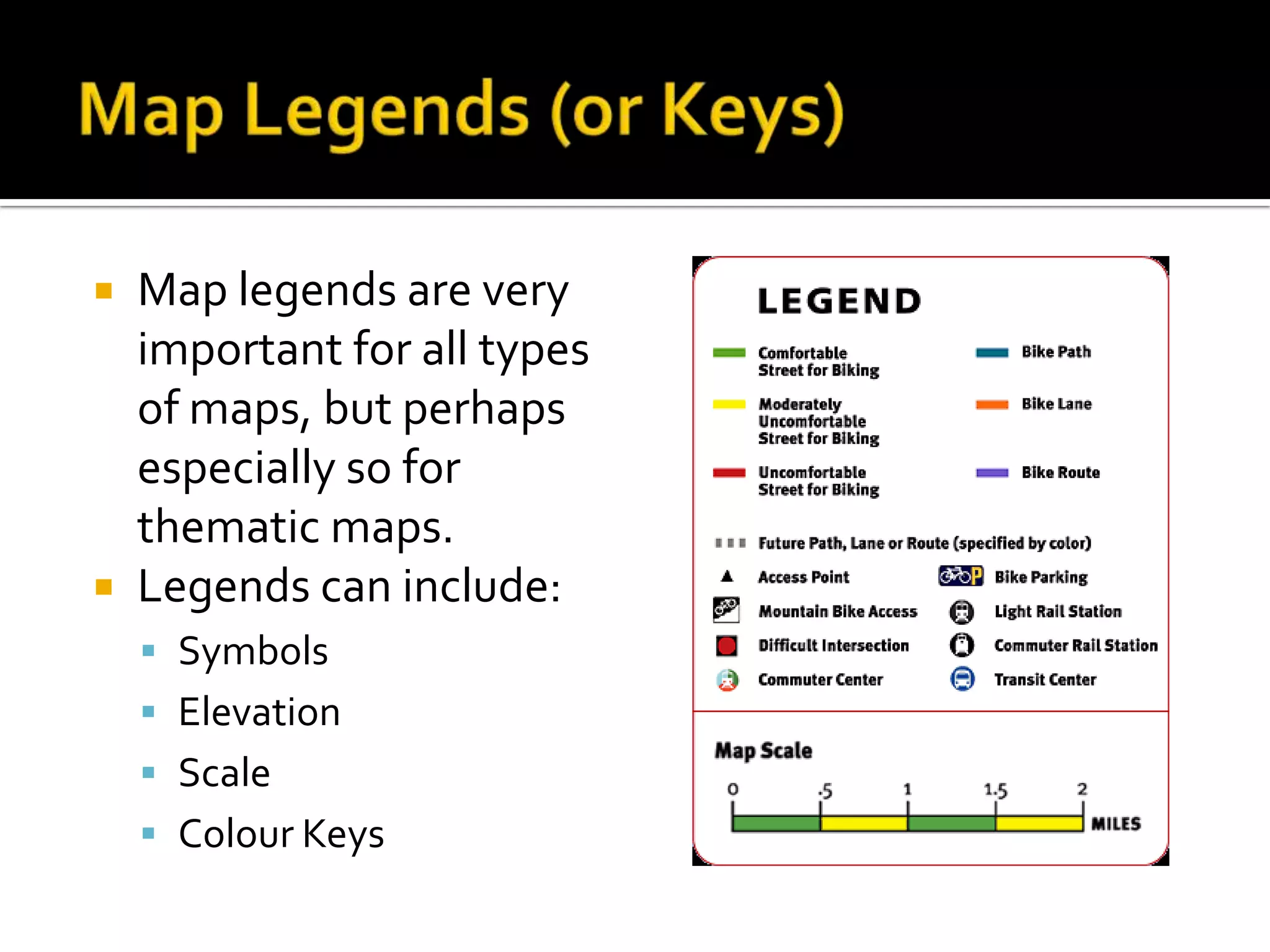
 Map legends are very
  important for all types
  of maps, but perhaps
  especially so for
  thematic maps.
 Legends can include:
     Symbols
     Elevation
     Scale
     Colour Keys
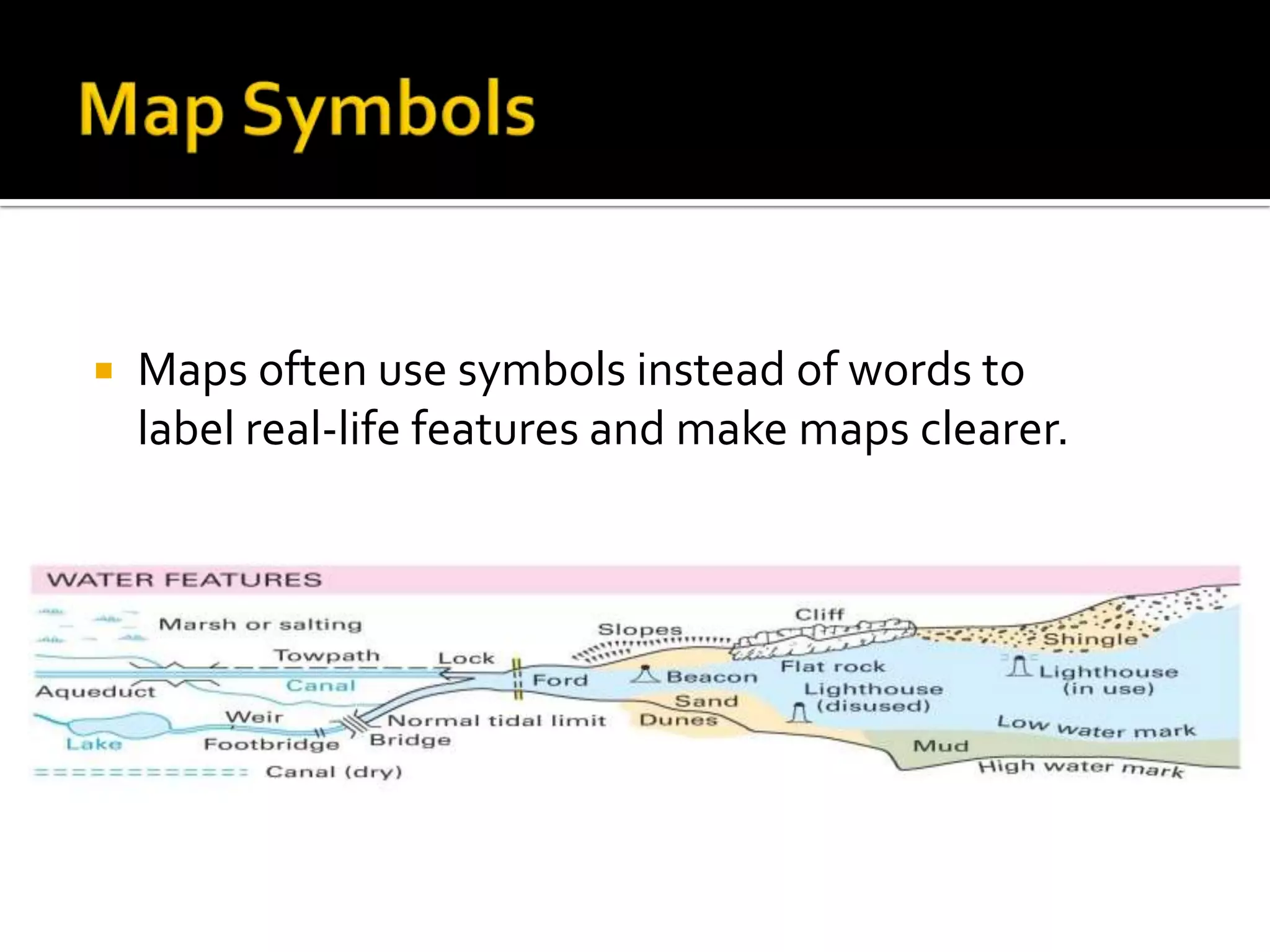
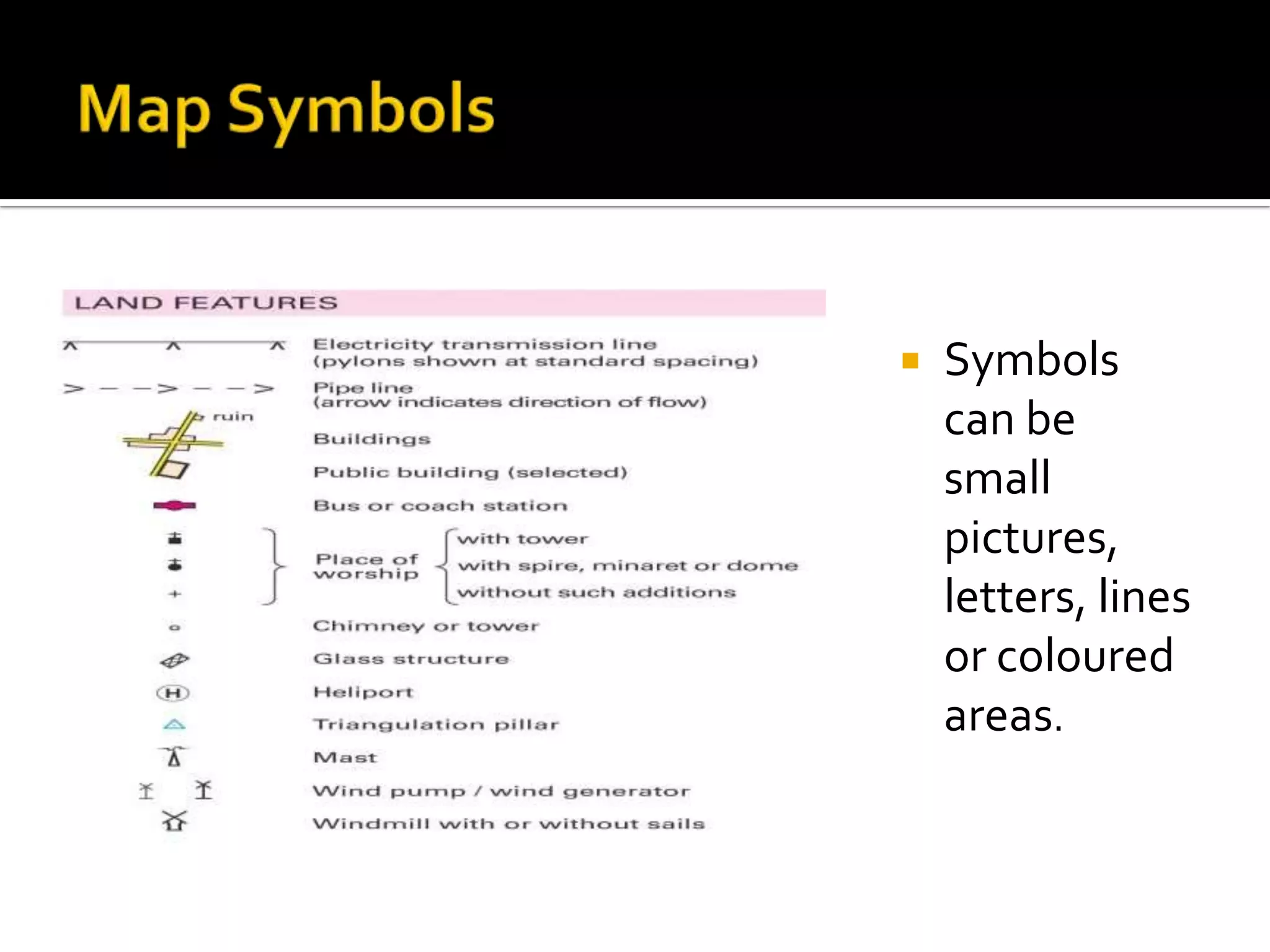
   Maps often use symbols instead of words to
    label real-life features and make maps clearer.
   Symbols
    can be
    small
    pictures,
    letters, lines
    or coloured
    areas.
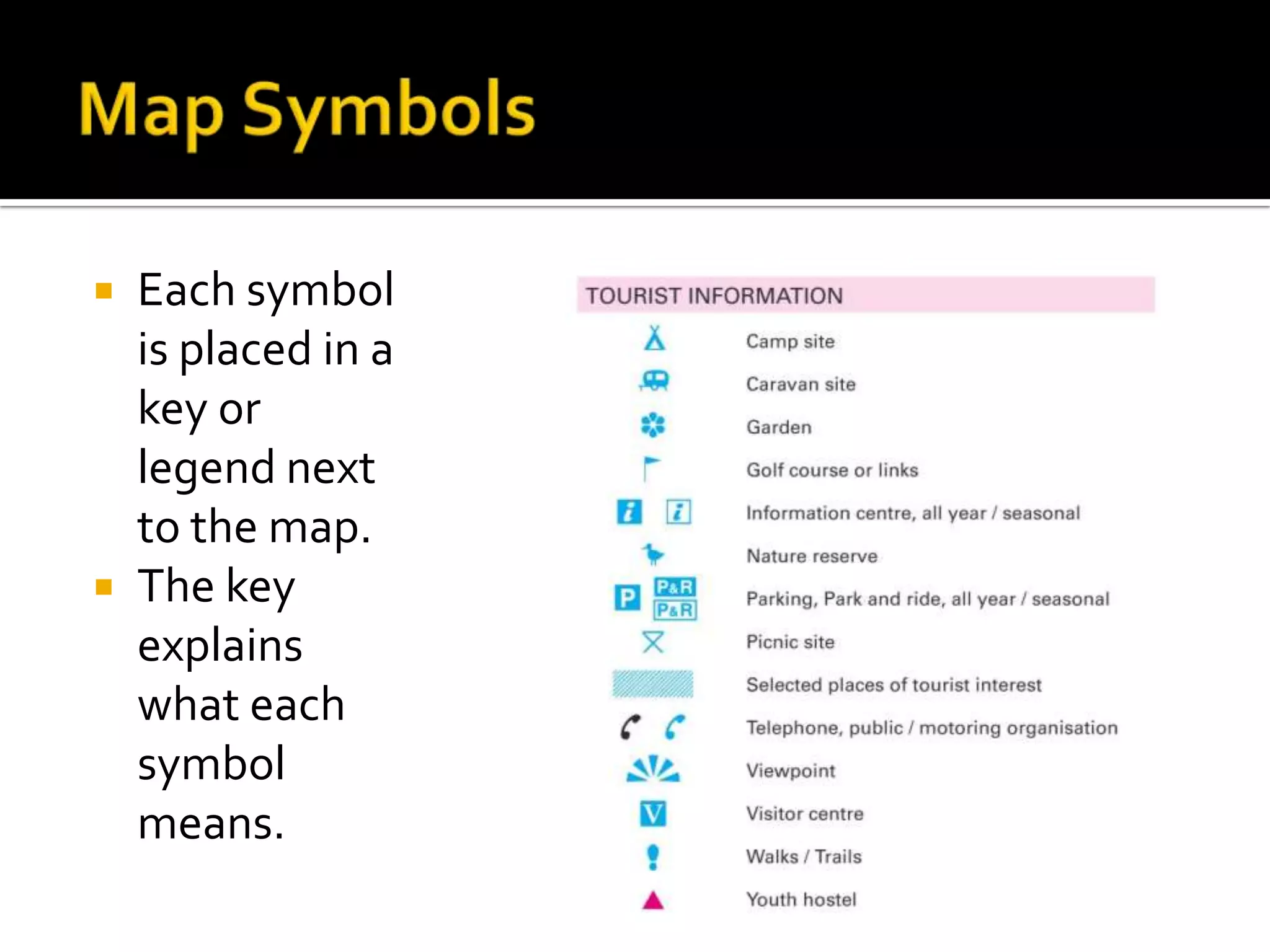
 Each symbol
  is placed in a
  key or
  legend next
  to the map.
 The key
  explains
  what each
  symbol
  means.
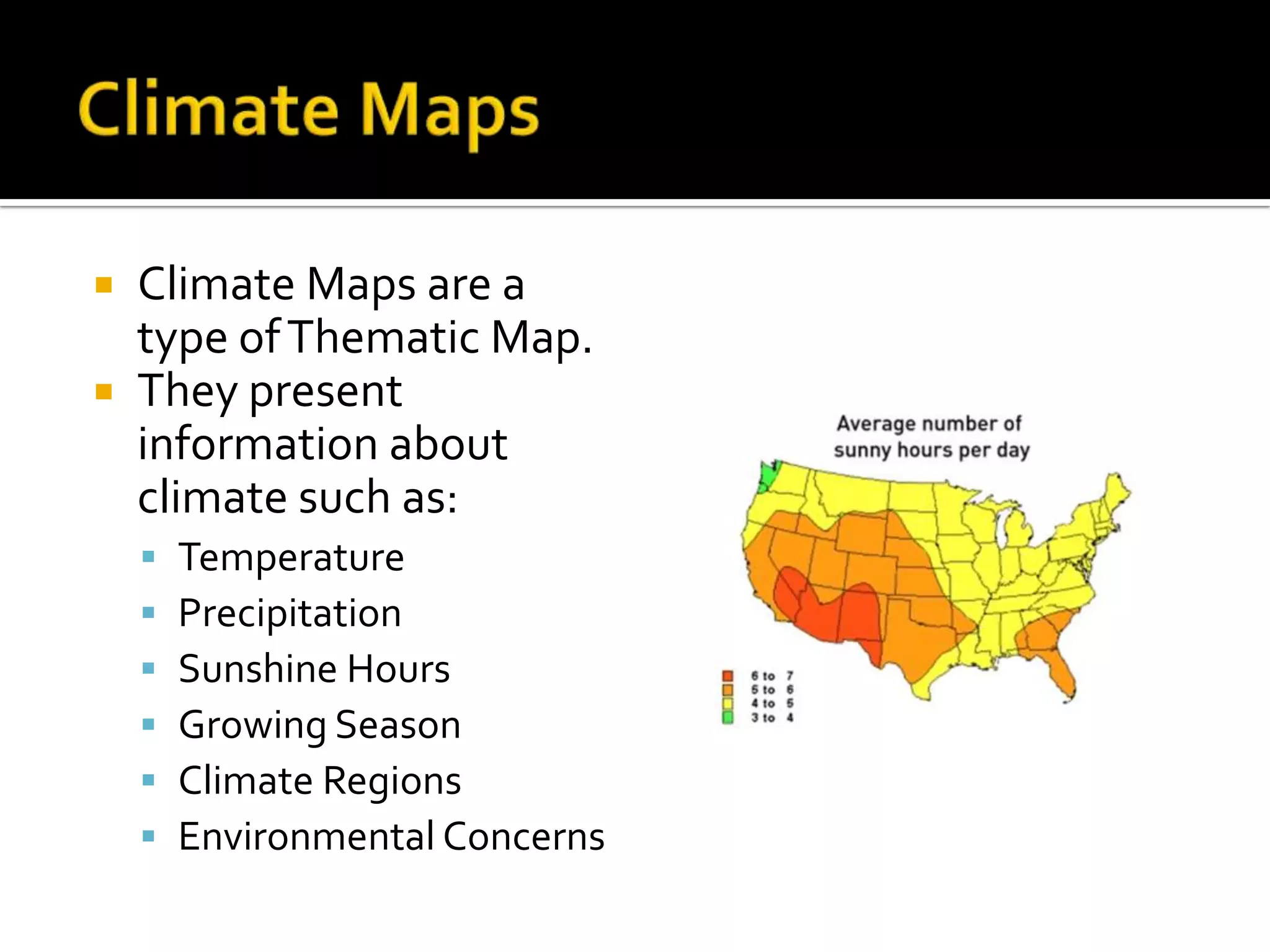
 Climate Maps are a
  type of Thematic Map.
 They present
  information about
  climate such as:
       Temperature
       Precipitation
       Sunshine Hours
       Growing Season
       Climate Regions
       Environmental Concerns
   Climate is the
    overall weather
    pattern of a region.

   The two major
    aspects of climate
    are temperature
    and precipitation.
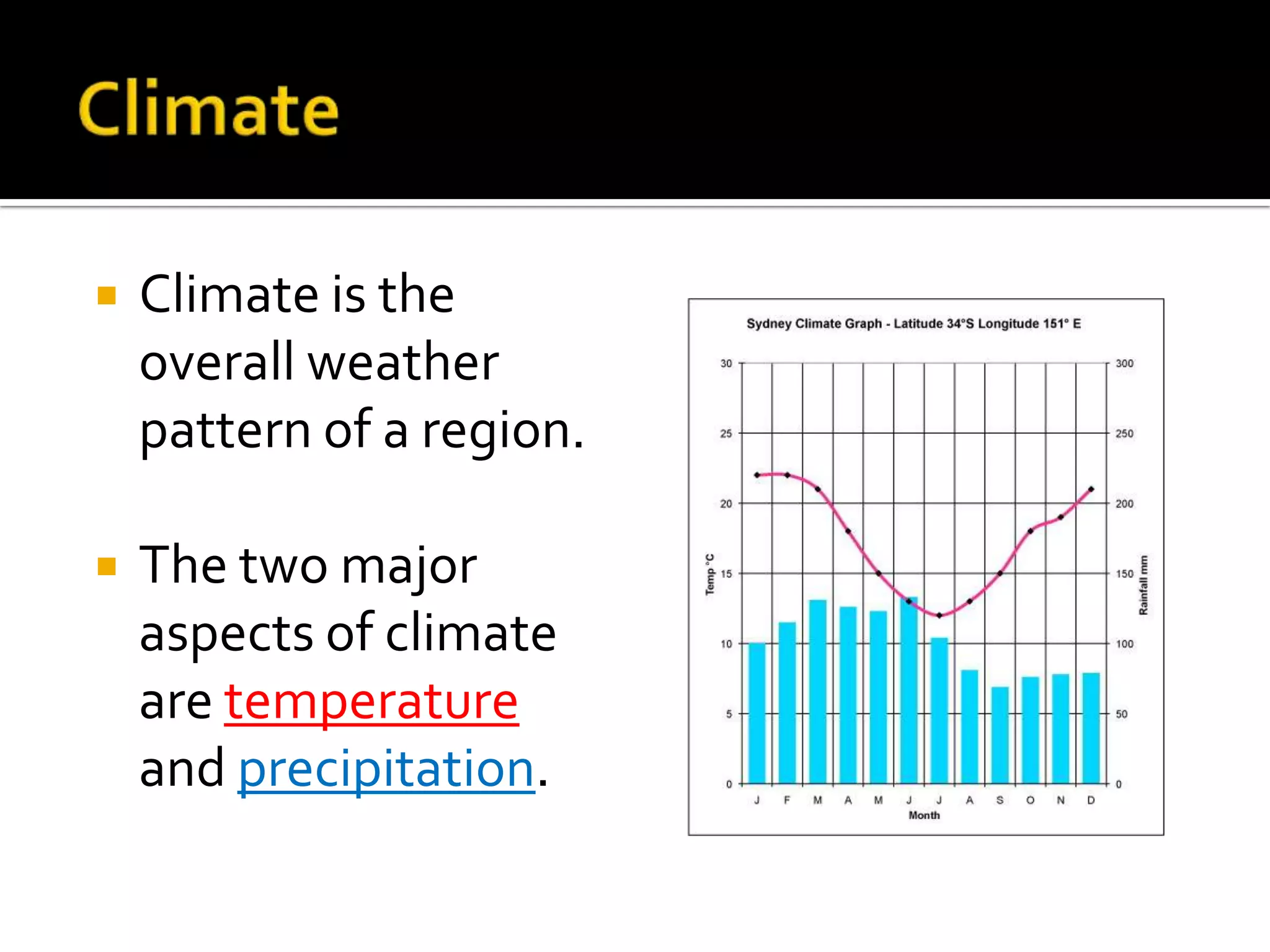
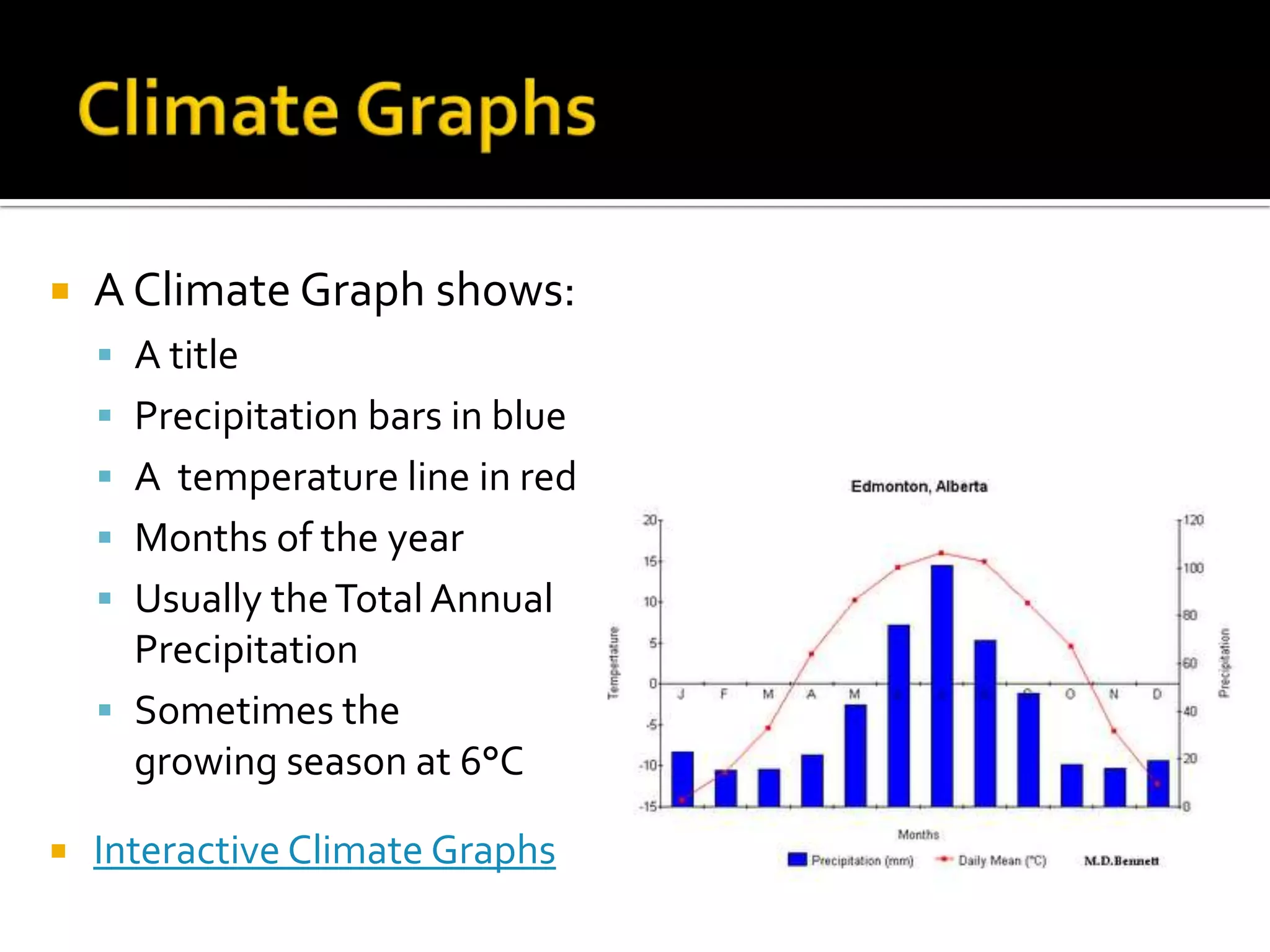
   A Climate Graph shows:
     A title
     Precipitation bars in blue
     A temperature line in red
     Months of the year
     Usually the Total Annual
      Precipitation
     Sometimes the
      growing season at 6°C

   Interactive Climate Graphs
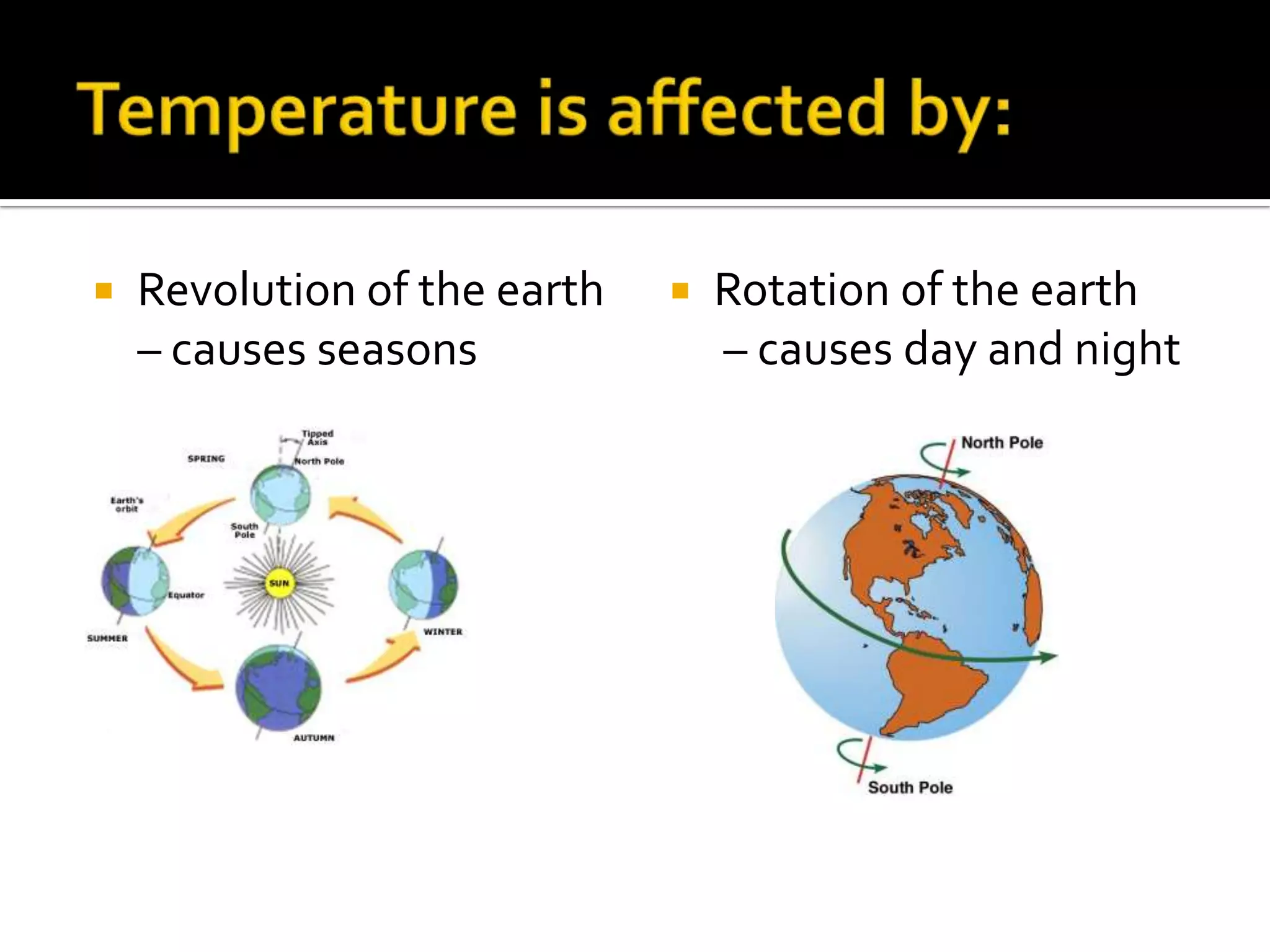
   Revolution of the earth      Rotation of the earth
    – causes seasons              – causes day and night
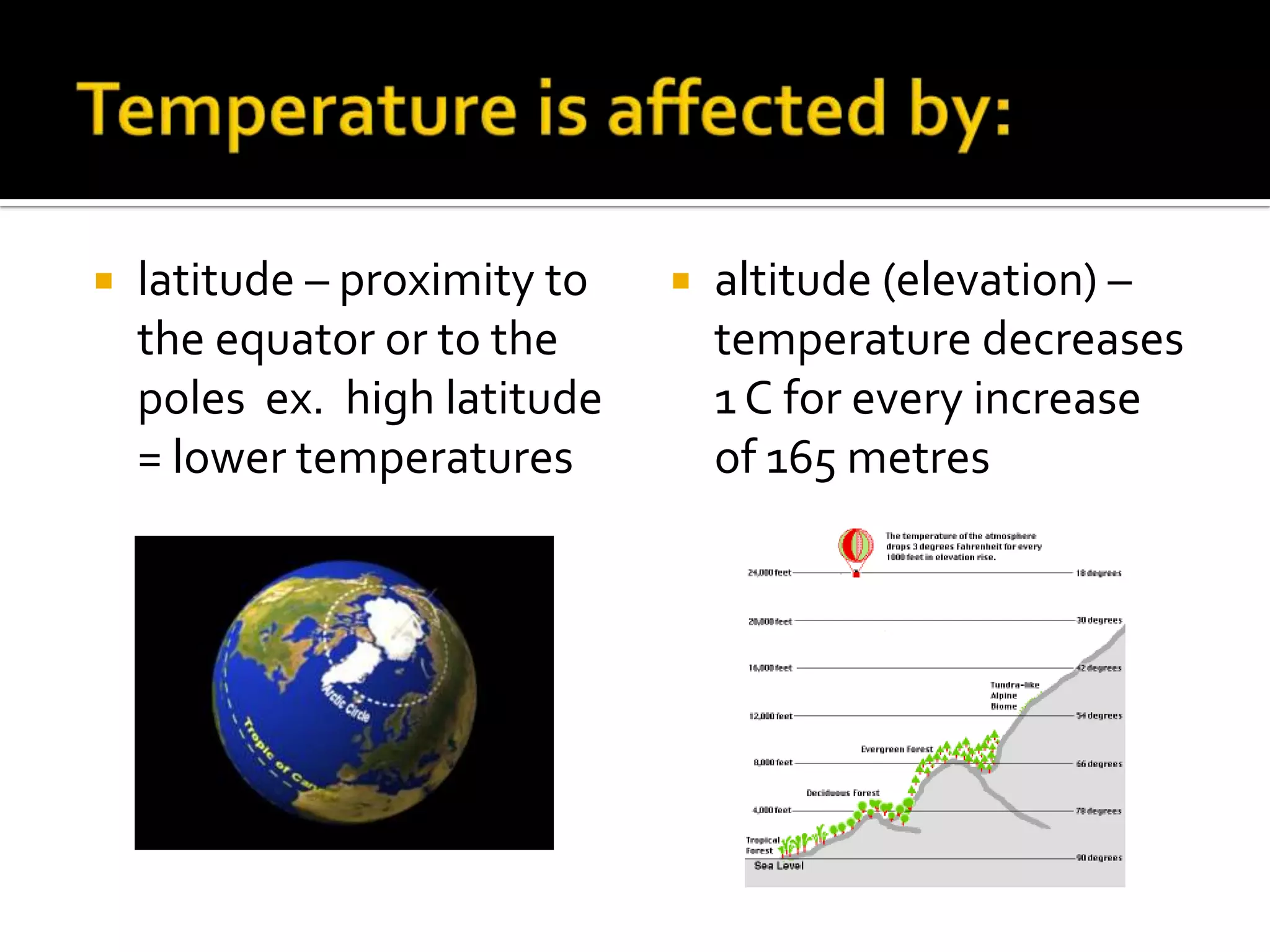
   latitude – proximity to      altitude (elevation) –
    the equator or to the         temperature decreases
    poles ex. high latitude       1 C for every increase
    = lower temperatures          of 165 metres
   wind – wind can lower or raise temperature
    depending on where the wind comes from

   large bodies of water – water’s temperature
    changes more slowly than land’s
    temperature; therefore the temperature near
    large bodies of water will be more moderate
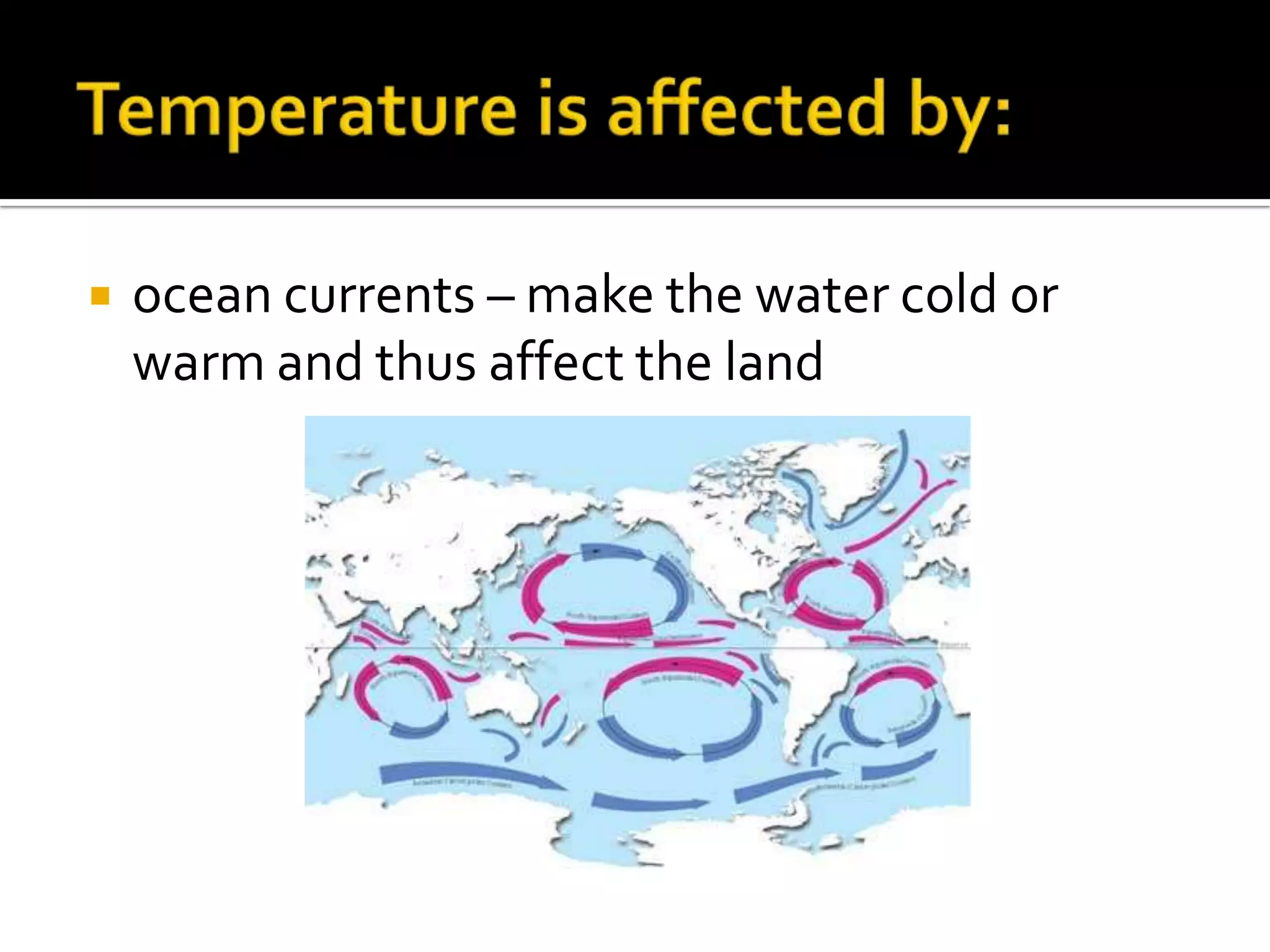
   ocean currents – make the water cold or
    warm and thus affect the land
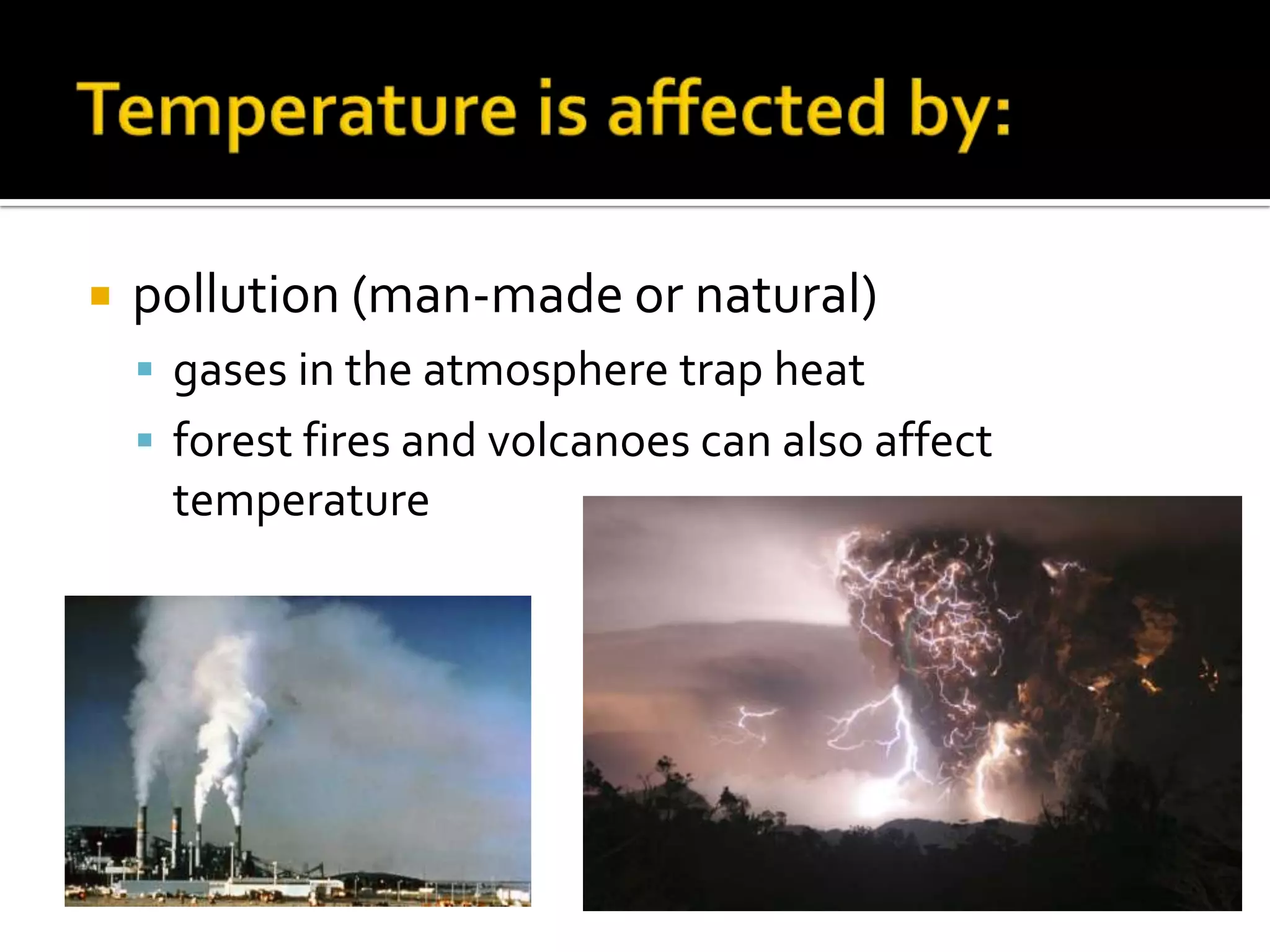
   pollution (man-made or natural)
     gases in the atmosphere trap heat
     forest fires and volcanoes can also affect
     temperature
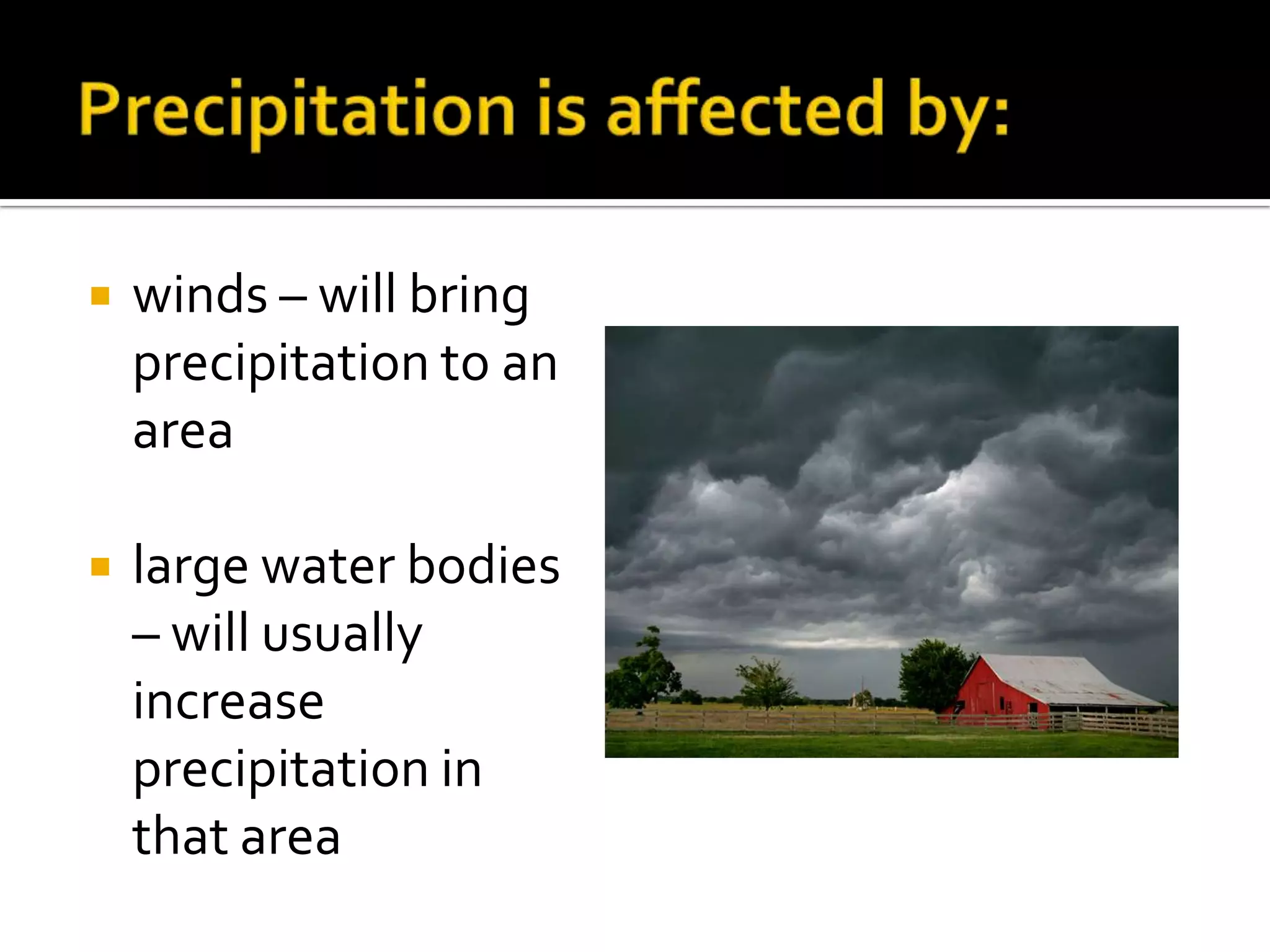
   winds – will bring
    precipitation to an
    area

   large water bodies
    – will usually
    increase
    precipitation in
    that area
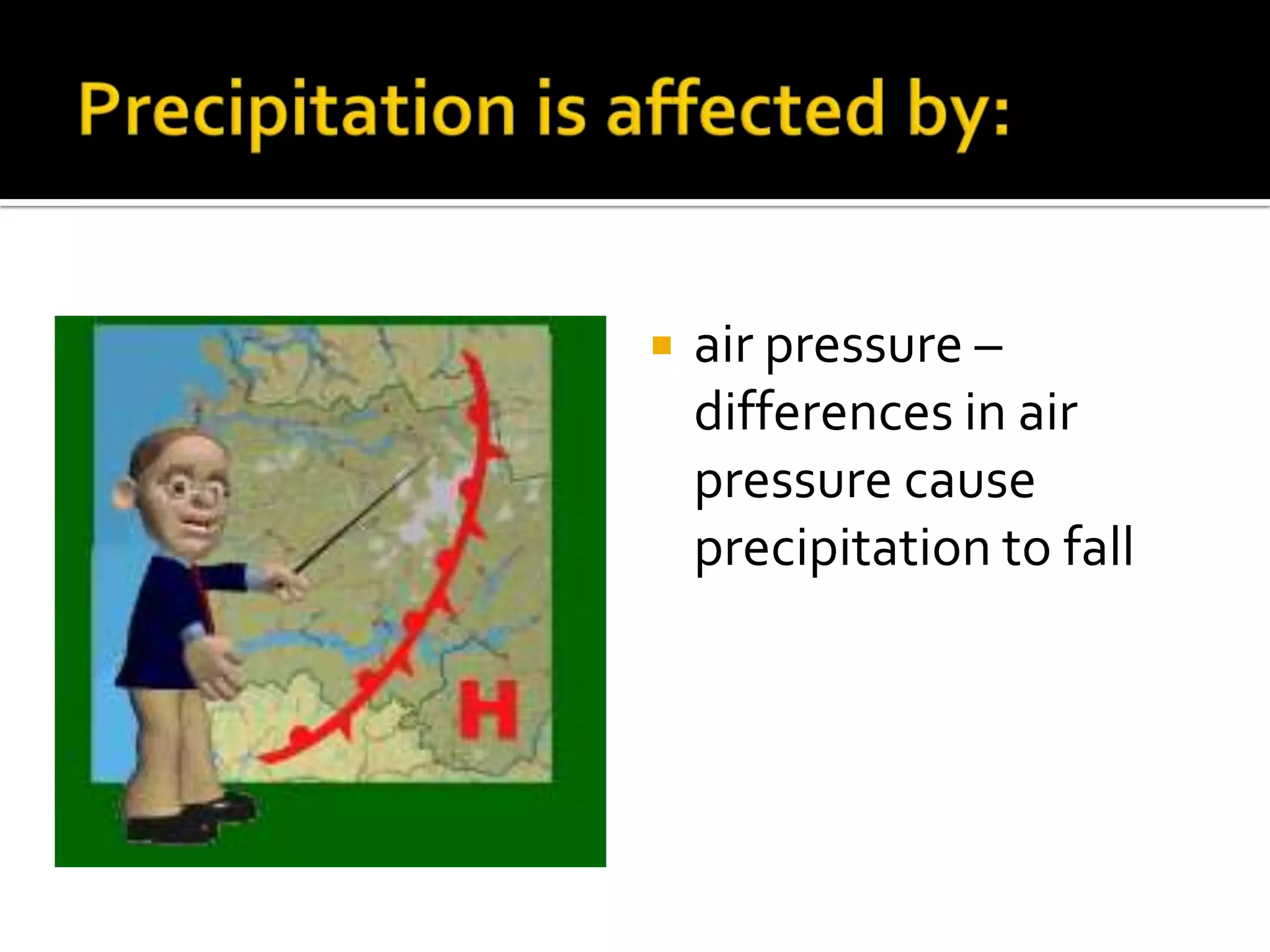
   air pressure –
    differences in air
    pressure cause
    precipitation to fall
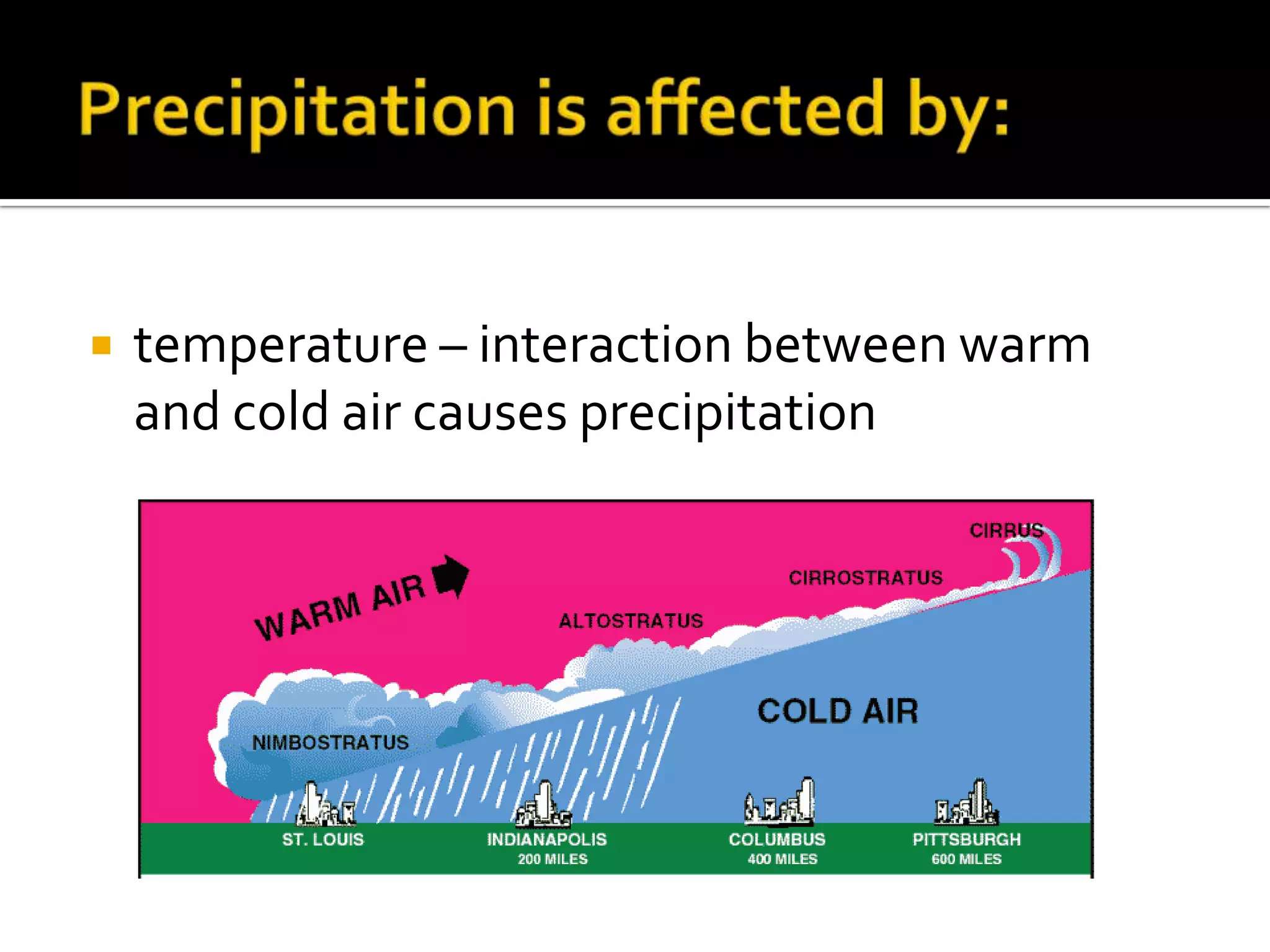
   temperature – interaction between warm
    and cold air causes precipitation
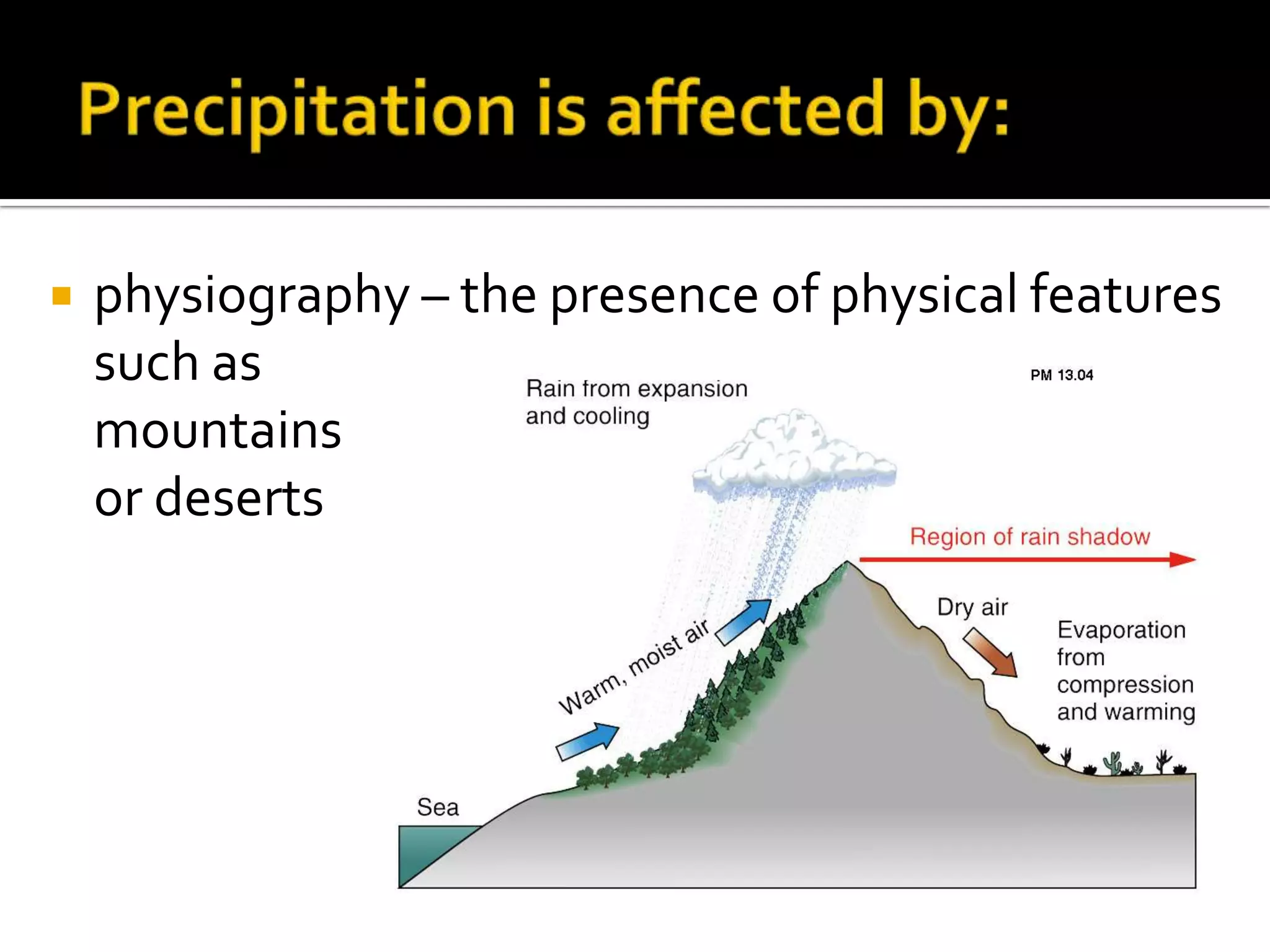
   physiography – the presence of physical features
    such as
    mountains
    or deserts
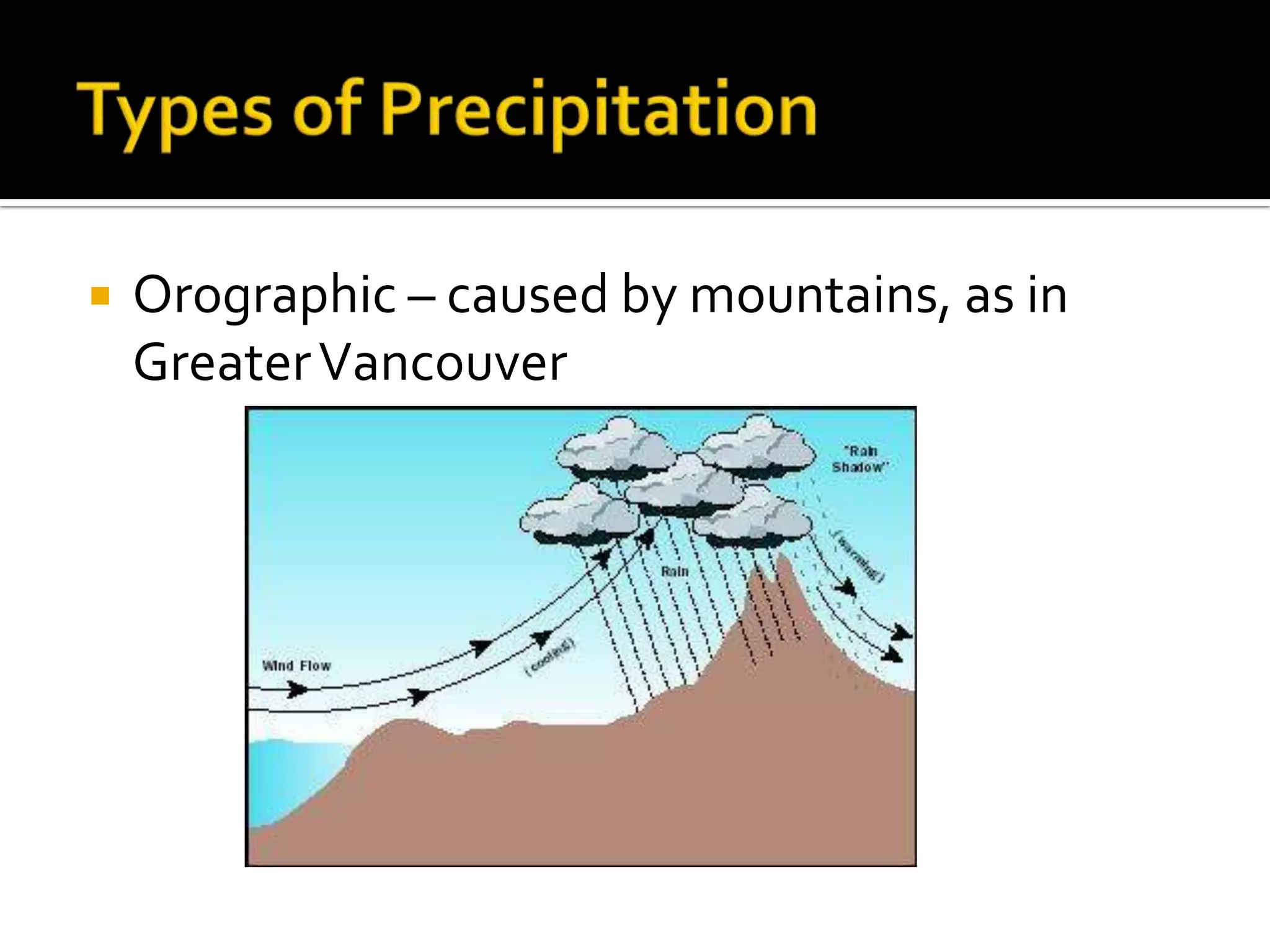
   Orographic – caused by mountains, as in
    Greater Vancouver
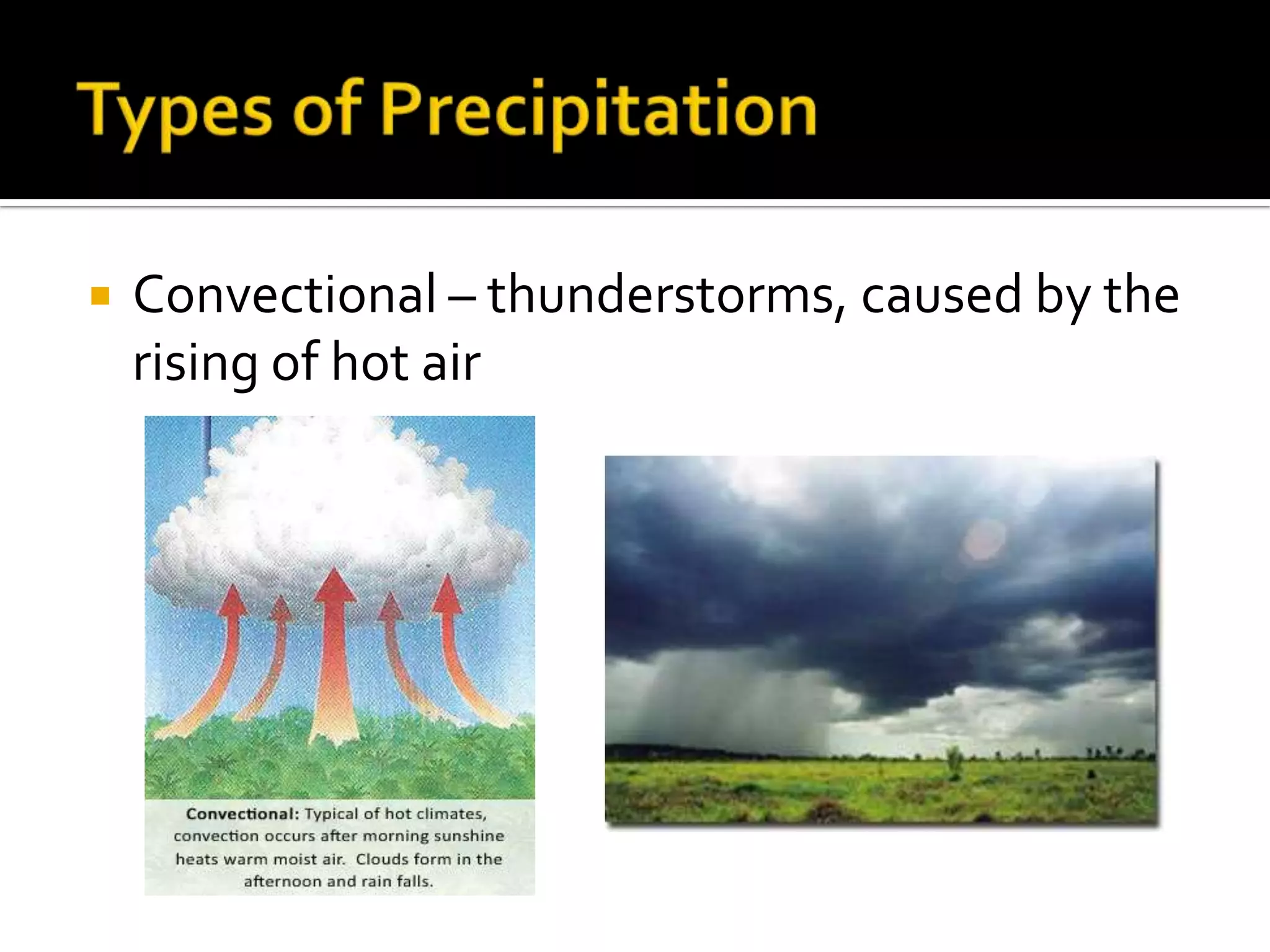
   Convectional – thunderstorms, caused by the
    rising of hot air
   Cyclonic – the most common type, caused by
    differences in air pressure

Geography Skills - Thematic Maps & Climate

  • 1.
  • 2.
    A map is an image that represents an area of the earth’s surface, usually from above.
  • 3.
    A map can provide different information such as place names, land features, elevation, and political boundaries.
  • 4.
    North is usually at the top of the map, check the compass rose to see if it has been repositioned in a different direction.
  • 5.
    Physical maps indicate natural features such as mountains, deserts, rivers and lakes.
  • 6.
    Political maps focus on the division of the earth’s surface into different countries, states or provinces.
  • 7.
    Most maps in this atlas will show physical features as well as country borders, cities, and towns.
  • 8.
     Today, scientists can make more accurate maps of the world than ever before.  They can use information from satellites that orbit the earth.
  • 9.
     A thematicmap is one that focuses on a particular main idea (or theme).  These might include:  Climate  Vegetation  Economy  Population  Language
  • 11.
     Map legendsare very important for all types of maps, but perhaps especially so for thematic maps.  Legends can include:  Symbols  Elevation  Scale  Colour Keys
  • 12.
    Maps often use symbols instead of words to label real-life features and make maps clearer.
  • 13.
    Symbols can be small pictures, letters, lines or coloured areas.
  • 14.
     Each symbol is placed in a key or legend next to the map.  The key explains what each symbol means.
  • 15.
     Climate Mapsare a type of Thematic Map.  They present information about climate such as:  Temperature  Precipitation  Sunshine Hours  Growing Season  Climate Regions  Environmental Concerns
  • 16.
    Climate is the overall weather pattern of a region.  The two major aspects of climate are temperature and precipitation.
  • 17.
    A Climate Graph shows:  A title  Precipitation bars in blue  A temperature line in red  Months of the year  Usually the Total Annual Precipitation  Sometimes the growing season at 6°C  Interactive Climate Graphs
  • 18.
    Revolution of the earth  Rotation of the earth – causes seasons – causes day and night
  • 19.
    latitude – proximity to  altitude (elevation) – the equator or to the temperature decreases poles ex. high latitude 1 C for every increase = lower temperatures of 165 metres
  • 20.
    wind – wind can lower or raise temperature depending on where the wind comes from  large bodies of water – water’s temperature changes more slowly than land’s temperature; therefore the temperature near large bodies of water will be more moderate
  • 21.
    ocean currents – make the water cold or warm and thus affect the land
  • 22.
    pollution (man-made or natural)  gases in the atmosphere trap heat  forest fires and volcanoes can also affect temperature
  • 23.
    winds – will bring precipitation to an area  large water bodies – will usually increase precipitation in that area
  • 24.
    air pressure – differences in air pressure cause precipitation to fall
  • 25.
    temperature – interaction between warm and cold air causes precipitation
  • 26.
    physiography – the presence of physical features such as mountains or deserts
  • 27.
    Orographic – caused by mountains, as in Greater Vancouver
  • 28.
    Convectional – thunderstorms, caused by the rising of hot air
  • 29.
    Cyclonic – the most common type, caused by differences in air pressure