SJSD Secondary Professional
      Development

       February 19, 2013
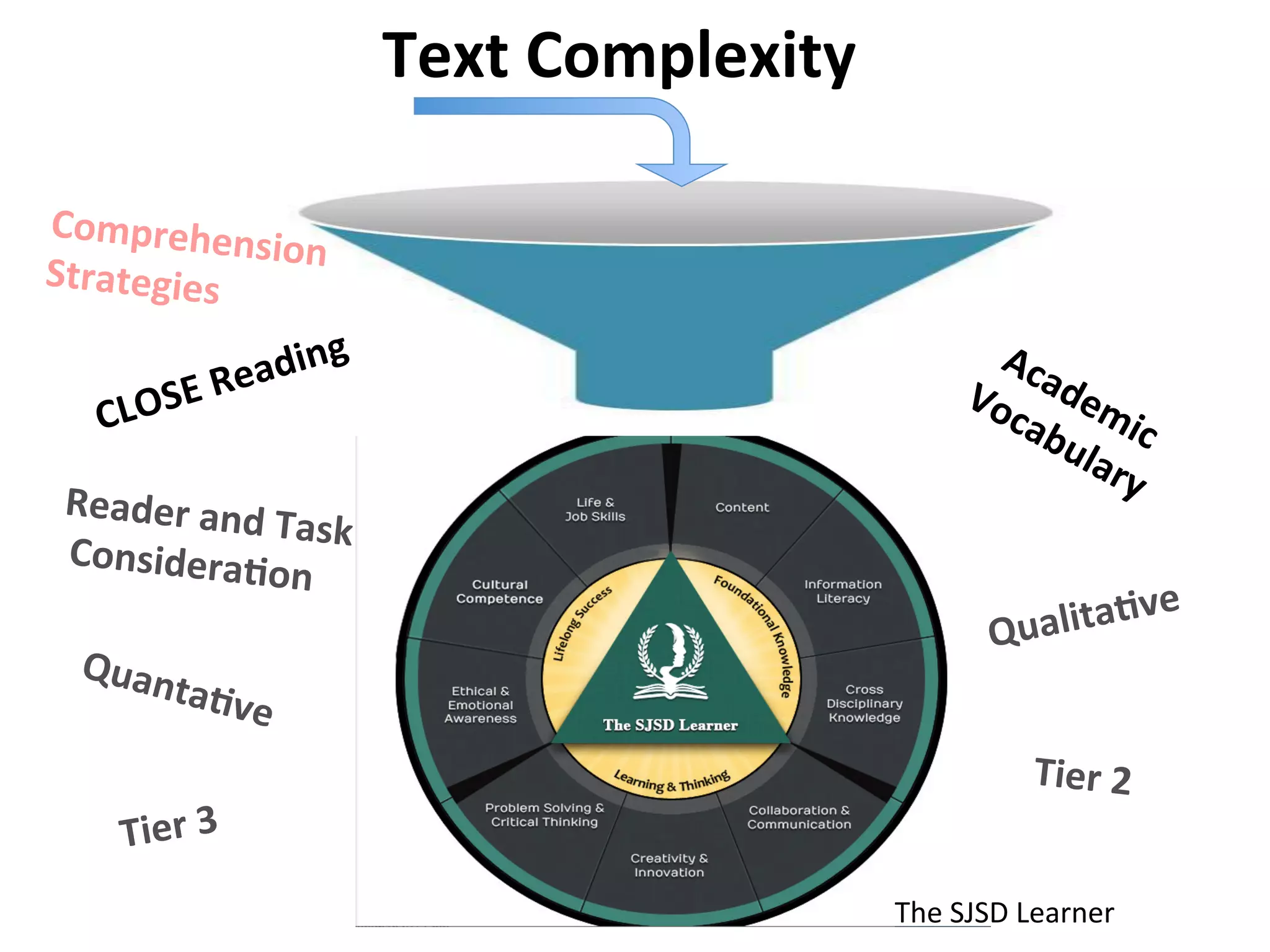
Text	
  Complexity	
  

Comprehen
               sion	
  
Strategies	


                ading
        E	
  Re
    CLOS
   Reader	
  and
                	
  Task	
  
 	
  Considera8
                 on	


                                                                  Qualita8ve
  Quan
      ta8ve
            	
  
                                                                       Tier	
  2	
  
      Tier	
  3	
  
                                                        The	
  SJSD	
  Learner	
  
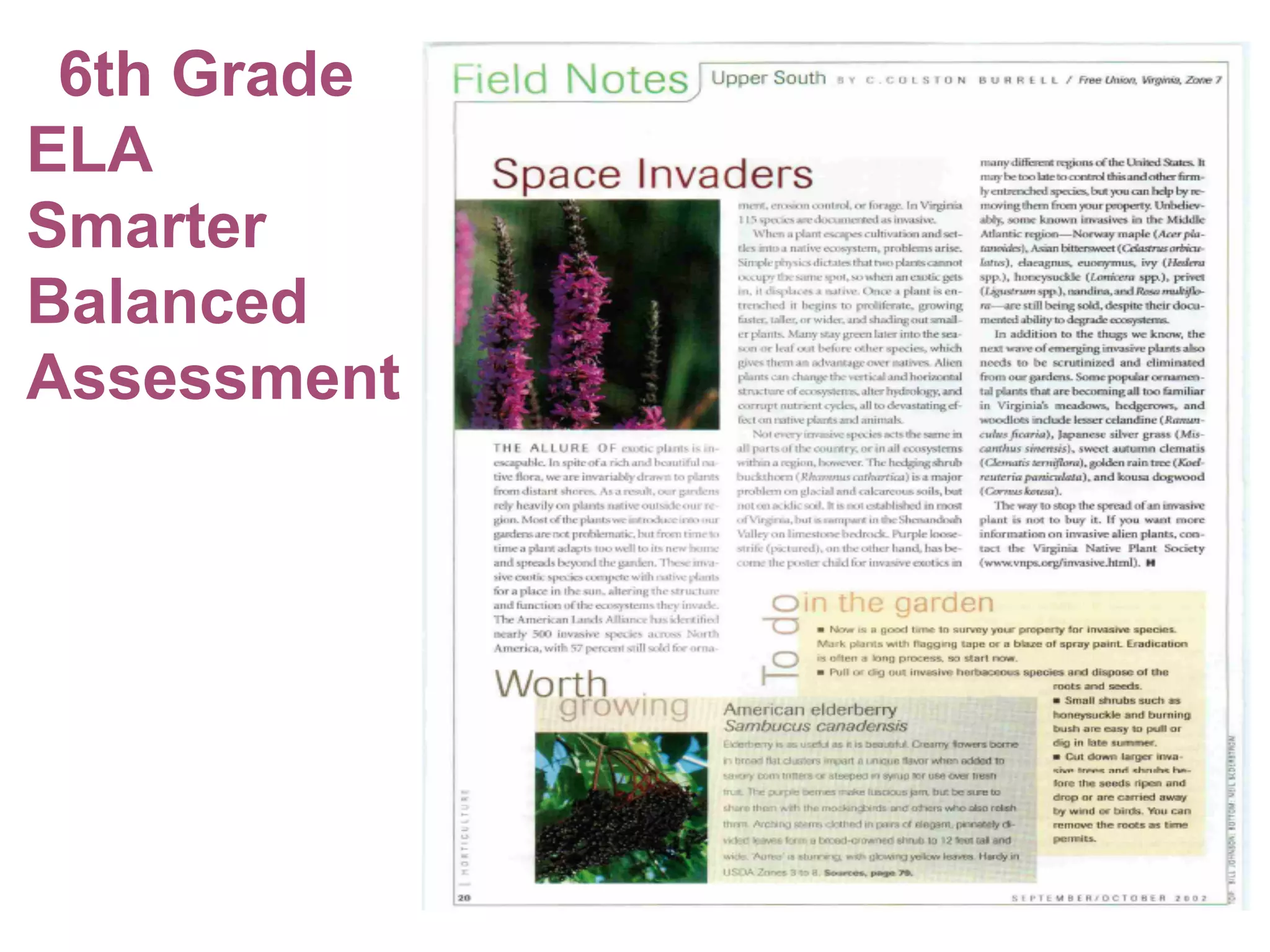
6th Grade
ELA
Smarter
Balanced
Assessment
Part 1: 35 minutes
Students will read three sources (article, fact sheet, and blog
   entry), taking notes on what they read, and answer the
   following questions in preparation for writing an informational
   essay about invasive plants:


1. Explain what invasive plants are and why people should be
   concerned about them. Use details from the sources to support your
   answer.


2. Evaluate which source, the article or the fact sheet, would be most
   helpful to the blog writer. Use details from the sources to support
   your answer.


3. Analyze why some people might not want to get rid of invasive
   plants. Use details from the sources to support your answer.
Part 2: 70 minutes
Review your notes and sources, plan draft, and revise your essay.
  Your assignment:


A local newspaper is publishing student essays about important
   environmental topics. You are invited to submit an essay about
   invasive plants, which have become a serious problem in your state.
   Your essay should be informative and interesting to read, and it
   should give readers a basic introduction to the issue of invasive
   plants.
Three Stay...
One Stray
Reading Activity


Think about your thinking - "metacognition"

Purpose - actively read to understand how this
  applies to you
Article: Common Core Standards Set the Stage
  for New State Accountability Tests
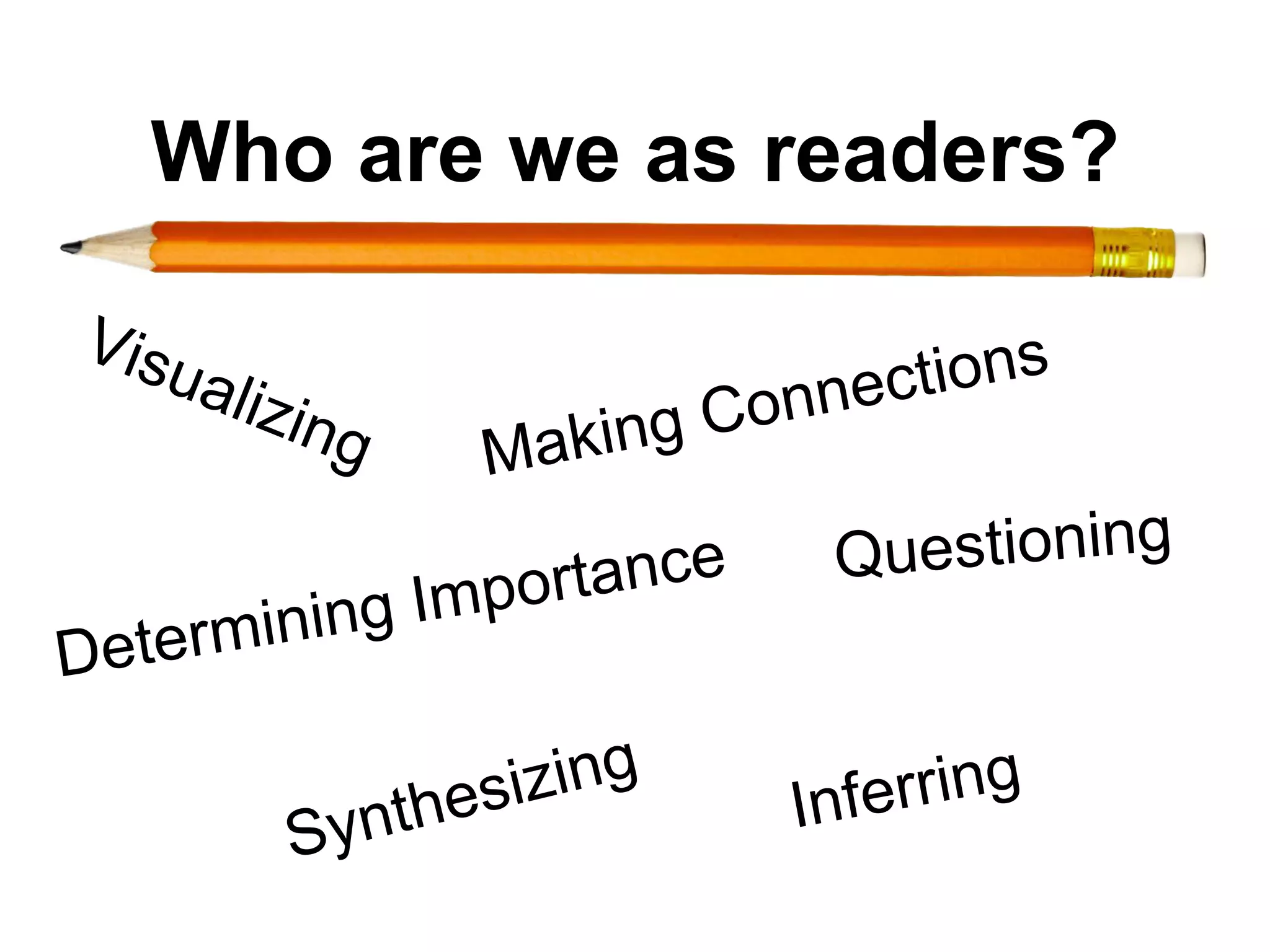
Who are we as readers?

                               onne ctions
                  Ma k ing C

                     ortance      Questioning
            in g Imp
De termin

               thes izing       Inferring
        Syn
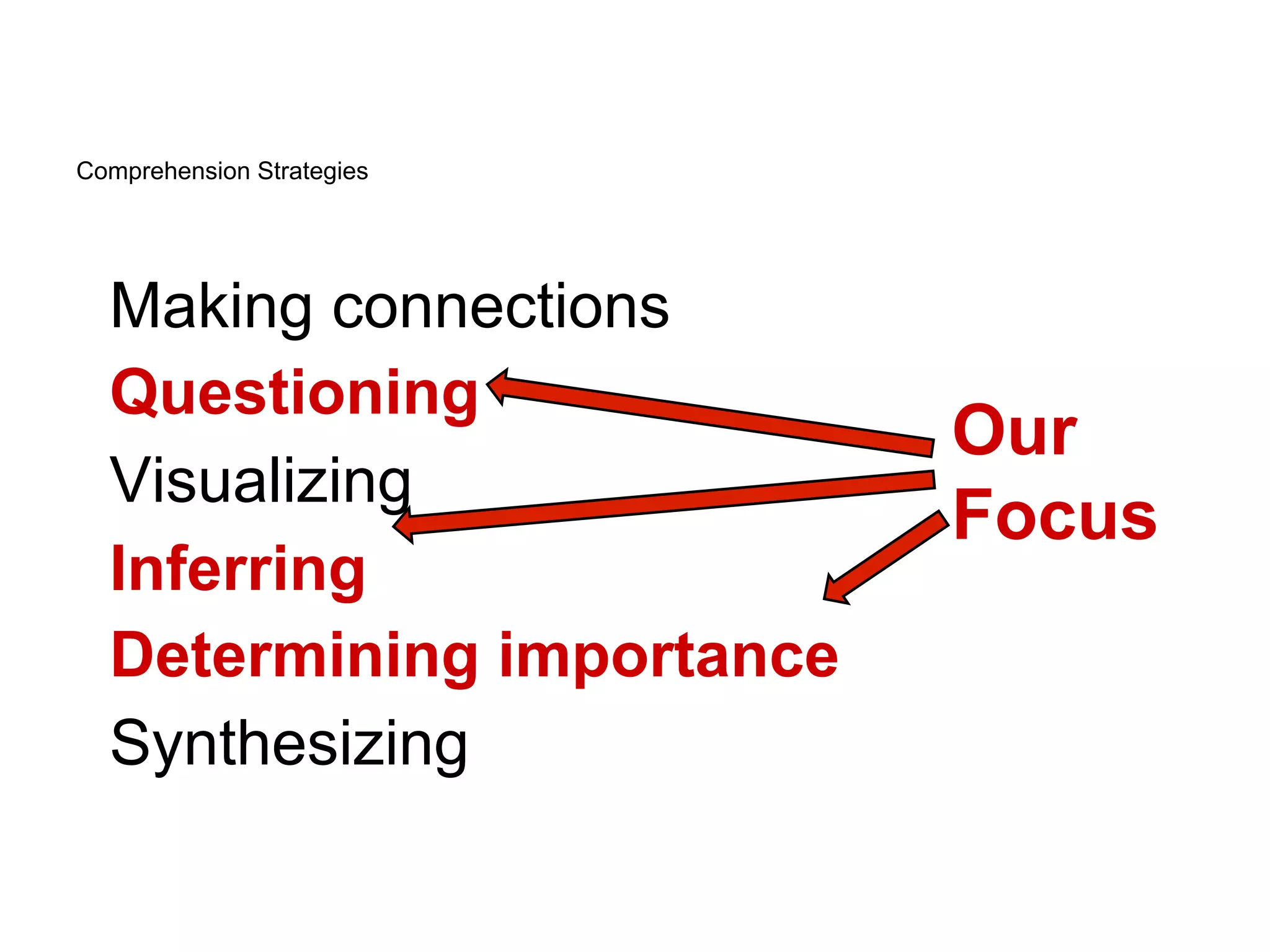
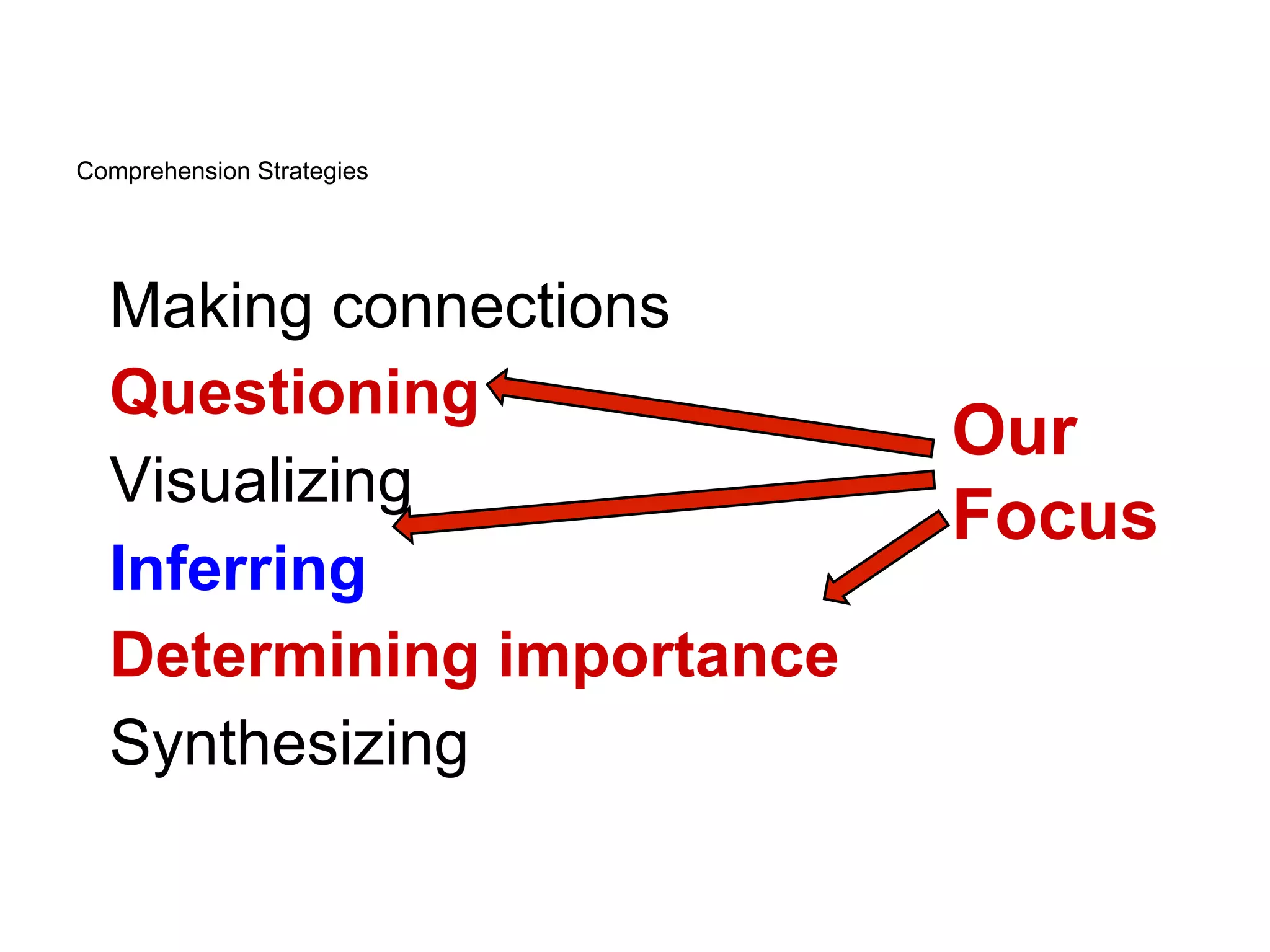
Comprehension Strategies


  Making connections
  Questioning
                           Our
  Visualizing
                           Focus
  Inferring
  Determining importance
  Synthesizing
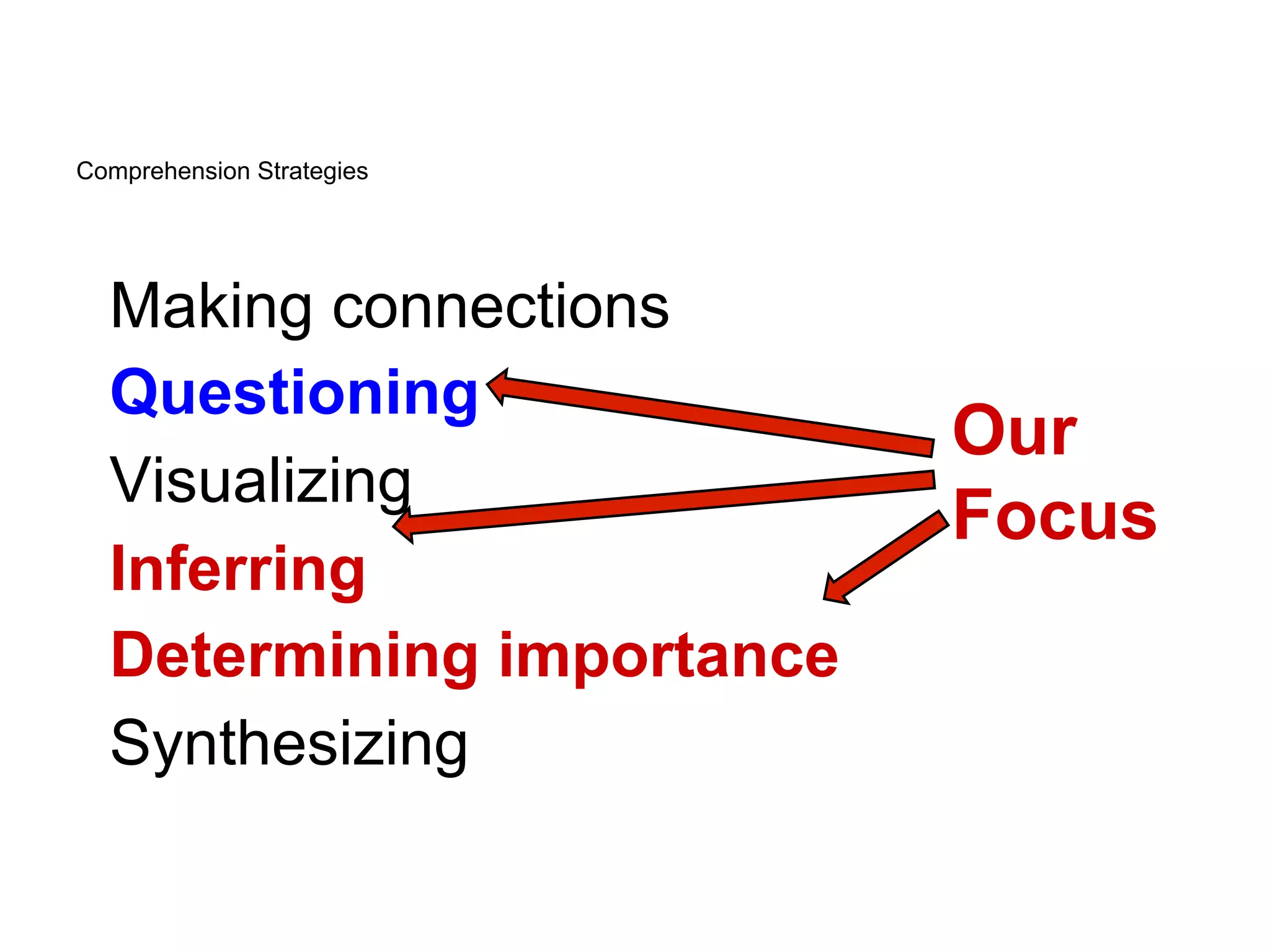
Comprehension Strategies


  Making connections
  Questioning
                           Our
  Visualizing
                           Focus
  Inferring
  Determining importance
  Synthesizing
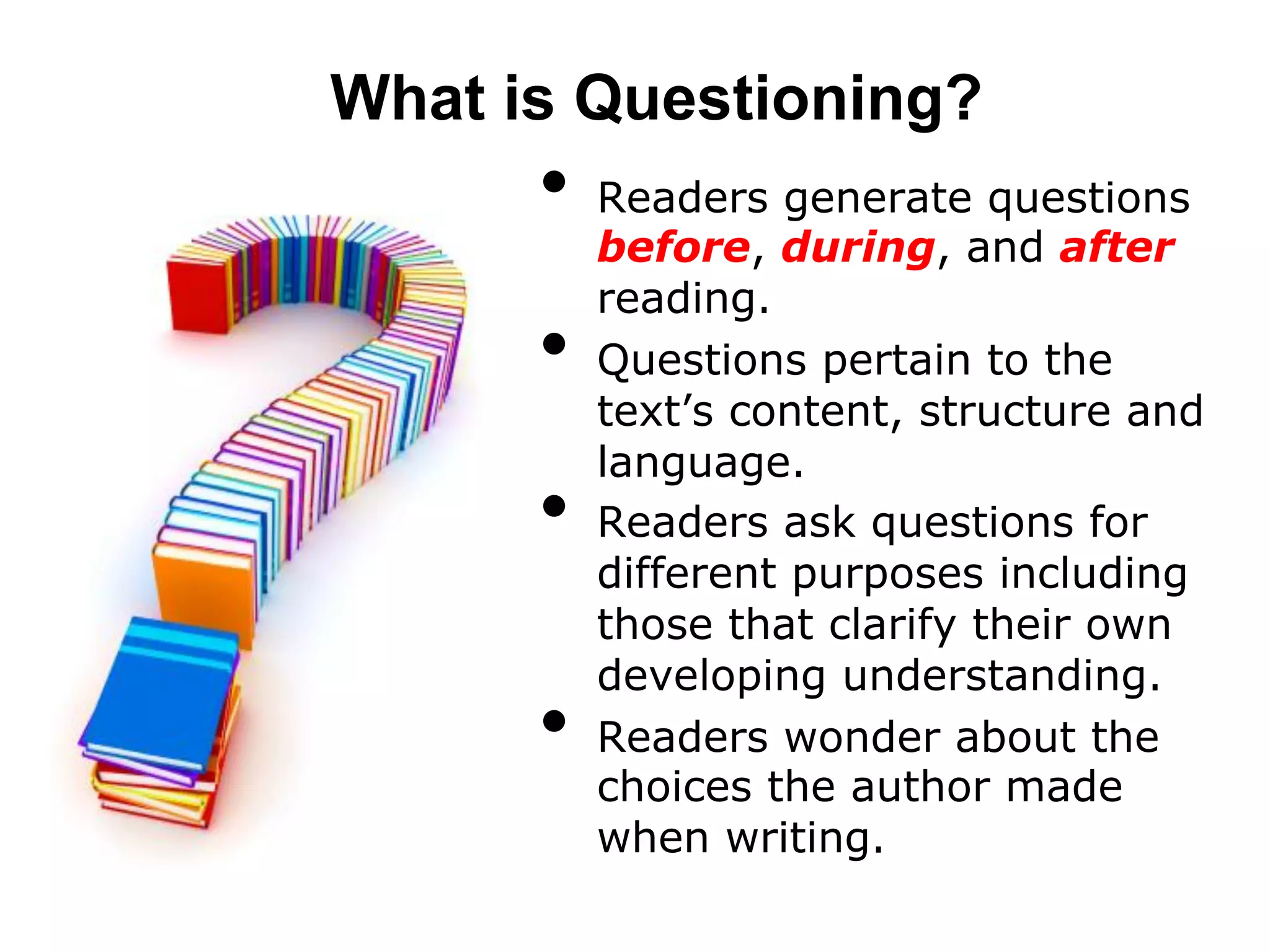
What is Questioning?
      •  Readers generate questions
           before, during, and after
           reading.
      •    Questions pertain to the
           text’s content, structure and
           language.
      •    Readers ask questions for
           different purposes including
           those that clarify their own
           developing understanding.
      •    Readers wonder about the
           choices the author made
           when writing.
Why teach Questioning?
"Readers who ask questions when they read
  assume responsibility for their learning and
  improve their comprehension in 5 ways:
1.  By interacting with the text
2.  By motivating themselves to read
3.  By clarifying information in the text
4.  By inferring beyond the literal meaning."
5.  By drawing conclusions at the end of the
    text.
                         I Read It, But I Don't Get It by Chris Tiovani
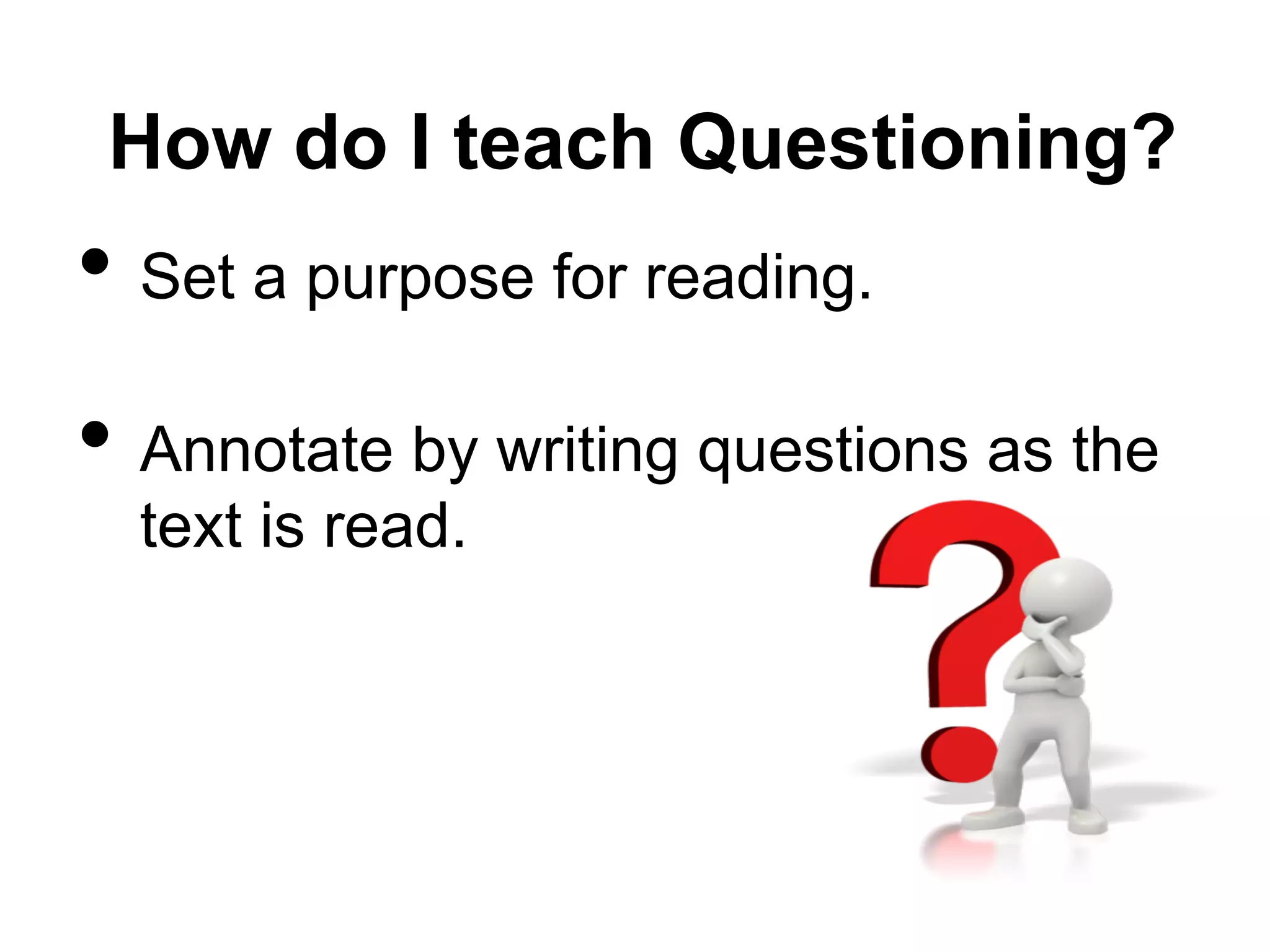
How do I teach Questioning?
•  Set a purpose for reading.
•  Annotate by writing questions as the
  text is read.
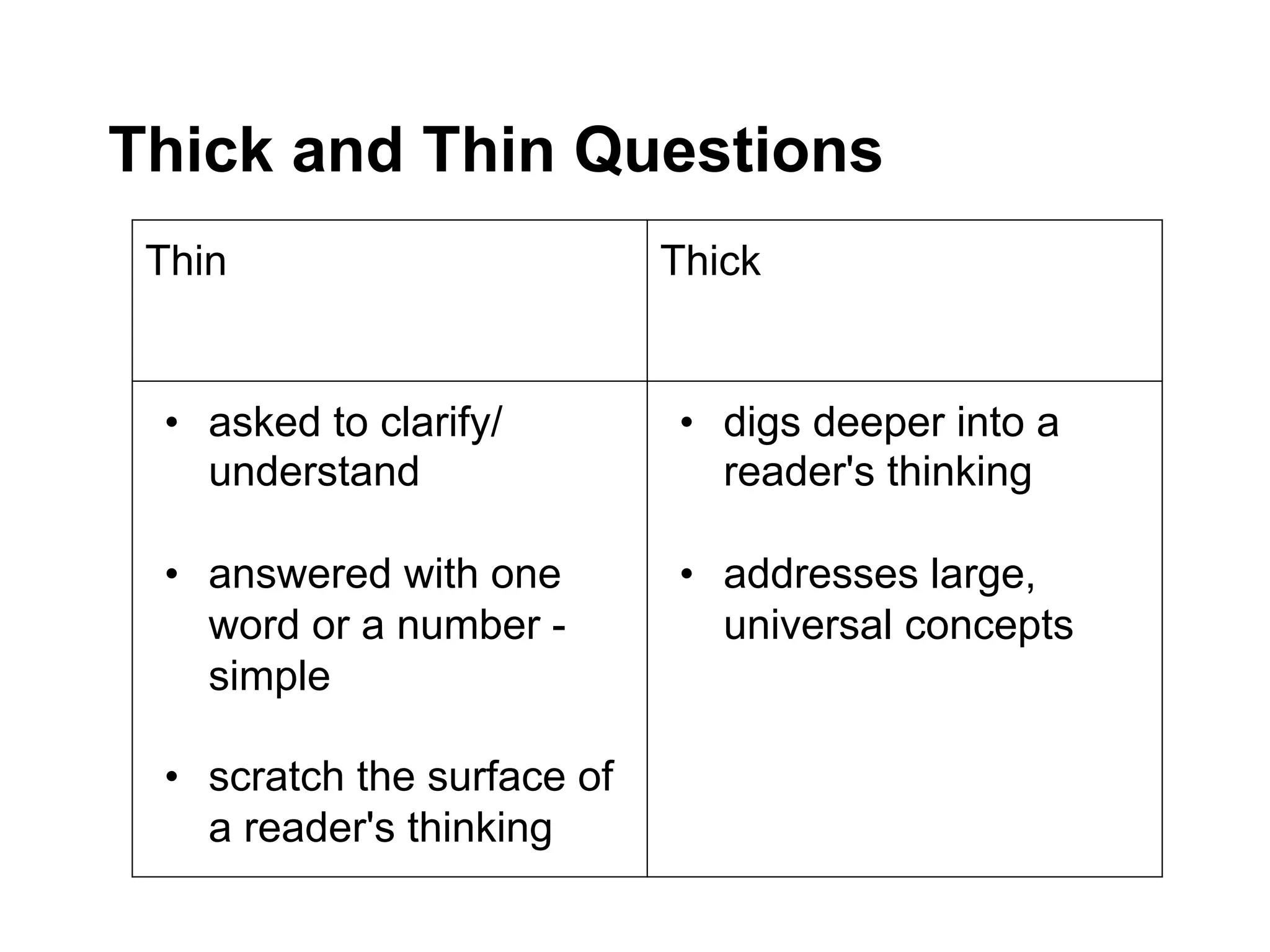
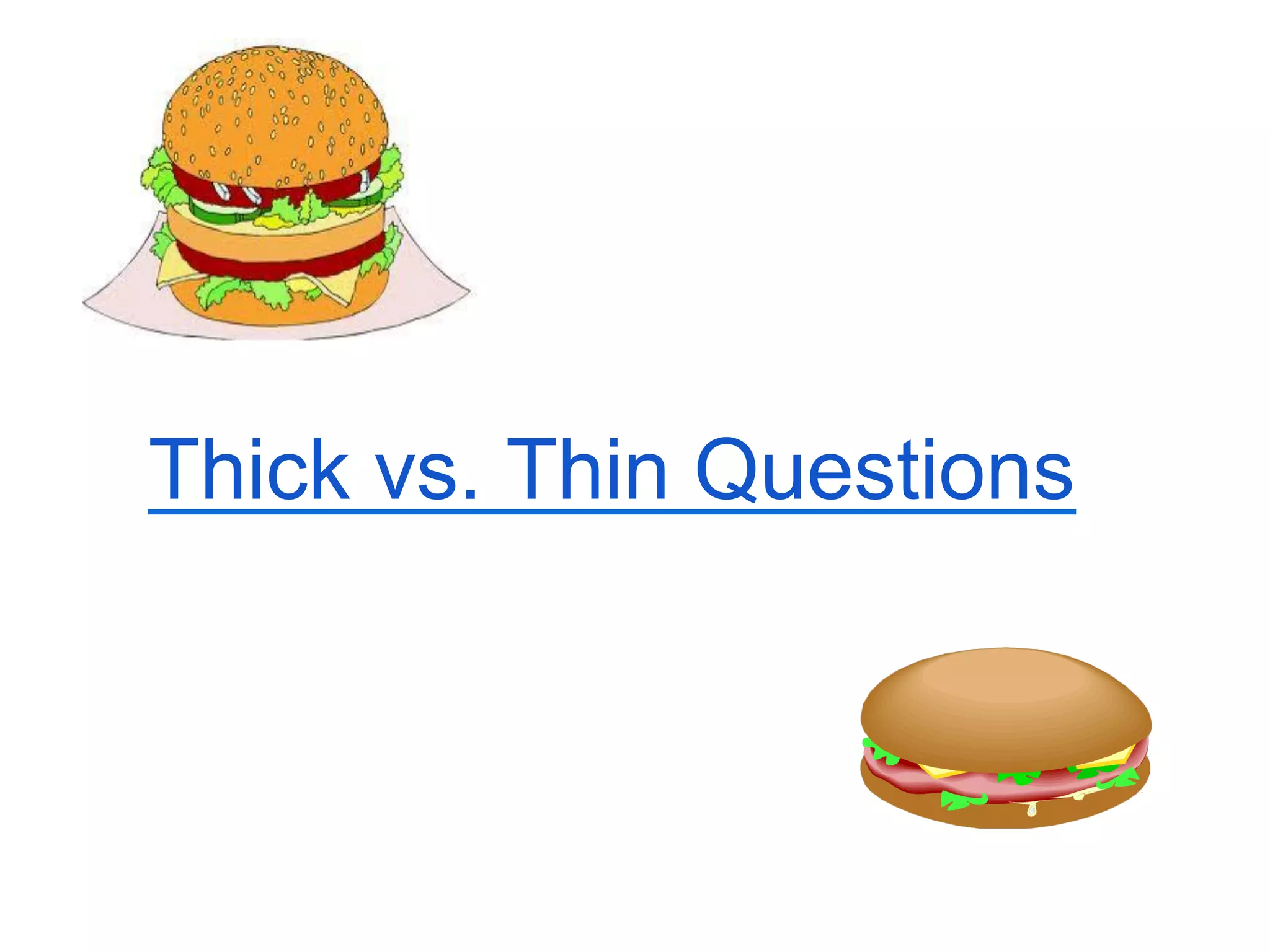
Thick and Thin Questions
 Thin                        Thick


 •  asked to clarify/        •  digs deeper into a
    understand                  reader's thinking

 •  answered with one        •  addresses large,
    word or a number -          universal concepts
    simple

 •  scratch the surface of
    a reader's thinking
Thick vs. Thin Questions
Time for a
Break


             http://taildom.com/blog/pictures/bathroom-break-at-cesar-millans/#.T5ls0MvRz0Q.pinterest
Comprehension Strategies


  Making connections
  Questioning
                           Our
  Visualizing
                           Focus
  Inferring
  Determining importance
  Synthesizing
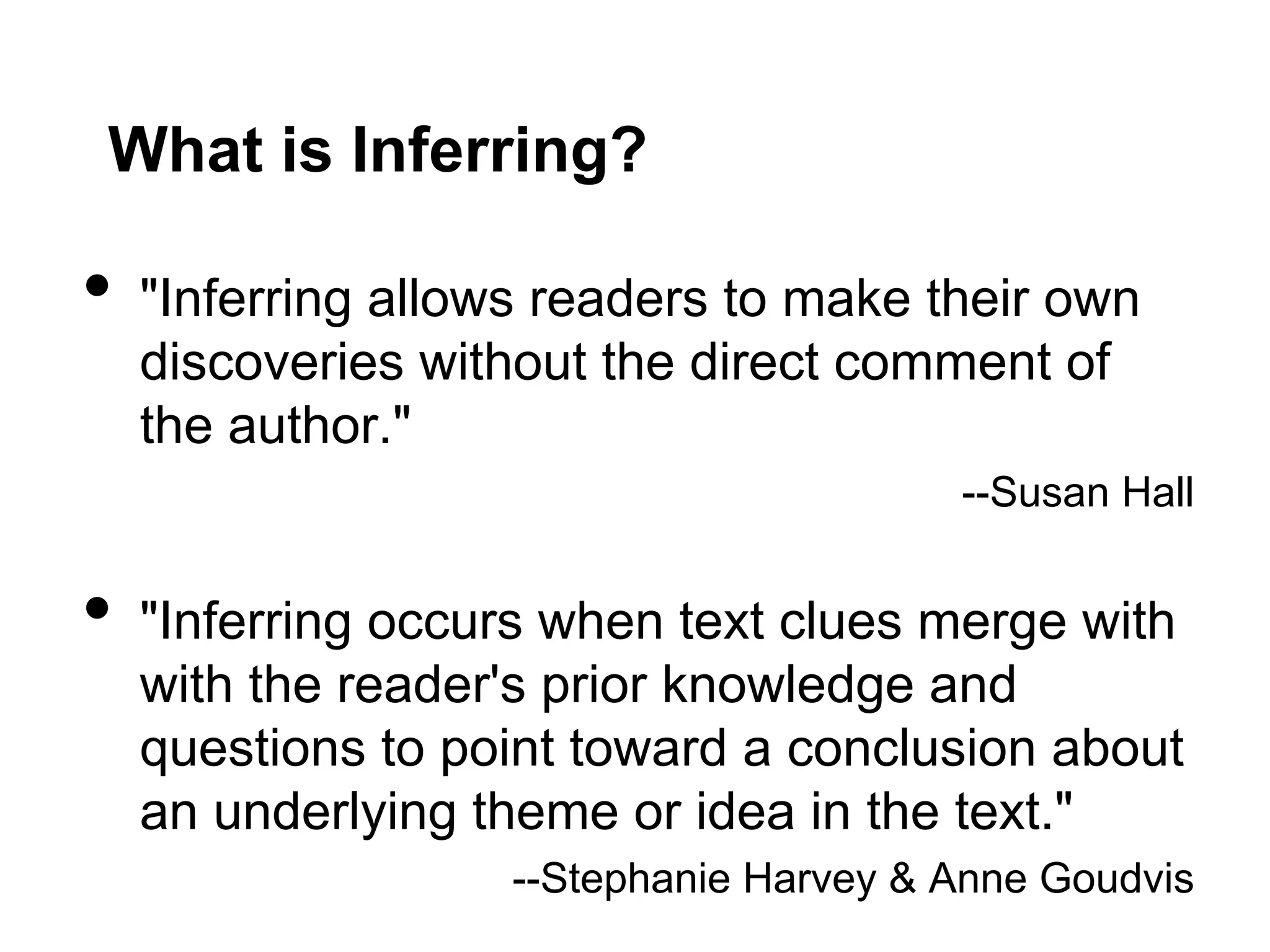
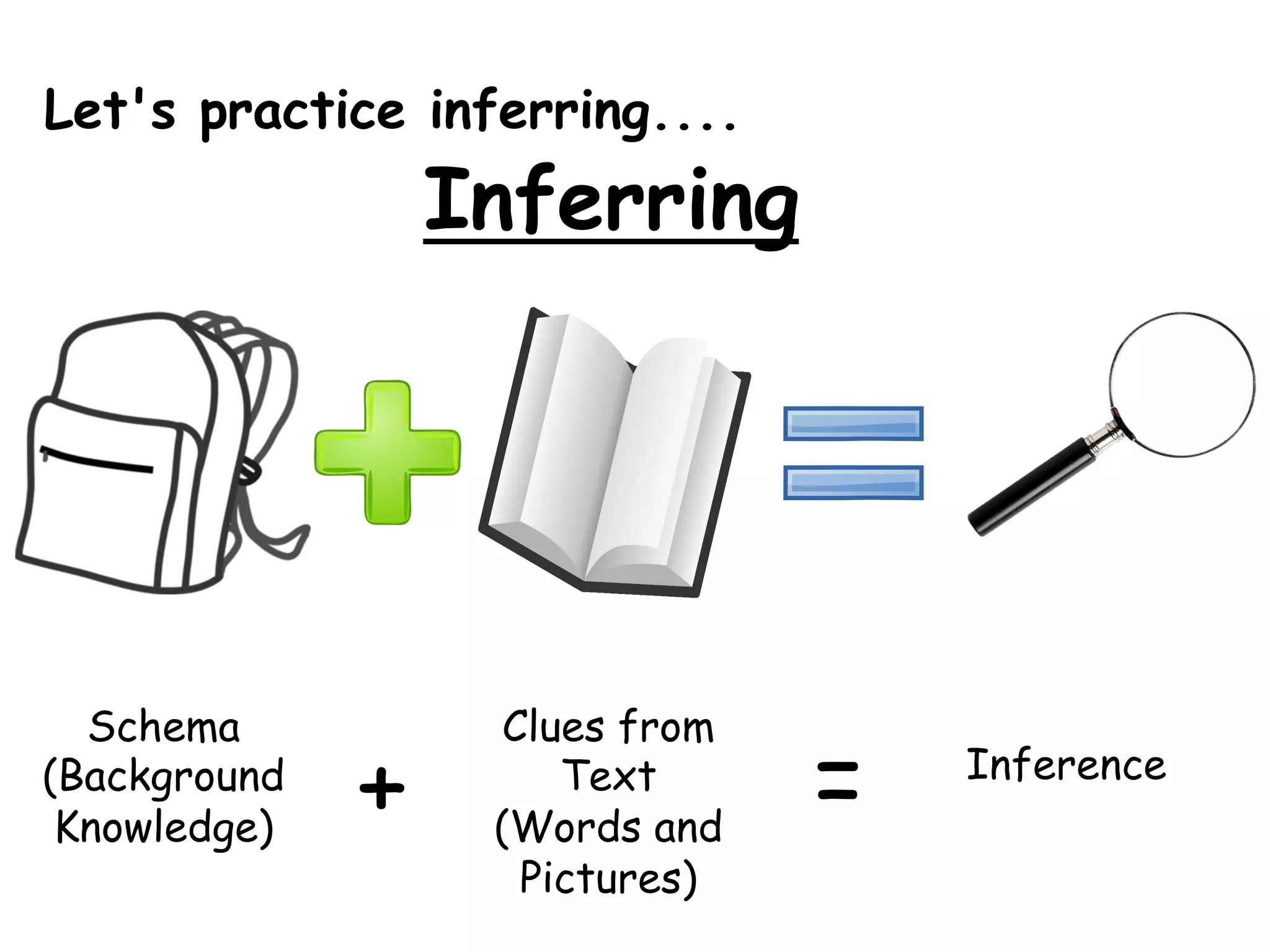
What is Inferring?

•  "Inferring allows readers to make their own
  discoveries without the direct comment of
  the author."
                                       --Susan Hall


•  "Inferring occurs when text clues merge with
  with the reader's prior knowledge and
  questions to point toward a conclusion about
  an underlying theme or idea in the text."
                  --Stephanie Harvey & Anne Goudvis
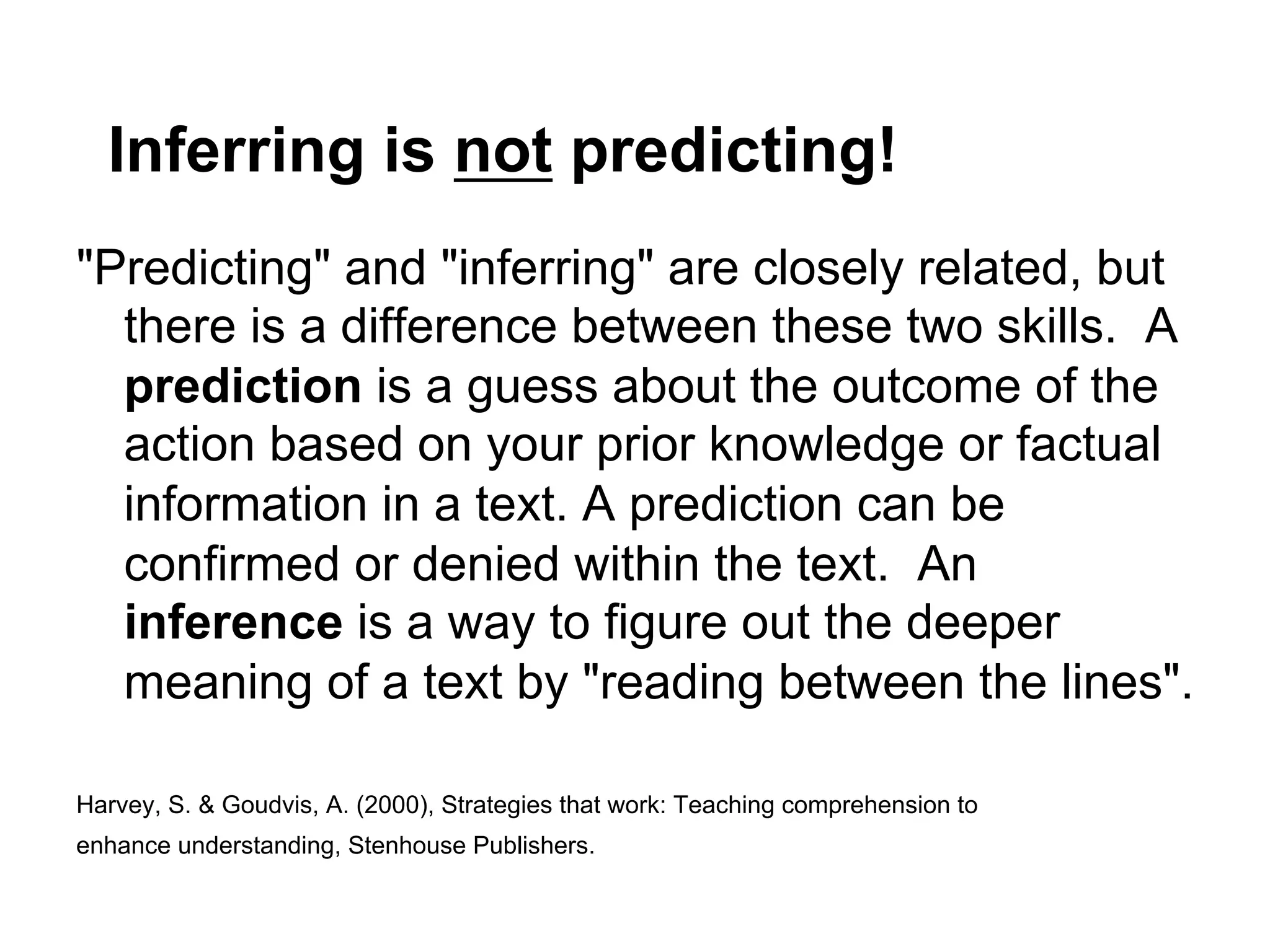
Inferring is not predicting!
"Predicting" and "inferring" are closely related, but
  there is a difference between these two skills. A
  prediction is a guess about the outcome of the
  action based on your prior knowledge or factual
  information in a text. A prediction can be
  confirmed or denied within the text. An
  inference is a way to figure out the deeper
  meaning of a text by "reading between the lines".

Harvey, S. & Goudvis, A. (2000), Strategies that work: Teaching comprehension to
enhance understanding, Stenhouse Publishers.
Why teach Inferring?
Inferring requires higher order thinking skills,
  which makes it a difficult skill for many
  students.

Researchers have confirmed that thoughtful,
  active, proficient readers are metacognitive;
  they think about their own thinking
during reading.
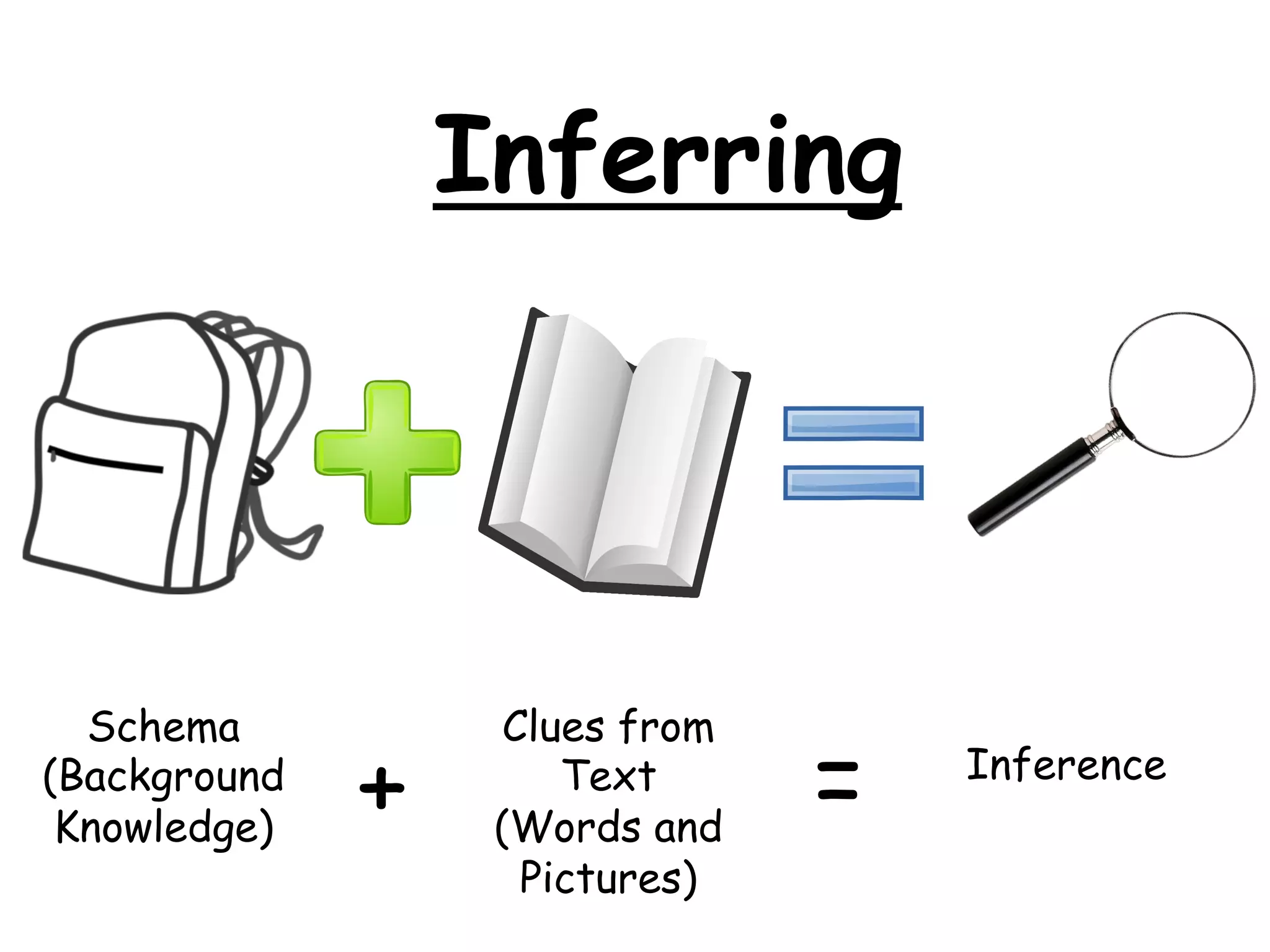
Inferring


  Schema            Clues from
(Background
 Knowledge)   +        Text
                   (Words and
                                 =   Inference

                     Pictures)
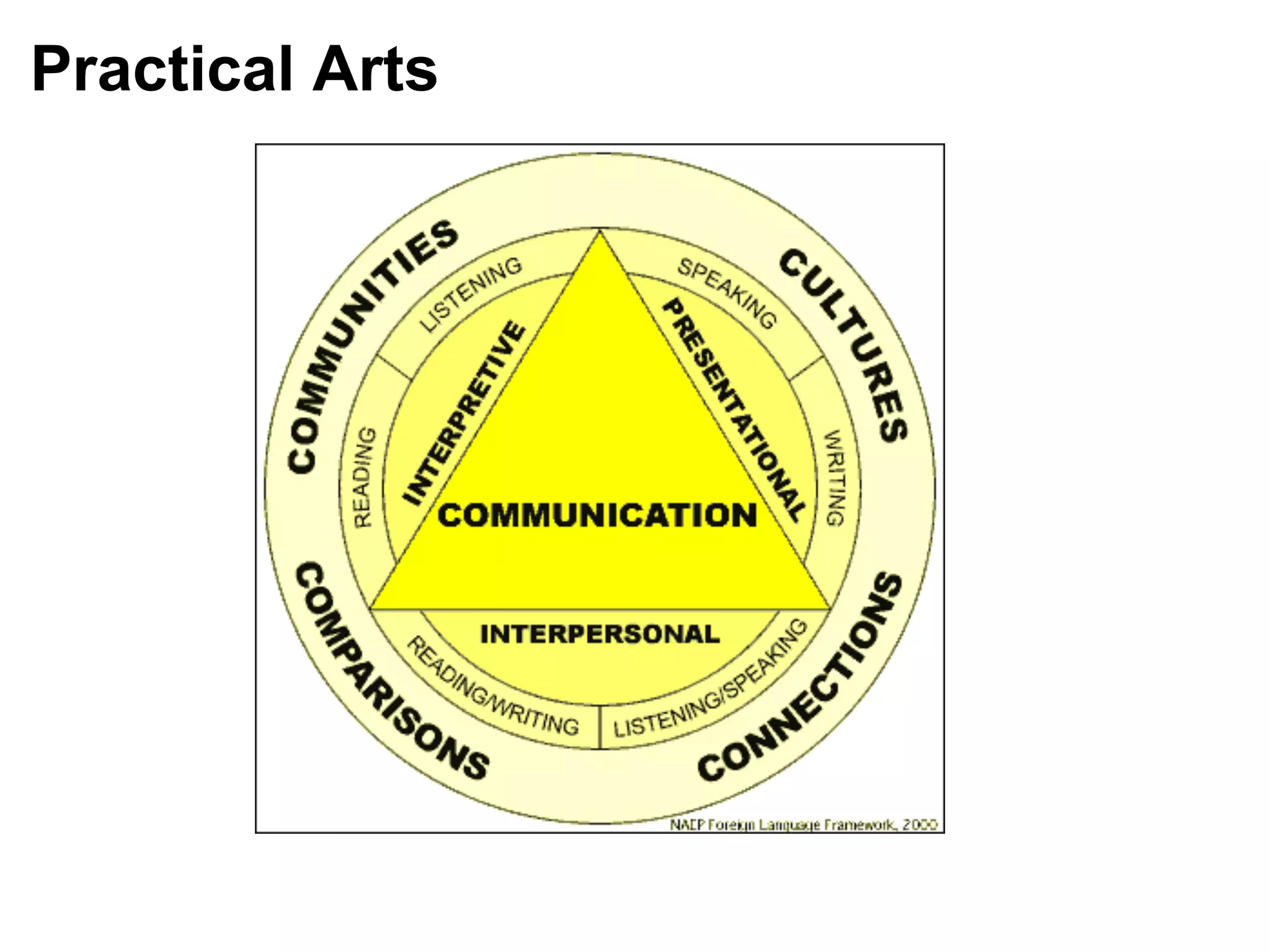
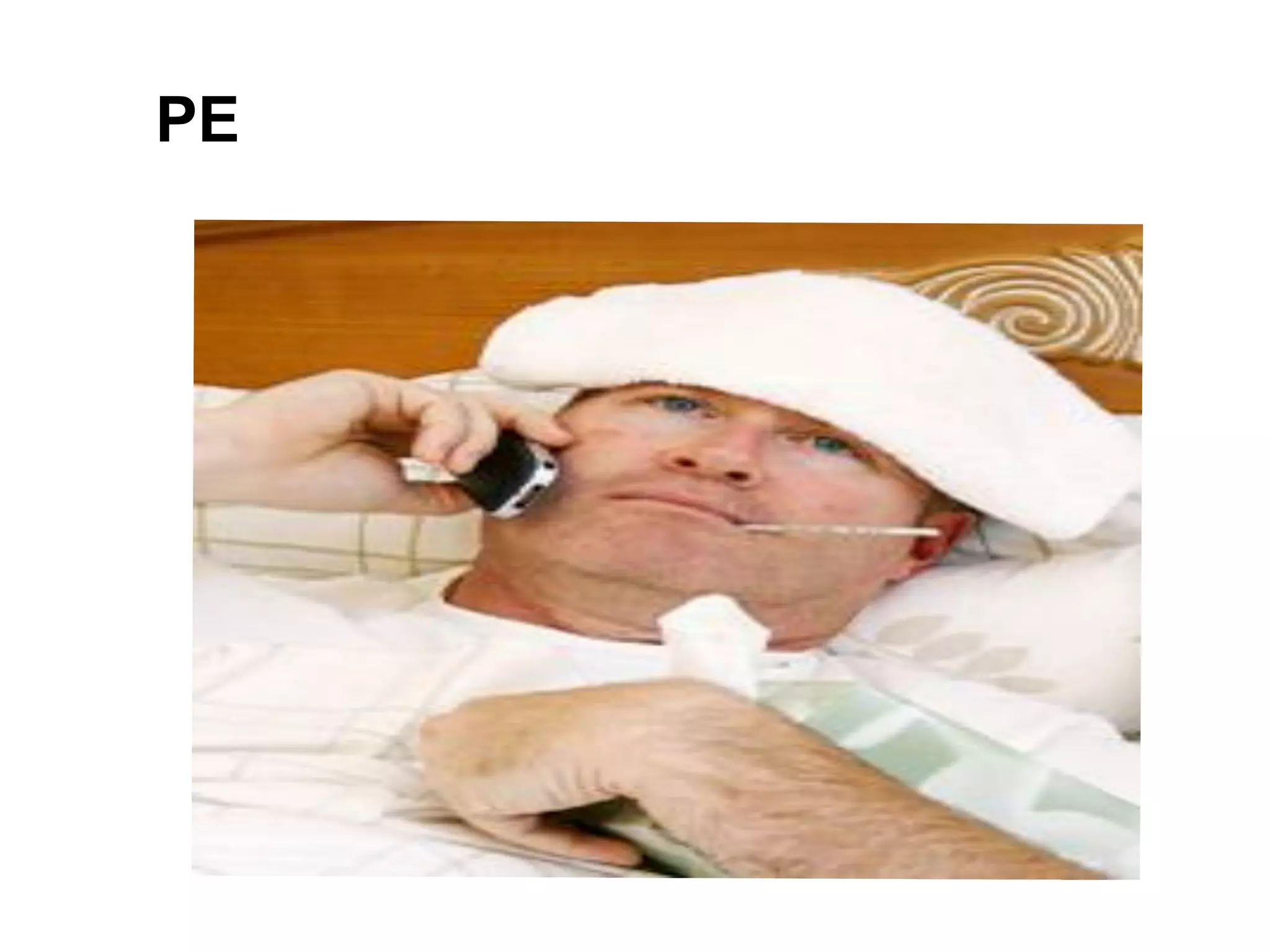
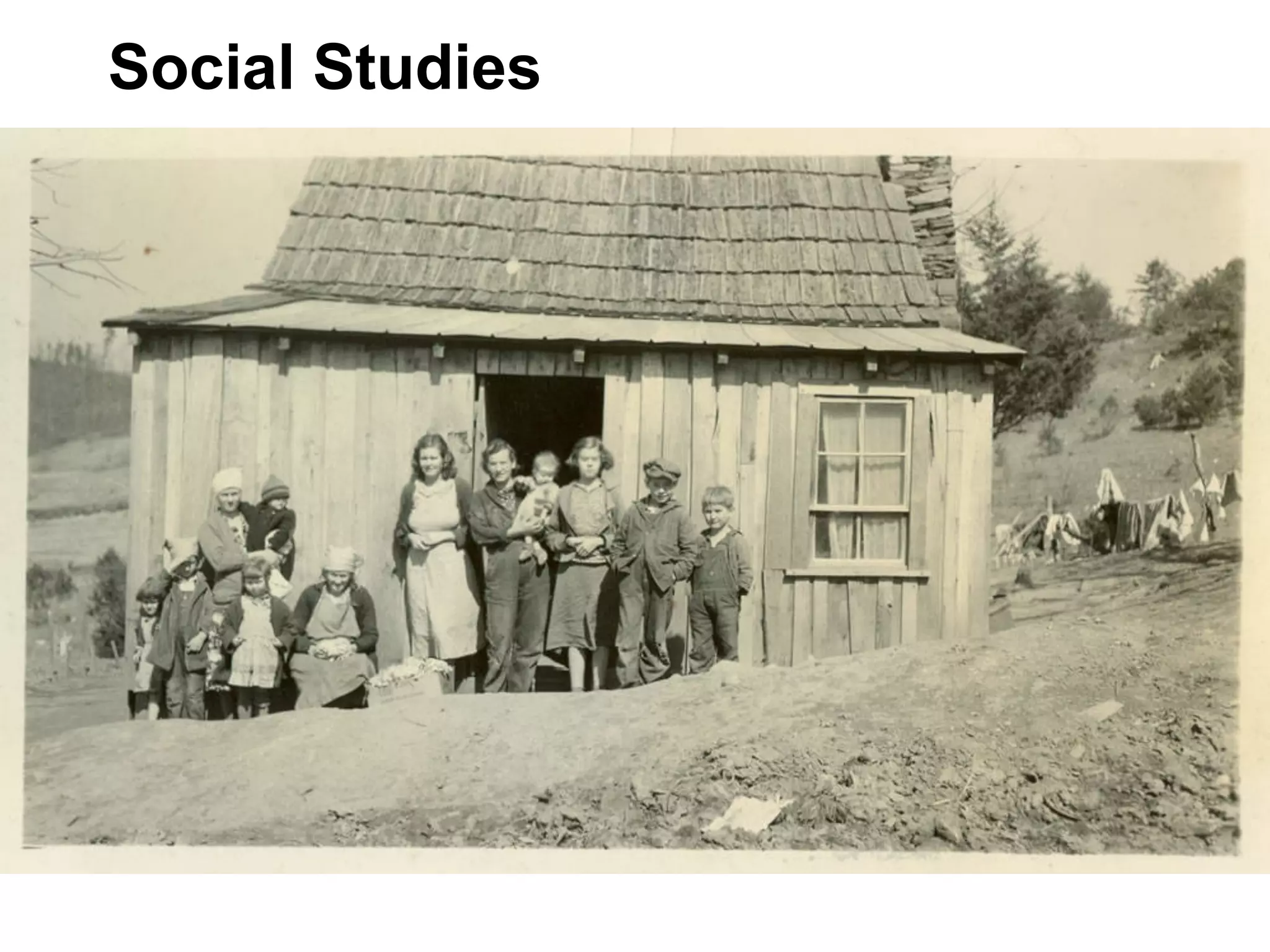
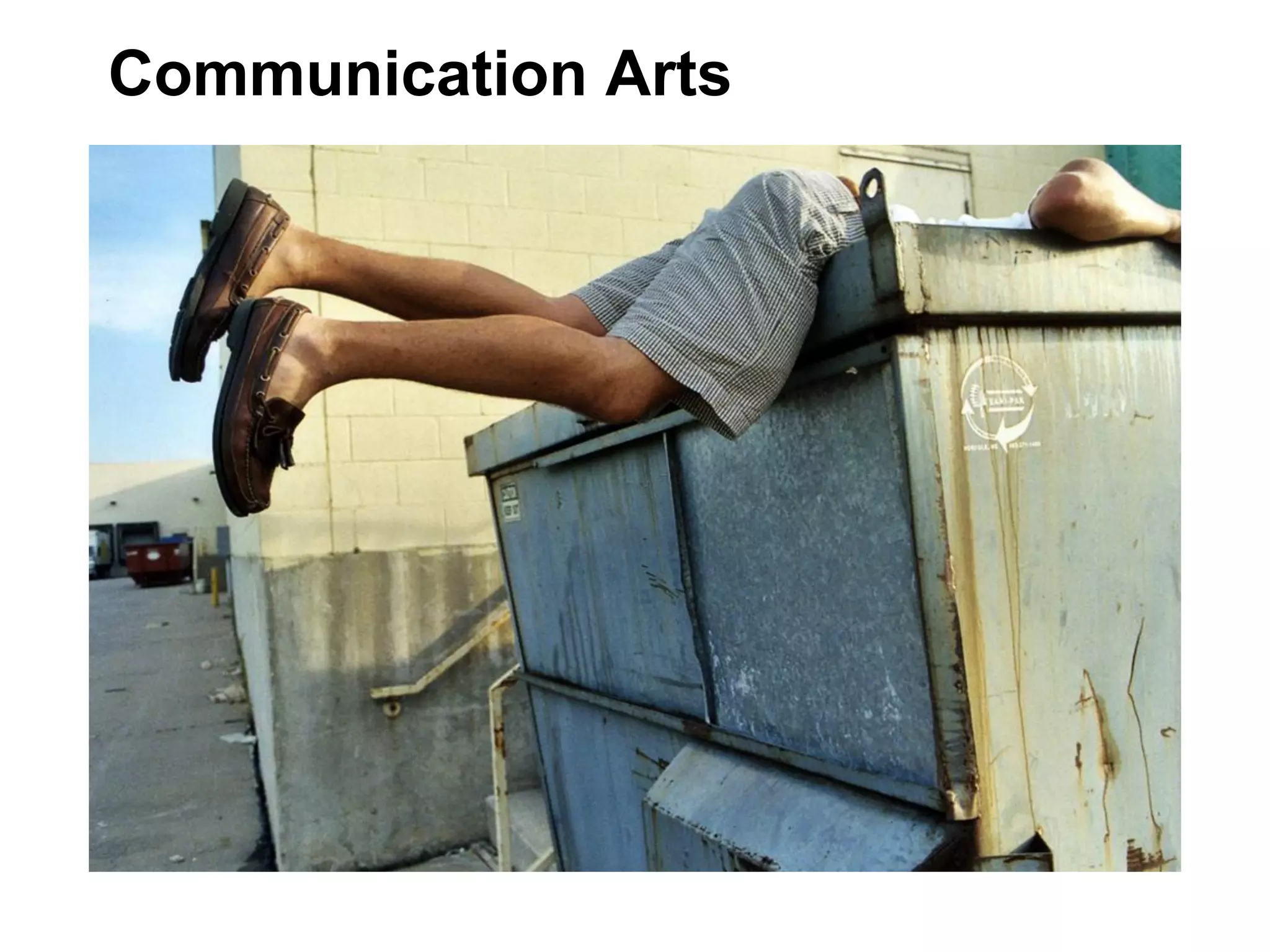
Practical Arts
Fine Arts
PE
Social Studies
Math
Science
Communication Arts
Let's practice inferring....
                  Inferring


  Schema            Clues from
(Background
 Knowledge)   +        Text
                   (Words and
                                 =   Inference

                     Pictures)
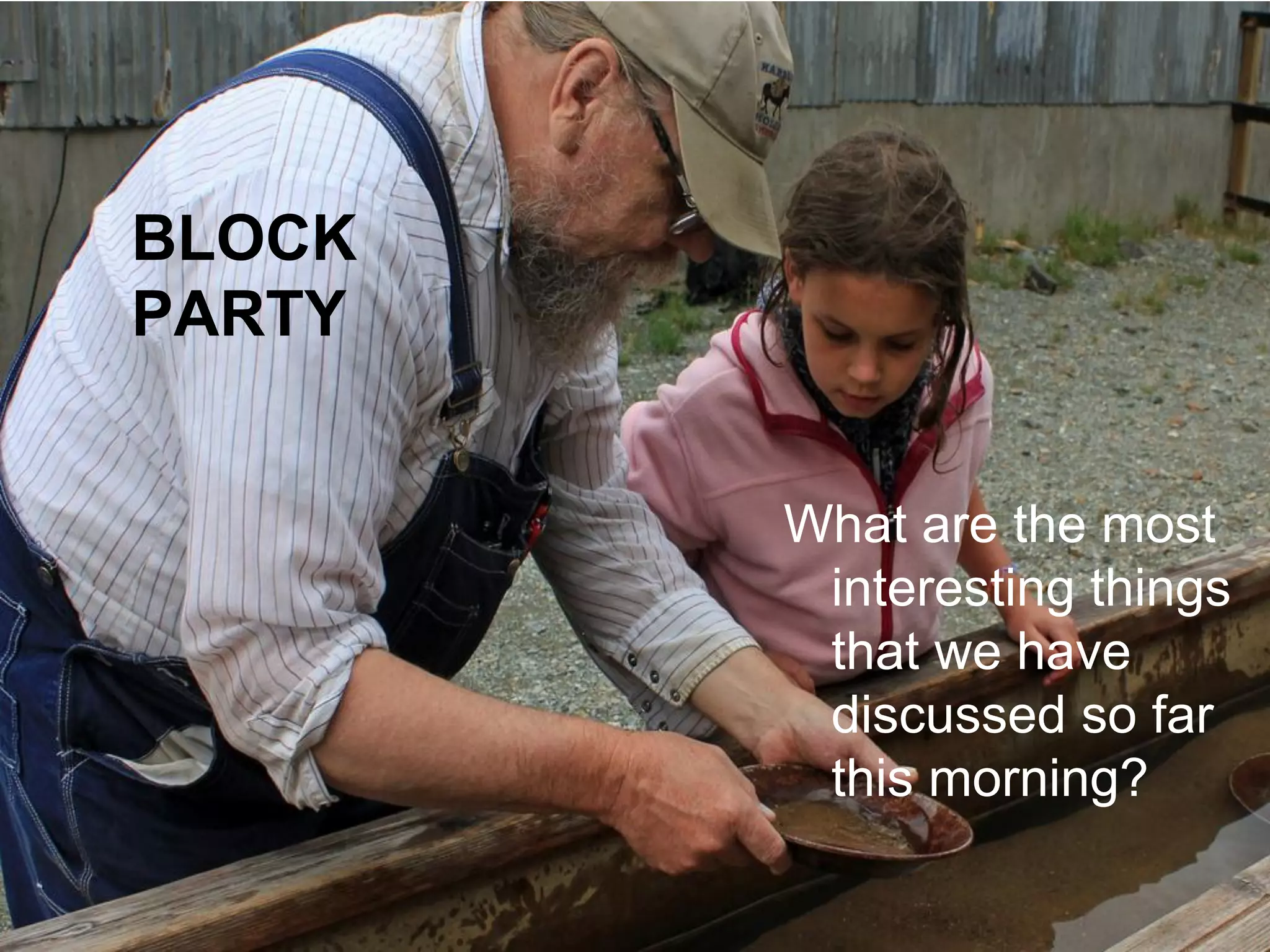
BLOCK
PARTY


        What are the most
         interesting things
         that we have
         discussed so far
         this morning?
What are the
most important
things that we
have discussed
so far this
morning?
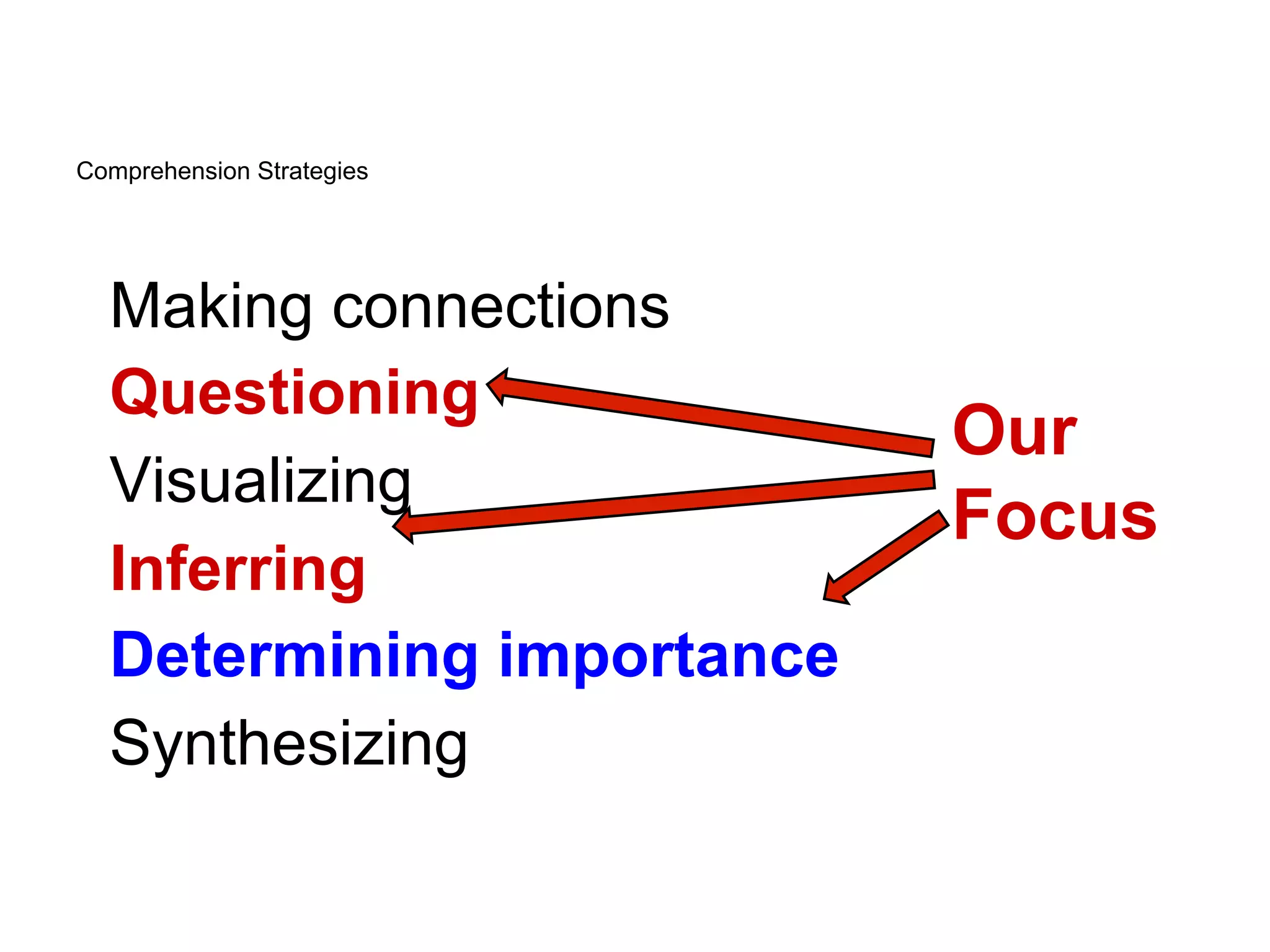
Comprehension Strategies


  Making connections
  Questioning
                           Our
  Visualizing
                           Focus
  Inferring
  Determining importance
  Synthesizing
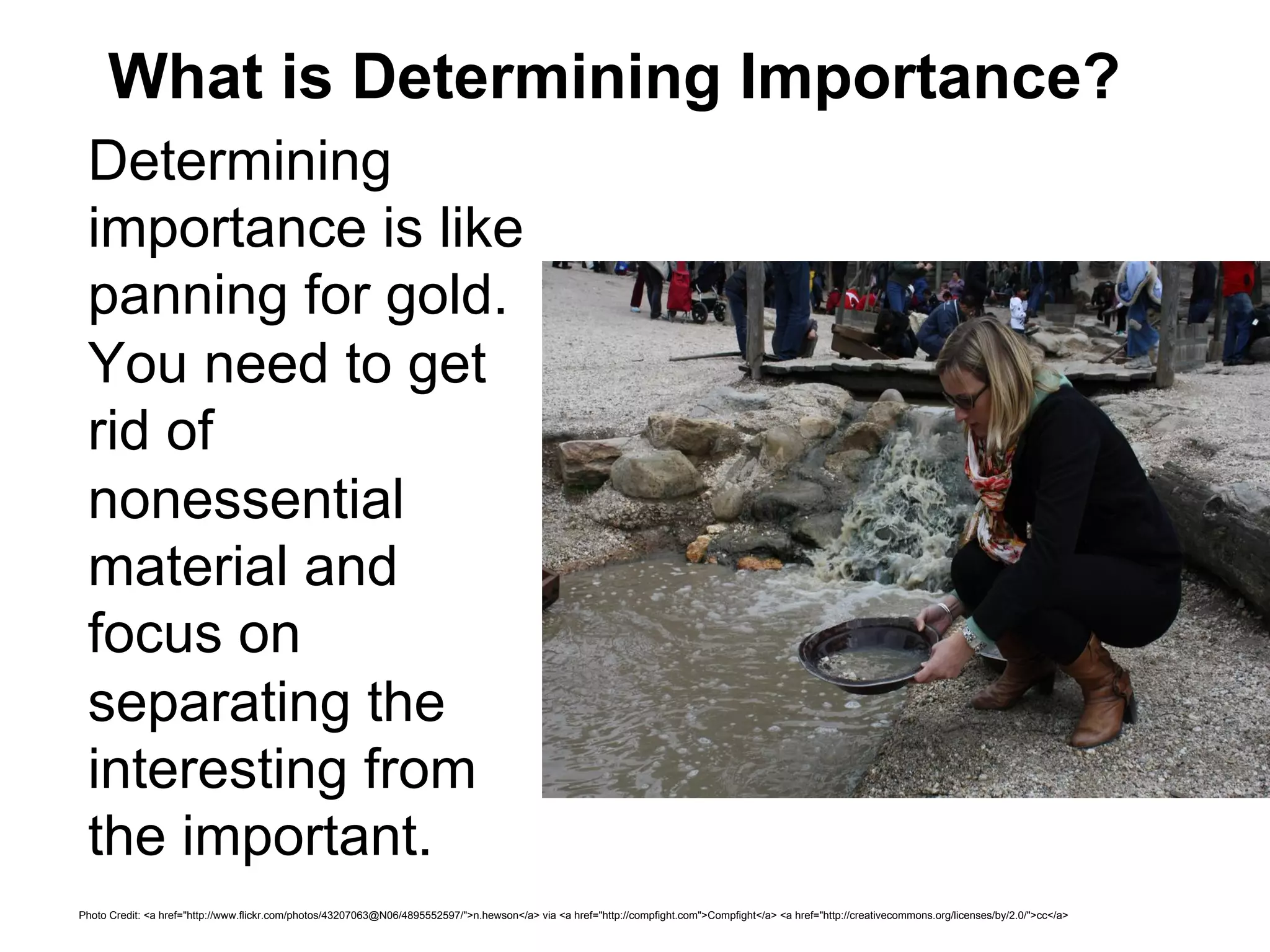
What is Determining Importance?
 Determining
 importance is like
 panning for gold.
 You need to get
 rid of
 nonessential
 material and
 focus on
 separating the
 interesting from
 the important.
Photo Credit: <a href="http://www.flickr.com/photos/43207063@N06/4895552597/">n.hewson</a> via <a href="http://compfight.com">Compfight</a> <a href="http://creativecommons.org/licenses/by/2.0/">cc</a>
Why teach Determining Importance?
Determining importance...
-assists readers in identifying important idea and facts, which enables them to
   mentally organize information and ultimately more easily comprehend the
   essence of what they are reading


Determining importance becomes even more critical with Common Core
  implementation due to...
-an emphasis change from literary to informational texts
-a greater emphasis on independent learning and the use of study skills


Did you know?
-The more well-written a text is, the more difficult it is to determine what is
   important vs. what is interesting. Textbook material tends to be the most
   difficult of all.

http://www.ohiorc.org/adlit/strategy/strategy_each.aspx?id=5#how

teacherweb.esu1.org/files/ahill/DeterminingImportance.ppt
How do I teach Determining Importance?

 1. Annotation

 2. VIP - Very Important Point

 3. THIEVES - Title, Headings, Introduction, Every
    1st sentence in paragraph, Visuals, Vocabulary, End of
    chapter questions, Summary


 4. FQR - fact/question/response
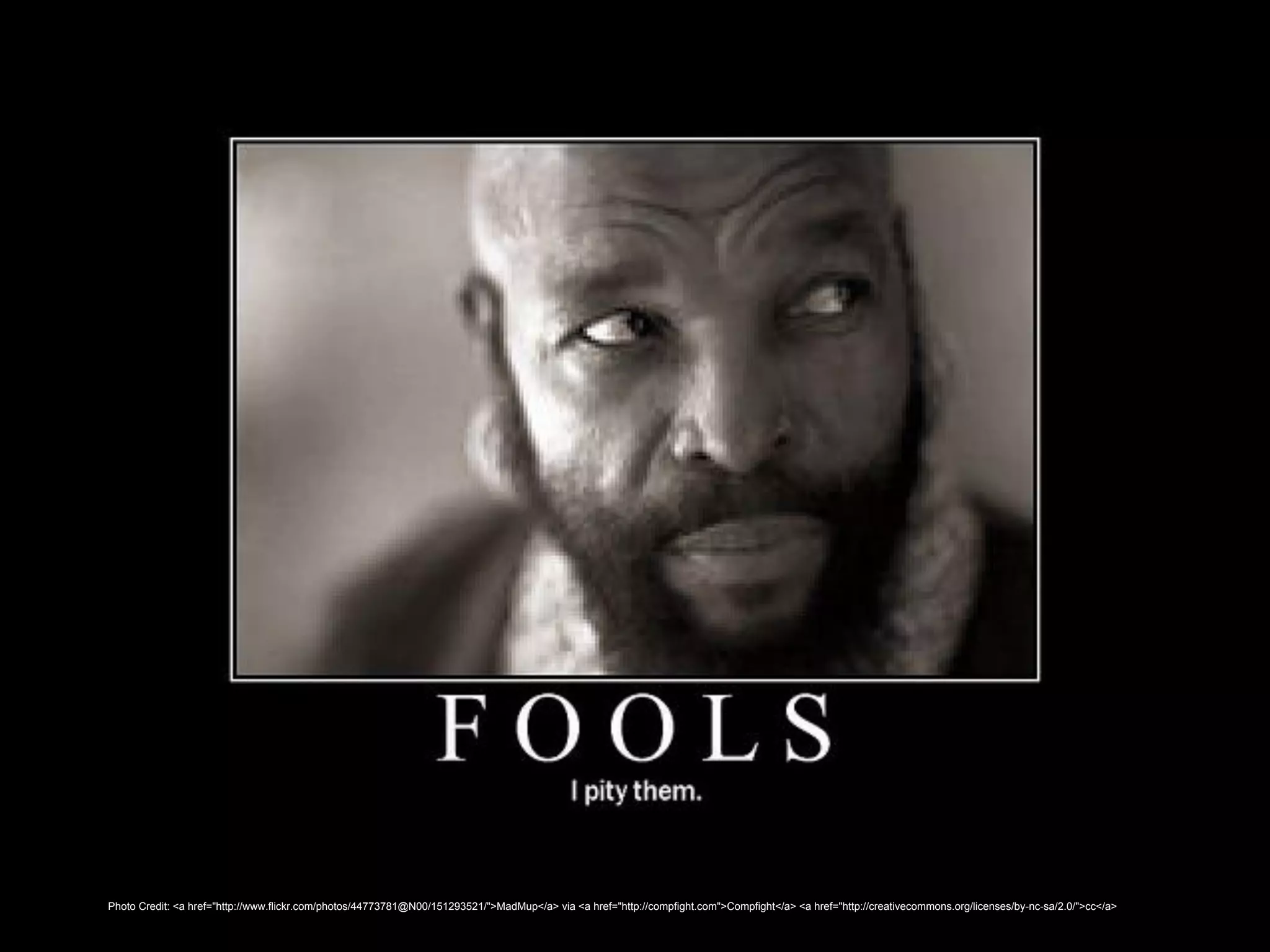
Photo Credit: <a href="http://www.flickr.com/photos/44773781@N00/151293521/">MadMup</a> via <a href="http://compfight.com">Compfight</a> <a href="http://creativecommons.org/licenses/by-nc-sa/2.0/">cc</a>
Exit Slip
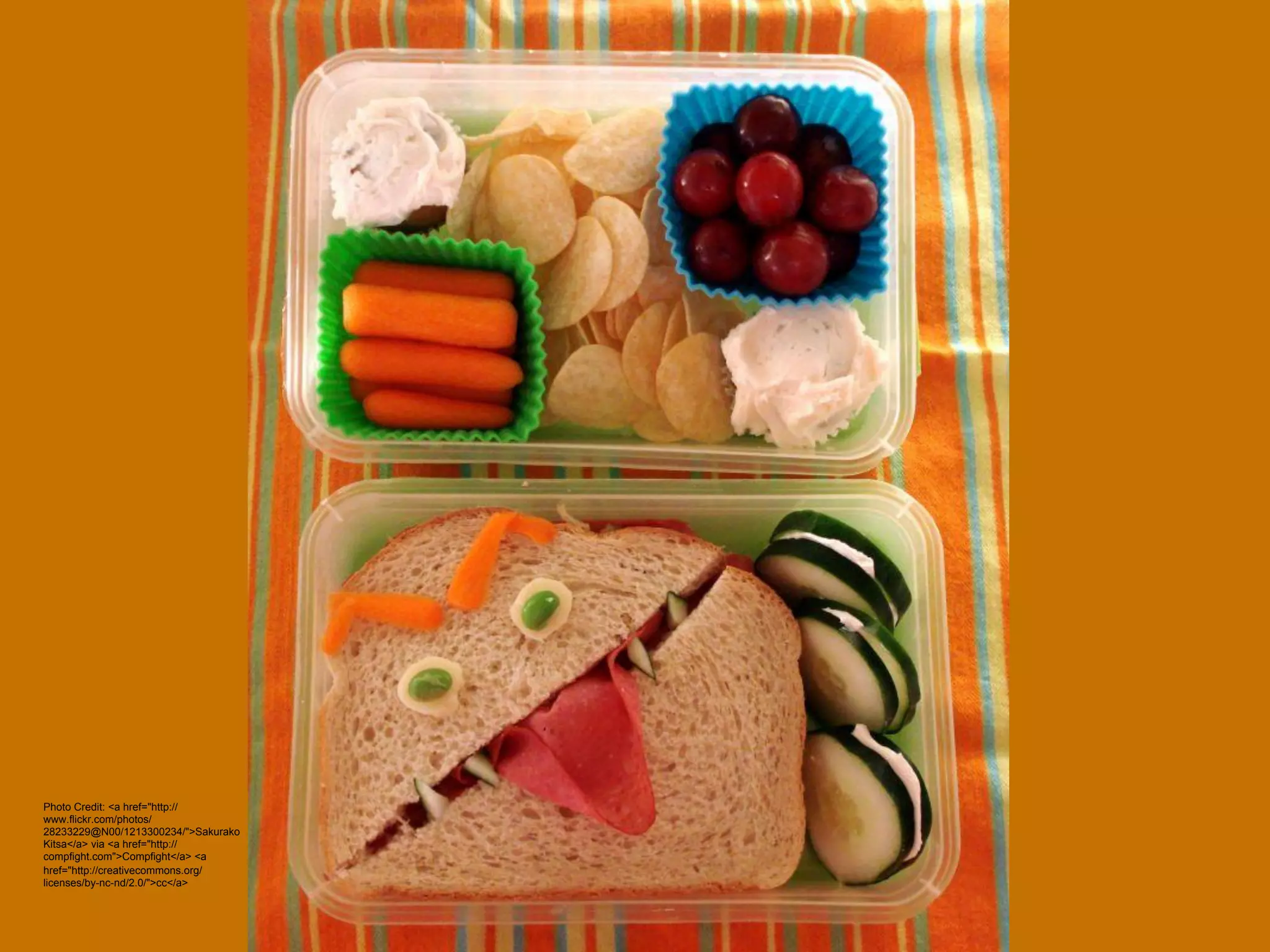
Photo Credit: <a href="http://
www.flickr.com/photos/
28233229@N00/1213300234/">Sakurako
Kitsa</a> via <a href="http://
compfight.com">Compfight</a> <a
href="http://creativecommons.org/
licenses/by-nc-nd/2.0/">cc</a>
Next
Steps


           4th Quarter Text Complexity,
      Vocabulary, and Comprehension Strategy
                   Plan Template
                                    http://goo.gl/sBivt
 Photo Credit: <a href="http://www.flickr.com/photos/10508943@N00/169187125/">extranoise</a> via <a href="http://compfight.com">Compfight</a> <a href="http://creativecommons.org/licenses/by/2.0/">cc</a>

SJSD Comprehension Strategy Professional Development

  • 1.
    SJSD Secondary Professional Development February 19, 2013
  • 2.
    Text  Complexity   Comprehen sion   Strategies     ading E  Re CLOS Reader  and  Task    Considera8 on     Qualita8ve Quan ta8ve   Tier  2   Tier  3   The  SJSD  Learner  
  • 3.
  • 4.
    Part 1: 35minutes Students will read three sources (article, fact sheet, and blog entry), taking notes on what they read, and answer the following questions in preparation for writing an informational essay about invasive plants: 1. Explain what invasive plants are and why people should be concerned about them. Use details from the sources to support your answer. 2. Evaluate which source, the article or the fact sheet, would be most helpful to the blog writer. Use details from the sources to support your answer. 3. Analyze why some people might not want to get rid of invasive plants. Use details from the sources to support your answer.
  • 5.
    Part 2: 70minutes Review your notes and sources, plan draft, and revise your essay. Your assignment: A local newspaper is publishing student essays about important environmental topics. You are invited to submit an essay about invasive plants, which have become a serious problem in your state. Your essay should be informative and interesting to read, and it should give readers a basic introduction to the issue of invasive plants.
  • 6.
  • 7.
    Reading Activity Think aboutyour thinking - "metacognition" Purpose - actively read to understand how this applies to you Article: Common Core Standards Set the Stage for New State Accountability Tests
  • 8.
    Who are weas readers? onne ctions Ma k ing C ortance Questioning in g Imp De termin thes izing Inferring Syn
  • 9.
    Comprehension Strategies Making connections Questioning Our Visualizing Focus Inferring Determining importance Synthesizing
  • 10.
    Comprehension Strategies Making connections Questioning Our Visualizing Focus Inferring Determining importance Synthesizing
  • 11.
    What is Questioning? •  Readers generate questions before, during, and after reading. •  Questions pertain to the text’s content, structure and language. •  Readers ask questions for different purposes including those that clarify their own developing understanding. •  Readers wonder about the choices the author made when writing.
  • 12.
    Why teach Questioning? "Readerswho ask questions when they read assume responsibility for their learning and improve their comprehension in 5 ways: 1.  By interacting with the text 2.  By motivating themselves to read 3.  By clarifying information in the text 4.  By inferring beyond the literal meaning." 5.  By drawing conclusions at the end of the text. I Read It, But I Don't Get It by Chris Tiovani
  • 13.
    How do Iteach Questioning? •  Set a purpose for reading. •  Annotate by writing questions as the text is read.
  • 14.
    Thick and ThinQuestions Thin Thick •  asked to clarify/ •  digs deeper into a understand reader's thinking •  answered with one •  addresses large, word or a number - universal concepts simple •  scratch the surface of a reader's thinking
  • 15.
    Thick vs. ThinQuestions
  • 16.
    Time for a Break http://taildom.com/blog/pictures/bathroom-break-at-cesar-millans/#.T5ls0MvRz0Q.pinterest
  • 17.
    Comprehension Strategies Making connections Questioning Our Visualizing Focus Inferring Determining importance Synthesizing
  • 18.
    What is Inferring? • "Inferring allows readers to make their own discoveries without the direct comment of the author." --Susan Hall •  "Inferring occurs when text clues merge with with the reader's prior knowledge and questions to point toward a conclusion about an underlying theme or idea in the text." --Stephanie Harvey & Anne Goudvis
  • 19.
    Inferring is notpredicting! "Predicting" and "inferring" are closely related, but there is a difference between these two skills. A prediction is a guess about the outcome of the action based on your prior knowledge or factual information in a text. A prediction can be confirmed or denied within the text. An inference is a way to figure out the deeper meaning of a text by "reading between the lines". Harvey, S. & Goudvis, A. (2000), Strategies that work: Teaching comprehension to enhance understanding, Stenhouse Publishers.
  • 20.
    Why teach Inferring? Inferringrequires higher order thinking skills, which makes it a difficult skill for many students. Researchers have confirmed that thoughtful, active, proficient readers are metacognitive; they think about their own thinking during reading.
  • 21.
    Inferring Schema Clues from (Background Knowledge) + Text (Words and = Inference Pictures)
  • 22.
  • 23.
  • 24.
  • 25.
  • 26.
  • 27.
  • 28.
  • 29.
    Let's practice inferring.... Inferring Schema Clues from (Background Knowledge) + Text (Words and = Inference Pictures)
  • 30.
    BLOCK PARTY What are the most interesting things that we have discussed so far this morning?
  • 31.
    What are the mostimportant things that we have discussed so far this morning?
  • 32.
    Comprehension Strategies Making connections Questioning Our Visualizing Focus Inferring Determining importance Synthesizing
  • 33.
    What is DeterminingImportance? Determining importance is like panning for gold. You need to get rid of nonessential material and focus on separating the interesting from the important. Photo Credit: <a href="http://www.flickr.com/photos/43207063@N06/4895552597/">n.hewson</a> via <a href="http://compfight.com">Compfight</a> <a href="http://creativecommons.org/licenses/by/2.0/">cc</a>
  • 34.
    Why teach DeterminingImportance? Determining importance... -assists readers in identifying important idea and facts, which enables them to mentally organize information and ultimately more easily comprehend the essence of what they are reading Determining importance becomes even more critical with Common Core implementation due to... -an emphasis change from literary to informational texts -a greater emphasis on independent learning and the use of study skills Did you know? -The more well-written a text is, the more difficult it is to determine what is important vs. what is interesting. Textbook material tends to be the most difficult of all. http://www.ohiorc.org/adlit/strategy/strategy_each.aspx?id=5#how teacherweb.esu1.org/files/ahill/DeterminingImportance.ppt
  • 35.
    How do Iteach Determining Importance? 1. Annotation 2. VIP - Very Important Point 3. THIEVES - Title, Headings, Introduction, Every 1st sentence in paragraph, Visuals, Vocabulary, End of chapter questions, Summary 4. FQR - fact/question/response
  • 36.
    Photo Credit: <ahref="http://www.flickr.com/photos/44773781@N00/151293521/">MadMup</a> via <a href="http://compfight.com">Compfight</a> <a href="http://creativecommons.org/licenses/by-nc-sa/2.0/">cc</a>
  • 37.
  • 38.
    Photo Credit: <ahref="http:// www.flickr.com/photos/ 28233229@N00/1213300234/">Sakurako Kitsa</a> via <a href="http:// compfight.com">Compfight</a> <a href="http://creativecommons.org/ licenses/by-nc-nd/2.0/">cc</a>
  • 39.
    Next Steps 4th Quarter Text Complexity, Vocabulary, and Comprehension Strategy Plan Template http://goo.gl/sBivt Photo Credit: <a href="http://www.flickr.com/photos/10508943@N00/169187125/">extranoise</a> via <a href="http://compfight.com">Compfight</a> <a href="http://creativecommons.org/licenses/by/2.0/">cc</a>