QuestioningStrategies That WorkBy Stephanie Harvey and Anne Goudvis
Sensational Strategies Predicting Connections Monitoring Questioning Inferring
Questions lead readers deeper into a piece, setting up a dialogue with the author, sparking in readers’ minds what it is they care about.  If you ask questions as you read, you are awake.  You are thinking. You are engaged.~ Susan Zimmerman
 Proficient readers spontaneously and purposefully ask questions before, during, and after reading.
Readers ask questions to:Clarify meaningSpeculate about text yet to be readDetermine an author’s intent, style, content, or formLocate a specific answer in textConsider rhetorical questions inspired by the text
 Proficient Readers…understand that many of the most intriguing questions can not be answered in the text, but are left to the reader’s interpretationdetermine whether the answers to their questions can be found in the text or whether they will need to infer the answer using their background knowledge, and/or an outside source
 Proficient Readers…use questions to focus their attention on ideas, events, or other text elements they want to rememberare aware that as they hear others’ questions, new ones – called generative questions – are inspired in their own mindsunderstand and can describe how asking    questions deepens their comprehension
Where to begin?Model, model, model during Read AloudStrategies That Work, Chapter 8 – full of lessons for teaching questioningQARThick and Thin Questions Anchor ChartsThe Q Food
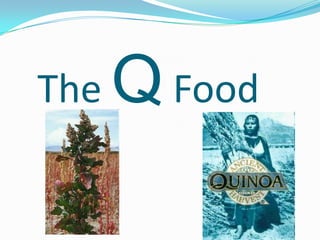
The Q FoodQuinoa – pronounced “keen-wa.”Quinoa is a grain from the Andes Mountains, first used by the Inca civilization.  For more information, visit www.quinoa.net
The Q Food
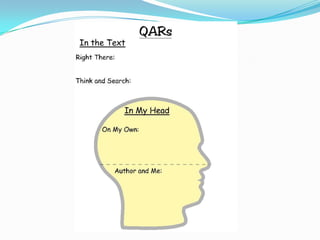
QAR Question Answer RelationshipsIN THE TEXTRight There – literal question, answer can be  found in text
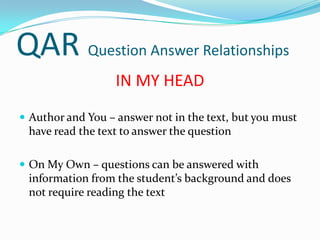
Think and Search – how the information or ideas in the text relate to one another, must summarize, compare, contrast, explainQAR Question Answer RelationshipsIN MY HEADAuthor and You – answer not in the text, but you must have read the text to answer the question
On My Own – questions can be answered with information from the student’s background and does not require reading the text
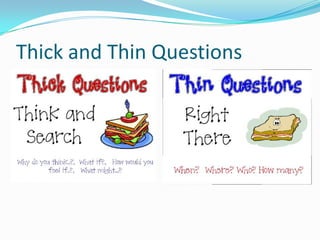
Thick and Thin Questions
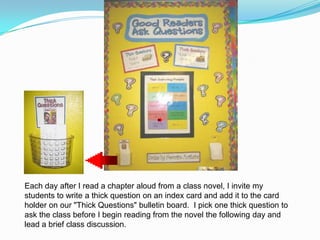
Each day after I read a chapter aloud from a class novel, I invite my students to write a thick question on an index card and add it to the card holder on our "Thick Questions" bulletin board.  I pick one thick question to ask the class before I begin reading from the novel the following day and lead a brief class discussion.
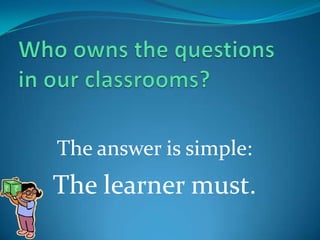
Who owns the questions in our classrooms?The answer is simple:The learner must.

Questioning Strategy

  • 1.
    QuestioningStrategies That WorkByStephanie Harvey and Anne Goudvis
  • 2.
    Sensational Strategies PredictingConnections Monitoring Questioning Inferring
  • 3.
    Questions lead readersdeeper into a piece, setting up a dialogue with the author, sparking in readers’ minds what it is they care about. If you ask questions as you read, you are awake. You are thinking. You are engaged.~ Susan Zimmerman
  • 4.
    Proficient readersspontaneously and purposefully ask questions before, during, and after reading.
  • 5.
    Readers ask questionsto:Clarify meaningSpeculate about text yet to be readDetermine an author’s intent, style, content, or formLocate a specific answer in textConsider rhetorical questions inspired by the text
  • 6.
    Proficient Readers…understandthat many of the most intriguing questions can not be answered in the text, but are left to the reader’s interpretationdetermine whether the answers to their questions can be found in the text or whether they will need to infer the answer using their background knowledge, and/or an outside source
  • 7.
    Proficient Readers…usequestions to focus their attention on ideas, events, or other text elements they want to rememberare aware that as they hear others’ questions, new ones – called generative questions – are inspired in their own mindsunderstand and can describe how asking questions deepens their comprehension
  • 8.
    Where to begin?Model,model, model during Read AloudStrategies That Work, Chapter 8 – full of lessons for teaching questioningQARThick and Thin Questions Anchor ChartsThe Q Food
  • 9.
    The Q FoodQuinoa– pronounced “keen-wa.”Quinoa is a grain from the Andes Mountains, first used by the Inca civilization. For more information, visit www.quinoa.net
  • 10.
  • 11.
    QAR Question AnswerRelationshipsIN THE TEXTRight There – literal question, answer can be found in text
  • 12.
    Think and Search– how the information or ideas in the text relate to one another, must summarize, compare, contrast, explainQAR Question Answer RelationshipsIN MY HEADAuthor and You – answer not in the text, but you must have read the text to answer the question
  • 13.
    On My Own– questions can be answered with information from the student’s background and does not require reading the text
  • 14.
  • 15.
    Each day afterI read a chapter aloud from a class novel, I invite my students to write a thick question on an index card and add it to the card holder on our "Thick Questions" bulletin board.  I pick one thick question to ask the class before I begin reading from the novel the following day and lead a brief class discussion.
  • 16.
    Who owns thequestions in our classrooms?The answer is simple:The learner must.