Helping Students Answer
       Questions
      Renee Jackson
What is QAR?

•   QAR: Question-Answer
    Relationships
•   Meta-cognition strategy which:
    •   enhances learners’ ability to answer questions,
    •   generate questions and
    •   pose questions at varying levels of complexity for
        reading comprehension

•   Readers can rely on two facets of comprehension
    for answering questions:
    •   1. text-based information
    •   2. schema or background knowledge
More Knowledgeable Others
                 say:
   Reading Educator
   Mr. Steinbach's Blog- Fourth Grade
   Scholastic
   Barnes and Noble books recommendation
How does it work?


            QAR
 Question Answer Relationships
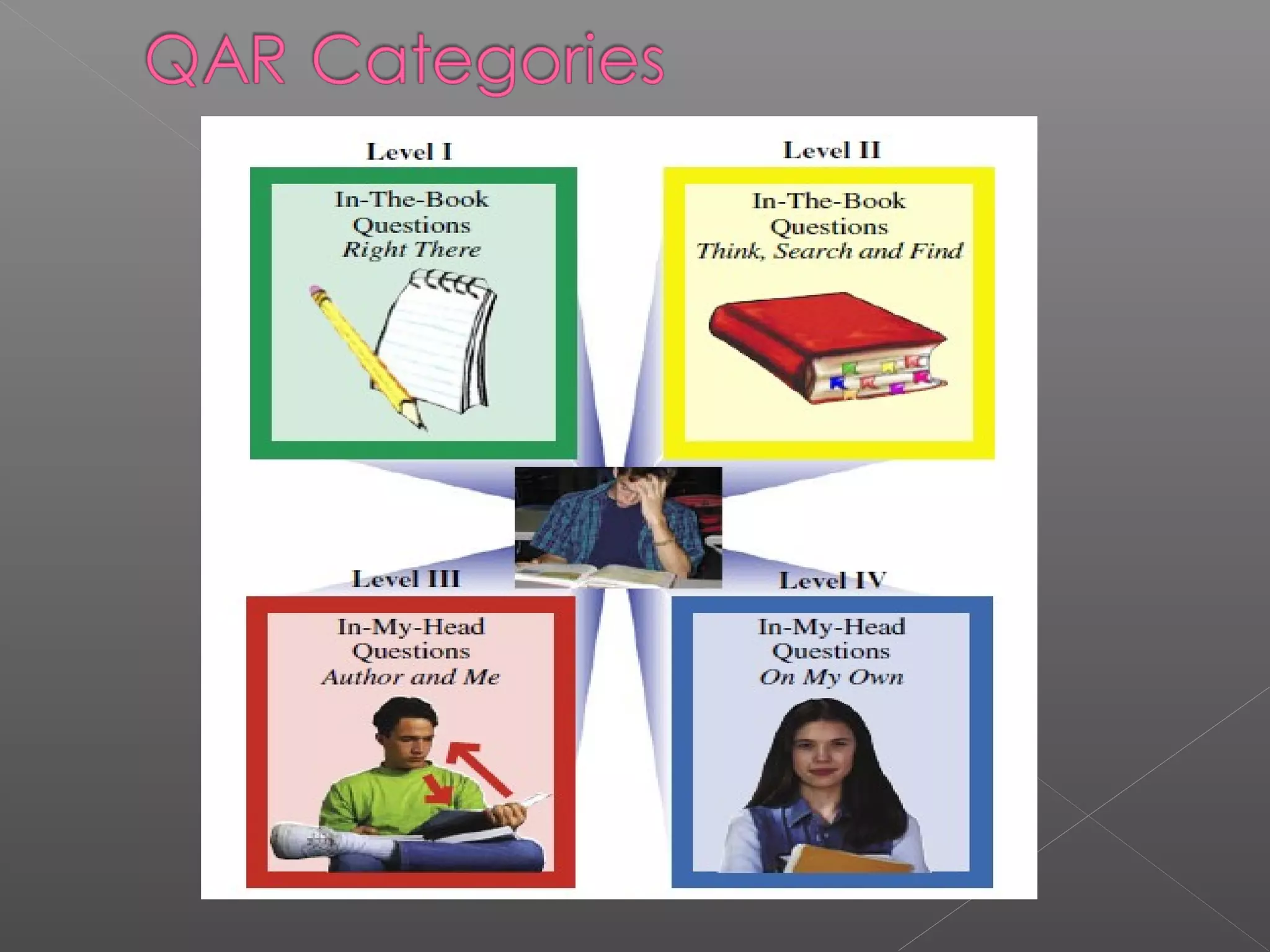
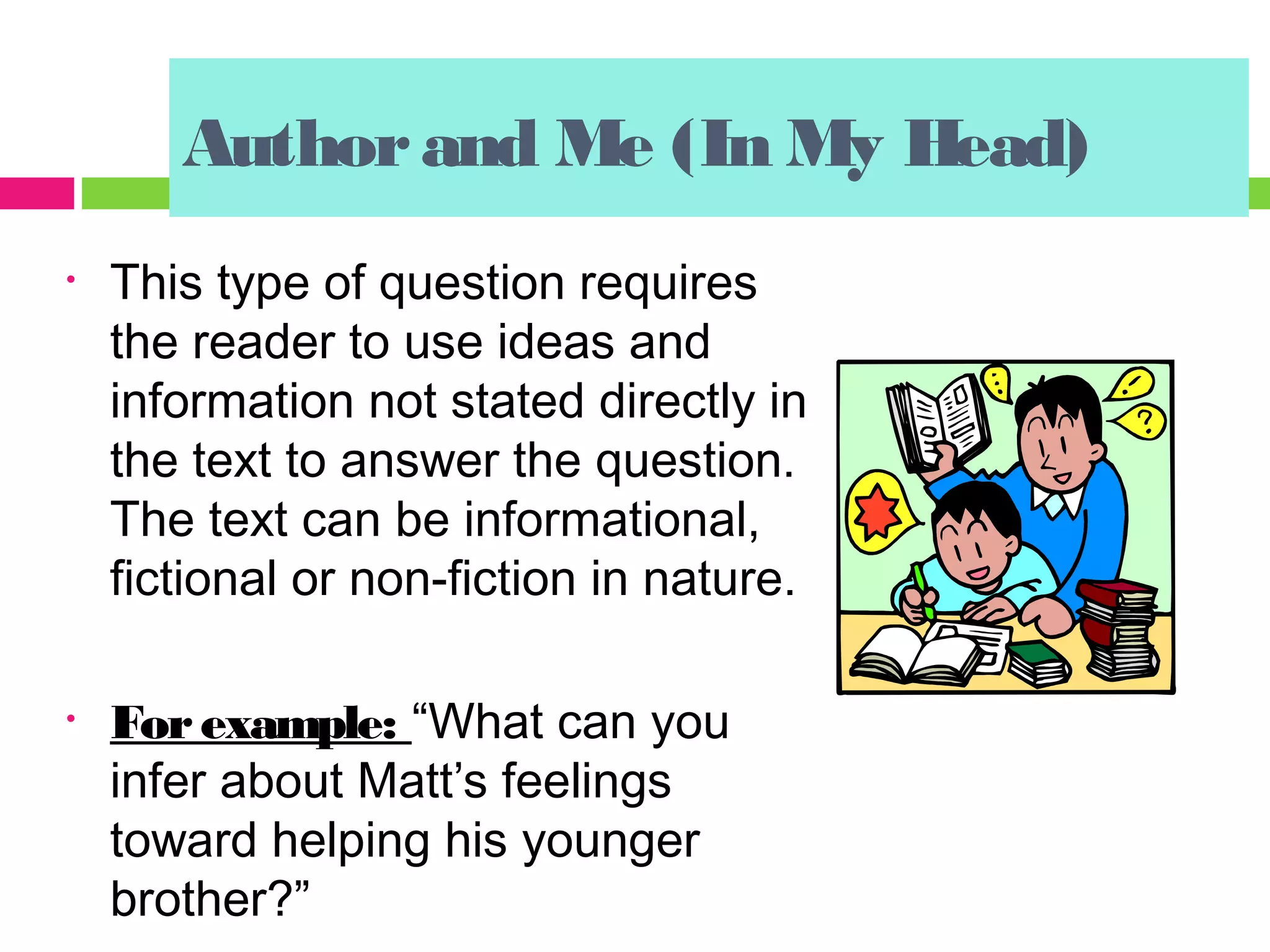
Author and Me (In My Head)
•   This type of question requires
    the reader to use ideas and
    information not stated directly in
    the text to answer the question.
    The text can be informational,
    fictional or non-fiction in nature.

•   For example: “What can you
    infer about Matt’s feelings
    toward helping his younger
    brother?”
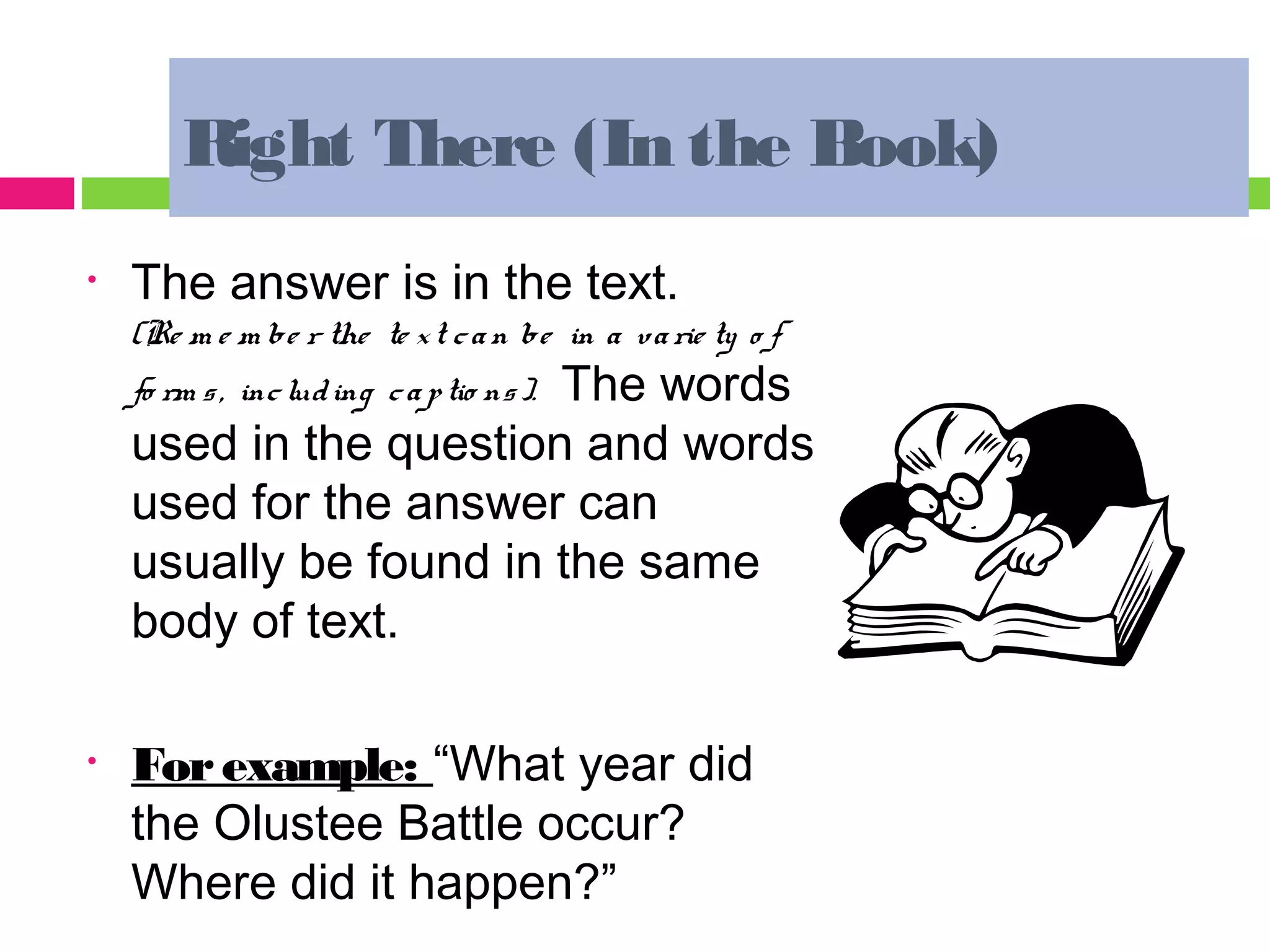
Right There (In the Book)
•   The answer is in the text.
    (Re m e m be r the te x t c a n be in a v a rie ty o f
                        The words
    fo rm s , inc lud ing c a p tio ns ).
    used in the question and words
    used for the answer can
    usually be found in the same
    body of text.

•   For example: “What year did
    the Olustee Battle occur?
    Where did it happen?”
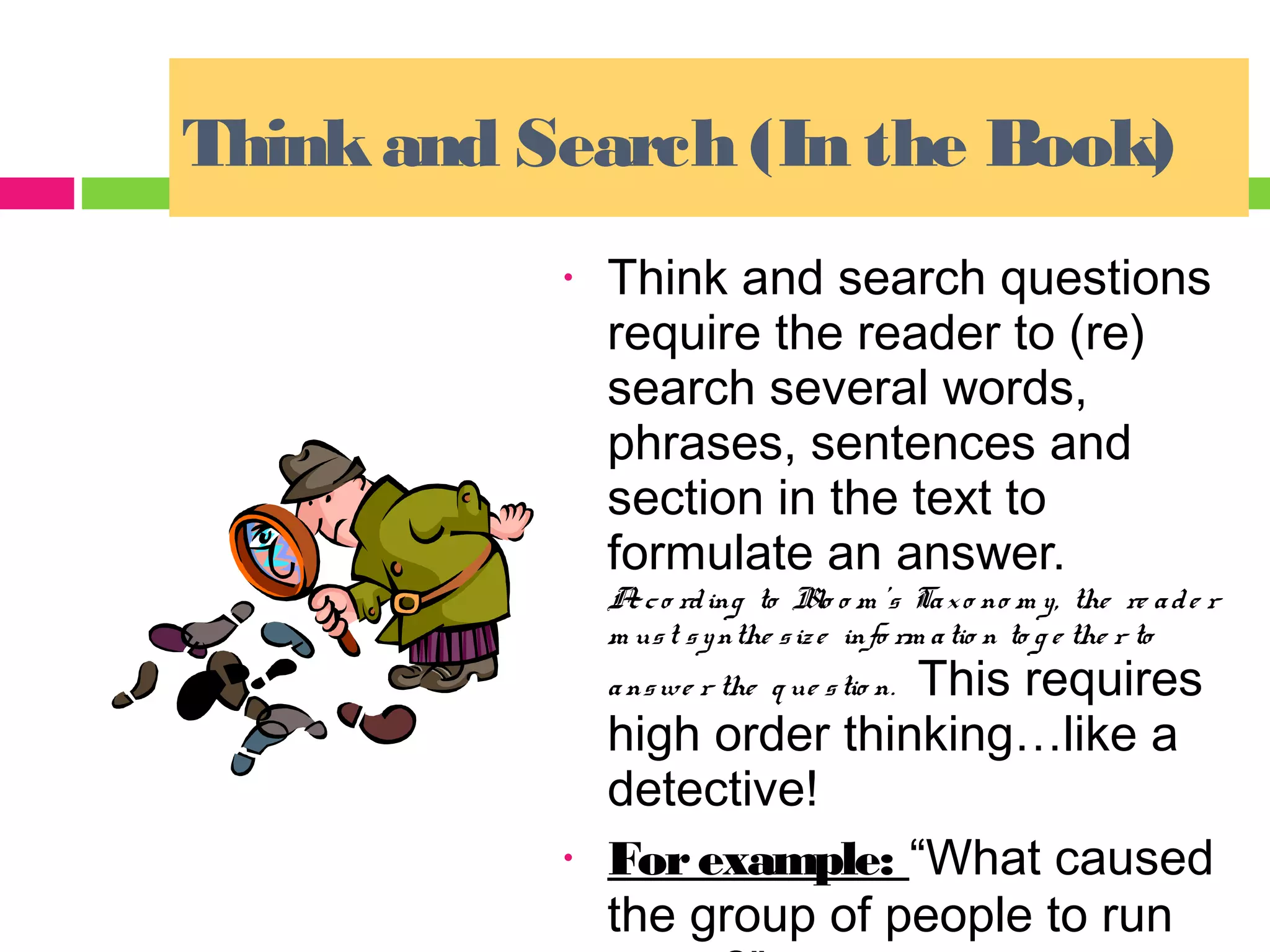
Think and Search (In the Book)
           •   Think and search questions
               require the reader to (re)
               search several words,
               phrases, sentences and
               section in the text to
               formulate an answer.
               A c o rd ing to Blo o m ’s Ta x o no m y, the re a d e r
                c
               m us t s y nthe s iz e info rm a tio n to g e the r to
                              This requires
               a ns we r the q ue s tio n.
               high order thinking…like a
               detective!
           •   For example: “What caused
               the group of people to run
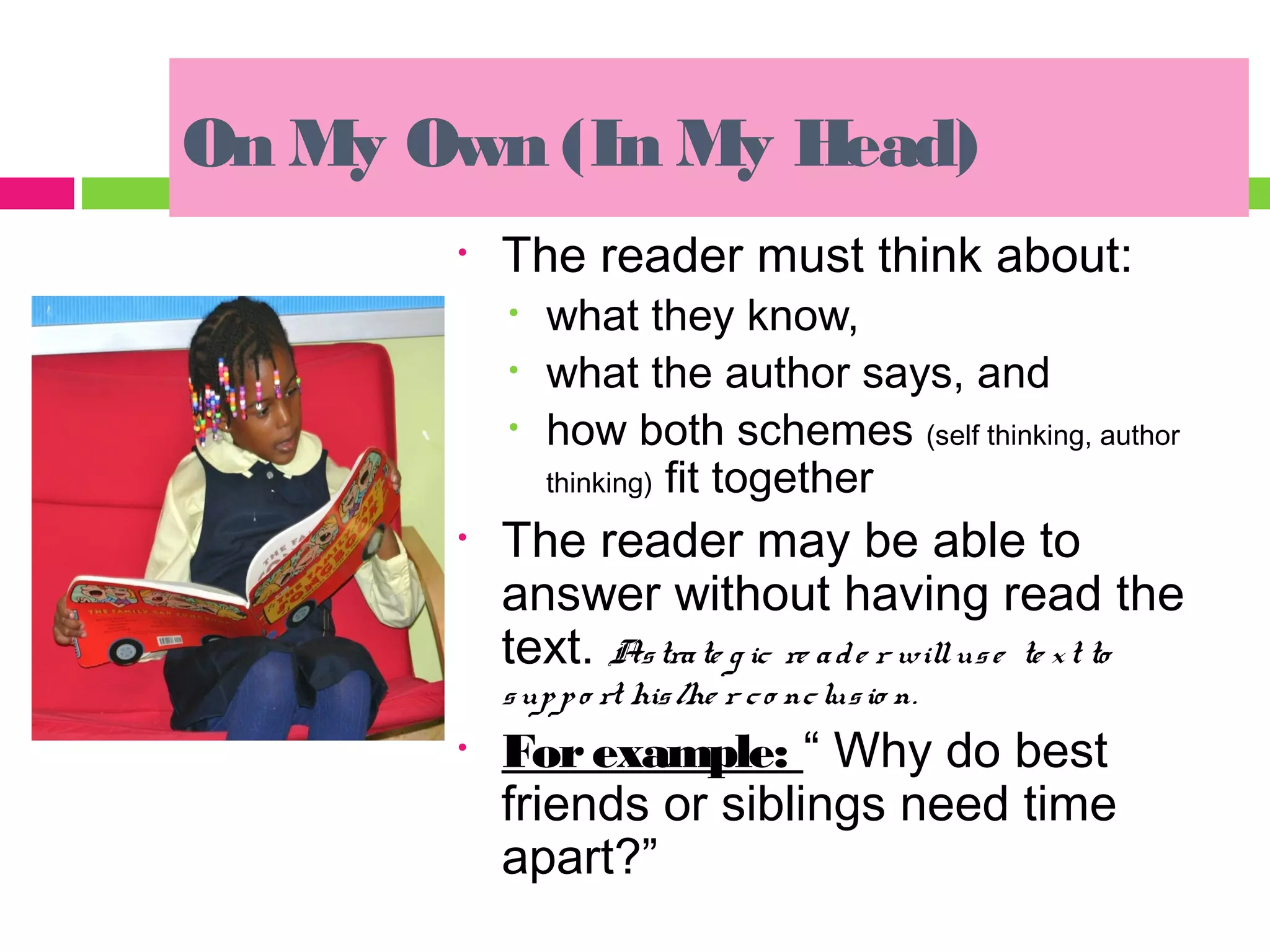
On My Own (In My Head)
       •   The reader must think about:
           •   what they know,
           •   what the author says, and
           •   how both schemes (self thinking, author
               thinking) fit together
       •   The reader may be able to
           answer without having read the
           text. As tra te g ic re a d e r will us e te x t to
           s up p o rt his /he r c o nc lus io n.
       •   For example: “ Why do best
           friends or siblings need time
           apart?”
 Knowing  the           Read, read, read!
 relationship between    Read fun text, like
 a question and an        comics, graphic novels,
 answer.                  or the back of a cereal
                          box.
                         Read informational text,
                          like signposts at the zoo
                          describing animal
                          behavior.
                         Read technical text, like
                          the instructions to build
                          a birdhouse.

      So makes a scholar a
         better reader?

Helping students answer questions

  • 1.
    Helping Students Answer Questions Renee Jackson
  • 2.
    What is QAR? • QAR: Question-Answer Relationships • Meta-cognition strategy which: • enhances learners’ ability to answer questions, • generate questions and • pose questions at varying levels of complexity for reading comprehension • Readers can rely on two facets of comprehension for answering questions: • 1. text-based information • 2. schema or background knowledge
  • 4.
    More Knowledgeable Others say:  Reading Educator  Mr. Steinbach's Blog- Fourth Grade  Scholastic  Barnes and Noble books recommendation
  • 5.
    How does itwork? QAR Question Answer Relationships
  • 6.
    Author and Me(In My Head) • This type of question requires the reader to use ideas and information not stated directly in the text to answer the question. The text can be informational, fictional or non-fiction in nature. • For example: “What can you infer about Matt’s feelings toward helping his younger brother?”
  • 7.
    Right There (Inthe Book) • The answer is in the text. (Re m e m be r the te x t c a n be in a v a rie ty o f The words fo rm s , inc lud ing c a p tio ns ). used in the question and words used for the answer can usually be found in the same body of text. • For example: “What year did the Olustee Battle occur? Where did it happen?”
  • 8.
    Think and Search(In the Book) • Think and search questions require the reader to (re) search several words, phrases, sentences and section in the text to formulate an answer. A c o rd ing to Blo o m ’s Ta x o no m y, the re a d e r c m us t s y nthe s iz e info rm a tio n to g e the r to This requires a ns we r the q ue s tio n. high order thinking…like a detective! • For example: “What caused the group of people to run
  • 9.
    On My Own(In My Head) • The reader must think about: • what they know, • what the author says, and • how both schemes (self thinking, author thinking) fit together • The reader may be able to answer without having read the text. As tra te g ic re a d e r will us e te x t to s up p o rt his /he r c o nc lus io n. • For example: “ Why do best friends or siblings need time apart?”
  • 10.
     Knowing the  Read, read, read! relationship between  Read fun text, like a question and an comics, graphic novels, answer. or the back of a cereal box.  Read informational text, like signposts at the zoo describing animal behavior.  Read technical text, like the instructions to build a birdhouse. So makes a scholar a better reader?