WELCOME
TO
OUR
PRESENTATION
INTRODUCING MY GROUP MEMBERS
Md. Ilias Bappi
ID: 131-15-2266
Ferdous Ahamad
ID:131-15-2408
Md.Kawsar Hamid
ID:131-15-2223
Md. Jahirul Shahed
ID: 131-15-2479
Saiful Islam
ID:131-15-2516
OUR PRESENTATION
TOPIC’S
SIMULATION, MODELING,
IT’S APPLICATION,
ADVANTAGE
&
DISADVANTAGE
DEFINITION OF SIMULATION
• Simulation is the execution of a model that is represented by
a computer program that given information about the system
being investigation.
• Simulation is the set of assumption.
HISTORICAL BACKGROUND OF SIMULATION
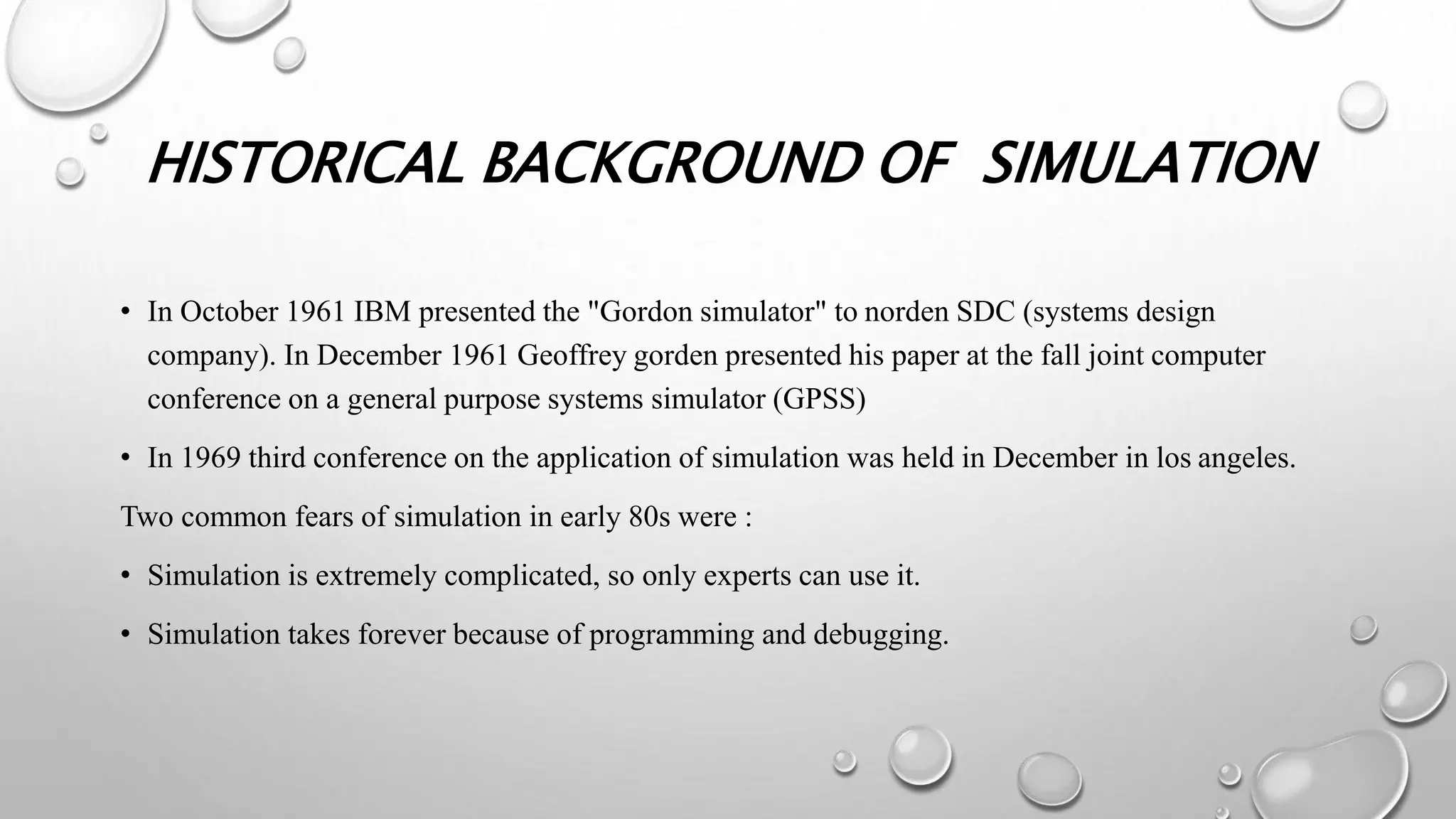
• In October 1961 IBM presented the "Gordon simulator" to norden SDC (systems design
company). In December 1961 Geoffrey gorden presented his paper at the fall joint computer
conference on a general purpose systems simulator (GPSS)
• In 1969 third conference on the application of simulation was held in December in los angeles.
Two common fears of simulation in early 80s were :
• Simulation is extremely complicated, so only experts can use it.
• Simulation takes forever because of programming and debugging.
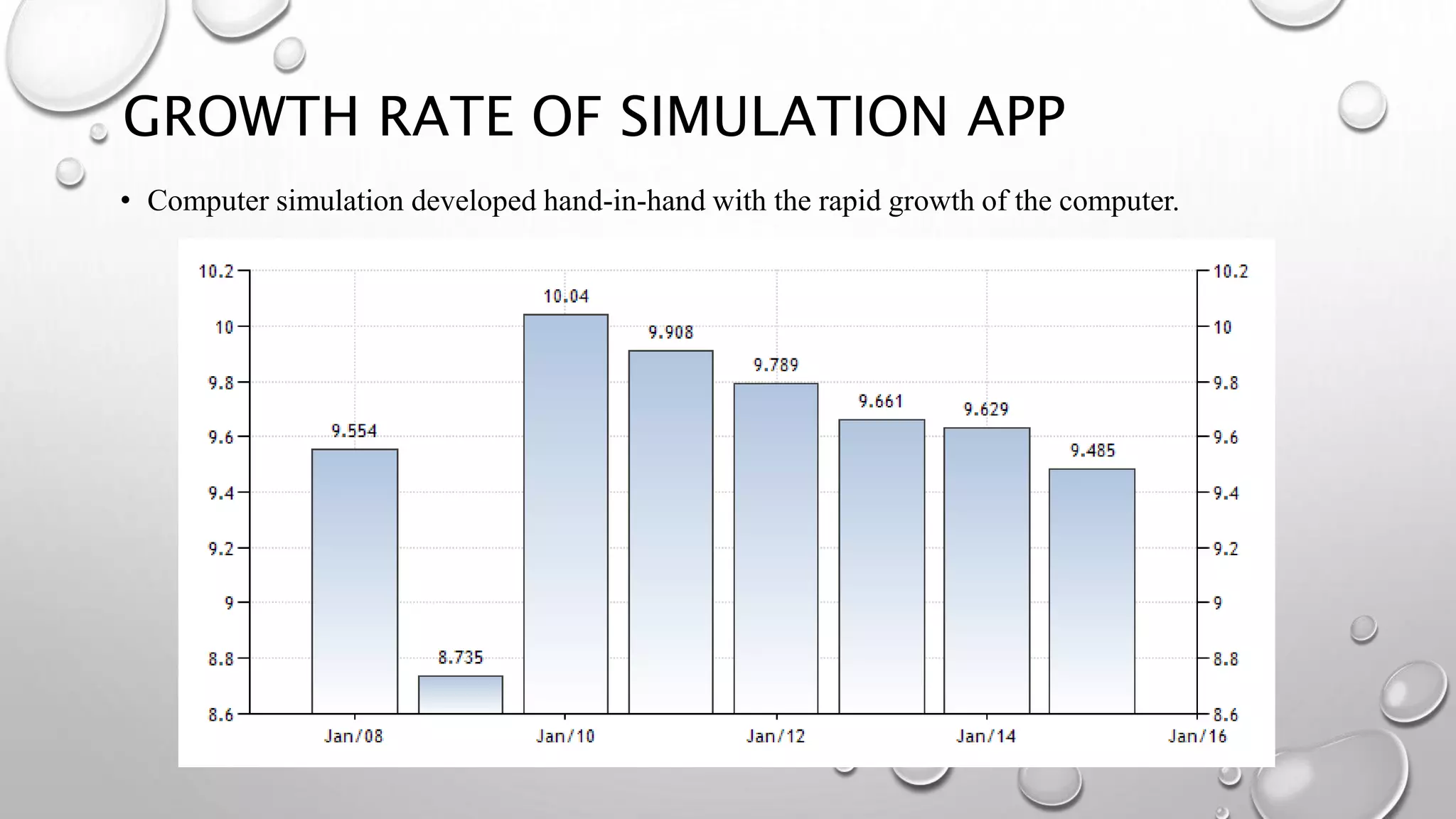
• Computer simulation developed hand-in-hand with the rapid growth of the computer.
GROWTH RATE OF SIMULATION APP
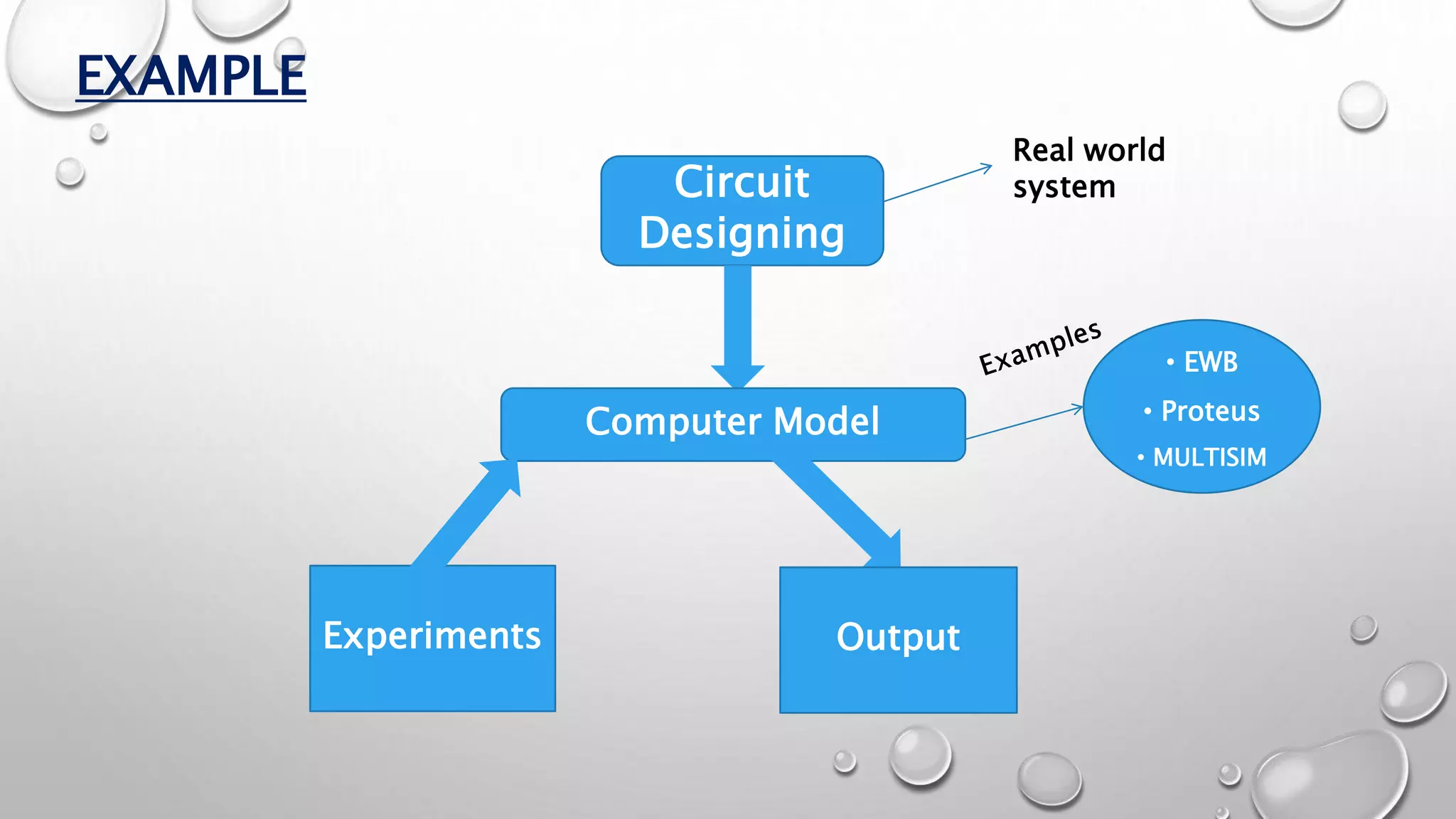
EXAMPLE
Circuit
Designing
Real world
system
Computer Model
• EWB
• Proteus
• MULTISIM
Experiments Output
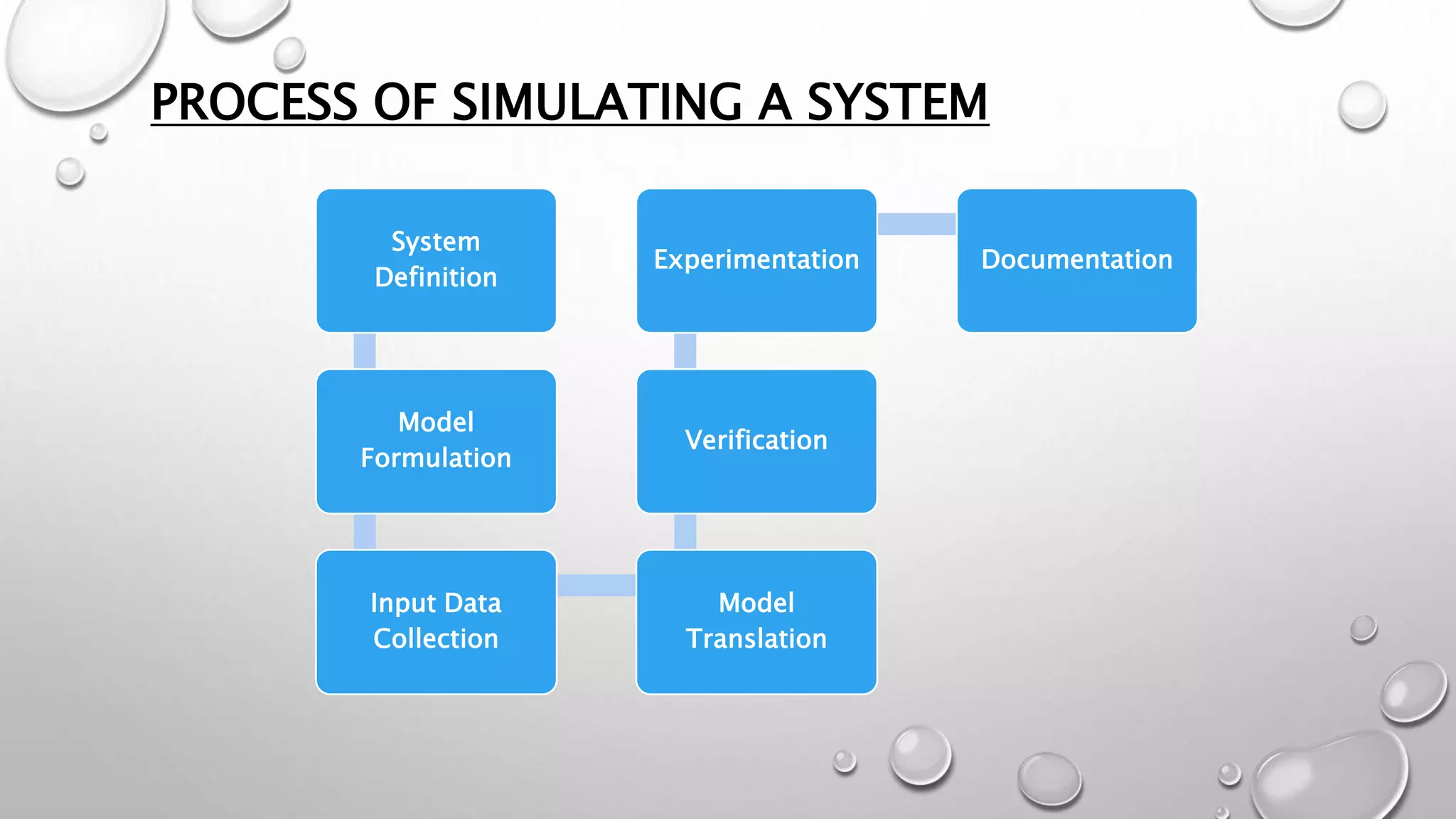
PROCESS OF SIMULATING A SYSTEM
System
Definition
Model
Formulation
Input Data
Collection
Model
Translation
Verification
Experimentation Documentation
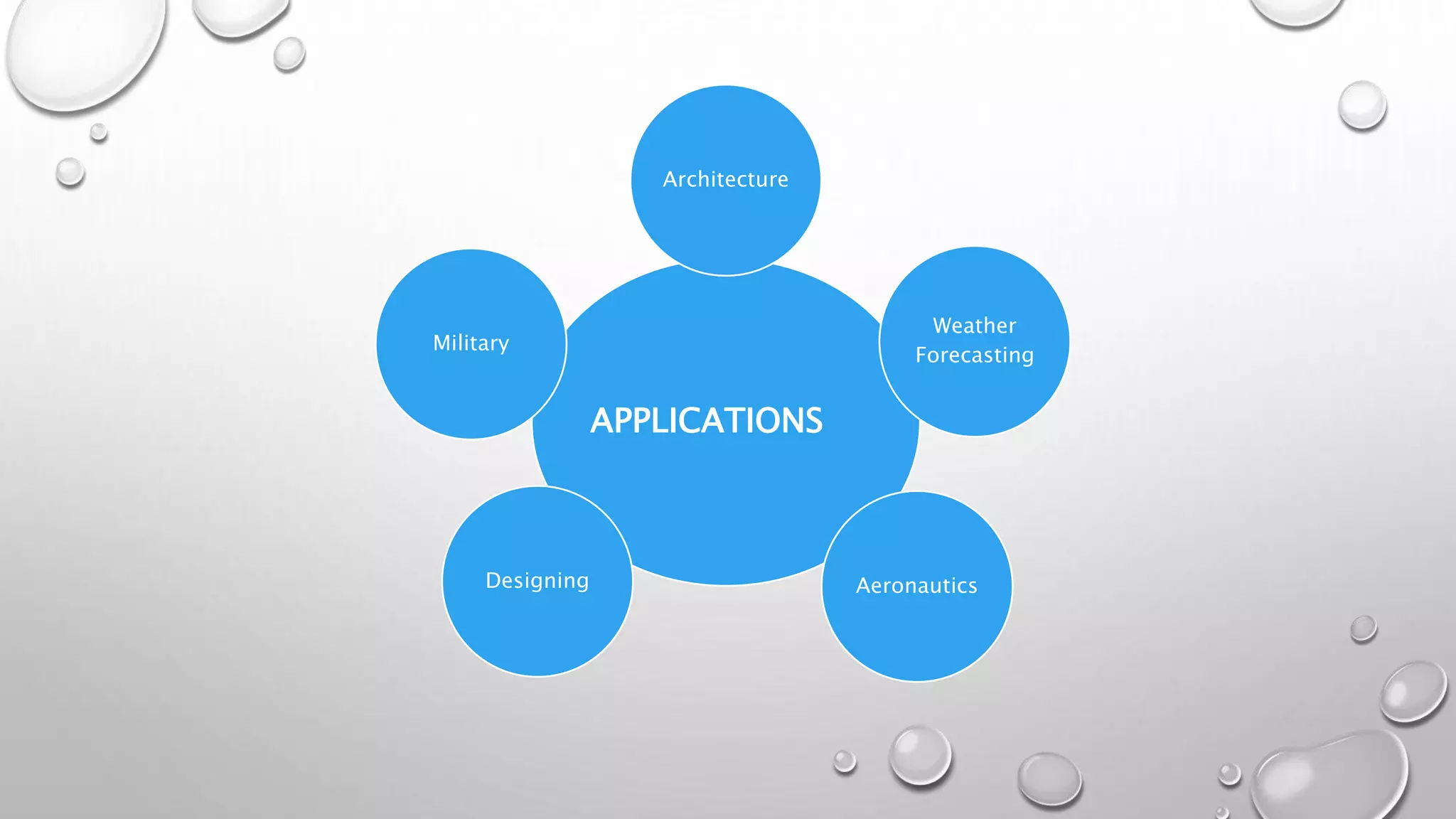
APPLICATIONS
Architecture
Weather
Forecasting
AeronauticsDesigning
Military
FERDOUS AHMED 131-15-2408
Applications on drug
development
Slide 11
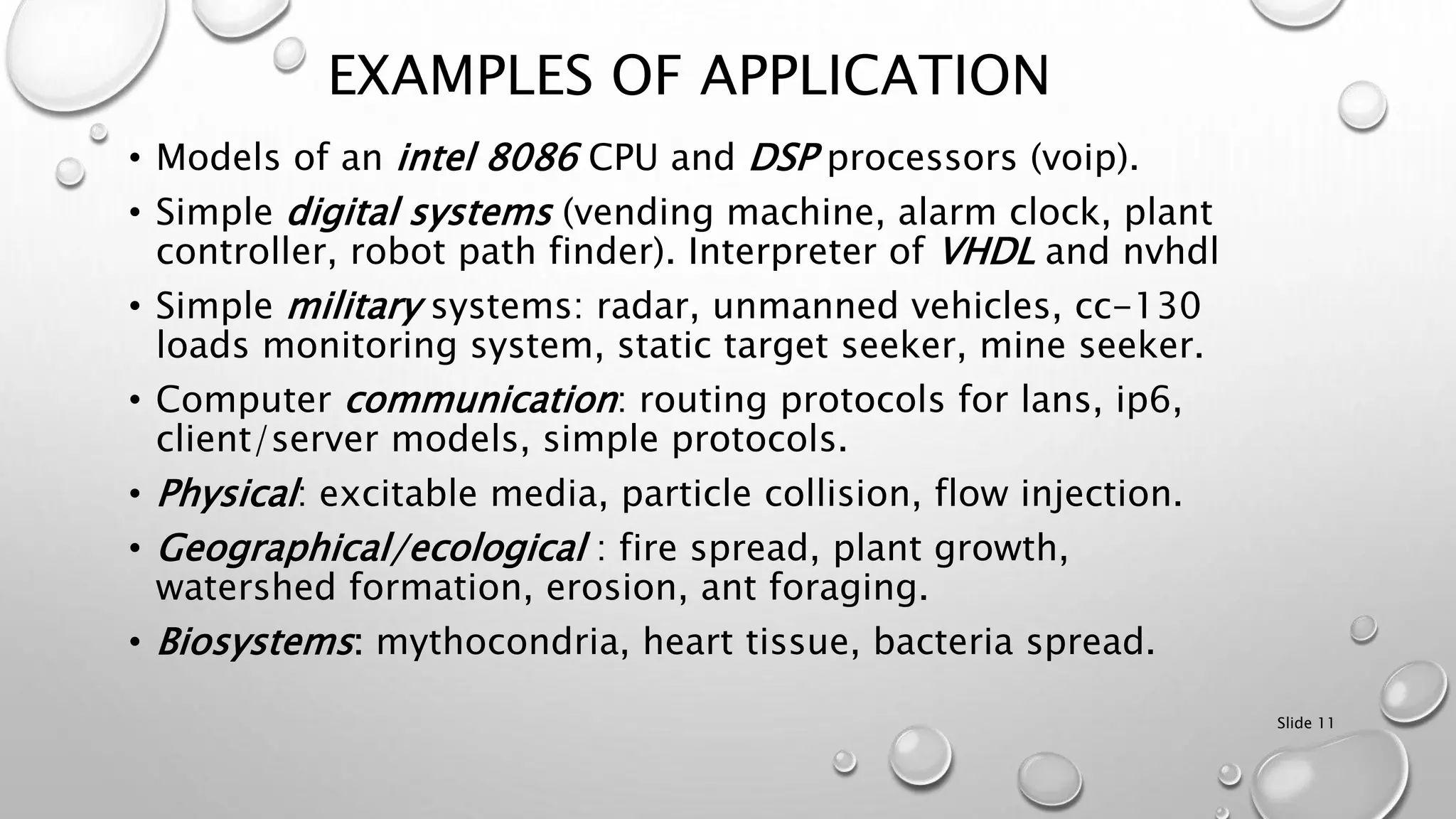
EXAMPLES OF APPLICATION
• Models of an intel 8086 CPU and DSP processors (voip).
• Simple digital systems (vending machine, alarm clock, plant
controller, robot path finder). Interpreter of VHDL and nvhdl
• Simple military systems: radar, unmanned vehicles, cc-130
loads monitoring system, static target seeker, mine seeker.
• Computer communication: routing protocols for lans, ip6,
client/server models, simple protocols.
• Physical: excitable media, particle collision, flow injection.
• Geographical/ecological : fire spread, plant growth,
watershed formation, erosion, ant foraging.
• Biosystems: mythocondria, heart tissue, bacteria spread.
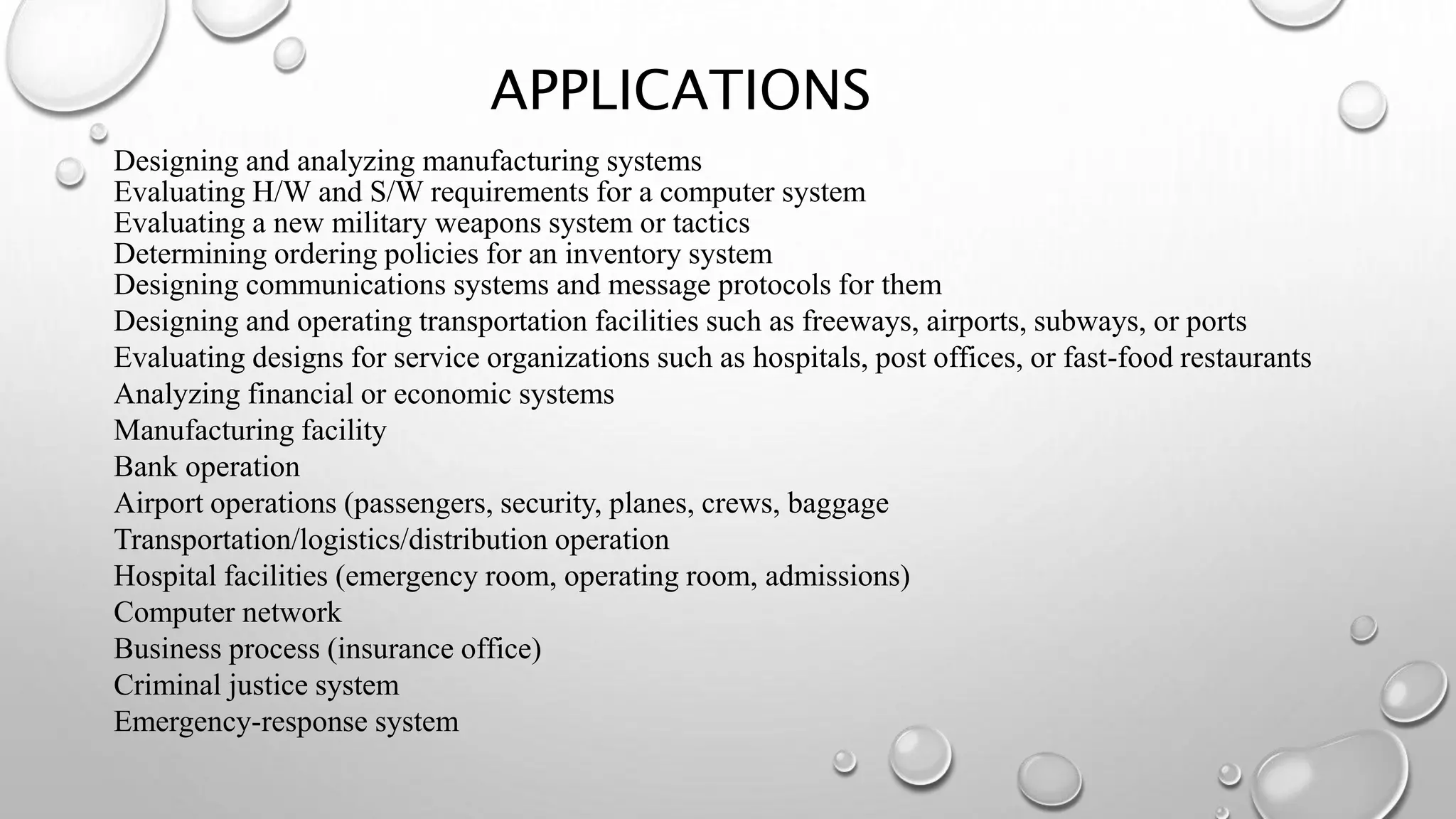
APPLICATIONS
Designing and analyzing manufacturing systems
Evaluating H/W and S/W requirements for a computer system
Evaluating a new military weapons system or tactics
Determining ordering policies for an inventory system
Designing communications systems and message protocols for them
Designing and operating transportation facilities such as freeways, airports, subways, or ports
Evaluating designs for service organizations such as hospitals, post offices, or fast-food restaurants
Analyzing financial or economic systems
Manufacturing facility
Bank operation
Airport operations (passengers, security, planes, crews, baggage
Transportation/logistics/distribution operation
Hospital facilities (emergency room, operating room, admissions)
Computer network
Business process (insurance office)
Criminal justice system
Emergency-response system
Slide 13
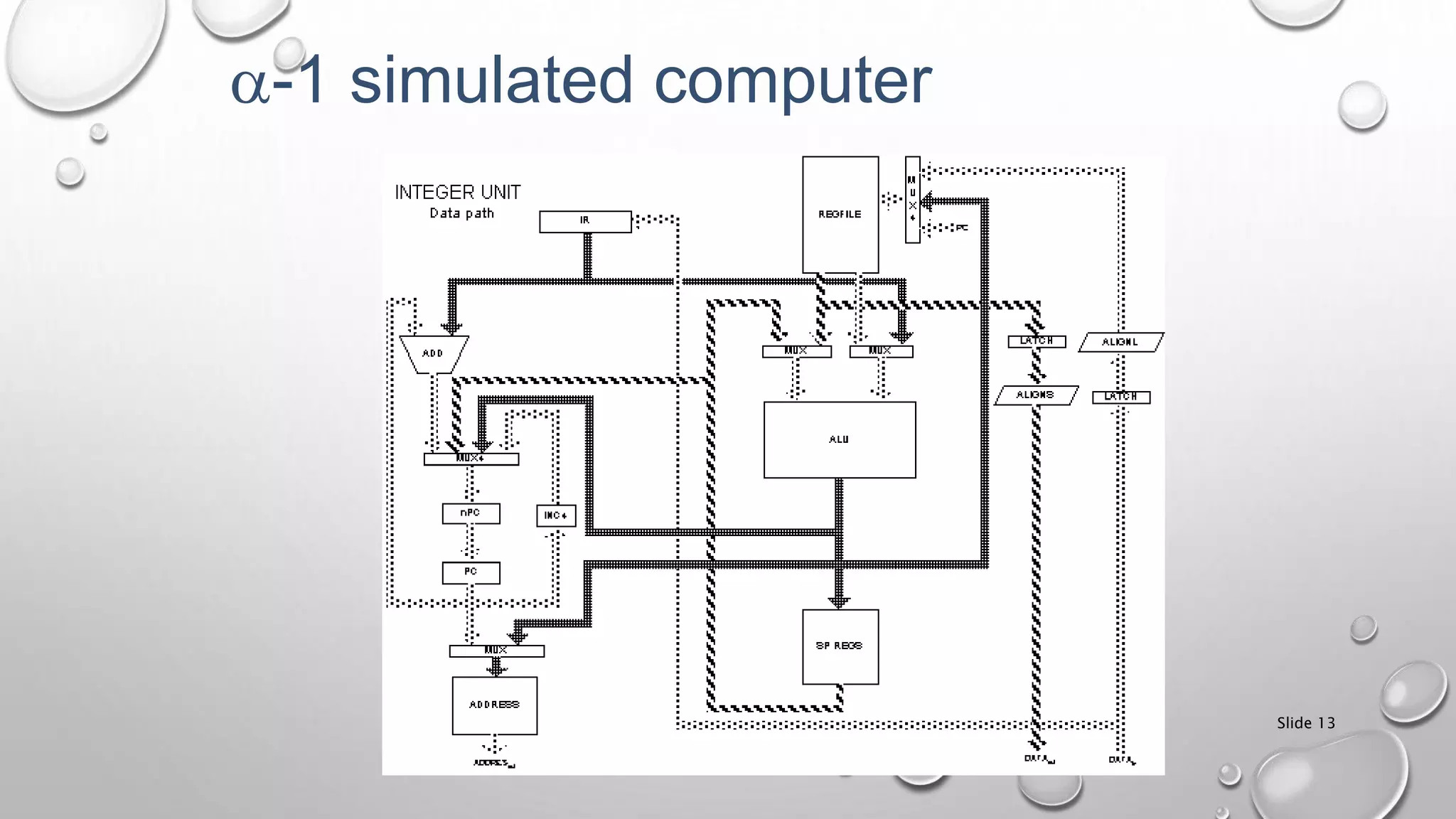
a-1 simulated computer
Slide 14
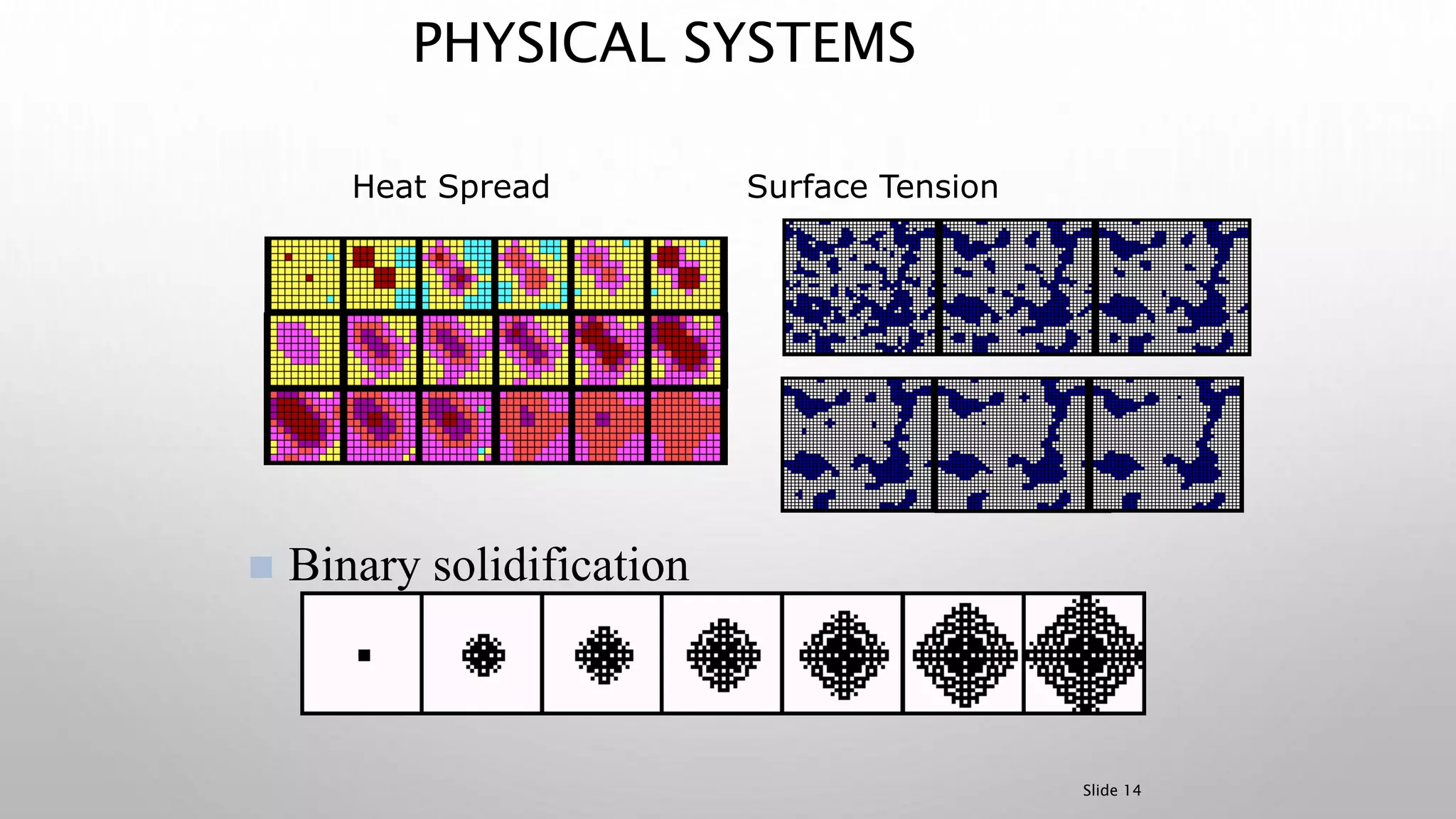
PHYSICAL SYSTEMS
Heat Spread Surface Tension
 Binary solidification
Slide 15
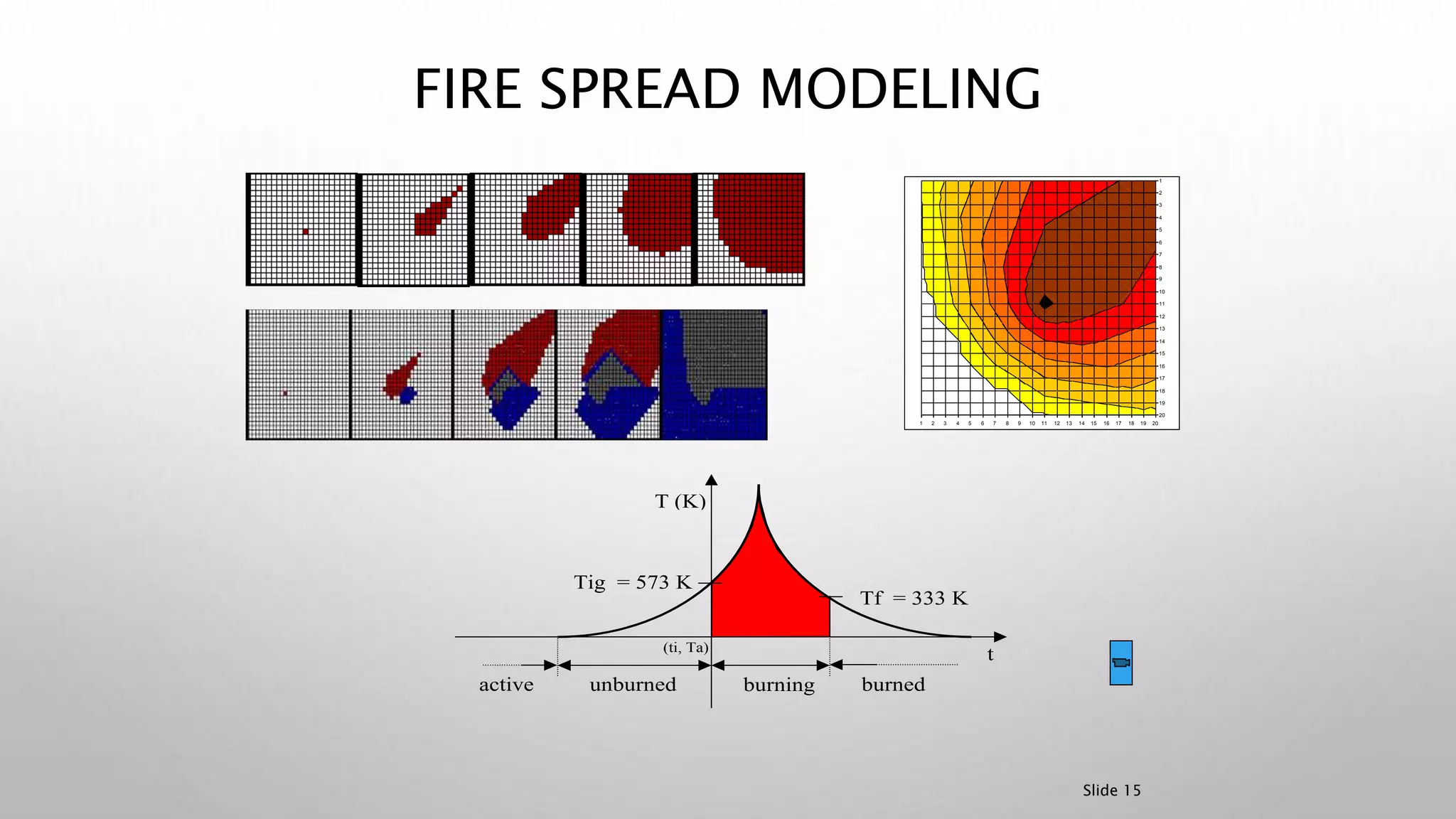
FIRE SPREAD MODELING
1 2 3 4 5 6 7 8 9 10 11 12 13 14 15 16 17 18 19 20
1
2
3
4
5
6
7
8
9
10
11
12
13
14
15
16
17
18
19
20
t(ti, Ta)
active
Tf = 333 K
Tig = 573 K
T (K)
unburned burnedburning
Slide 16
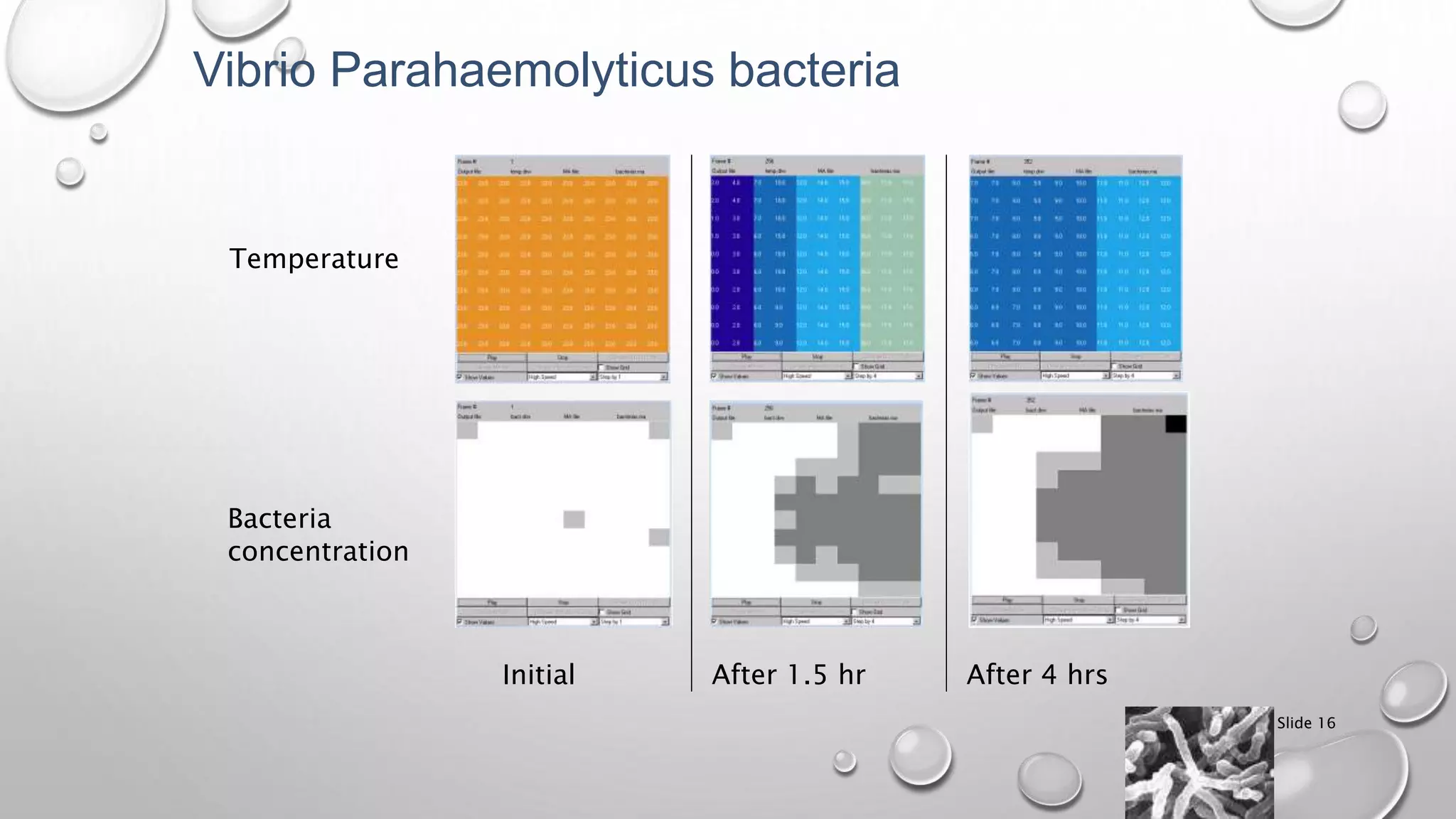
Initial After 1.5 hr After 4 hrs
Temperature
Bacteria
concentration
Vibrio Parahaemolyticus bacteria
Slide 17
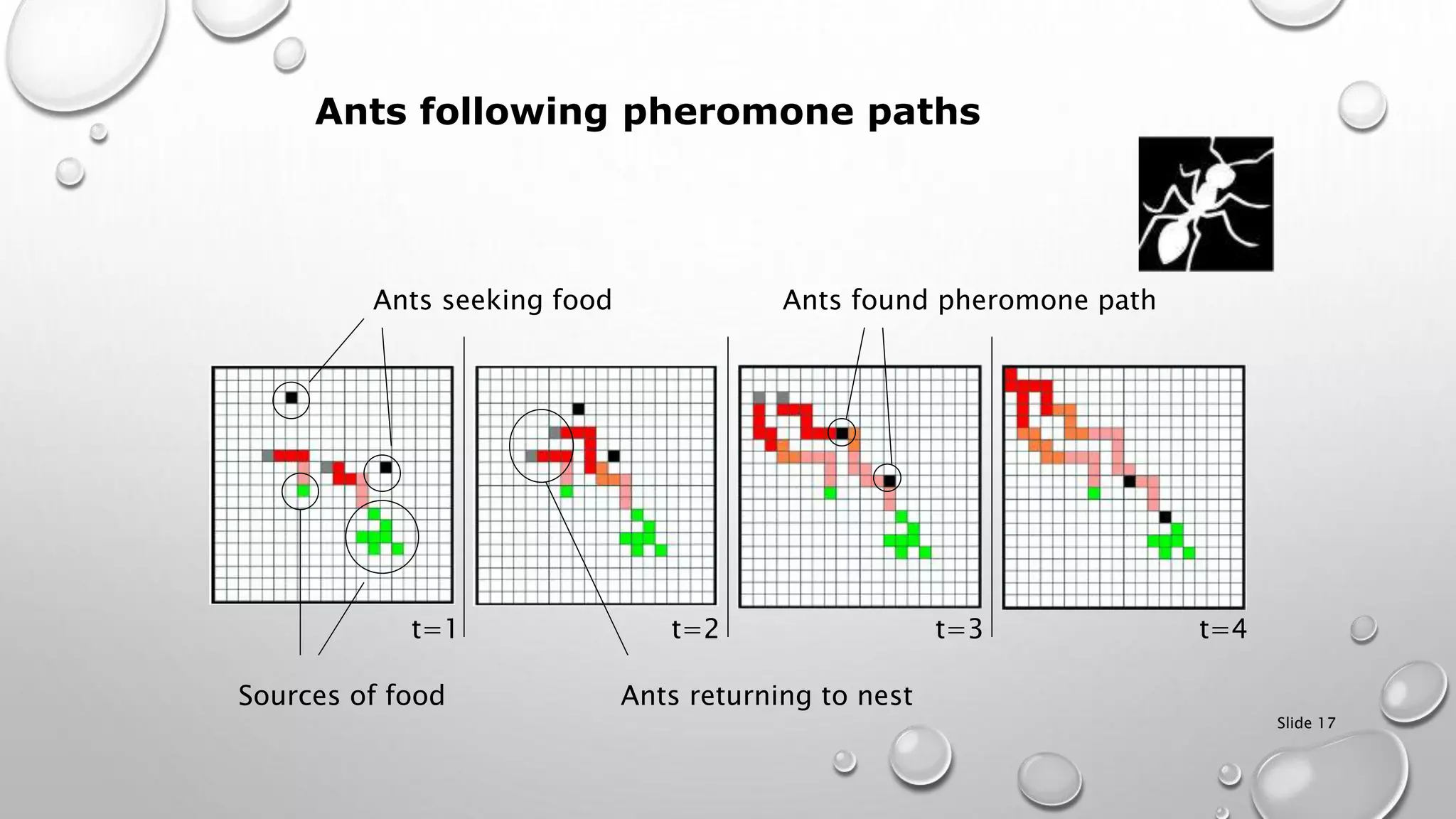
Sources of food
Ants seeking food
Ants returning to nest
Ants found pheromone path
Ants following pheromone paths
t=1 t=2 t=3 t=4
WEATHER FORECASTING
18
• Computer simulation of weather forecasting can be used to predict storms
• The wind, rain pattern and temperatures e.T.C for the whole planet are simulated
using very powerful computers.
SIMULATION OF A STORM
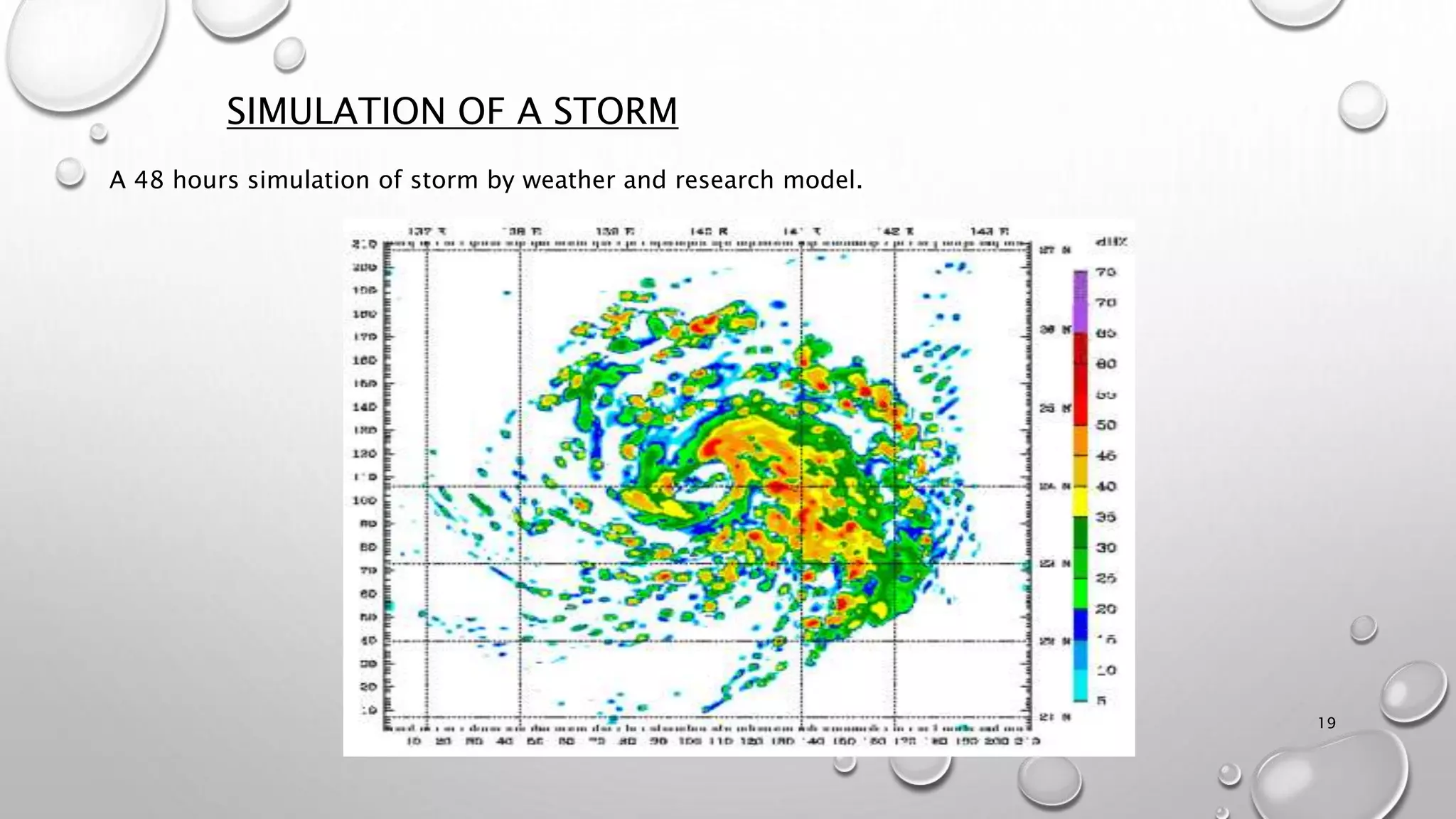
A 48 hours simulation of storm by weather and research model.
19
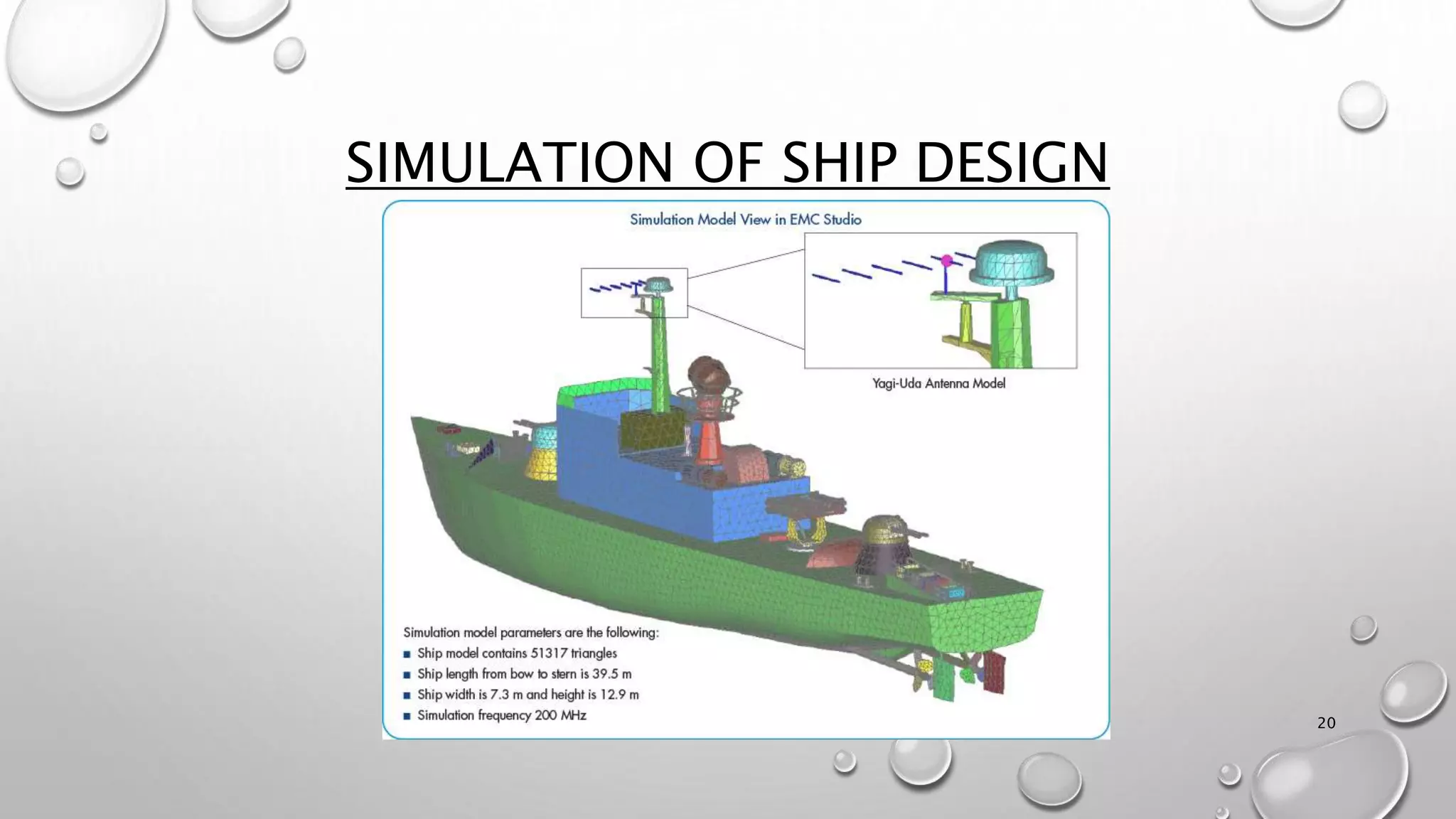
SIMULATION OF SHIP DESIGN
20
ARCHITECTURE
21
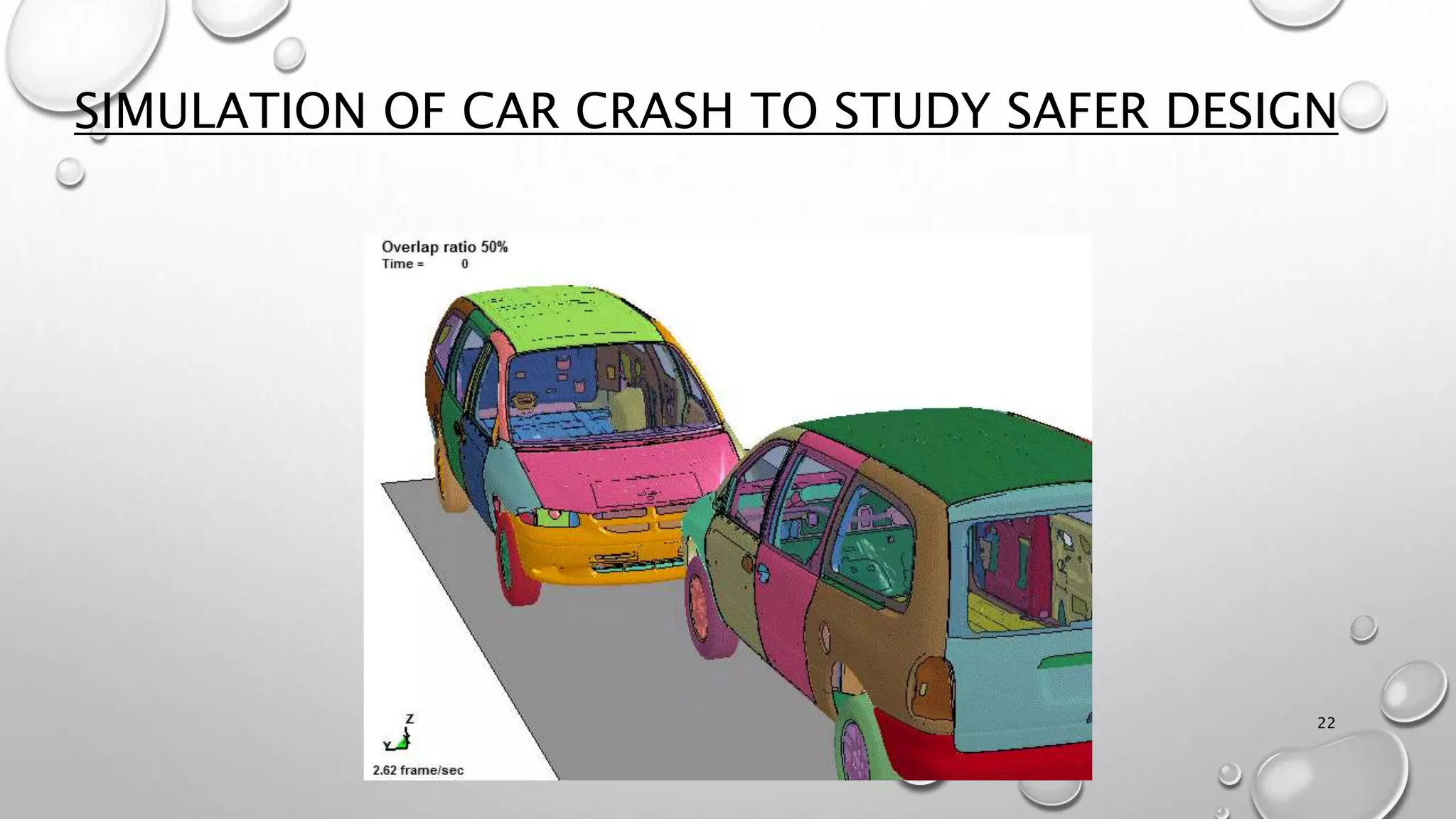
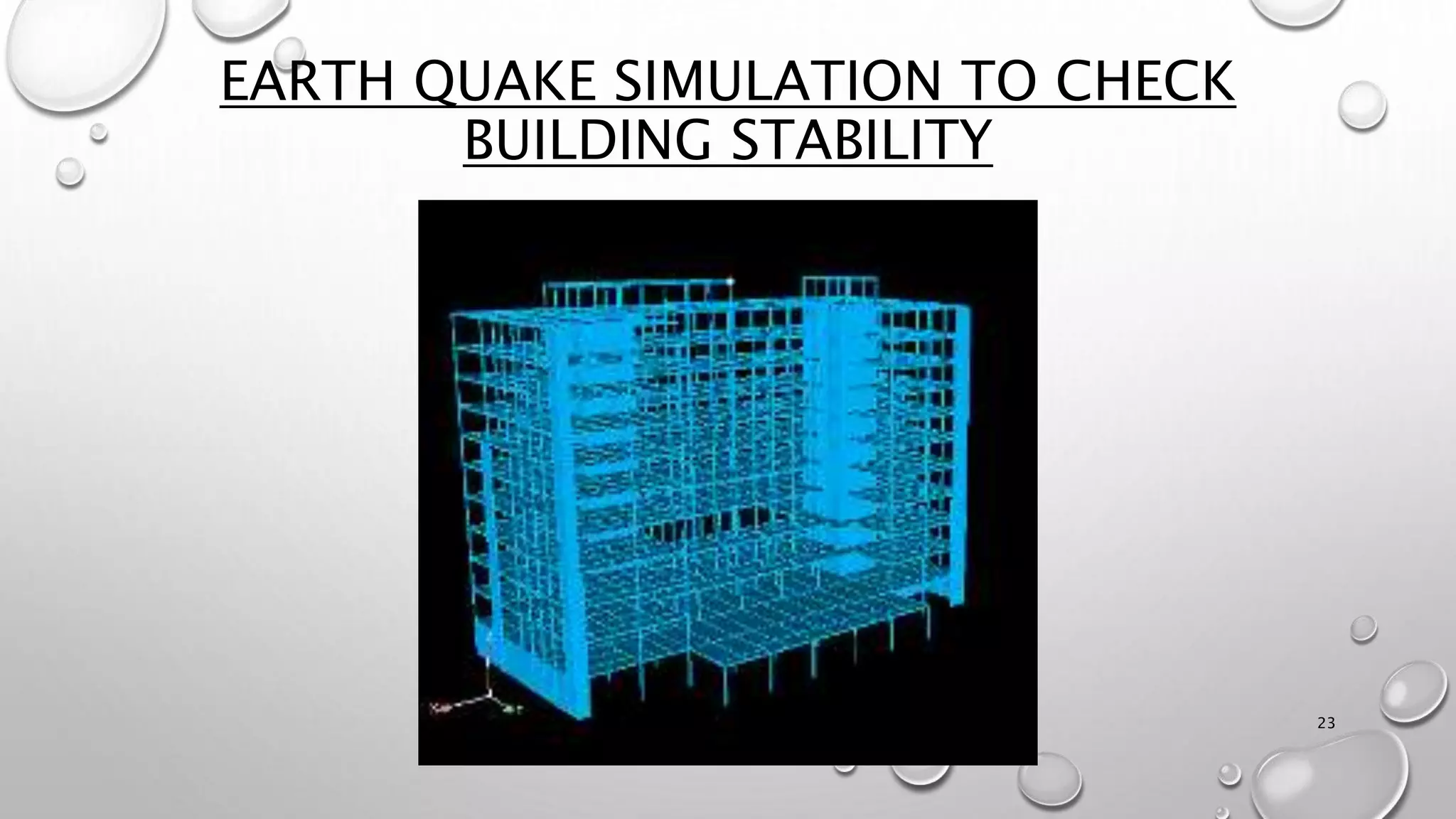
• Design stability of buildings are checked by simulation of earth quake through
simulation software
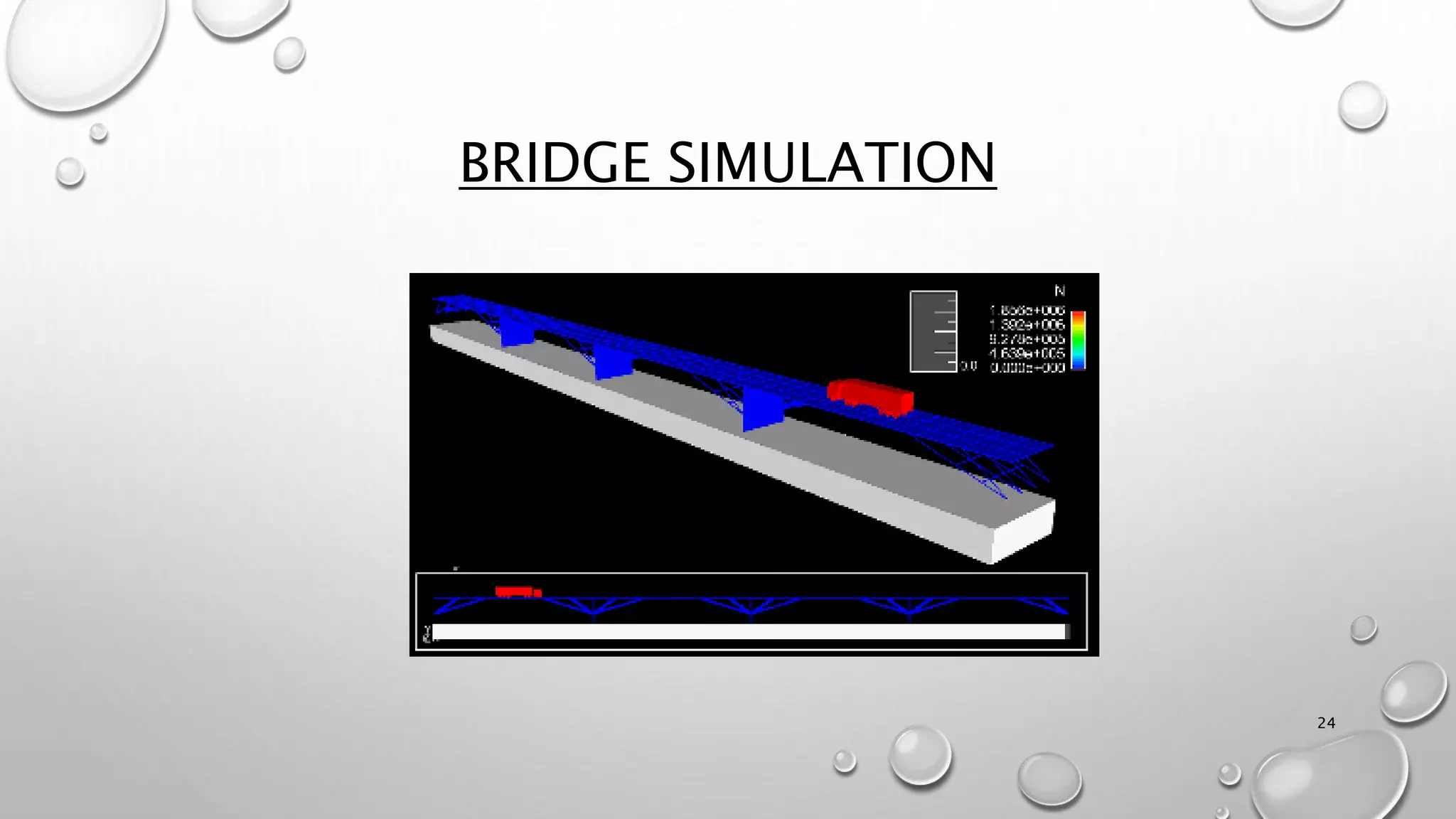
• Bridges are also simulated to check how much load they can resist, and what
improvement can be made
Application of Computer
Simulation
SIMULATION OF CAR CRASH TO STUDY SAFER DESIGN
22
EARTH QUAKE SIMULATION TO CHECK
BUILDING STABILITY
23
BRIDGE SIMULATION
24
AERONAUTICS
25
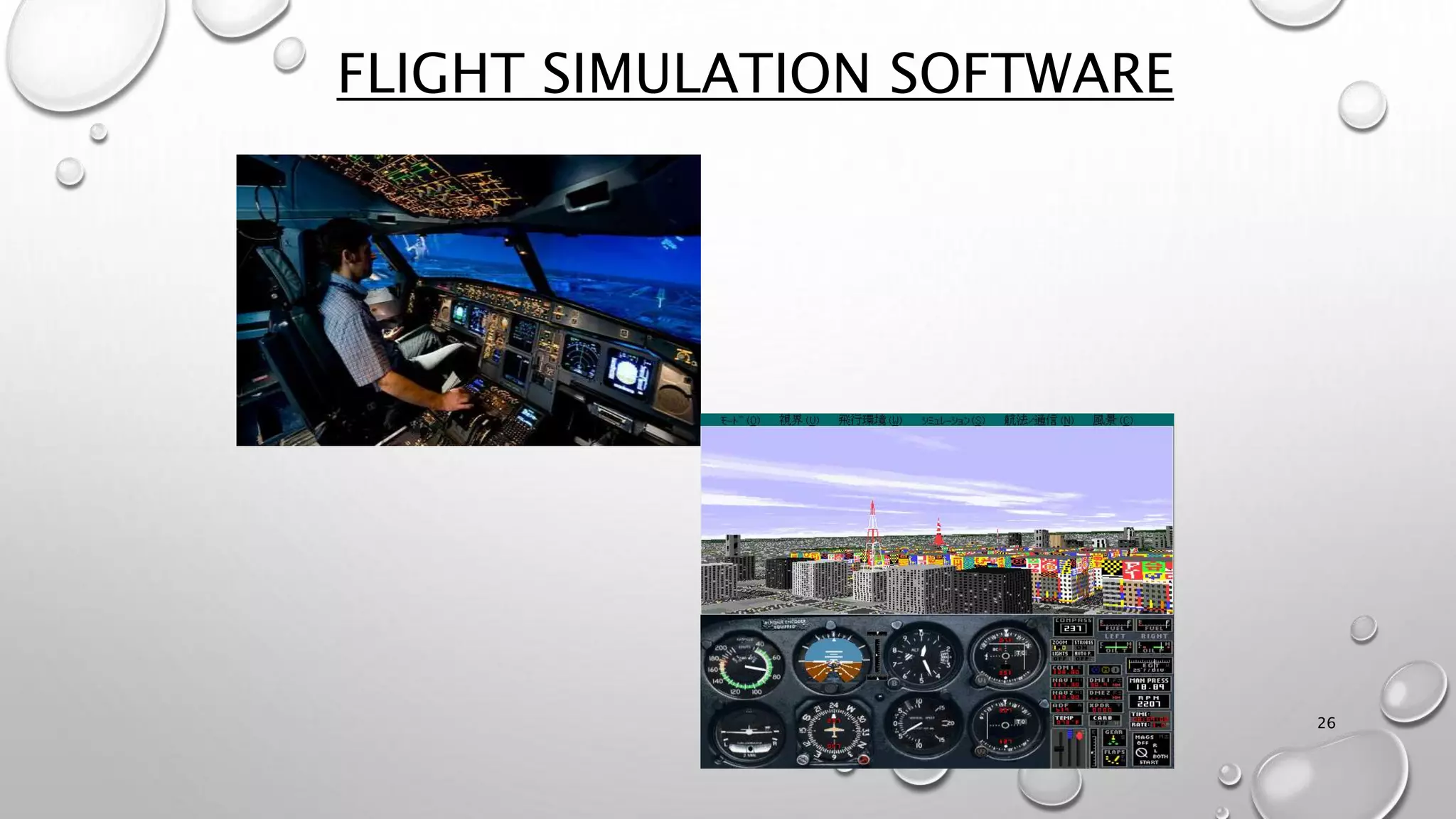
• Trainee pilots have many hours of lesson in flight simulators before being
allowed to fly an airplanes.
• These simulators provide realistic flying situation like storms, engine failure…
• This experience help them to tackle such situation in real, as they have gained a
bit experience.
Application of Computer
Simulation
FLIGHT SIMULATION SOFTWARE
26
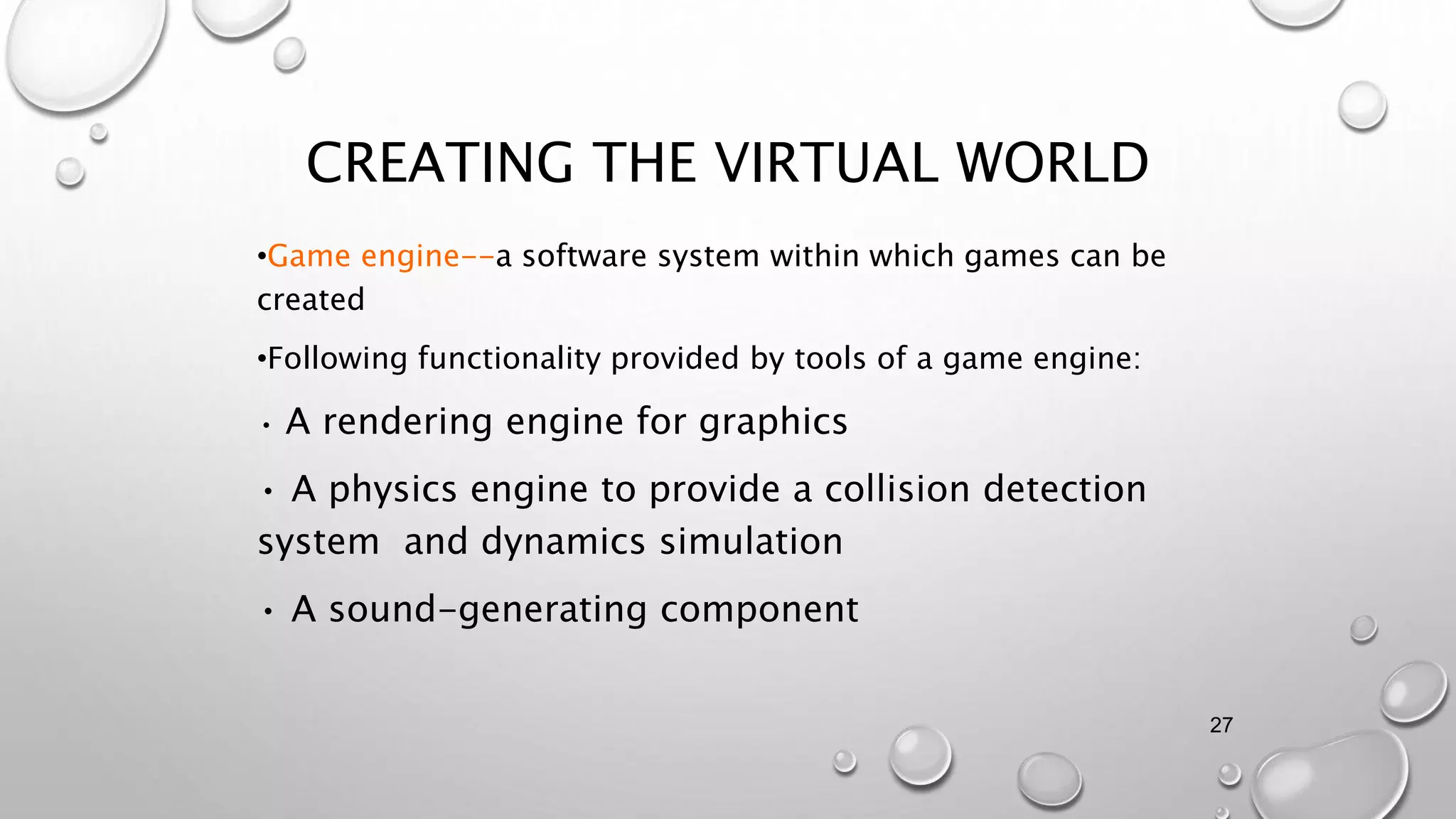
CREATING THE VIRTUAL WORLD
•Game engine--a software system within which games can be
created
•Following functionality provided by tools of a game engine:
• A rendering engine for graphics
• A physics engine to provide a collision detection
system and dynamics simulation
• A sound-generating component
27
Slide 28
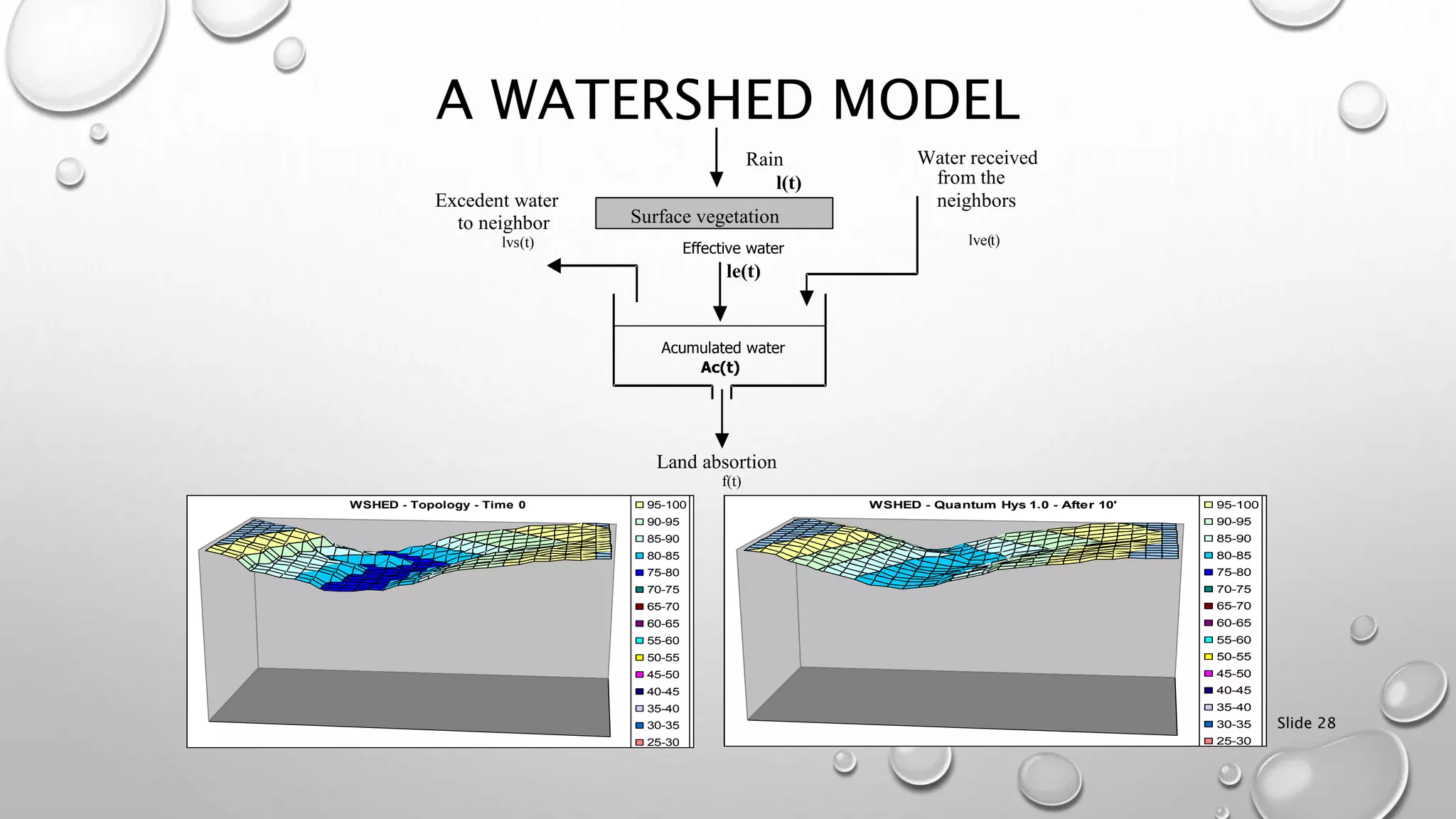
A WATERSHED MODEL
Surface vegetation
Rain
Waterl(t)
Effective water
le(t)
Acumulated water
Ac(t)
Excedent water
flowingto neighbor
landslvs(t)
Land absortion
water f(t)
Water received
byfrom the
neighbors
lve(t)
WSHED - Topology - Time 0 95-100
90-95
85-90
80-85
75-80
70-75
65-70
60-65
55-60
50-55
45-50
40-45
35-40
30-35
25-30
20-25
WSHED - Quantum Hys 1.0 - After 10' 95-100
90-95
85-90
80-85
75-80
70-75
65-70
60-65
55-60
50-55
45-50
40-45
35-40
30-35
25-30
20-25
Slide 29
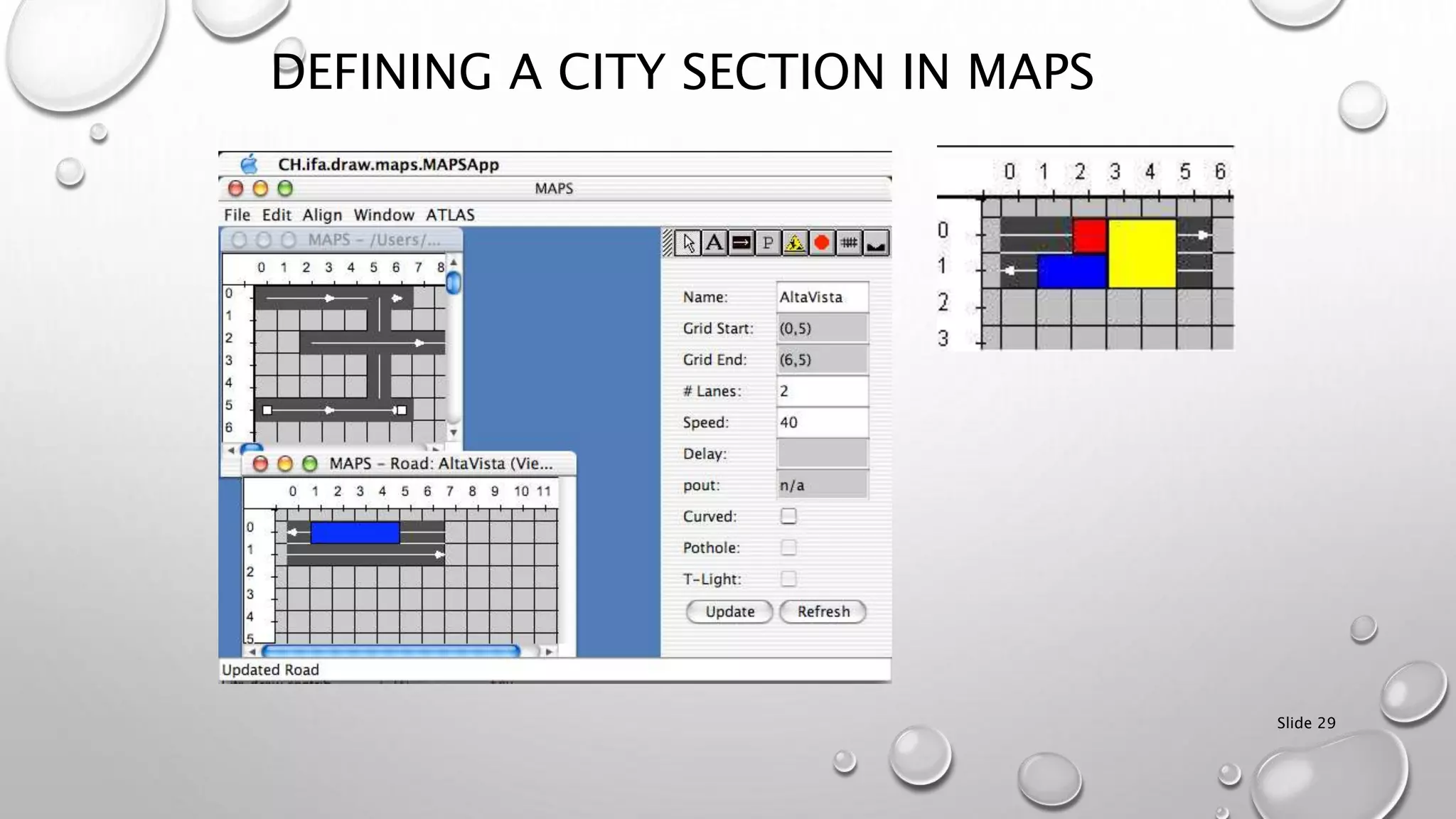
DEFINING A CITY SECTION IN MAPS
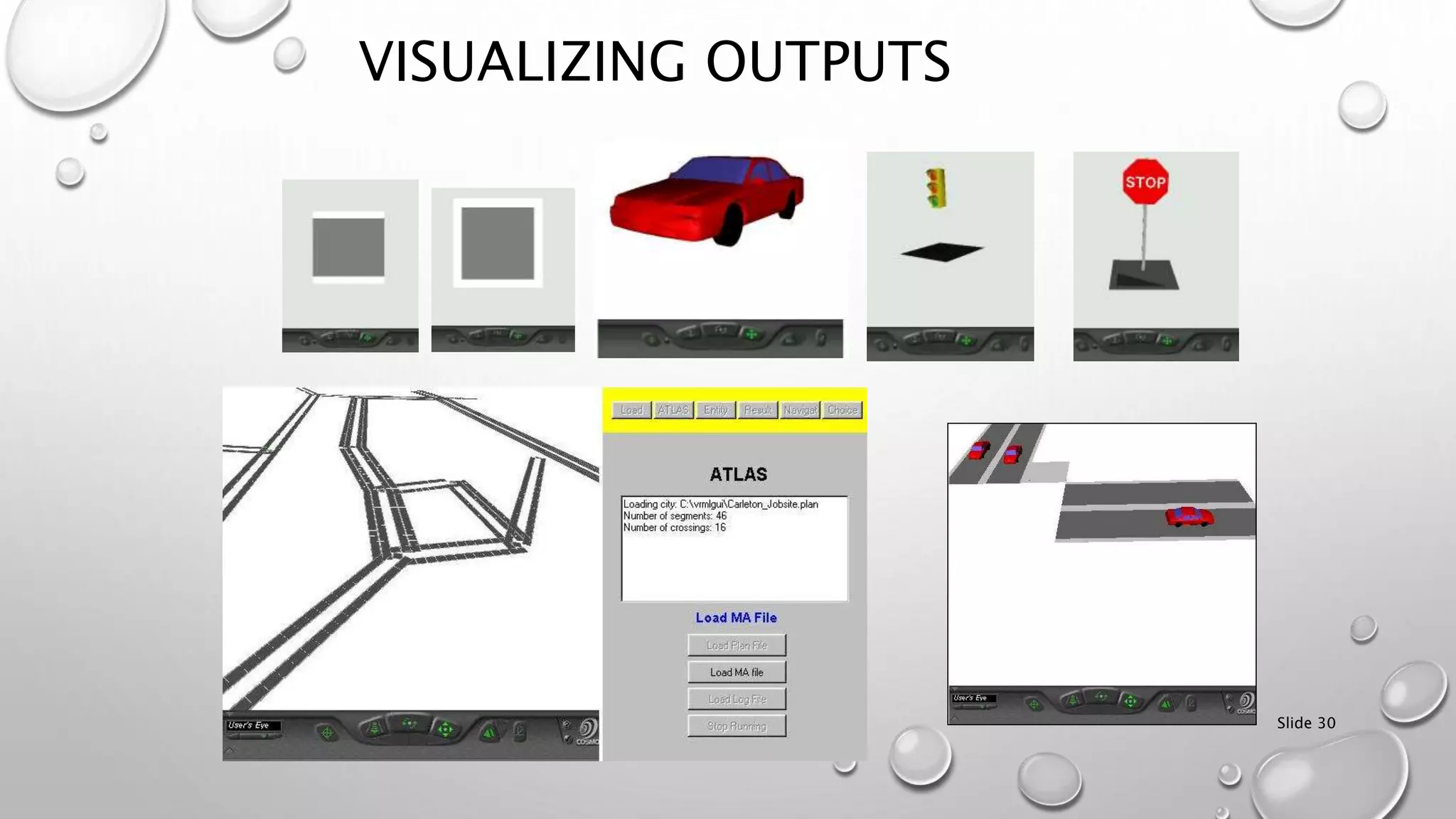
Slide 30
VISUALIZING OUTPUTS
Slide 31
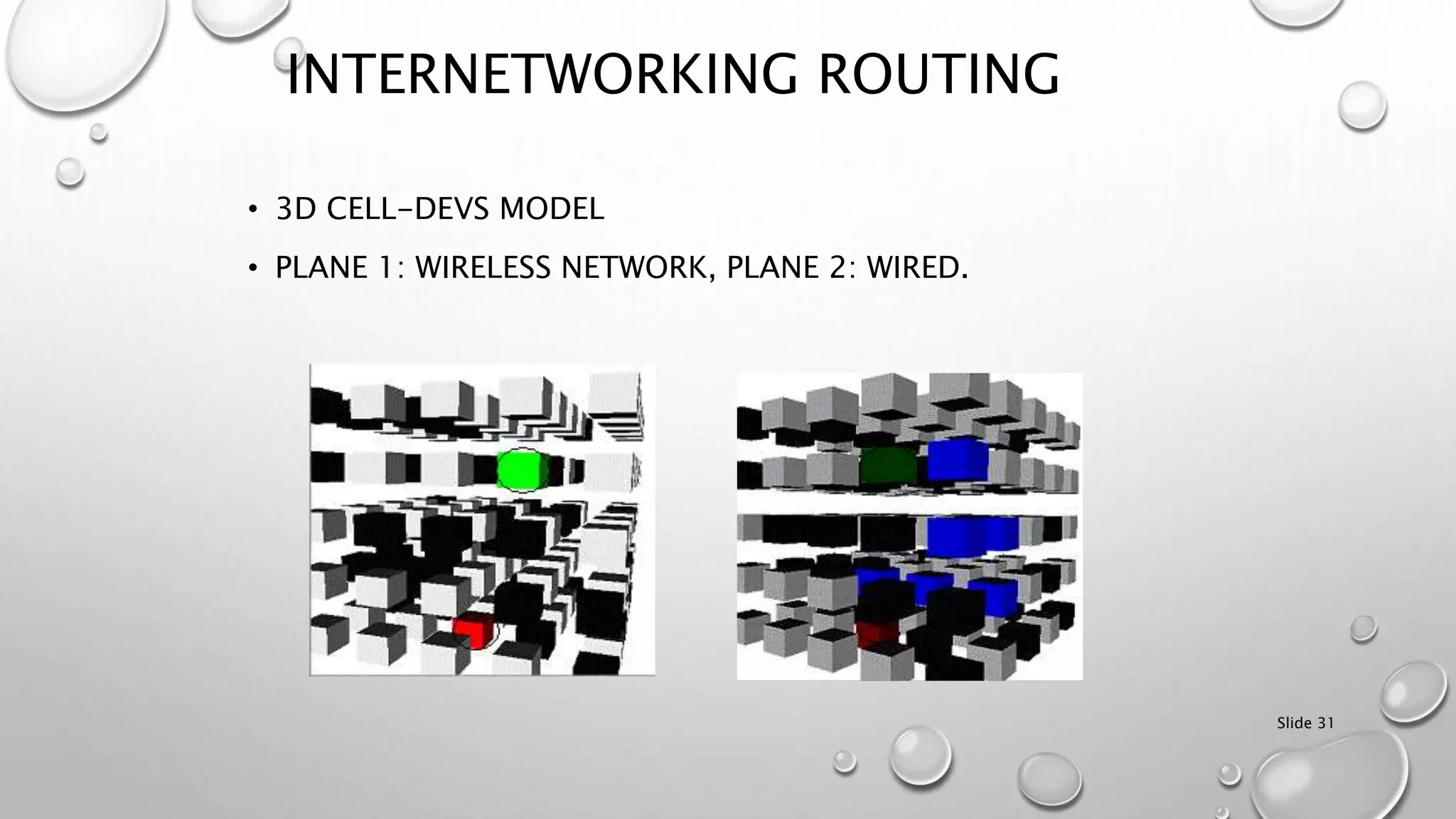
INTERNETWORKING ROUTING
• 3D CELL-DEVS MODEL
• PLANE 1: WIRELESS NETWORK, PLANE 2: WIRED.
OPERATION PROCEDURES
• New polices, operating procedures, decision rules,
information flows, organizational procedures, and so on can
be explored without disrupting ongoing operations of the real
system.
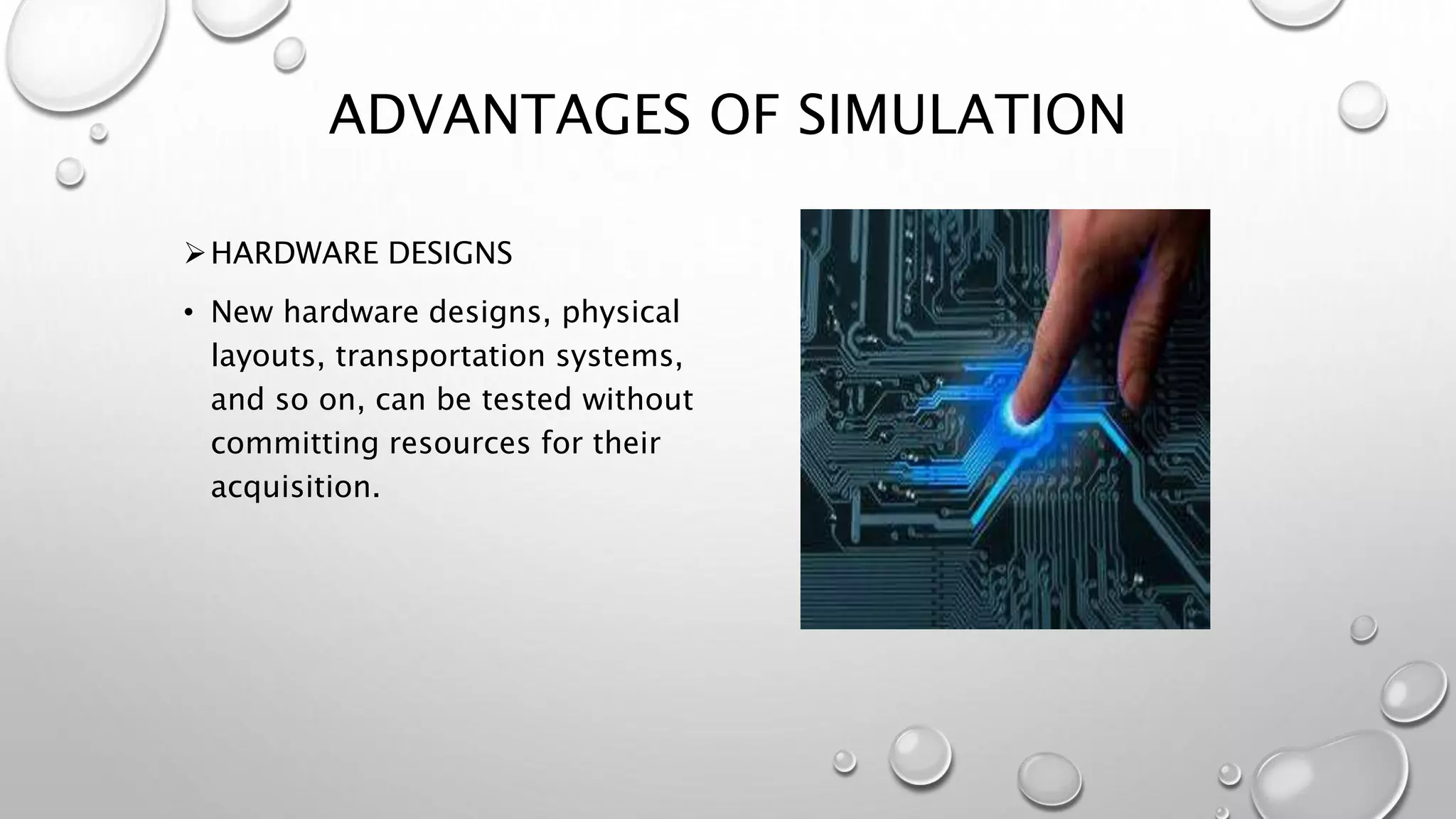
HARDWARE DESIGNS
• New hardware designs, physical
layouts, transportation systems,
and so on, can be tested without
committing resources for their
acquisition.
ADVANTAGES OF SIMULATION
INTERNAL TEST
• Insight can be obtained about the interaction of variables.
• Can be used to study complex systems that would
otherwise be difficult to investigate.
ADVANTAGES OF SIMULATION
INVESTIGATING
Can be used to compress a time frame, a simulation model run
on a computer system can be used to investigate quickly the
effects of a change in a real life situation that take place over
several years.
Can be used in engineering and product design to investigate
the effect of changes without producing a physical prototype.
ADVANTAGES OF SIMULATION
MAIN DISADVANTAGES OF SIMULATION
 EXPENSIVE TO BUILD A SIMULATION MODEL.
 EXPENSIVE TO CONDUCT SIMULATION.
 SOMETIMES IT IS DIFFICULT TO INTERPRET THE SIMULATION
RESULTS.
MODEL
•What is model?
Model is the representation of a system .A
model is the body of an information system.
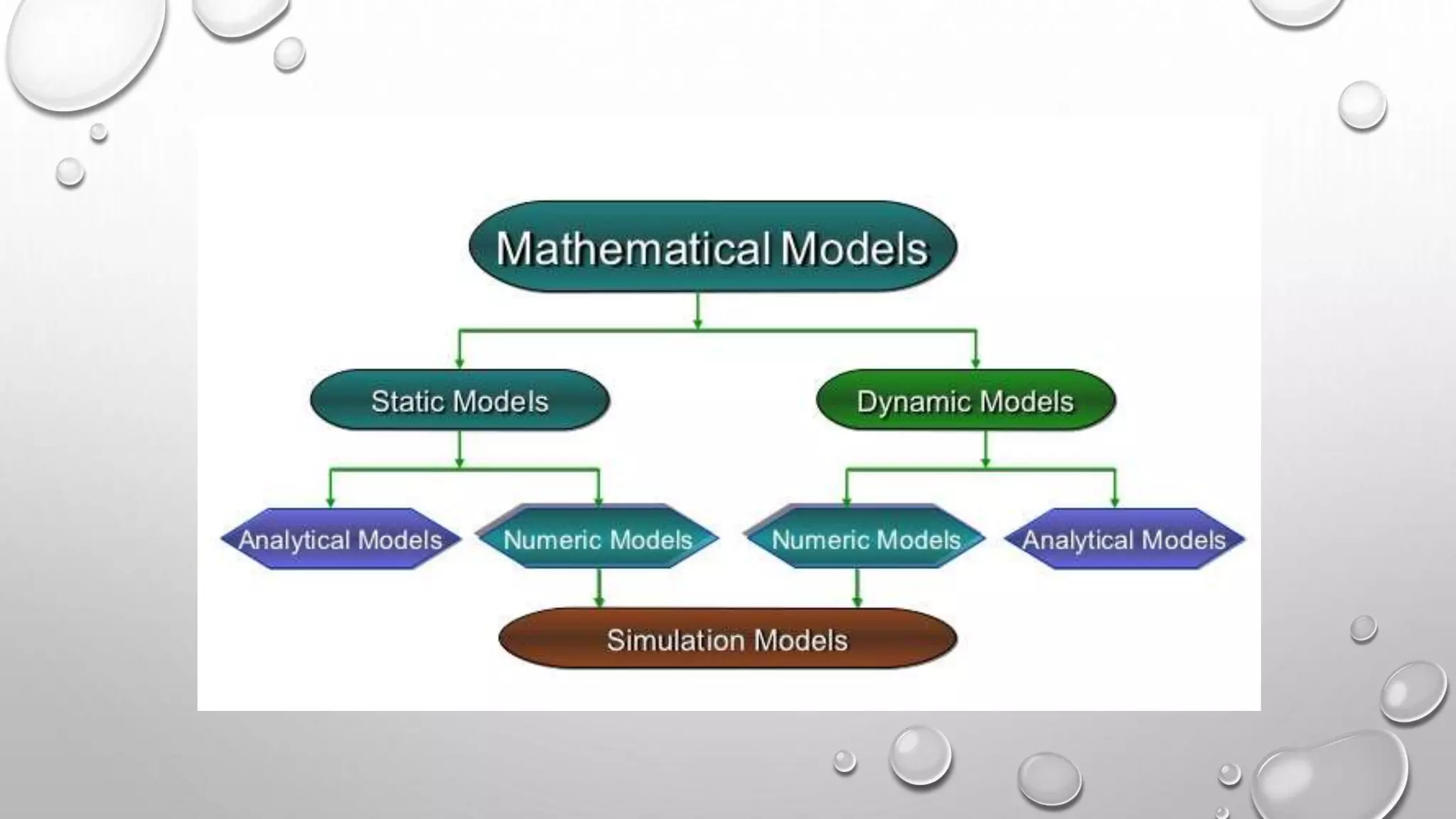
MODEL TYPES
Two type of model:
1. Mathematical model
2. Physical model.
Mathematical model: mathematical model uses
mathematical notation and mathematical equation.
Static and dynamic model
Static: Monte carlo represents a
system snapshort at a particular
point in time.
Dynamic: represents systems as they
change over time.
PHYSICAL MODEL
Physical model: Physical model represented by a
system measurement.
Example:
V=IR
THANK YOU

Simulation, Modeling, it’s application, advantage & disadvantage

  • 1.
  • 2.
    INTRODUCING MY GROUPMEMBERS Md. Ilias Bappi ID: 131-15-2266 Ferdous Ahamad ID:131-15-2408 Md.Kawsar Hamid ID:131-15-2223 Md. Jahirul Shahed ID: 131-15-2479 Saiful Islam ID:131-15-2516
  • 3.
    OUR PRESENTATION TOPIC’S SIMULATION, MODELING, IT’SAPPLICATION, ADVANTAGE & DISADVANTAGE
  • 4.
    DEFINITION OF SIMULATION •Simulation is the execution of a model that is represented by a computer program that given information about the system being investigation. • Simulation is the set of assumption.
  • 5.
    HISTORICAL BACKGROUND OFSIMULATION • In October 1961 IBM presented the "Gordon simulator" to norden SDC (systems design company). In December 1961 Geoffrey gorden presented his paper at the fall joint computer conference on a general purpose systems simulator (GPSS) • In 1969 third conference on the application of simulation was held in December in los angeles. Two common fears of simulation in early 80s were : • Simulation is extremely complicated, so only experts can use it. • Simulation takes forever because of programming and debugging.
  • 6.
    • Computer simulationdeveloped hand-in-hand with the rapid growth of the computer. GROWTH RATE OF SIMULATION APP
  • 7.
    EXAMPLE Circuit Designing Real world system Computer Model •EWB • Proteus • MULTISIM Experiments Output
  • 8.
    PROCESS OF SIMULATINGA SYSTEM System Definition Model Formulation Input Data Collection Model Translation Verification Experimentation Documentation
  • 9.
  • 10.
  • 11.
    Slide 11 EXAMPLES OFAPPLICATION • Models of an intel 8086 CPU and DSP processors (voip). • Simple digital systems (vending machine, alarm clock, plant controller, robot path finder). Interpreter of VHDL and nvhdl • Simple military systems: radar, unmanned vehicles, cc-130 loads monitoring system, static target seeker, mine seeker. • Computer communication: routing protocols for lans, ip6, client/server models, simple protocols. • Physical: excitable media, particle collision, flow injection. • Geographical/ecological : fire spread, plant growth, watershed formation, erosion, ant foraging. • Biosystems: mythocondria, heart tissue, bacteria spread.
  • 12.
    APPLICATIONS Designing and analyzingmanufacturing systems Evaluating H/W and S/W requirements for a computer system Evaluating a new military weapons system or tactics Determining ordering policies for an inventory system Designing communications systems and message protocols for them Designing and operating transportation facilities such as freeways, airports, subways, or ports Evaluating designs for service organizations such as hospitals, post offices, or fast-food restaurants Analyzing financial or economic systems Manufacturing facility Bank operation Airport operations (passengers, security, planes, crews, baggage Transportation/logistics/distribution operation Hospital facilities (emergency room, operating room, admissions) Computer network Business process (insurance office) Criminal justice system Emergency-response system
  • 13.
  • 14.
    Slide 14 PHYSICAL SYSTEMS HeatSpread Surface Tension  Binary solidification
  • 15.
    Slide 15 FIRE SPREADMODELING 1 2 3 4 5 6 7 8 9 10 11 12 13 14 15 16 17 18 19 20 1 2 3 4 5 6 7 8 9 10 11 12 13 14 15 16 17 18 19 20 t(ti, Ta) active Tf = 333 K Tig = 573 K T (K) unburned burnedburning
  • 16.
    Slide 16 Initial After1.5 hr After 4 hrs Temperature Bacteria concentration Vibrio Parahaemolyticus bacteria
  • 17.
    Slide 17 Sources offood Ants seeking food Ants returning to nest Ants found pheromone path Ants following pheromone paths t=1 t=2 t=3 t=4
  • 18.
    WEATHER FORECASTING 18 • Computersimulation of weather forecasting can be used to predict storms • The wind, rain pattern and temperatures e.T.C for the whole planet are simulated using very powerful computers.
  • 19.
    SIMULATION OF ASTORM A 48 hours simulation of storm by weather and research model. 19
  • 20.
  • 21.
    ARCHITECTURE 21 • Design stabilityof buildings are checked by simulation of earth quake through simulation software • Bridges are also simulated to check how much load they can resist, and what improvement can be made Application of Computer Simulation
  • 22.
    SIMULATION OF CARCRASH TO STUDY SAFER DESIGN 22
  • 23.
    EARTH QUAKE SIMULATIONTO CHECK BUILDING STABILITY 23
  • 24.
  • 25.
    AERONAUTICS 25 • Trainee pilotshave many hours of lesson in flight simulators before being allowed to fly an airplanes. • These simulators provide realistic flying situation like storms, engine failure… • This experience help them to tackle such situation in real, as they have gained a bit experience. Application of Computer Simulation
  • 26.
  • 27.
    CREATING THE VIRTUALWORLD •Game engine--a software system within which games can be created •Following functionality provided by tools of a game engine: • A rendering engine for graphics • A physics engine to provide a collision detection system and dynamics simulation • A sound-generating component 27
  • 28.
    Slide 28 A WATERSHEDMODEL Surface vegetation Rain Waterl(t) Effective water le(t) Acumulated water Ac(t) Excedent water flowingto neighbor landslvs(t) Land absortion water f(t) Water received byfrom the neighbors lve(t) WSHED - Topology - Time 0 95-100 90-95 85-90 80-85 75-80 70-75 65-70 60-65 55-60 50-55 45-50 40-45 35-40 30-35 25-30 20-25 WSHED - Quantum Hys 1.0 - After 10' 95-100 90-95 85-90 80-85 75-80 70-75 65-70 60-65 55-60 50-55 45-50 40-45 35-40 30-35 25-30 20-25
  • 29.
    Slide 29 DEFINING ACITY SECTION IN MAPS
  • 30.
  • 31.
    Slide 31 INTERNETWORKING ROUTING •3D CELL-DEVS MODEL • PLANE 1: WIRELESS NETWORK, PLANE 2: WIRED.
  • 32.
    OPERATION PROCEDURES • Newpolices, operating procedures, decision rules, information flows, organizational procedures, and so on can be explored without disrupting ongoing operations of the real system.
  • 33.
    HARDWARE DESIGNS • Newhardware designs, physical layouts, transportation systems, and so on, can be tested without committing resources for their acquisition. ADVANTAGES OF SIMULATION
  • 34.
    INTERNAL TEST • Insightcan be obtained about the interaction of variables. • Can be used to study complex systems that would otherwise be difficult to investigate. ADVANTAGES OF SIMULATION
  • 35.
    INVESTIGATING Can be usedto compress a time frame, a simulation model run on a computer system can be used to investigate quickly the effects of a change in a real life situation that take place over several years. Can be used in engineering and product design to investigate the effect of changes without producing a physical prototype. ADVANTAGES OF SIMULATION
  • 36.
    MAIN DISADVANTAGES OFSIMULATION  EXPENSIVE TO BUILD A SIMULATION MODEL.  EXPENSIVE TO CONDUCT SIMULATION.  SOMETIMES IT IS DIFFICULT TO INTERPRET THE SIMULATION RESULTS.
  • 37.
    MODEL •What is model? Modelis the representation of a system .A model is the body of an information system.
  • 38.
    MODEL TYPES Two typeof model: 1. Mathematical model 2. Physical model. Mathematical model: mathematical model uses mathematical notation and mathematical equation.
  • 40.
    Static and dynamicmodel Static: Monte carlo represents a system snapshort at a particular point in time. Dynamic: represents systems as they change over time.
  • 41.
    PHYSICAL MODEL Physical model:Physical model represented by a system measurement. Example: V=IR
  • 42.