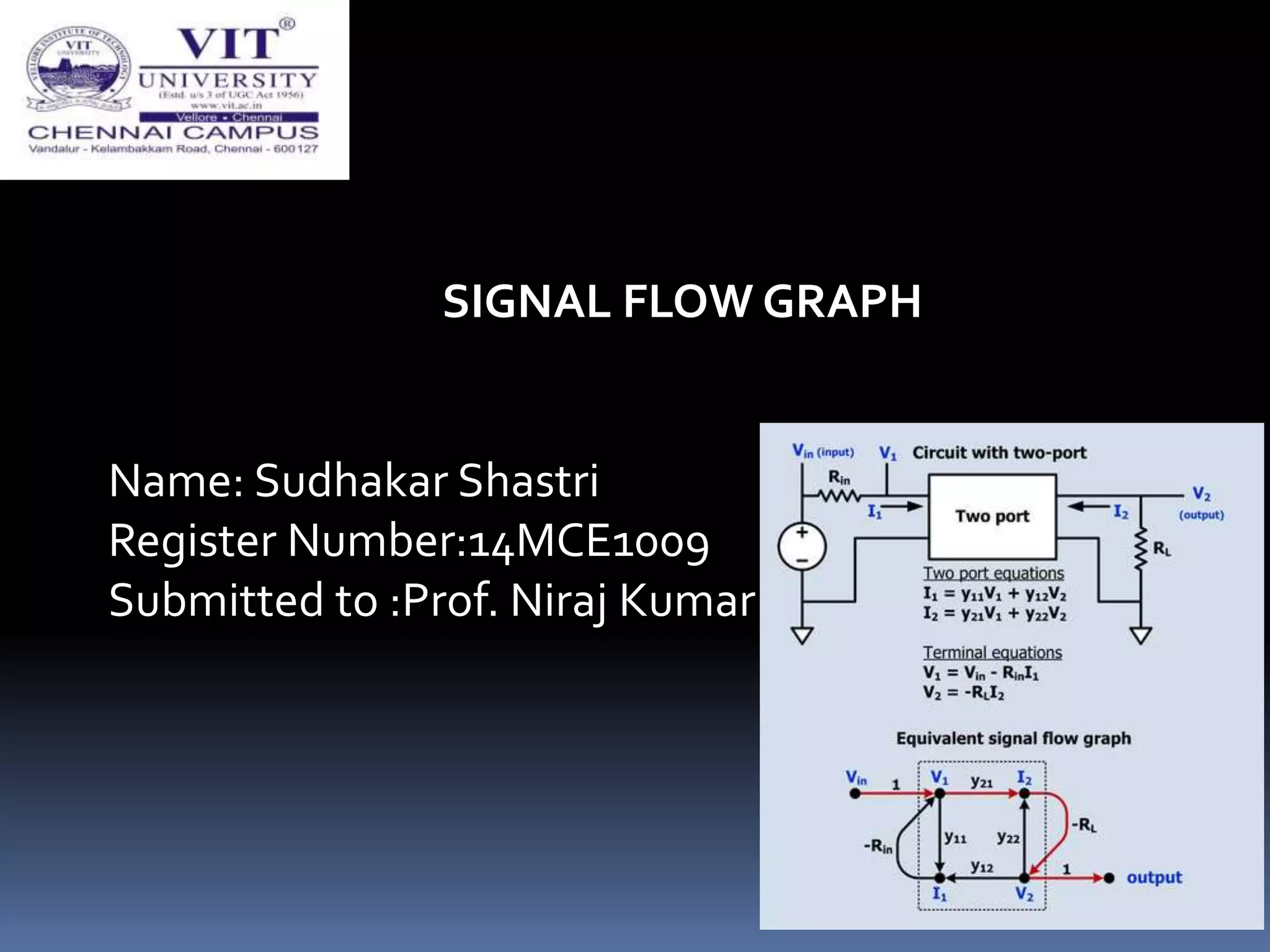
SIGNAL FLOW GRAPH
Name: Sudhakar Shastri
Register Number:14MCE1009
Submitted to :Prof. Niraj Kumar
Contents
 Introduction
 Basic components
 Representation of source and load
 Rules of SFG
 Construction of SFG
 Applications
Introduction
 SFG is a useful technique for analysis of
microwave networks in terms of reflected
and transmitted waves.
 Signal and Scattering parameters can be
described using a graphical technique called
Signal Flow Graphs (SFG).
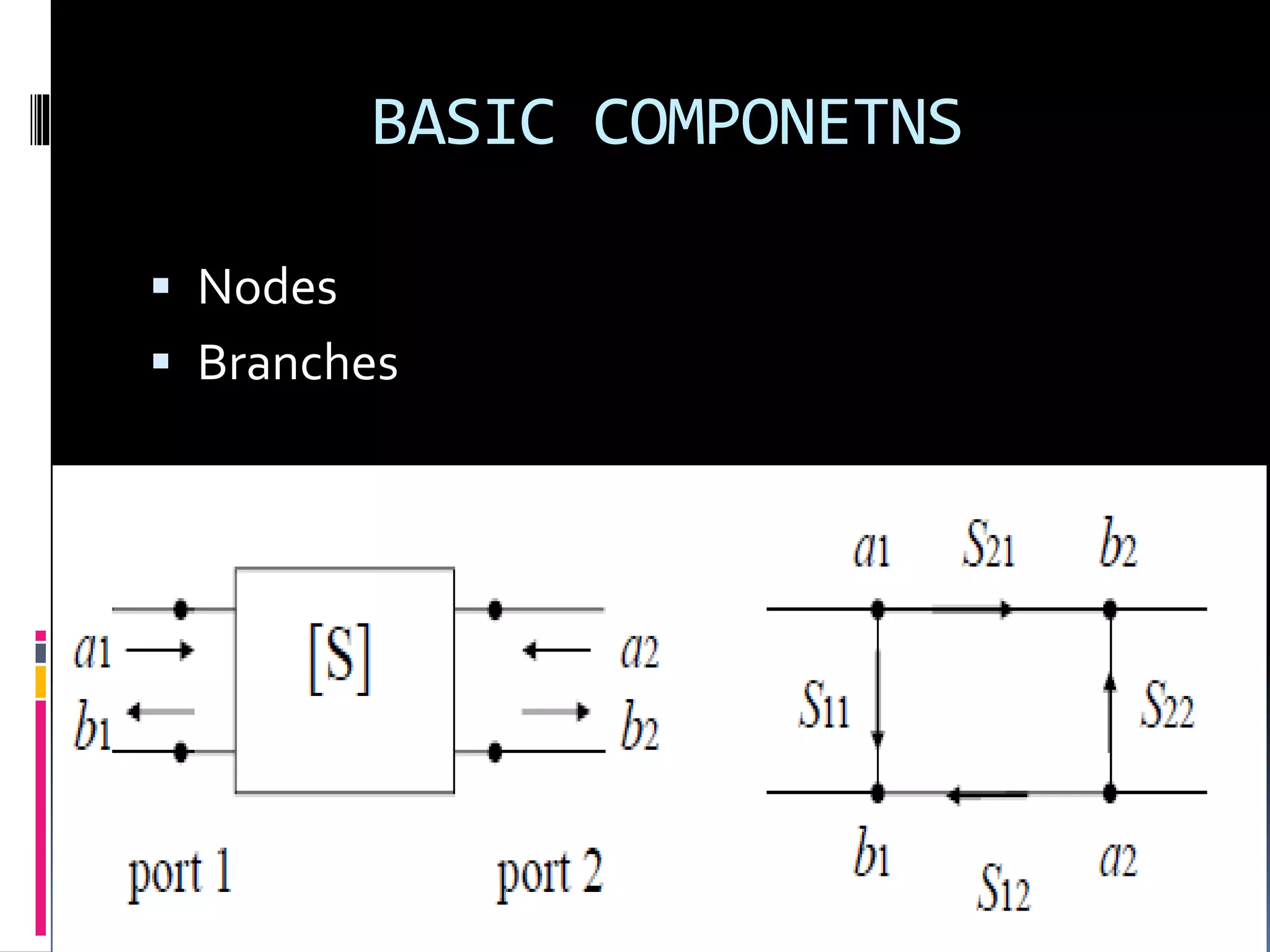
BASIC COMPONETNS
 Nodes
 Branches
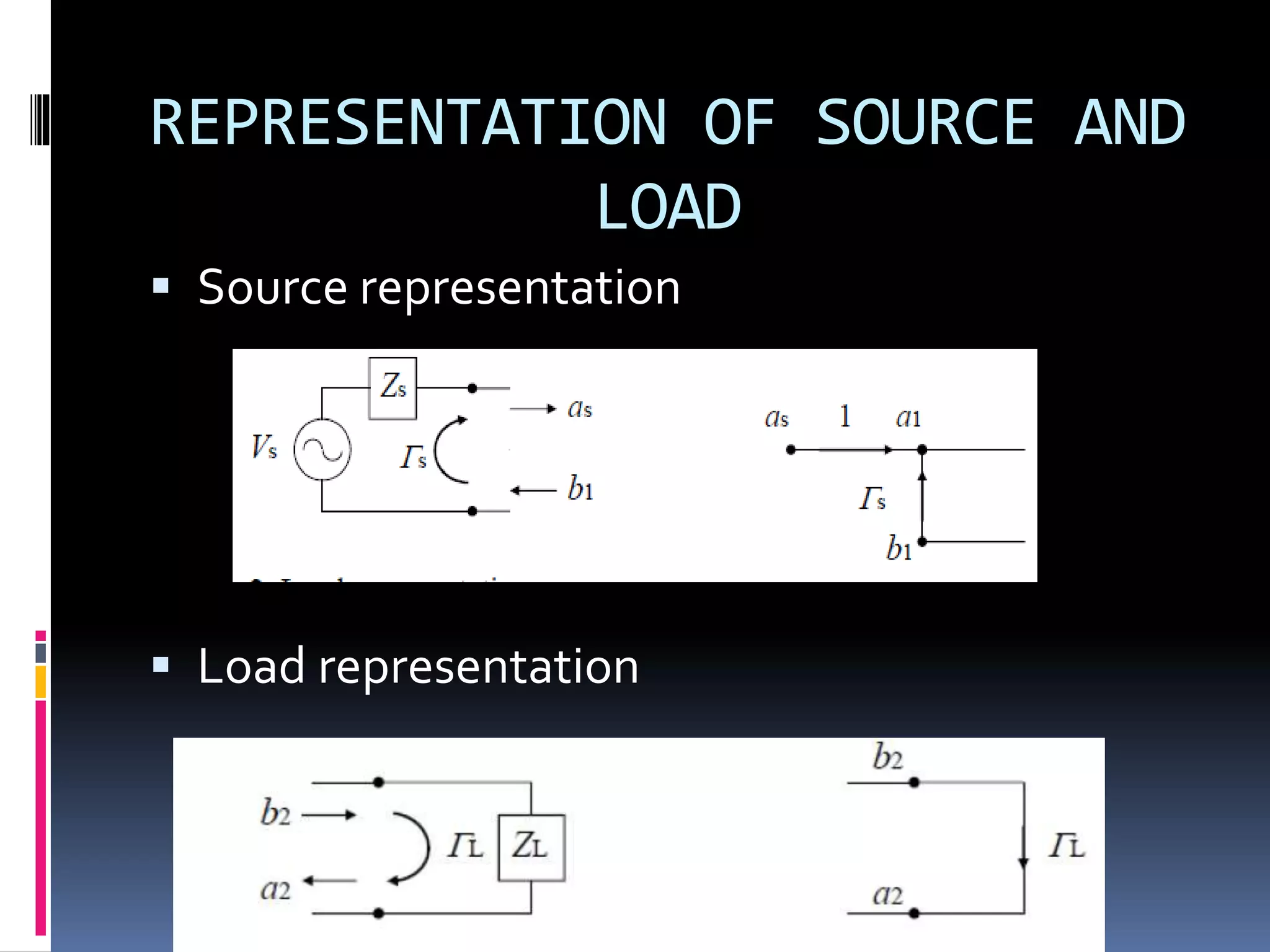
REPRESENTATION OF SOURCE AND
LOAD
 Source representation
 Load representation
RULES OF SFG
 Series rule
 Parallel rule
 Recursive rule (self loop)
 Node splitting rule
RULE 1:Series Rule
 S-parameters for paths in series can be
combined into one path by multiplying the s-
parameters.
V3=S32S21V1
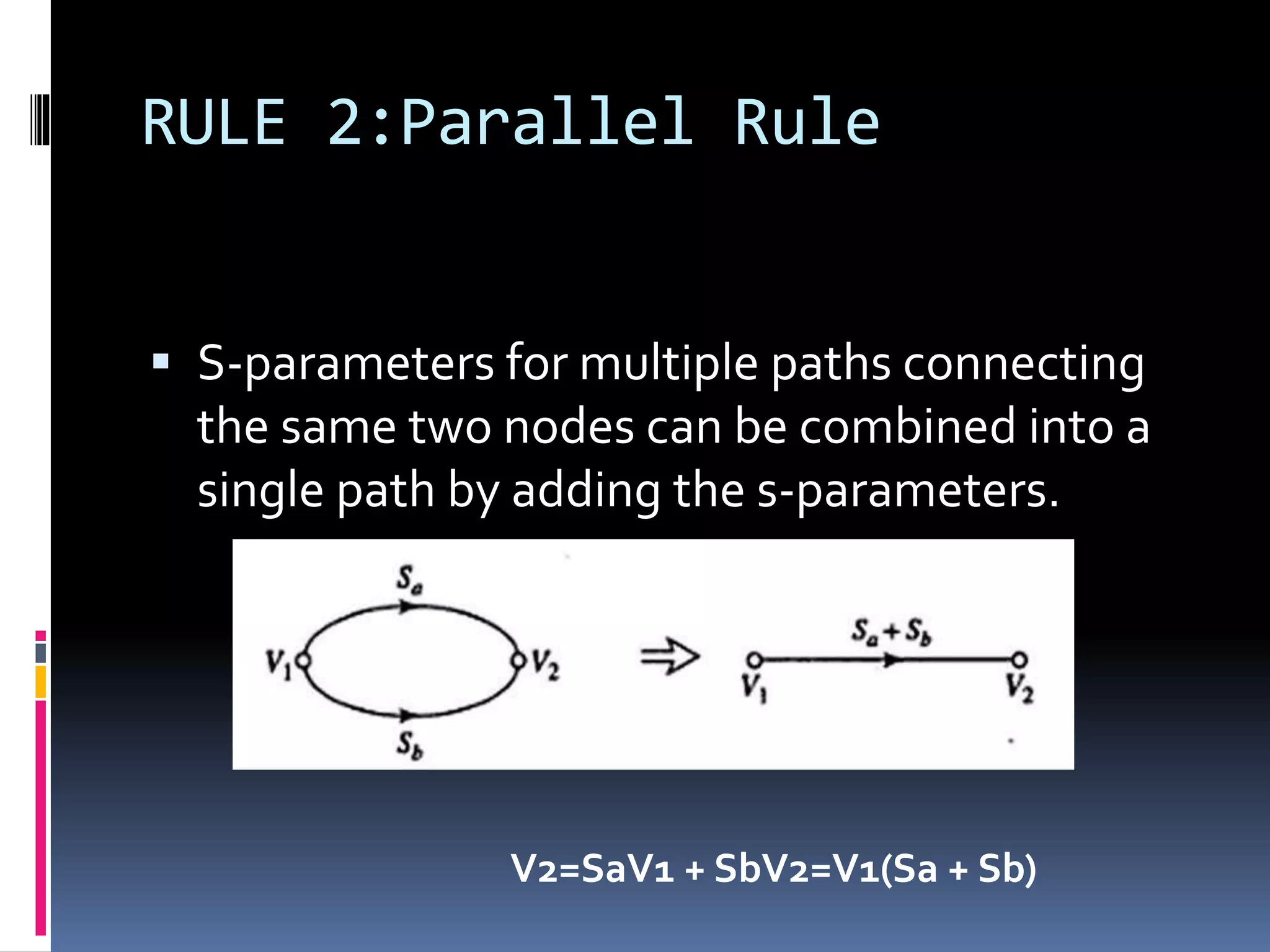
RULE 2:Parallel Rule
 S-parameters for multiple paths connecting
the same two nodes can be combined into a
single path by adding the s-parameters.
V2=SaV1 + SbV2=V1(Sa + Sb)
RULE 3:Recursion Rule
When a node has a self loop of co-efficient S,
the self loop Can be eliminated by multiplying
coefficients of the branches feeding that node
by 1/(1-S)
V2=S21V1 + S22V2
V3=S32V2
Eliminating V2
V3=S32S21V1/1-S22
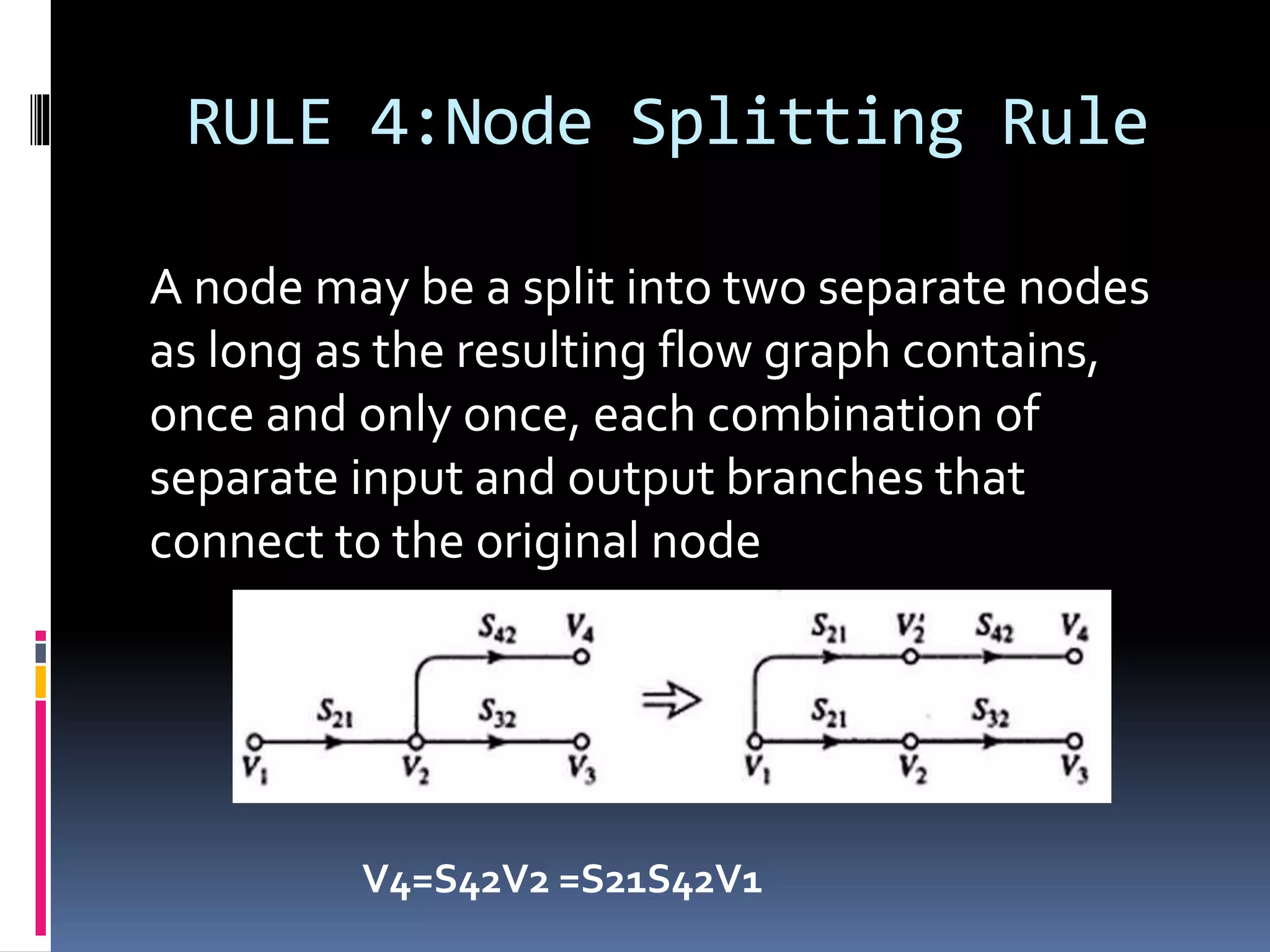
RULE 4:Node Splitting Rule
A node may be a split into two separate nodes
as long as the resulting flow graph contains,
once and only once, each combination of
separate input and output branches that
connect to the original node
V4=S42V2 =S21S42V1
APPLICATIONS
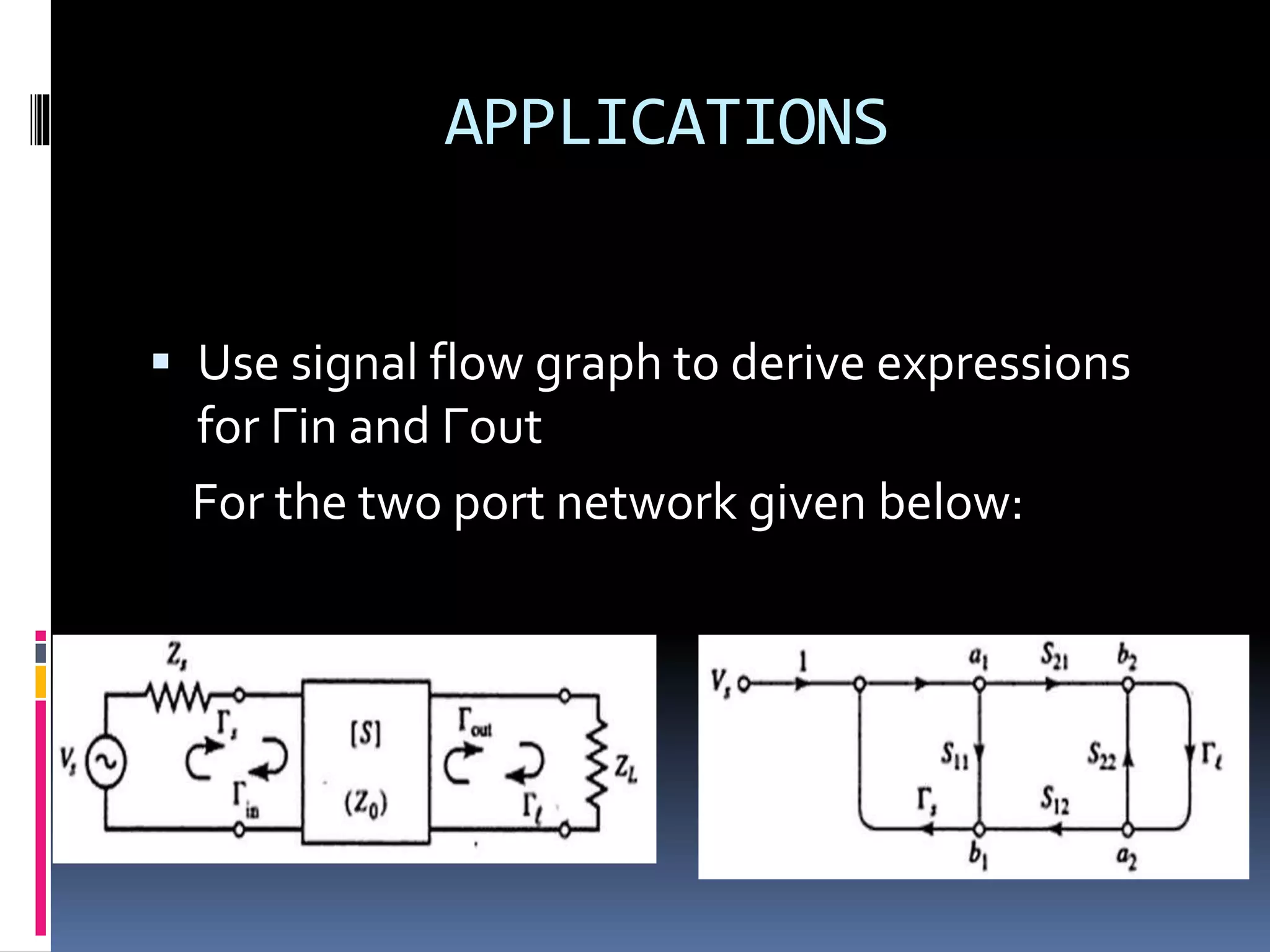
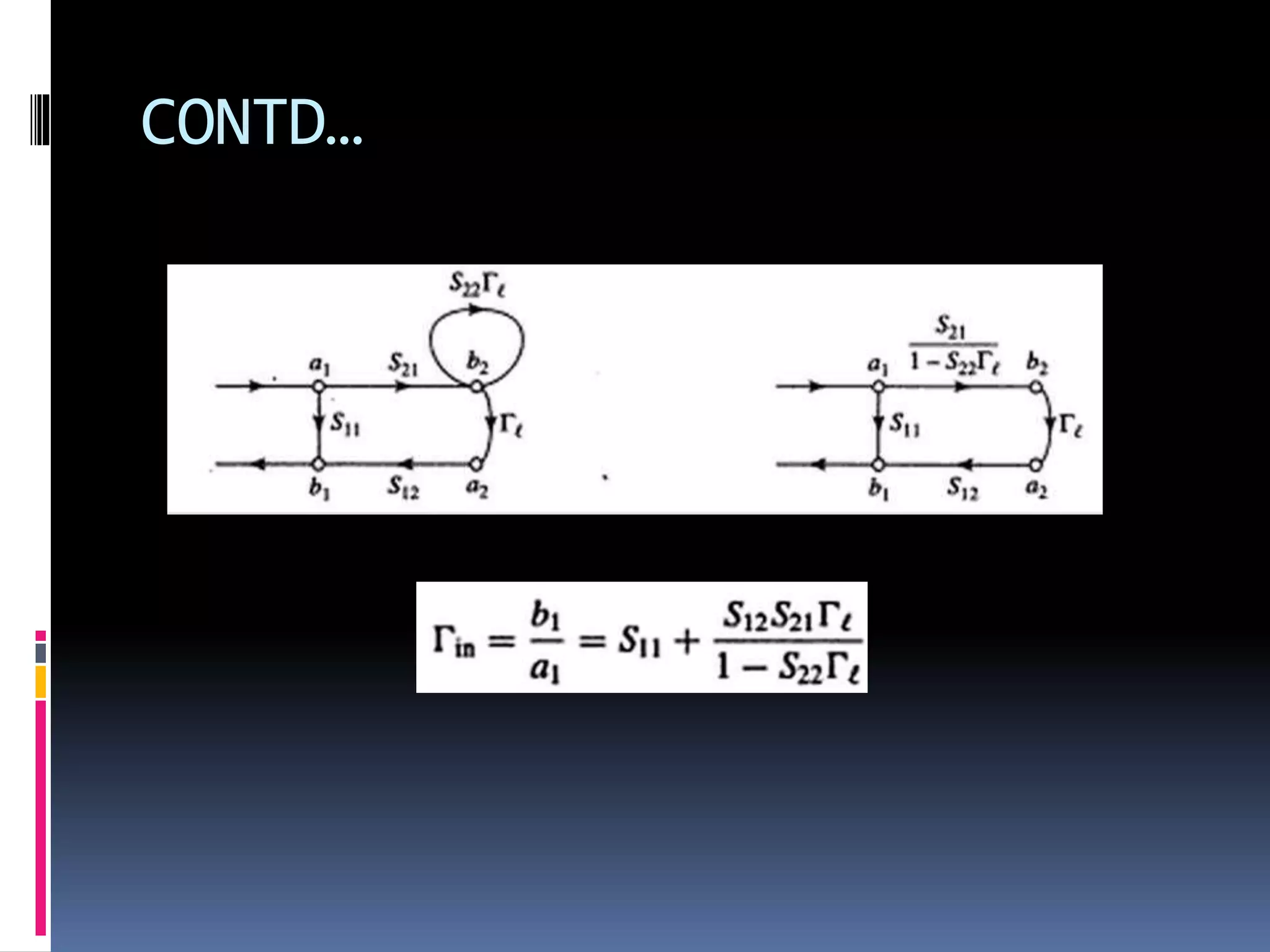
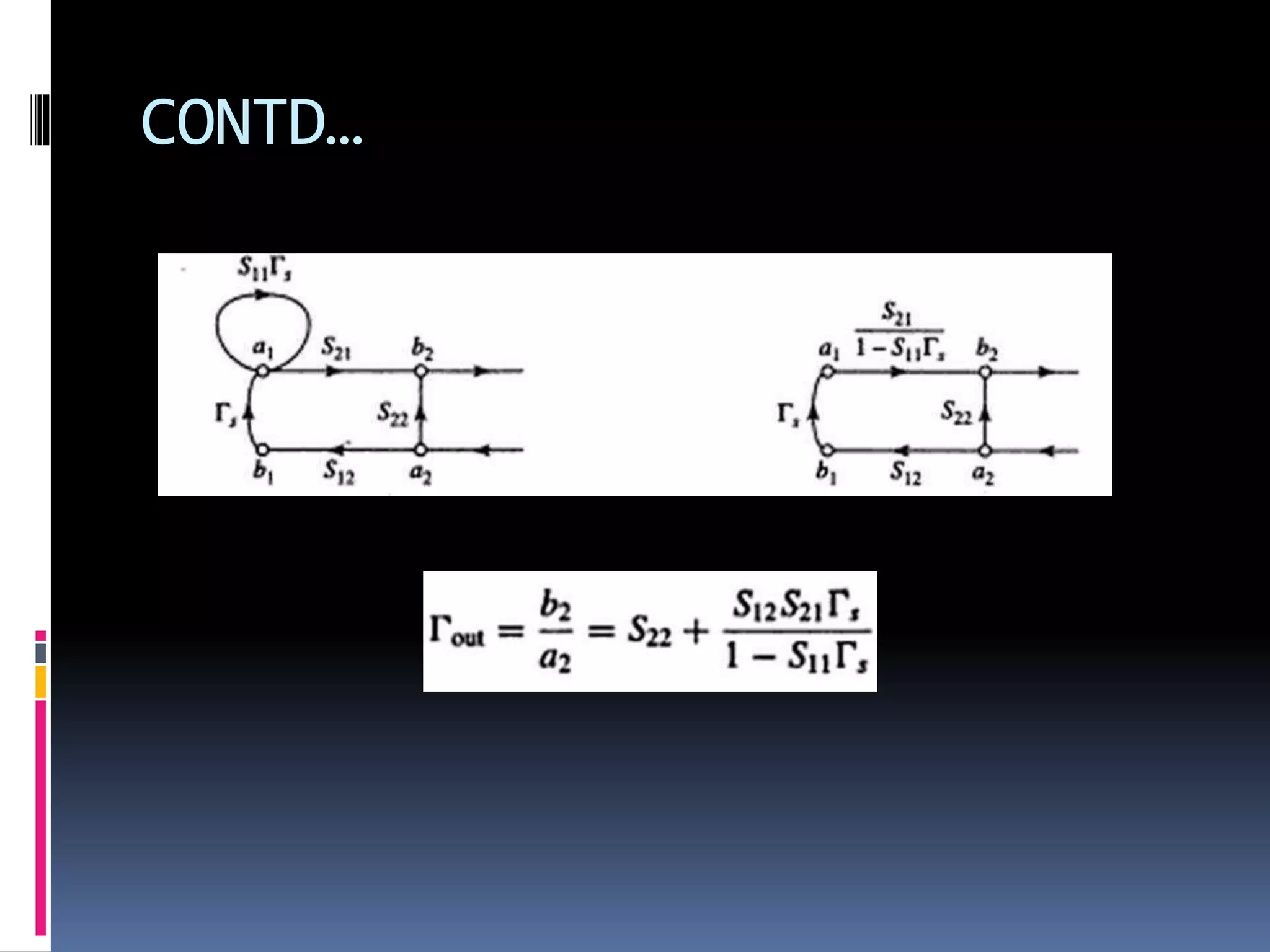
 Use signal flow graph to derive expressions
for Γin and Γout
For the two port network given below:
CONTD…
CONTD…
Signal flow graph

Signal flow graph

  • 1.
    SIGNAL FLOW GRAPH Name:Sudhakar Shastri Register Number:14MCE1009 Submitted to :Prof. Niraj Kumar
  • 2.
    Contents  Introduction  Basiccomponents  Representation of source and load  Rules of SFG  Construction of SFG  Applications
  • 3.
    Introduction  SFG isa useful technique for analysis of microwave networks in terms of reflected and transmitted waves.  Signal and Scattering parameters can be described using a graphical technique called Signal Flow Graphs (SFG).
  • 4.
  • 5.
    REPRESENTATION OF SOURCEAND LOAD  Source representation  Load representation
  • 6.
    RULES OF SFG Series rule  Parallel rule  Recursive rule (self loop)  Node splitting rule
  • 7.
    RULE 1:Series Rule S-parameters for paths in series can be combined into one path by multiplying the s- parameters. V3=S32S21V1
  • 8.
    RULE 2:Parallel Rule S-parameters for multiple paths connecting the same two nodes can be combined into a single path by adding the s-parameters. V2=SaV1 + SbV2=V1(Sa + Sb)
  • 9.
    RULE 3:Recursion Rule Whena node has a self loop of co-efficient S, the self loop Can be eliminated by multiplying coefficients of the branches feeding that node by 1/(1-S) V2=S21V1 + S22V2 V3=S32V2 Eliminating V2 V3=S32S21V1/1-S22
  • 10.
    RULE 4:Node SplittingRule A node may be a split into two separate nodes as long as the resulting flow graph contains, once and only once, each combination of separate input and output branches that connect to the original node V4=S42V2 =S21S42V1
  • 11.
    APPLICATIONS  Use signalflow graph to derive expressions for Γin and Γout For the two port network given below:
  • 12.
  • 13.