Sickle cell Anemia
Sreja.s
III Bsc Zoology
18bzg044
Sickle cell Anemia:
 Sickle cell anemia is an inherited red blood cell disorder in which there
aren't enough healthy red blood cells to carry oxygen throughout your
body.
 Normally, the flexible, round red blood cells move easily through
blood vessels.
 In sickle cell anemia, the red blood cells are shaped like sickles or
crescent moons. These rigid, sticky cells can get stuck in small blood
vessels, which can slow or block blood flow and oxygen to parts of the
body.
 There's no cure for most people with sickle cell anemia. But treatments
can relieve pain and help prevent complications associated with the
disease.
SYMPTOMS:
 Signs and symptoms of sickle cell anemia usually appear around 5
months of age. They vary from person to person and change
over time. Signs and symptoms can include:
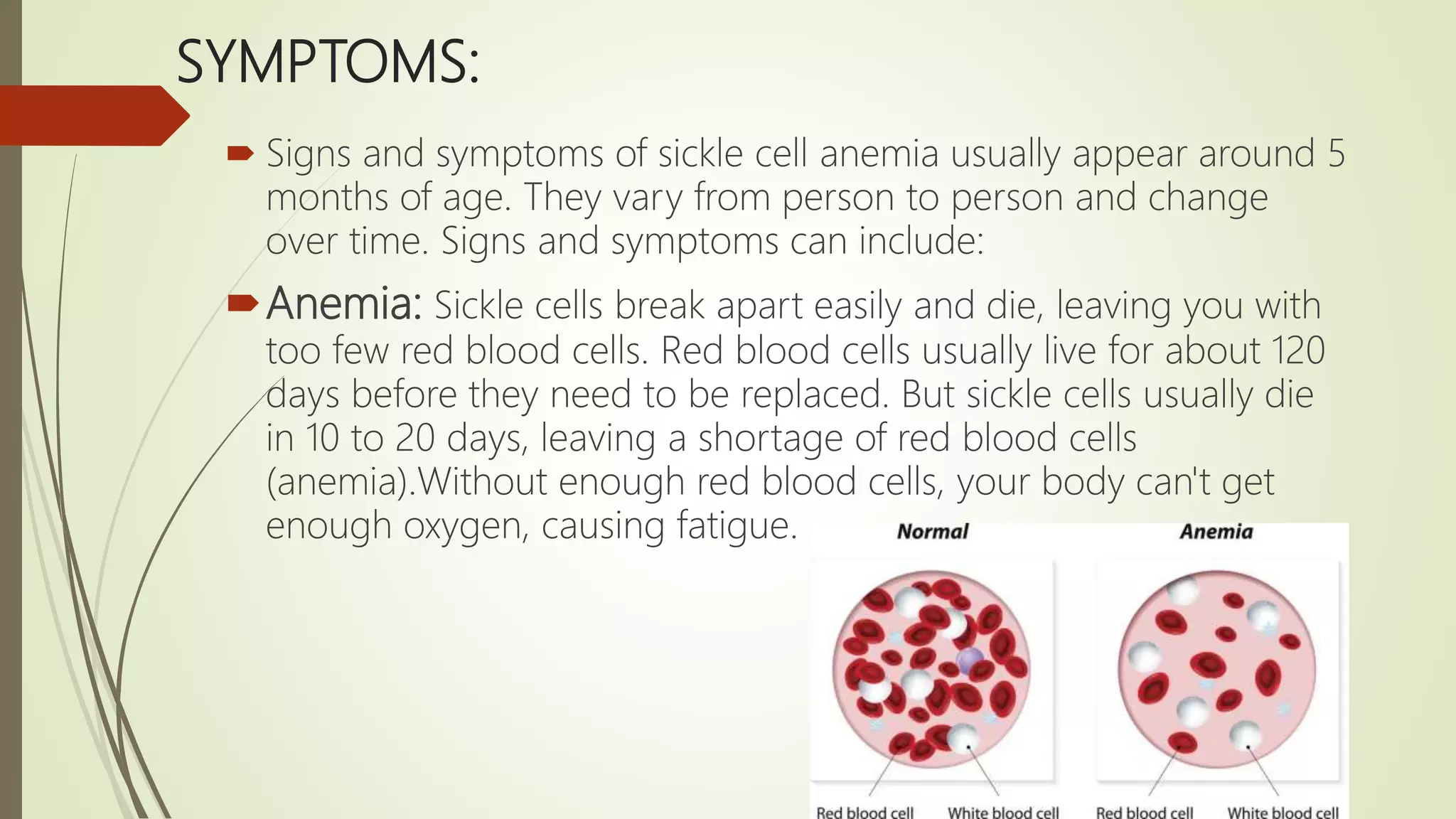
Anemia: Sickle cells break apart easily and die, leaving you with
too few red blood cells. Red blood cells usually live for about 120
days before they need to be replaced. But sickle cells usually die
in 10 to 20 days, leaving a shortage of red blood cells
(anemia).Without enough red blood cells, your body can't get
enough oxygen, causing fatigue.
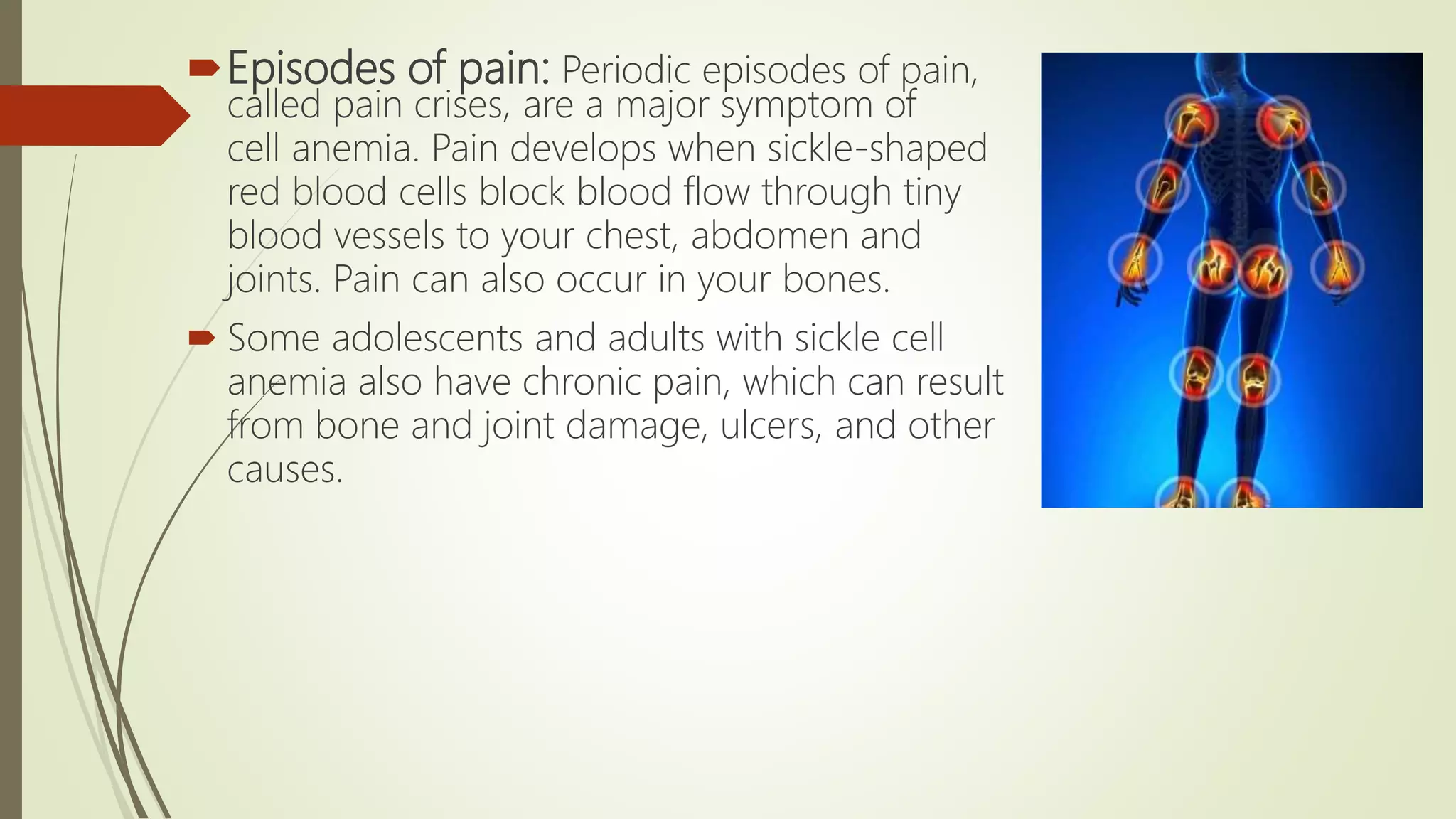
Episodes of pain: Periodic episodes of pain,
called pain crises, are a major symptom of
cell anemia. Pain develops when sickle-shaped
red blood cells block blood flow through tiny
blood vessels to your chest, abdomen and
joints. Pain can also occur in your bones.
 Some adolescents and adults with sickle cell
anemia also have chronic pain, which can result
from bone and joint damage, ulcers, and other
causes.
Swelling of hands and feet: The swelling
is caused by sickle-shaped red blood cells
blocking blood flow to the hands and feet.
Frequent infections: Sickle cells can
damage your spleen, leaving you more
vulnerable to infections. Doctors commonly
give infants and children with sickle cell
anemia vaccinations and antibiotics to
prevent potentially life-threatening
infections, such as pneumonia.
Delayed growth or
puberty: Red blood cells provide
your body with the oxygen and
nutrients needed for growth. A
shortage of healthy red blood
can slow growth in infants and
children and delay puberty in
teenagers.
Vision problems: Tiny blood
vessels that supply your eyes can
become plugged with sickle cells.
This can damage the retina — the
portion of the eye that processes
visual images — and lead to
problems.
When to see a doctor
 Fever. People with sickle cell anemia have an increased risk of serious
infection, and fever can be the first sign of an infection.
 Unexplained episodes of severe pain, such as pain in the abdomen,
chest, bones or joints.
 Swelling in the hands or feet.
 Abdominal swelling, especially if the area is tender to the touch.
 Pale skin or nail beds.
 Yellow tint to the skin or whites of the eyes.
 Signs or symptoms of stroke. If you notice one-sided paralysis or
weakness in the face, arms or legs; confusion; trouble walking or talking;
sudden vision changes or unexplained numbness; or a severe headache.

Sickle cell Anemia- symptoms.pptx

  • 1.
    Sickle cell Anemia Sreja.s IIIBsc Zoology 18bzg044
  • 2.
    Sickle cell Anemia: Sickle cell anemia is an inherited red blood cell disorder in which there aren't enough healthy red blood cells to carry oxygen throughout your body.  Normally, the flexible, round red blood cells move easily through blood vessels.  In sickle cell anemia, the red blood cells are shaped like sickles or crescent moons. These rigid, sticky cells can get stuck in small blood vessels, which can slow or block blood flow and oxygen to parts of the body.  There's no cure for most people with sickle cell anemia. But treatments can relieve pain and help prevent complications associated with the disease.
  • 3.
    SYMPTOMS:  Signs andsymptoms of sickle cell anemia usually appear around 5 months of age. They vary from person to person and change over time. Signs and symptoms can include: Anemia: Sickle cells break apart easily and die, leaving you with too few red blood cells. Red blood cells usually live for about 120 days before they need to be replaced. But sickle cells usually die in 10 to 20 days, leaving a shortage of red blood cells (anemia).Without enough red blood cells, your body can't get enough oxygen, causing fatigue.
  • 4.
    Episodes of pain:Periodic episodes of pain, called pain crises, are a major symptom of cell anemia. Pain develops when sickle-shaped red blood cells block blood flow through tiny blood vessels to your chest, abdomen and joints. Pain can also occur in your bones.  Some adolescents and adults with sickle cell anemia also have chronic pain, which can result from bone and joint damage, ulcers, and other causes.
  • 5.
    Swelling of handsand feet: The swelling is caused by sickle-shaped red blood cells blocking blood flow to the hands and feet. Frequent infections: Sickle cells can damage your spleen, leaving you more vulnerable to infections. Doctors commonly give infants and children with sickle cell anemia vaccinations and antibiotics to prevent potentially life-threatening infections, such as pneumonia.
  • 6.
    Delayed growth or puberty:Red blood cells provide your body with the oxygen and nutrients needed for growth. A shortage of healthy red blood can slow growth in infants and children and delay puberty in teenagers. Vision problems: Tiny blood vessels that supply your eyes can become plugged with sickle cells. This can damage the retina — the portion of the eye that processes visual images — and lead to problems.
  • 7.
    When to seea doctor  Fever. People with sickle cell anemia have an increased risk of serious infection, and fever can be the first sign of an infection.  Unexplained episodes of severe pain, such as pain in the abdomen, chest, bones or joints.  Swelling in the hands or feet.  Abdominal swelling, especially if the area is tender to the touch.  Pale skin or nail beds.  Yellow tint to the skin or whites of the eyes.  Signs or symptoms of stroke. If you notice one-sided paralysis or weakness in the face, arms or legs; confusion; trouble walking or talking; sudden vision changes or unexplained numbness; or a severe headache.