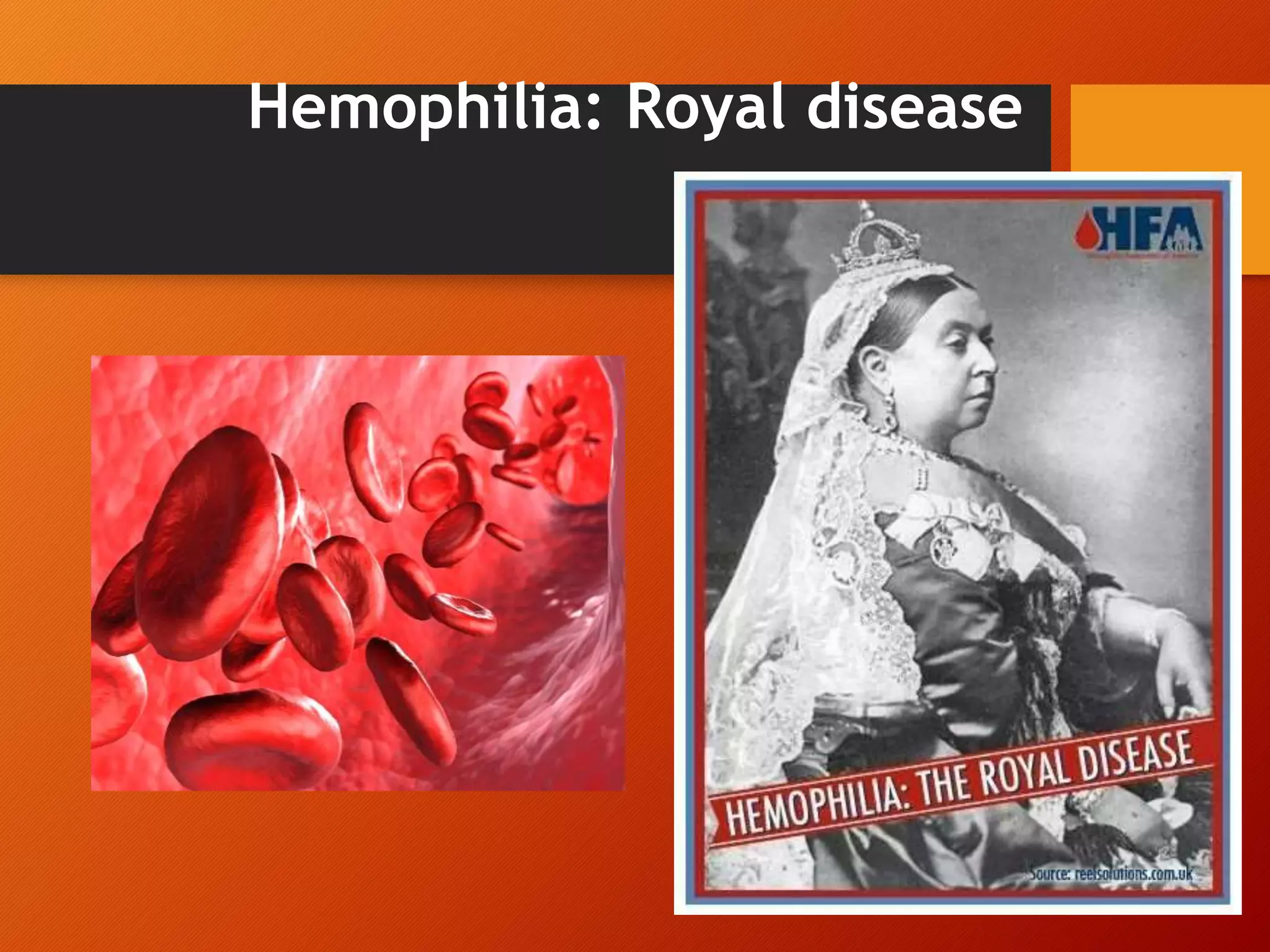
Hemophilia: Royal disease
Definition:
• Hemophilia is a coagulation disorder arising from a genetic
defect of the X chromosome. Any of several hereditary blood-
coagulation disorders in which the blood fails to clot normally
because of a deficiency or abnormality of one of the clotting
factors. Hemophilia is a recessive trait associated with the X-
chromosome, mostly occurs in males.
Incidence:
• 1 per 5,000 male births
• 1 per 10,000 population
• 85 % - F VIII deficiency
• 10- 15 % - F IX deficiency
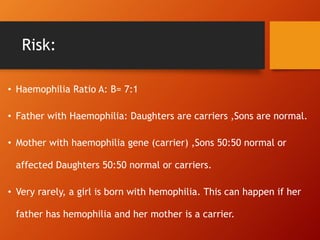
Risk:
• Haemophilia Ratio A: B= 7:1
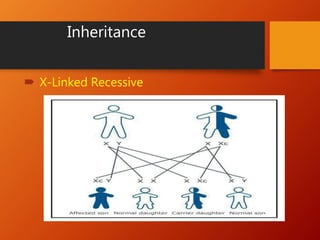
• Father with Haemophilia: Daughters are carriers ,Sons are normal.
• Mother with haemophilia gene (carrier) ,Sons 50:50 normal or
affected Daughters 50:50 normal or carriers.
• Very rarely, a girl is born with hemophilia. This can happen if her
father has hemophilia and her mother is a carrier.
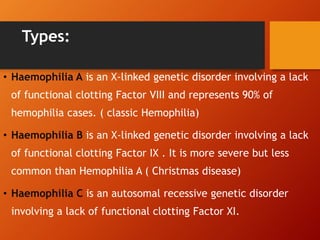
Types:
• Haemophilia A is an X-linked genetic disorder involving a lack
of functional clotting Factor VIII and represents 90% of
hemophilia cases. ( classic Hemophilia)
• Haemophilia B is an X-linked genetic disorder involving a lack
of functional clotting Factor IX . It is more severe but less
common than Hemophilia A ( Christmas disease)
• Haemophilia C is an autosomal recessive genetic disorder
involving a lack of functional clotting Factor XI.
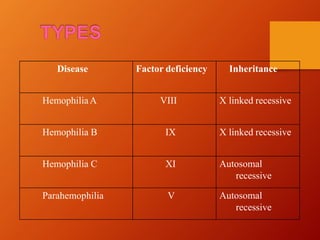
Disease Factor deficiency Inheritance
HemophiliaA VIII X linked recessive
Hemophilia B IX X linked recessive
Hemophilia C XI Autosomal
recessive
Parahemophilia V Autosomal
recessive
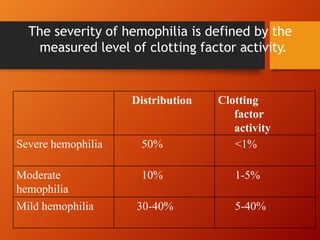
Distribution Clotting
factor
activity
Severe hemophilia 50% <1%
Moderate
hemophilia
10% 1-5%
Mild hemophilia 30-40% 5-40%
The severity of hemophilia is defined by the
measured level of clotting factor activity.
Etiology:
• Lack of formation of prothrombin activator
• Deficiency of factor VIII, IX, X. It is caused due
to genetic mutation.
Inheritance
 X-Linked Recessive
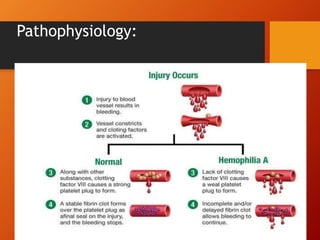
Pathophysiology:
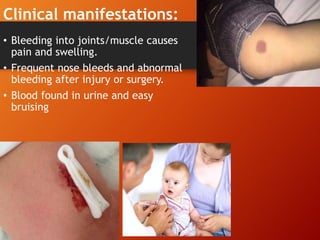
Clinical manifestations:
• Bleeding into joints/muscle causes
pain and swelling.
• Frequent nose bleeds and abnormal
bleeding after injury or surgery.
• Blood found in urine and easy
bruising
• External bleeding may include:
• Bleeding in the mouth from a cut or bite or from cutting or
losing a tooth
• Nosebleeds for no obvious reason.
• Heavy bleeding from a minor cut.
• Bleeding from a cut that resumes after stopping for a short
time
• Internal bleeding may include:
• Blood in the urine (from bleeding in the kidneys or bladder).
• Blood in the stool (from bleeding in the intestines or stomach).
• Large bruises (from bleeding into the large muscles of the
body).
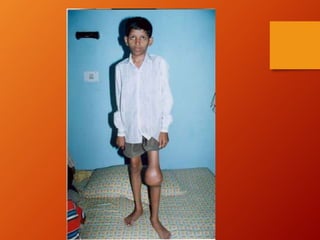
• Bleeding in the Joints
• Bleeding in the knees, elbows, or other joints is another
common form of internal bleeding in people who have
hemophilia.
• The bleeding causes tightness in the joint with no real pain or
any visible signs of bleeding.
• The joint then becomes swollen, hot to touch, and painful to
bend.
• Bleeding in the Brain
• Long-lasting, painful headaches or neck pain or stiffness
• Sudden weakness or clumsiness of the arms or legs or
problems walking
• Double vision
• Convulsions or seizures
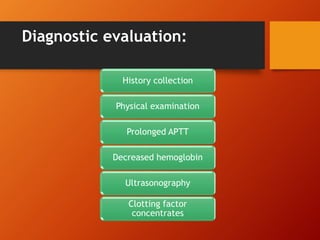
Diagnostic evaluation:
History collection
Physical examination
Prolonged APTT
Decreased hemoglobin
Ultrasonography
Clotting factor
concentrates
Continue..
• FAMILY HISTORY: Any family history of bleeding, such as following surgery or
injury, or unexplained deaths among brothers, sisters, or other male
relatives such as maternal uncles, grandfathers, or cousins should be
discussed with a doctor to see if hemophilia was a cause.
• SCREENING TESTS: Screening tests are blood tests that show if the blood is
clotting properly. Types of screening tests: Complete Blood Count (CBC) •
This common test measures the amount of hemoglobin, the size and number
of red blood cells and numbers of different types of white blood cells and
platelets found in blood. The CBC is normal in people with hemophilia.
Continue..
• ACTIVATED PARTIAL THROMBOPLASTIN TIME (APTT) TEST: This
test measures how long it takes for blood to clot. It measures
the clotting ability of factors VIII (8), IX (9), XI (11), and XII
(12). If any of these clotting factors are too low, it takes longer
than normal for the blood to clot. The results of this test will
show a longer clotting time among people with hemophilia A or
B.
• PROTHROMBIN TIME (PT) TEST: This test also measures the time
it takes for blood to clot. It measures primarily the clotting
ability of factors I (1), II (2), V (5), VII (7), and X (10). If any of
these factors are too low, it takes longer than normal for the
blood to clot. The results of this test will be normal among
most people with hemophilia A and B.
Continue..
• FIBRINOGEN TEST: This test also helps doctors assess a
patient’s ability to form a blood clot. This test is ordered
either along with other blood clotting tests or when a patient
has an abnormal PT or APTT test result, or both.
• CLOTTING FACTOR TESTS: Clotting factor tests, also called
factor assays, are required to diagnose a bleeding disorder.
This blood test shows the type of hemophilia and the severity.
Continue..
• FETAL DIAGNOSIS: Pregnant women who are known hemophilia
carriers can have the disorder diagnosed in their unborn babies
as early as 12 weeks into their pregnancies. • Women who are
hemophilia carriers also can have "preimplantation diagnosis"
to have children who don't have hemophilia. • For this process,
women have their eggs removed and fertilized by sperm in a
laboratory. The embryos are then tested for hemophilia.
Management:
• Prenatal testing: If a pregnant woman has a history of
hemophilia, a hemophilia gene test can be done during
pregnancy. A sample of placenta is removed from the uterus
and tested. This test is known as a CVS (chorionic villus
sampling) test.
• Plasma-derived clotting factors - prepared from the plasma of
donated human blood.
• Recombinant clotting factors Desmopressin (DDAVP)(for
hemophilia A).
• This medication is a synthetic hormone which encourages the
body to produce more of its own Factor VIII.
• Control topical bleeding like hemarthrosis by RICE (Rest,
Ice, Compression, Elevation).
• RICE is a treatment many health care professionals
recommend for joint bleeds. It also reduces swelling and
tissue damage when used together with clotting factor
concentrates.
• Administering clotting factor concentrates:
The medication is injected into a vein - generally in the
back of the hand or at the crook of the elbow.
• Analgesics
• Desmopressin
• Trasfusion of packed RBCs or blood products to replace blood
volume
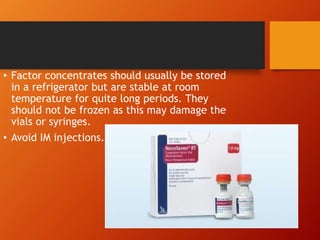
• Factor concentrates should usually be stored
in a refrigerator but are stable at room
temperature for quite long periods. They
should not be frozen as this may damage the
vials or syringes.
• Avoid IM injections.
PREVENTION:
• Control Bleeding Episodes • Local measures: apply direct
pressure; elevate or ice compress • Epistaxis sit up lean
forward
• Prevent joint degeneration • Immobilize joint during
acute bleeding • Progressive exercise • Avoid prolong
immobility
Complications
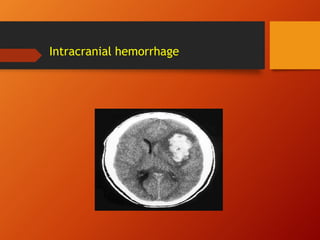
Intracranial hemorrhage
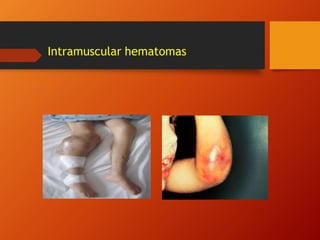
Intramuscular hematomas
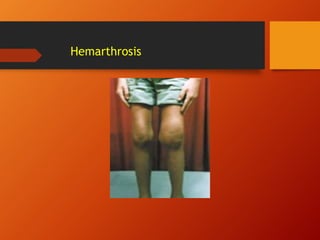
Hemarthrosis
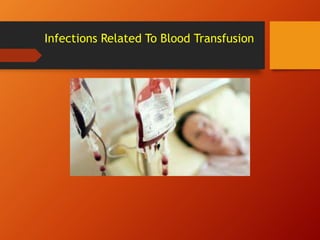
Infections Related To Blood Transfusion
Nursing diagnosis:
• Acute pain related to hemarthrosis/traumatic injury to
muscles/intramuscular bleeding.
• Impaired mobility related to pain and discomfort with the
onset of bleeding episodes/hemarthrosis.
• Impaired skin integrity related to intramuscular bleeding.
• Ineffective circulation related to disease condition.
• Risk for bleeding related to decreased concentration of
clotting factors circulating in the blood (factor VIII and factor
IX)
• Knowledge deficit related to disease condition.
Hemophilia

Hemophilia

  • 1.
  • 3.
    Definition: • Hemophilia isa coagulation disorder arising from a genetic defect of the X chromosome. Any of several hereditary blood- coagulation disorders in which the blood fails to clot normally because of a deficiency or abnormality of one of the clotting factors. Hemophilia is a recessive trait associated with the X- chromosome, mostly occurs in males.
  • 4.
    Incidence: • 1 per5,000 male births • 1 per 10,000 population • 85 % - F VIII deficiency • 10- 15 % - F IX deficiency
  • 5.
    Risk: • Haemophilia RatioA: B= 7:1 • Father with Haemophilia: Daughters are carriers ,Sons are normal. • Mother with haemophilia gene (carrier) ,Sons 50:50 normal or affected Daughters 50:50 normal or carriers. • Very rarely, a girl is born with hemophilia. This can happen if her father has hemophilia and her mother is a carrier.
  • 6.
    Types: • Haemophilia Ais an X-linked genetic disorder involving a lack of functional clotting Factor VIII and represents 90% of hemophilia cases. ( classic Hemophilia) • Haemophilia B is an X-linked genetic disorder involving a lack of functional clotting Factor IX . It is more severe but less common than Hemophilia A ( Christmas disease) • Haemophilia C is an autosomal recessive genetic disorder involving a lack of functional clotting Factor XI.
  • 7.
    Disease Factor deficiencyInheritance HemophiliaA VIII X linked recessive Hemophilia B IX X linked recessive Hemophilia C XI Autosomal recessive Parahemophilia V Autosomal recessive
  • 8.
    Distribution Clotting factor activity Severe hemophilia50% <1% Moderate hemophilia 10% 1-5% Mild hemophilia 30-40% 5-40% The severity of hemophilia is defined by the measured level of clotting factor activity.
  • 9.
    Etiology: • Lack offormation of prothrombin activator • Deficiency of factor VIII, IX, X. It is caused due to genetic mutation.
  • 10.
  • 11.
  • 12.
    Clinical manifestations: • Bleedinginto joints/muscle causes pain and swelling. • Frequent nose bleeds and abnormal bleeding after injury or surgery. • Blood found in urine and easy bruising
  • 13.
    • External bleedingmay include: • Bleeding in the mouth from a cut or bite or from cutting or losing a tooth • Nosebleeds for no obvious reason. • Heavy bleeding from a minor cut. • Bleeding from a cut that resumes after stopping for a short time
  • 14.
    • Internal bleedingmay include: • Blood in the urine (from bleeding in the kidneys or bladder). • Blood in the stool (from bleeding in the intestines or stomach). • Large bruises (from bleeding into the large muscles of the body).
  • 15.
    • Bleeding inthe Joints • Bleeding in the knees, elbows, or other joints is another common form of internal bleeding in people who have hemophilia. • The bleeding causes tightness in the joint with no real pain or any visible signs of bleeding. • The joint then becomes swollen, hot to touch, and painful to bend.
  • 16.
    • Bleeding inthe Brain • Long-lasting, painful headaches or neck pain or stiffness • Sudden weakness or clumsiness of the arms or legs or problems walking • Double vision • Convulsions or seizures
  • 18.
    Diagnostic evaluation: History collection Physicalexamination Prolonged APTT Decreased hemoglobin Ultrasonography Clotting factor concentrates
  • 19.
    Continue.. • FAMILY HISTORY:Any family history of bleeding, such as following surgery or injury, or unexplained deaths among brothers, sisters, or other male relatives such as maternal uncles, grandfathers, or cousins should be discussed with a doctor to see if hemophilia was a cause. • SCREENING TESTS: Screening tests are blood tests that show if the blood is clotting properly. Types of screening tests: Complete Blood Count (CBC) • This common test measures the amount of hemoglobin, the size and number of red blood cells and numbers of different types of white blood cells and platelets found in blood. The CBC is normal in people with hemophilia.
  • 20.
    Continue.. • ACTIVATED PARTIALTHROMBOPLASTIN TIME (APTT) TEST: This test measures how long it takes for blood to clot. It measures the clotting ability of factors VIII (8), IX (9), XI (11), and XII (12). If any of these clotting factors are too low, it takes longer than normal for the blood to clot. The results of this test will show a longer clotting time among people with hemophilia A or B. • PROTHROMBIN TIME (PT) TEST: This test also measures the time it takes for blood to clot. It measures primarily the clotting ability of factors I (1), II (2), V (5), VII (7), and X (10). If any of these factors are too low, it takes longer than normal for the blood to clot. The results of this test will be normal among most people with hemophilia A and B.
  • 21.
    Continue.. • FIBRINOGEN TEST:This test also helps doctors assess a patient’s ability to form a blood clot. This test is ordered either along with other blood clotting tests or when a patient has an abnormal PT or APTT test result, or both. • CLOTTING FACTOR TESTS: Clotting factor tests, also called factor assays, are required to diagnose a bleeding disorder. This blood test shows the type of hemophilia and the severity.
  • 22.
    Continue.. • FETAL DIAGNOSIS:Pregnant women who are known hemophilia carriers can have the disorder diagnosed in their unborn babies as early as 12 weeks into their pregnancies. • Women who are hemophilia carriers also can have "preimplantation diagnosis" to have children who don't have hemophilia. • For this process, women have their eggs removed and fertilized by sperm in a laboratory. The embryos are then tested for hemophilia.
  • 23.
    Management: • Prenatal testing:If a pregnant woman has a history of hemophilia, a hemophilia gene test can be done during pregnancy. A sample of placenta is removed from the uterus and tested. This test is known as a CVS (chorionic villus sampling) test. • Plasma-derived clotting factors - prepared from the plasma of donated human blood. • Recombinant clotting factors Desmopressin (DDAVP)(for hemophilia A). • This medication is a synthetic hormone which encourages the body to produce more of its own Factor VIII.
  • 24.
    • Control topicalbleeding like hemarthrosis by RICE (Rest, Ice, Compression, Elevation). • RICE is a treatment many health care professionals recommend for joint bleeds. It also reduces swelling and tissue damage when used together with clotting factor concentrates.
  • 25.
    • Administering clottingfactor concentrates: The medication is injected into a vein - generally in the back of the hand or at the crook of the elbow. • Analgesics • Desmopressin • Trasfusion of packed RBCs or blood products to replace blood volume
  • 26.
    • Factor concentratesshould usually be stored in a refrigerator but are stable at room temperature for quite long periods. They should not be frozen as this may damage the vials or syringes. • Avoid IM injections.
  • 27.
    PREVENTION: • Control BleedingEpisodes • Local measures: apply direct pressure; elevate or ice compress • Epistaxis sit up lean forward • Prevent joint degeneration • Immobilize joint during acute bleeding • Progressive exercise • Avoid prolong immobility
  • 28.
  • 29.
  • 30.
  • 31.
  • 32.
    Infections Related ToBlood Transfusion
  • 33.
    Nursing diagnosis: • Acutepain related to hemarthrosis/traumatic injury to muscles/intramuscular bleeding. • Impaired mobility related to pain and discomfort with the onset of bleeding episodes/hemarthrosis. • Impaired skin integrity related to intramuscular bleeding. • Ineffective circulation related to disease condition. • Risk for bleeding related to decreased concentration of clotting factors circulating in the blood (factor VIII and factor IX) • Knowledge deficit related to disease condition.