For My Non Muslim Students :
Think good and do good things always
GOOD MORNING
For My Muslim Students:
Pay attention to Allah and He will pay attention to you
SHRINKAGE
a) Drying shrinkage
b) Plastic shrinkage
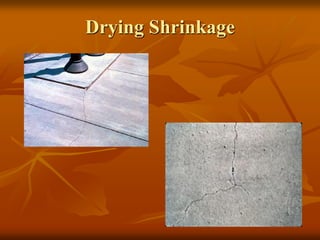
Drying Shrinkage
Drying Shrinkage
 Withdrawal of water from concrete stored in
unsaturated air causes drying shrinkage.
 Because almost all concrete is mixed with
more water than is needed to hydrate the
cement, much of the remaining water
evaporates, causing the concrete to shrink.
 Drying shrinkage represents the strain caused
by the loss of water from the hardened
material.
 Shrinkage may continue for a number of years,
depending on the size & shape of concrete mass.
 On exposure, concrete loses some of its original
water through evaporation and shrink.
 Normal weight concretee shrink from 400 to
800 microstrains
 Example:
Slab length : 6 m
Drying Shrinkage : 600 micro strain
Shrinkage of slab : 4 mm
Factors Influencing Shrinkage
 Amount of water used in concrete
 Size of coarse aggregate used
 Type of aggregate used
 Amount and type of curing applied
Factors Increases Shrinkage
 Use of high slump (without superplasticizer)
 High fine aggregate content
 Use of small-size coarse aggregate
 Excessive high freshly mixed concrete
temperatures
 Use of softer and less rigid aggregates
How to minimize??
 Early wet curing or use steam curing
 Keep water content of concrete as low as can
 Hard, rigid aggregates are difficult to compress
and provide more restrain to shrinkage than
softer one
 Avoid using aggregate that have drying
shrinkage properties
 Avoid using aggregates containing excessive
amounts of clay
Plastic Shrinkage
Plastic Shrinkage
 It refers to volume change occurring while the
concrete is still fresh, before hardening.
 Caused by the rapid evaporation of mix water
(not bleed water) while the concrete is in its
plastic state & in the early stages of initial set.
 It results in cracking due to tension.
 Plastic shrinkage cracks appear in the surface
of fresh concrete soon after it is placed while it
is still plastic.
 Mostly appear on horizontal surface.
 Rarely fracture aggregate, but separated
around the aggregate.
 Any factors that delay setting increases the
possibility of plastic shrinkage cracking.
 Plastic shrinkage is aggravated by a
combination of the following:
a) high wind velocity
b) low relative humidity
c) high air temperature
d) high concrete temperatures
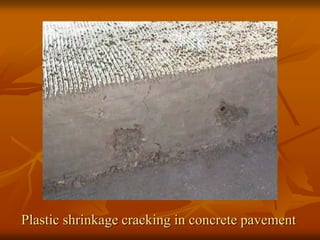
Plastic shrinkage cracking in concrete pavement
How to control?
 Minimize surface evaporation through:
a) use of fogging
b) use of wind breaks
c) use of shading
d) use of plastic sheet covers
e) use of wet burlap
f) use of spray-on finishing aids (evaporation
retarders)
g)use of plastic fibers
 Start curing the concrete as soon as possible.
 If concrete is to be placed on a dry subgrade or
on previously placed concrete, the subgrade or
the concrete base should be thoroughly
dampened. The formwork and reinforcement
should also be dampened.
 Prevent excessive surface moisture
evaporation by providing fog sprays and
erecting windbreaks.
 Reduce the time between placing and final
finishing to a minimum.
CREEP
Introduction
 Creep can be defined as
“The tendency of a solid material to slowly
move or deform permanently under the
influence of stresses.”
 Occurrence of creep will destroy the integrity
of the surface and reduce its durability.
 When concrete is loaded, the deformation
caused by the load can be divided into two
parts :
a) a deformation that occurs immediately
(elastic strain) and
b) time-dependent deformation that begins
immediately but continues at a decreasing
rate for as long as the concrete is loaded.
 The latter deformation is called creep.
 Amount of creep is dependent upon:
a) the magnitude of stress
b) the age and strength of the concrete when
stress is applied
c) the length of time the concrete is stressed
d) type, amount and max. size of aggregate
e) type of cementing materials
f) amount of cement paste
g) size and shape of the concrete element
h) amount of steel reinforcement
i) prior curing conditions
j) the ambient temperature and humidity
Consequences of Creep
 Loss in pre-stress
 Possibility of excessive deflection
 Stressing of non load bearing members
“Many of life's failures are people who did not realize how close they
were to success when they gave up."~ Thomas A. Edison

Shrinkage and creep

  • 1.
    For My NonMuslim Students : Think good and do good things always GOOD MORNING
  • 2.
    For My MuslimStudents: Pay attention to Allah and He will pay attention to you
  • 3.
  • 4.
  • 5.
    Drying Shrinkage  Withdrawalof water from concrete stored in unsaturated air causes drying shrinkage.  Because almost all concrete is mixed with more water than is needed to hydrate the cement, much of the remaining water evaporates, causing the concrete to shrink.  Drying shrinkage represents the strain caused by the loss of water from the hardened material.
  • 6.
     Shrinkage maycontinue for a number of years, depending on the size & shape of concrete mass.  On exposure, concrete loses some of its original water through evaporation and shrink.  Normal weight concretee shrink from 400 to 800 microstrains  Example: Slab length : 6 m Drying Shrinkage : 600 micro strain Shrinkage of slab : 4 mm
  • 7.
    Factors Influencing Shrinkage Amount of water used in concrete  Size of coarse aggregate used  Type of aggregate used  Amount and type of curing applied
  • 8.
    Factors Increases Shrinkage Use of high slump (without superplasticizer)  High fine aggregate content  Use of small-size coarse aggregate  Excessive high freshly mixed concrete temperatures  Use of softer and less rigid aggregates
  • 9.
    How to minimize?? Early wet curing or use steam curing  Keep water content of concrete as low as can  Hard, rigid aggregates are difficult to compress and provide more restrain to shrinkage than softer one  Avoid using aggregate that have drying shrinkage properties  Avoid using aggregates containing excessive amounts of clay
  • 10.
  • 11.
    Plastic Shrinkage  Itrefers to volume change occurring while the concrete is still fresh, before hardening.  Caused by the rapid evaporation of mix water (not bleed water) while the concrete is in its plastic state & in the early stages of initial set.  It results in cracking due to tension.  Plastic shrinkage cracks appear in the surface of fresh concrete soon after it is placed while it is still plastic.
  • 12.
     Mostly appearon horizontal surface.  Rarely fracture aggregate, but separated around the aggregate.  Any factors that delay setting increases the possibility of plastic shrinkage cracking.  Plastic shrinkage is aggravated by a combination of the following: a) high wind velocity b) low relative humidity c) high air temperature d) high concrete temperatures
  • 13.
    Plastic shrinkage crackingin concrete pavement
  • 14.
    How to control? Minimize surface evaporation through: a) use of fogging b) use of wind breaks c) use of shading d) use of plastic sheet covers e) use of wet burlap f) use of spray-on finishing aids (evaporation retarders) g)use of plastic fibers
  • 15.
     Start curingthe concrete as soon as possible.  If concrete is to be placed on a dry subgrade or on previously placed concrete, the subgrade or the concrete base should be thoroughly dampened. The formwork and reinforcement should also be dampened.  Prevent excessive surface moisture evaporation by providing fog sprays and erecting windbreaks.  Reduce the time between placing and final finishing to a minimum.
  • 16.
  • 17.
    Introduction  Creep canbe defined as “The tendency of a solid material to slowly move or deform permanently under the influence of stresses.”  Occurrence of creep will destroy the integrity of the surface and reduce its durability.
  • 18.
     When concreteis loaded, the deformation caused by the load can be divided into two parts : a) a deformation that occurs immediately (elastic strain) and b) time-dependent deformation that begins immediately but continues at a decreasing rate for as long as the concrete is loaded.  The latter deformation is called creep.
  • 19.
     Amount ofcreep is dependent upon: a) the magnitude of stress b) the age and strength of the concrete when stress is applied c) the length of time the concrete is stressed d) type, amount and max. size of aggregate e) type of cementing materials f) amount of cement paste g) size and shape of the concrete element h) amount of steel reinforcement i) prior curing conditions j) the ambient temperature and humidity
  • 20.
    Consequences of Creep Loss in pre-stress  Possibility of excessive deflection  Stressing of non load bearing members
  • 21.
    “Many of life'sfailures are people who did not realize how close they were to success when they gave up."~ Thomas A. Edison